
THE LIFE COURSE PERSPECTIVE WHAT IS IT WHY





- Slides: 41
THE LIFE COURSE PERSPECTIVE: WHAT IS IT, WHY SHOULD WE CARE, AND HOW CAN WE USE IT TO IMPROVE MATERNAL AND CHILD HEALTH? PADMINI PARTHASARATHY, MPH FAMILY, MATERNAL AND CHILD HEALTH PROGRAMS CONTRA COSTA HEALTH SERVICES NOVEMBER 2010
Acknowledgements Funding: Contra Costa Health Services, California Department of Public Health, Maternal, Child and Adolescent Health Program, and The San Francisco Foundation Drs. Michael Lu and Neal Halfon, UCLA Dr. Paula Braveman, UCSF Wendel Brunner, MD, Ph. D Life Course Planning Team: Cheri Pies, Chuck Mc. Ketney, Debbie Casanova, Dawn Dailey
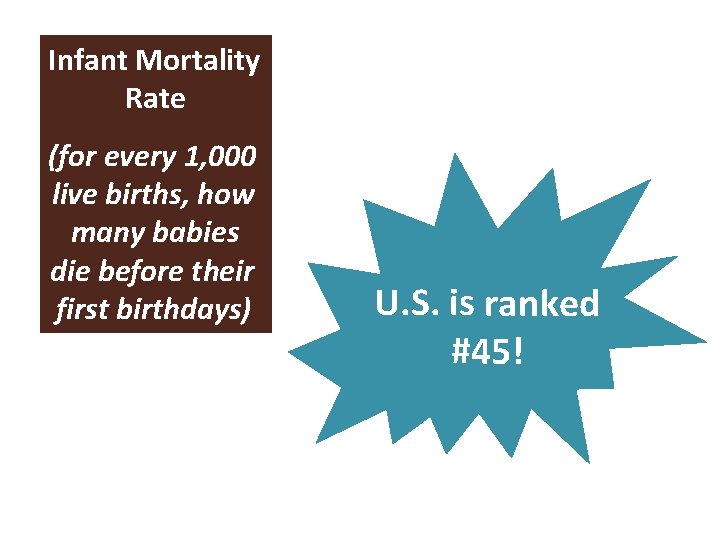
Infant Mortality Rate (for every 1, 000 live births, how many babies die before their first birthdays) What is the international ranking of the United States?
Infant Mortality Rate (for every 1, 000 live births, how many babies die before their first birthdays) Source: CIA World Factbook, 2010 U. S. is ranked #45!
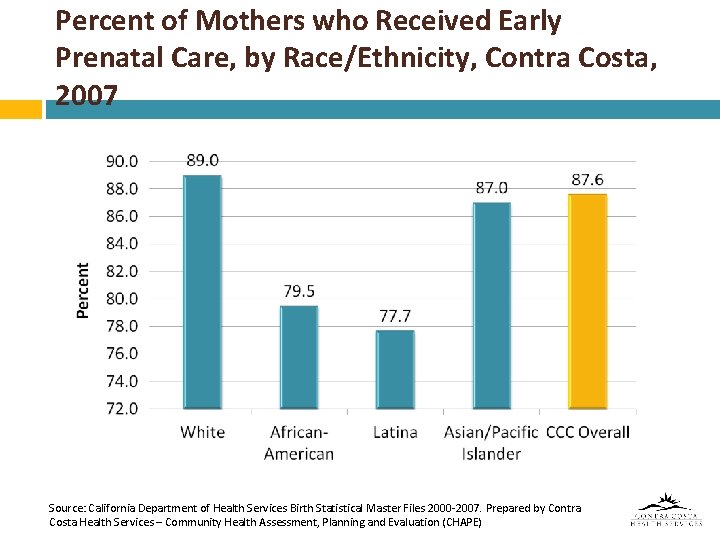
Percent of Mothers who Received Early Prenatal Care, by Race/Ethnicity, Contra Costa, 2007 Source: California Department of Health Services Birth Statistical Master Files 2000 -2007. Prepared by Contra Costa Health Services – Community Health Assessment, Planning and Evaluation (CHAPE)
Rate of Low Birth Weight Births (per 100 live births), by Race/Ethnicity, Contra Costa, 2007 Source: California Department of Health Services, Birth Statistical Master Files, 2002 -2004 Source: California Department of Health Services Birth Statistical Master Files 2000 -2007. Prepared by Contra Costa Health Services – Community Health Assessment, Planning and Evaluation (CHAPE)
Infant Mortality Rate (per 1, 000 live births), by Race/Ethnicity, Contra Costa, 2005 -2007 Source: California Department of Health Services Death Statistical Master Files 2000 -2007. Prepared by Contra Costa Health Services – Community Health Assessment, Planning and Evaluation (CHAPE)
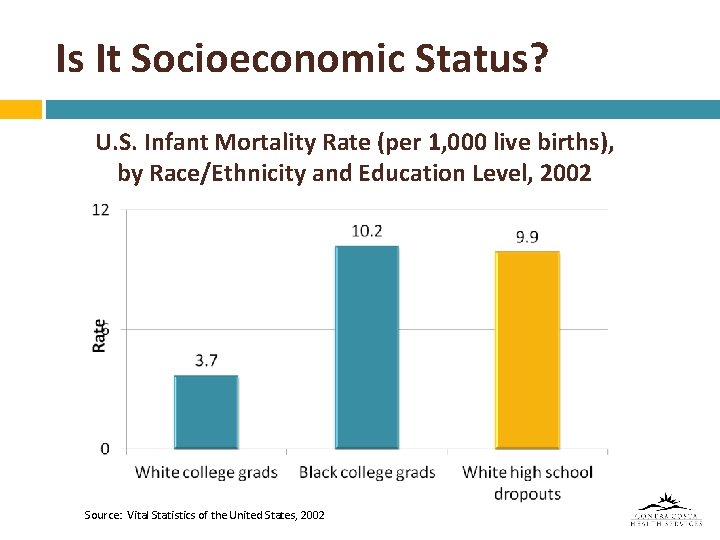
Is It Socioeconomic Status? U. S. Infant Mortality Rate (per 1, 000 live births), by Race/Ethnicity and Education Level, 2002 Source: Vital Statistics of the United States, 2002
Is it Genetics? No! Black women born in Africa and the Caribbean have lower LBW rates than U. S. born black women Something about the pre-pregnancy experiences of U. S. born black women is detrimental to their pregnancy outcomes
Latina Paradox Latinas living in the United States but born abroad have birth outcomes similar to White women Birth outcomes worsen with each following generation
Life Course Perspective A way of looking at life not as disconnected stages, but as an integrated continuum Suggests that a complex interplay of biological, behavioral, psychological, and social protective and risk factors contributes to health outcomes across the span of a person’s life
Key Concepts Early Programming Cumulative Pathways
Early Programming
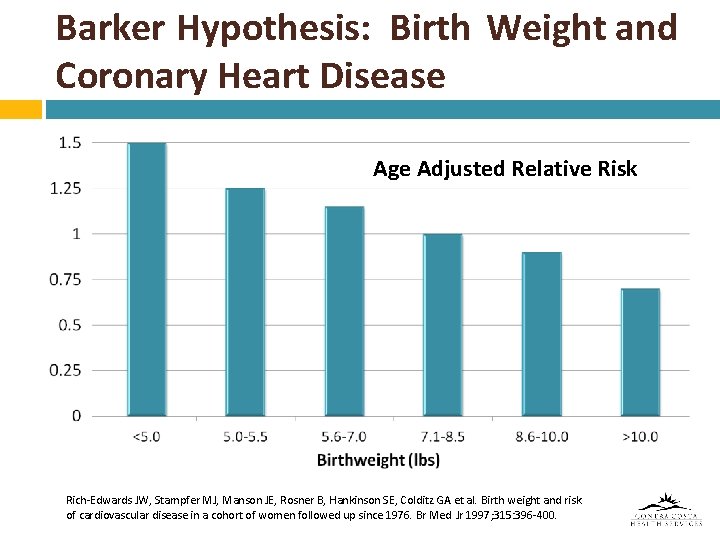
Barker Hypothesis: Birth Weight and Coronary Heart Disease Age Adjusted Relative Risk Rich-Edwards JW, Stampfer MJ, Manson JE, Rosner B, Hankinson SE, Colditz GA et al. Birth weight and risk of cardiovascular disease in a cohort of women followed up since 1976. Br Med Jr 1997; 315: 396 -400.
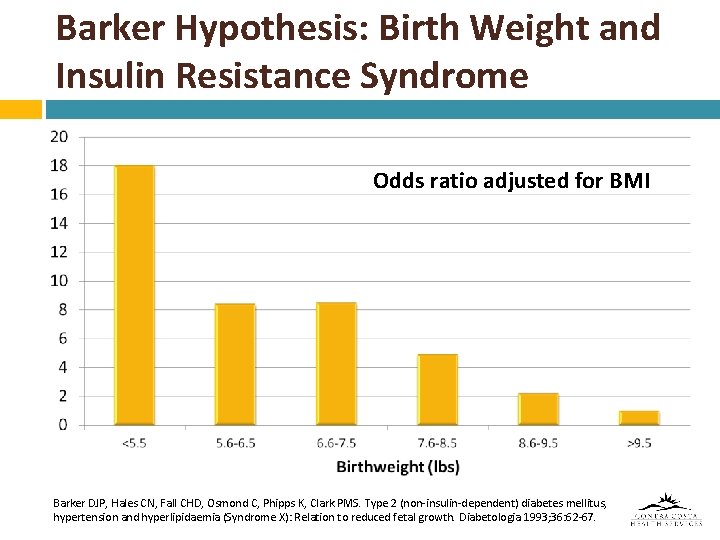
Barker Hypothesis: Birth Weight and Insulin Resistance Syndrome Odds ratio adjusted for BMI Barker DJP, Hales CN, Fall CHD, Osmond C, Phipps K, Clark PMS. Type 2 (non-insulin-dependent) diabetes mellitus, hypertension and hyperlipidaemia (Syndrome X): Relation to reduced fetal growth. Diabetologia 1993; 36: 62 -67.
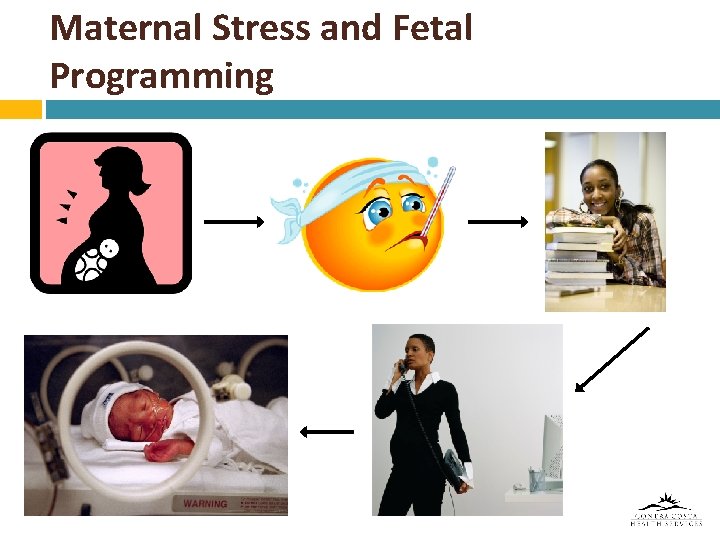
Maternal Stress and Fetal Programming
Cumulative Pathways
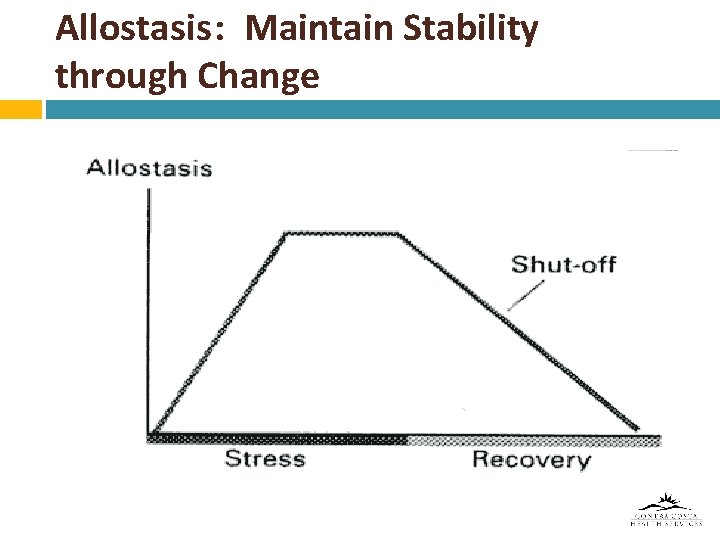
Allostasis: Maintain Stability through Change Mc. Ewen BS. Protective and damaging effects of stress mediators. N Eng J Med. 1998; 338: 171 -9.
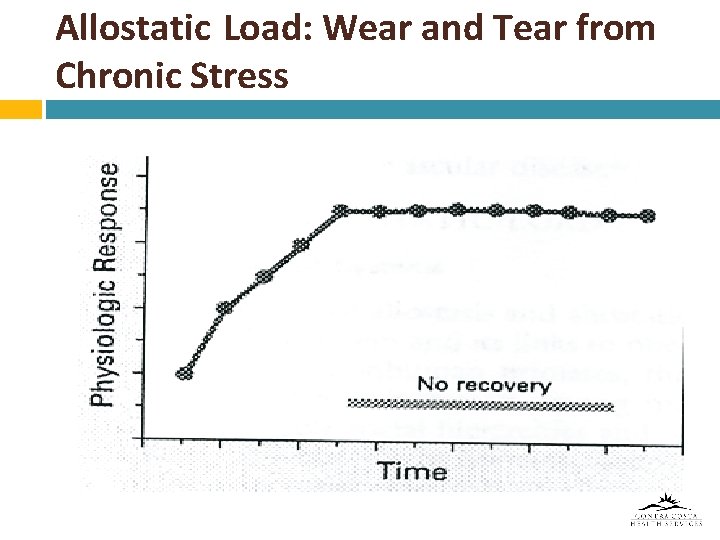
Allostatic Load: Wear and Tear from Chronic Stress Mc. Ewen BS. Protective and damaging effects of stress mediators. N Eng J Med. 1998; 338: 171 -9.
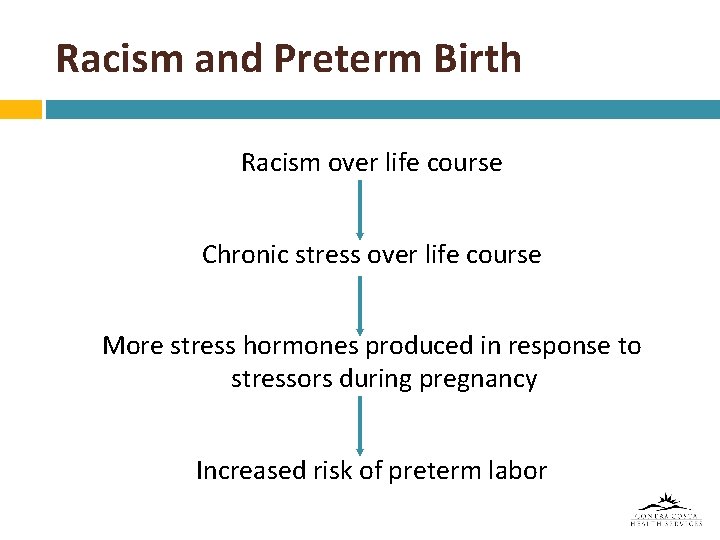
Racism and Preterm Birth Racism over life course Chronic stress over life course More stress hormones produced in response to stressors during pregnancy Increased risk of preterm labor
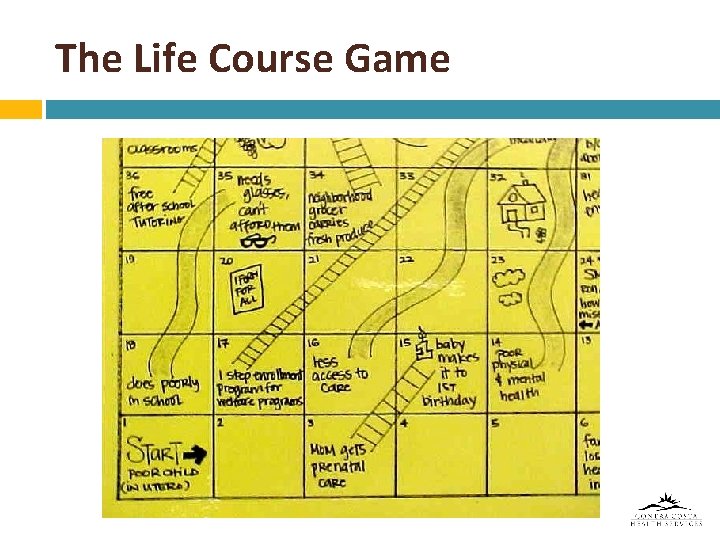
The Life Course Game
So, what can we do?
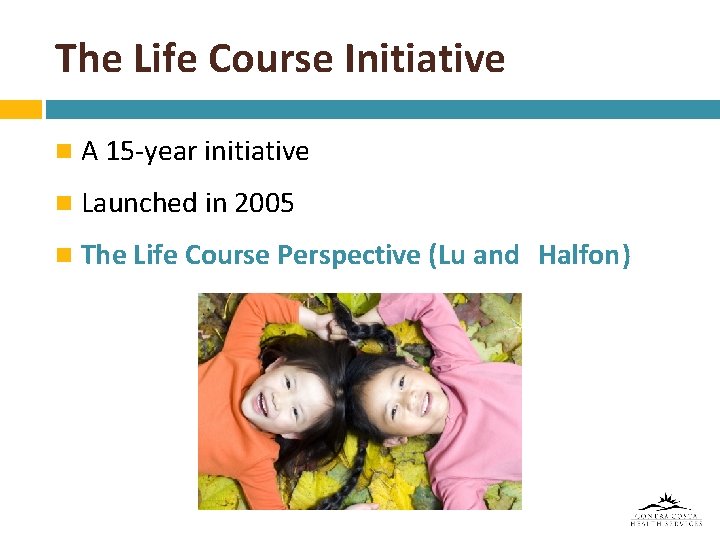
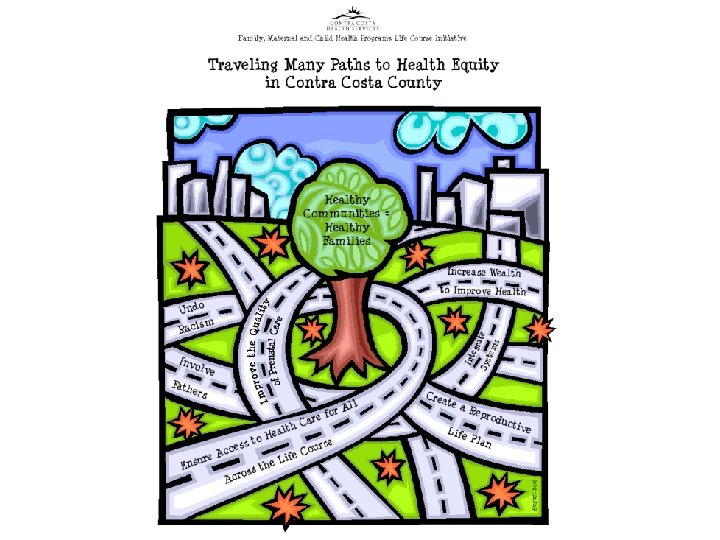
The Life Course Initiative A 15 -year initiative Launched in 2005 The Life Course Perspective (Lu and Halfon )
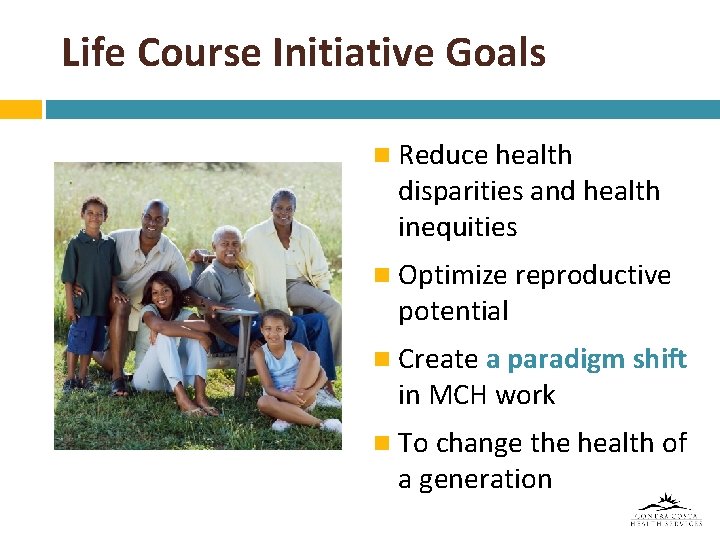
Life Course Initiative Goals Reduce health disparities and health inequities Optimize reproductive potential Create a paradigm shift in MCH work To change the health of a generation
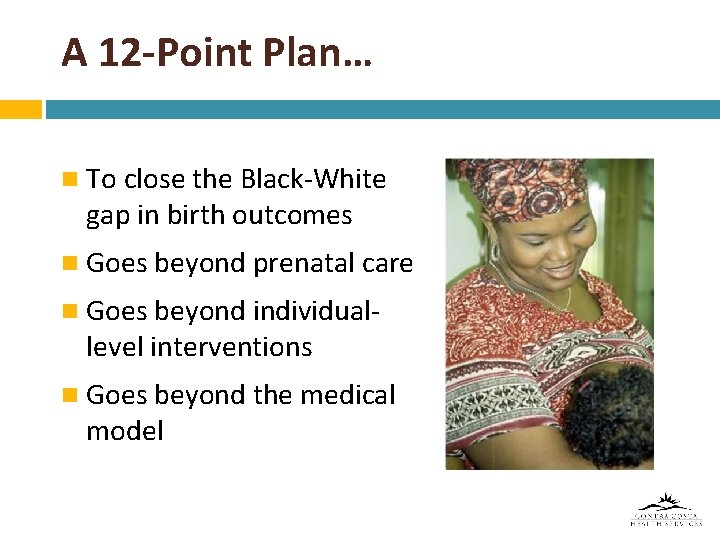
A 12 -Point Plan… To close the Black-White gap in birth outcomes Goes beyond prenatal care Goes beyond individual- level interventions Goes beyond the medical model
Social Gradient of Health
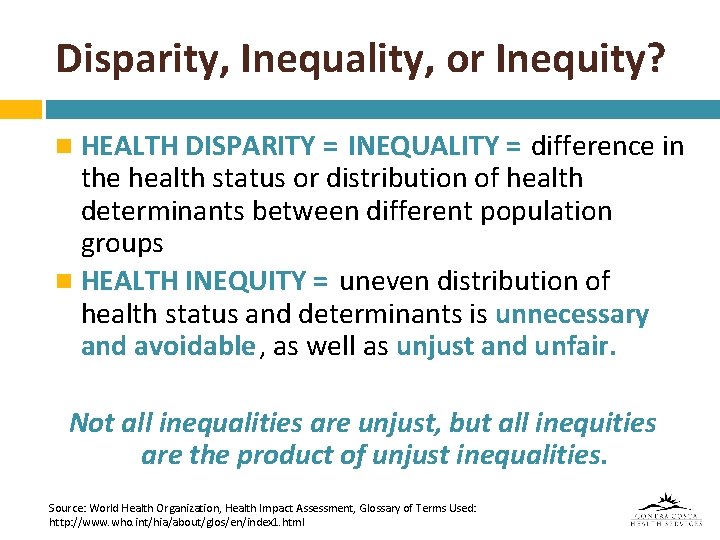
Disparity, Inequality, or Inequity? HEALTH DISPARITY = INEQUALITY = difference in the health status or distribution of health determinants between different population groups HEALTH INEQUITY = uneven distribution of health status and determinants is unnecessary and avoidable, as well as unjust and unfair. Not all inequalities are unjust, but all inequities are the product of unjust inequalities. Source: World Health Organization, Health Impact Assessment, Glossary of Terms Used: http: //www. who. int/hia/about/glos/en/index 1. html
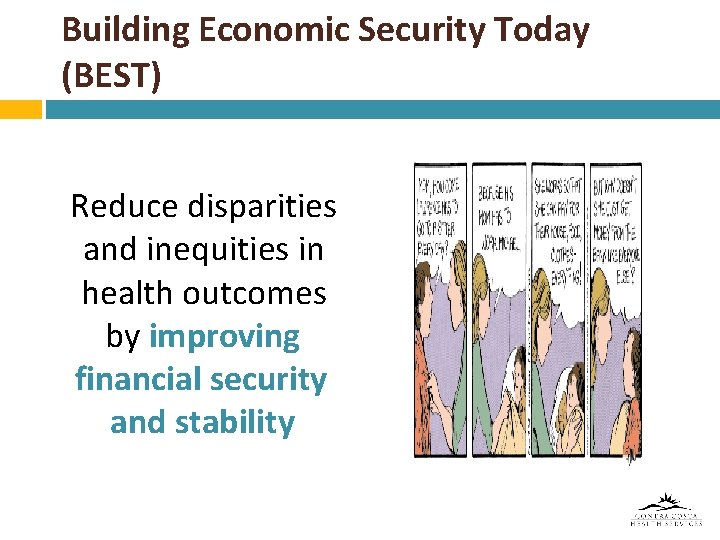
Building Economic Security Today (BEST) Reduce disparities and inequities in health outcomes by improving financial security and stability
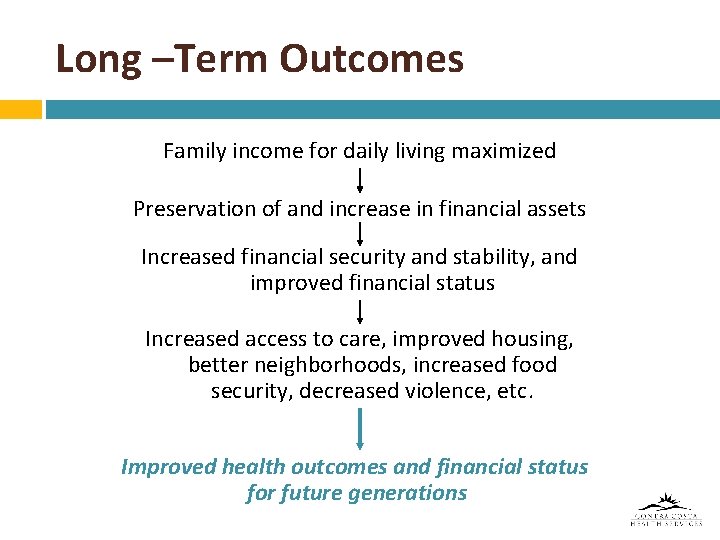
Long –Term Outcomes Family income for daily living maximized Preservation of and increase in financial assets Increased financial security and stability, and improved financial status Increased access to care, improved housing, better neighborhoods, increased food security, decreased violence, etc. Improved health outcomes and financial status for future generations
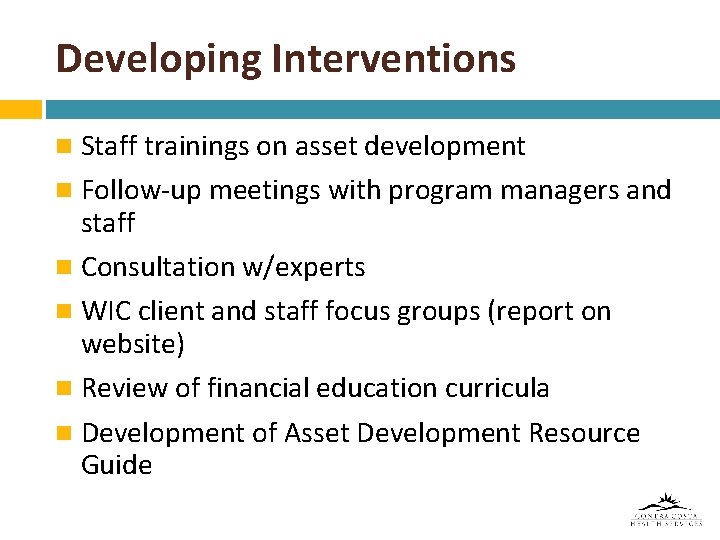
Developing Interventions Staff trainings on asset development Follow-up meetings with program managers and staff Consultation w/experts WIC client and staff focus groups (report on website) Review of financial education curricula Development of Asset Development Resource Guide
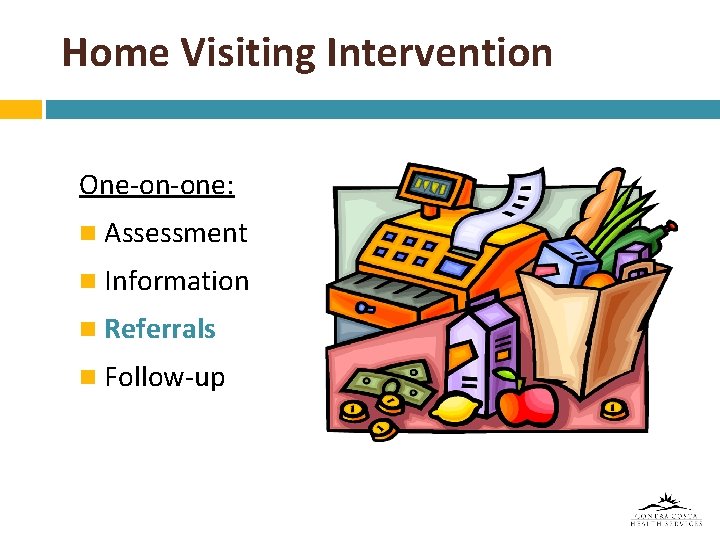
Home Visiting Intervention One-on-one: Assessment Information Referrals Follow-up
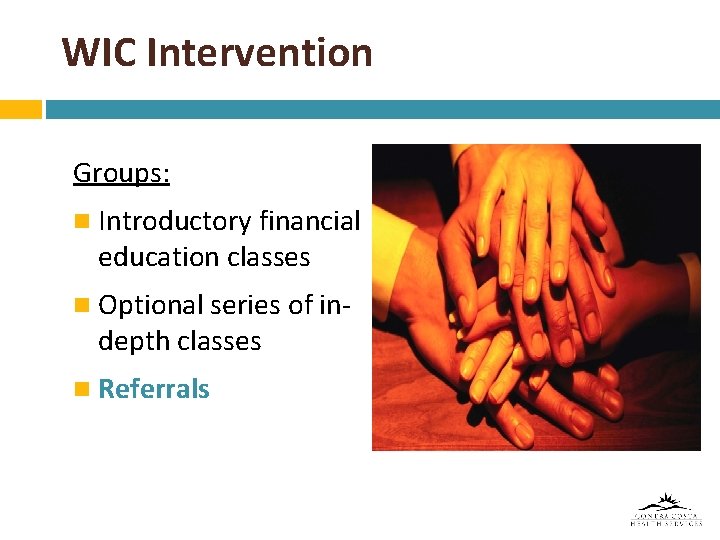
WIC Intervention Groups: Introductory financial education classes Optional series of in- depth classes Referrals
BEST Partners Community Financial Resources Contra Costa Family Economic Security Partnership (FESP) Health-Wealth Connection Collaborative (HWCC) Spark Point Center Collaboratives
Lessons Learned Start with staff where they are Acknowledge what staff are already doing and build on this Recognize that change takes time Have a long view Seize opportunities to collaborate with new partners Develop evaluation plan while developing program interventions
For More Information Padmini Parthasarathy, MPH Life Course Initiative Coordinator Family, Maternal and Child Health Programs 925 -313 -6178 padmini. parthasarathy@hsd. cccounty. us www. cchealth. org/groups/lifecourse/