
The Life and Rise of Adolf Hitler Hitlers
- Slides: 24
The Life and Rise of Adolf Hitler
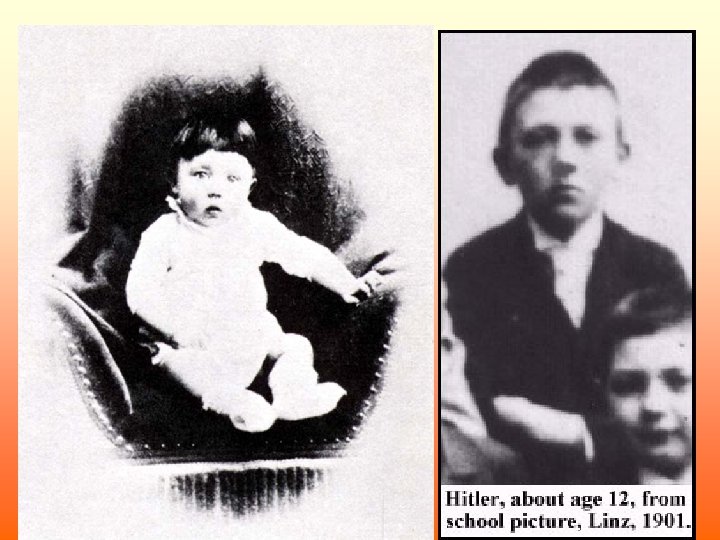
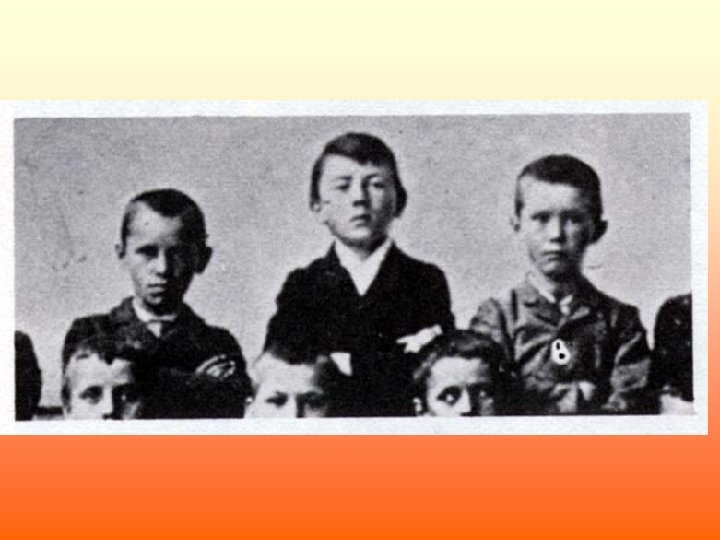
Hitler’s Childhood • Born April 20, 1889 near Linz, Austria on the German border • Hitler dreamed of becoming an artist • Became interested in German nationalism as a teen • Father died when he was 13 - Hitler became head of household • Eventually dropped out of school at age 16 • Self-taught from then on
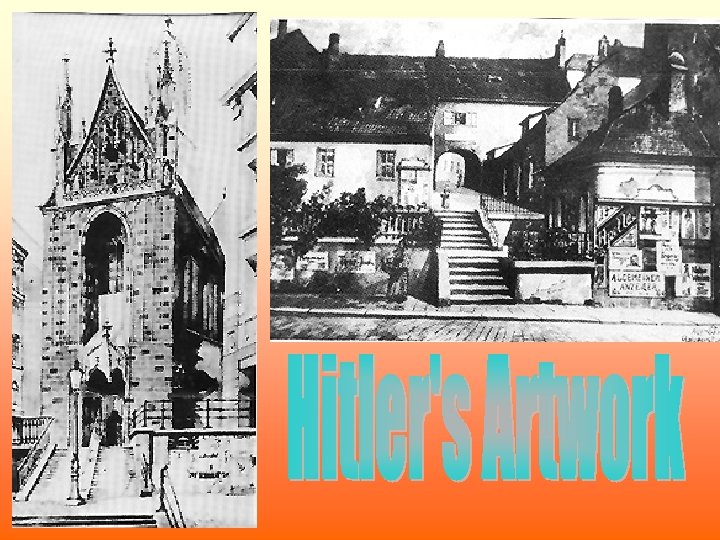
Loss and Disappointment • At age 18, he went to Vienna to attend an art academy but failed to get in because his drawings were judged unsatisfactory • Mother died of breast cancer in 1907, shortly after Hitler returned home • Hitler devastated • Failed to get into art academy a second time • Ended up homeless on the streets of Vienna
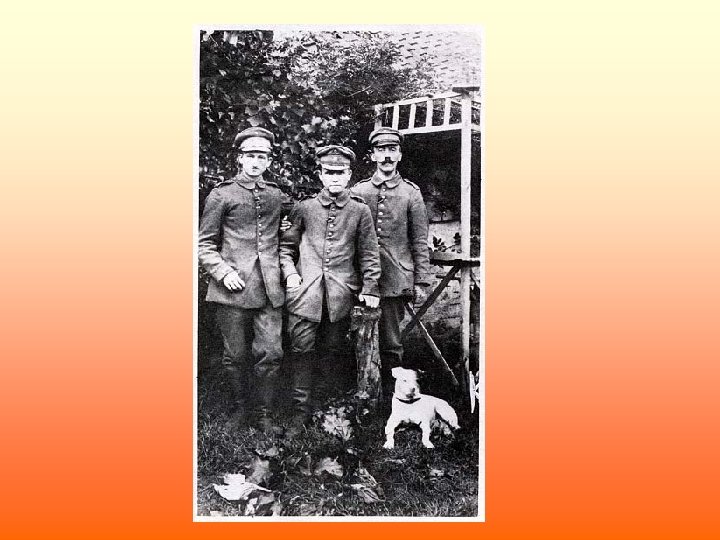
Soldier and Spy • At 24, Hitler left Vienna for Germany to avoid military service for Austria • August 1914, volunteered for German Army • Injured twice in the war • Very upset with how WWI ended – Believed Jews & politicians stabbed German Army in the back - sold them out to end war – Hitler called them the November Criminals • After Kaiser abdicates, Germany a republic – Country had no experience with democracy – Political and social chaos results
Soldier and Spy • Becomes undercover agent for German army – Supposed to root out Marxists • Spies on German Workers' Party in 1919 • Agrees with their nationalist, pro-military, anti-Semitic beliefs and joins them at age 30
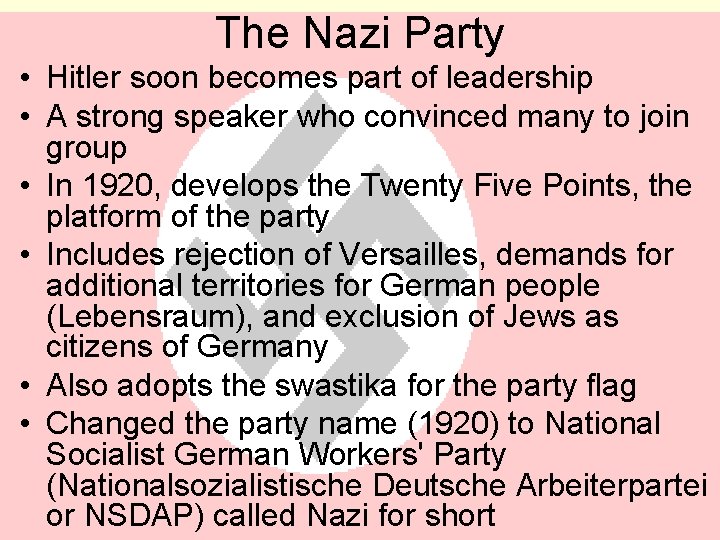
The Nazi Party • Hitler soon becomes part of leadership • A strong speaker who convinced many to join group • In 1920, develops the Twenty Five Points, the platform of the party • Includes rejection of Versailles, demands for additional territories for German people (Lebensraum), and exclusion of Jews as citizens of Germany • Also adopts the swastika for the party flag • Changed the party name (1920) to National Socialist German Workers' Party (Nationalsozialistische Deutsche Arbeiterpartei or NSDAP) called Nazi for short
The Führer • In July of 1921, Hitler named Führer (leader) of the Nazi Party • Told executive committee he would resign if they didn't make him sole leader • They knew party would die without him
Hitler’s Political Ammunition • In April of 1921, Britain & France demanded Germany pay damages from war - badly damaged German economy • Germany asked to postpone but France refused • Germany refused to pay so France occupied the industrial Ruhr region of Germany (1923) • Economy virtually collapses - money worthless • Govt. decides to pay - causes unrest among opposition groups
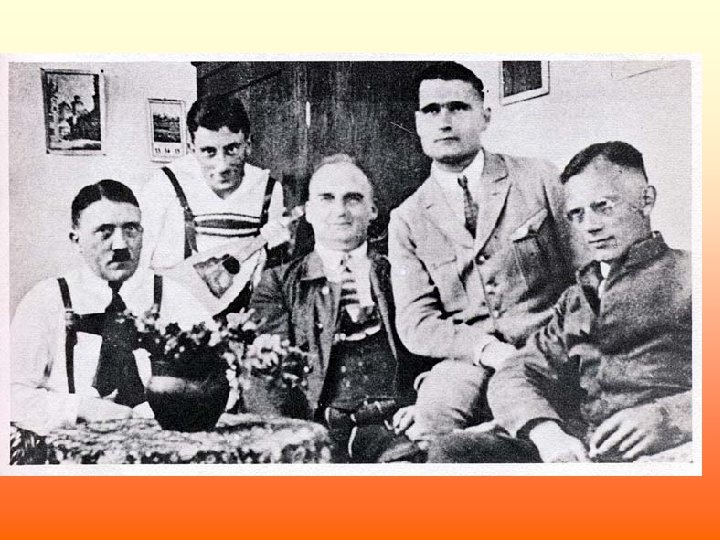
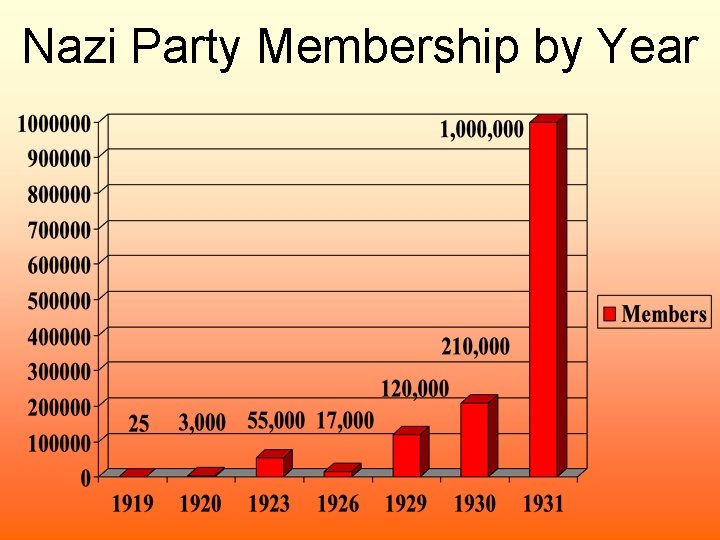
The Beer Hall Putsch • Nazis (55, 000 followers in 1923) decide to attempt to take over govt. • On Nov. 8, 1923, Hitler stages the Beer Hall Putsch (revolt) • Revolt fails - Hitler is jailed for 8 months • Writes Mein Kampf (My Struggle) while in prison • Reveals his political & racial ideas in detail • Heavy focus on Jews as problem for Germany
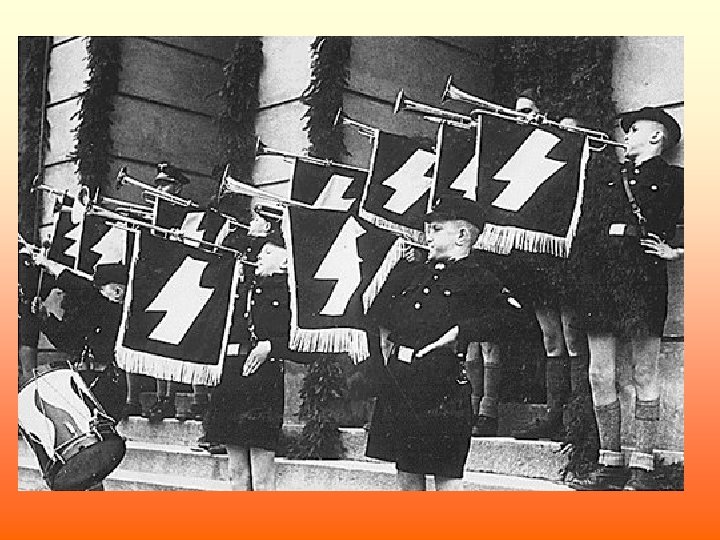
A renewed push for power • 1924 - Released from jail - Decides to try to get elected rather than overthrow govt. – Reorganizes party – Forms Hitler Youth • Creates the SS (Schutzstaffel), his personal body guards (1926) • Econ. conditions improved in Ger. (1926 -29) – Made Nazis less appealing • Worked on getting Nazis elected into govt. • Arrival of Great Depression the turning point
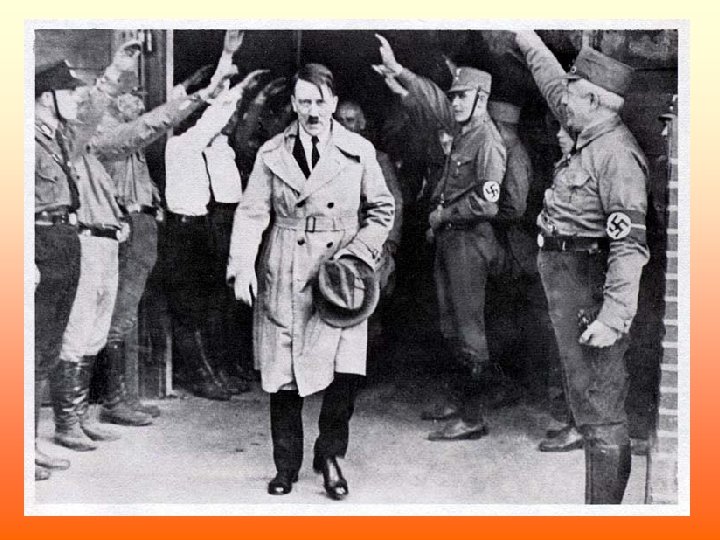
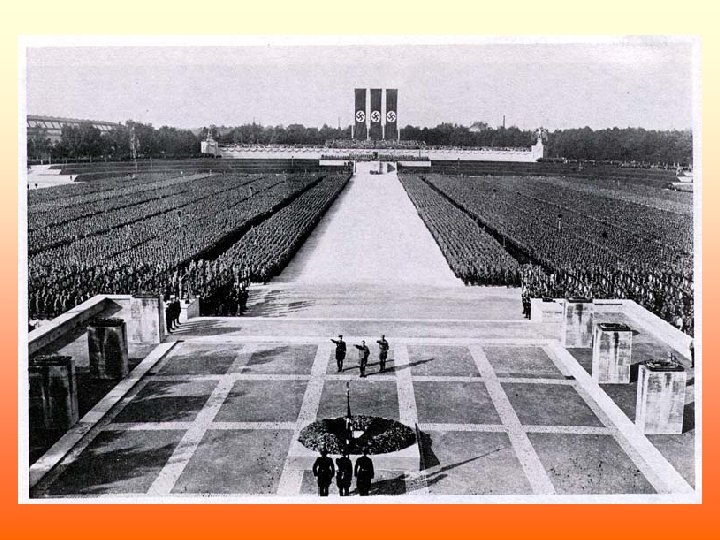
Revival of the Nazi Party • Bad economy makes Nazis popular again • Nazis run for office in 1930 w/ carefully staged campaign events – Music, banners, uniforms, theatrical lighting • Hitler's speeches promised greatness for Germany • The Nazis - Hitler down to the bottom worked tirelessly to get their message out
Nazis on the Rise • Sept. 1930 - Nazis win 107 seats in German Reichstag (Parliament) • Overnight, party goes from smallest to 2 nd largest in Germany • Gave Hitler international prestige • Storm Troopers celebrated by smashing Jewish businesses • Nazis had no intention of helping the govt. get stronger • Was to their advantage to let things get worse
Hitler’s Base of Support • Hitler had support of army General Staff and German industrialists • Industrialists funded Nazis • General Staff wanted Hitler to break Treaty of Versailles • Hoped to rebuild and modernize army • Nazis in Reichstag worked hard to disrupt govt. – People saw a govt. in chaos • Many looked to Hitler for leadership because he was decisive and promised a better future
The 1932 Elections • Hitler decides to run for president in 1932 • Runs against president & WWI hero Paul von Hindenburg • Massive Nazi campaign effort w/ propaganda & rallies • Hitler lost (36% to Hindenburg's 53%) • But… elections revealed massive popularity of Nazi Party • Nazis become the largest party in Reichstag • A sign of things to come
Nazi Party Membership by Year
Hitler Becomes Chancellor • January 1933 – President Hindenburg appointed Hitler to be his Chancellor • Most hoped that Hitler would be less radical once he was part of the govt. • Many believed that Hitler could be controlled • Hitler was second only to Hindenburg in power – If the elderly Hindenburg died, Hitler would assume power – Hindenburg died in 1934 • August 19, 1934 – plebiscite confirms Hitler as total leader of Germany