
The Legislative Process How a Bill becomes a
The Legislative Process How a Bill becomes a Law
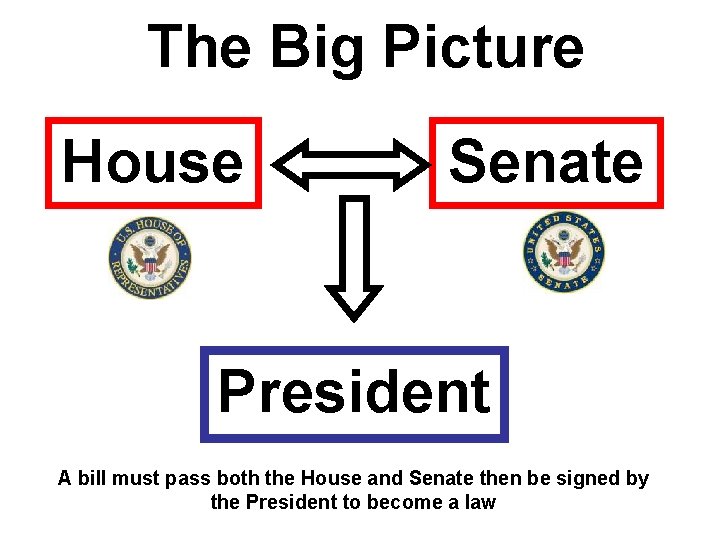
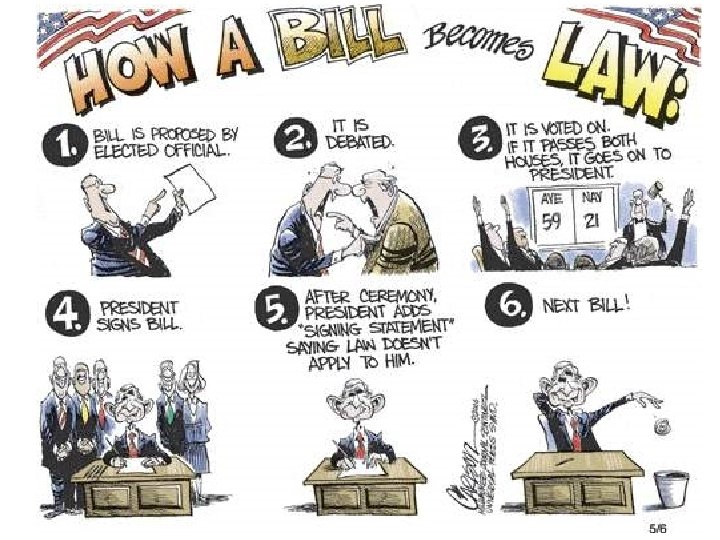
The Big Picture House Senate President A bill must pass both the House and Senate then be signed by the President to become a law
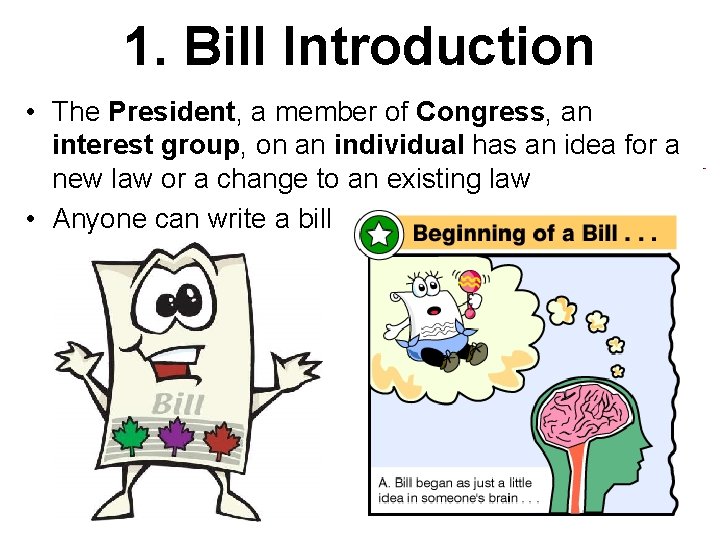
1. Bill Introduction • The President, a member of Congress, an interest group, on an individual has an idea for a new law or a change to an existing law • Anyone can write a bill
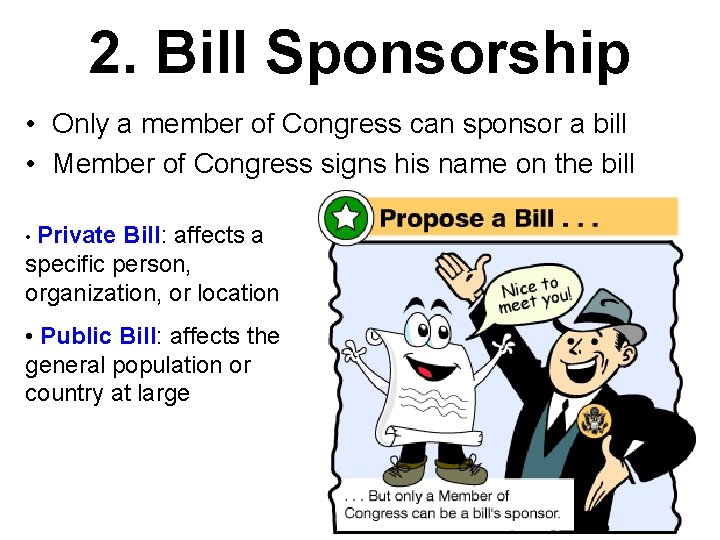
2. Bill Sponsorship • Only a member of Congress can sponsor a bill • Member of Congress signs his name on the bill • Private Bill: affects a specific person, organization, or location • Public Bill: affects the general population or country at large
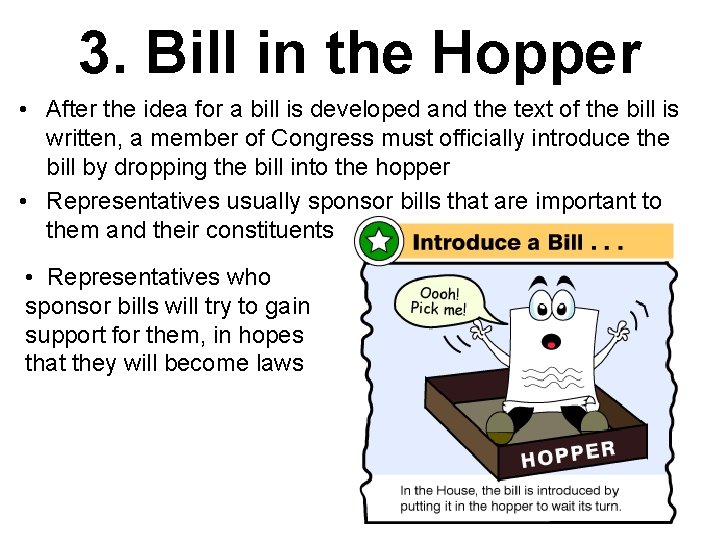
3. Bill in the Hopper • After the idea for a bill is developed and the text of the bill is written, a member of Congress must officially introduce the bill by dropping the bill into the hopper • Representatives usually sponsor bills that are important to them and their constituents • Representatives who sponsor bills will try to gain support for them, in hopes that they will become laws
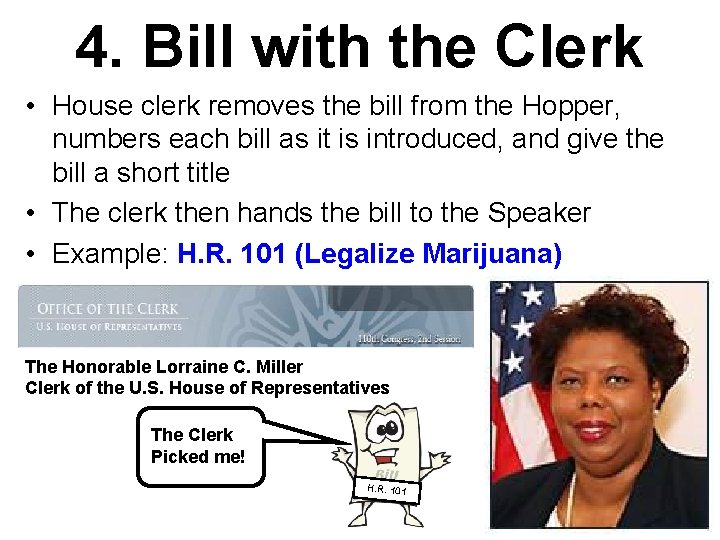
4. Bill with the Clerk • House clerk removes the bill from the Hopper, numbers each bill as it is introduced, and give the bill a short title • The clerk then hands the bill to the Speaker • Example: H. R. 101 (Legalize Marijuana) The Honorable Lorraine C. Miller Clerk of the U. S. House of Representatives The Clerk Picked me! H. R. 101
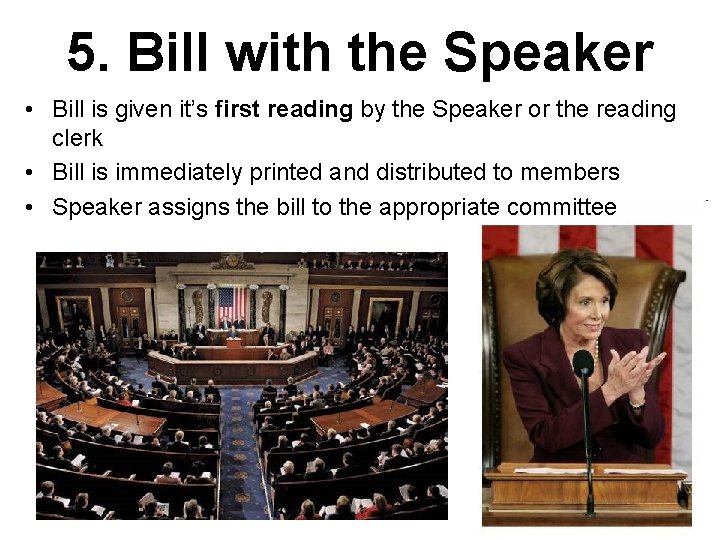
5. Bill with the Speaker • Bill is given it’s first reading by the Speaker or the reading clerk • Bill is immediately printed and distributed to members • Speaker assigns the bill to the appropriate committee
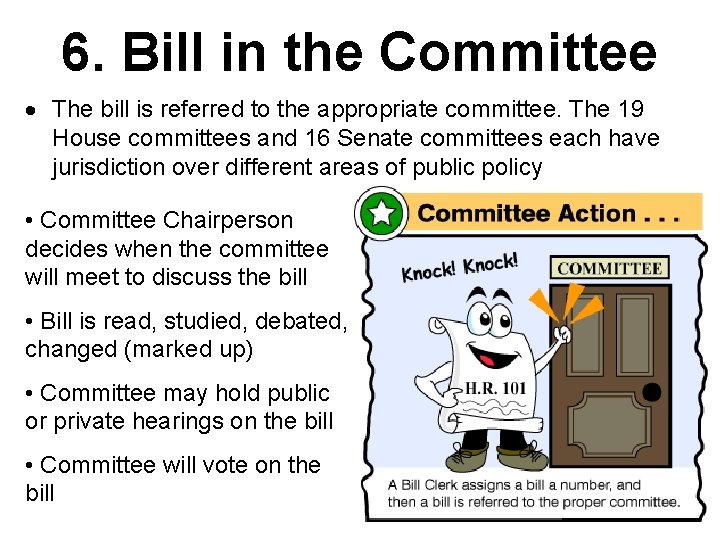
6. Bill in the Committee · The bill is referred to the appropriate committee. The 19 House committees and 16 Senate committees each have jurisdiction over different areas of public policy • Committee Chairperson decides when the committee will meet to discuss the bill • Bill is read, studied, debated, changed (marked up) • Committee may hold public or private hearings on the bill • Committee will vote on the bill
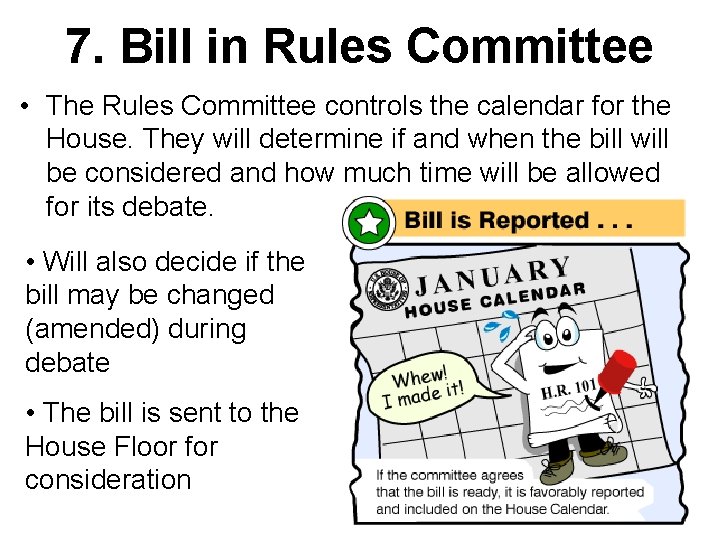
7. Bill in Rules Committee • The Rules Committee controls the calendar for the House. They will determine if and when the bill will be considered and how much time will be allowed for its debate. • Will also decide if the bill may be changed (amended) during debate • The bill is sent to the House Floor for consideration
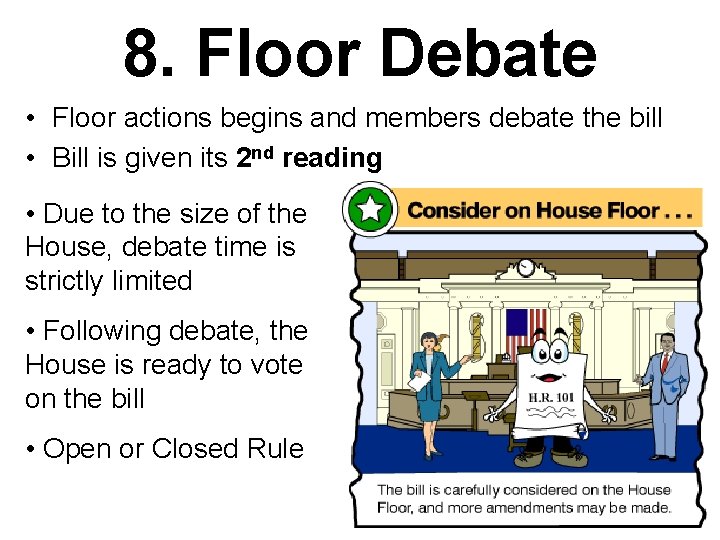
8. Floor Debate • Floor actions begins and members debate the bill • Bill is given its 2 nd reading • Due to the size of the House, debate time is strictly limited • Following debate, the House is ready to vote on the bill • Open or Closed Rule
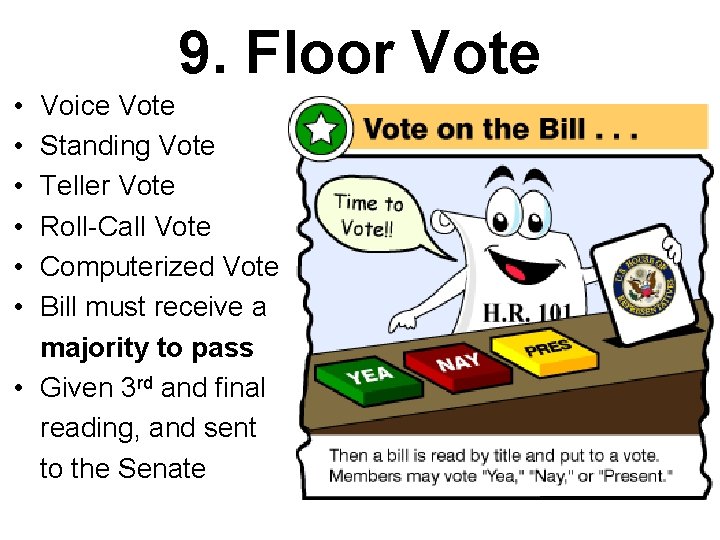
9. Floor Vote • • • Voice Vote Standing Vote Teller Vote Roll-Call Vote Computerized Vote Bill must receive a majority to pass • Given 3 rd and final reading, and sent to the Senate
10. Bill with Senate Secretary • The Secretary of the Senate will "clock" the bill when it arrives and present it to the acting President Pro Tempore I’m half way through the process, I hope I can make it through the Senate! H. R. 101
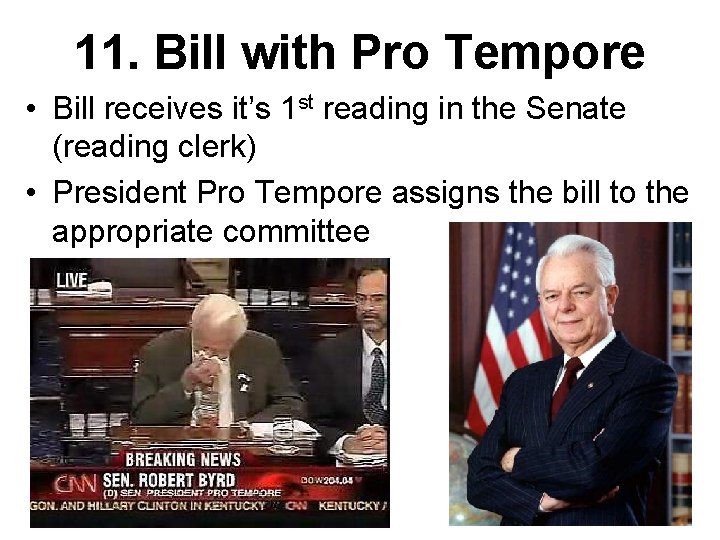
11. Bill with Pro Tempore • Bill receives it’s 1 st reading in the Senate (reading clerk) • President Pro Tempore assigns the bill to the appropriate committee
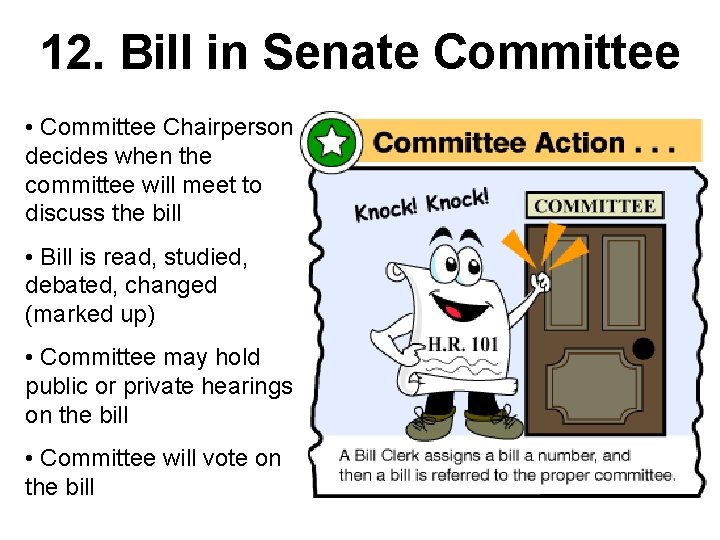
12. Bill in Senate Committee • Committee Chairperson decides when the committee will meet to discuss the bill • Bill is read, studied, debated, changed (marked up) • Committee may hold public or private hearings on the bill • Committee will vote on the bill
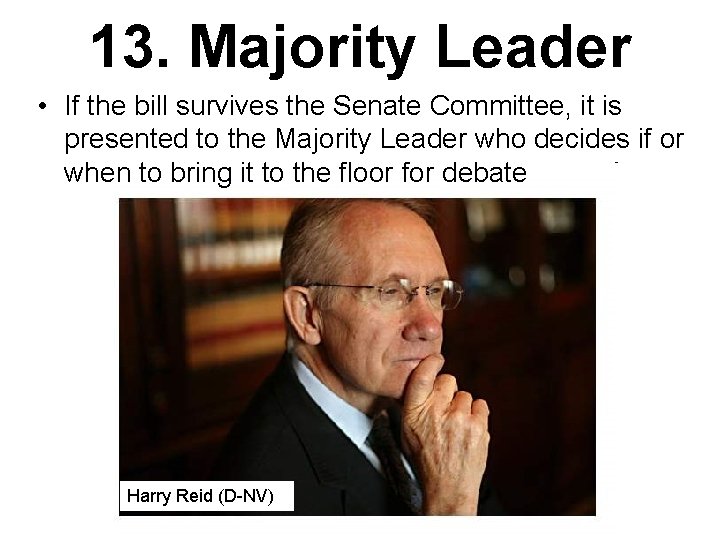
13. Majority Leader • If the bill survives the Senate Committee, it is presented to the Majority Leader who decides if or when to bring it to the floor for debate Harry Reid (D-NV)
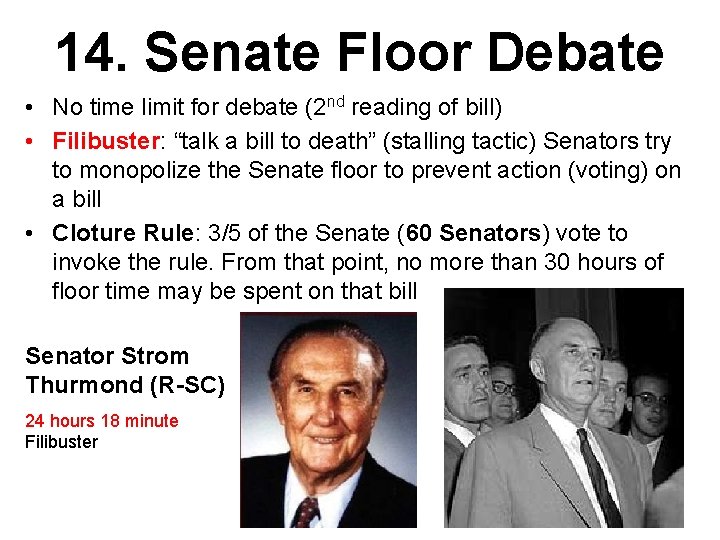
14. Senate Floor Debate • No time limit for debate (2 nd reading of bill) • Filibuster: “talk a bill to death” (stalling tactic) Senators try to monopolize the Senate floor to prevent action (voting) on a bill • Cloture Rule: 3/5 of the Senate (60 Senators) vote to invoke the rule. From that point, no more than 30 hours of floor time may be spent on that bill Senator Strom Thurmond (R-SC) 24 hours 18 minute Filibuster
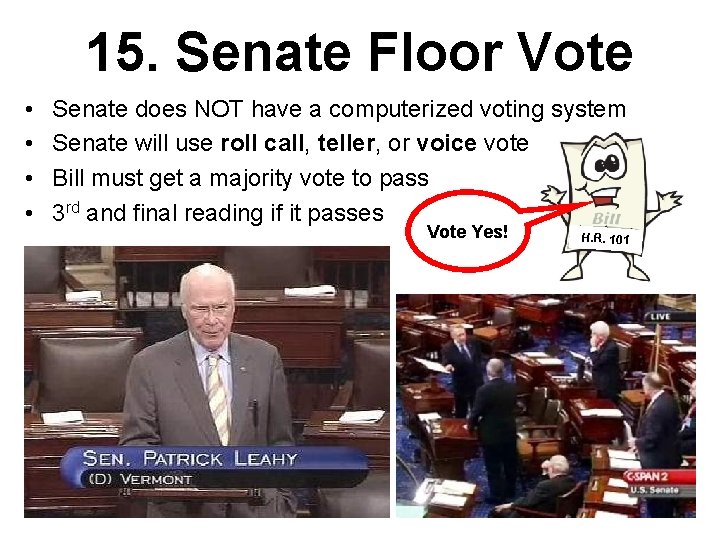
15. Senate Floor Vote • • Senate does NOT have a computerized voting system Senate will use roll call, teller, or voice vote Bill must get a majority vote to pass 3 rd and final reading if it passes Vote Yes! H. R. 101
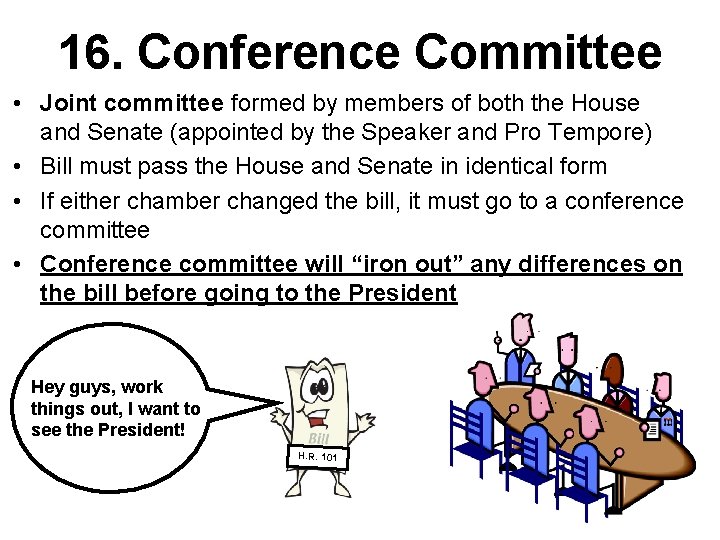
16. Conference Committee • Joint committee formed by members of both the House and Senate (appointed by the Speaker and Pro Tempore) • Bill must pass the House and Senate in identical form • If either chamber changed the bill, it must go to a conference committee • Conference committee will “iron out” any differences on the bill before going to the President Hey guys, work things out, I want to see the President! H. R. 101
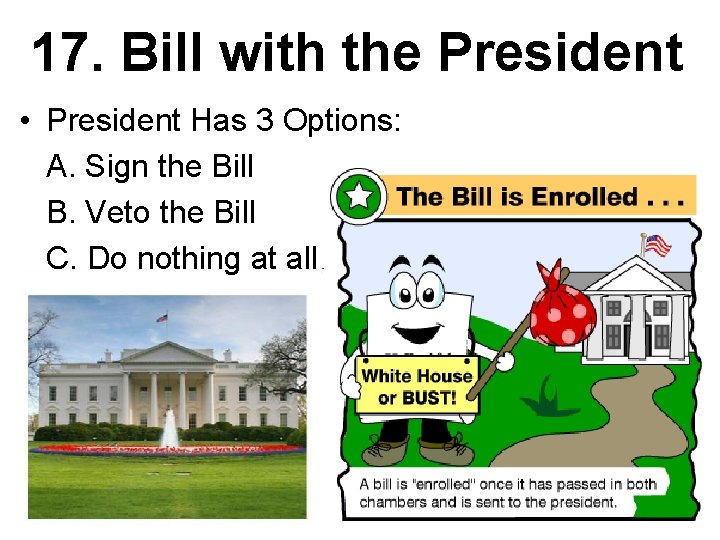
17. Bill with the President • President Has 3 Options: A. Sign the Bill B. Veto the Bill C. Do nothing at all
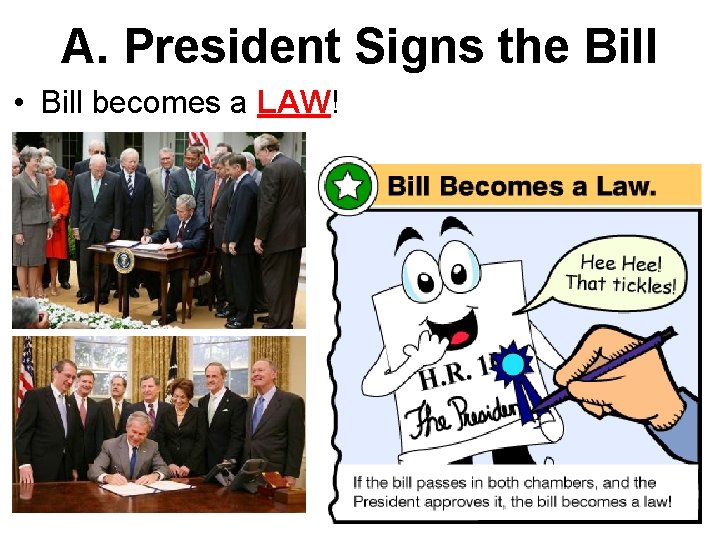
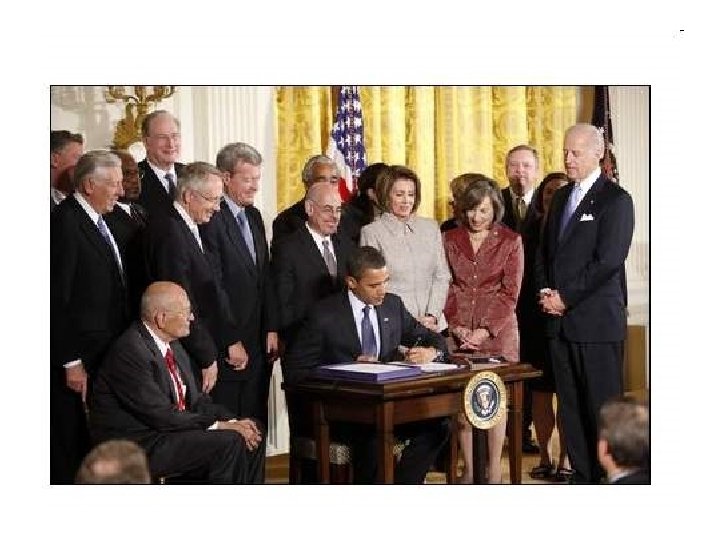
A. President Signs the Bill • Bill becomes a LAW!
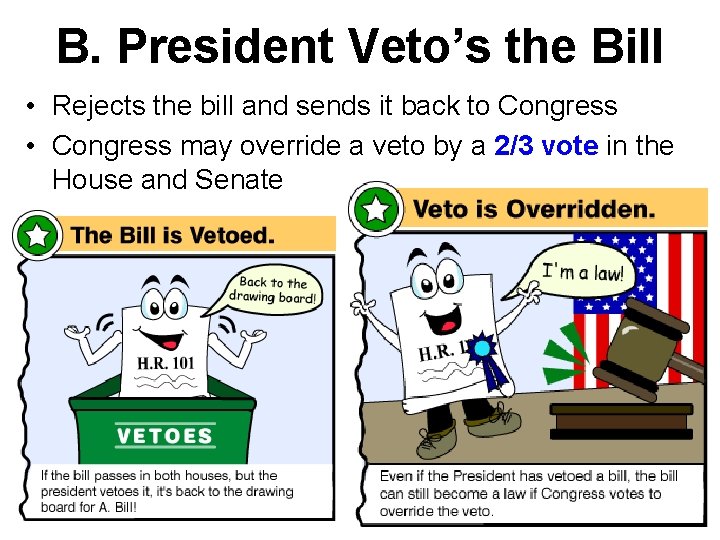
B. President Veto’s the Bill • Rejects the bill and sends it back to Congress • Congress may override a veto by a 2/3 vote in the House and Senate
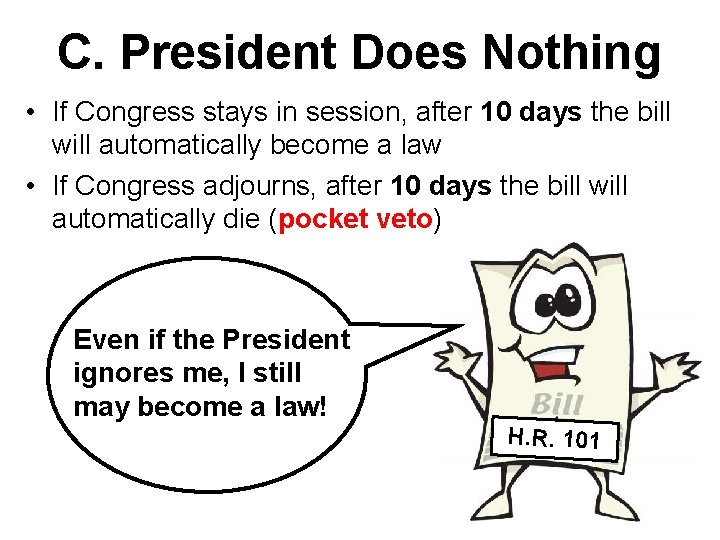
C. President Does Nothing • If Congress stays in session, after 10 days the bill will automatically become a law • If Congress adjourns, after 10 days the bill will automatically die (pocket veto) Even if the President ignores me, I still may become a law! H. R. 101
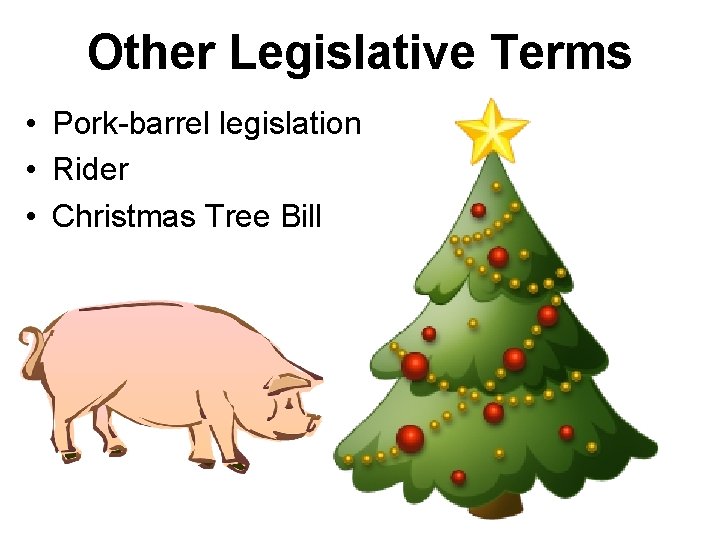
Other Legislative Terms • Pork-barrel legislation • Rider • Christmas Tree Bill
- Slides: 25