
THE LEGISLATIVE BRANCH What is Congress Congress makes
THE LEGISLATIVE BRANCH
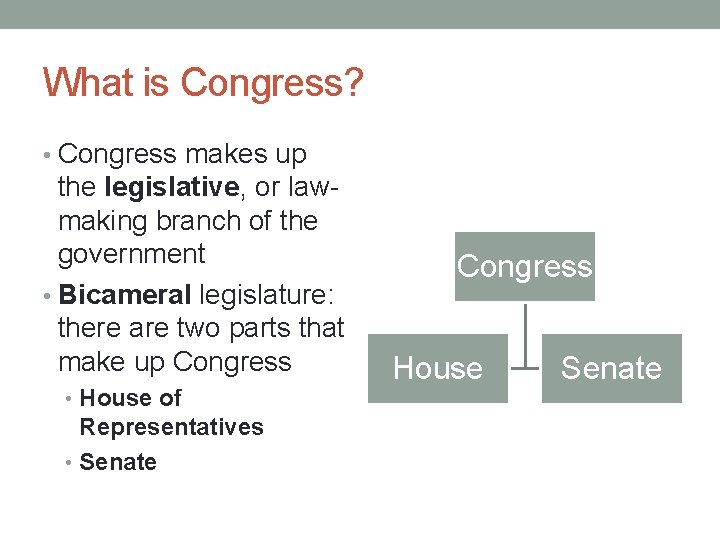
What is Congress? • Congress makes up the legislative, or lawmaking branch of the government • Bicameral legislature: there are two parts that make up Congress • House of Representatives • Senate Congress House Senate
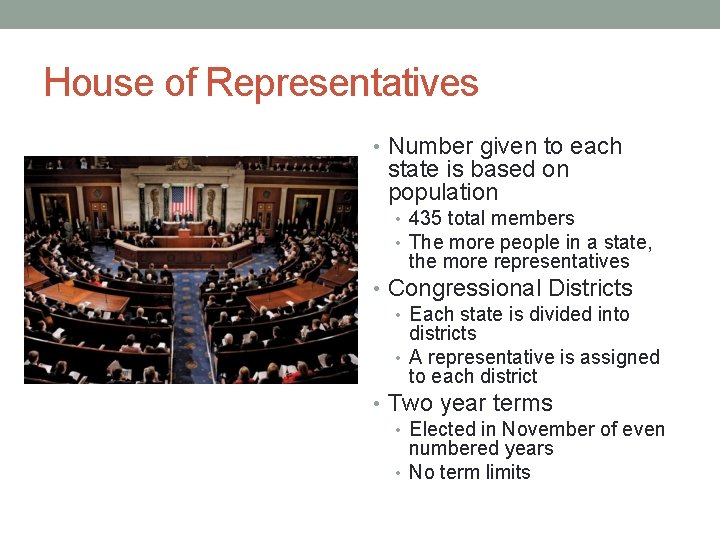
House of Representatives • Number given to each state is based on population • 435 total members • The more people in a state, the more representatives • Congressional Districts • Each state is divided into districts • A representative is assigned to each district • Two year terms • Elected in November of even numbered years • No term limits
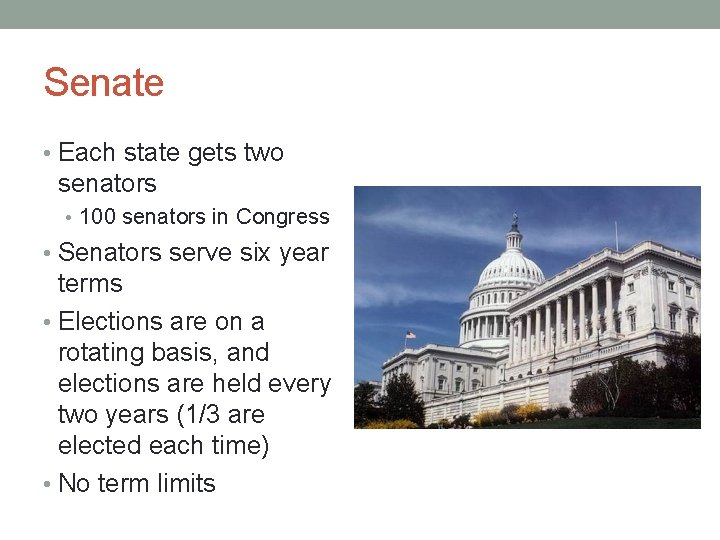
Senate • Each state gets two senators • 100 senators in Congress • Senators serve six year terms • Elections are on a rotating basis, and elections are held every two years (1/3 are elected each time) • No term limits
ORGANIZATION OF CONGRESS
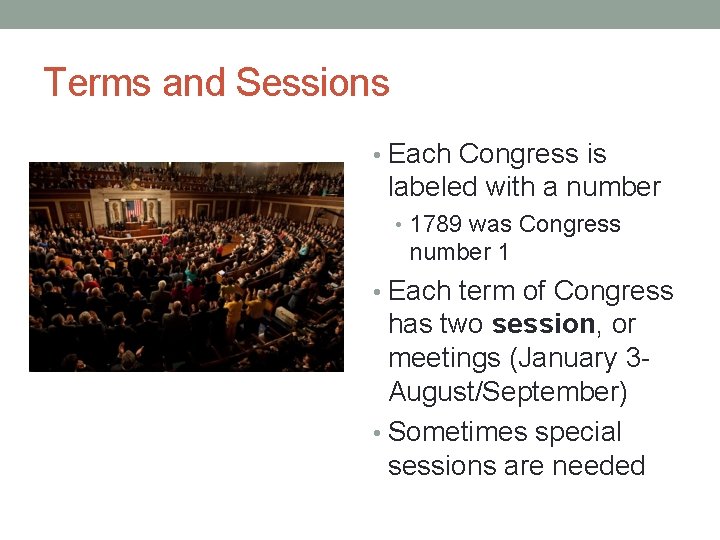
Terms and Sessions • Each Congress is labeled with a number • 1789 was Congress number 1 • Each term of Congress has two session, or meetings (January 3 August/September) • Sometimes special sessions are needed
Organization • The House and Senate each have “leaders” • House • Speaker of the House (elected from majority party) • Senate • Vice President of US (only votes in a tie) • President Pro Tempore: leads in VP’s absence
Political Parties • The political party that has more members in each house is known as the majority party • The political party that has fewer members is called the minority party
Other Positions • Floor Leader: helps guide proposed laws through Congress • One for the majority party, and one for the minority party • Party Whip: each party has a person who communicates with other members to persuade them to vote for new legislation
Committees • Every year, Congress has to consider thousands of bills (possible laws) • 6000 in a two year term! • Since it’s tough for every Congress member to read every bill, they divide up the work • Most of the work of Congress is done in smaller groups, which are called Committees • There are five main types of committees • Standing • Sub • Select • Joint • Conference
POWERS OF CONGRESS
Expressed Powers • These are powers specifically given to Congress by the Constitution • Financing the government: taxes, loans, printing and coining money • Conducting trade and regulating industry: trading with other countries; creating laws for industries • Declaring war • Impeachment: put federal officials on trial • House writes up charges • Senate carries out the trial
Implied Powers • These are powers not specifically stated in the Constitution, but Congress believes are implied • Elastic Clause: belief that Congress has the power to make all laws which are necessary and proper • Allows congress to “stretch” its powers in certain situations • Helping Citizens • Members of Congress perform many services for the people in their home district or state
- Slides: 13