
The Latest Buzz on Nutrition ANNEMARIE DAVEE MS
The Latest Buzz on Nutrition ANNE-MARIE DAVEE, MS, RDN, LD REGISTERED DIETITIANNUTRITIONIST NOVEMBER 5, 2018
Outline: §Warm Up Activity – Join Kahoot. it §Nutritional Concerns for Youth §Recommendations §Sports Nutrition Best Practices §Resources §Questions
Warm-Up Activity Questions: 1. What macronutrient provides the body’s most efficient source of fuel for performance? 2. What element brings energy into the cells, removes waste products and cools the body?
Warm Up Activity Questions 4. What is the recommended range for protein intake for athletes? 5. How often should athletes eat? 6. When is the ideal time to refuel?
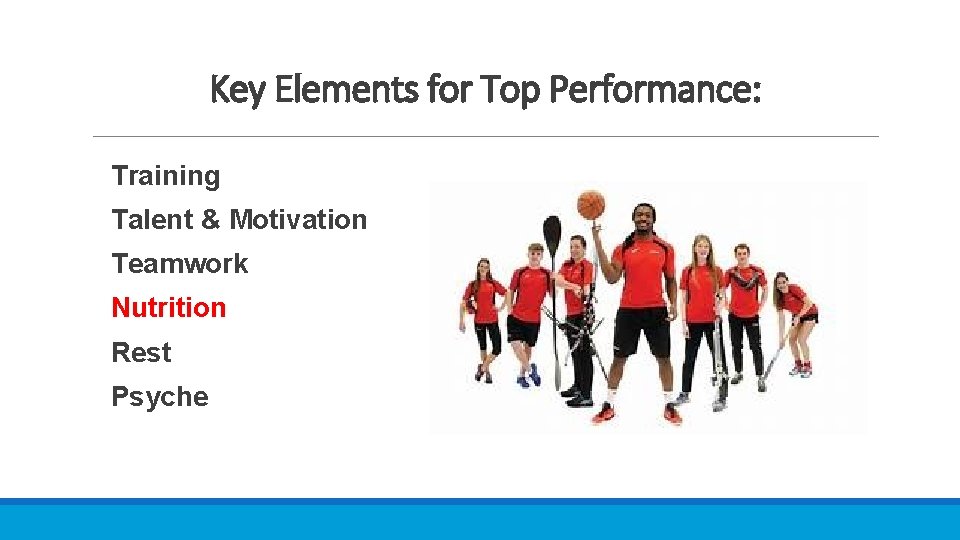
Key Elements for Top Performance: Training Talent & Motivation Teamwork Nutrition Rest Psyche
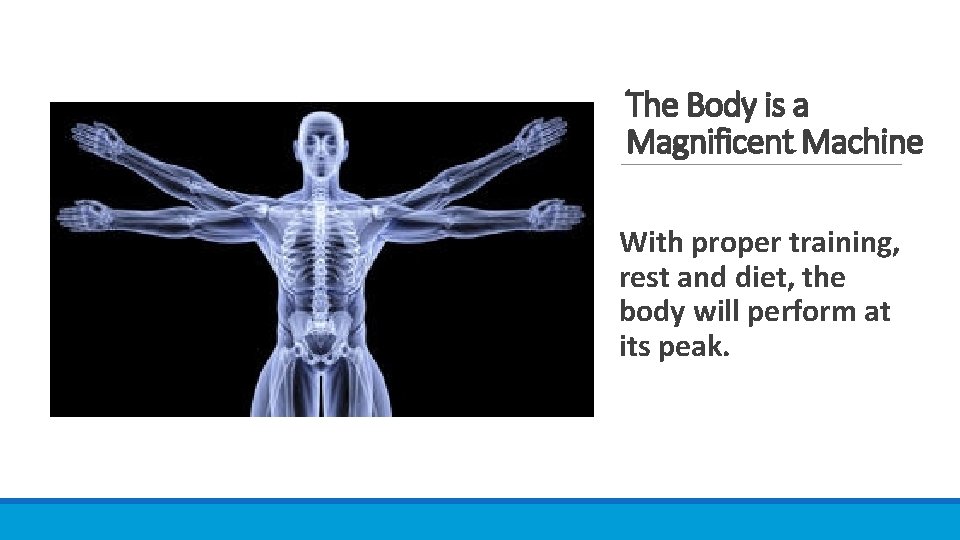
The Body is a Magnificent Machine With proper training, rest and diet, the body will perform at its peak.

Maine Integrated Youth Health Survey (MIYHS) http: //data. mainepublichealth. gov/miyhs/files/HS_Detailed_Reports_MIY HS 2015/Maine_High_School. Detailed_Tables. pdf
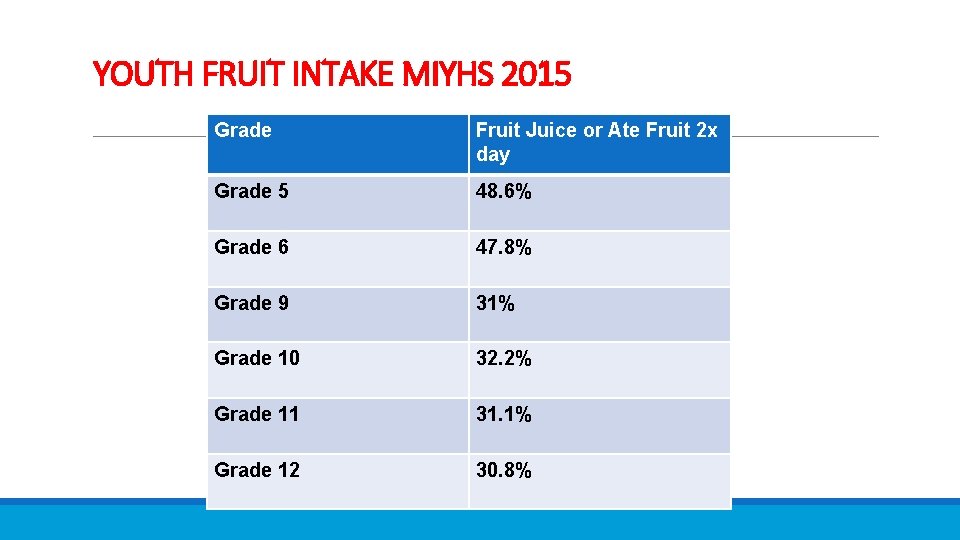
YOUTH FRUIT INTAKE MIYHS 2015 Grade Fruit Juice or Ate Fruit 2 x day Grade 5 48. 6% Grade 6 47. 8% Grade 9 31% Grade 10 32. 2% Grade 11 31. 1% Grade 12 30. 8%
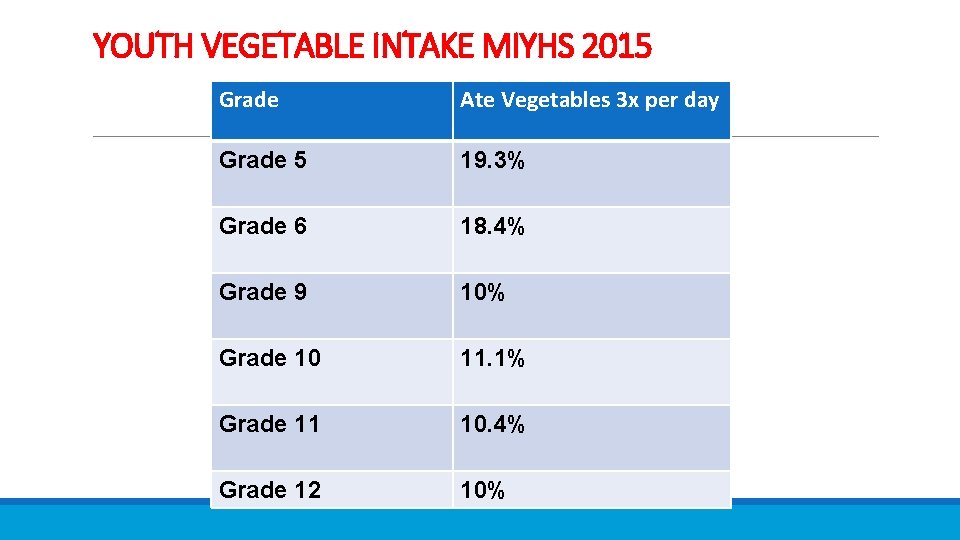
YOUTH VEGETABLE INTAKE MIYHS 2015 Grade Ate Vegetables 3 x per day Grade 5 19. 3% Grade 6 18. 4% Grade 9 10% Grade 10 11. 1% Grade 11 10. 4% Grade 12 10%
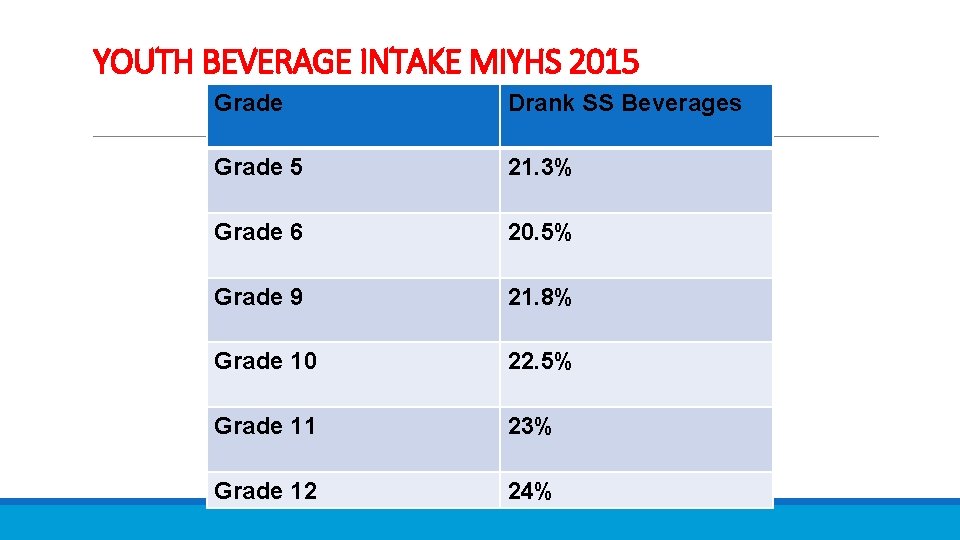
YOUTH BEVERAGE INTAKE MIYHS 2015 Grade Drank SS Beverages Grade 5 21. 3% Grade 6 20. 5% Grade 9 21. 8% Grade 10 22. 5% Grade 11 23% Grade 12 24%

Nutritional Concerns School Age Children §Consumption of Sugar-Sweetened Beverages §Intake of Added Sugars §Unhealthy Meals and Snacks
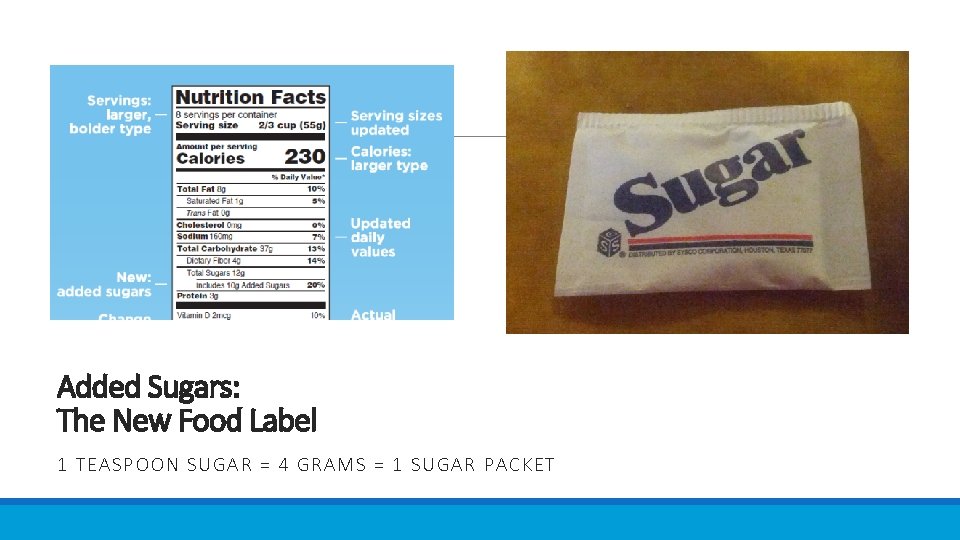
Added Sugars: The New Food Label 1 TEASPOON SUGAR = 4 GRAMS = 1 S UG AR PACKET
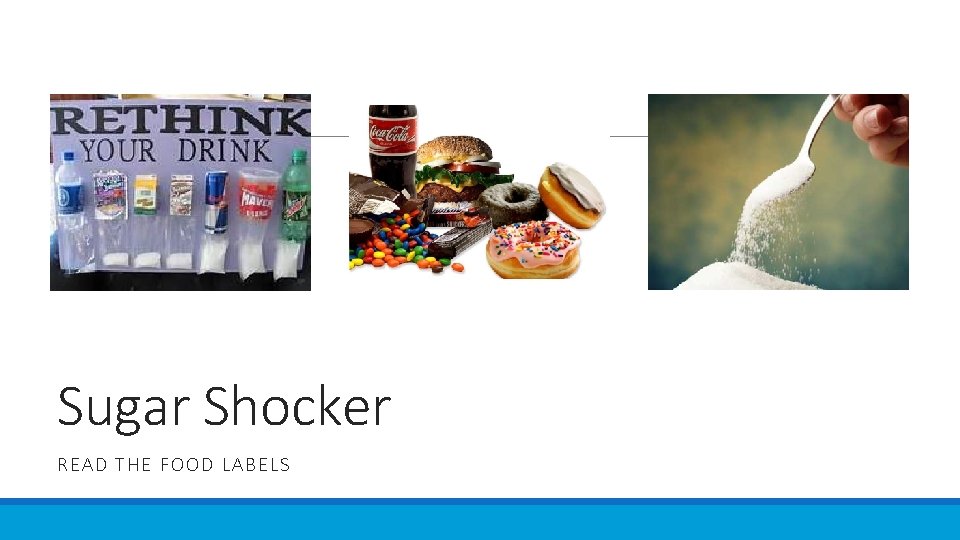
Sugar Shocker READ THE FOOD L ABELS
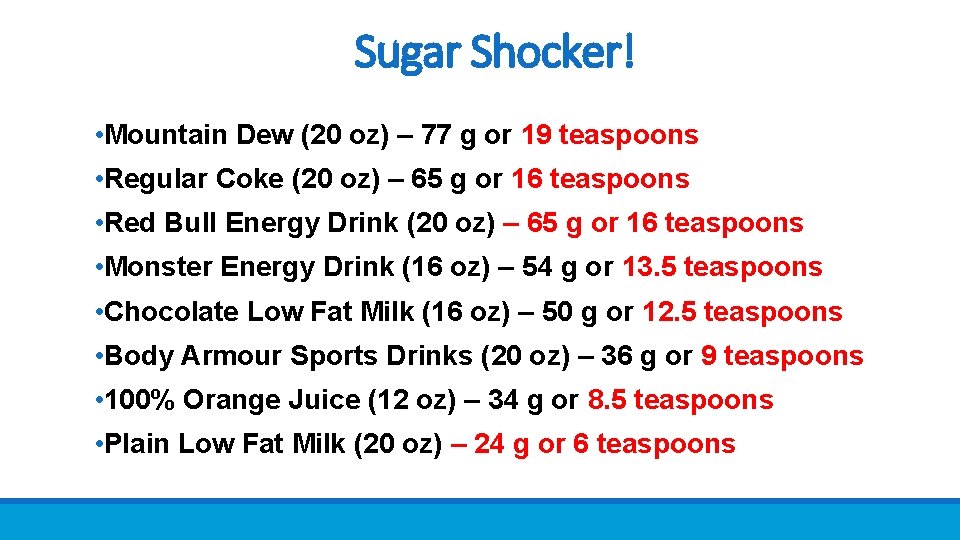
Sugar Shocker! • Mountain Dew (20 oz) – 77 g or 19 teaspoons • Regular Coke (20 oz) – 65 g or 16 teaspoons • Red Bull Energy Drink (20 oz) – 65 g or 16 teaspoons • Monster Energy Drink (16 oz) – 54 g or 13. 5 teaspoons • Chocolate Low Fat Milk (16 oz) – 50 g or 12. 5 teaspoons • Body Armour Sports Drinks (20 oz) – 36 g or 9 teaspoons • 100% Orange Juice (12 oz) – 34 g or 8. 5 teaspoons • Plain Low Fat Milk (20 oz) – 24 g or 6 teaspoons
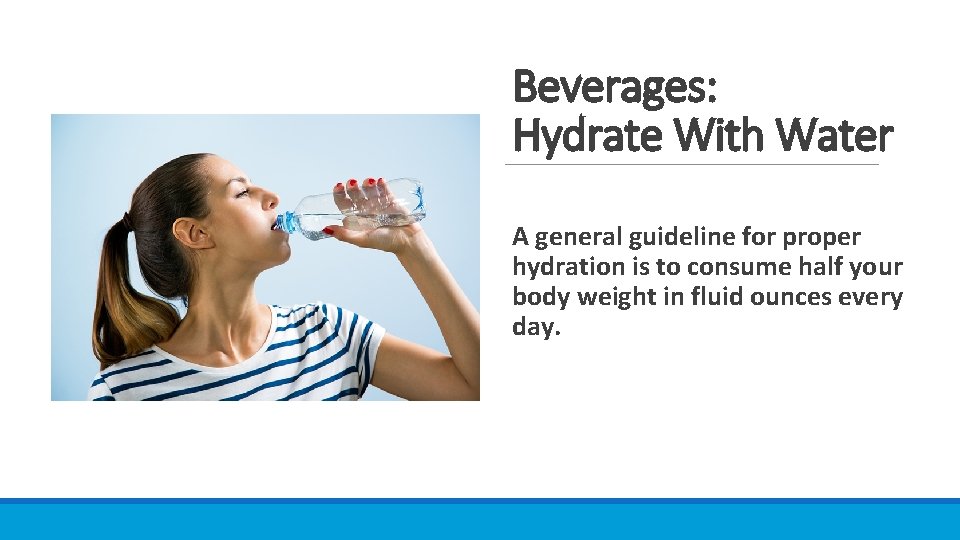
Beverages: Hydrate With Water A general guideline for proper hydration is to consume half your body weight in fluid ounces every day.
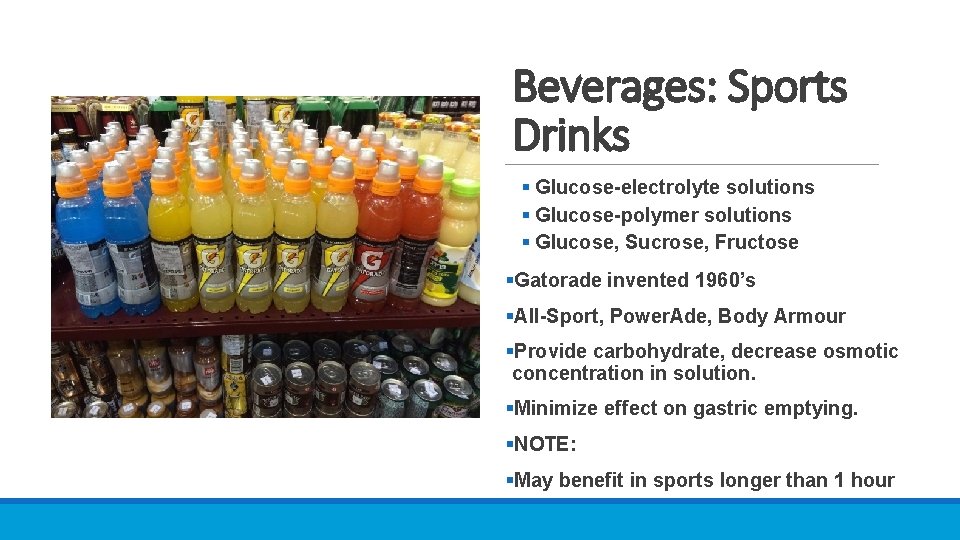
Beverages: Sports Drinks § Glucose-electrolyte solutions § Glucose-polymer solutions § Glucose, Sucrose, Fructose §Gatorade invented 1960’s §All-Sport, Power. Ade, Body Armour §Provide carbohydrate, decrease osmotic concentration in solution. §Minimize effect on gastric emptying. §NOTE: §May benefit in sports longer than 1 hour
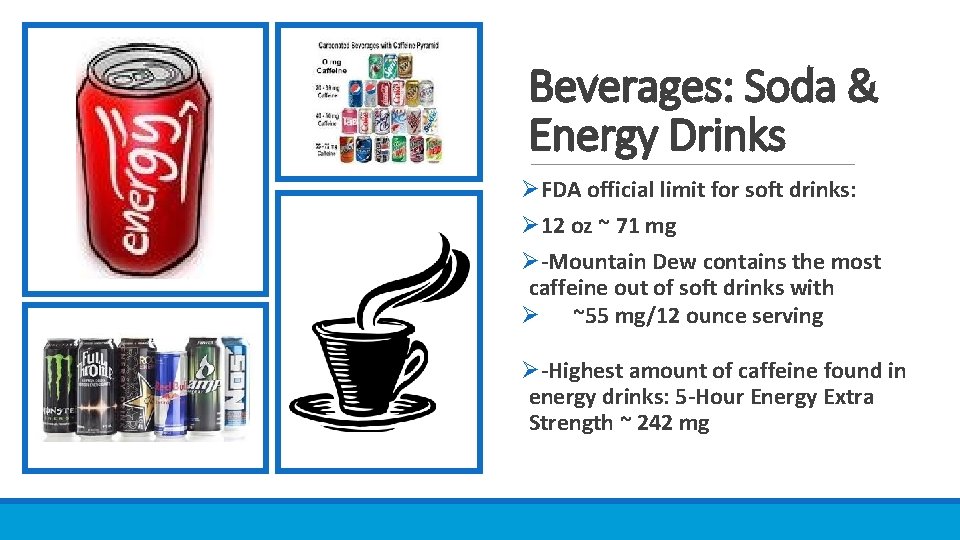
Beverages: Soda & Energy Drinks ØFDA official limit for soft drinks: Ø 12 oz ~ 71 mg Ø-Mountain Dew contains the most caffeine out of soft drinks with Ø ~55 mg/12 ounce serving Ø-Highest amount of caffeine found in energy drinks: 5 -Hour Energy Extra Strength ~ 242 mg
Pros of Caffeine Ø Improved memory Ø Decreased fatigue Ø Improved mental functioning more alert Ø Elevated mood Ø Increased metabolic rate NOTE: When consumed in moderate amounts!
Cons of Caffeine Ø Highly addictive Ø Increases anxiousness, nervousness, irritability, headache Ø Causes dehydration Ø Increases sleep problems Ø Temporarily increases blood pressure NOTE: Don’t mix caffeine with alcohol!
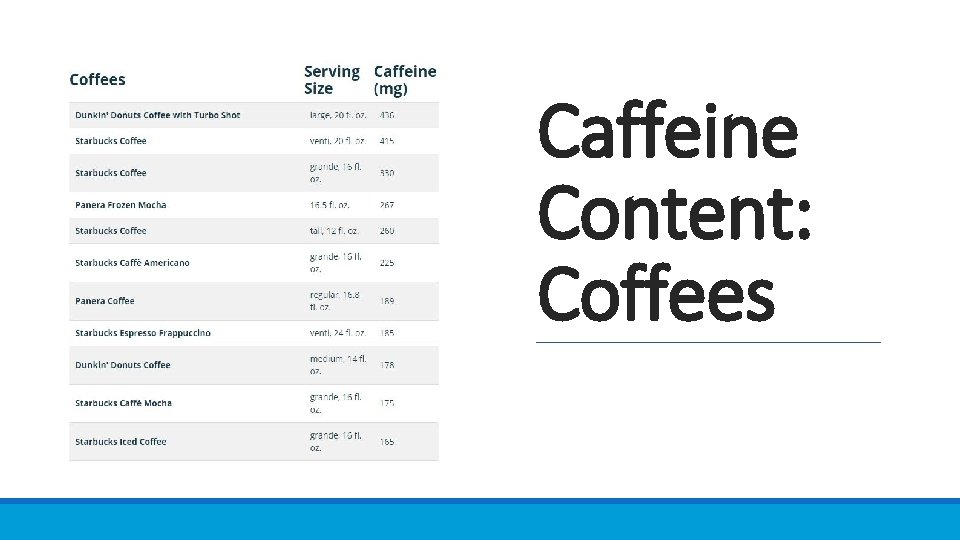
Caffeine Content: Coffees
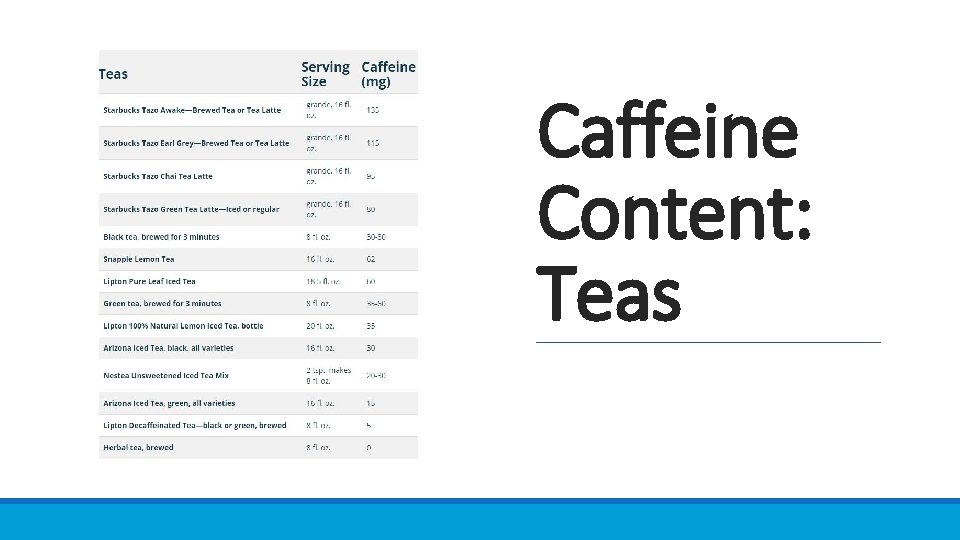
Caffeine Content: Teas
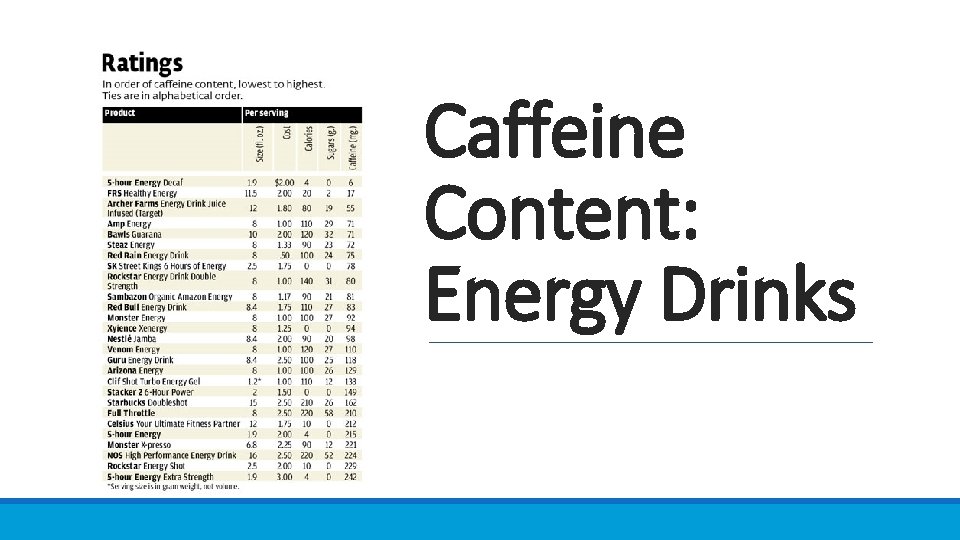
Caffeine Content: Energy Drinks
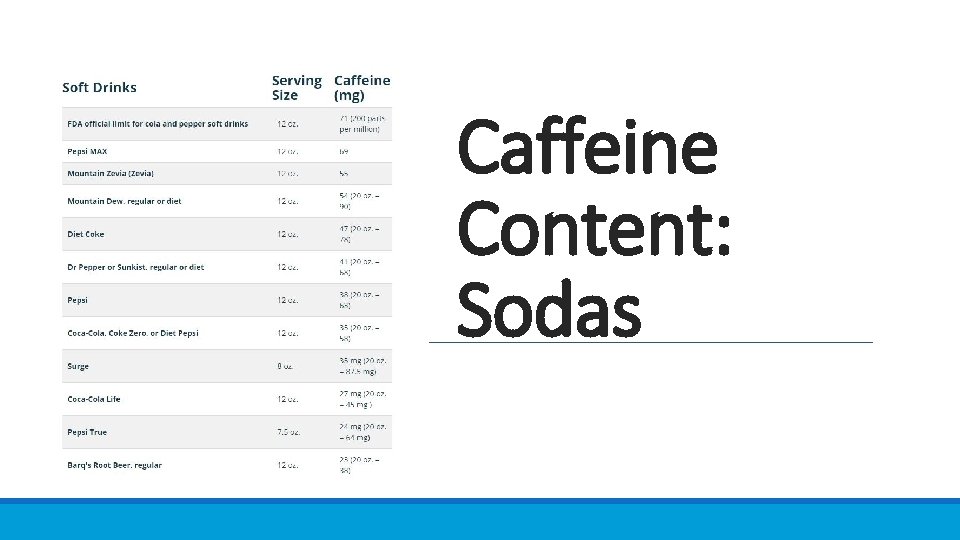
Caffeine Content: Sodas
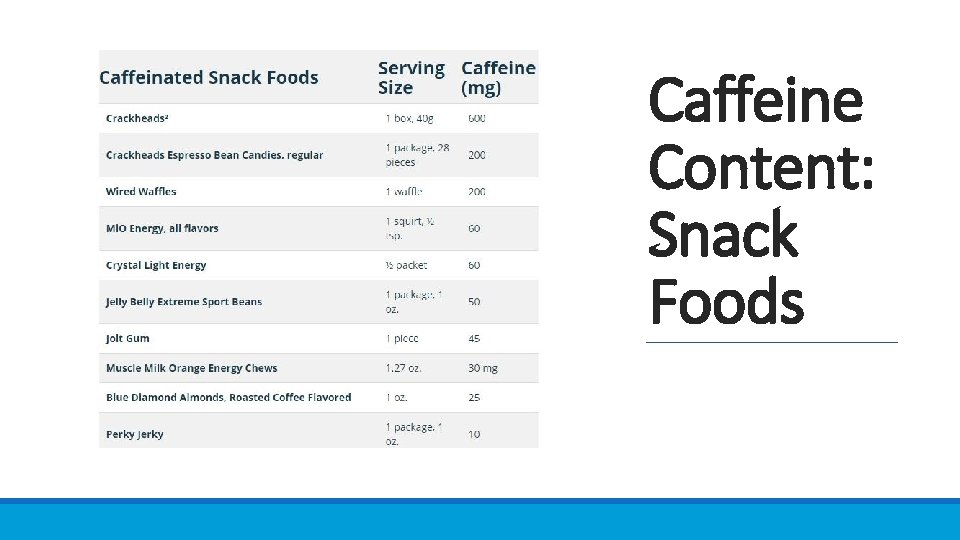
Caffeine Content: Snack Foods
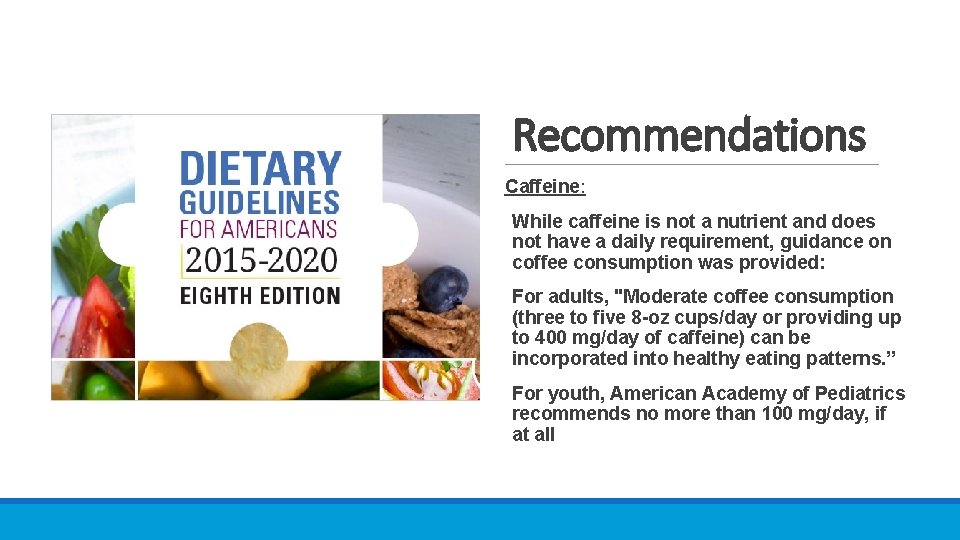
Recommendations Caffeine: While caffeine is not a nutrient and does not have a daily requirement, guidance on coffee consumption was provided: For adults, "Moderate coffee consumption (three to five 8 -oz cups/day or providing up to 400 mg/day of caffeine) can be incorporated into healthy eating patterns. ” For youth, American Academy of Pediatrics recommends no more than 100 mg/day, if at all
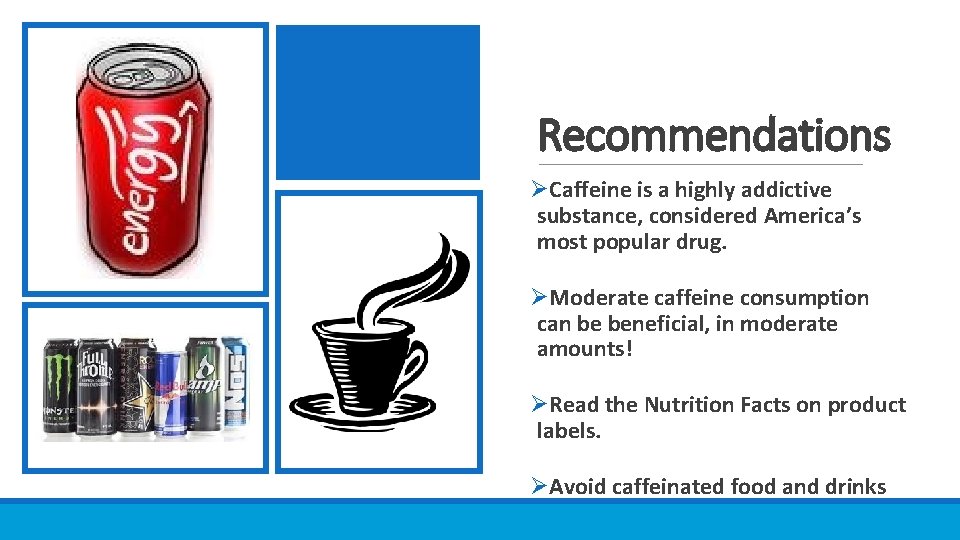
Recommendations ØCaffeine is a highly addictive substance, considered America’s most popular drug. ØModerate caffeine consumption can be beneficial, in moderate amounts! ØRead the Nutrition Facts on product labels. ØAvoid caffeinated food and drinks with added sugars.
#1. Hydrate #2. Fuel The Body for Optimal Sports Nutrition: Best Practices Performance #3. Timing is Everything #4. Race to Replace (Refuel) #5. Prepare for Game Day
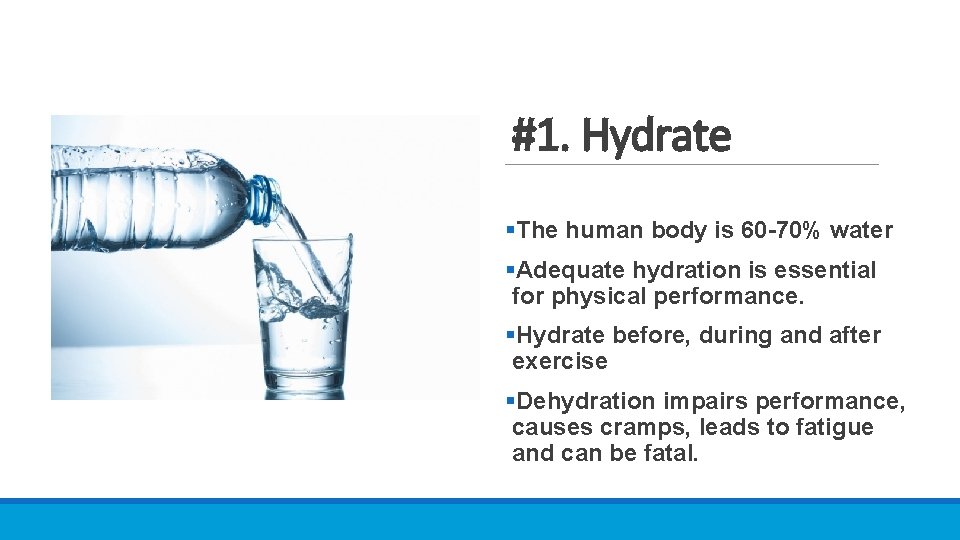
#1. Hydrate §The human body is 60 -70% water §Adequate hydration is essential for physical performance. §Hydrate before, during and after exercise §Dehydration impairs performance, causes cramps, leads to fatigue and can be fatal.
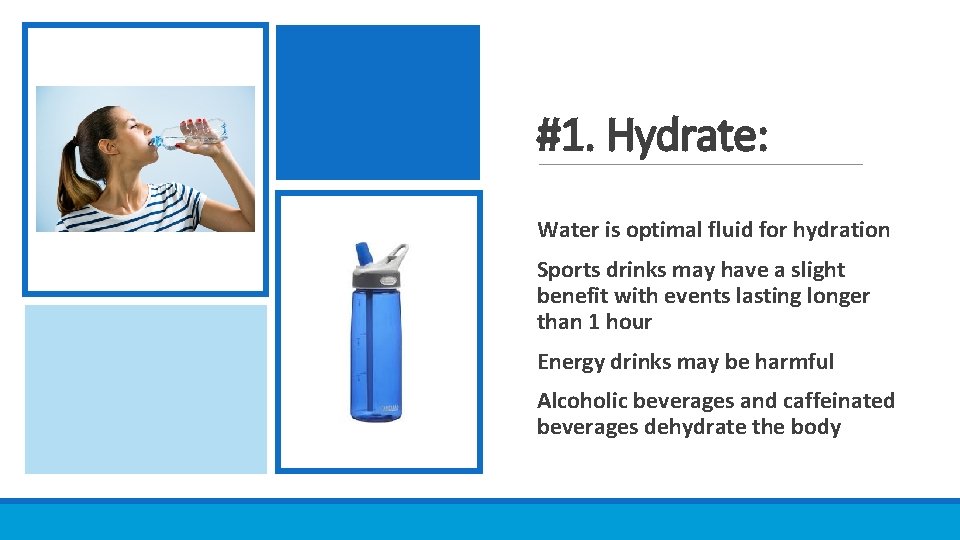
#1. Hydrate: Water is optimal fluid for hydration Sports drinks may have a slight benefit with events lasting longer than 1 hour Energy drinks may be harmful Alcoholic beverages and caffeinated beverages dehydrate the body
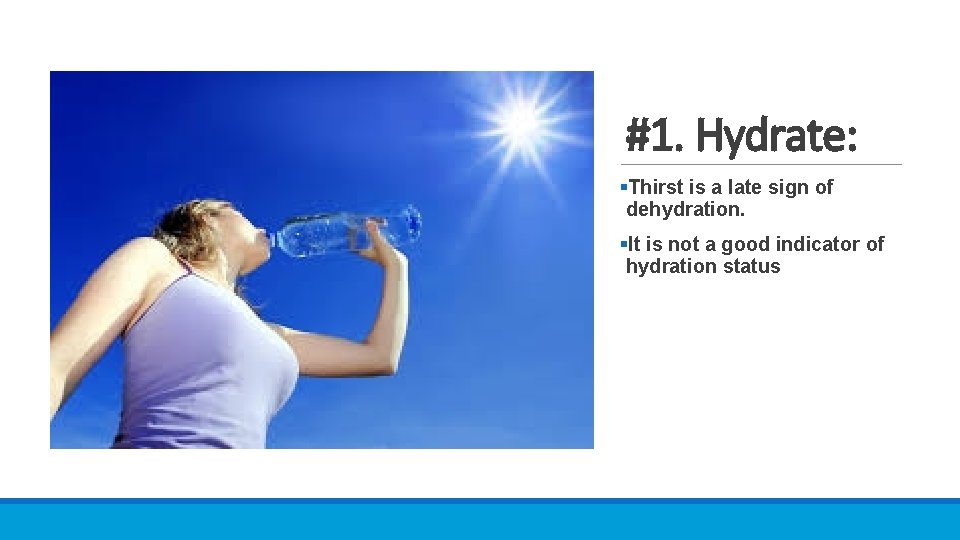
#1. Hydrate: §Thirst is a late sign of dehydration. §It is not a good indicator of hydration status
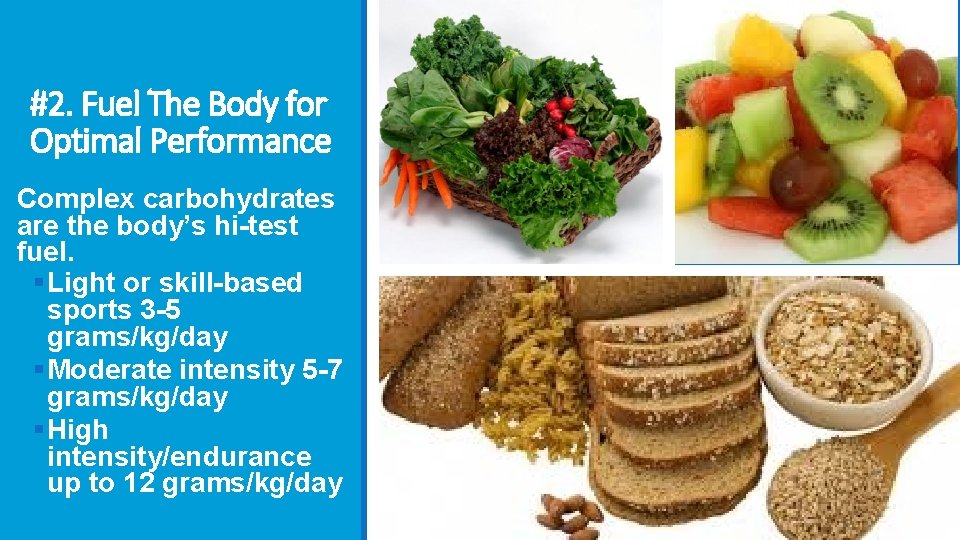
#2. Fuel The Body for Optimal Performance Complex carbohydrates are the body’s hi-test fuel. § Light or skill-based sports 3 -5 grams/kg/day § Moderate intensity 5 -7 grams/kg/day § High intensity/endurance up to 12 grams/kg/day
Carbs provide 4 calories per gram Primary fuel for brain, nervous system and red blood cells Carbohydrates Carbs are readily available as fuel for all cells in the form of blood glucose or glycogen Minimum RDA is 130 grams per day for adults
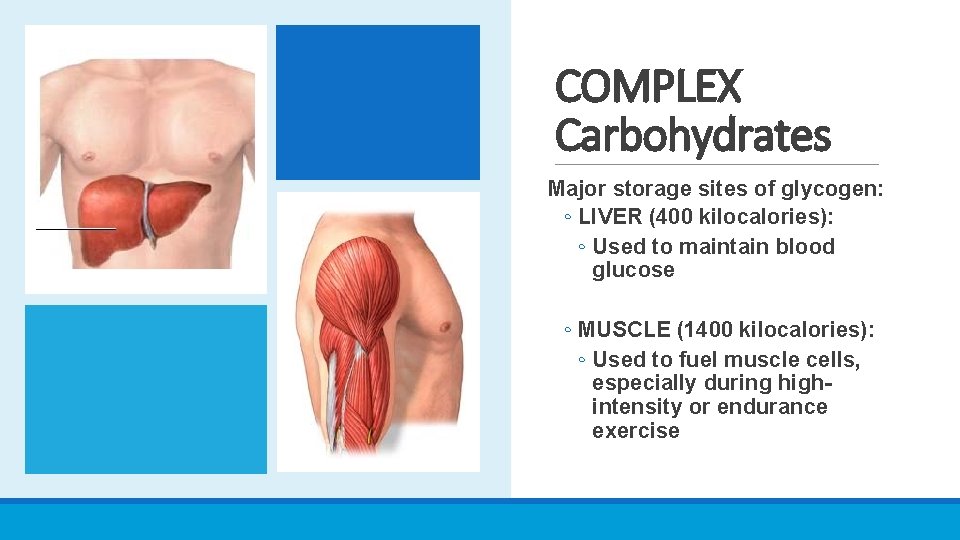
COMPLEX Carbohydrates Major storage sites of glycogen: ◦ LIVER (400 kilocalories): ◦ Used to maintain blood glucose ◦ MUSCLE (1400 kilocalories): ◦ Used to fuel muscle cells, especially during highintensity or endurance exercise
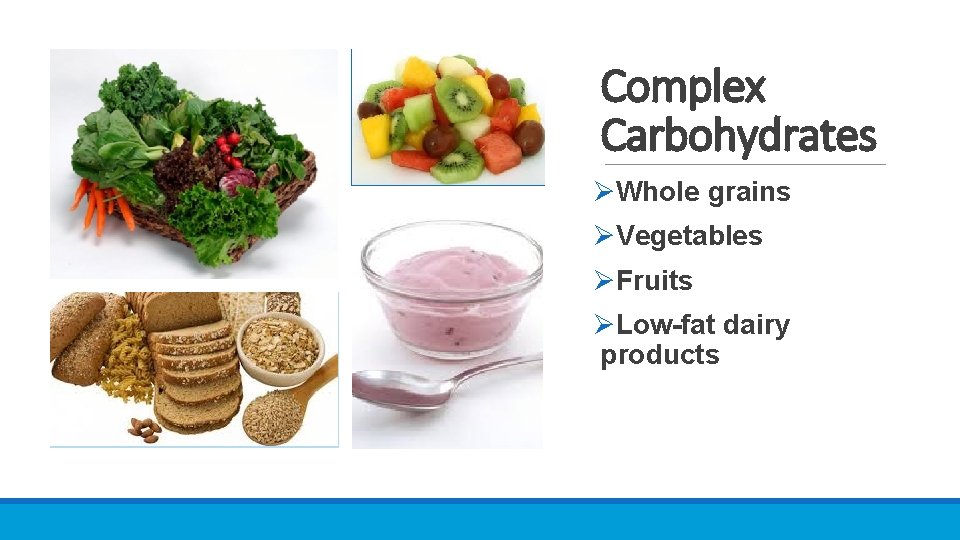
Complex Carbohydrates ØWhole grains ØVegetables ØFruits ØLow-fat dairy products
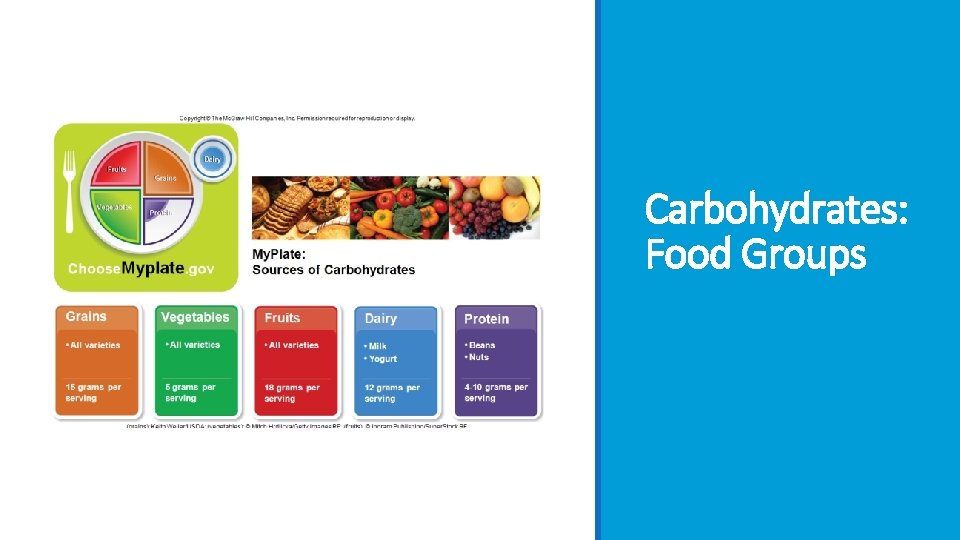
Carbohydrates: Food Groups
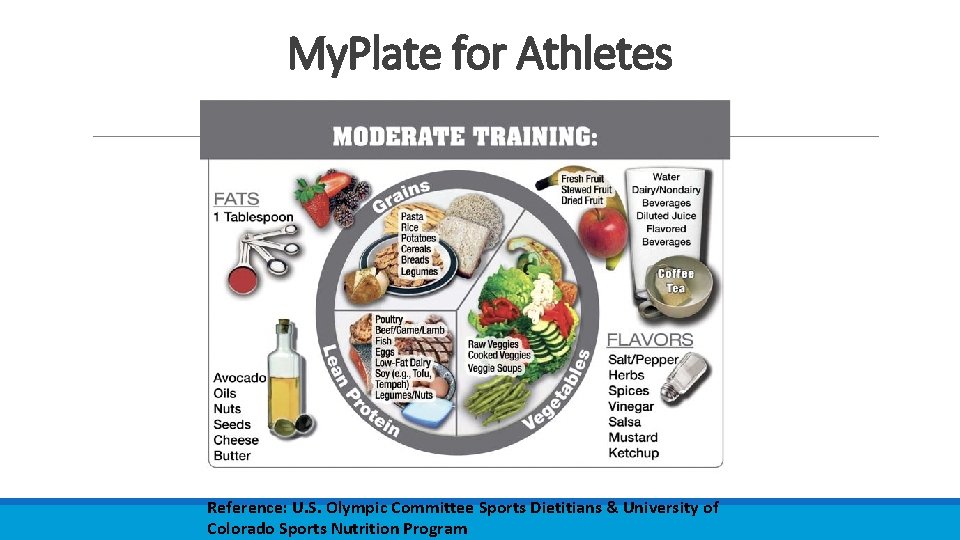
My. Plate for Athletes Reference: U. S. Olympic Committee Sports Dietitians & University of Colorado Sports Nutrition Program
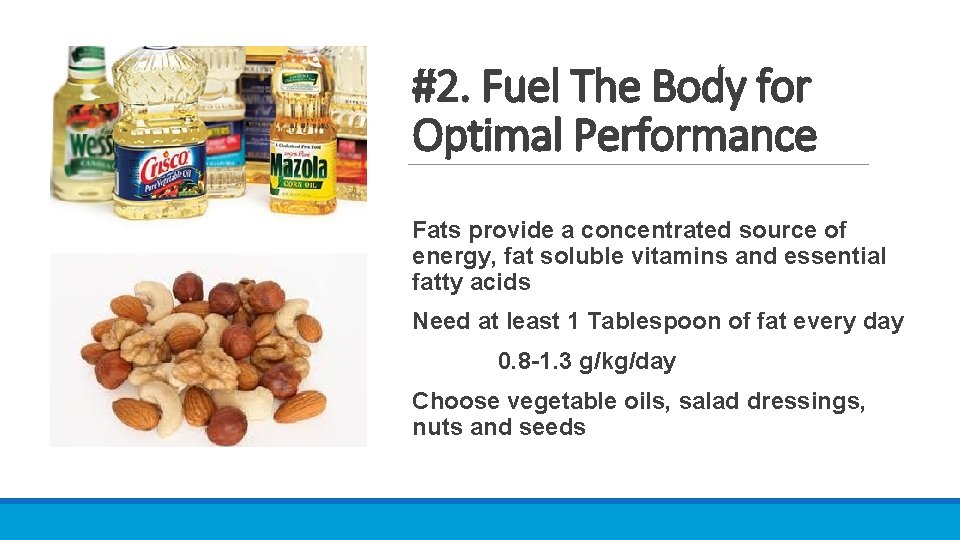
#2. Fuel The Body for Optimal Performance Fats provide a concentrated source of energy, fat soluble vitamins and essential fatty acids Need at least 1 Tablespoon of fat every day 0. 8 -1. 3 g/kg/day Choose vegetable oils, salad dressings, nuts and seeds
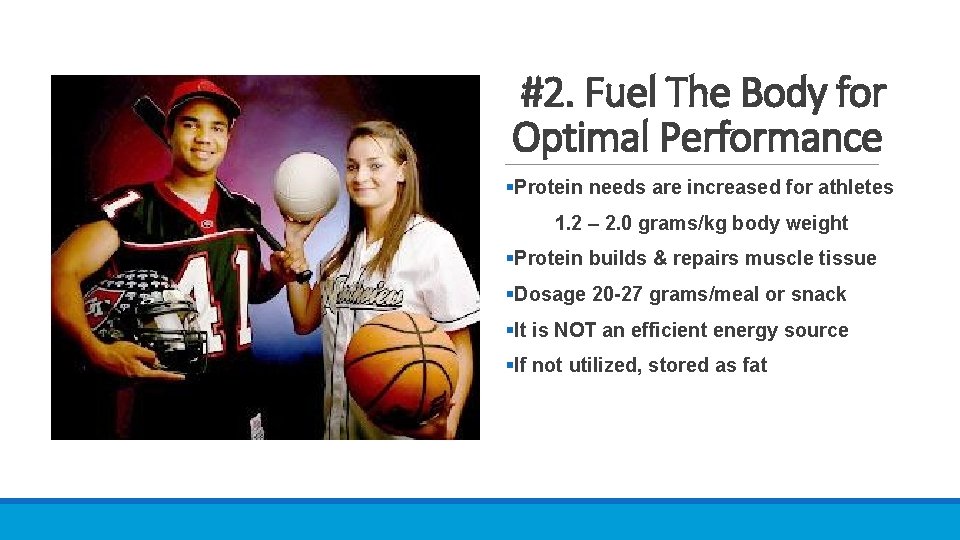
#2. Fuel The Body for Optimal Performance §Protein needs are increased for athletes 1. 2 – 2. 0 grams/kg body weight §Protein builds & repairs muscle tissue §Dosage 20 -27 grams/meal or snack §It is NOT an efficient energy source §If not utilized, stored as fat
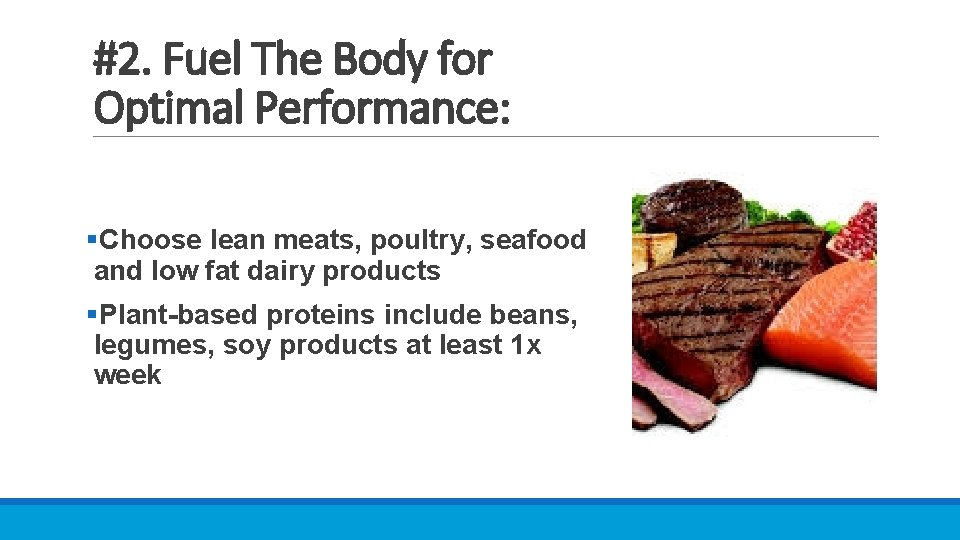
#2. Fuel The Body for Optimal Performance: §Choose lean meats, poultry, seafood and low fat dairy products §Plant-based proteins include beans, legumes, soy products at least 1 x week
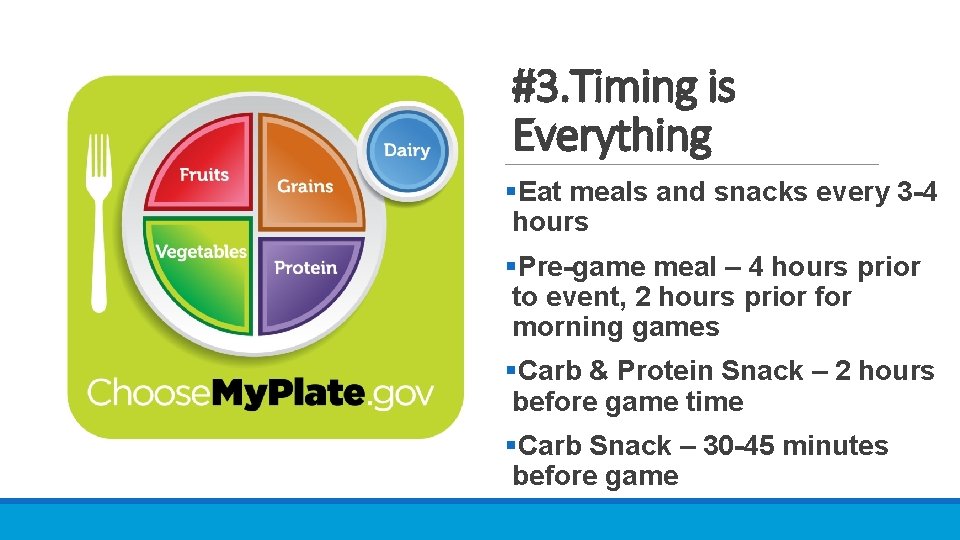
#3. Timing is Everything §Eat meals and snacks every 3 -4 hours §Pre-game meal – 4 hours prior to event, 2 hours prior for morning games §Carb & Protein Snack – 2 hours before game time §Carb Snack – 30 -45 minutes before game
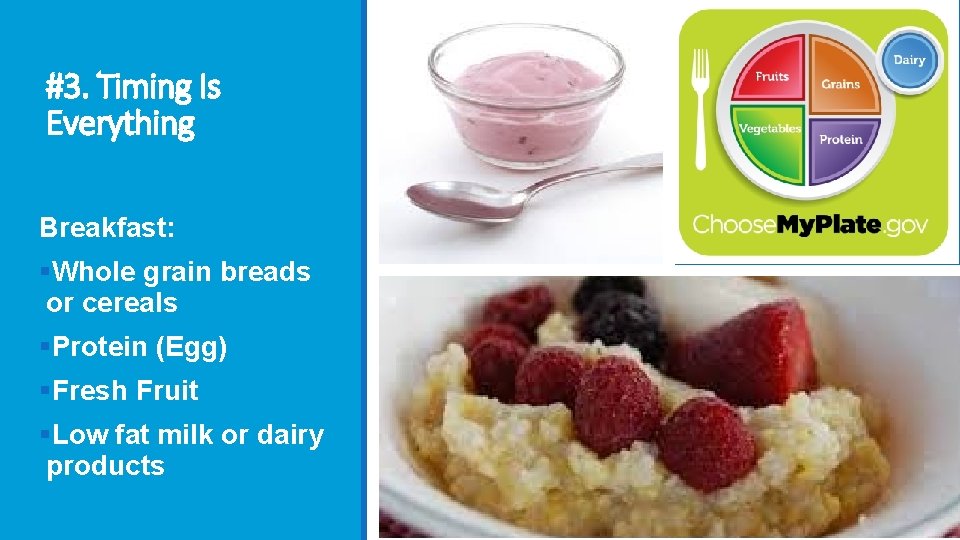
#3. Timing Is Everything Breakfast: §Whole grain breads or cereals §Protein (Egg) §Fresh Fruit §Low fat milk or dairy products
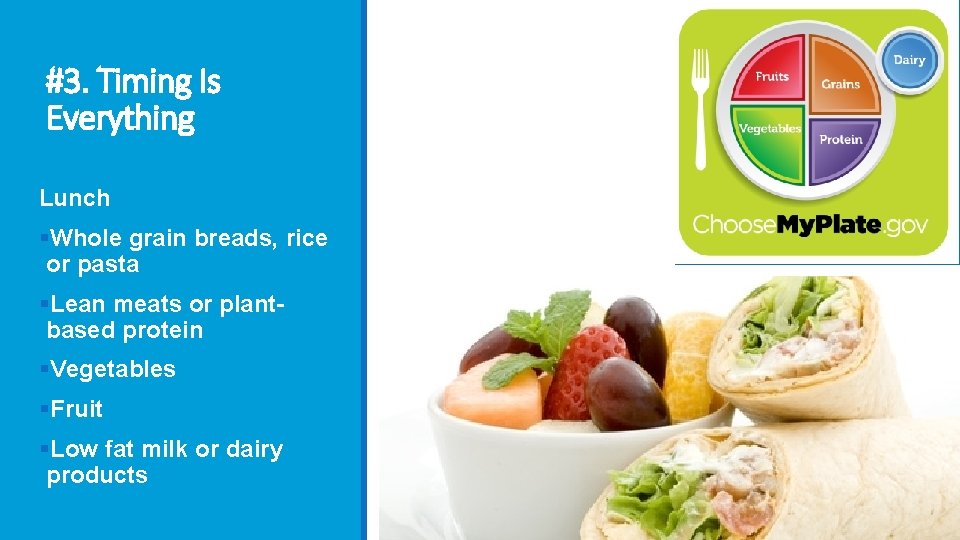
#3. Timing Is Everything Lunch §Whole grain breads, rice or pasta §Lean meats or plantbased protein §Vegetables §Fruit §Low fat milk or dairy products
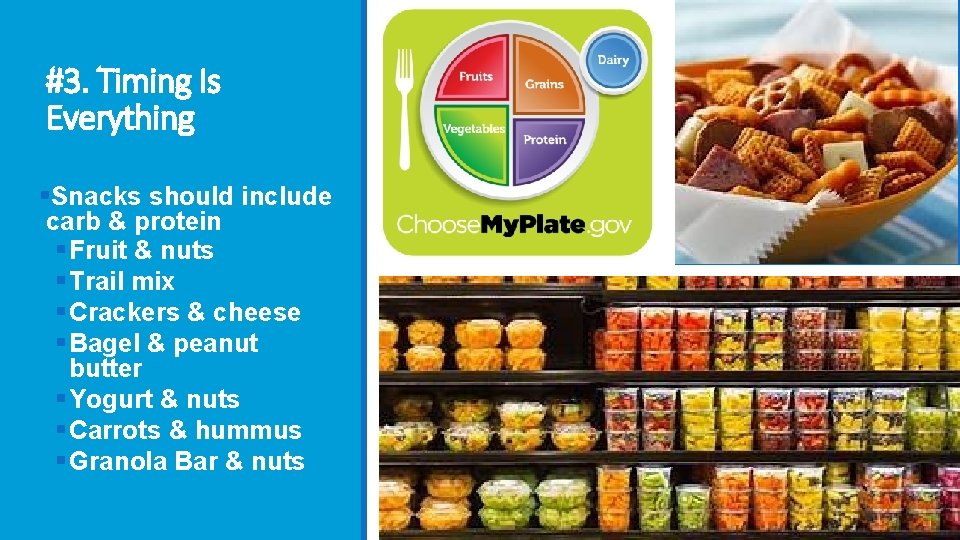
#3. Timing Is Everything §Snacks should include carb & protein § Fruit & nuts § Trail mix § Crackers & cheese § Bagel & peanut butter § Yogurt & nuts § Carrots & hummus § Granola Bar & nuts
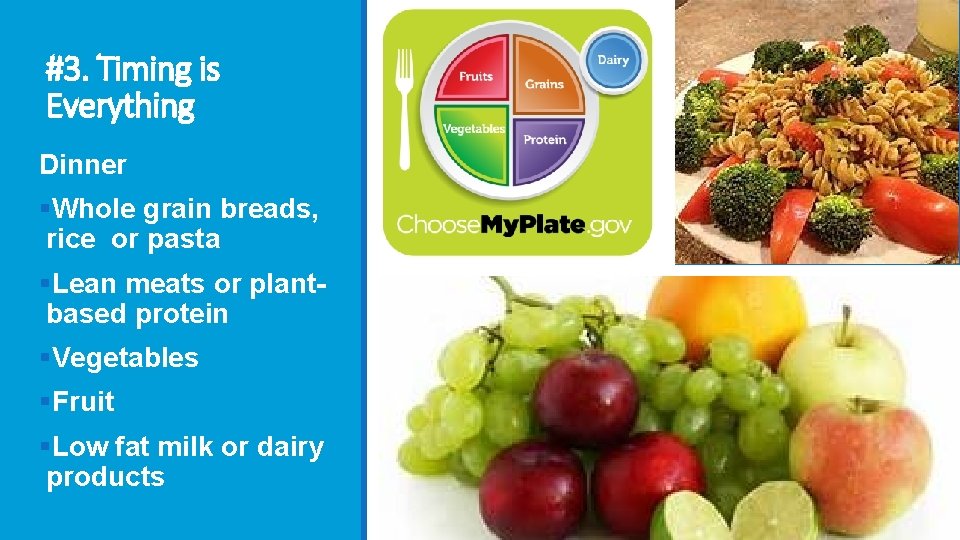
#3. Timing is Everything Dinner §Whole grain breads, rice or pasta §Lean meats or plantbased protein §Vegetables §Fruit §Low fat milk or dairy products
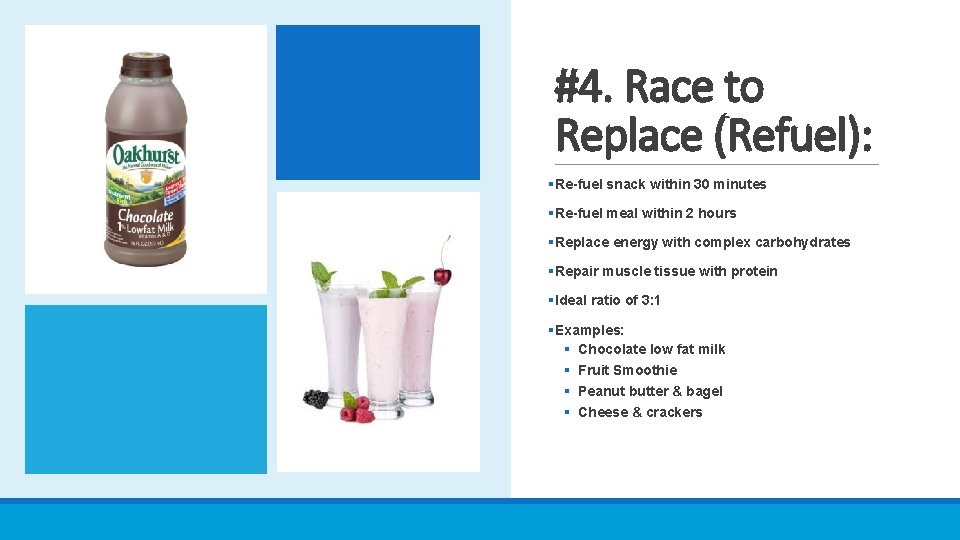
#4. Race to Replace (Refuel): § Re-fuel snack within 30 minutes § Re-fuel meal within 2 hours § Replace energy with complex carbohydrates § Repair muscle tissue with protein § Ideal ratio of 3: 1 § Examples: § Chocolate low fat milk § Fruit Smoothie § Peanut butter & bagel § Cheese & crackers
#5. Prepare for Game Day: §Don’t try anything new §Hydrate- drink water §Choose foods high in carbohydrate & low in fat, low in fiber §No concentrated sugars or sweets §Psyche up!
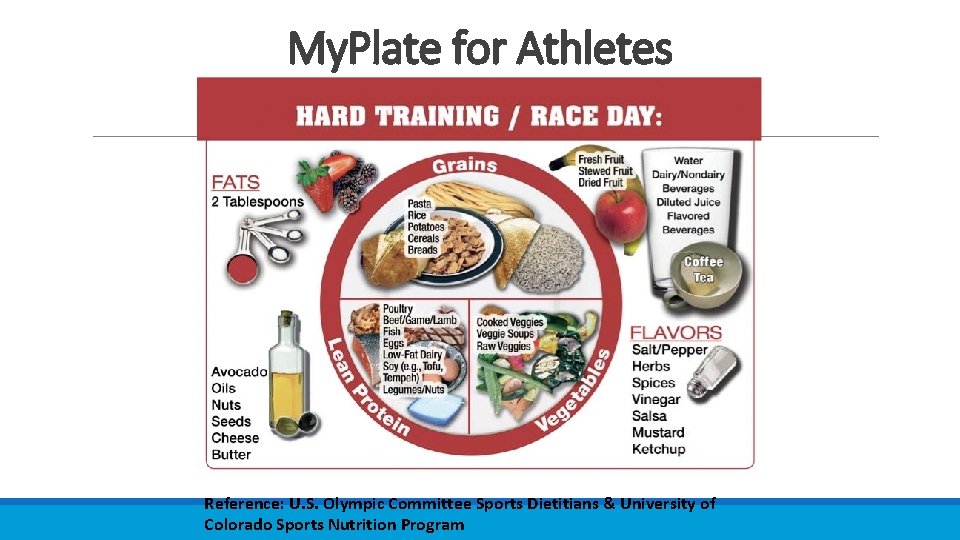
My. Plate for Athletes Reference: U. S. Olympic Committee Sports Dietitians & University of Colorado Sports Nutrition Program

Every Athlete is Unique EACH ATHLETE HAS THEIR OWN PREFERENCES FOR FUEL, CONDITIONING PROGRAMS AND COMPETITIVE RITUALS.
Resources: §American College of Sports Medicine http: //www. acsm. org/ §Academy of Nutrition & Dietetics https: //www. eatright. org/ §Centers for Disease Control & Prevention https: //www. cdc. gov/ §Choose My. Plate https: //www. choosemyplate. gov/ §Dietary Guidelines for Americans https: //health. gov/dietaryguidelines/2015/
Resources: §National Academy of Sciences, Institute of Medicine https: //www. neha. org/national-academy-sciencesinstitutemedicine §National Institutes of Health https: //www. nih. gov/ §Team USA - U. S Olympic Committee Sports Dietitians https: //www. teamusa. org/about-the-usoc/athletedevelopment/sport-performance/nutrition §University of Colorado Sport Nutrition Graduate Program https: //www. uccs. edu/bethel/health-sciencesprograms/ms-sport-nutrition
Questions? Contact: Anne-Marie Davee, MS, RDN, LD Assistant Clinical Professor Nutrition Program University of New England adavee@une. edu 207 -602 -2563
- Slides: 51