
The Last People Alive Pitcairn and Henderson Islands

- Slides: 16
The Last People Alive Pitcairn and Henderson Islands Megan , Xavier and Elizabeth
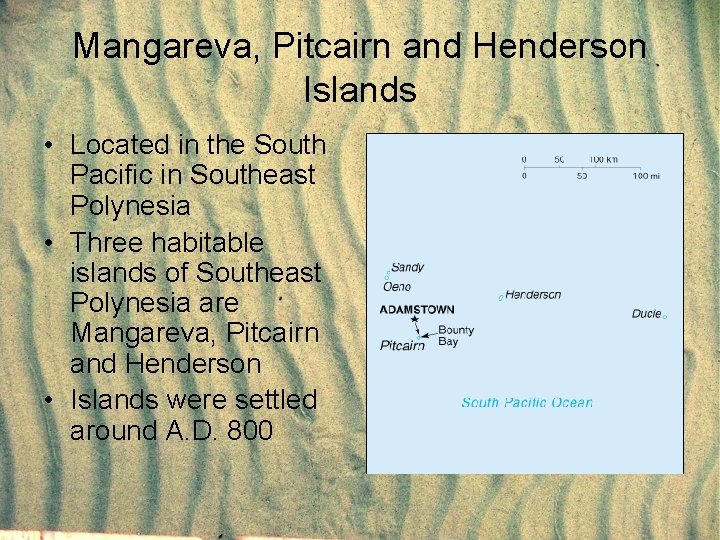
Mangareva, Pitcairn and Henderson Islands • Located in the South Pacific in Southeast Polynesia • Three habitable islands of Southeast Polynesia are Mangareva, Pitcairn and Henderson • Islands were settled around A. D. 800
Mangareva Island • Largest population and most abundant resources of all the islands • Extinct volcanic islands 15 miles in diameter and surrounded by a coral reef • High points on the islands received enough rain to have streams and springs as well as forests
Mangareva Island • Islanders used terraced farming techniques • Grew potatoes, breadfruit, taro, bananas and yams • Abundant fishing on Mangareva’s reefs, including black-lipped pearl oysters to make tools • Lacked hard stone resources for tool making
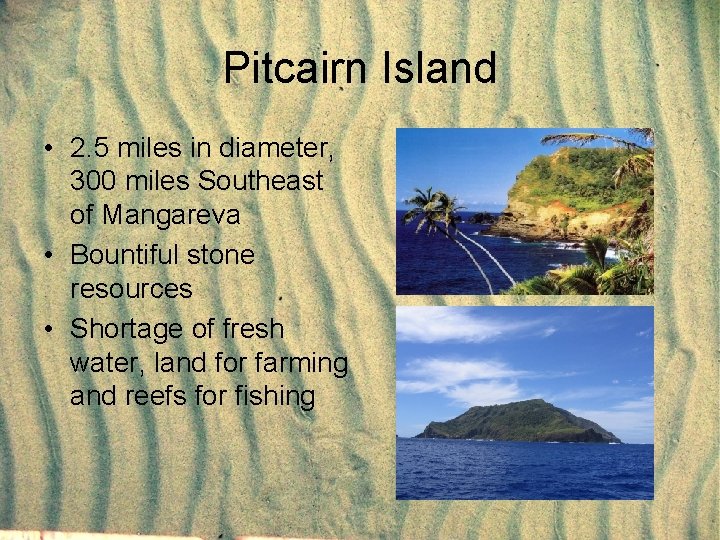
Pitcairn Island • 2. 5 miles in diameter, 300 miles Southeast of Mangareva • Bountiful stone resources • Shortage of fresh water, land for farming and reefs for fishing
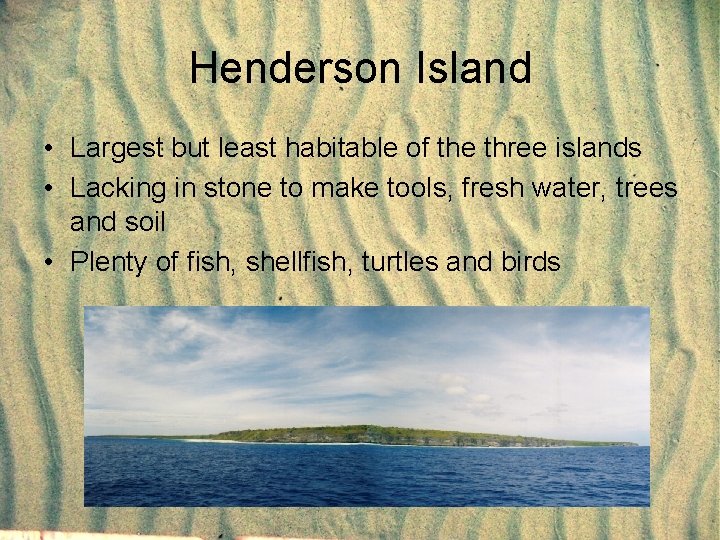
Henderson Island • Largest but least habitable of the three islands • Lacking in stone to make tools, fresh water, trees and soil • Plenty of fish, shellfish, turtles and birds
Trade Between Islands • Mangareva, Pitcairn and Henderson all traded with each other • Islands exchanged resources, crops, animals, marriage partners and skilled craftspeople between themselves
Trade With Other Islands • Mangareva acted as a hub between Pitcairn and Henderson and the larger islands of Polynesia • Mangareva traded with Marquesas Islands, peaking at around A. D. 1100 -1300 • Trade had stopped by A. D. 1500
Collapse of the Pitcairn Islands • Mangarevans deforested the hills on the interior of the island in order to plant gardens • Canoes could not be built without trees • Lack of canoes caused a decline in fishing and trade between islands • Deforestation also caused soil erosion and extinction of other plants and animals
Collapse of Pitcairn Islands • Henderson Islanders used giant clam shells to make tools • Bird bones were used to make awls • Limestone or coral of giant clam shells were used to make oven stones • Limestone and shells were not effective as replacements for oven stones • Islanders survived for several generations after trade stopped
Collapse of Pitcairn Islands • Fighting broke out over the few available resources left on the islands • Islanders resorted to cannibalism to survive • Pitcairn and Henderson Islands could not survive without the resources coming in from Mangareva Island • No one survived on Pitcairn and Henderson
Five-Point Analysis • • • Hostile Neighbors Loss of Friendly Neighbors Climate Change Society’s Reaction to Problems Environmental Damage
Henderson Island Environmental Damage • No more imported Mangareva oyster shell • No more Pitcairn volcanic glass or fine-grained basalt – All of which used to be in Henderson’s archaeological layers • No metal, stones or imports • In replacement for stone, they used shells or limestones for ovenstones Loss of Friendly Neighbors • No metal, stones or imports • In replacement for stone, they used shells or limestones for ovenstones Society’s Reaction to Problems • In replacement for stone, they used shells or limestones for ovenstones
Mangareva Island Environmental Damage • Habitat damage • Mass extinctions of plants and animals • Islanders contributed to deforestation in order to plant their gardens • Forest became a savannah of ferns • Soil erosion Society’s Reaction to Problems • Mass extinctions of plants and animals • Islanders contributed to deforestation in order to plant their gardens • Forest became a savannah of ferns • Chronic hunger • Cannibalism • Islanders fighting over the island
Pitcairn Island Environmental Damage • Massive deforestation • Soil erosion • 5/9 ths of its species of land birds were extinct due to hunting and habitat destruction • Loss of timber for canoes ended all trade Society’s Reaction to Problems • Hunting • Habitat destruction • Forest being burned down for gardens Loss of Friendly Neighbors • Loss of timber for canoes ended trade • Loss of imported volcanic stone
The End