
The Last of the Review Material Evolution Classification

- Slides: 60
The Last of the Review Material: Evolution, Classification, and the Kingdoms
Evolution
The definition of evolution • The change in gene frequencies in a population over time. • Populations evolve. Individuals don’t. Individuals are stuck with the DNA they have. All they can do is make the best of it.
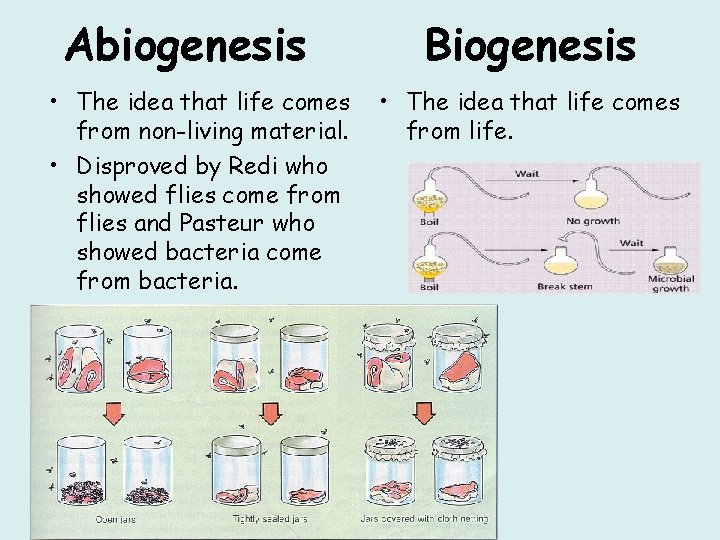
Abiogenesis • The idea that life comes from non-living material. • Disproved by Redi who showed flies come from flies and Pasteur who showed bacteria come from bacteria. Biogenesis • The idea that life comes from life.
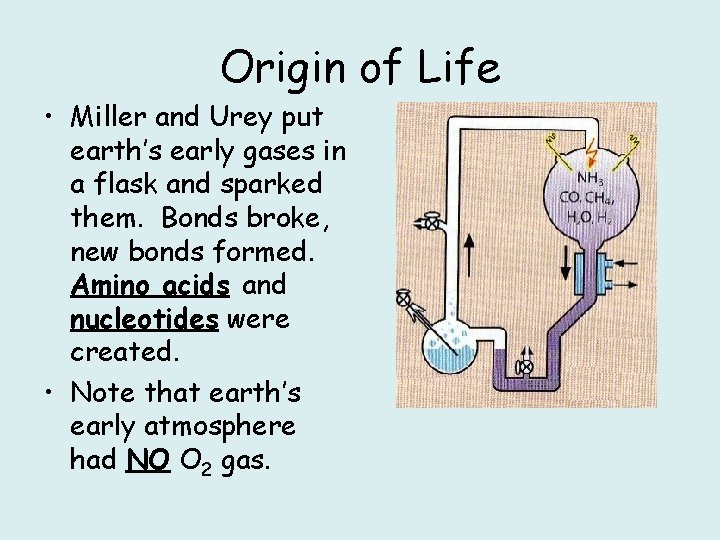
Origin of Life • Miller and Urey put earth’s early gases in a flask and sparked them. Bonds broke, new bonds formed. Amino acids and nucleotides were created. • Note that earth’s early atmosphere had NO O 2 gas.
The Order of Life • Given enough time it is believed that the molecules formed in the “primordial soup” of ancient earth arranged to form simple cells and that these cells evolved to be more complex. This is the order: • • 1 st Anaerobic prokaryotes (bacteria) 2 nd Photosynthetic prokaryotes (bacteria) 3 rd Unicellular eukaryotes (protists) 4 th Multi-cellular eukaryotes (fungus, plants, animals)
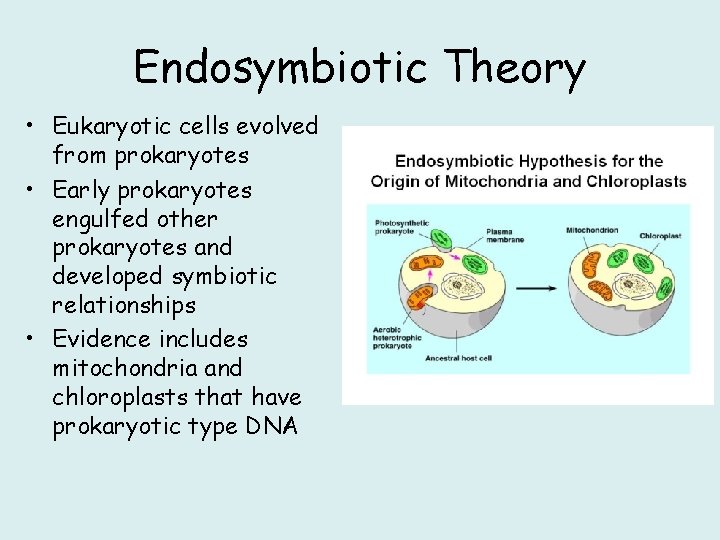
Endosymbiotic Theory • Eukaryotic cells evolved from prokaryotes • Early prokaryotes engulfed other prokaryotes and developed symbiotic relationships • Evidence includes mitochondria and chloroplasts that have prokaryotic type DNA
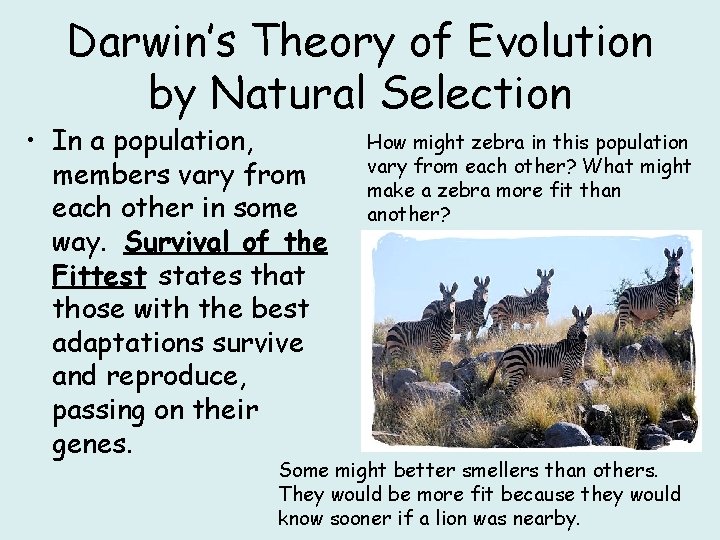
Darwin’s Theory of Evolution by Natural Selection • In a population, members vary from each other in some way. Survival of the Fittest states that those with the best adaptations survive and reproduce, passing on their genes. How might zebra in this population vary from each other? What might make a zebra more fit than another? Some might better smellers than others. They would be more fit because they would know sooner if a lion was nearby.
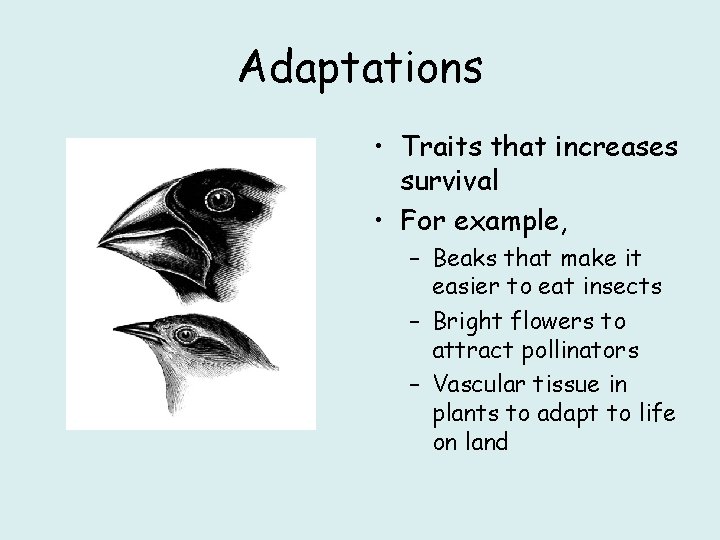
Adaptations • Traits that increases survival • For example, – Beaks that make it easier to eat insects – Bright flowers to attract pollinators – Vascular tissue in plants to adapt to life on land
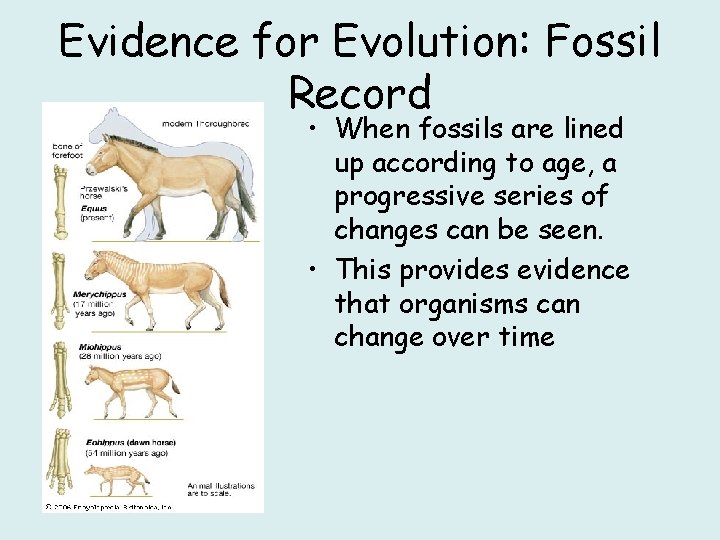
Evidence for Evolution: Fossil Record • When fossils are lined up according to age, a progressive series of changes can be seen. • This provides evidence that organisms can change over time
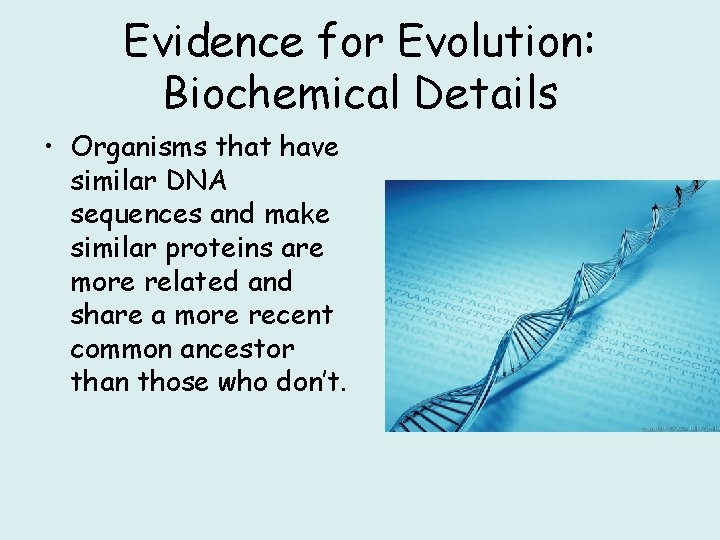
Evidence for Evolution: Biochemical Details • Organisms that have similar DNA sequences and make similar proteins are more related and share a more recent common ancestor than those who don’t.
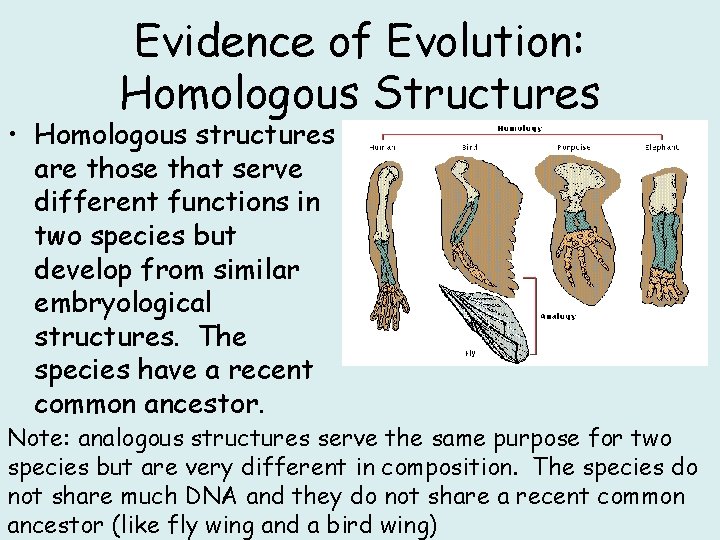
Evidence of Evolution: Homologous Structures • Homologous structures are those that serve different functions in two species but develop from similar embryological structures. The species have a recent common ancestor. Note: analogous structures serve the same purpose for two species but are very different in composition. The species do not share much DNA and they do not share a recent common ancestor (like fly wing and a bird wing)
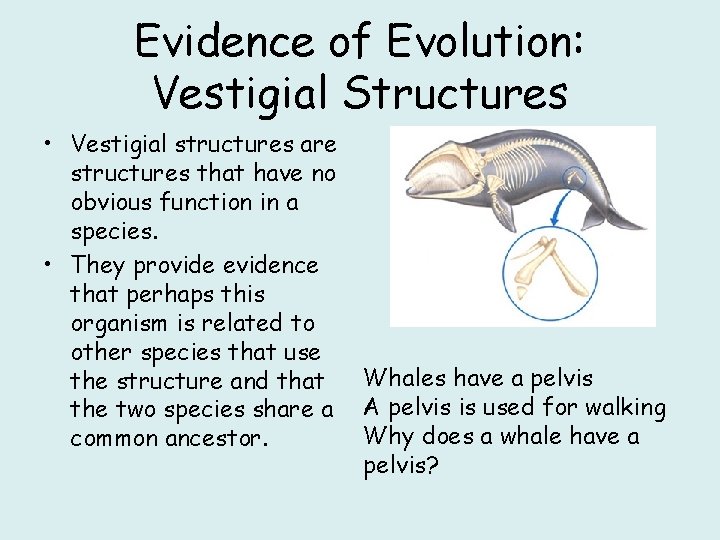
Evidence of Evolution: Vestigial Structures • Vestigial structures are structures that have no obvious function in a species. • They provide evidence that perhaps this organism is related to other species that use the structure and that the two species share a common ancestor. Whales have a pelvis A pelvis is used for walking Why does a whale have a pelvis?
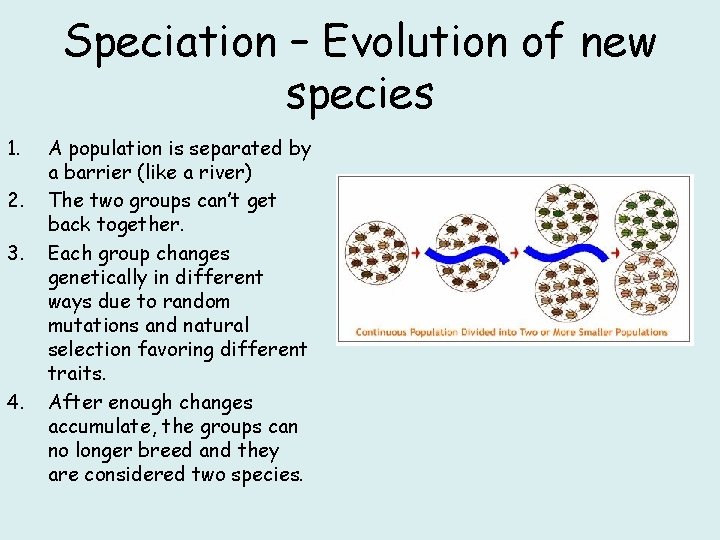
Speciation – Evolution of new species 1. 2. 3. 4. A population is separated by a barrier (like a river) The two groups can’t get back together. Each group changes genetically in different ways due to random mutations and natural selection favoring different traits. After enough changes accumulate, the groups can no longer breed and they are considered two species.
New species develop fastest in the following conditions 1. There is a lot of genetic variation in a population. 2. The environment is rapidly changing.
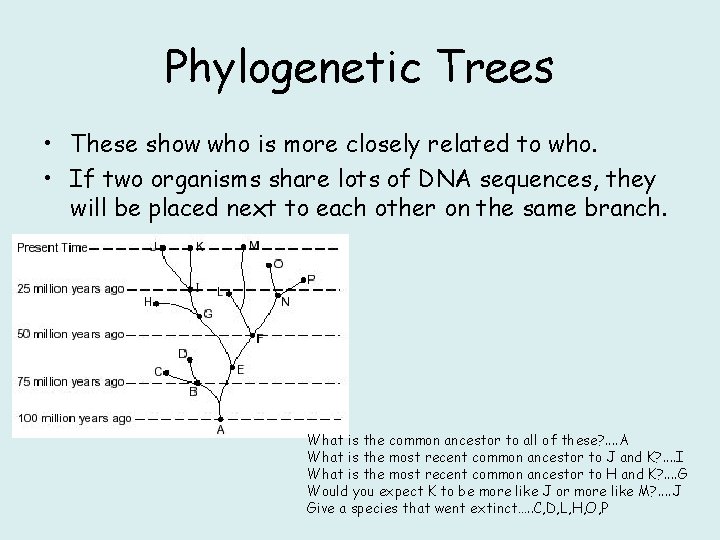
Phylogenetic Trees • These show who is more closely related to who. • If two organisms share lots of DNA sequences, they will be placed next to each other on the same branch. What is the common ancestor to all of these? . . A What is the most recent common ancestor to J and K? . . I What is the most recent common ancestor to H and K? . . G Would you expect K to be more like J or more like M? . . J Give a species that went extinct…. . C, D, L, H, O, P
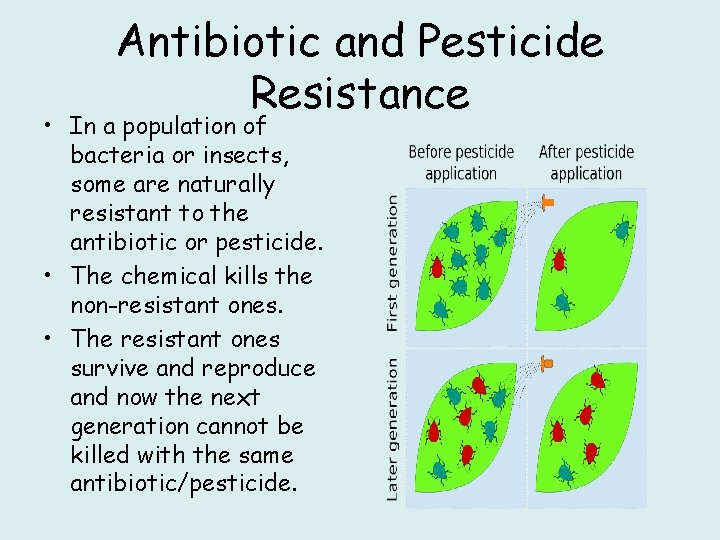
Antibiotic and Pesticide Resistance • In a population of bacteria or insects, some are naturally resistant to the antibiotic or pesticide. • The chemical kills the non-resistant ones. • The resistant ones survive and reproduce and now the next generation cannot be killed with the same antibiotic/pesticide.
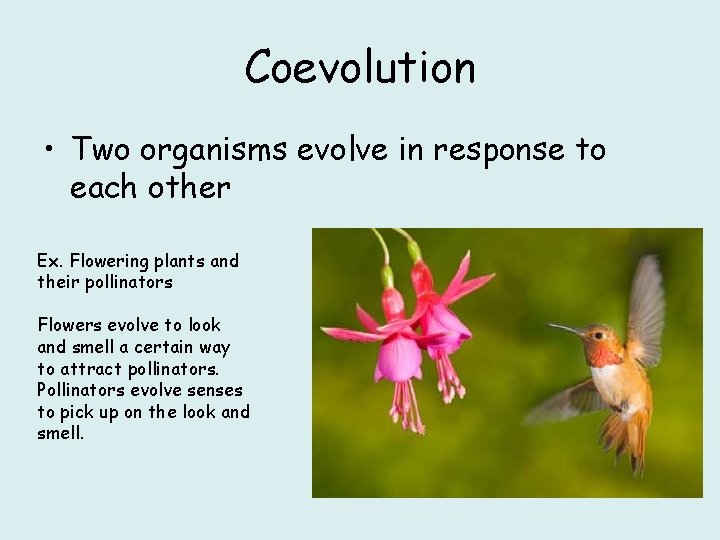
Coevolution • Two organisms evolve in response to each other Ex. Flowering plants and their pollinators Flowers evolve to look and smell a certain way to attract pollinators. Pollinators evolve senses to pick up on the look and smell.
Classification
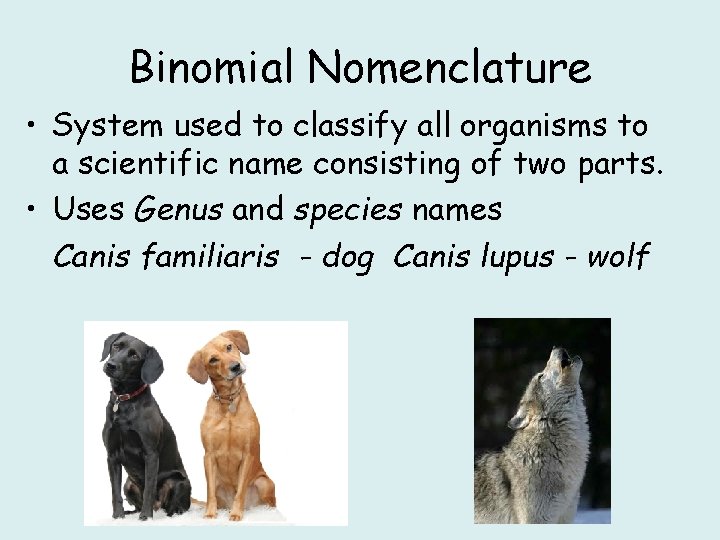
Binomial Nomenclature • System used to classify all organisms to a scientific name consisting of two parts. • Uses Genus and species names Canis familiaris - dog Canis lupus - wolf
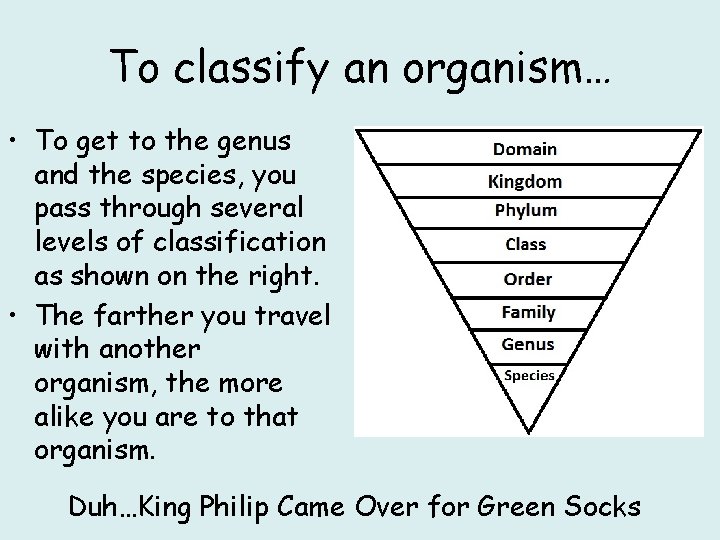
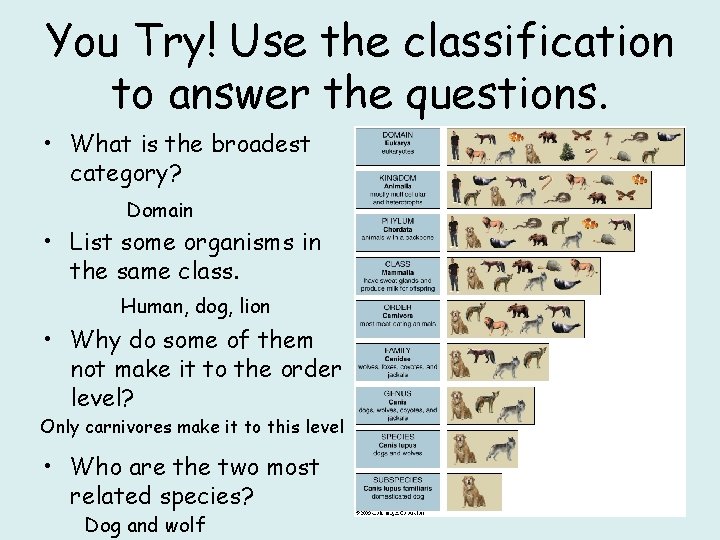
To classify an organism… • To get to the genus and the species, you pass through several levels of classification as shown on the right. • The farther you travel with another organism, the more alike you are to that organism. Duh…King Philip Came Over for Green Socks
You Try! Use the classification to answer the questions. • What is the broadest category? Domain • List some organisms in the same class. Human, dog, lion • Why do some of them not make it to the order level? Only carnivores make it to this level • Who are the two most related species? Dog and wolf
The classification system is always undergoing change. • Why? – We are discovering new species. – We are learning more about a species. – We now sequence DNA instead of relying on how organisms look externally. For example, there used to be just two kingdoms…. . plants and animals. Then, scientists learned fungus are not at all like plants because they can’t make their own food – so a third kingdom was made for them. We currently have 6 kingdoms.
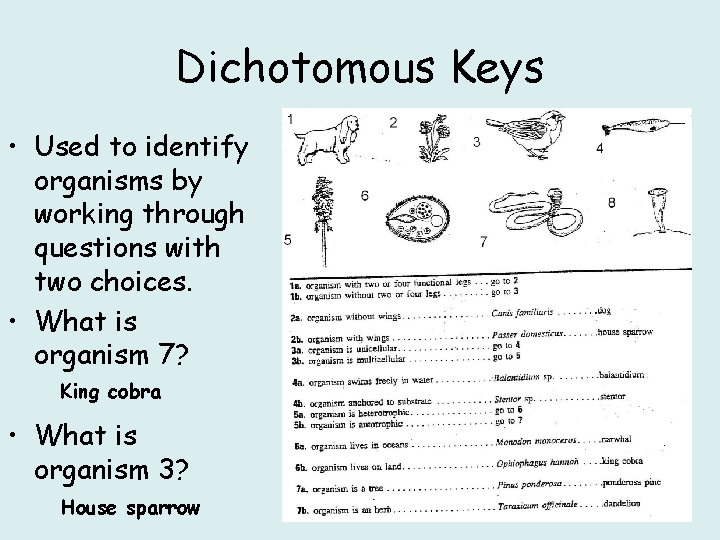
Dichotomous Keys • Used to identify organisms by working through questions with two choices. • What is organism 7? King cobra • What is organism 3? House sparrow
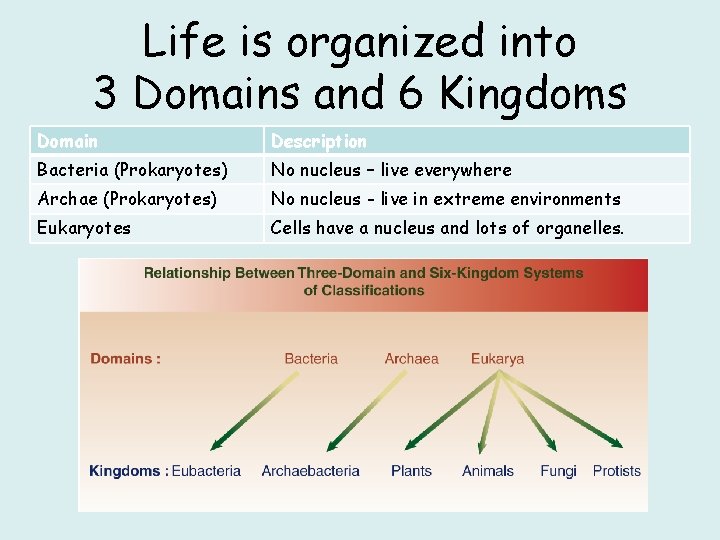
3 Domains and 6 Kingdoms
Life is organized into 3 Domains and 6 Kingdoms Domain Description Bacteria (Prokaryotes) No nucleus – live everywhere Archae (Prokaryotes) No nucleus - live in extreme environments Eukaryotes Cells have a nucleus and lots of organelles.
Let’s learn more about the kingdoms in the Eukaryote Domain
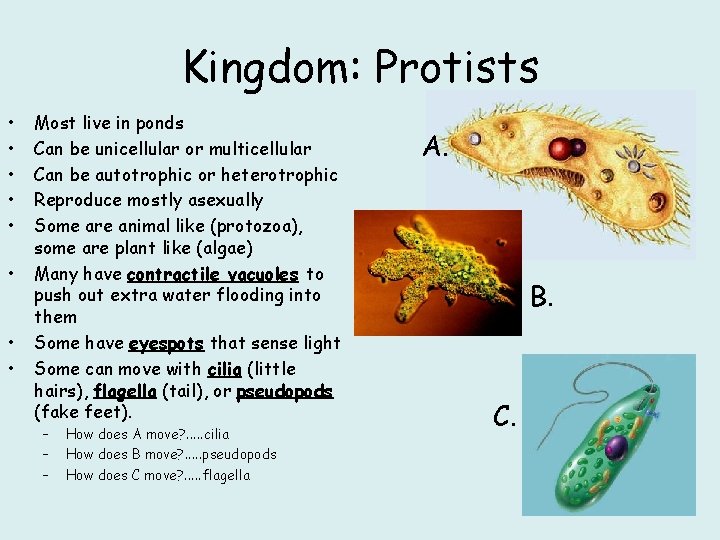
Kingdom: Protists • • Most live in ponds Can be unicellular or multicellular Can be autotrophic or heterotrophic Reproduce mostly asexually Some are animal like (protozoa), some are plant like (algae) Many have contractile vacuoles to push out extra water flooding into them Some have eyespots that sense light Some can move with cilia (little hairs), flagella (tail), or pseudopods (fake feet). – – – How does A move? . . . cilia How does B move? . . . pseudopods How does C move? . . . flagella A. B. C.
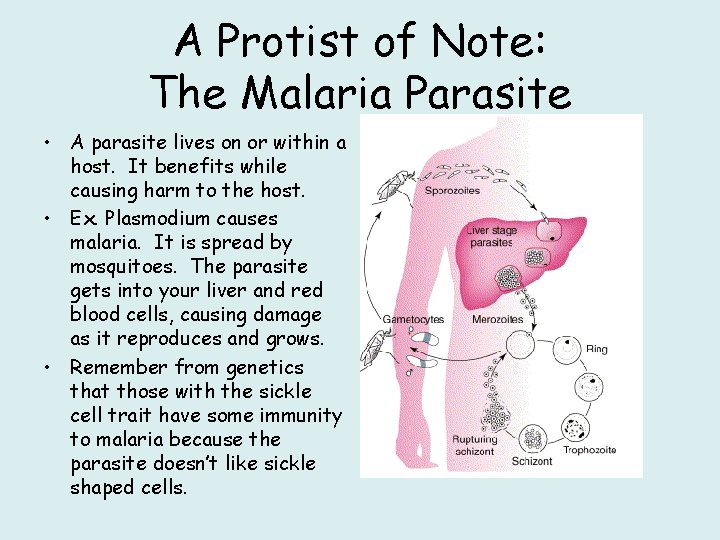
A Protist of Note: The Malaria Parasite • A parasite lives on or within a host. It benefits while causing harm to the host. • Ex. Plasmodium causes malaria. It is spread by mosquitoes. The parasite gets into your liver and red blood cells, causing damage as it reproduces and grows. • Remember from genetics that those with the sickle cell trait have some immunity to malaria because the parasite doesn’t like sickle shaped cells.
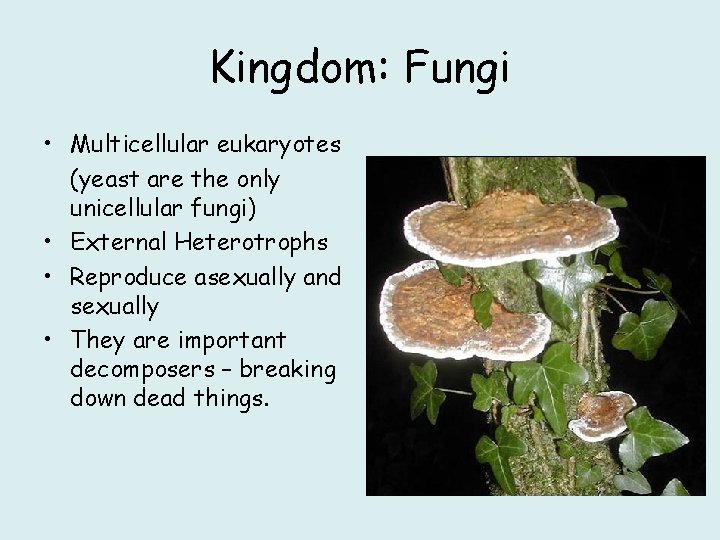
Kingdom: Fungi • Multicellular eukaryotes (yeast are the only unicellular fungi) • External Heterotrophs • Reproduce asexually and sexually • They are important decomposers – breaking down dead things.
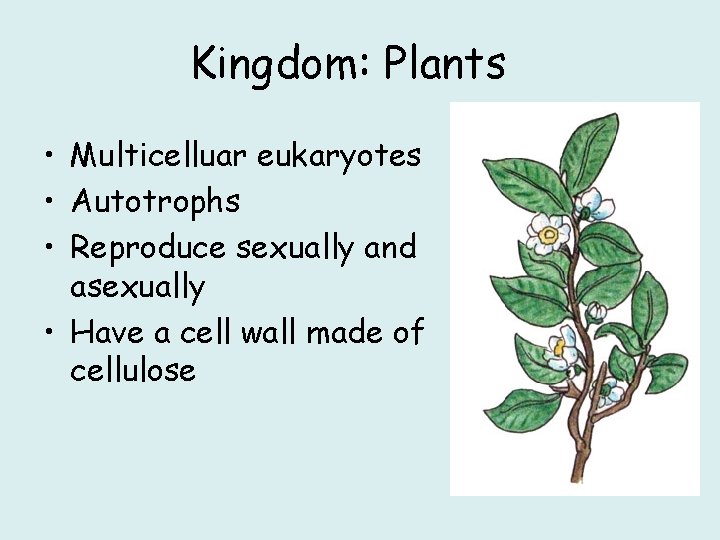
Kingdom: Plants • Multicelluar eukaryotes • Autotrophs • Reproduce sexually and asexually • Have a cell wall made of cellulose
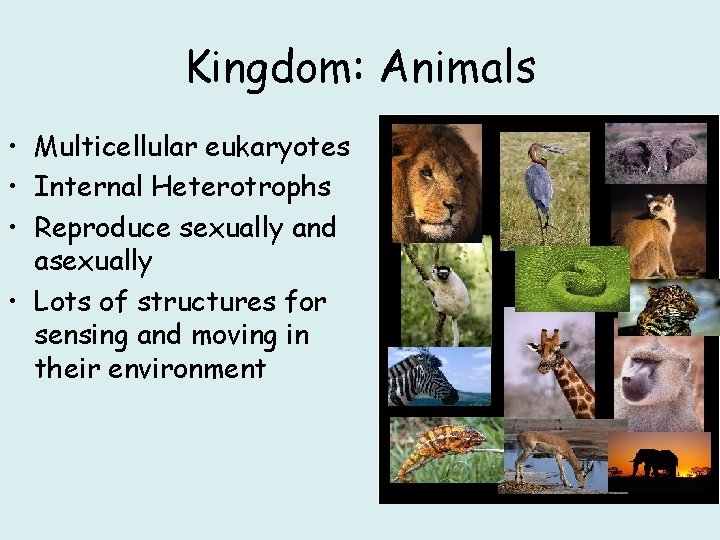
Kingdom: Animals • Multicellular eukaryotes • Internal Heterotrophs • Reproduce sexually and asexually • Lots of structures for sensing and moving in their environment
You Need to Know a Bit More About Plants
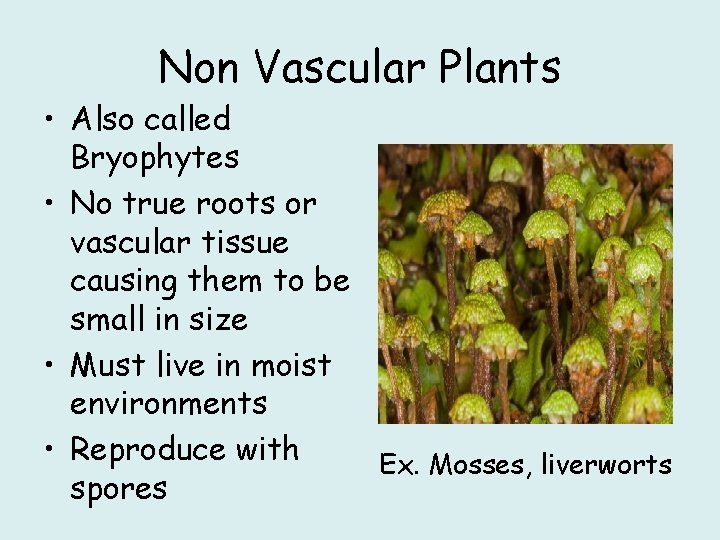
Non Vascular Plants • Also called Bryophytes • No true roots or vascular tissue causing them to be small in size • Must live in moist environments • Reproduce with Ex. Mosses, liverworts spores
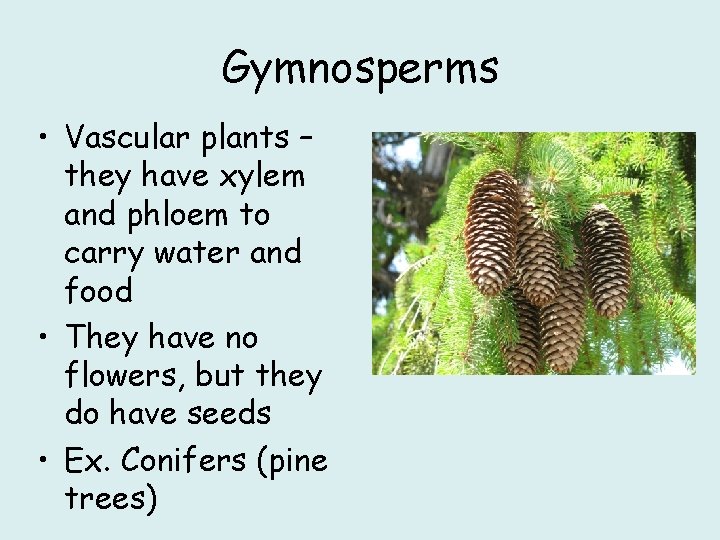
Gymnosperms • Vascular plants – they have xylem and phloem to carry water and food • They have no flowers, but they do have seeds • Ex. Conifers (pine trees)
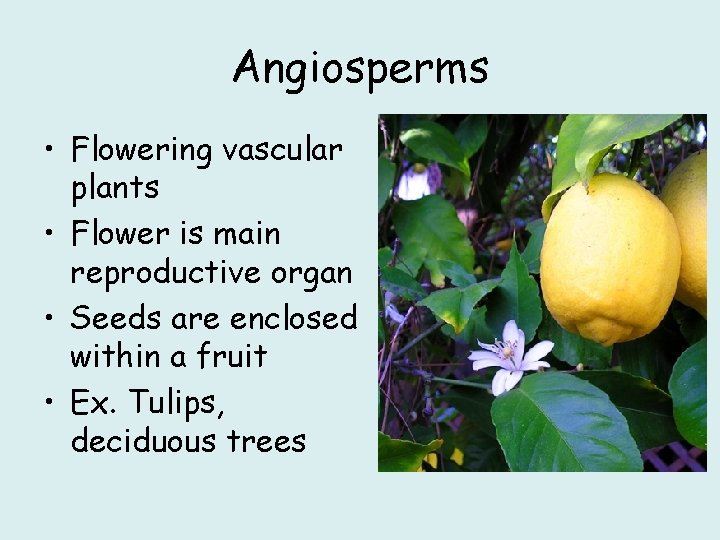
Angiosperms • Flowering vascular plants • Flower is main reproductive organ • Seeds are enclosed within a fruit • Ex. Tulips, deciduous trees
You Need to Know a Bit More About Animals
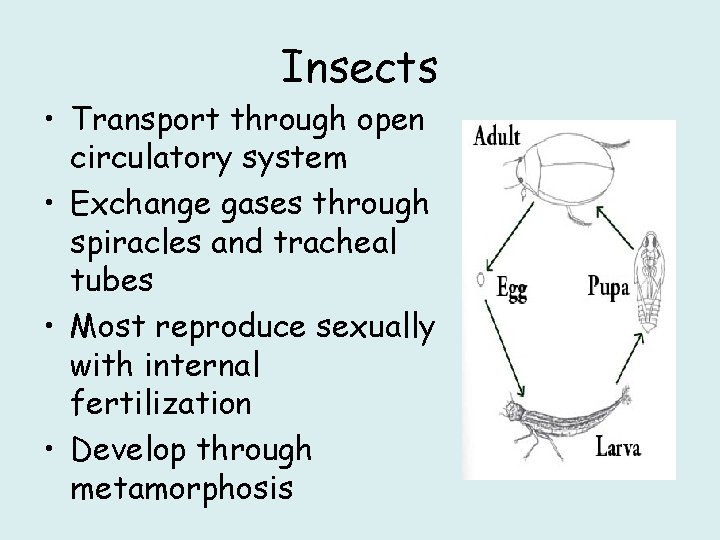
Insects • Transport through open circulatory system • Exchange gases through spiracles and tracheal tubes • Most reproduce sexually with internal fertilization • Develop through metamorphosis
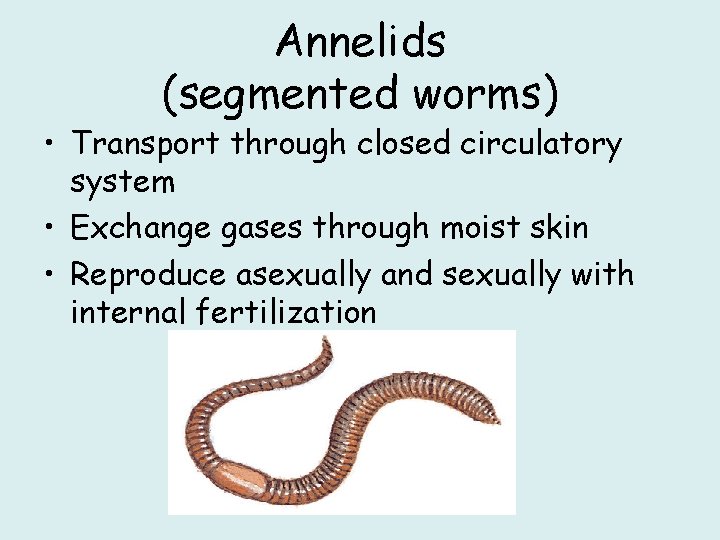
Annelids (segmented worms) • Transport through closed circulatory system • Exchange gases through moist skin • Reproduce asexually and sexually with internal fertilization
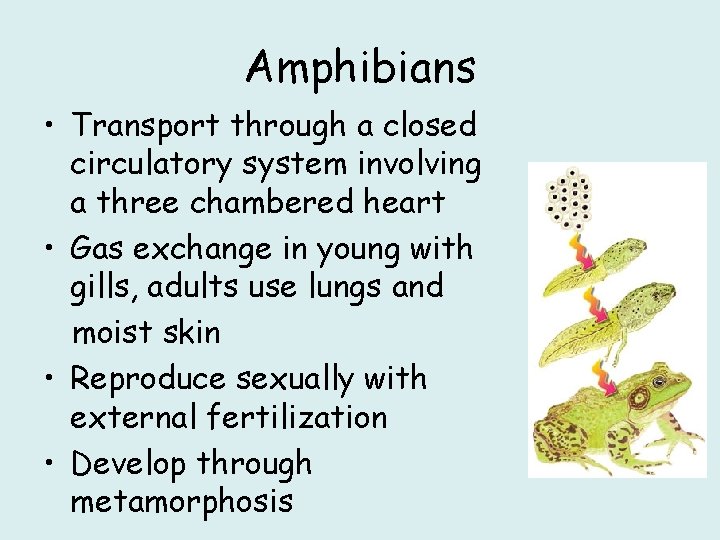
Amphibians • Transport through a closed circulatory system involving a three chambered heart • Gas exchange in young with gills, adults use lungs and moist skin • Reproduce sexually with external fertilization • Develop through metamorphosis
Mammals • Transport though closed circulatory system involving a four chambered heart • Gas exchange through lungs • Reproduce sexually with internal fertilization • Young develop in a uterus and obtain nutrients and oxygen through the placenta and umbilical cord.
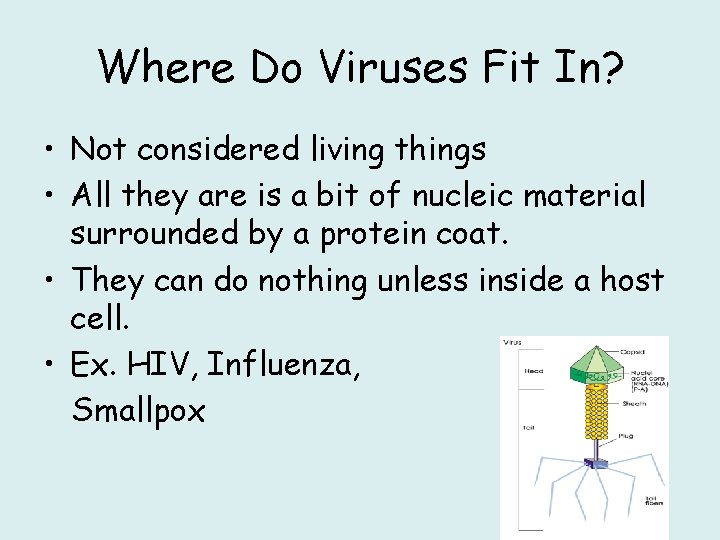
Where Do Viruses Fit In? • Not considered living things • All they are is a bit of nucleic material surrounded by a protein coat. • They can do nothing unless inside a host cell. • Ex. HIV, Influenza, Smallpox
Our defense against viruses is our immune system *Remember that antibiotics only work against bacterial infections*
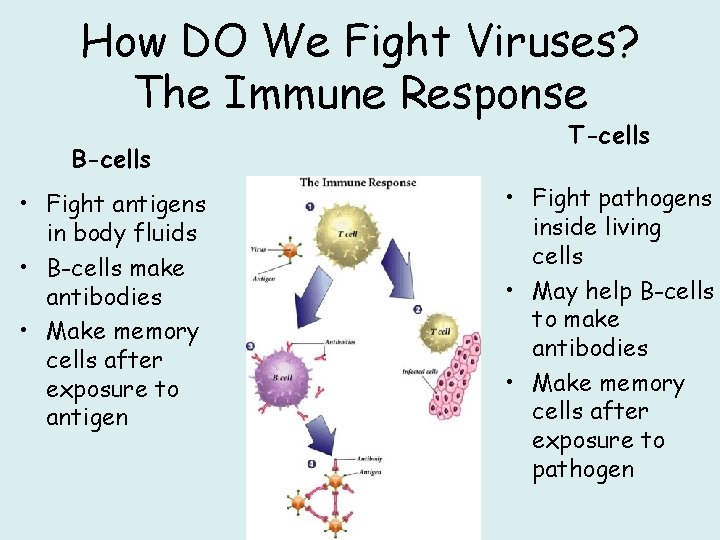
The Immune System • The job of the immune system is to recognize “self” from “non-self”. Your immune system reads antigens (protein name tags that identify cells). If your immune system recognizes the name tag, it leaves the cell alone. If not, the immune system mounts an attack and starts to produce antibodies – proteins that will seek out and help destroy the invading antigen.
Immunity Passive Immunity Active Immunity • Antibodies are given into the body • Short term • Such as when a mother transfers antibodies to her infant through breast feeding • Antibodies are acquired when an immune response is activated in the body • Long term • Ex. Vaccines are weak/dead antigens that are introduced to the body. They help a person make antibodies and create memory cells to remember how to make those antibodies in the future
How DO We Fight Viruses? The Immune Response B-cells • Fight antigens in body fluids • B-cells make antibodies • Make memory cells after exposure to antigen T-cells • Fight pathogens inside living cells • May help B-cells to make antibodies • Make memory cells after exposure to pathogen
Animal Behaviors
Innate Vs. Learned • Innate behaviors are those that an animal is born knowing how to do. • Learned behaviors are those that animal is taught to do or has learned as a result of an experience.
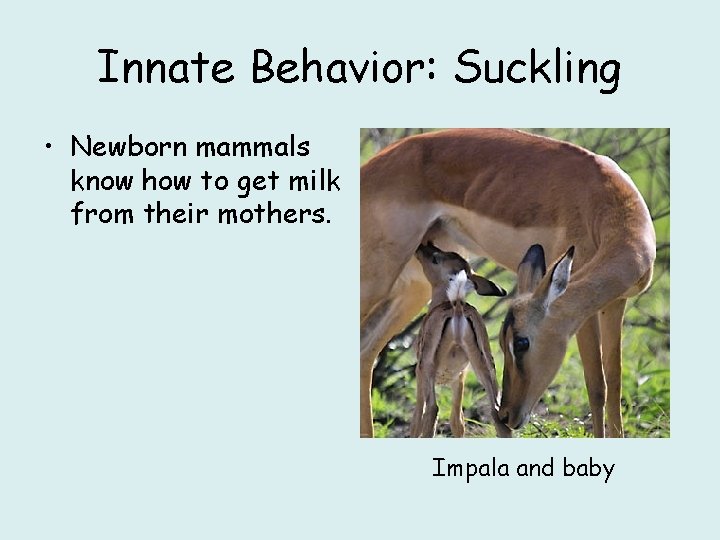
Innate Behavior: Suckling • Newborn mammals know how to get milk from their mothers. Impala and baby
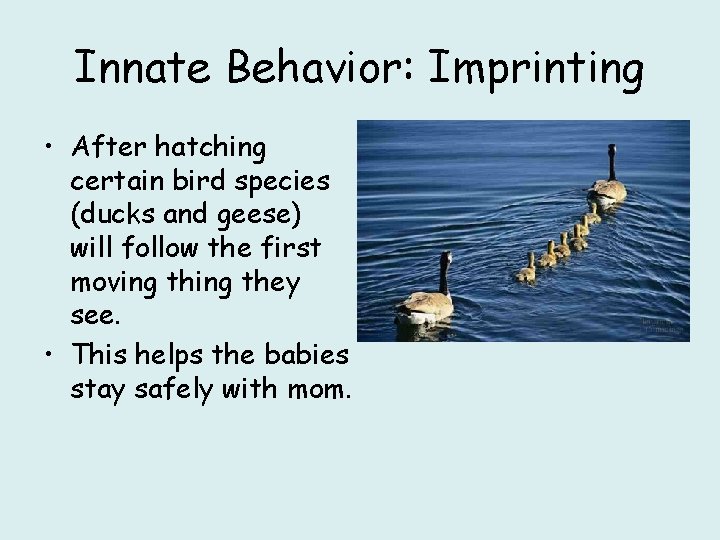
Innate Behavior: Imprinting • After hatching certain bird species (ducks and geese) will follow the first moving they see. • This helps the babies stay safely with mom.
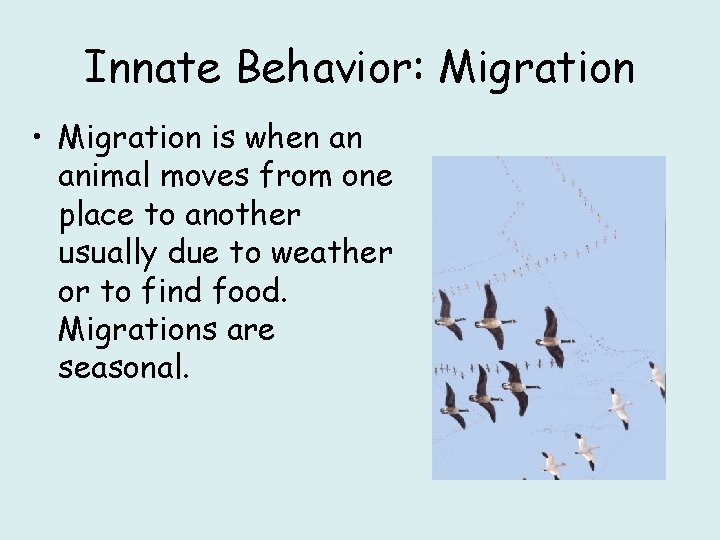
Innate Behavior: Migration • Migration is when an animal moves from one place to another usually due to weather or to find food. Migrations are seasonal.
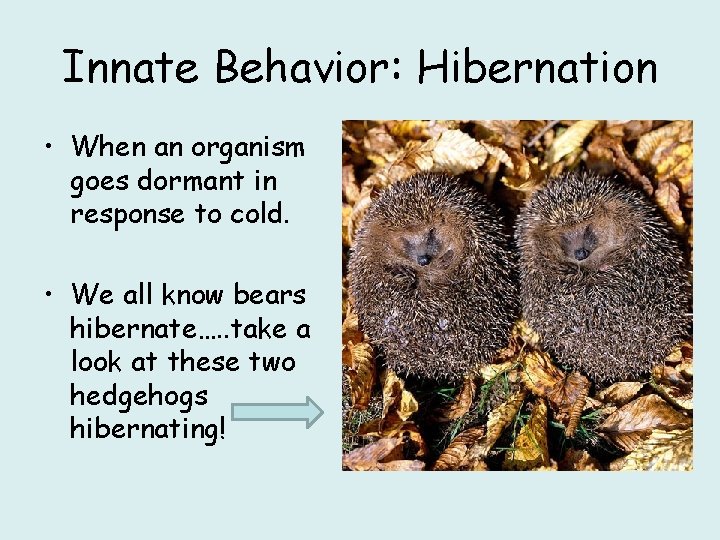
Innate Behavior: Hibernation • When an organism goes dormant in response to cold. • We all know bears hibernate…. . take a look at these two hedgehogs hibernating!
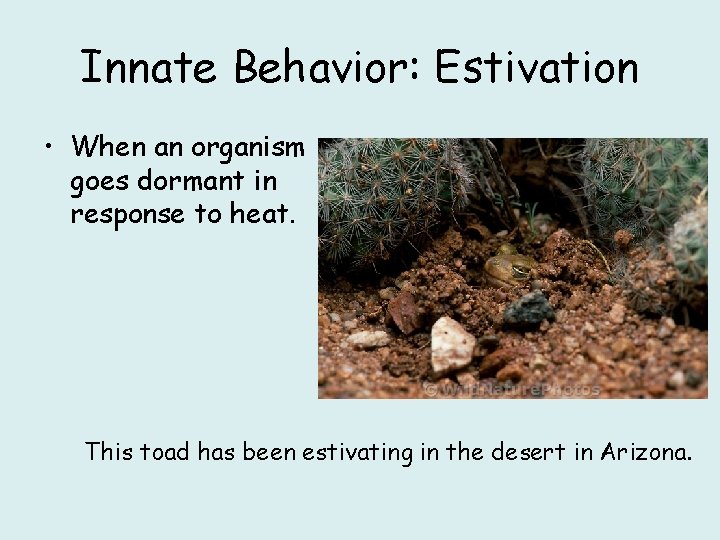
Innate Behavior: Estivation • When an organism goes dormant in response to heat. This toad has been estivating in the desert in Arizona.
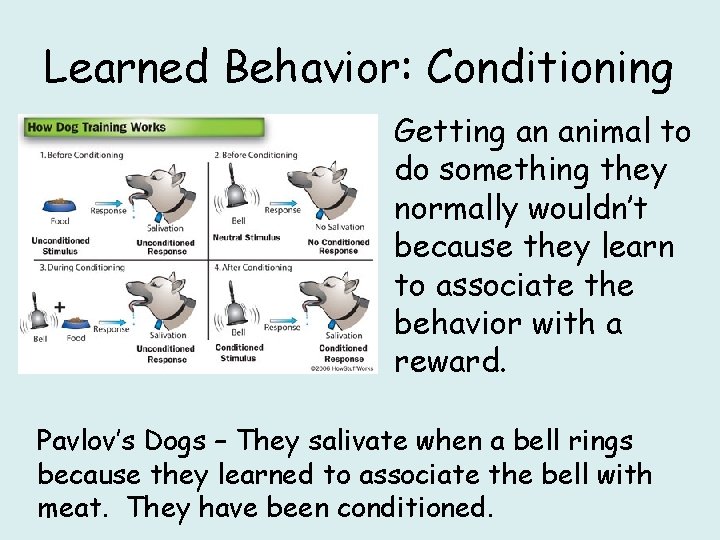
Learned Behavior: Conditioning • Getting an animal to do something they normally wouldn’t because they learn to associate the behavior with a reward. Pavlov’s Dogs – They salivate when a bell rings because they learned to associate the bell with meat. They have been conditioned.
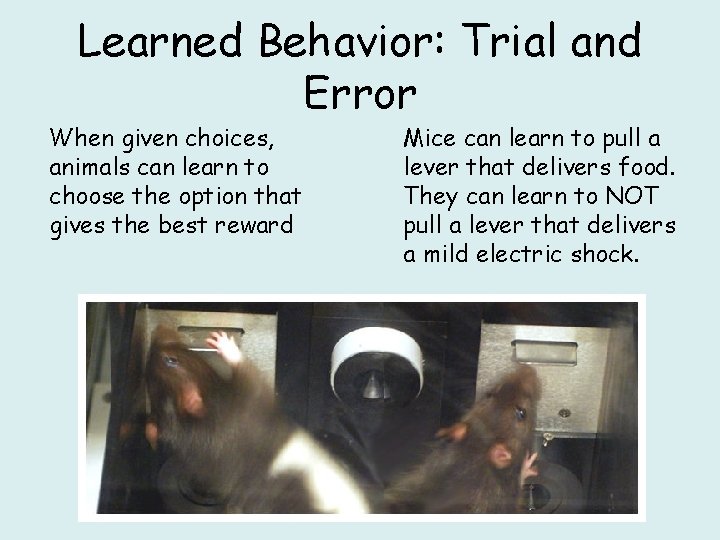
Learned Behavior: Trial and Error When given choices, animals can learn to choose the option that gives the best reward Mice can learn to pull a lever that delivers food. They can learn to NOT pull a lever that delivers a mild electric shock.
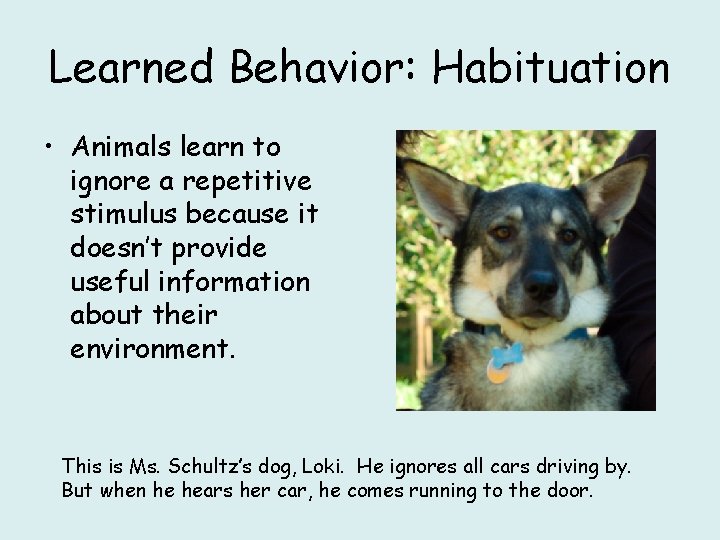
Learned Behavior: Habituation • Animals learn to ignore a repetitive stimulus because it doesn’t provide useful information about their environment. This is Ms. Schultz’s dog, Loki. He ignores all cars driving by. But when he hears her car, he comes running to the door.
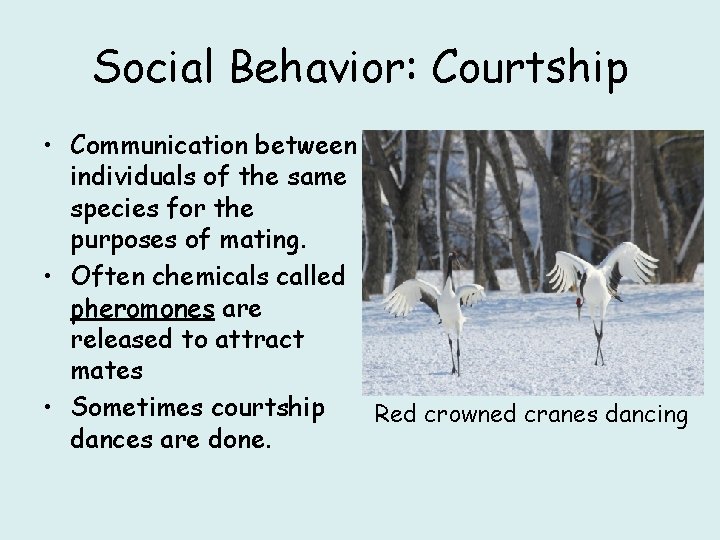
Social Behavior: Courtship • Communication between individuals of the same species for the purposes of mating. • Often chemicals called pheromones are released to attract mates • Sometimes courtship Red crowned cranes dancing dances are done.
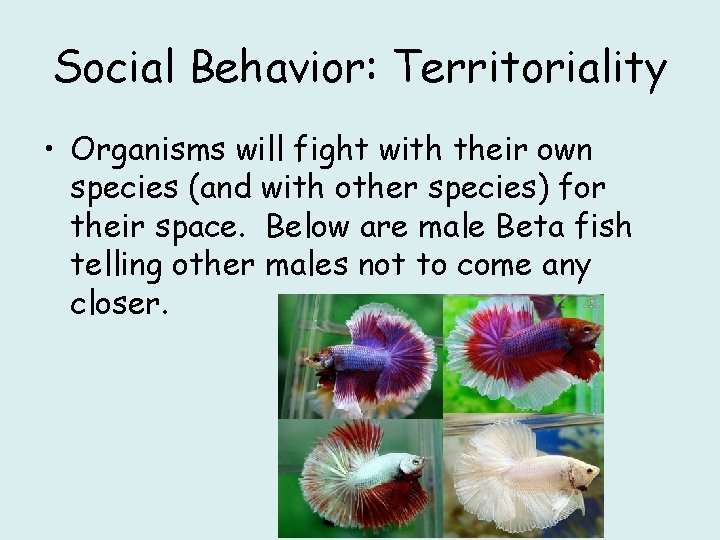
Social Behavior: Territoriality • Organisms will fight with their own species (and with other species) for their space. Below are male Beta fish telling other males not to come any closer.
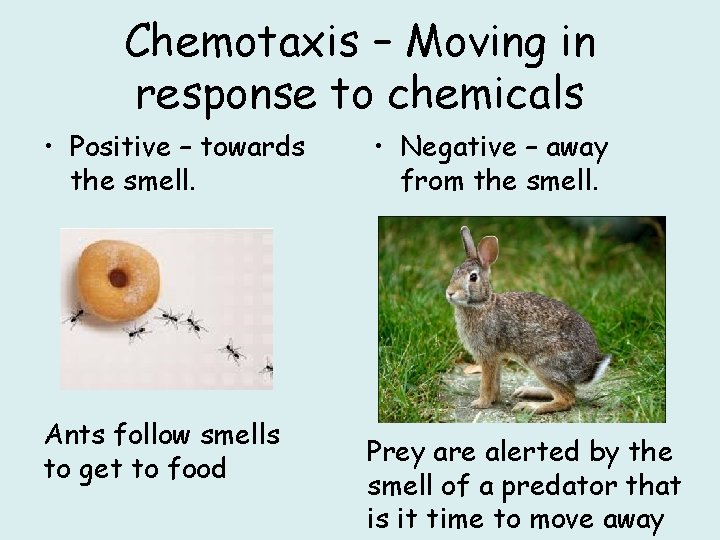
Chemotaxis – Moving in response to chemicals • Positive – towards the smell. Ants follow smells to get to food • Negative – away from the smell. Prey are alerted by the smell of a predator that is it time to move away
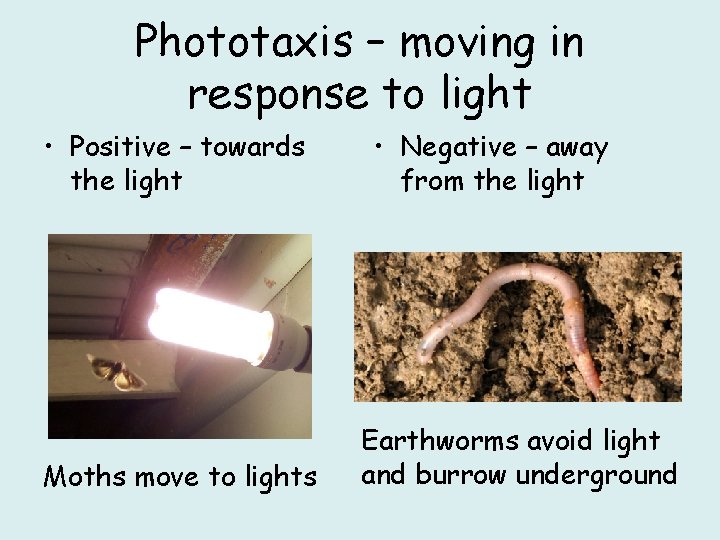
Phototaxis – moving in response to light • Positive – towards the light Moths move to lights • Negative – away from the light Earthworms avoid light and burrow underground