
The Last Ape Standing Part 3 Miocene Epoch
- Slides: 8
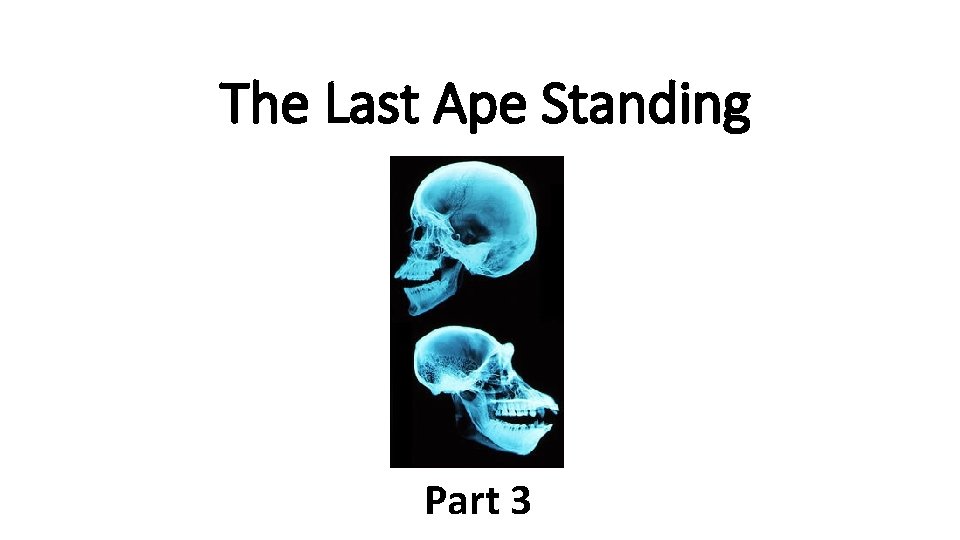
The Last Ape Standing Part 3
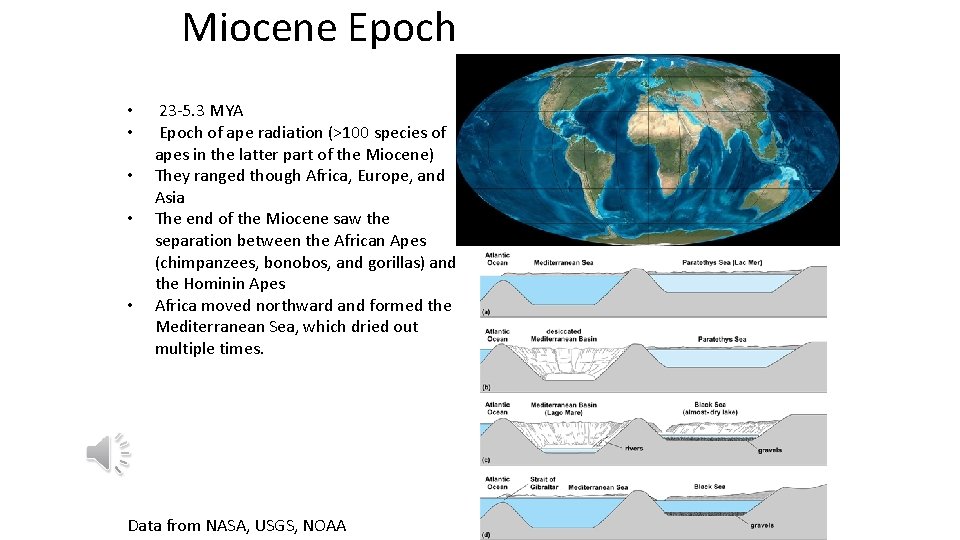
Miocene Epoch • • • 23 -5. 3 MYA Epoch of ape radiation (>100 species of apes in the latter part of the Miocene) They ranged though Africa, Europe, and Asia The end of the Miocene saw the separation between the African Apes (chimpanzees, bonobos, and gorillas) and the Hominin Apes Africa moved northward and formed the Mediterranean Sea, which dried out multiple times. Data from NASA, USGS, NOAA
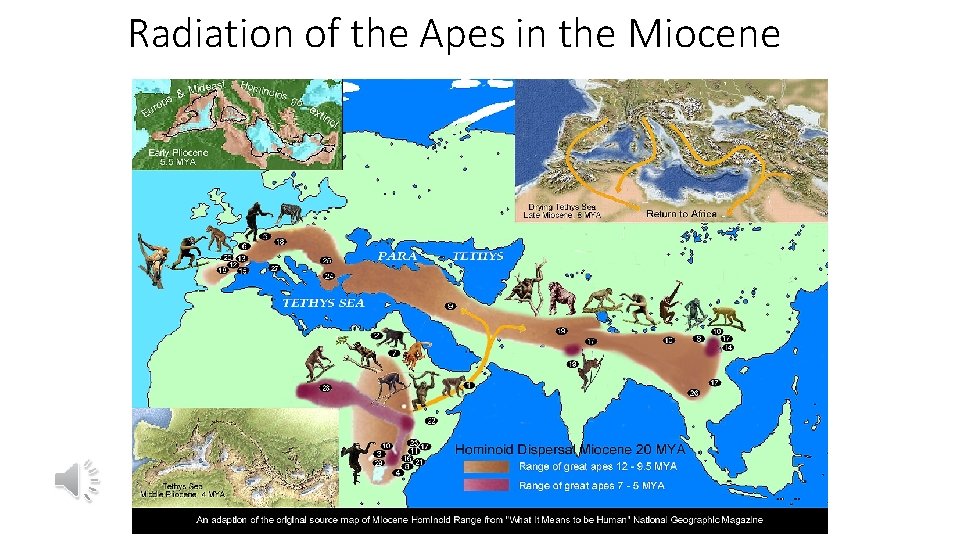
Radiation of the Apes in the Miocene
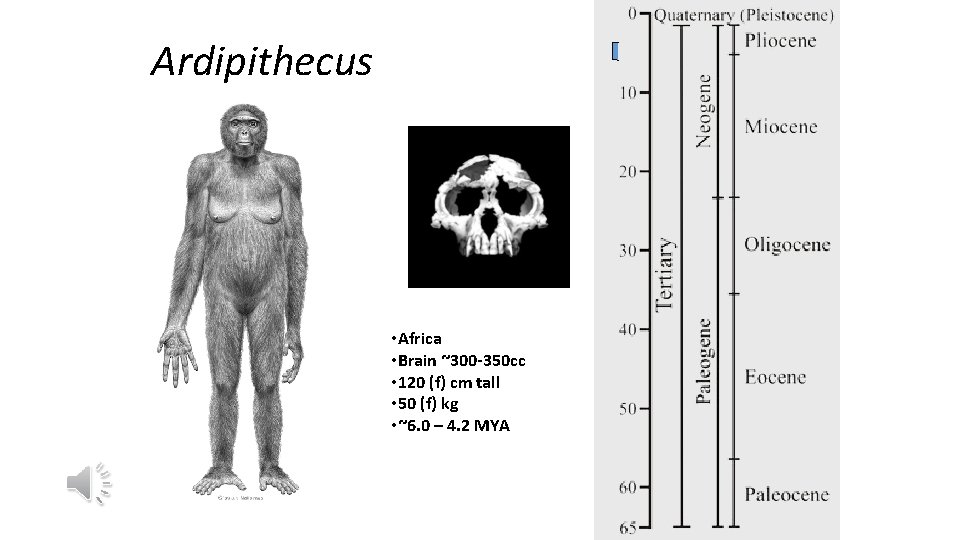
Ardipithecus • Africa • Brain ~300 -350 cc • 120 (f) cm tall • 50 (f) kg • ~6. 0 – 4. 2 MYA
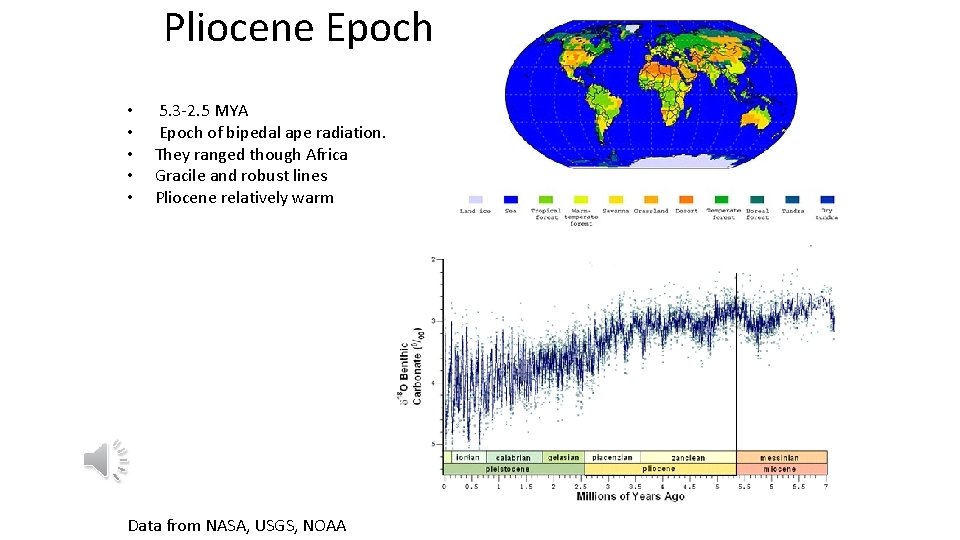
Pliocene Epoch • • • 5. 3 -2. 5 MYA Epoch of bipedal ape radiation. They ranged though Africa Gracile and robust lines Pliocene relatively warm Data from NASA, USGS, NOAA
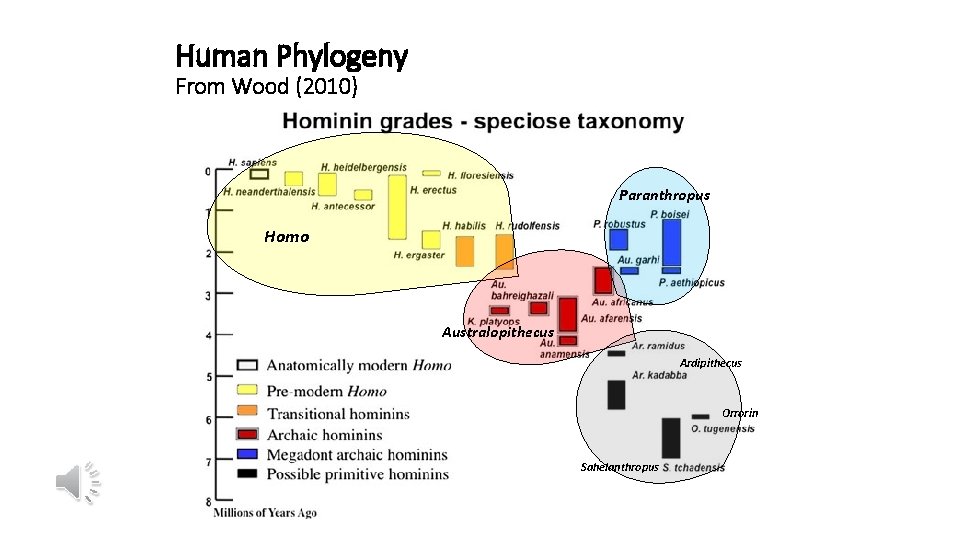
Human Phylogeny From Wood (2010) Paranthropus Homo Australopithecus Ardipithecus Orrorin Sahelanthropus
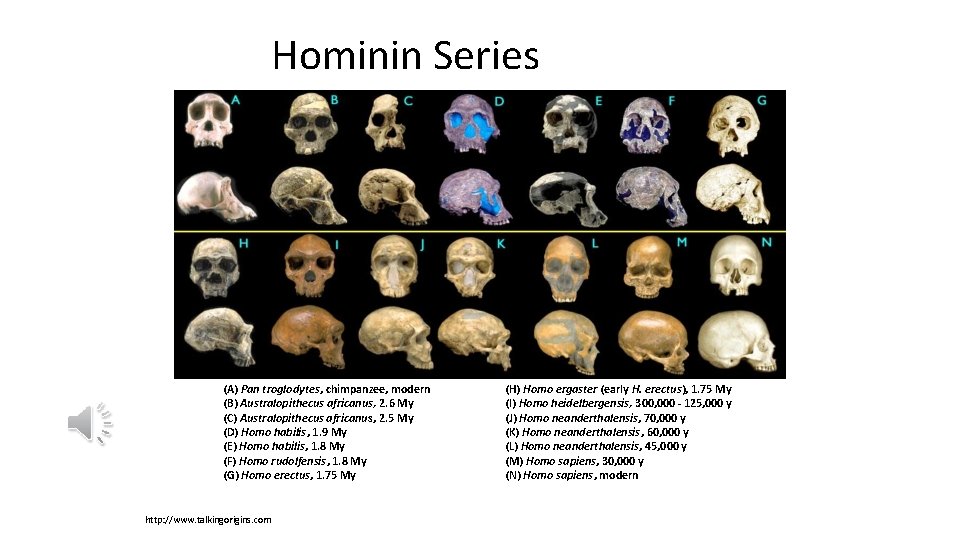
Hominin Series (A) Pan troglodytes, chimpanzee, modern (B) Australopithecus africanus, 2. 6 My (C) Australopithecus africanus, 2. 5 My (D) Homo habilis, 1. 9 My (E) Homo habilis, 1. 8 My (F) Homo rudolfensis, 1. 8 My (G) Homo erectus, 1. 75 My http: //www. talkingorigins. com (H) Homo ergaster (early H. erectus), 1. 75 My (I) Homo heidelbergensis, 300, 000 - 125, 000 y (J) Homo neanderthalensis, 70, 000 y (K) Homo neanderthalensis, 60, 000 y (L) Homo neanderthalensis, 45, 000 y (M) Homo sapiens, 30, 000 y (N) Homo sapiens, modern
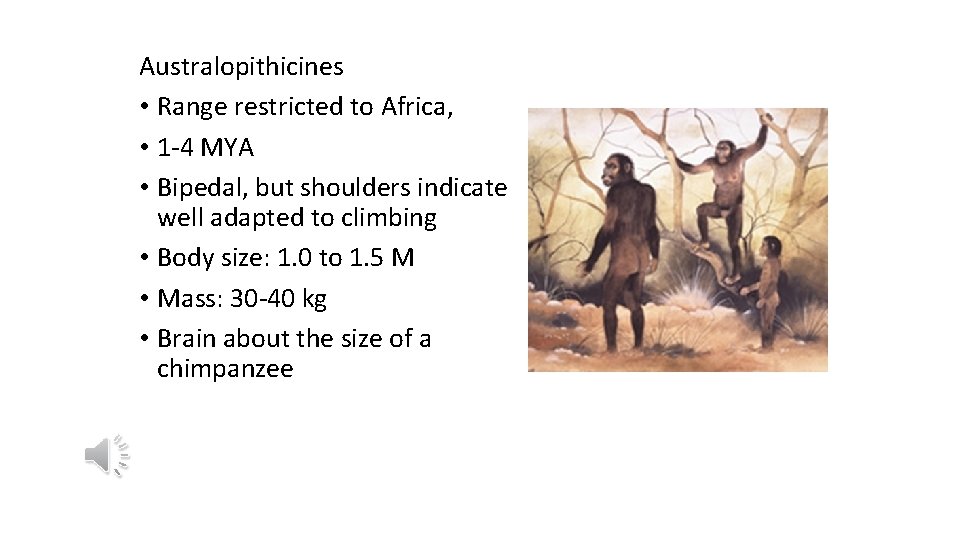
Australopithicines • Range restricted to Africa, • 1 -4 MYA • Bipedal, but shoulders indicate well adapted to climbing • Body size: 1. 0 to 1. 5 M • Mass: 30 -40 kg • Brain about the size of a chimpanzee