
The Laser Interferometer Gravitational Wave Observatory Probing the
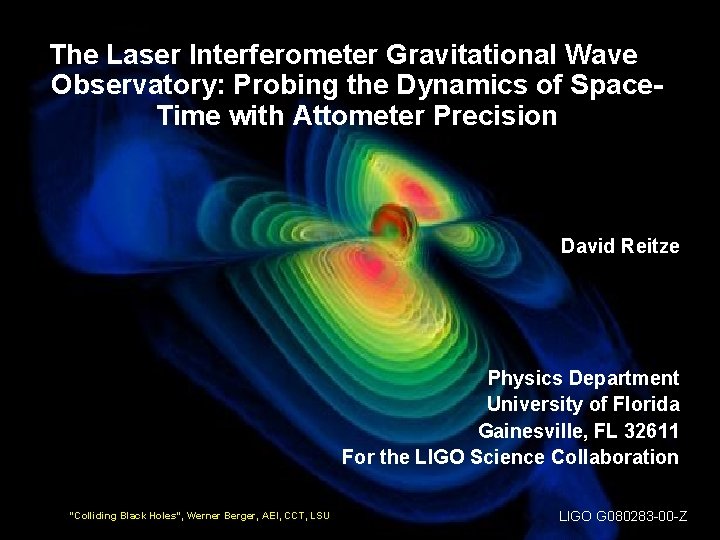
The Laser Interferometer Gravitational Wave Observatory: Probing the Dynamics of Space. Time with Attometer Precision David Reitze Physics Department University of Florida Gainesville, FL 32611 For the LIGO Science Collaboration “Colliding Black Holes”, Werner Berger, AEI, CCT, LSU CLEO, San Jose, CA 5 May 2008 LIGO G 080283 -00 -Z
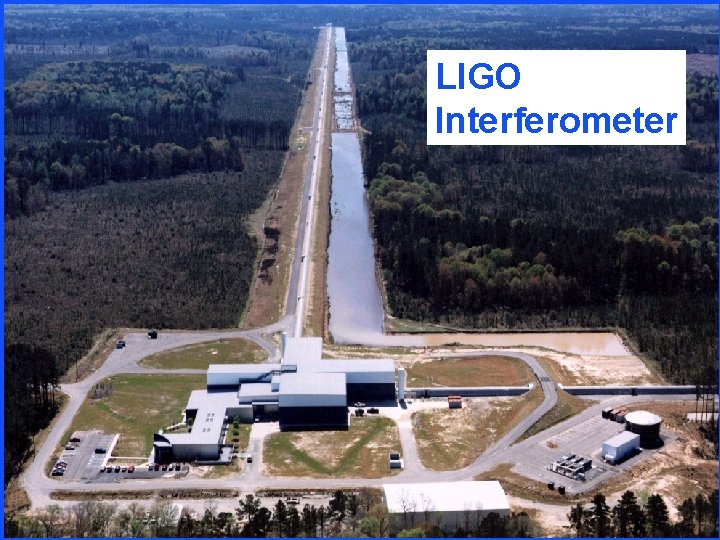
Michelson-Morley Interferometer LIGO Interferometer CLEO, San Jose, CA 5 May 2008
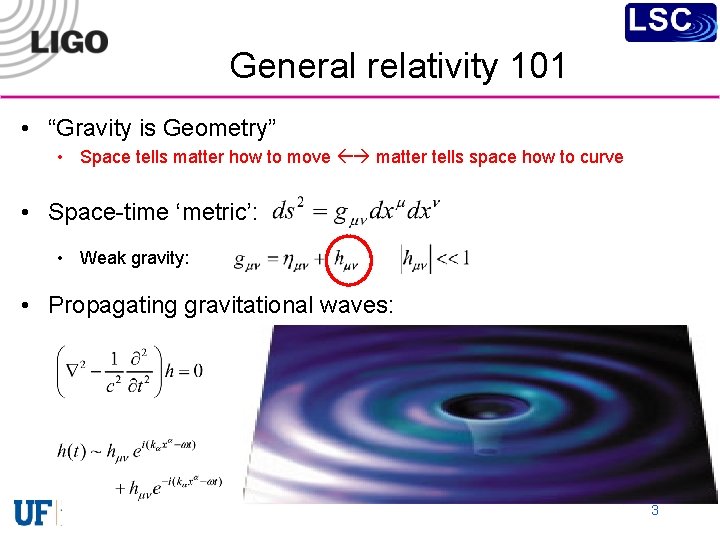
General relativity 101 • “Gravity is Geometry” • Space tells matter how to move matter tells space how to curve • Space-time ‘metric’: • Weak gravity: • Propagating gravitational waves: Copyright Addison Wesley, 3 2004 CLEO, San Jose, CA 5 May 2008
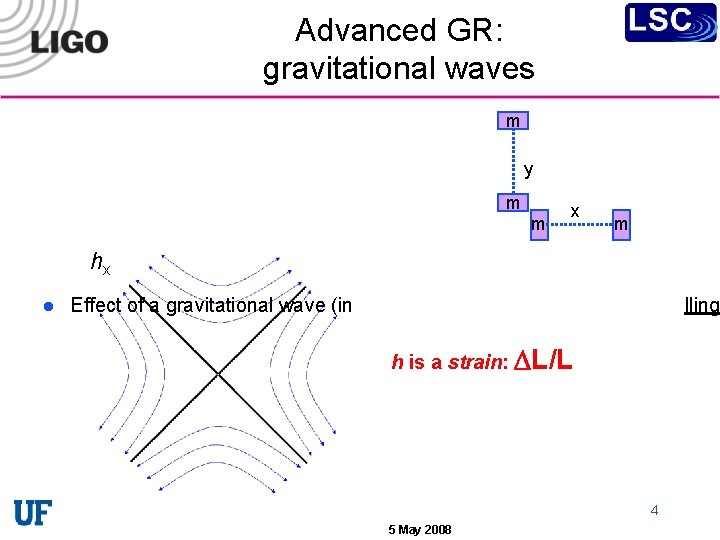
Advanced GR: gravitational waves m y m m x m h+x l Effect of a gravitational wave (in z) on light traveling between freely falling h is a strain: DL/L 4 CLEO, San Jose, CA 5 May 2008
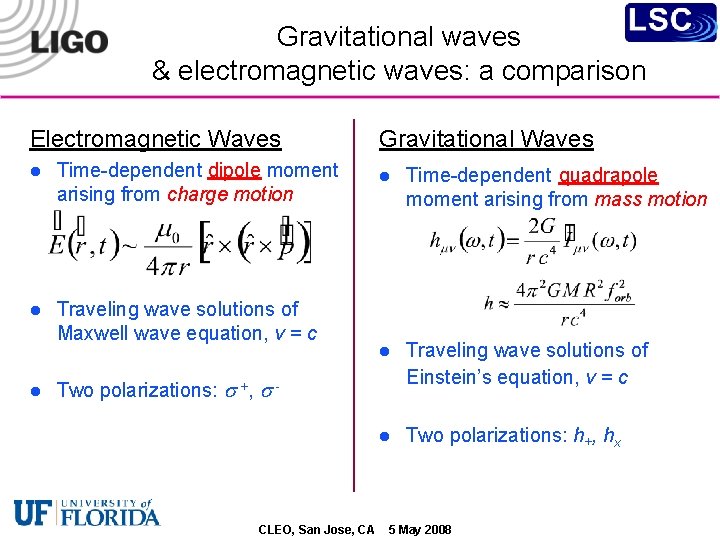
Gravitational waves & electromagnetic waves: a comparison Electromagnetic Waves l Time-dependent dipole moment arising from charge motion l Traveling wave solutions of Maxwell wave equation, v = c l Gravitational Waves l Time-dependent quadrapole moment arising from mass motion l Traveling wave solutions of Einstein’s equation, v = c l Two polarizations: h+, hx Two polarizations: s +, s - CLEO, San Jose, CA 5 May 2008
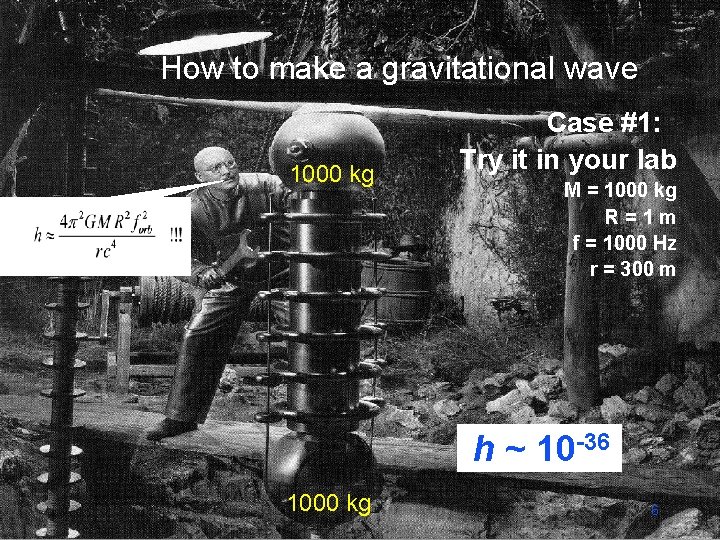
How to make a gravitational wave Case #1: Try it in your lab 1000 kg M = 1000 kg R=1 m f = 1000 Hz r = 300 m h ~ 10 -36 1000 kg CLEO, San Jose, CA 6 5 May 2008
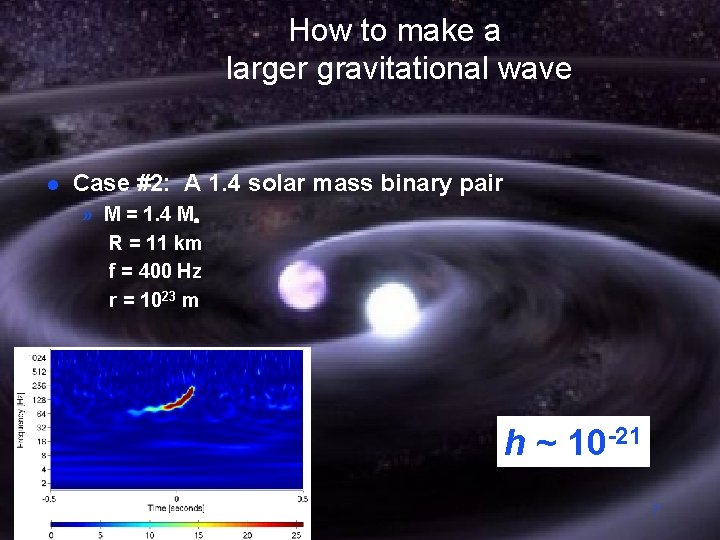
How to make a larger gravitational wave l Case #2: A 1. 4 solar mass binary pair » M = 1. 4 M R = 11 km f = 400 Hz r = 1023 m Gravitational Waveform h ~ 10 -21 7 Credit: T. Strohmayer and D. Berry CLEO, San Jose, CA 5 May 2008
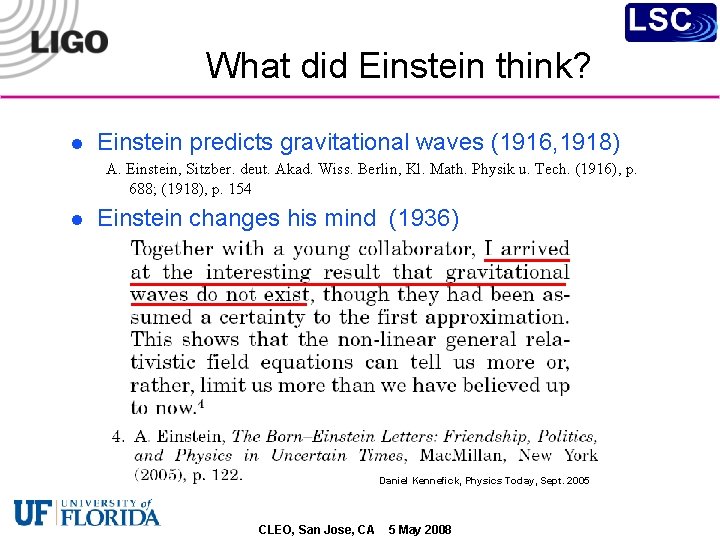
What did Einstein think? l Einstein predicts gravitational waves (1916, 1918) A. Einstein, Sitzber. deut. Akad. Wiss. Berlin, Kl. Math. Physik u. Tech. (1916), p. 688; (1918), p. 154 l Einstein changes his mind (1936) Daniel Kennefick, Physics Today, Sept. 2005 CLEO, San Jose, CA 5 May 2008
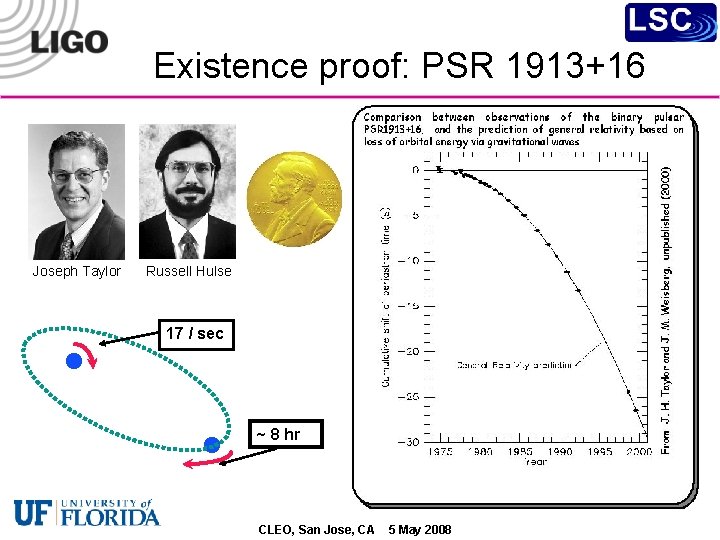
Existence proof: PSR 1913+16 Joseph Taylor · Russell Hulse 17 / sec · ~ 8 hr CLEO, San Jose, CA 5 May 2008
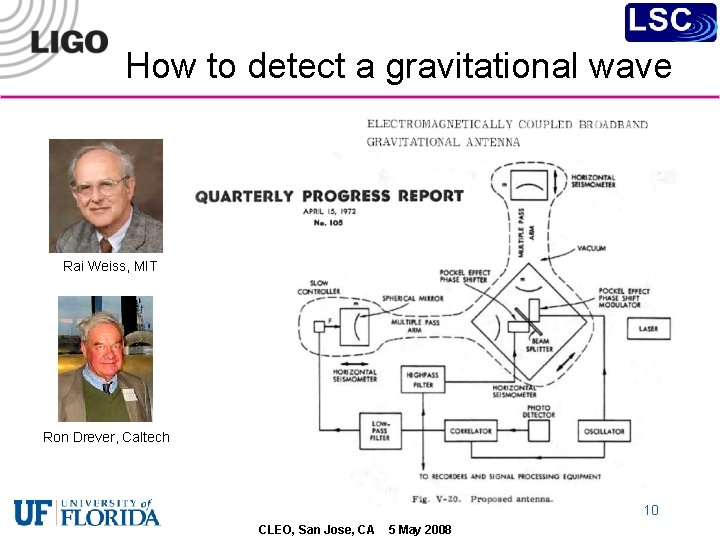
How to detect a gravitational wave Rai Weiss, MIT Ron Drever, Caltech 10 CLEO, San Jose, CA 5 May 2008
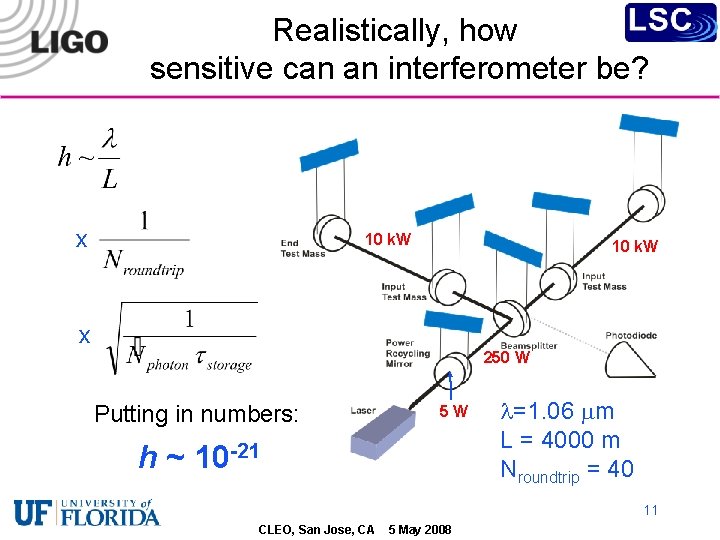
Realistically, how sensitive can an interferometer be? x 10 k. W x 250 W Putting in numbers: 5 W h ~ 10 -21 l=1. 06 mm L = 4000 m Nroundtrip = 40 11 CLEO, San Jose, CA 5 May 2008
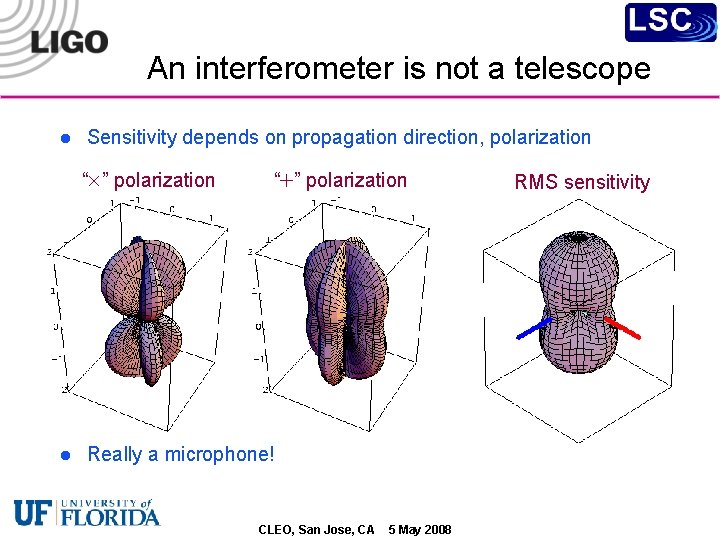
An interferometer is not a telescope l Sensitivity depends on propagation direction, polarization “ ” polarization l “ ” polarization Really a microphone! CLEO, San Jose, CA 5 May 2008 RMS sensitivity
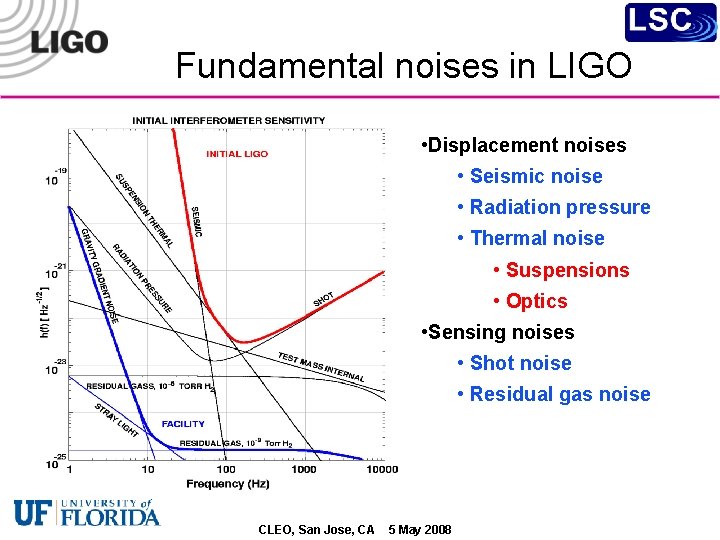
Fundamental noises in LIGO • Displacement noises • Seismic noise • Radiation pressure • Thermal noise • Suspensions • Optics • Sensing noises • Shot noise • Residual gas noise CLEO, San Jose, CA 5 May 2008
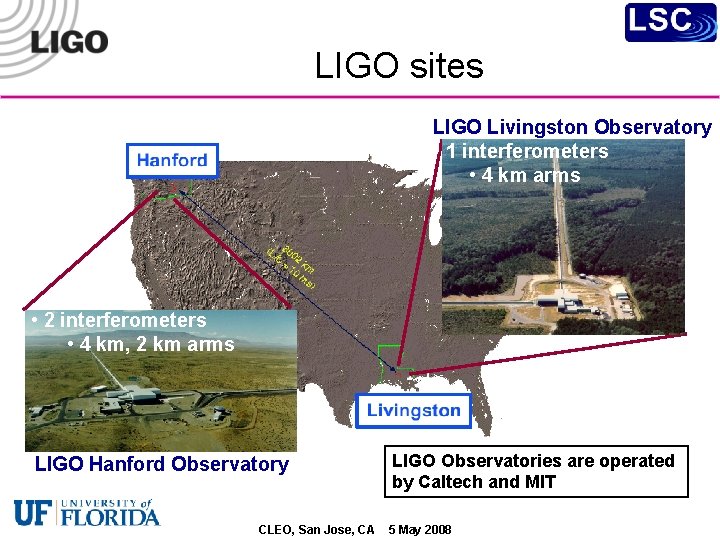
LIGO sites LIGO Livingston Observatory • 1 interferometers • 4 km arms • 2 interferometers • 4 km, 2 km arms LIGO Hanford Observatory CLEO, San Jose, CA LIGO Observatories are operated by Caltech and MIT 5 May 2008
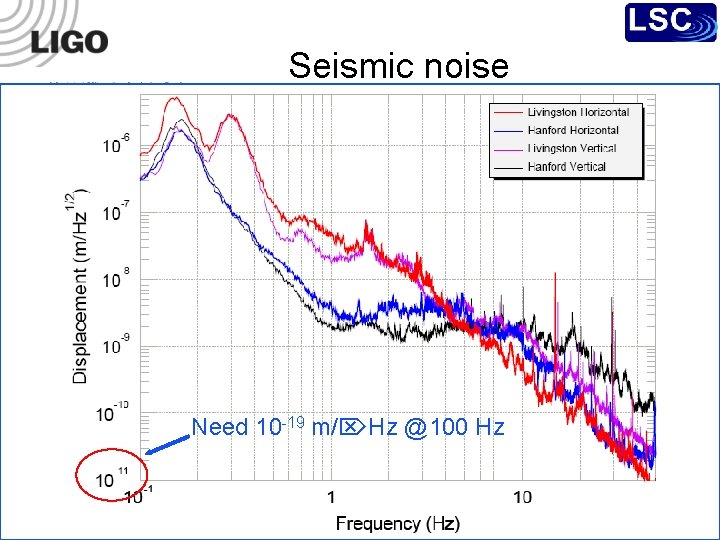
Seismic noise Need 10 -19 m/ Hz @100 Hz Tubular coil springs with internal damping, layered between steel reaction masses CLEO, San Jose, CA 5 May 2008
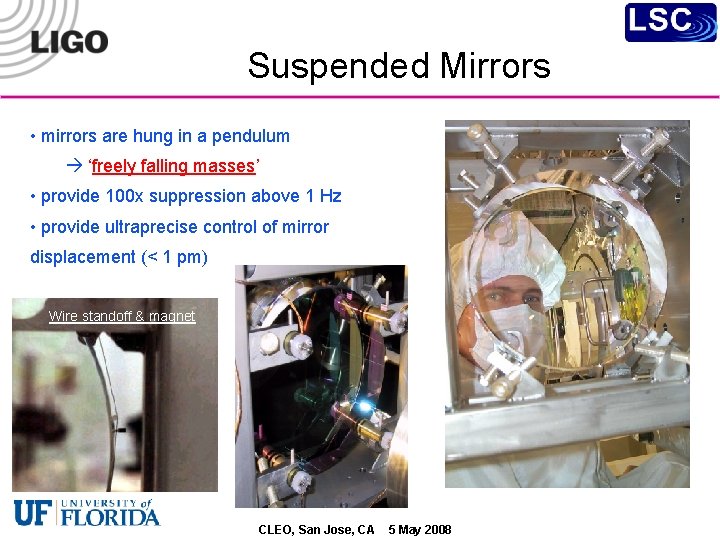
Suspended Mirrors • mirrors are hung in a pendulum ‘freely falling masses’ • provide 100 x suppression above 1 Hz • provide ultraprecise control of mirror displacement (< 1 pm) “OSEM” Wire standoff & magnet CLEO, San Jose, CA 5 May 2008
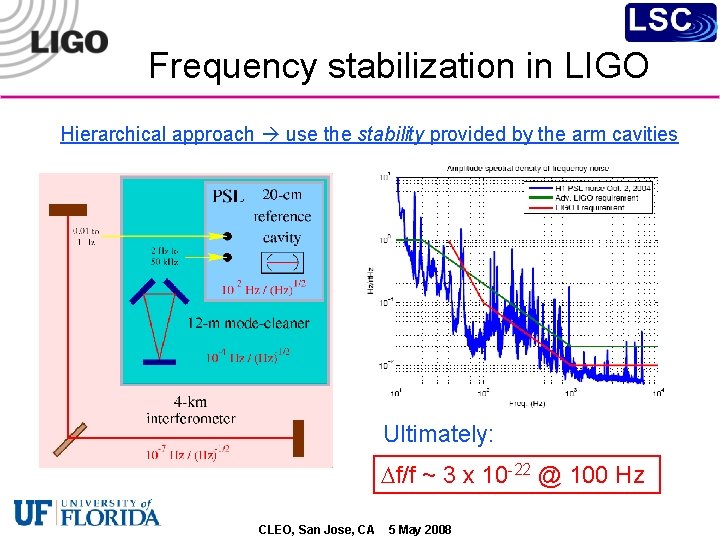
Frequency stabilization in LIGO Hierarchical approach use the stability provided by the arm cavities Ultimately: Df/f ~ 3 x 10 -22 @ 100 Hz CLEO, San Jose, CA 5 May 2008
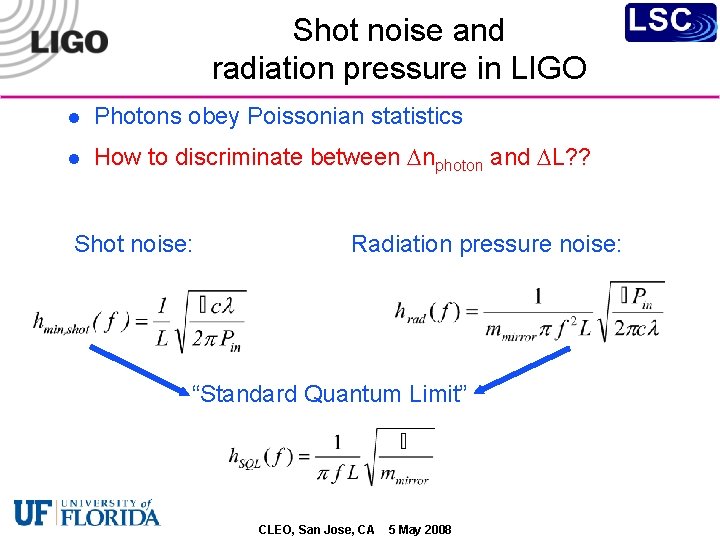
Shot noise and radiation pressure in LIGO l Photons obey Poissonian statistics l How to discriminate between Dnphoton and DL? ? Shot noise: Radiation pressure noise: “Standard Quantum Limit” CLEO, San Jose, CA 5 May 2008
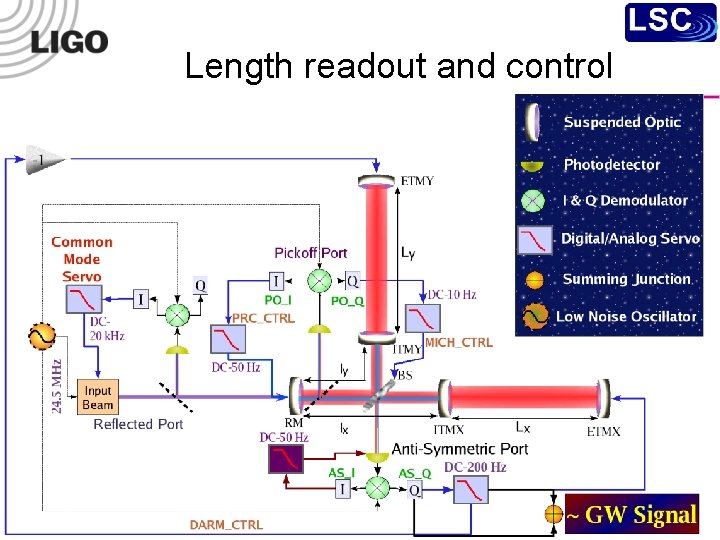
Length readout and control CLEO, San Jose, CA 5 May 2008
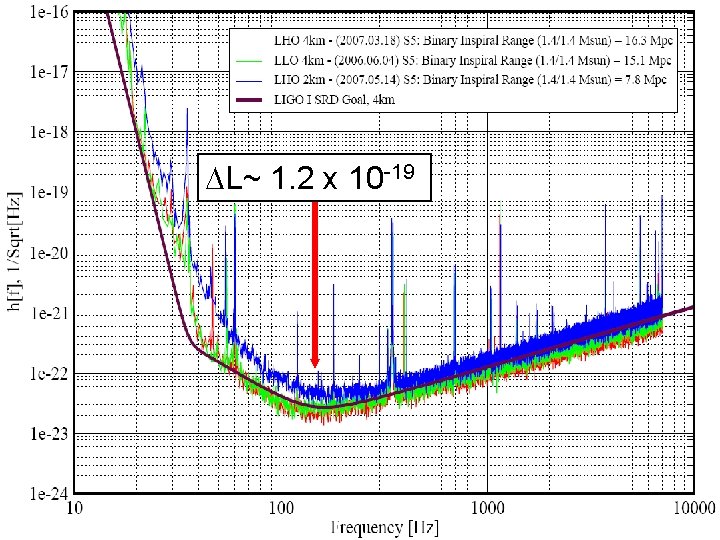
-19 DL~ 10 -23 h ~1. 2 3 xx 10 CLEO, San Jose, CA 5 May 2008
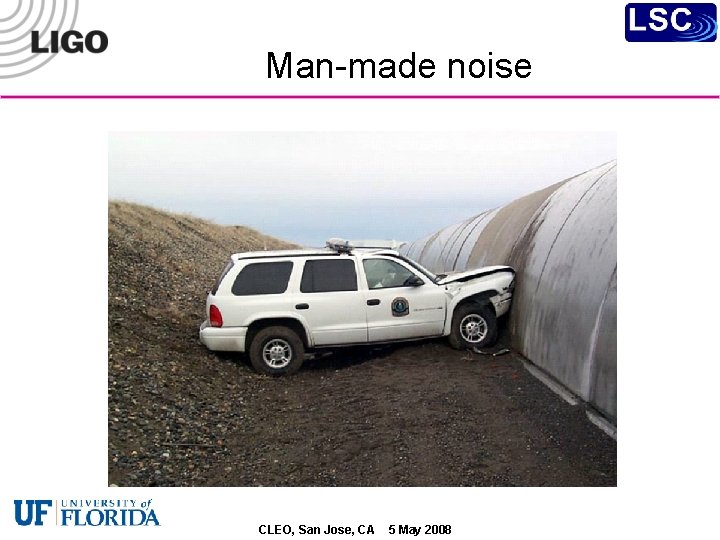
Man-made noise CLEO, San Jose, CA 5 May 2008
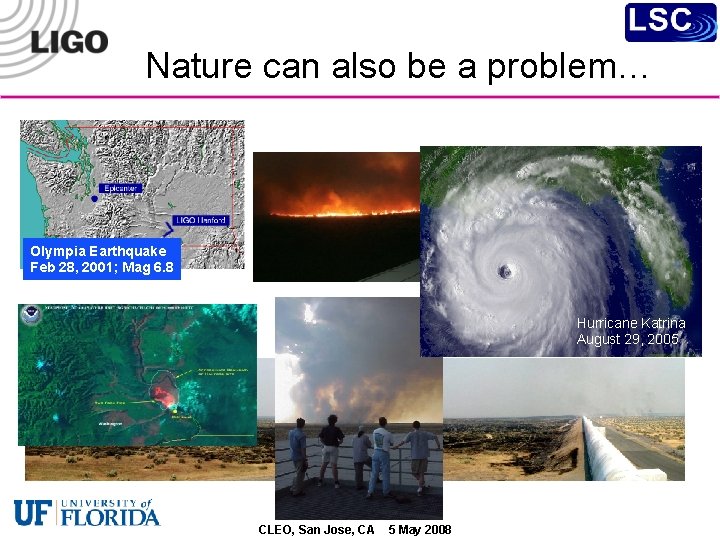
Nature can also be a problem… Olympia Earthquake Feb 28, 2001; Mag 6. 8 Hurricane Katrina August 29, 2005 CLEO, San Jose, CA 5 May 2008
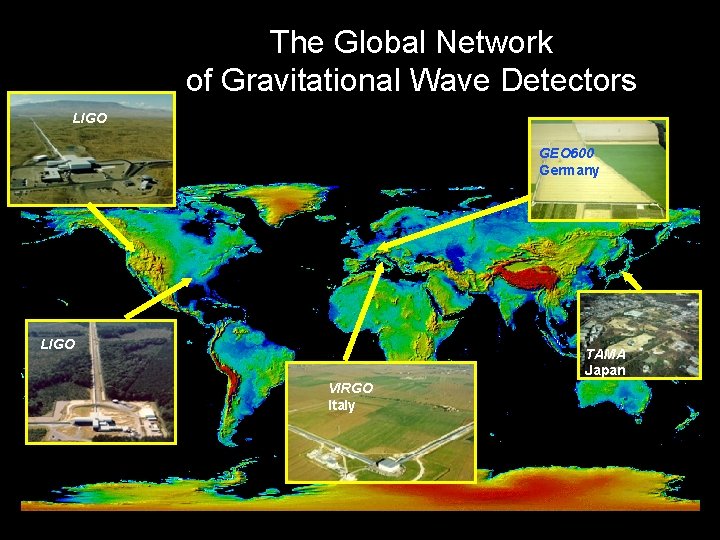
The Global Network of Gravitational Wave Detectors LIGO GEO 600 Germany LIGO TAMA Japan VIRGO Italy CLEO, San Jose, CA 5 May 2008
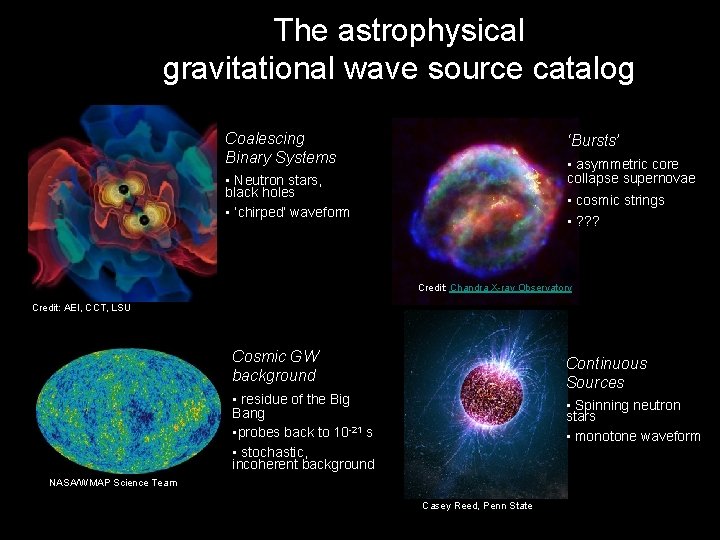
The astrophysical gravitational wave source catalog Coalescing Binary Systems ‘Bursts’ • asymmetric core collapse supernovae • Neutron stars, black holes • ‘chirped’ waveform • cosmic strings • ? ? ? Credit: Chandra X-ray Observatory Credit: AEI, CCT, LSU Cosmic GW background Continuous Sources • residue of the Big Bang • probes back to 10 -21 s • stochastic, incoherent background • Spinning neutron stars • monotone waveform NASA/WMAP Science Team Casey Reed, Penn State CLEO, San Jose, CA 5 May 2008
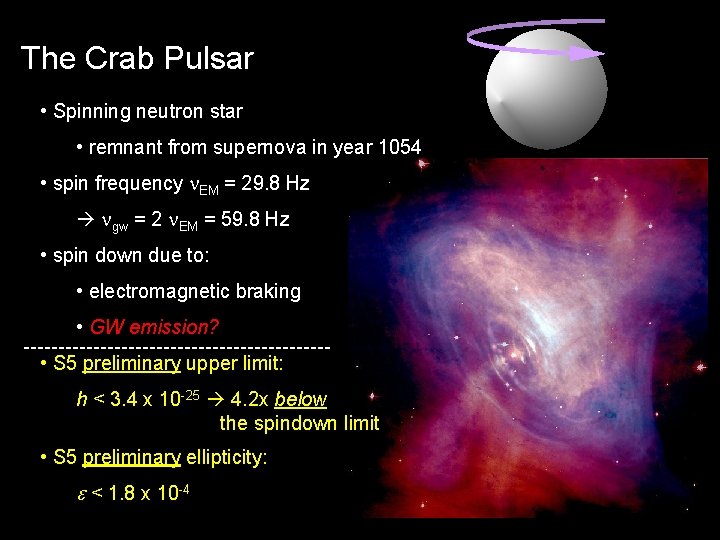
The Crab Pulsar • Spinning neutron star • remnant from supernova in year 1054 • spin frequency n. EM = 29. 8 Hz ngw = 2 n. EM = 59. 8 Hz • spin down due to: • electromagnetic braking • GW emission? • S 5 preliminary upper limit: h < 3. 4 x 10 -25 4. 2 x below the spindown limit • S 5 preliminary ellipticity: e < 1. 8 x 10 -4 CLEO, San Jose, CA 5 May 2008
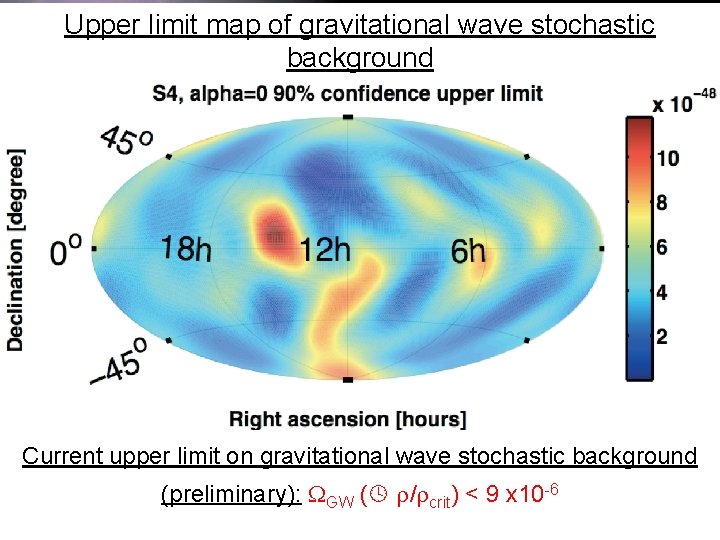
Upper limit map of gravitational wave stochastic background Current upper limit on gravitational wave stochastic background (preliminary): WGW ( r/rcrit) < 9 x 10 -6 Credit: Caltech Space Radiation Laboratory CLEO, San Jose, CA 5 May 2008
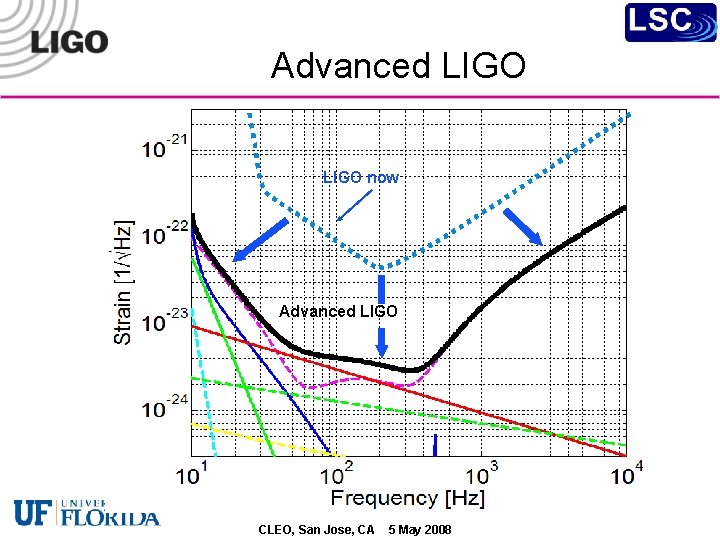
Advanced LIGO 100 now million light years Advanced LIGO CLEO, San Jose, CA 5 May 2008
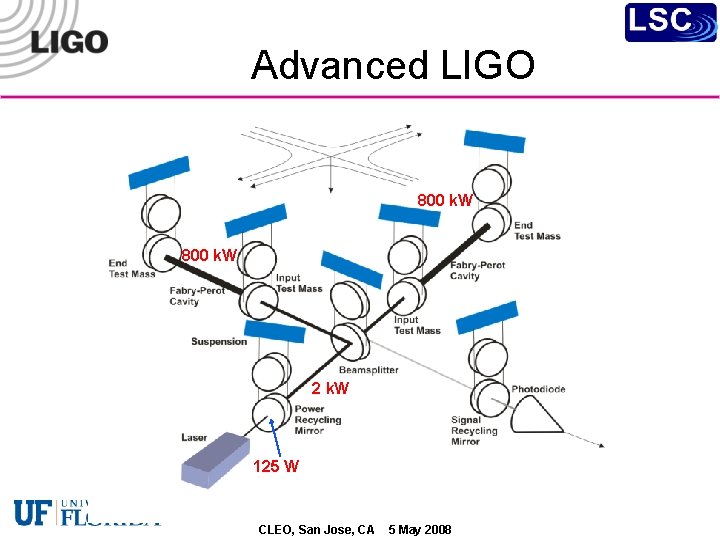
The LIGO Detector Advanced LIGO 800 k. W 10 k. W 800 10 k. W 2250 k. W W LIGO 5 W 125 W CLEO, San Jose, CA 5 May 2008
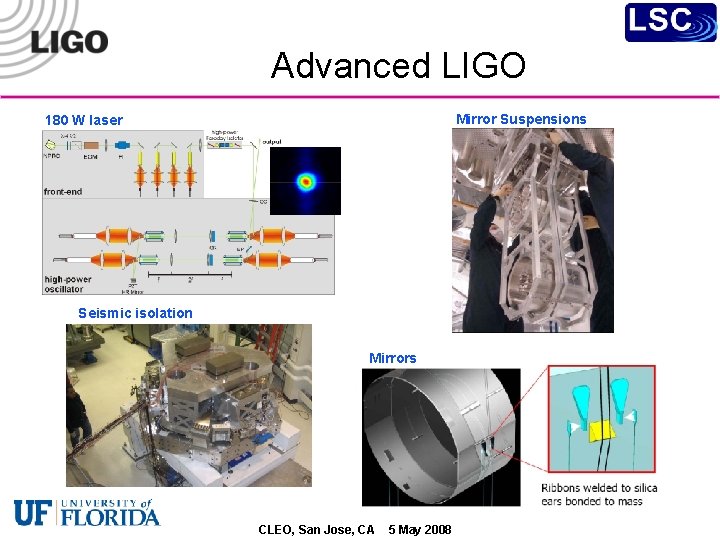
Advanced LIGO Mirror Suspensions 180 W laser Seismic isolation Mirrors CLEO, San Jose, CA 5 May 2008
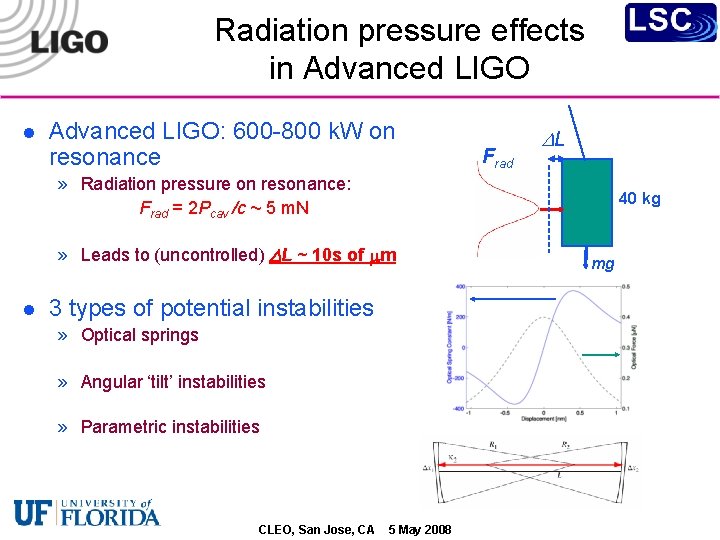
Radiation pressure effects in Advanced LIGO l Advanced LIGO: 600 -800 k. W on resonance Frad DL » Radiation pressure on resonance: Frad = 2 Pcav /c ~ 5 m. N 40 kg » Leads to (uncontrolled) DL ~ 10 s of mm l 3 types of potential instabilities » Optical springs » Angular ‘tilt’ instabilities » Parametric instabilities CLEO, San Jose, CA 5 May 2008 mg
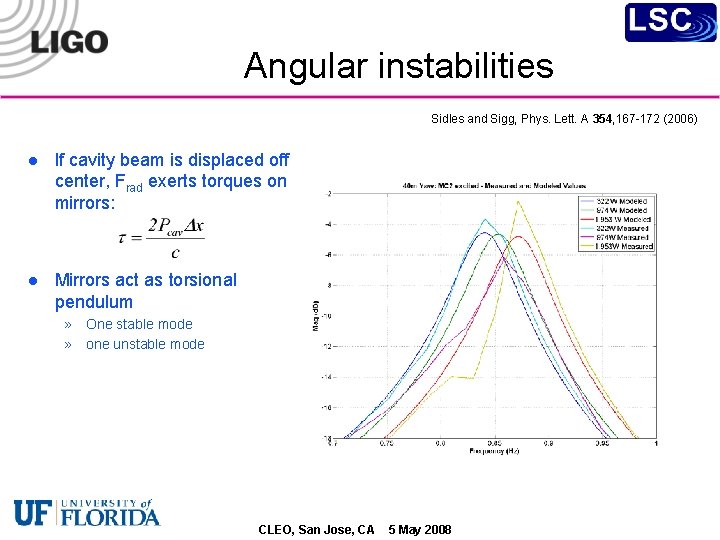
Angular instabilities Sidles and Sigg, Phys. Lett. A 354, 167 -172 (2006) l If cavity beam is displaced off center, Frad exerts torques on mirrors: l Mirrors act as torsional pendulum » One stable mode » one unstable mode CLEO, San Jose, CA 5 May 2008
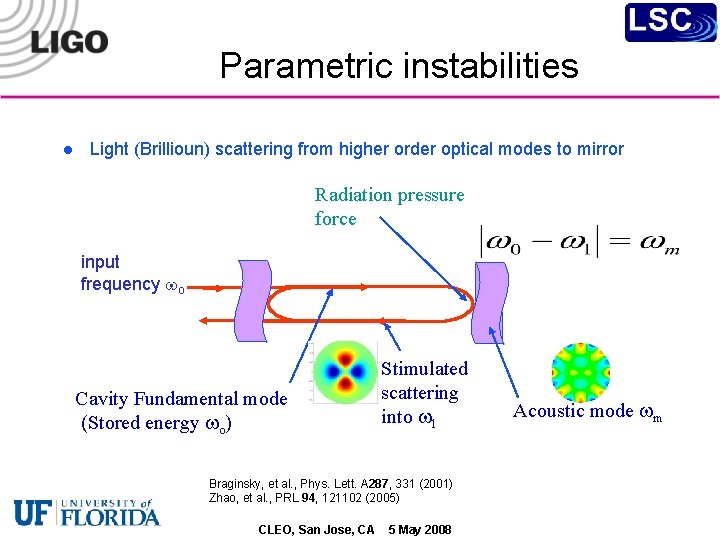
Parametric instabilities l Light (Brillioun) scattering from higher order optical modes to mirror Radiation pressure force input frequency wo Cavity Fundamental mode (Stored energy wo) Stimulated scattering into w 1 Braginsky, et al. , Phys. Lett. A 287, 331 (2001) Zhao, et al. , PRL 94, 121102 (2005) CLEO, San Jose, CA 5 May 2008 Acoustic mode wm
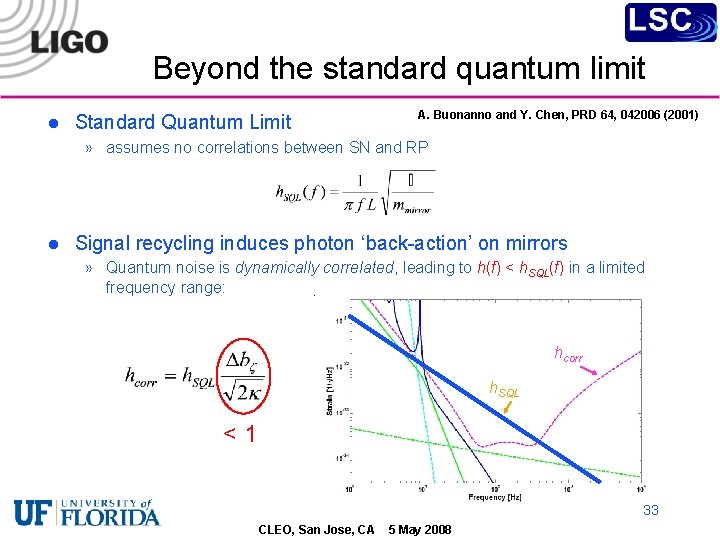
Beyond the standard quantum limit l Standard Quantum Limit A. Buonanno and Y. Chen, PRD 64, 042006 (2001) » assumes no correlations between SN and RP l Signal recycling induces photon ‘back-action’ on mirrors » Quantum noise is dynamically correlated, leading to h(f) < h. SQL(f) in a limited frequency range: hcorr h. SQL <1 33 CLEO, San Jose, CA 5 May 2008
The Microwave Universe Wilkinson Microwave Galaxy. Anisotropy NGC 6240 Probe Gravitational Wave The Gravitational Wave Universe Astronomy The Visible Universe The Radio Universe Stay ? Tuned… Chandra X-ray Telescope Image courtesy of NRAO/AUI; The X-ray Universe J. M. Dickey and F. J. Lockman CLEO, San Jose, CA 5 May 2008

LIGO Scientific Collaboration CLEO, San Jose, CA 5 May 2008
Acknowledgments • Members of the LIGO Laboratory • Members of the LIGO Science Collaboration • National Science Foundation More Information • http: //www. ligo. caltech. edu; www. ligo. org Thank you! CLEO, San Jose, CA 5 May 2008
- Slides: 36