
The Language Of Medicine Dr Michael P Gillespie


- Slides: 39
The Language Of Medicine Dr. Michael P. Gillespie
CHAPTER 9 MALE REPRODUCTIVE SYSTEM 2
CHAPTER GOALS Name, locate, and describe the functions of the organs of the male reproductive system. Define abnormal conditions and infections that affect the male reproductive system. Differentiate among several types of sexually transmitted infections.
CHAPTER GOALS Define combining forms used to describe the structures of the this system. Describe various laboratory tests and clinical procedures that are pertinent to the disorders of the male reproductive system, and recognize related abbreviations. Apply your new knowledge to understanding medical terms in their contexts, such as medical reports and records.
INTRODUCTION The male sex cell is called a spermatozoon, or sperm cell. The sperm cell carries its nuclear hereditary material, or chromosomes, in its head region. The tail consists of a flagellum, which makes the sperm cell mobile.
INTRODUCTION Only one spermatozoon out of 300 million sperm cells released during ejaculation can fertilize a single female ovum. If more than one egg is present in the fallopian tubes during ejaculation, multiple fertilizations are possible.
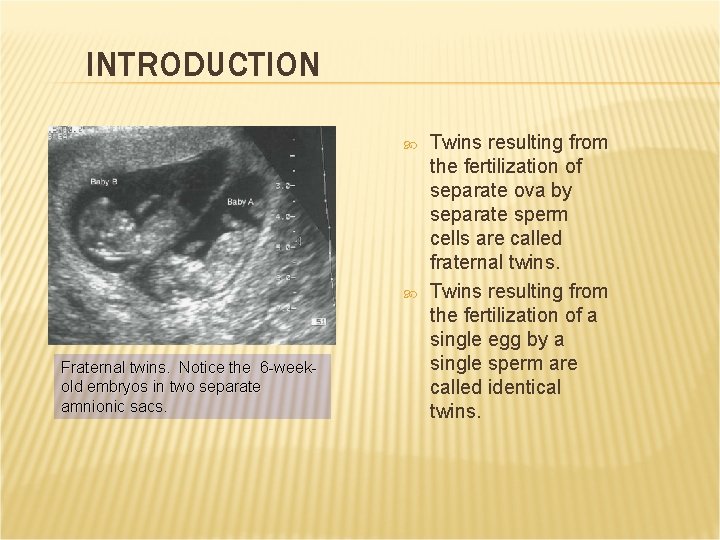
INTRODUCTION Fraternal twins. Notice the 6 -weekold embryos in two separate amnionic sacs. Twins resulting from the fertilization of separate ova by separate sperm cells are called fraternal twins. Twins resulting from the fertilization of a single egg by a single sperm are called identical twins.
INTRODUCTION � The organs of the male reproductive system are designed to produce and release billions of sperm cells throughout the man’s lifetime. � The hormone called testosterone is responsible for the bodily characteristics of the male (such as beard, pubic hair, and deeper voice).
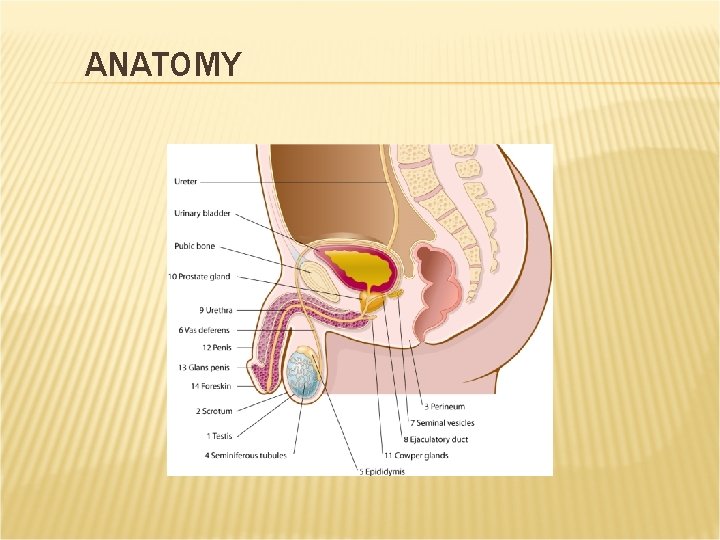
ANATOMY
ANATOMY
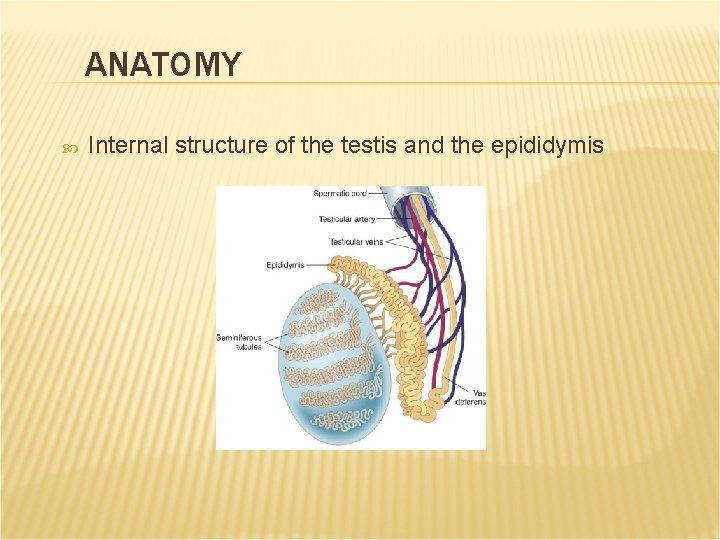
ANATOMY Internal structure of the testis and the epididymis
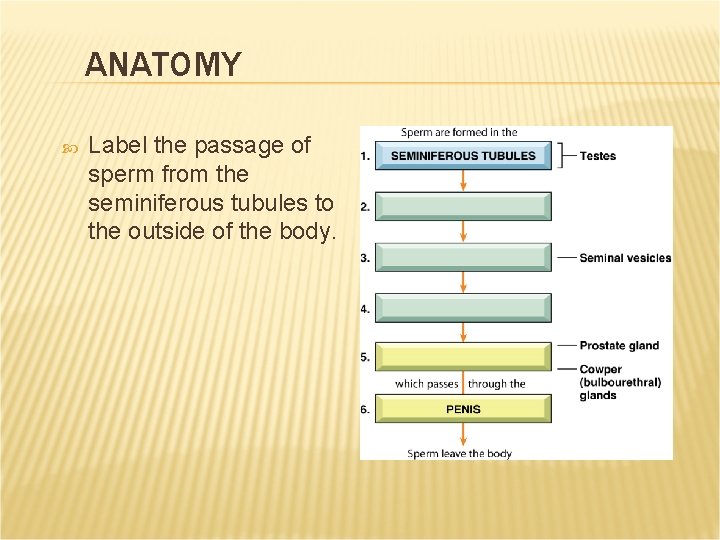
ANATOMY Label the passage of sperm from the seminiferous tubules to the outside of the body.
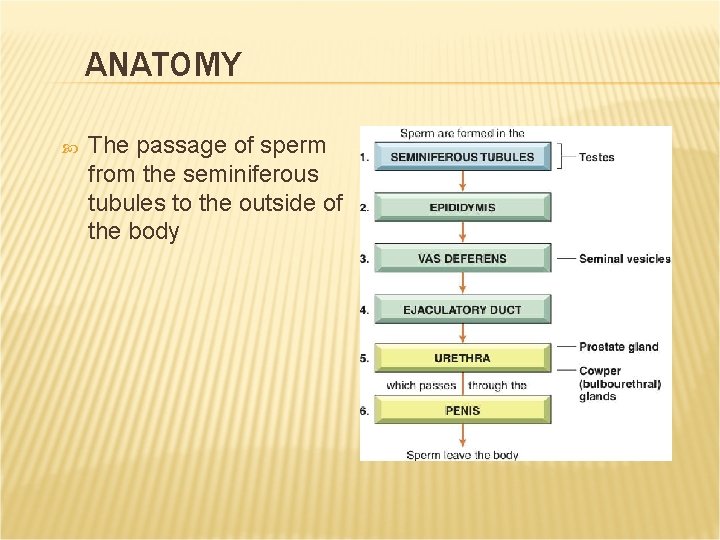
ANATOMY The passage of sperm from the seminiferous tubules to the outside of the body
VOCABULARY � bulbourethral gland (Cowper gland) � ejaculation � ejaculatory duct � epididymis (pl. epididymides) � flagellum � fraternal twins
VOCABULARY � � � glans penis identical twins parenchyma penis perineum prepuce (or foreskin)
VOCABULARY � prostate gland � scrotum � semen � seminal vesicle � seminiferous tubules � spermatozoon (pl. spermatozoa)
VOCABULARY � sterilization � stroma � testis (pl. : testes) � testosterone � vas deferens
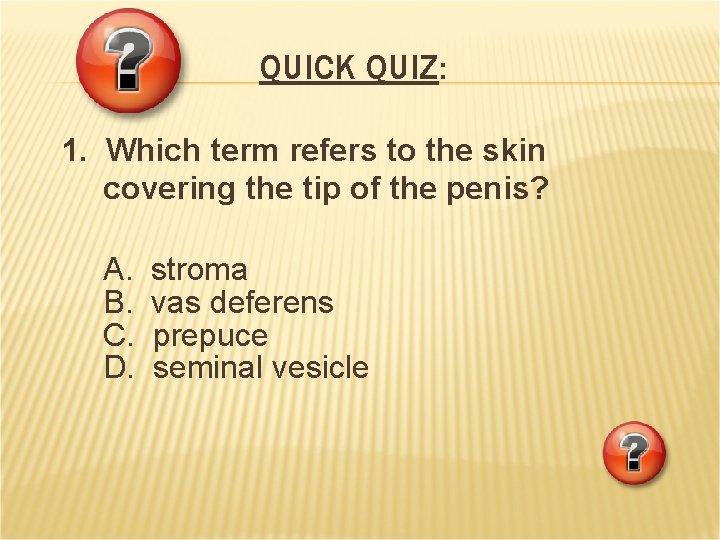
QUICK QUIZ: 1. Which term refers to the skin covering the tip of the penis? A. B. C. D. stroma vas deferens prepuce seminal vesicle
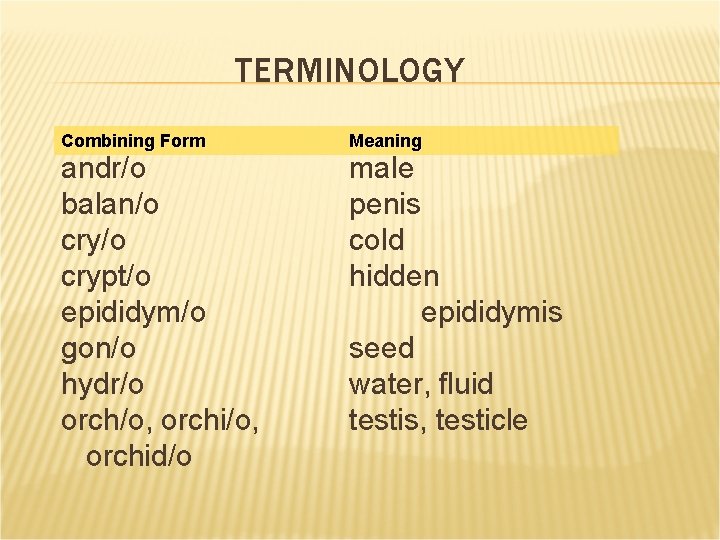
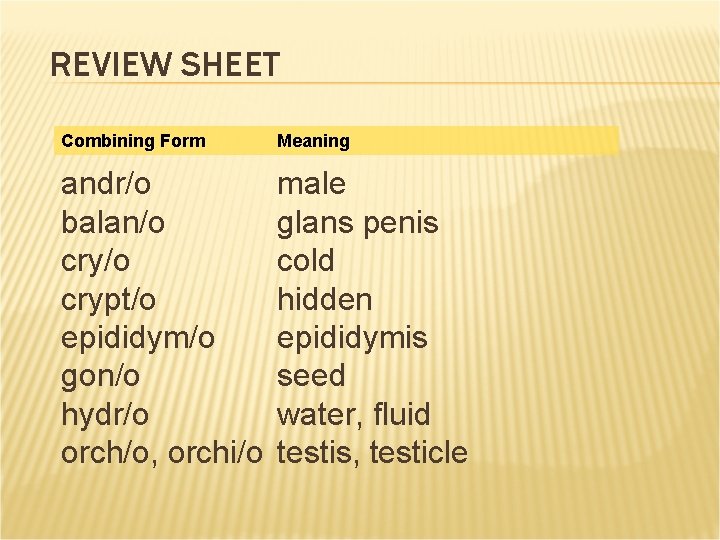
TERMINOLOGY Combining Form andr/o balan/o crypt/o epididym/o gon/o hydr/o orch/o, orchid/o Meaning male penis cold hidden epididymis seed water, fluid testis, testicle
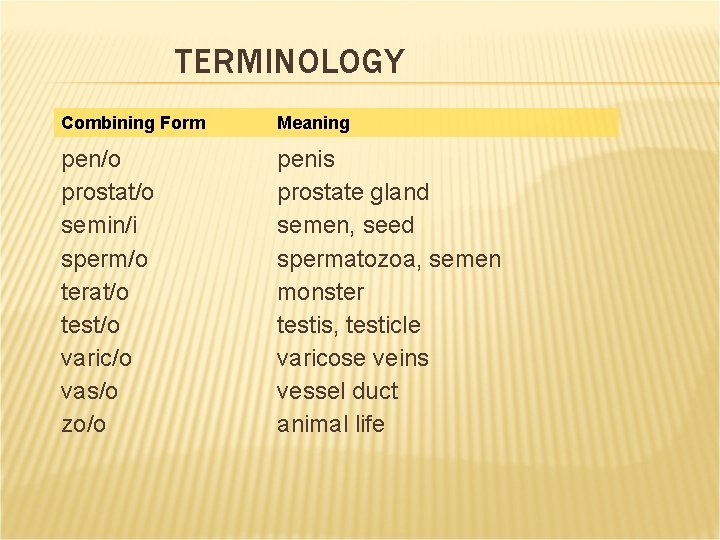
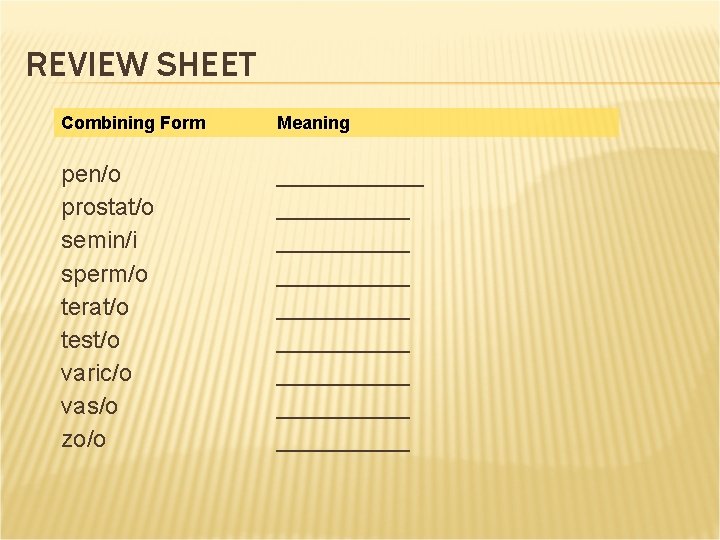
TERMINOLOGY Combining Form Meaning pen/o prostat/o semin/i sperm/o terat/o test/o varic/o vas/o zo/o penis prostate gland semen, seed spermatozoa, semen monster testis, testicle varicose veins vessel duct animal life
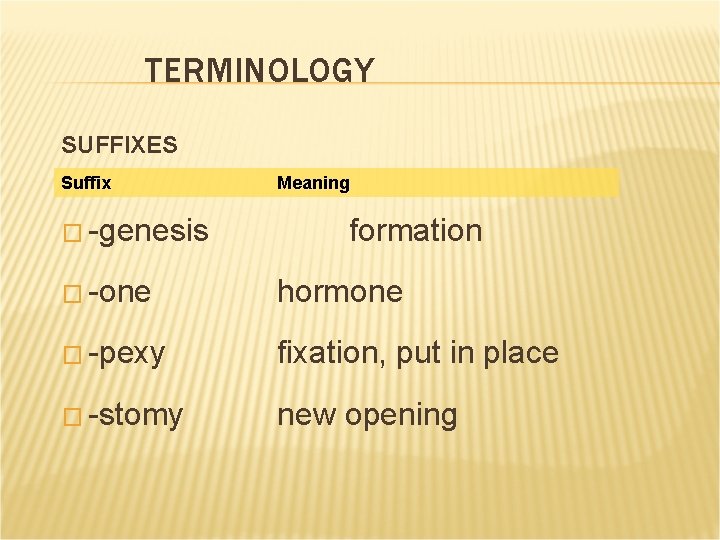
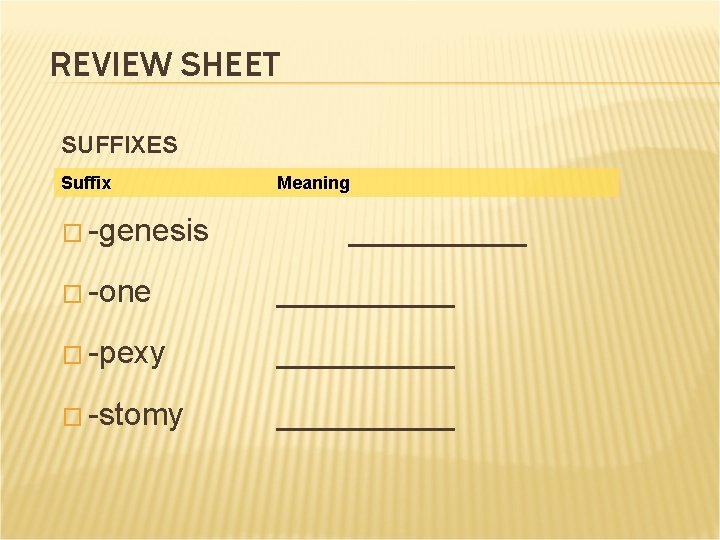
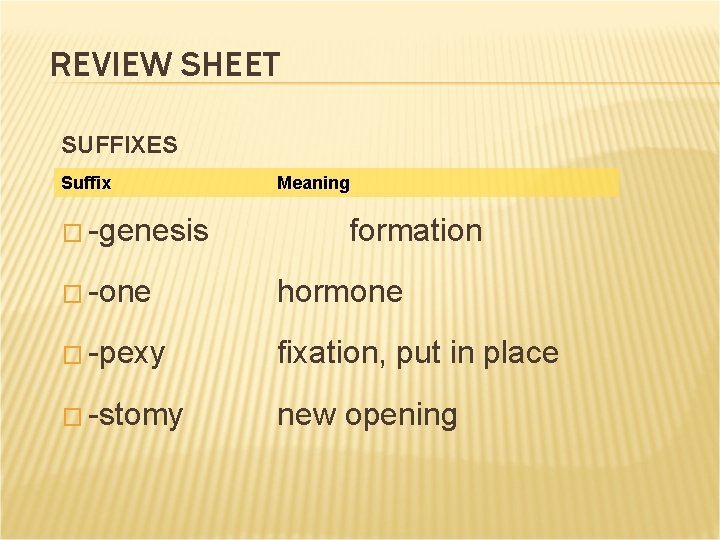
TERMINOLOGY SUFFIXES Suffix � -genesis Meaning formation � -one hormone � -pexy fixation, put in place � -stomy new opening
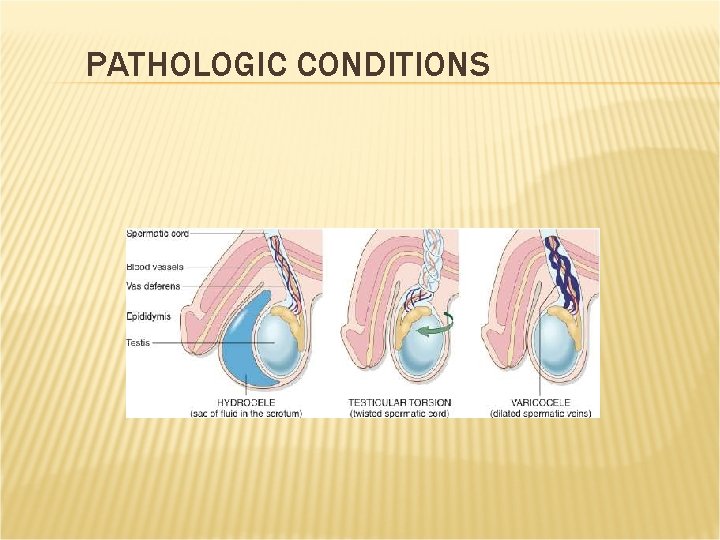
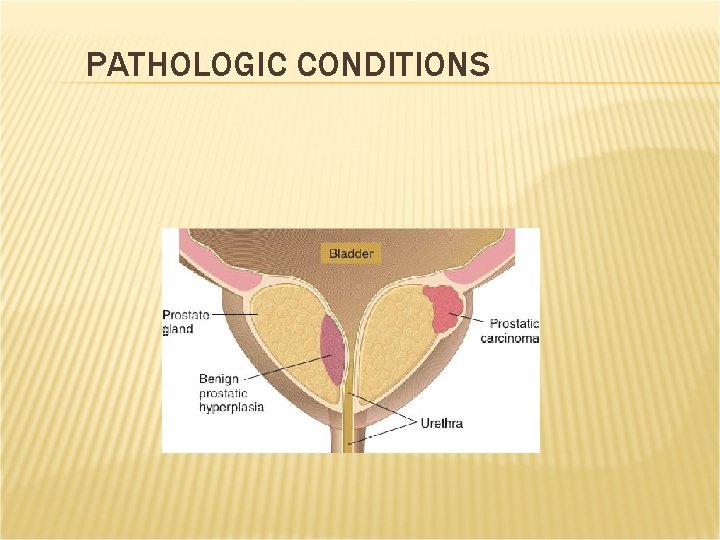
PATHOLOGIC CONDITIONS
PATHOLOGIC CONDITIONS
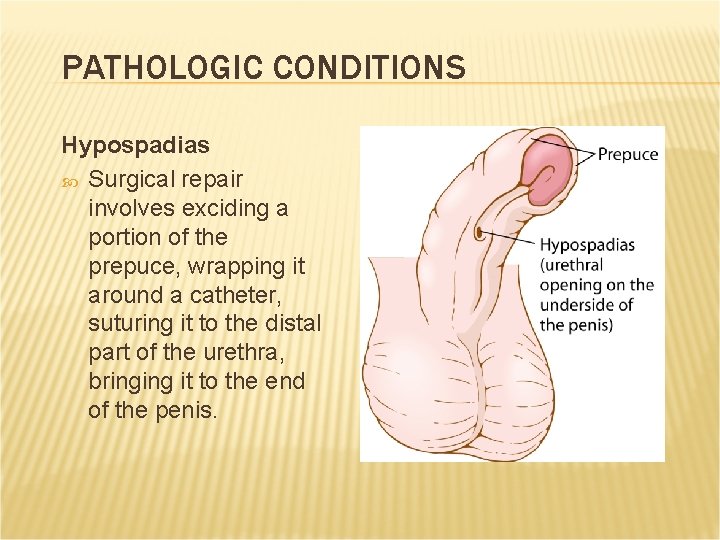
PATHOLOGIC CONDITIONS Hypospadias Surgical repair involves exciding a portion of the prepuce, wrapping it around a catheter, suturing it to the distal part of the urethra, bringing it to the end of the penis.
SEXUALLY TRANSMITTED DISEASES STDs chlamydia Ø gonorrhea Ø herpes genitalis Ø human papilloma virus (HPV) Ø syphilis Ø
LABORATORY TESTS AND CLINICAL PROCEDURES Laboratory Tests PSA test Ø semen analysis Ø
QUICK QUIZ: 2. What does the PSA test for? A. B. C. D. levels of infection sperm mobility sperm motility levels of an antigen
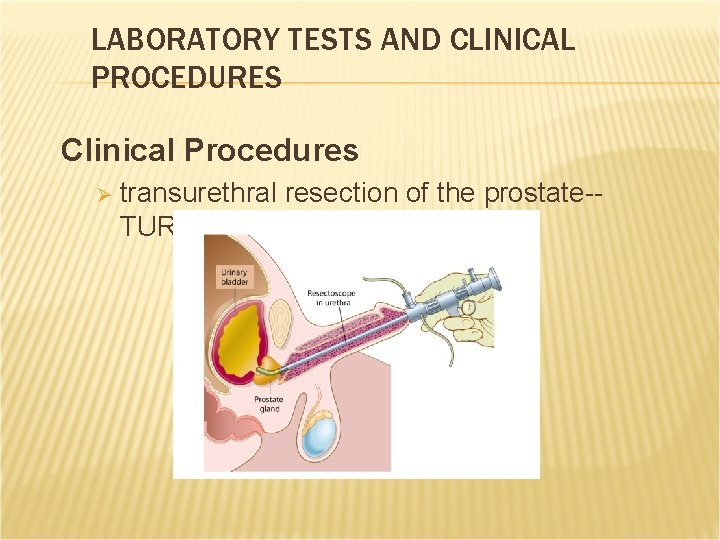
LABORATORY TESTS AND CLINICAL PROCEDURES Clinical Procedures Ø transurethral resection of the prostate-TURP
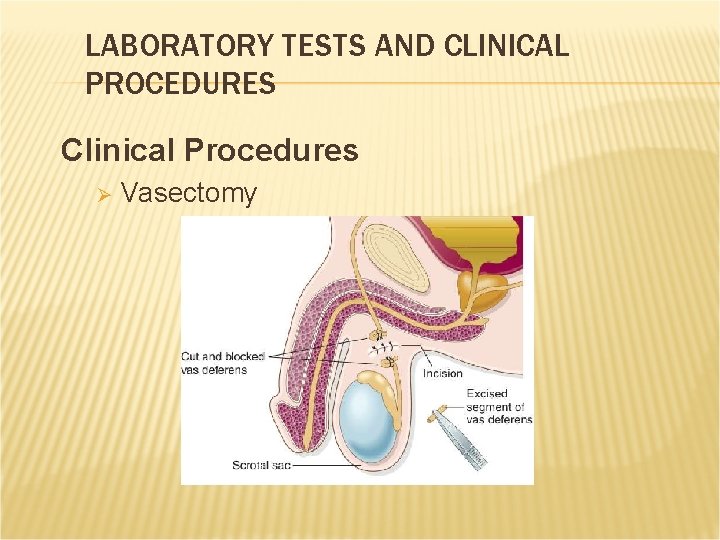
LABORATORY TESTS AND CLINICAL PROCEDURES Clinical Procedures Ø Vasectomy
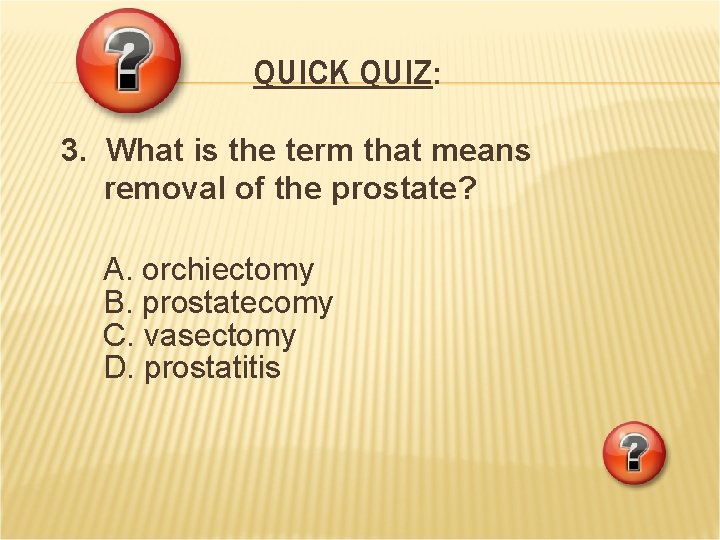
QUICK QUIZ: 3. What is the term that means removal of the prostate? A. orchiectomy B. prostatecomy C. vasectomy D. prostatitis
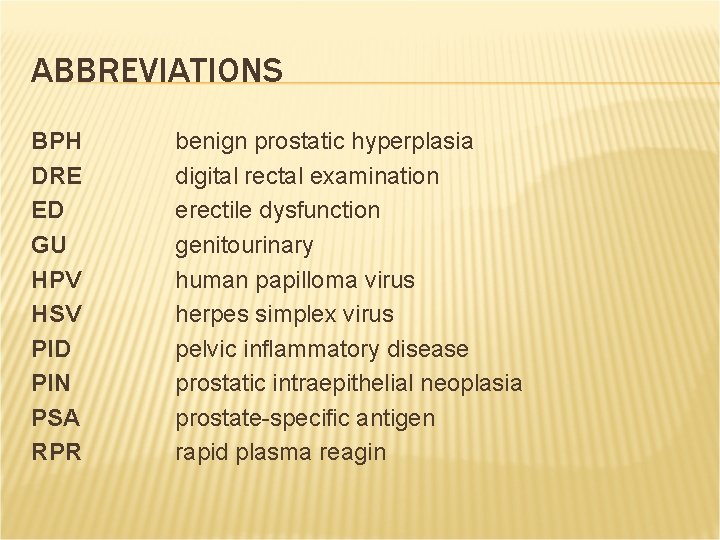
ABBREVIATIONS BPH DRE ED GU HPV HSV PID PIN PSA RPR benign prostatic hyperplasia digital rectal examination erectile dysfunction genitourinary human papilloma virus herpes simplex virus pelvic inflammatory disease prostatic intraepithelial neoplasia prostate-specific antigen rapid plasma reagin
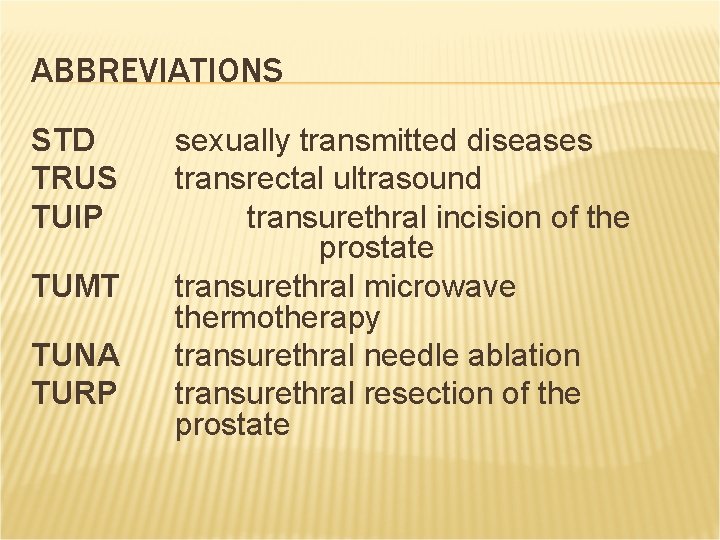
ABBREVIATIONS STD TRUS TUIP TUMT TUNA TURP sexually transmitted diseases transrectal ultrasound transurethral incision of the prostate transurethral microwave thermotherapy transurethral needle ablation transurethral resection of the prostate
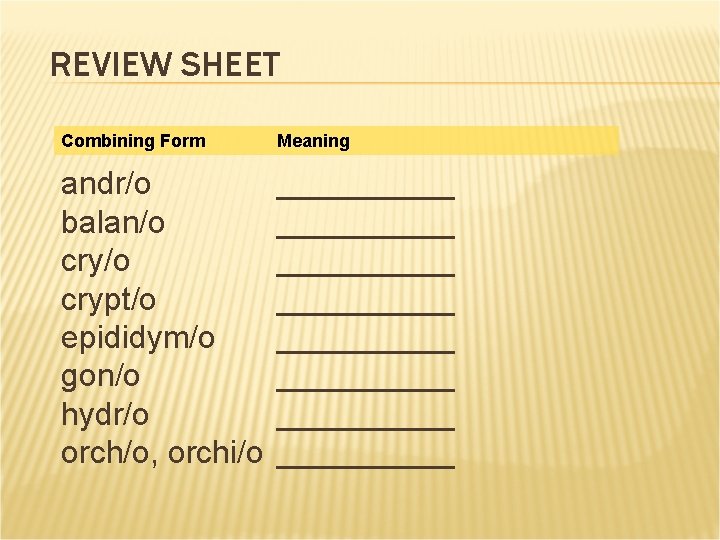
REVIEW SHEET Combining Form Meaning andr/o balan/o crypt/o epididym/o gon/o hydr/o orch/o, orchi/o __________ __________
REVIEW SHEET Combining Form Meaning andr/o balan/o crypt/o epididym/o gon/o hydr/o orch/o, orchi/o male glans penis cold hidden epididymis seed water, fluid testis, testicle
REVIEW SHEET Combining Form Meaning pen/o prostat/o semin/i sperm/o terat/o test/o varic/o vas/o zo/o __________________________
REVIEW SHEET Combining Form. Meaning pen/o penis prostat/o prostate gland semin/i semen, seed sperm/o spermatozoa, semen terat/o monster test/o testis, testicle varic/o varicose veins vas/o vessel duct zo/o animal life
REVIEW SHEET SUFFIXES Suffix � -genesis Meaning _____ � -one _____ � -pexy _____ � -stomy _____
REVIEW SHEET SUFFIXES Suffix � -genesis Meaning formation � -one hormone � -pexy fixation, put in place � -stomy new opening
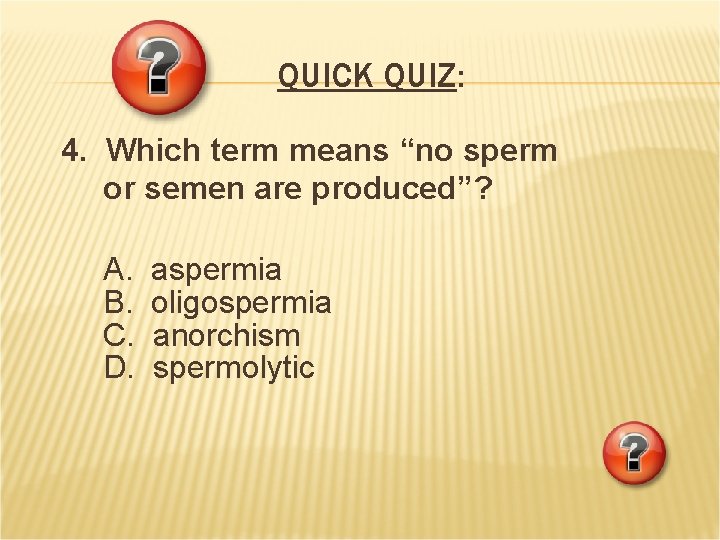
QUICK QUIZ: 4. Which term means “no sperm or semen are produced”? A. B. C. D. aspermia oligospermia anorchism spermolytic