
THE LANGUAGE OF FILM 100 Years of Film
- Slides: 22
THE LANGUAGE OF FILM
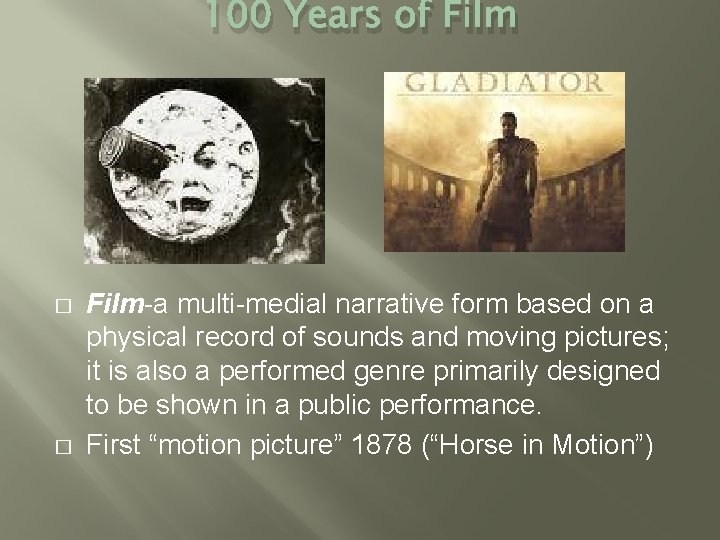
100 Years of Film � � Film-a multi-medial narrative form based on a physical record of sounds and moving pictures; it is also a performed genre primarily designed to be shown in a public performance. First “motion picture” 1878 (“Horse in Motion”)
STRUCTURE � Refers to the audiovisual of a film and the particular tools and techniques used to create that design. Camera � Lighting � Sound � Editing �
CONTENT The script � Story � Character � Theme �
The Production Process Development � Pre-Production � Post-Production � Distribution �
Development � � � Producer and/or Director gets an idea Creates a treatment (25 -30 page description of story) Begins pitching the idea to film distributors and production companies Film Distributor-marketing and release of film Production Company-financially backs the film Hire a screenwriter to write a screenplay
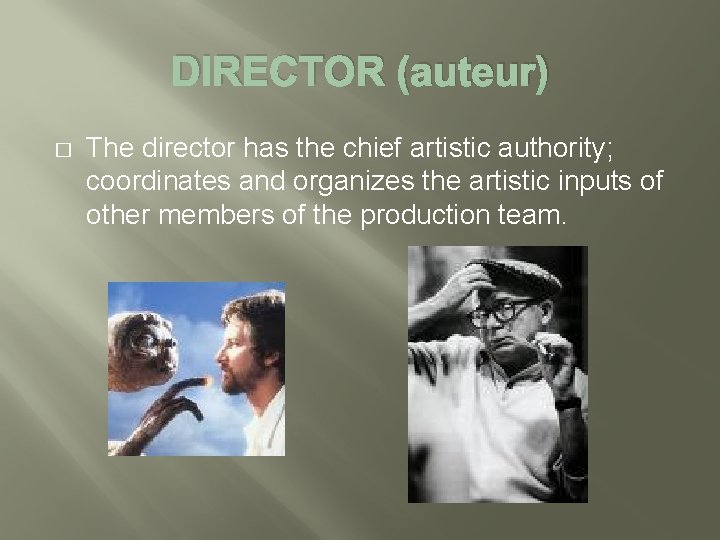
DIRECTOR (auteur) � The director has the chief artistic authority; coordinates and organizes the artistic inputs of other members of the production team.
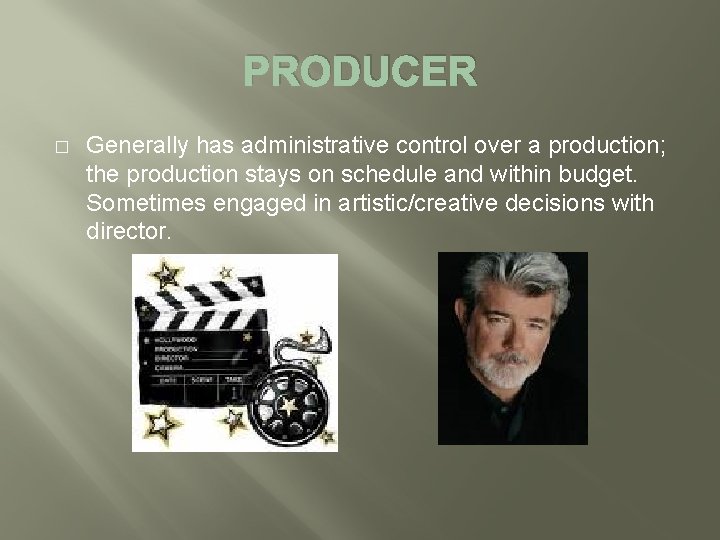
PRODUCER � Generally has administrative control over a production; the production stays on schedule and within budget. Sometimes engaged in artistic/creative decisions with director.
Production The Physical Creation of the Film � � � Storyboards-illustrated shot-by-shot breakdown of scenes in the film Unit Production Manager-maintains budget, schedule; liaison to the production company Production Designer-creates the look of the film (sets, costumes, locations, etc. )
Production � � Casting Director-responsible for casting the actors Director of Photography-main cinematographer, creates and plans camera work Sound Designer-responsible for the sound work during the shoot Most “shoots” are 14 -18 hours a day
Post-Production � � Editing/Editor-process of assembling all of the shots into a cohesive whole Creation of special effects Sound editing: ADR-addition of the sound tracks, dialogue, etc. Foley-everyday sound effects Composer-creation of the film’s score/music
Distribution � � Marketing of film through multiple channels Release of film domestically and overseas Released to the DVD, streaming, television markets Any future screening events
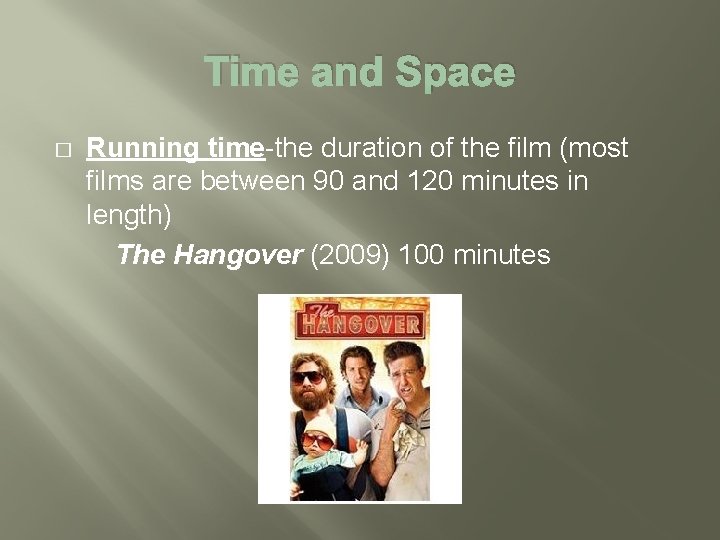
Time and Space � Running time-the duration of the film (most films are between 90 and 120 minutes in length) The Hangover (2009) 100 minutes
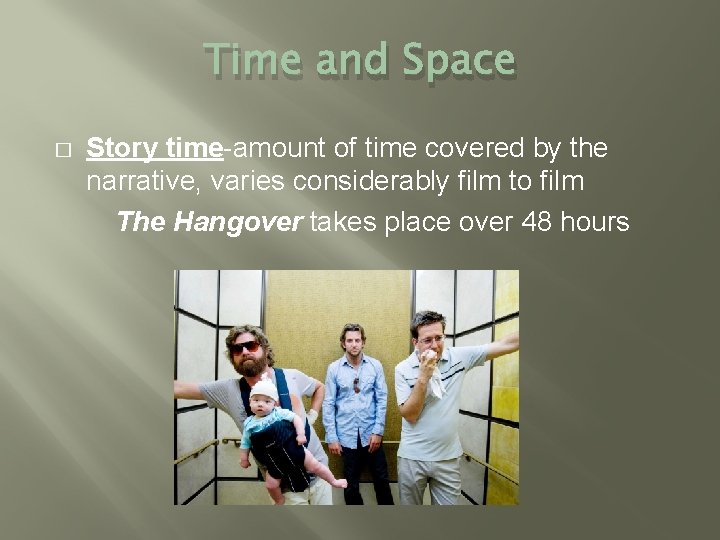
Time and Space � Story time-amount of time covered by the narrative, varies considerably film to film The Hangover takes place over 48 hours
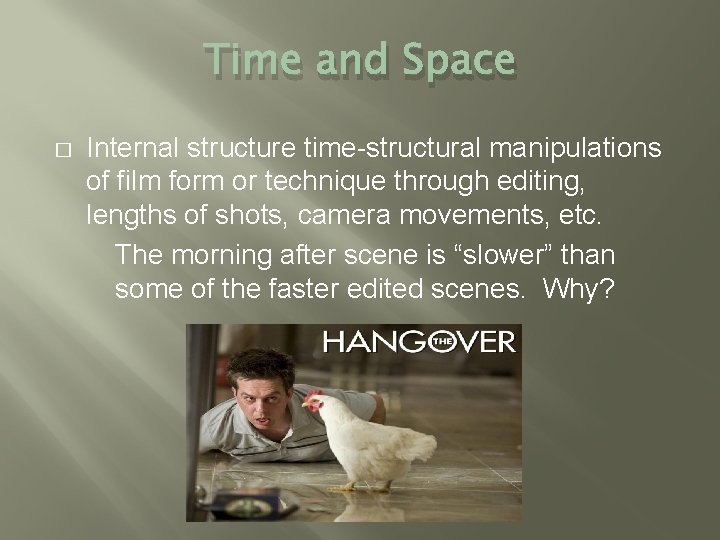
Time and Space � Internal structure time-structural manipulations of film form or technique through editing, lengths of shots, camera movements, etc. The morning after scene is “slower” than some of the faster edited scenes. Why?
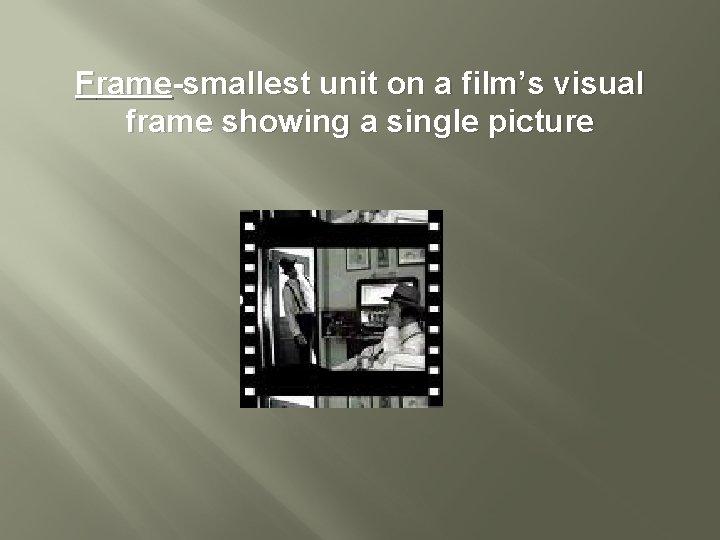
Frame-smallest unit on a film’s visual frame showing a single picture
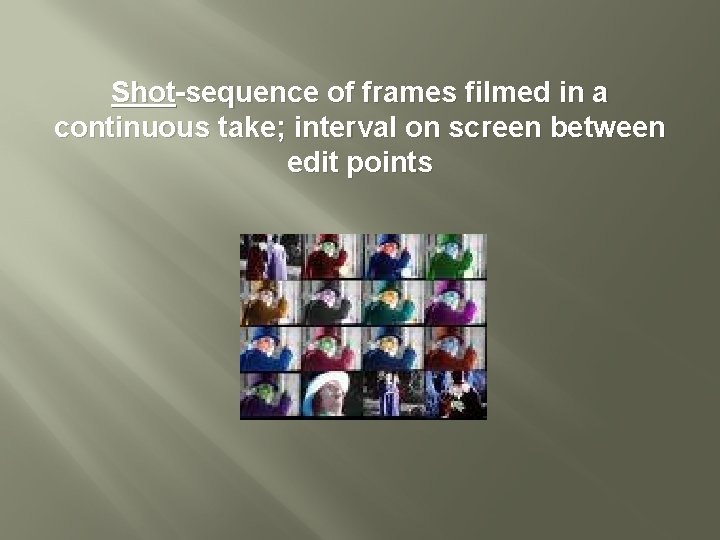
Shot-sequence of frames filmed in a continuous take; interval on screen between edit points
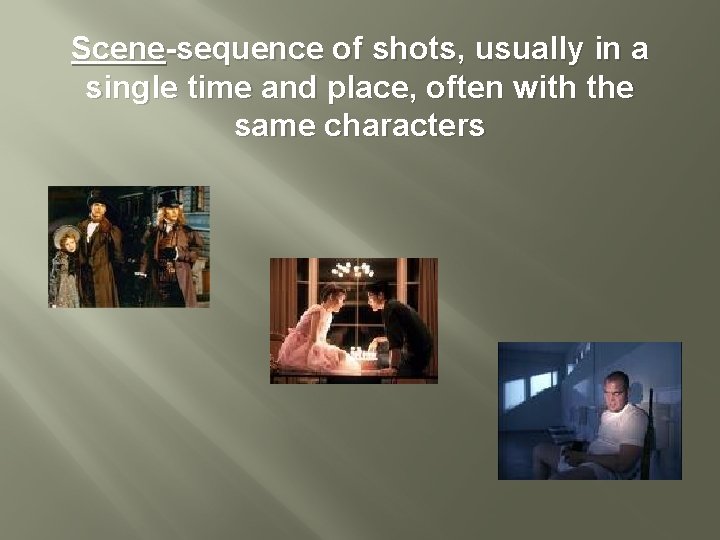
Scene-sequence of shots, usually in a single time and place, often with the same characters
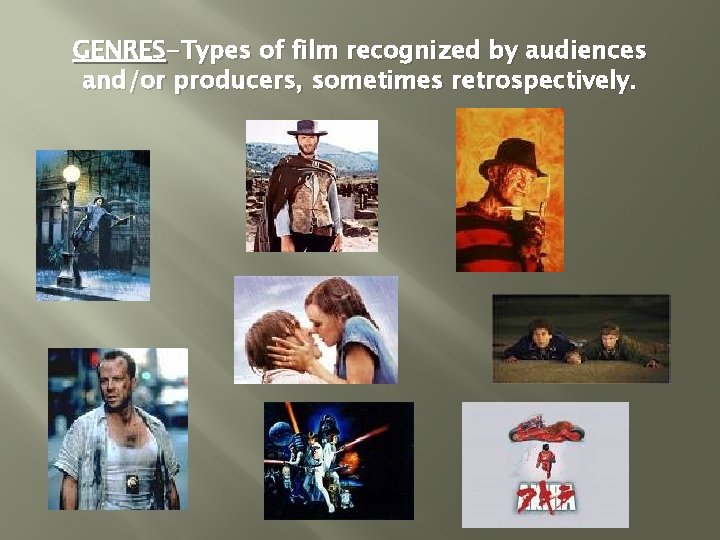
GENRES-Types of film recognized by audiences and/or producers, sometimes retrospectively.
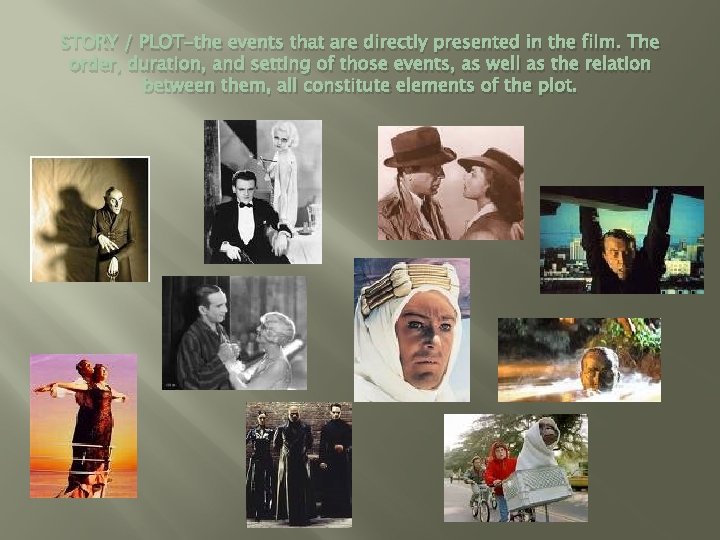
STORY / PLOT-the events that are directly presented in the film. The order, duration, and setting of those events, as well as the relation between them, all constitute elements of the plot.
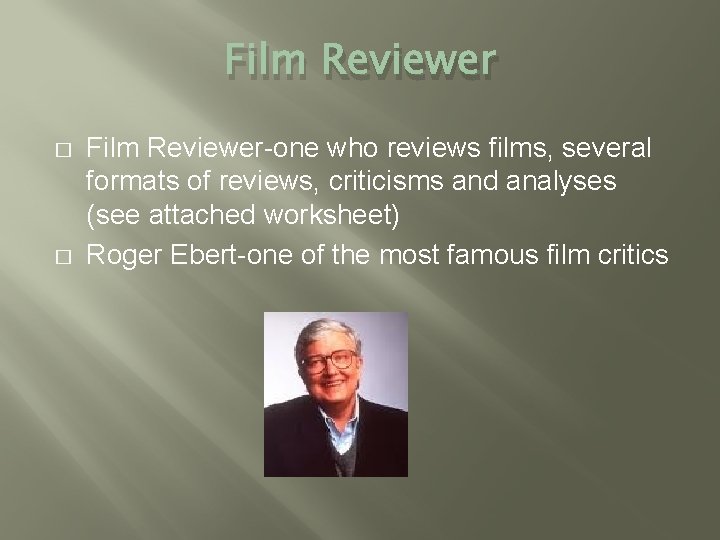
Film Reviewer � � Film Reviewer-one who reviews films, several formats of reviews, criticisms and analyses (see attached worksheet) Roger Ebert-one of the most famous film critics
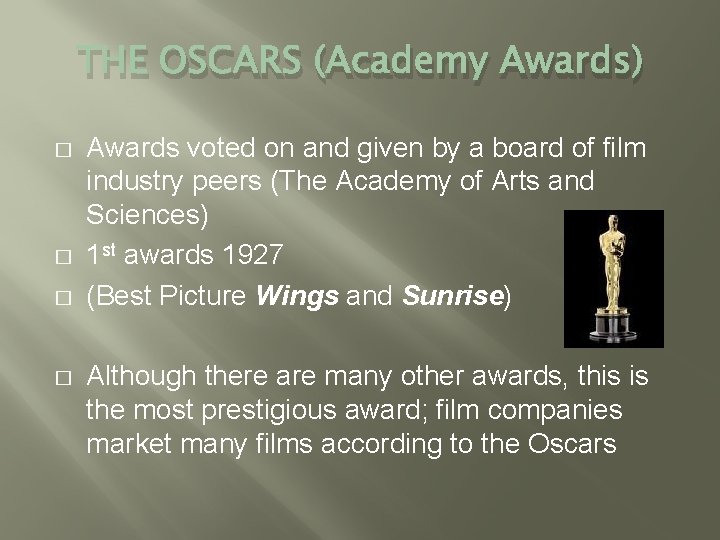
THE OSCARS (Academy Awards) � � Awards voted on and given by a board of film industry peers (The Academy of Arts and Sciences) 1 st awards 1927 (Best Picture Wings and Sunrise) Although there are many other awards, this is the most prestigious award; film companies market many films according to the Oscars