
The Language of Chemistry Matter Symbols Formulas Chemical
The Language of Chemistry Matter, Symbols, Formulas & Chemical Equations
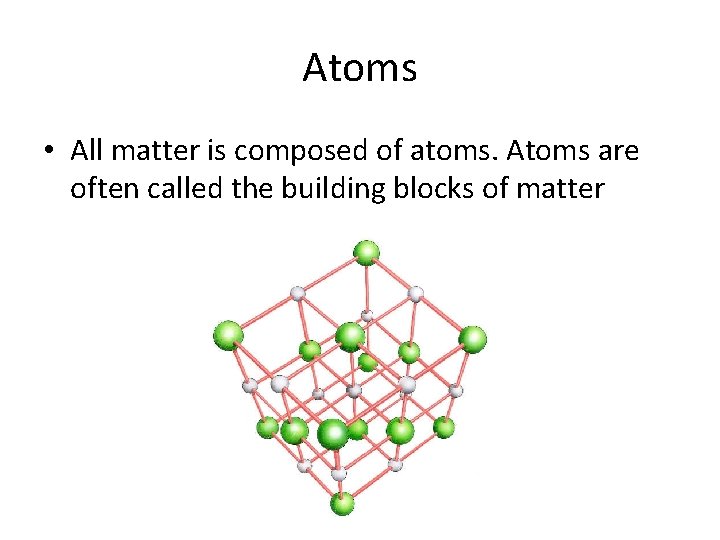
Atoms • All matter is composed of atoms. Atoms are often called the building blocks of matter

Element • Matter that is made up of only one kind of atom
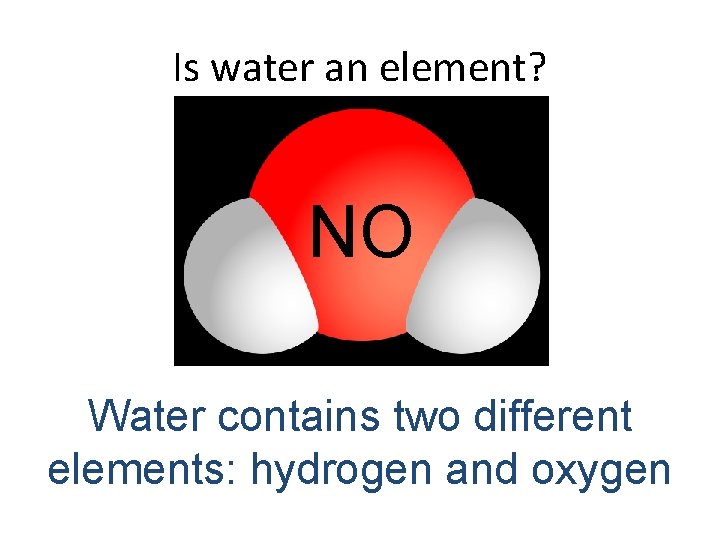
Is water an element? NO Water contains two different elements: hydrogen and oxygen
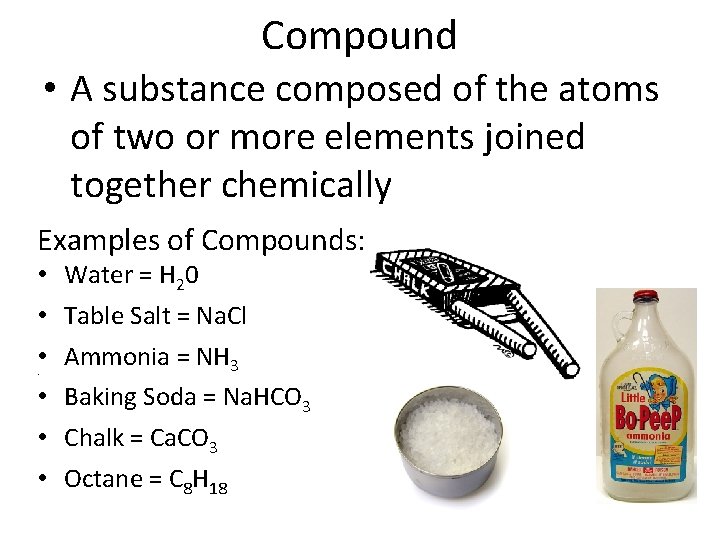
Compound • A substance composed of the atoms of two or more elements joined together chemically Examples of Compounds: • • Water = H 20 Table Salt = Na. Cl Ammonia = NH 3 Baking Soda = Na. HCO 3 Chalk = Ca. CO 3 Octane = C 8 H 18
Molecule • A collection of atoms that move and act together as a single entity • Atoms of a molecule are held together by chemical bonds

H Atoms H 2 Molecules
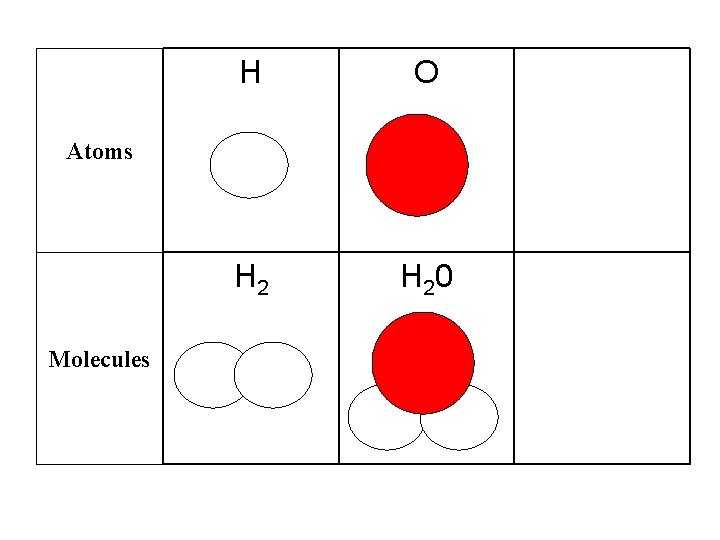
H O H 20 Atoms Molecules
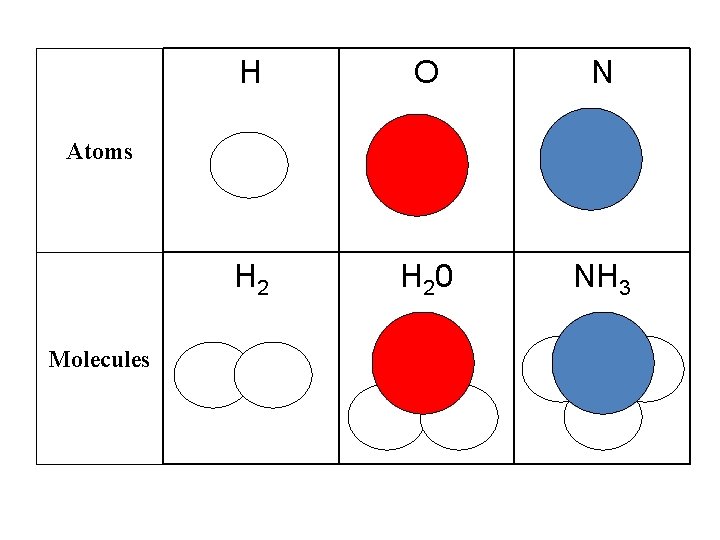
H O N H 20 NH 3 Atoms Molecules
Chemical Symbols • Some symbols are a single letter as: H, B, C, N, O, F, K • Other symbols are 2 letters, but only the first letter is capitalized: He, Li, Be, Na, Mg, Al • Note: Co ≠ CO & Ni ≠ NI
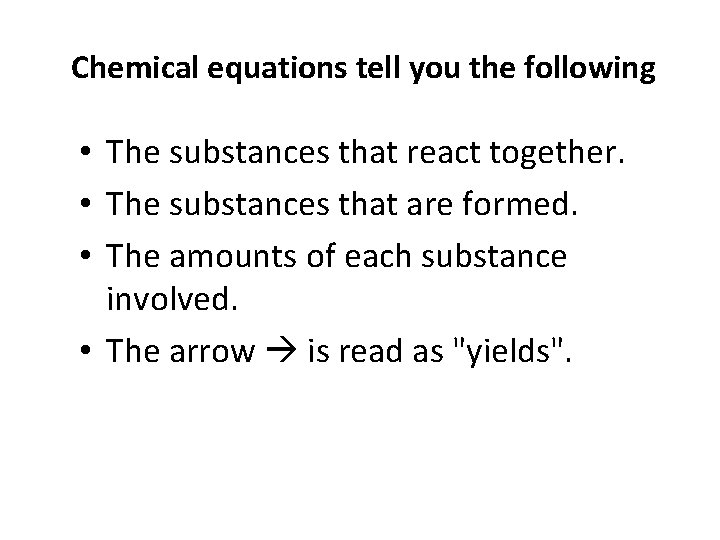
Chemical equations tell you the following • The substances that react together. • The substances that are formed. • The amounts of each substance involved. • The arrow is read as "yields".
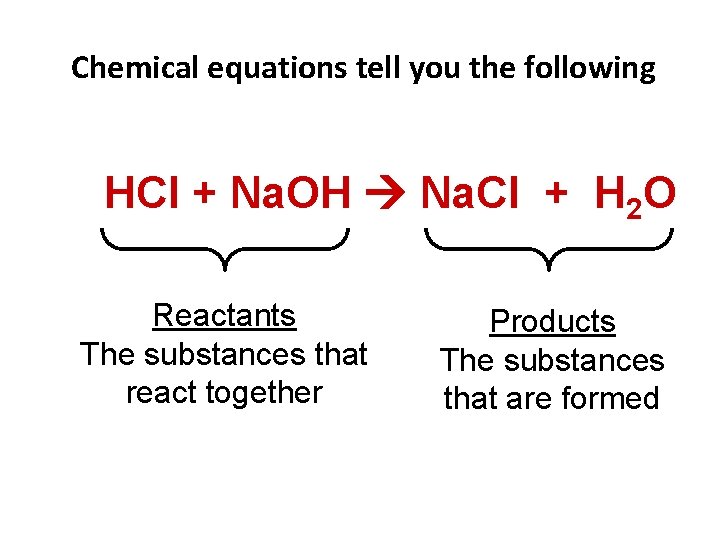
Chemical equations tell you the following HCl + Na. OH Na. Cl + H 2 O Reactants The substances that react together Products The substances that are formed

These numbers are found in a chemical equation Subscripts The small numbers to the lower right of chemical symbols. Subscripts represent the number of atoms of each element in the molecule. Coefficients The large numbers in front of chemical formulas. Coefficients represent the number of molecules of the substance in the reaction.
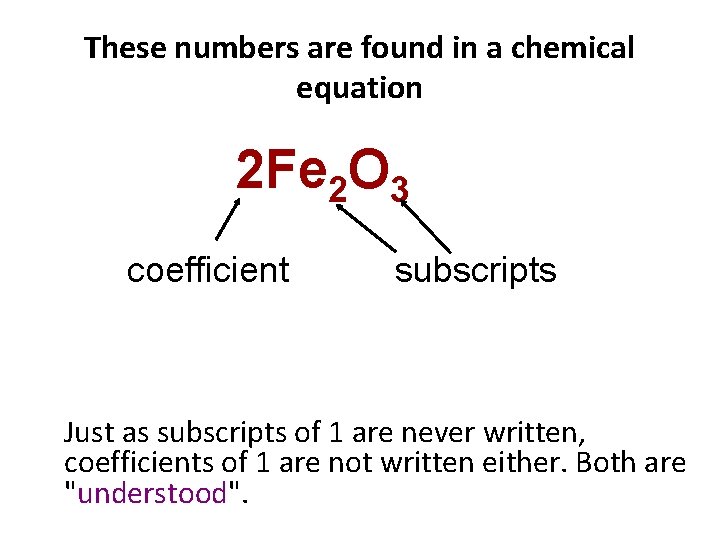
These numbers are found in a chemical equation 2 Fe 2 O 3 coefficient subscripts Just as subscripts of 1 are never written, coefficients of 1 are not written either. Both are "understood".
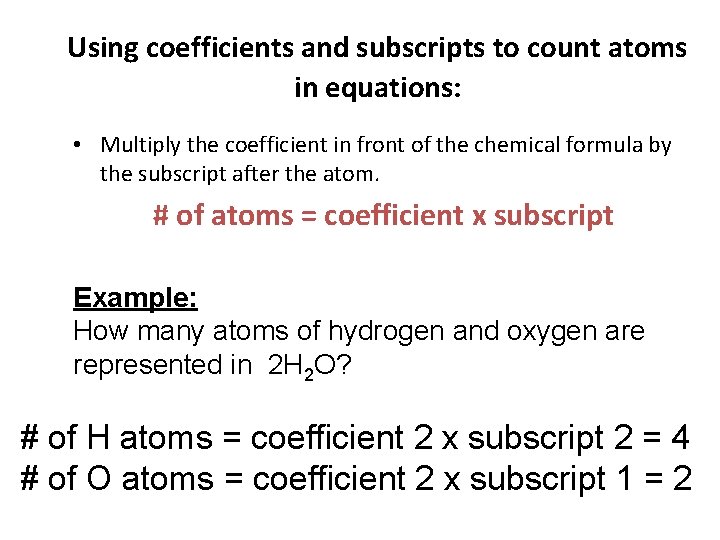
Using coefficients and subscripts to count atoms in equations: • Multiply the coefficient in front of the chemical formula by the subscript after the atom. # of atoms = coefficient x subscript Example: How many atoms of hydrogen and oxygen are represented in 2 H 2 O? # of H atoms = coefficient 2 x subscript 2 = 4 # of O atoms = coefficient 2 x subscript 1 = 2
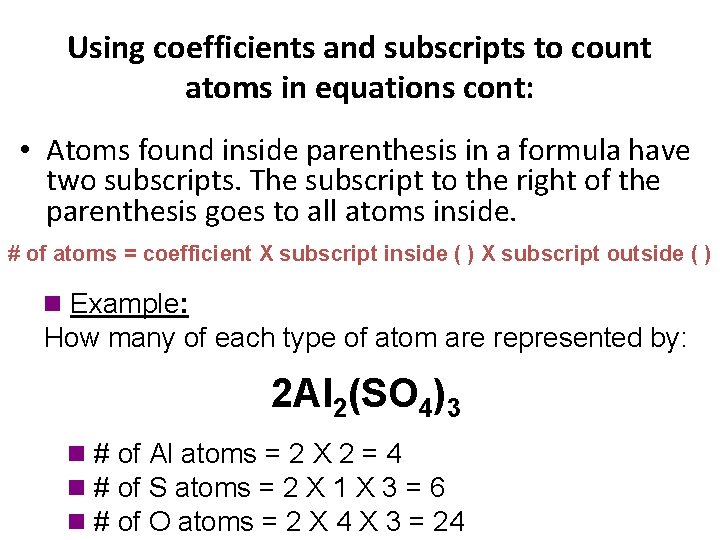
Using coefficients and subscripts to count atoms in equations cont: • Atoms found inside parenthesis in a formula have two subscripts. The subscript to the right of the parenthesis goes to all atoms inside. # of atoms = coefficient X subscript inside ( ) X subscript outside ( ) n Example: How many of each type of atom are represented by: 2 Al 2(SO 4)3 n # of Al atoms = 2 X 2 = 4 n # of S atoms = 2 X 1 X 3 = 6 n # of O atoms = 2 X 4 X 3 = 24
- Slides: 16