
The Language of Anatomy LA 910 2 2


- Slides: 17
The Language of Anatomy LA. 910. 2. 2. 3 The student will organize information to show understanding or relationships among facts, ideas, and events (e. g. , representing key points within text through charting, mapping, paraphrasing, summarizing, contrasting, or outlining)
Levels of Structural Organization 1. Chemical- simplest form, atoms combine to form molecules and molecules form organelles 2. Cellular- organelles form cells- most cells have unique functions. Smallest unit of life. 3. Tissue- Groups of similar cells and have unique functions. o 4 basic types: epithelial, connective, muscular, and nervous
Levels of Structural Organization 4. Organ- composed of at least 2 different tissue types (typically 4) that performs a specific function for the body 5. Organ System- organs of similar type form organ systems of organization to promote life. 6. Organism- sum of total of all structural levels of organization to promote life
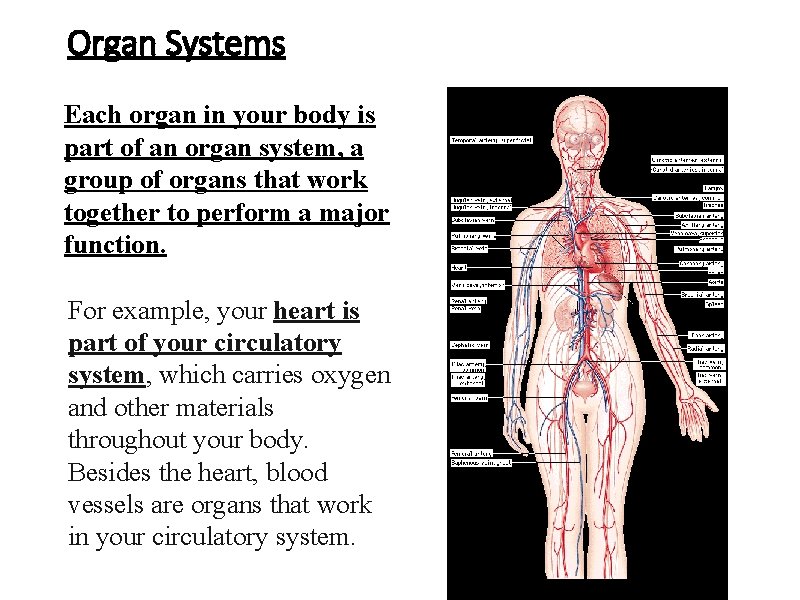
Organ Systems Each organ in your body is part of an organ system, a group of organs that work together to perform a major function. For example, your heart is part of your circulatory system, which carries oxygen and other materials throughout your body. Besides the heart, blood vessels are organs that work in your circulatory system.
Necessary Life Functions 1. Maintain Boundariesinternal distinct from external environment 2. Movement- whole body or substances within the body 3. Responsiveness- ability to respond to changes in the environment 4. Digestion- break down foods to chemicals that can be absorbed into the bloodstream 5. Met/ab/o/lism- break down and synthesizing of chemicals for energy 6. Excretion- process of removing waste from the body 7. Reproductioncellular or organism 8. Growth- increase in the size of a body part or the organism
11 Body Systems • Skeletal- bones, connective tissues, framework for the body • Lymphatic- immune system, houses WBC • Integumentary- skin, hair, nails. Creates barrier for internal and external environment • Cardiovascular- heart, blood vesselsprovides means of transport
11 Body Systems • Muscular- allows locomotion, maintains posture, produces heat • Endocrine- glands secrete hormones for regulation, slow control • Nervous- fast acting control, activates appropriate muscles and glands • Respiratory- keeps blood supplied with oxygen and carbon dioxide
11 Body Systems • Reproductive- to reproduce offspring and/or cells • Excretory- removes wastes • Digestive- breaks down foods so that they can be absorbed On the next slide, go through each body system and describe what Necessary Life Function it is responsible for. **Each life function can be associated with more than one body system (and each body system can have more than one life function)**
Skeletal. Lymphatic. Integumentary. Cardiovascular. Muscular-
Endocrine Nervous- Respiratory-
Reproductive. Urinary/Excretory- Digestive-
Directional and Anatomical Terms Anatomical Position: Body erect, palms face out, thumbs point away from the body **When referring to left or right, it is the left or right of the person, not your left or right! Divisions of the body: Appendicular- your appendages Axial- your head, neck, or trunk
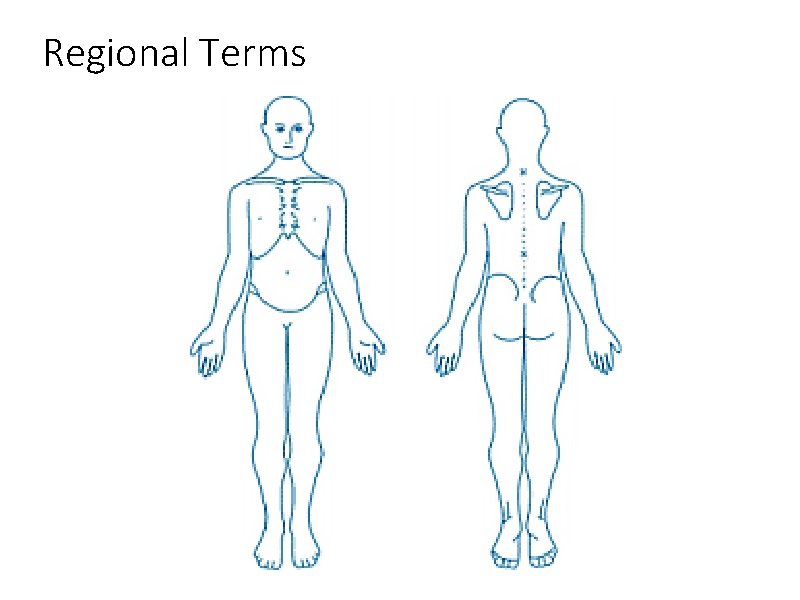
Regional Terms
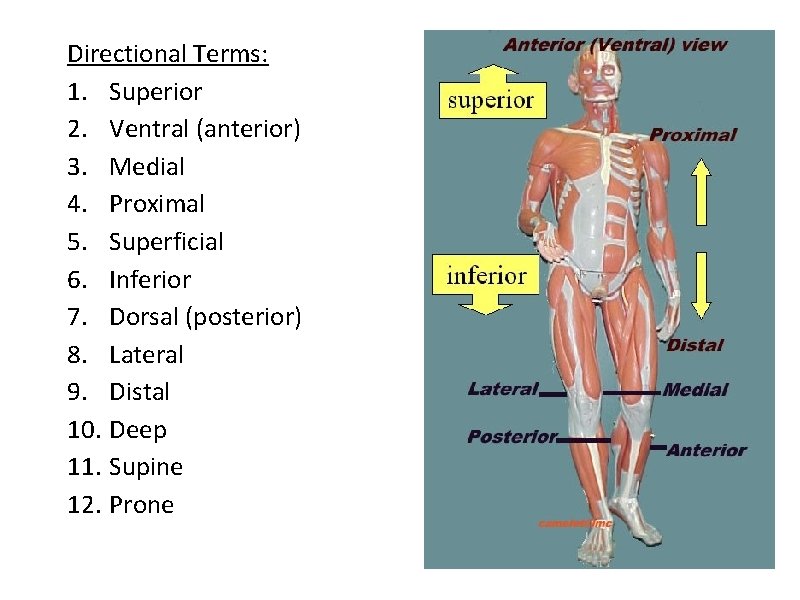
Directional Terms: 1. Superior 2. Ventral (anterior) 3. Medial 4. Proximal 5. Superficial 6. Inferior 7. Dorsal (posterior) 8. Lateral 9. Distal 10. Deep 11. Supine 12. Prone
Notes on Directional Terms
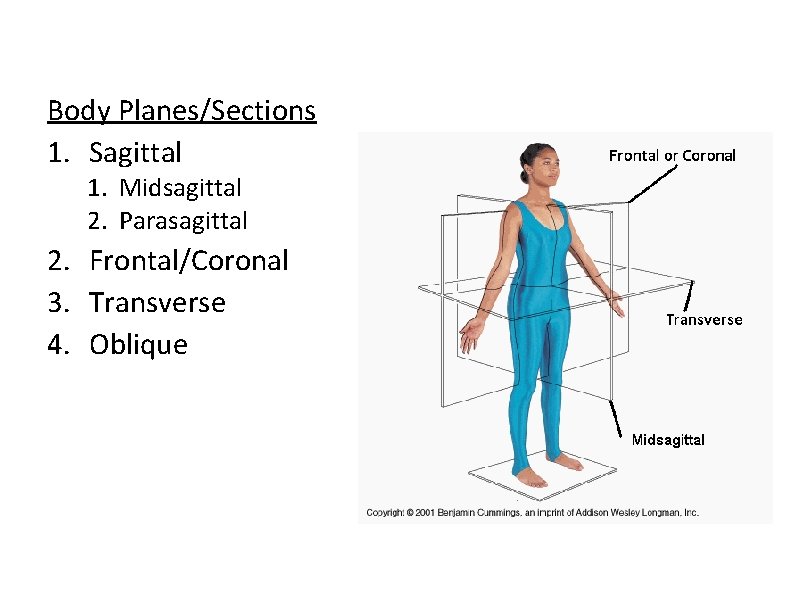
Body Planes/Sections 1. Sagittal 1. Midsagittal 2. Parasagittal 2. Frontal/Coronal 3. Transverse 4. Oblique
Notes on Body Planes/Sections