
THE LABYRINTH OF ASL LITERATURE PRODUCTION Dr Mary
THE LABYRINTH OF ASL LITERATURE PRODUCTION Dr. Mary Ann Seremeth
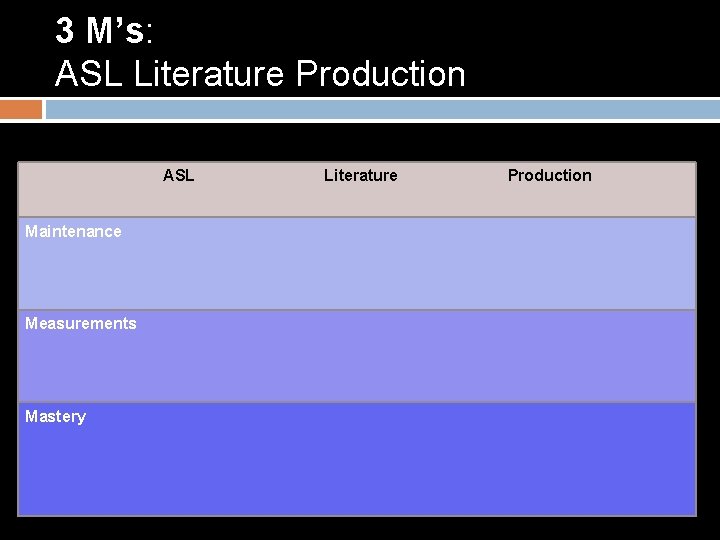
3 M’s: ASL Literature Production ASL Maintenance Measurements Mastery Literature Production
Overview 1) to incorporate the values of video production structure and basic fundamental editing concepts to enhance ASL storytelling 2) to embrace the concept of multiculturalism and assess on how to bring multicultural aspects in ASL Literature video stories. 3) to gain cultural pride and positive self efficacy as a Deaf individual

Foundations of ASL Literature Production Will & Dot Madsen Dr. Clayton Valli Marie Jean Philip WHEN? WHAT? WHY? HOW? WHICH? WHO?
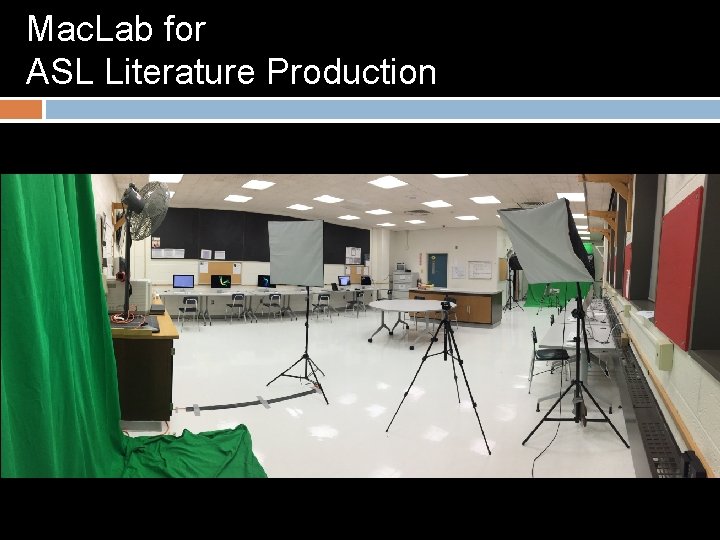
Mac. Lab for ASL Literature Production
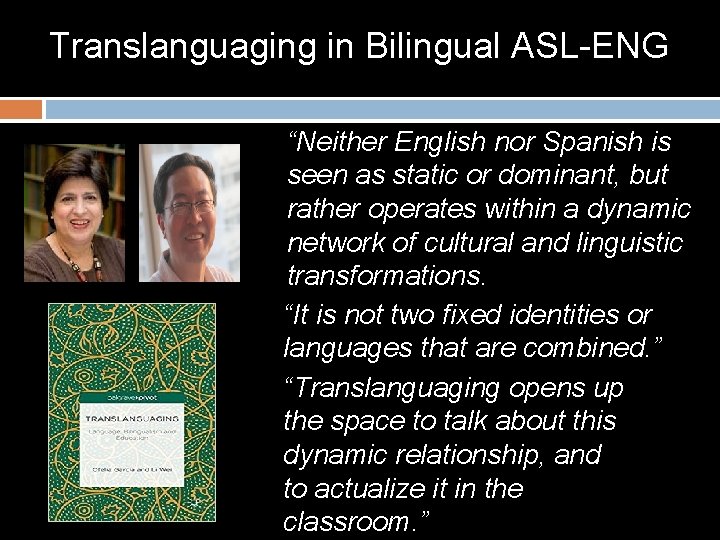
Translanguaging in Bilingual ASL-ENG “Neither English nor Spanish is seen as static or dominant, but rather operates within a dynamic network of cultural and linguistic transformations. “It is not two fixed identities or languages that are combined. ” “Translanguaging opens up the space to talk about this dynamic relationship, and to actualize it in the classroom. ”
Structure of ASL Literature Production Introductory Unit: a) Definitions of Literature b) ASL Literature Genres c) Video Production
Structure of ASL Literature Production ASL Review/Critique Unit: a) Introductory concepts on review and critique of ASL literature video stories b) Genres of ASL literature video list c) ASL literature review/critic worksheet form
Structure of ASL Literature Production Video Project Units 1 -5: Unit 1 Student’s Autobiography Unit 2 #2 a: Famous Deaf Person Biography #2 b: an Interview with a Deaf Adult
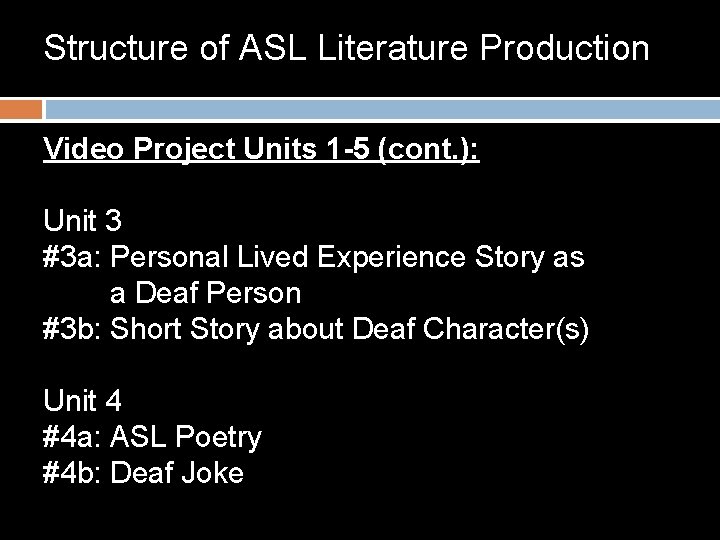
Structure of ASL Literature Production Video Project Units 1 -5 (cont. ): Unit 3 #3 a: Personal Lived Experience Story as a Deaf Person #3 b: Short Story about Deaf Character(s) Unit 4 #4 a: ASL Poetry #4 b: Deaf Joke
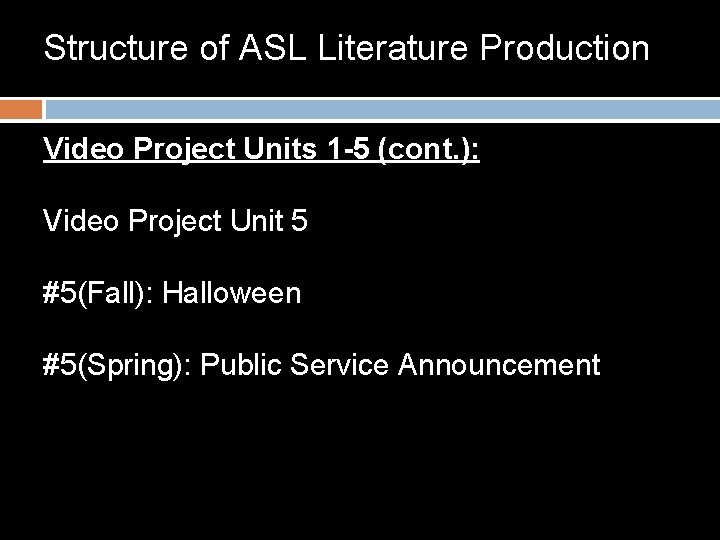
Structure of ASL Literature Production Video Project Units 1 -5 (cont. ): Video Project Unit 5 #5(Fall): Halloween #5(Spring): Public Service Announcement
An Example of Student’s work Student’s video file was shown at the 2017 ASL Roundtable conference
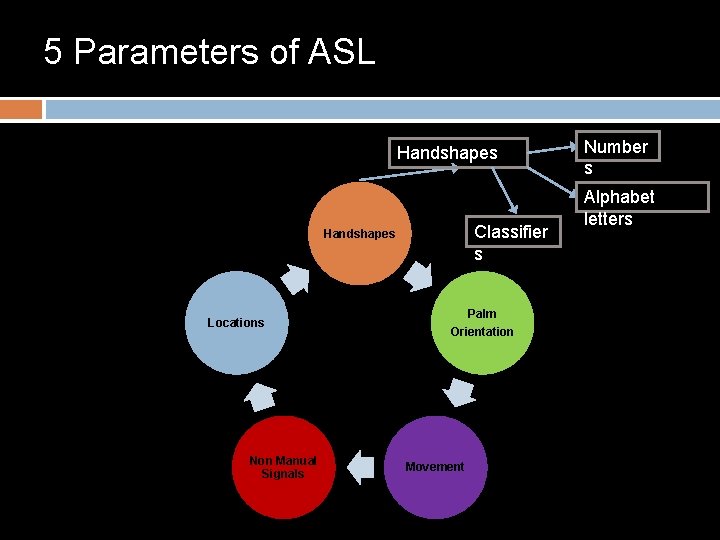
5 Parameters of ASL Handshapes Classifier s Handshapes Locations Non Manual Signals Palm Orientation Movement Number s Alphabet letters
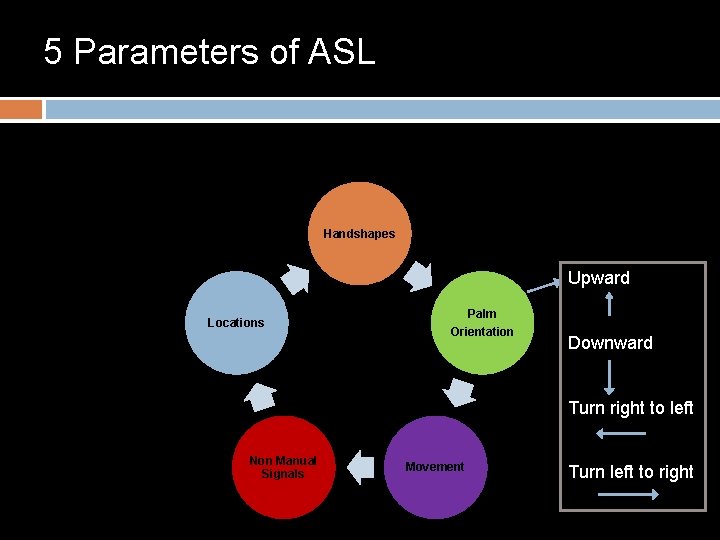
5 Parameters of ASL Handshapes Upward Locations Palm Orientation Downward Turn right to left Non Manual Signals Movement Turn left to right
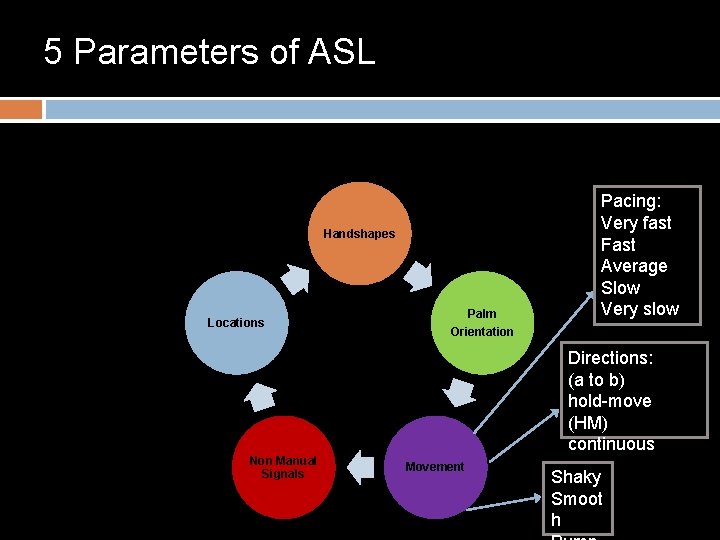
5 Parameters of ASL Handshapes Locations Non Manual Signals Palm Orientation Pacing: Very fast Fast Average Slow Very slow Directions: (a to b) hold-move (HM) continuous Movement Shaky Smoot h
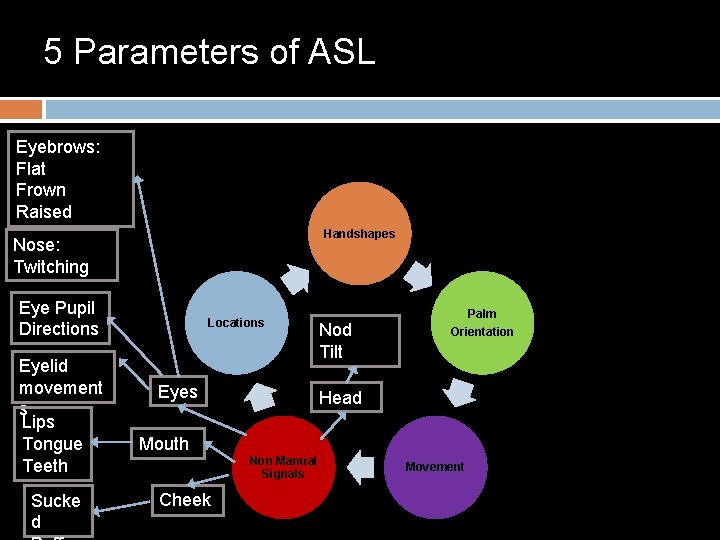
5 Parameters of ASL Eyebrows: Flat Frown Raised Handshapes Nose: Twitching Eye Pupil Directions Eyelid movement s Lips Tongue Teeth Sucke d Locations Eyes Nod Tilt Palm Orientation Head Mouth Non Manual Signals Cheek Movement
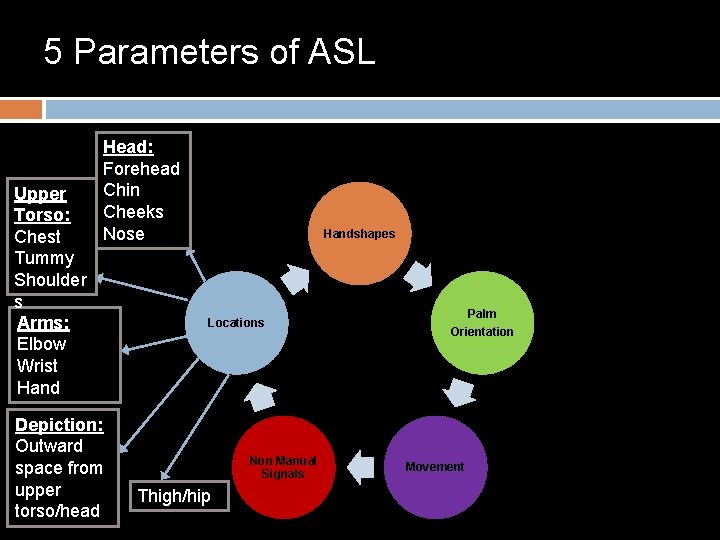
5 Parameters of ASL Upper Torso: Chest Tummy Shoulder s Arms: Elbow Wrist Hand Head: Forehead Chin Cheeks Nose Depiction: Outward space from upper torso/head Handshapes Locations Non Manual Signals Thigh/hip Palm Orientation Movement

Highlights of My Dissertation on Teacher Efficacy Deaf teachers’ self-efficacy needs to be recognized as a strength within their instructional practice The Bandura’s (1977) Self-Efficacy theory is focused on the individual’s perceived belief on the capabilities to follow through behaviors or action Liu (2013) defined Teacher Efficacy by focusing on whether teachers can: a) teach well b) work through goals, c) and help students succeed
Teacher Efficacy – ASL Teachers TE#1: The Essence of Deaf Teachers Definition: Innate ability to know what students and/or teachers lack and need in their environment
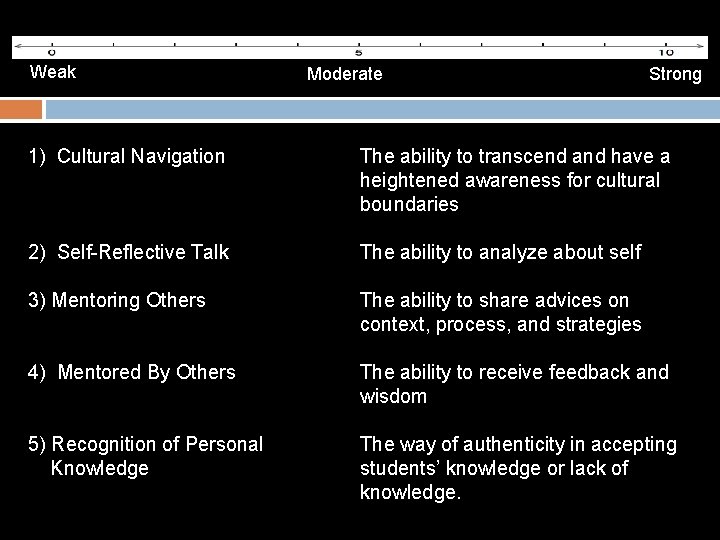
Weak Moderate Strong 1) Cultural Navigation The ability to transcend and have a heightened awareness for cultural boundaries 2) Self-Reflective Talk The ability to analyze about self 3) Mentoring Others The ability to share advices on context, process, and strategies 4) Mentored By Others The ability to receive feedback and wisdom 5) Recognition of Personal Knowledge The way of authenticity in accepting students’ knowledge or lack of knowledge.
Teacher Efficacy – ASL Teachers TE#2: An Insight of Anticipation of Mutual Dialogue Definition: To know what students need and how students think and learn things by teacher’s anticipation, and facilitating appropriate cultural discourse
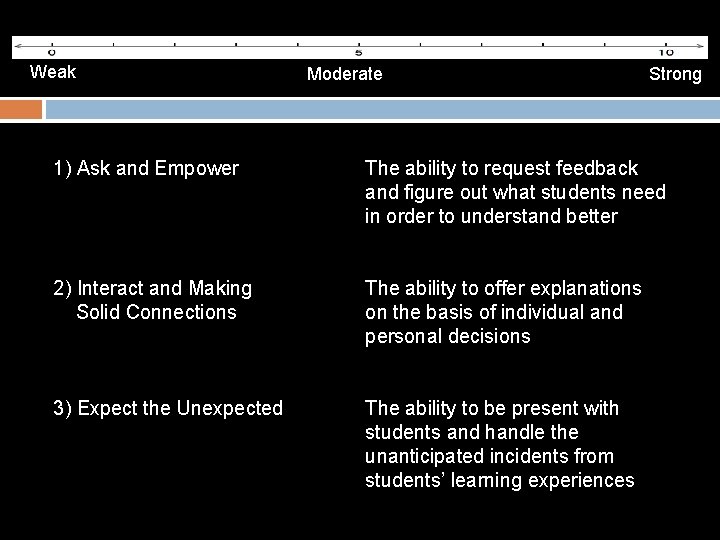
Weak Moderate Strong 1) Ask and Empower The ability to request feedback and figure out what students need in order to understand better 2) Interact and Making Solid Connections The ability to offer explanations on the basis of individual and personal decisions 3) Expect the Unexpected The ability to be present with students and handle the unanticipated incidents from students’ learning experiences
Teacher Efficacy – ASL Teachers TE#3: Teaching Reciprocity Definition: Mutual dialogue and exchange of knowledge between teachers, students, and members of the community
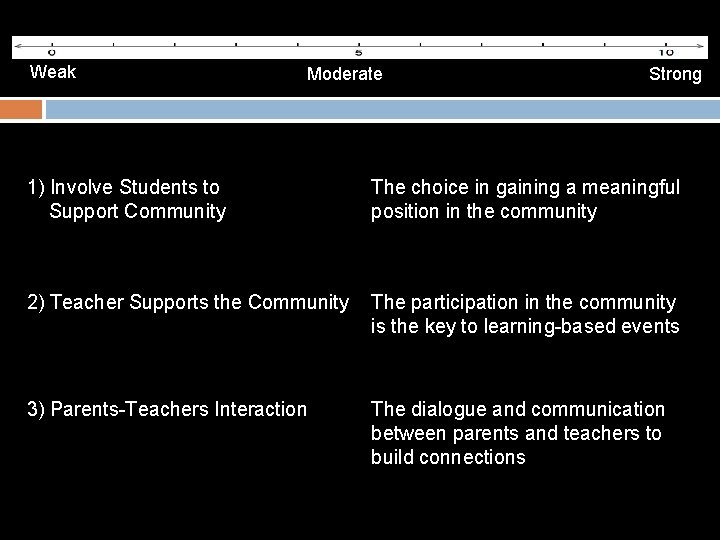
Weak Moderate 1) Involve Students to Support Community Strong The choice in gaining a meaningful position in the community 2) Teacher Supports the Community The participation in the community is the key to learning-based events 3) Parents-Teachers Interaction The dialogue and communication between parents and teachers to build connections
Teacher Efficacy – ASL Teachers TE#4: Alternative Electronic Media Learning Tools Definition: Teacher-created or generated media resources
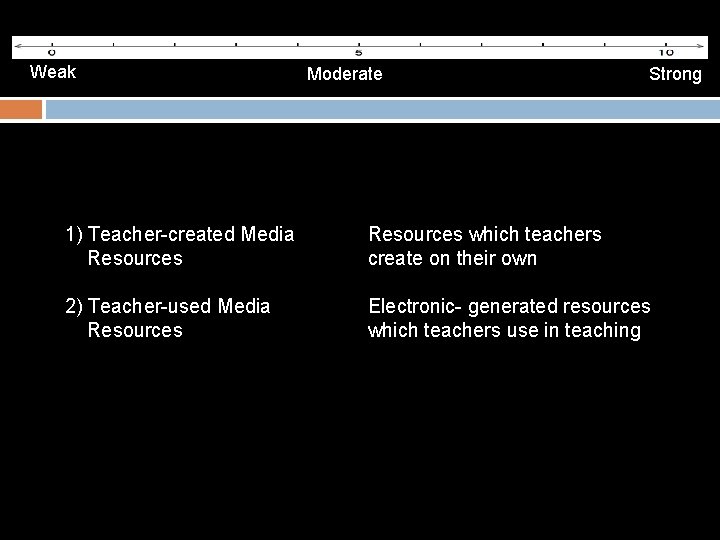
Weak Moderate Strong 1) Teacher-created Media Resources which teachers create on their own 2) Teacher-used Media Resources Electronic- generated resources which teachers use in teaching
Teacher Efficacy – ASL Teachers TE#5: The Depth of Identity Through Bilingual ASL-English Definition: Capture the message of innate knowing of circumstances where teachers know when to use ASL/English to communicate.
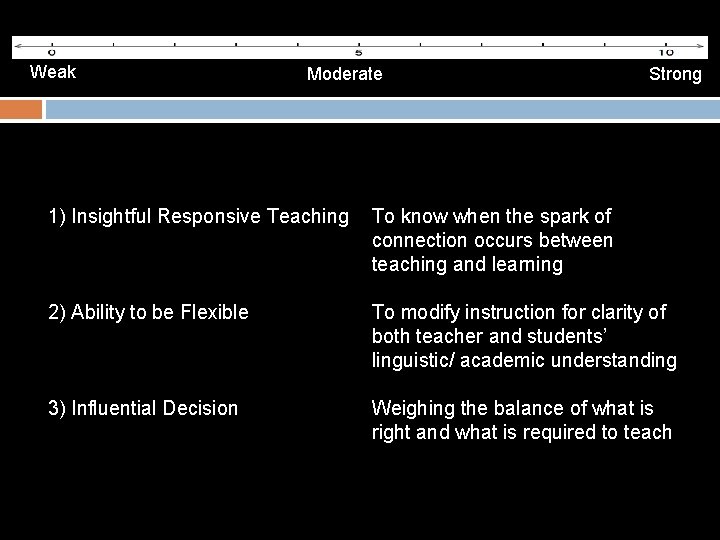
Weak Moderate Strong 1) Insightful Responsive Teaching To know when the spark of connection occurs between teaching and learning 2) Ability to be Flexible To modify instruction for clarity of both teacher and students’ linguistic/ academic understanding 3) Influential Decision Weighing the balance of what is right and what is required to teach
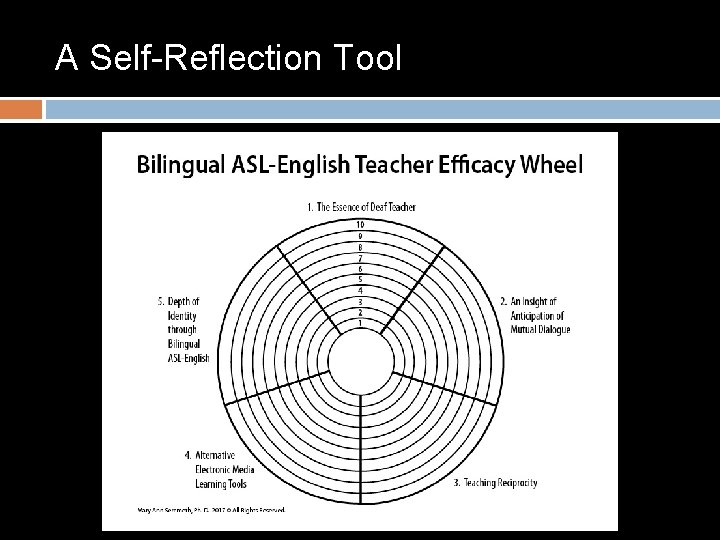
A Self-Reflection Tool
Multicultural Transformation Education 1. Teachers for Social Justice: Deaf Learners (one-week retreat) 2. Multicultural Curriculum Transformation Institute (training) 3. Personal and Professional Development (allyship with Deaf People of Color & marginalized Deaf people)
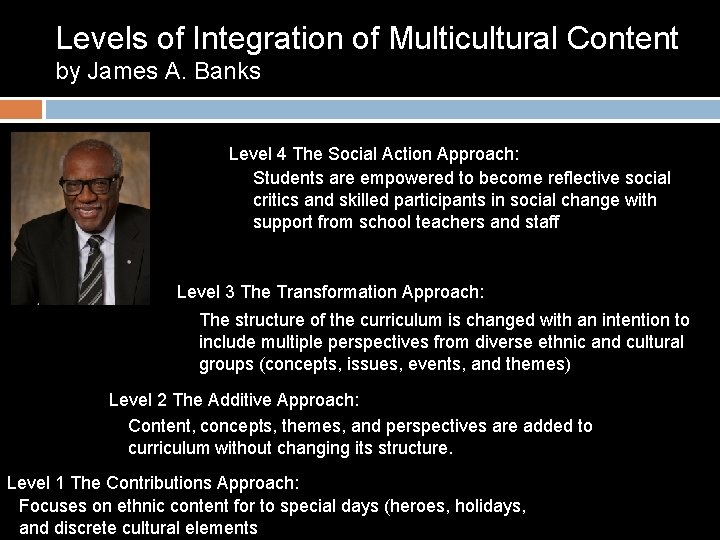
Levels of Integration of Multicultural Content by James A. Banks Level 4 The Social Action Approach: Students are empowered to become reflective social critics and skilled participants in social change with support from school teachers and staff Level 3 The Transformation Approach: The structure of the curriculum is changed with an intention to include multiple perspectives from diverse ethnic and cultural groups (concepts, issues, events, and themes) Level 2 The Additive Approach: Content, concepts, themes, and perspectives are added to curriculum without changing its structure. Level 1 The Contributions Approach: Focuses on ethnic content for to special days (heroes, holidays, and discrete cultural elements
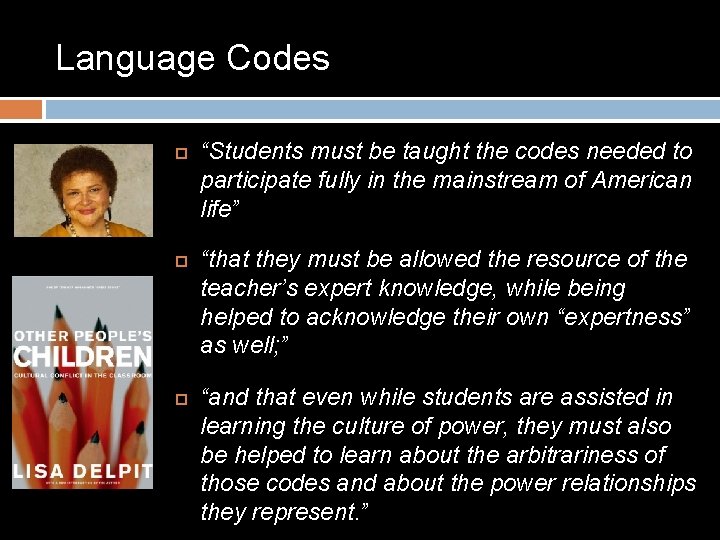
Language Codes “Students must be taught the codes needed to participate fully in the mainstream of American life” “that they must be allowed the resource of the teacher’s expert knowledge, while being helped to acknowledge their own “expertness” as well; ” “and that even while students are assisted in learning the culture of power, they must also be helped to learn about the arbitrariness of those codes and about the power relationships they represent. ”
An Example of Student’s work Student’s video file was shown at the 2017 ASL Roundtable conference
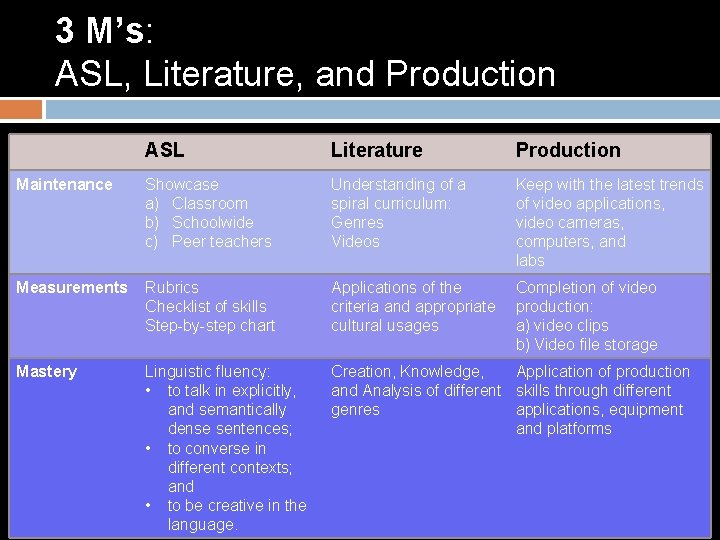
3 M’s: ASL, Literature, and Production ASL Literature Production Maintenance Showcase a) Classroom b) Schoolwide c) Peer teachers Understanding of a spiral curriculum: Genres Videos Keep with the latest trends of video applications, video cameras, computers, and labs Measurements Rubrics Checklist of skills Step-by-step chart Applications of the Completion of video criteria and appropriate production: cultural usages a) video clips b) Video file storage Mastery Linguistic fluency: • to talk in explicitly, and semantically dense sentences; • to converse in different contexts; and • to be creative in the language. Creation, Knowledge, Application of production and Analysis of different skills through different genres applications, equipment and platforms
A quote to remember Each step we consciously take will move us forward!
REFERENCES Banks, J. (1996). Multicultural education, transformative knowledge, and action: Historical and contemporary perspectives. New York, NY: Teachers College Press. Delpit, L. D. (2006). Other people's children: cultural conflict in the classroom. New York: New Press. García, O. , & Wei, L. (2014). Translanguaging: language, bilingualism and education. Basingstoke: Palgrave Macmillan. Seremeth, M. A. (2016). A study of teacher efficacy in secondary American Sign Language-English teaching (Order No. 10254440). Available from Pro. Quest Dissertations & Theses Global. (1870036812). Retrieved from http: //proxyga. wrlc. org/login? url=https: //searchproquestcom. proxyga. wrlc. org/docview/1870036812? accountid= 27346
Dr. Mary Ann Seremeth’s Contact information Work email: mary. seremeth@gallaudet. edu 3 L MAS Life coach email: mseremeth@gmail. com
- Slides: 37