
The Kulin Nation From Barwick 1985 Social organisation
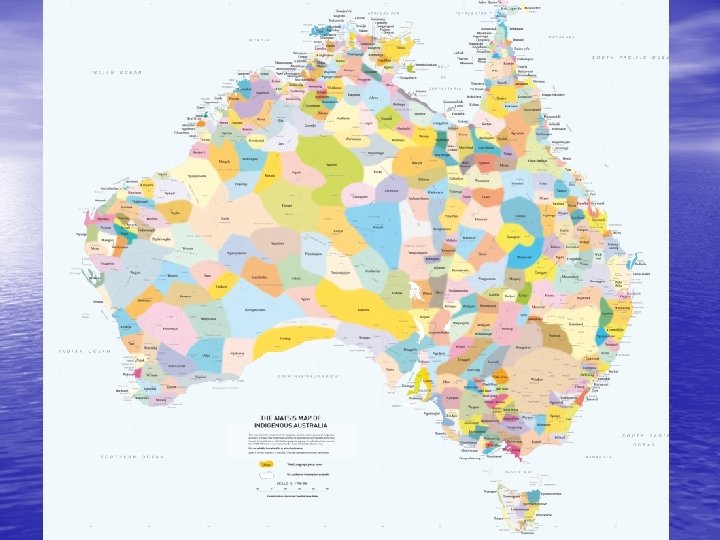

The Kulin Nation

From Barwick, 1985

Social organisation Confederation Eastern Kulin Language Groups Boon wurrung Taun wurrung Watha wurrung Woi wurrung Ngarai-illam wurrung Clans eg. Wurundjeri-willam, Marin-balluk (These groups each identify with particular ‘estates’) Bands The day-to-day (economic) functioning units; unnamed, based on family affiliation.

The impact of European occupation on landscape and people
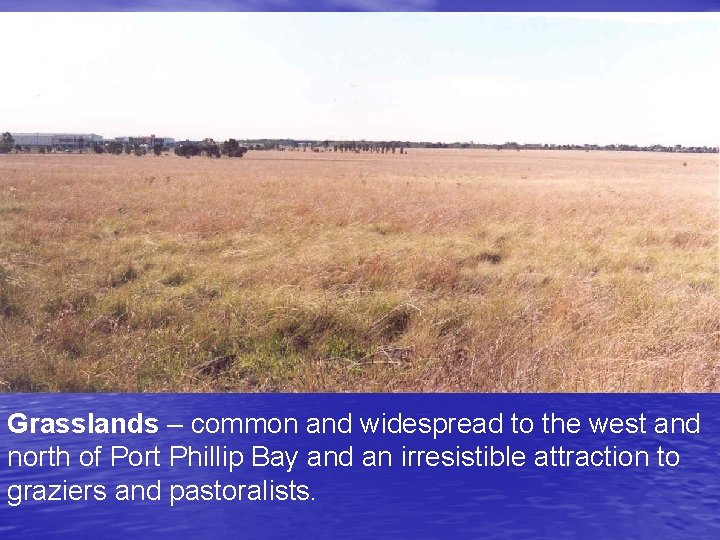
Grasslands – common and widespread to the west and north of Port Phillip Bay and an irresistible attraction to graziers and pastoralists.
Environmental changes • Grasslands • clearing of forests • introduction of exotic animals

Impacts on the local Aboriginal population • • • denial of access to sites, resources: eating out of native plant species introduction of diseases (eg. cold, smallpox; TB); deliberate driving away of Aboriginal people; introduction of European foodstuffs: (dependency on flour, sugar, alcohol and tobacco) killing
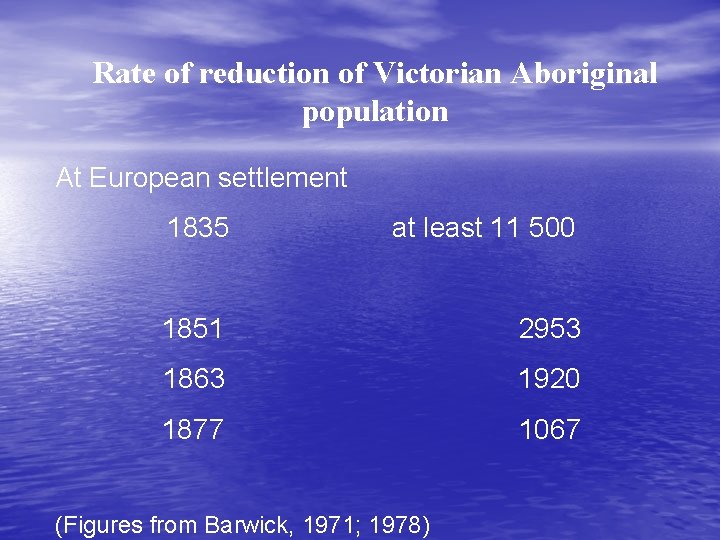
Rate of reduction of Victorian Aboriginal population At European settlement 1835 at least 11 500 1851 2953 1863 1920 1877 1067 (Figures from Barwick, 1971; 1978)
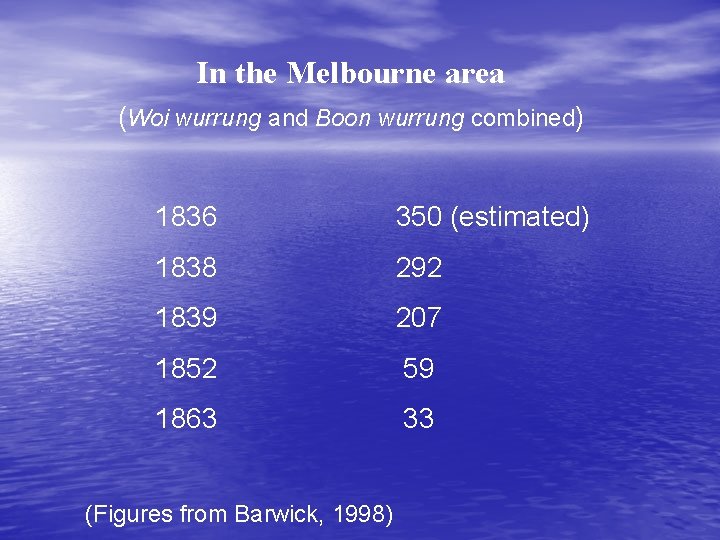
In the Melbourne area (Woi wurrung and Boon wurrung combined) 1836 350 (estimated) 1838 292 1839 207 1852 59 1863 33 (Figures from Barwick, 1998)
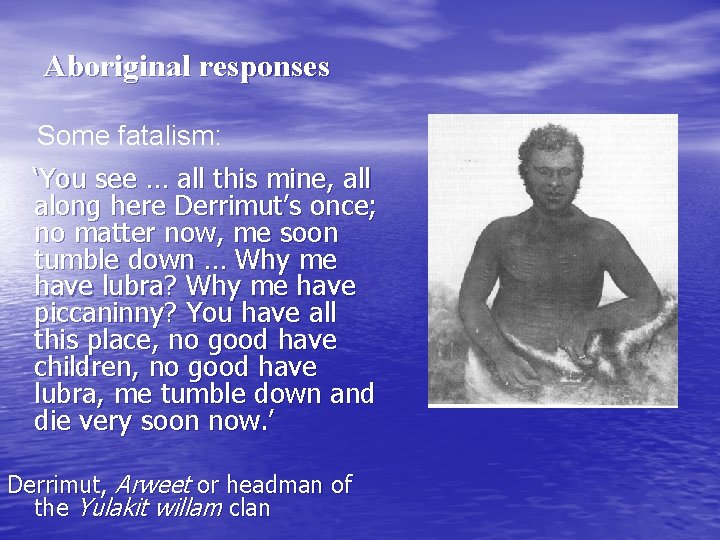
Aboriginal responses Some fatalism: ‘You see … all this mine, all along here Derrimut’s once; no matter now, me soon tumble down … Why me have lubra? Why me have piccaninny? You have all this place, no good have children, no good have lubra, me tumble down and die very soon now. ’ Derrimut, Arweet or headman of the Yulakit willam clan

How does this happen?

OED – Definition of “civilisation” The state or condition of being civilized; civilized society; a highly developed state of society; a particular form, stage, or type of social development. …in terms of education, writing, legal systems, buildings, language, religion, political system, etc.
Terra Nullius “both a country without a sovereign recognised by European authorities and a territory where nobody owns any land at all, where no tenure of any sort existed. ” (Henry Reynolds, historian)
Ramifications of Terra Nullius for white settlers Either: If no one owns land – settlement OR If people do own land – invasion
Consider the following images… From these images, what can we tell about European perceptions of aboriginal Australia? Would the artists have viewed aborigines as civilised or uncivilised? How can you tell?

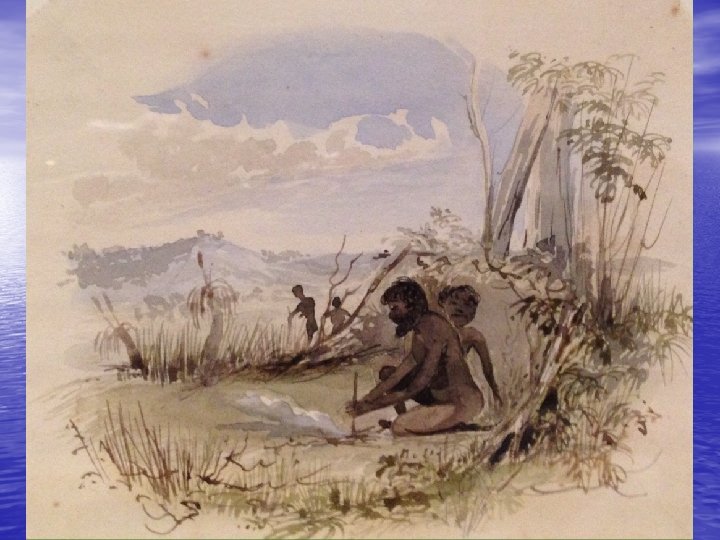
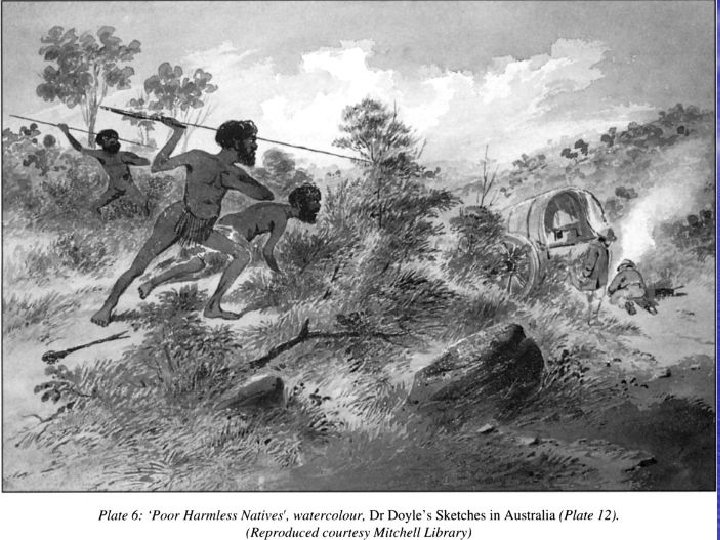
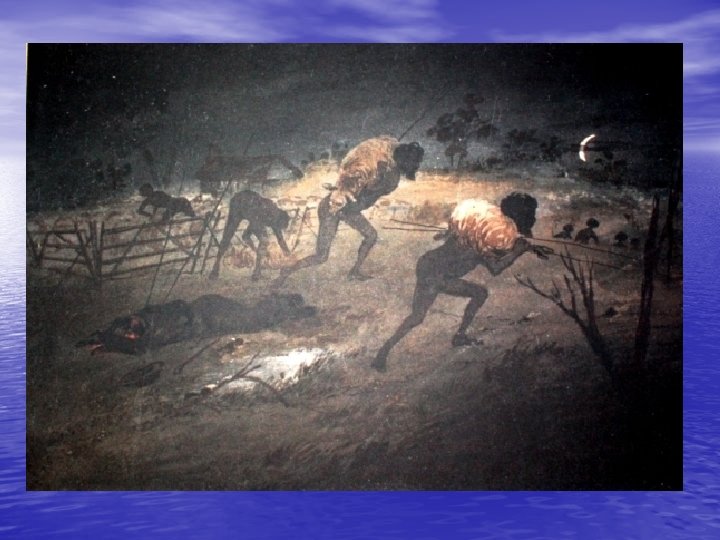
• From these images, what can we tell about European perceptions of aboriginal Australia and the relationship of aborigines to the land? • Would the artists have viewed aborigines as civilised or uncivilised? How can you tell?
Consider the attitudes of early Melbourne settlers… Handout – primary sources: 1. What are Griffith’s arguments – how have Aborigines forfeited the land? 2. What are Hull’s arguments – what is the ‘axiom’ he refers to?
So… what happened next?
GOLD! • 1850 – Colony of Victoria (formally Port Phillip District) • • separates from NSW 10 June 1851 – (Official) discovery of Gold in Victoria (actually found at Clunes in March 1850, but kept secret) Previously ‘found’ in NSW in early 1851 – rivalry prompts local Victorian businessmen to offer reward Also found at Warrandyte, Ballarat, Buninyong Ranges (near Ballarat), Bendigo (then Sandhurst), Castlemaine (Mt Alexander), Mc. Ivor Goldfields richer than those in NSW
Immediate effects on towns • Dramatic loss of population to the goldfields • Men abandon jobs, businesses and families
Longer term effect…
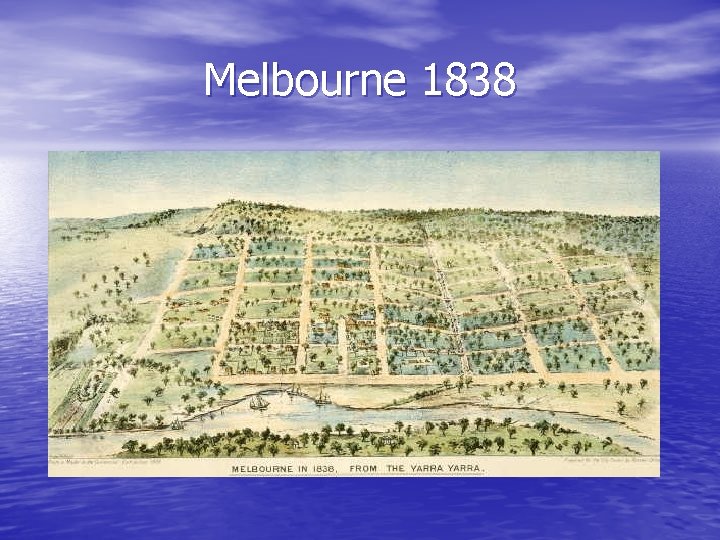
Melbourne 1838
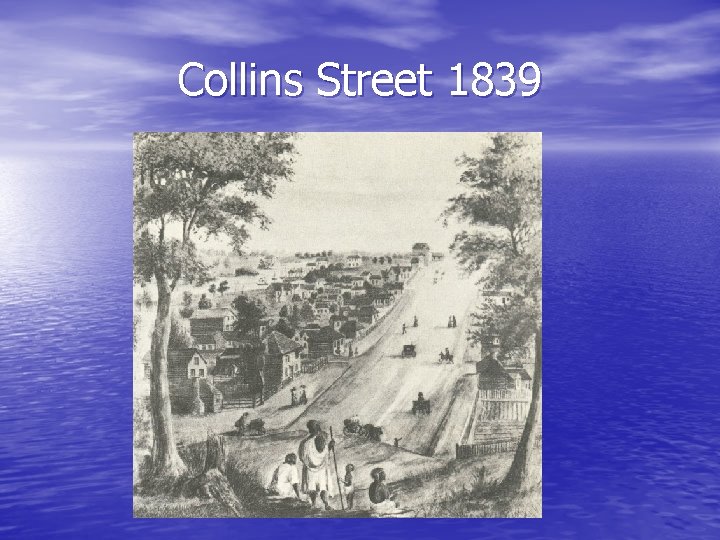
Collins Street 1839

Melbourne circa 1851
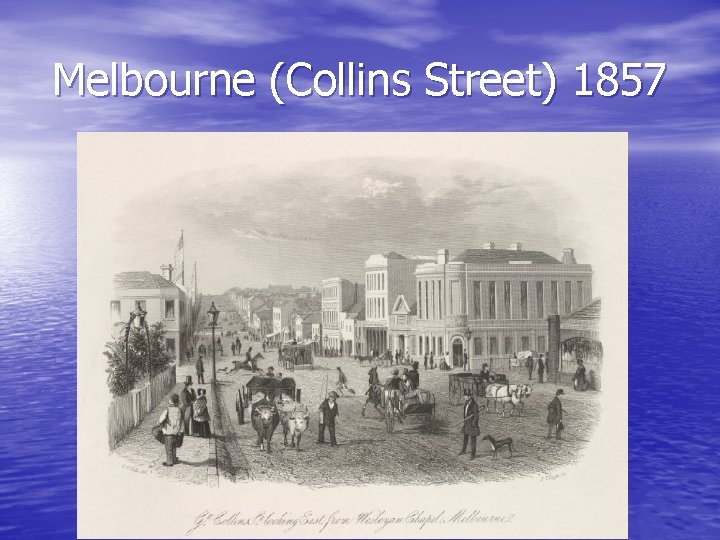
Melbourne (Collins Street) 1857
How?
Watch… Mining: A Dirty Business (first 25 minutes) https: //www. youtube. com/watch? v=jd. BYd 2 znr 2 g Take notes using the note guide.
Fill in this table… What Australia was like… Socially/ Culturally Economically Politically Physically/Environmental At the start of the Gold Rush (1851) During/after the Gold Rush (what changed/stayed the same) (1851 -186)
- Slides: 34