
The KNEE q The knee is one of
- Slides: 13
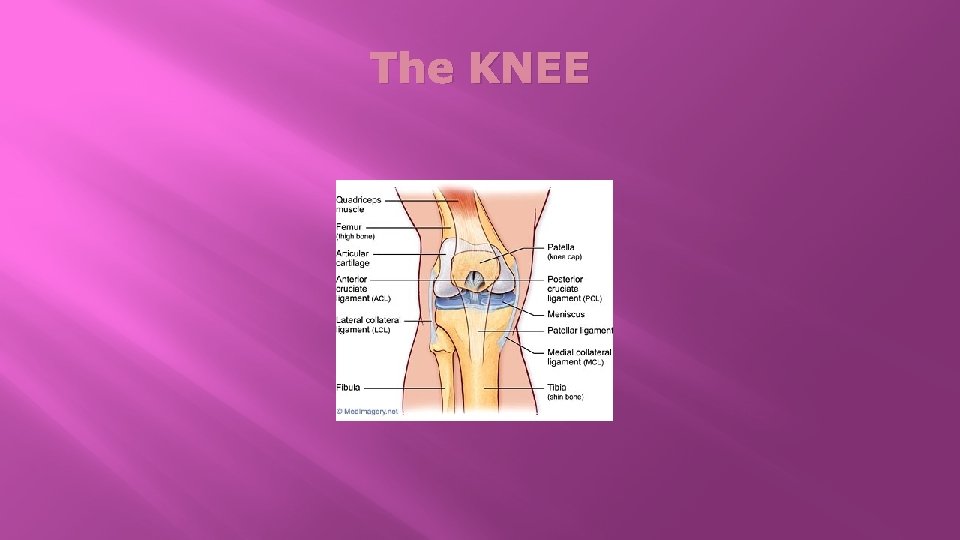
The KNEE
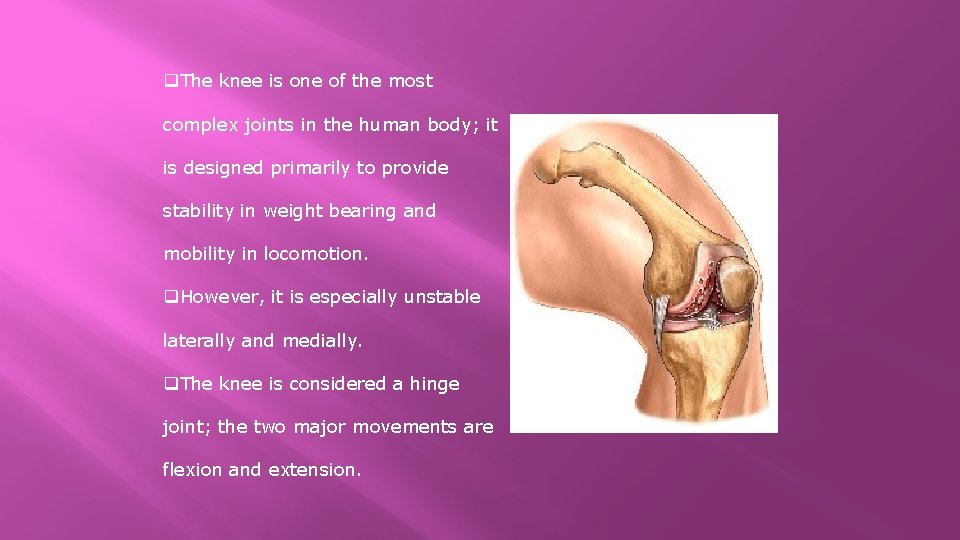
q. The knee is one of the most complex joints in the human body; it is designed primarily to provide stability in weight bearing and mobility in locomotion. q. However, it is especially unstable laterally and medially. q. The knee is considered a hinge joint; the two major movements are flexion and extension.
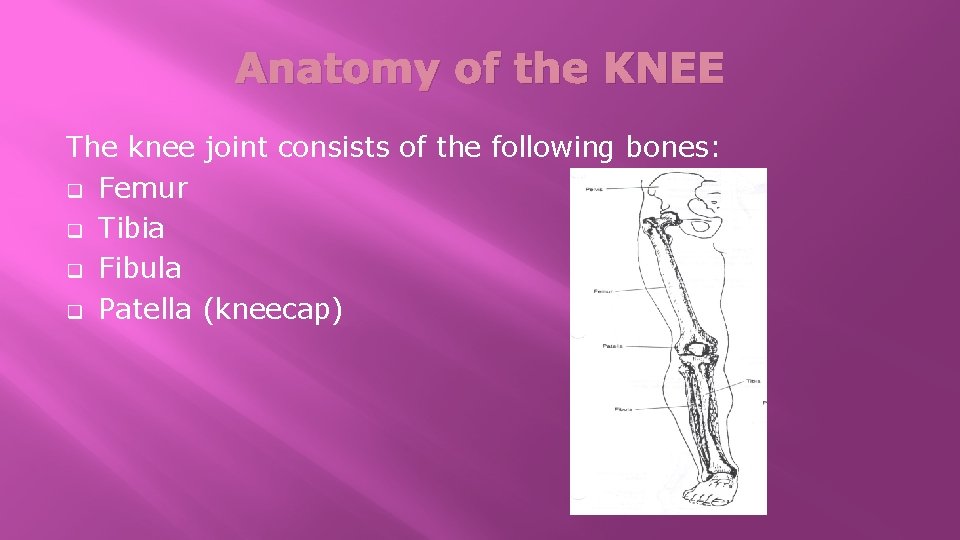
Anatomy of the KNEE The knee joint consists of the following bones: q Femur q Tibia q Fibula q Patella (kneecap)
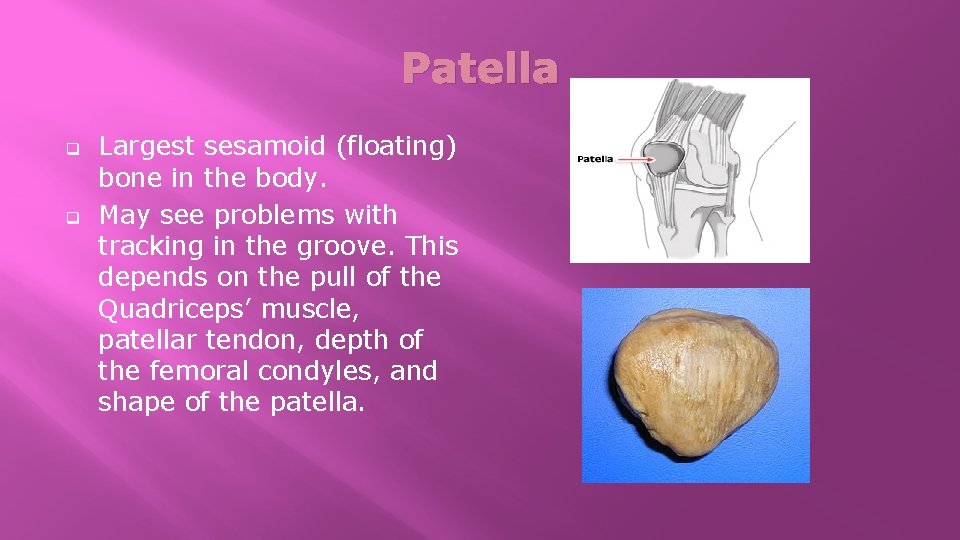
Patella q q Largest sesamoid (floating) bone in the body. May see problems with tracking in the groove. This depends on the pull of the Quadriceps’ muscle, patellar tendon, depth of the femoral condyles, and shape of the patella.
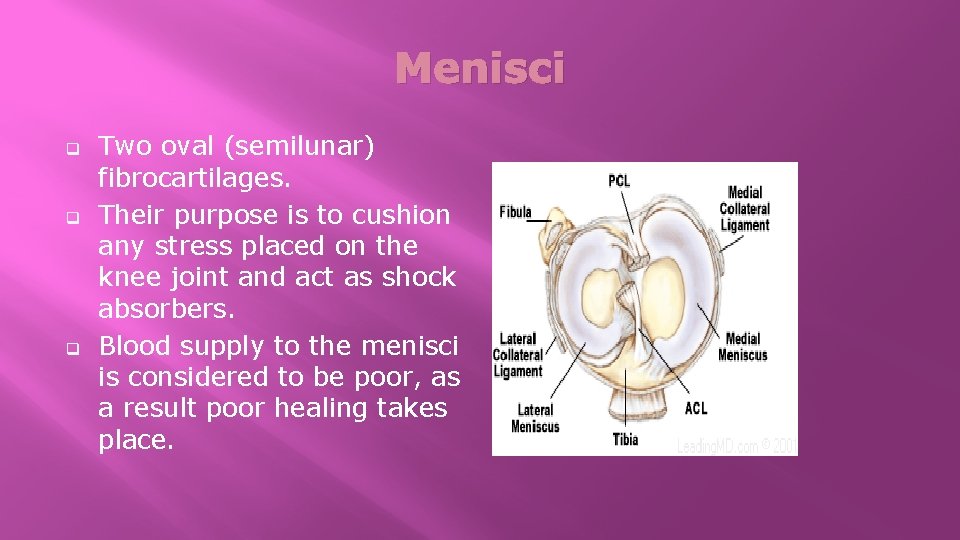
Menisci q q q Two oval (semilunar) fibrocartilages. Their purpose is to cushion any stress placed on the knee joint and act as shock absorbers. Blood supply to the menisci is considered to be poor, as a result poor healing takes place.
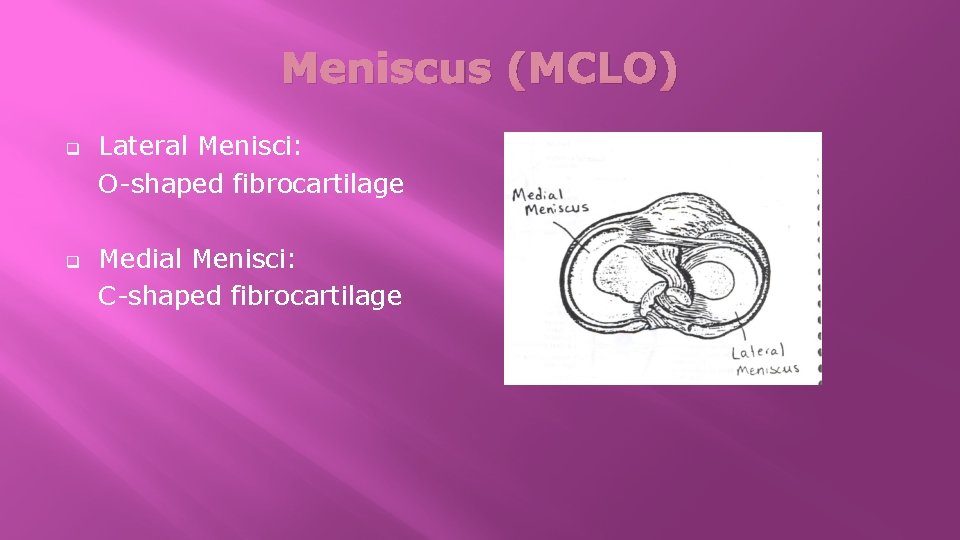
Meniscus (MCLO) q q Lateral Menisci: O-shaped fibrocartilage Medial Menisci: C-shaped fibrocartilage
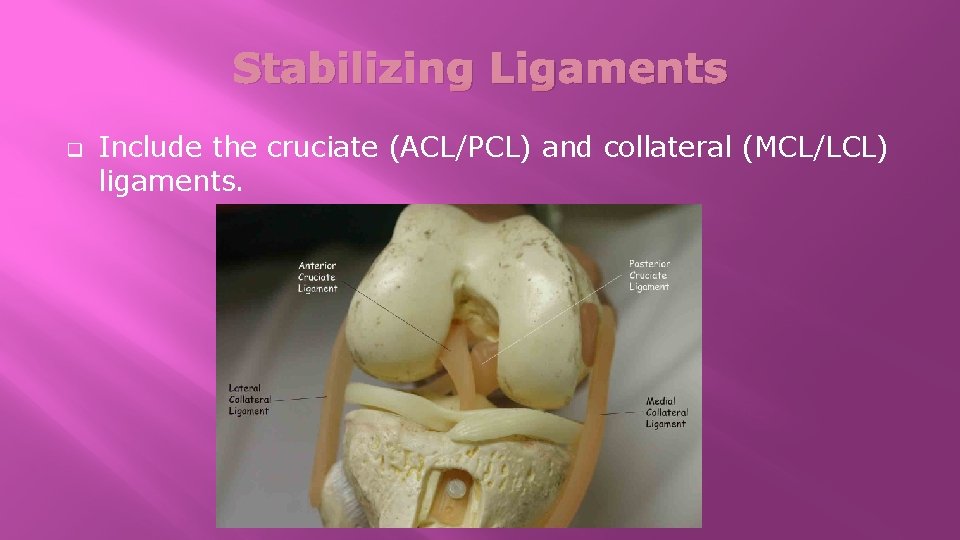
Stabilizing Ligaments q Include the cruciate (ACL/PCL) and collateral (MCL/LCL) ligaments.
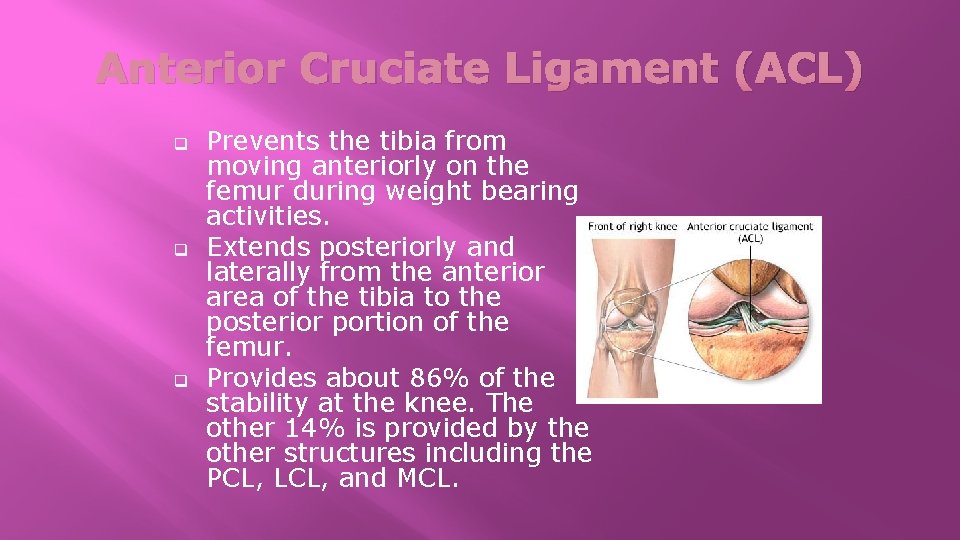
Anterior Cruciate Ligament (ACL) q q q Prevents the tibia from moving anteriorly on the femur during weight bearing activities. Extends posteriorly and laterally from the anterior area of the tibia to the posterior portion of the femur. Provides about 86% of the stability at the knee. The other 14% is provided by the other structures including the PCL, LCL, and MCL.
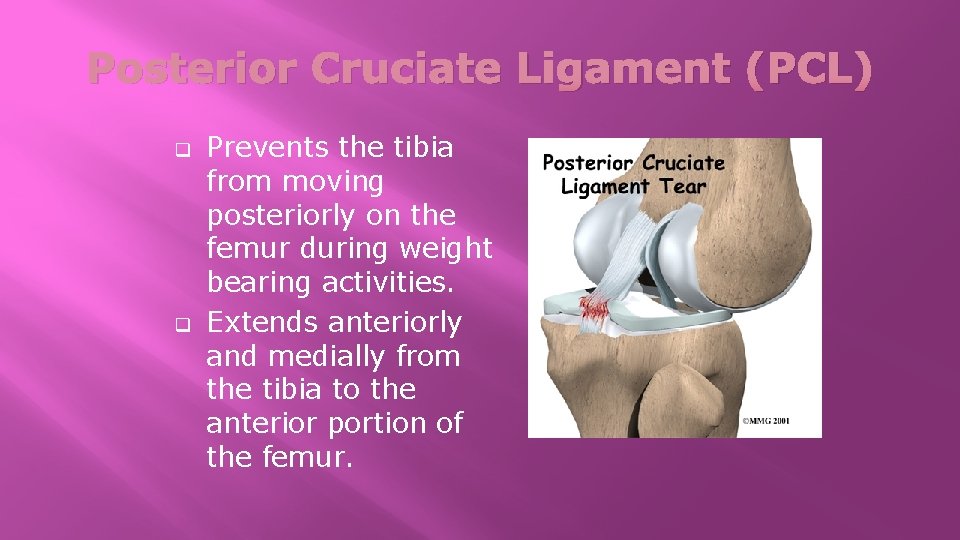
Posterior Cruciate Ligament (PCL) q q Prevents the tibia from moving posteriorly on the femur during weight bearing activities. Extends anteriorly and medially from the tibia to the anterior portion of the femur.
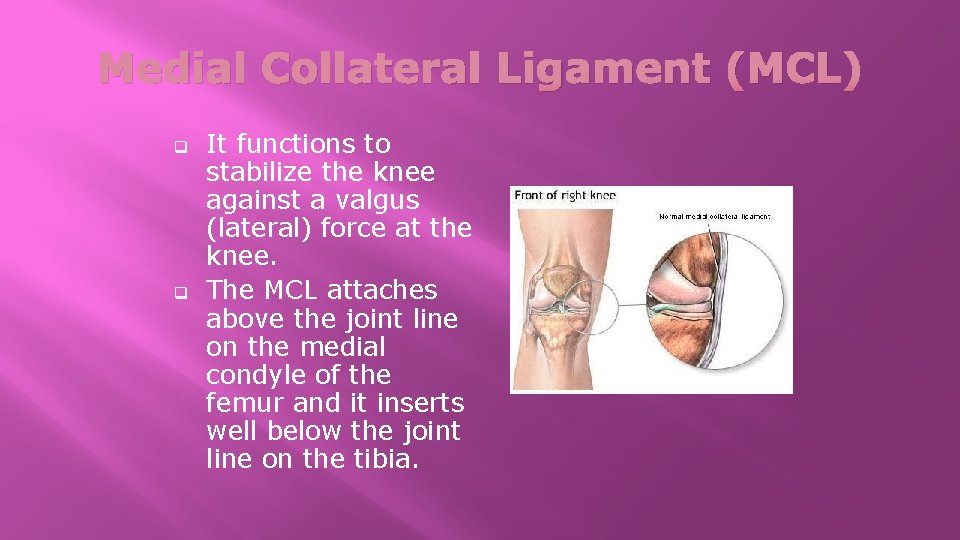
Medial Collateral Ligament (MCL) q q It functions to stabilize the knee against a valgus (lateral) force at the knee. The MCL attaches above the joint line on the medial condyle of the femur and it inserts well below the joint line on the tibia.
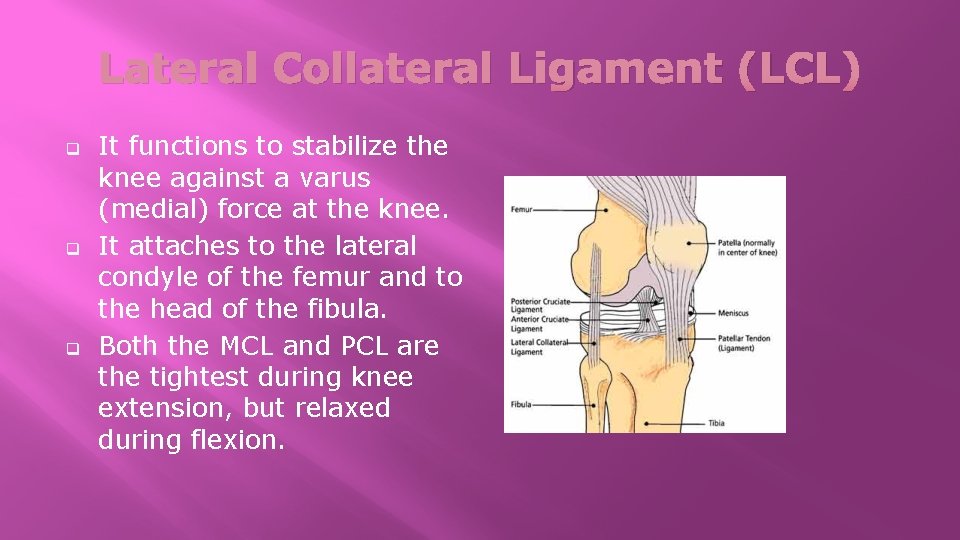
Lateral Collateral Ligament (LCL) q q q It functions to stabilize the knee against a varus (medial) force at the knee. It attaches to the lateral condyle of the femur and to the head of the fibula. Both the MCL and PCL are the tightest during knee extension, but relaxed during flexion.
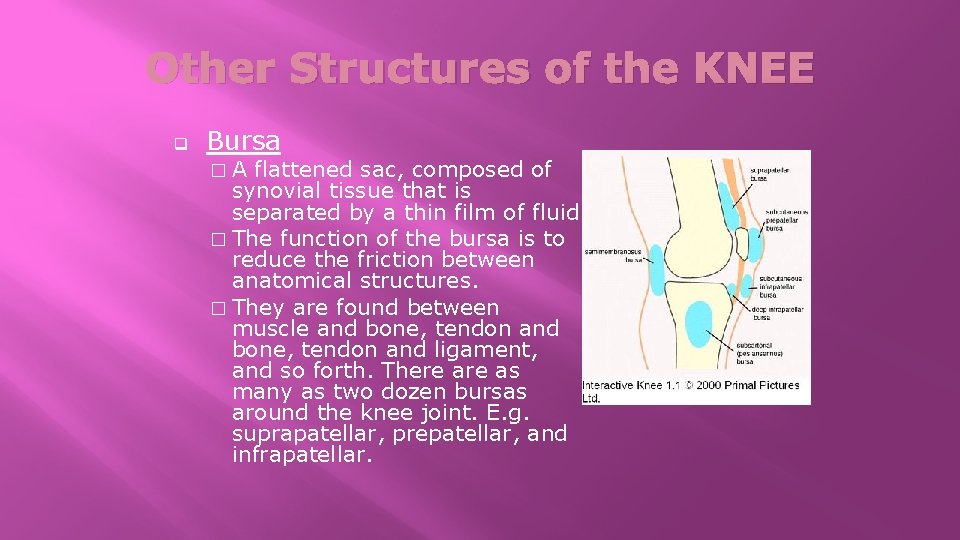
Other Structures of the KNEE q Bursa �A flattened sac, composed of synovial tissue that is separated by a thin film of fluid. � The function of the bursa is to reduce the friction between anatomical structures. � They are found between muscle and bone, tendon and ligament, and so forth. There as many as two dozen bursas around the knee joint. E. g. suprapatellar, prepatellar, and infrapatellar.
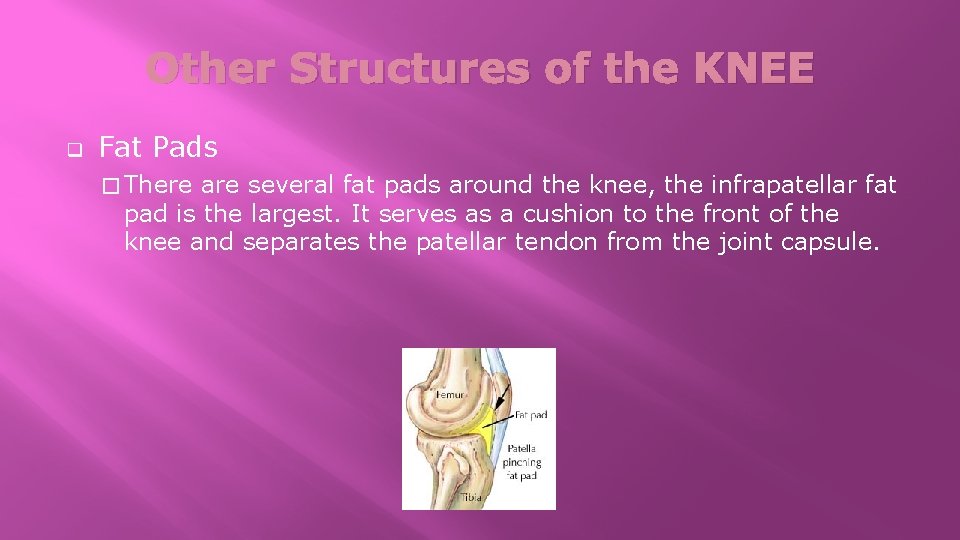
Other Structures of the KNEE q Fat Pads � There are several fat pads around the knee, the infrapatellar fat pad is the largest. It serves as a cushion to the front of the knee and separates the patellar tendon from the joint capsule.