
The Kite Runner A novel of friendship betrayal
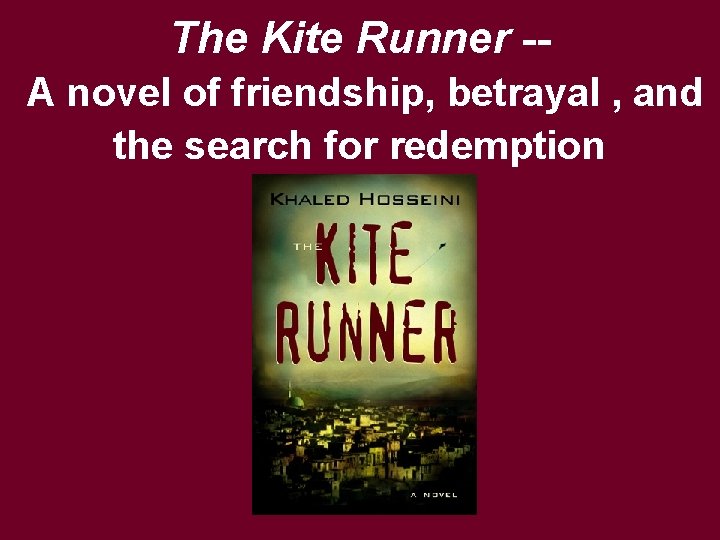
The Kite Runner -A novel of friendship, betrayal , and the search for redemption
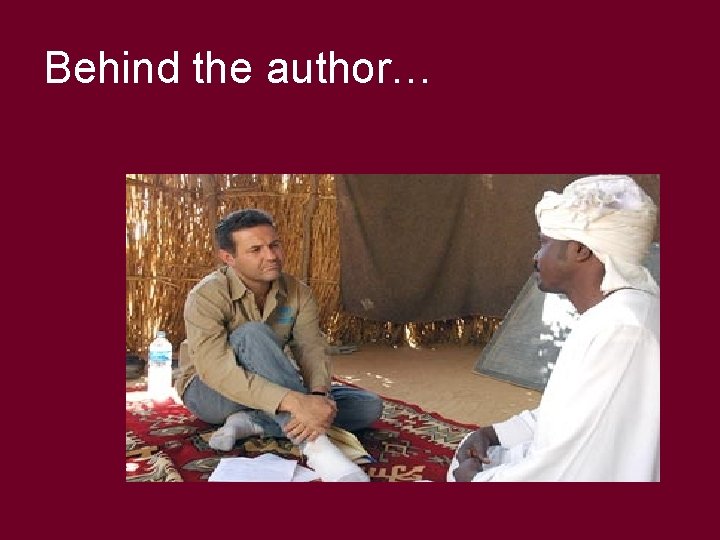
Behind the author…
Hosseini Biography • Khaled Hosseini was born in Kabul, Afghanistan, in 1965. • His father was a diplomat with the Afghan Foreign Ministry and his mother taught Farsi and History at a large high school in Kabul. • In 1976, the Afghan Foreign Ministry relocated the Hosseini family to Paris. They were ready to return to Kabul in 1980, but by then Afghanistan had already witnessed a bloody communist coup and the invasion of the Soviet army. • The Hosseinis sought and were granted political asylum in the United States. In September of 1980, Hosseini's family moved to San Jose, California. • Hosseini graduated from high school in 1984 and enrolled at Santa Clara University where he earned a bachelor's degree in Biology in 1988. • The following year, he entered the University of California-San Diego's School of Medicine, where he earned a Medical Degree in 1993. • He completed his residency at Cedars-Sinai Hospital in Los Angeles. Hosseini was a practicing internist between 1996 and 2004.
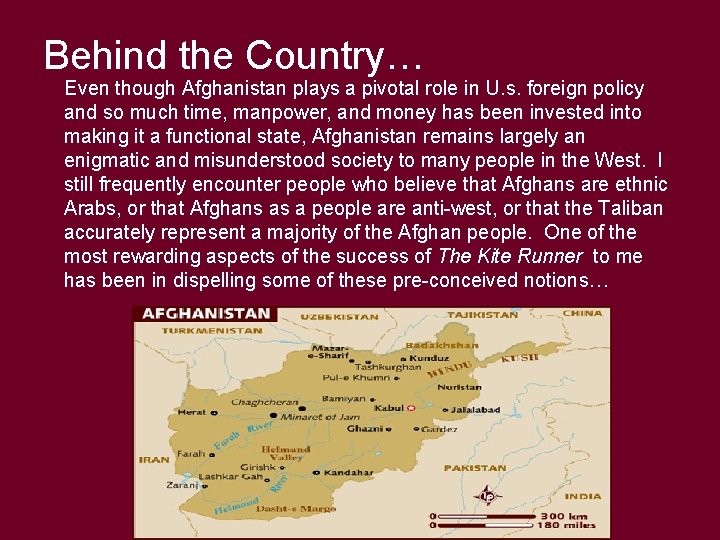
Behind the Country… Even though Afghanistan plays a pivotal role in U. s. foreign policy and so much time, manpower, and money has been invested into making it a functional state, Afghanistan remains largely an enigmatic and misunderstood society to many people in the West. I still frequently encounter people who believe that Afghans are ethnic Arabs, or that Afghans as a people are anti-west, or that the Taliban accurately represent a majority of the Afghan people. One of the most rewarding aspects of the success of The Kite Runner to me has been in dispelling some of these pre-conceived notions…
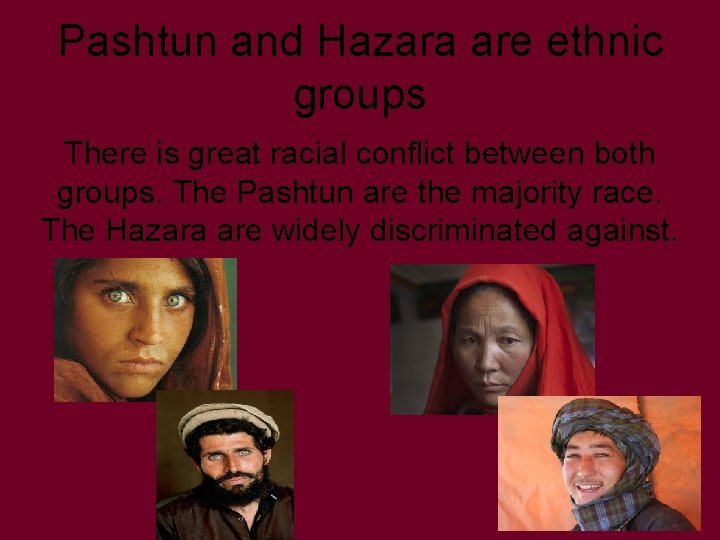
Pashtun and Hazara are ethnic groups There is great racial conflict between both groups. The Pashtun are the majority race. The Hazara are widely discriminated against.
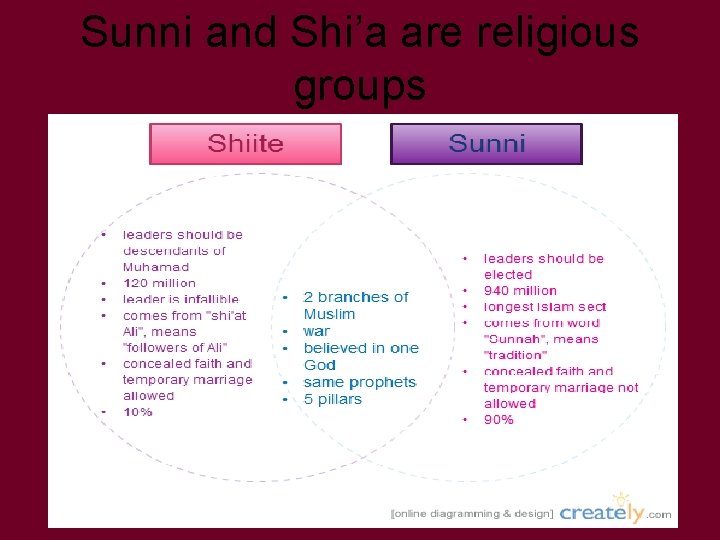
Sunni and Shi’a are religious groups
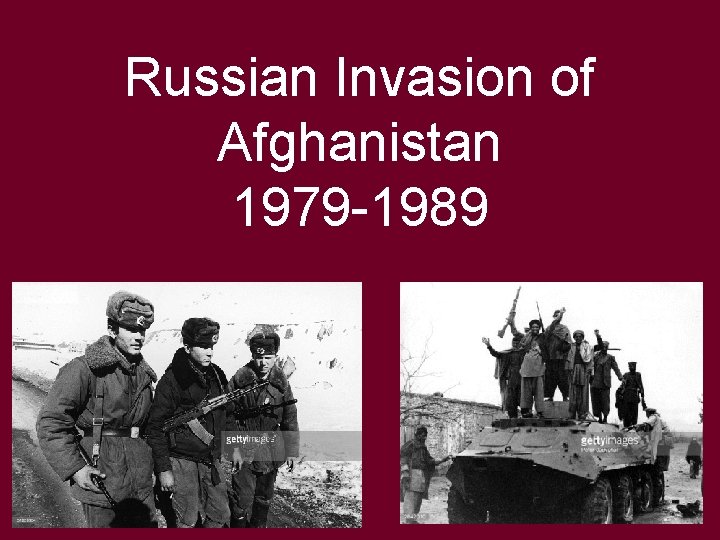
Russian Invasion of Afghanistan 1979 -1989
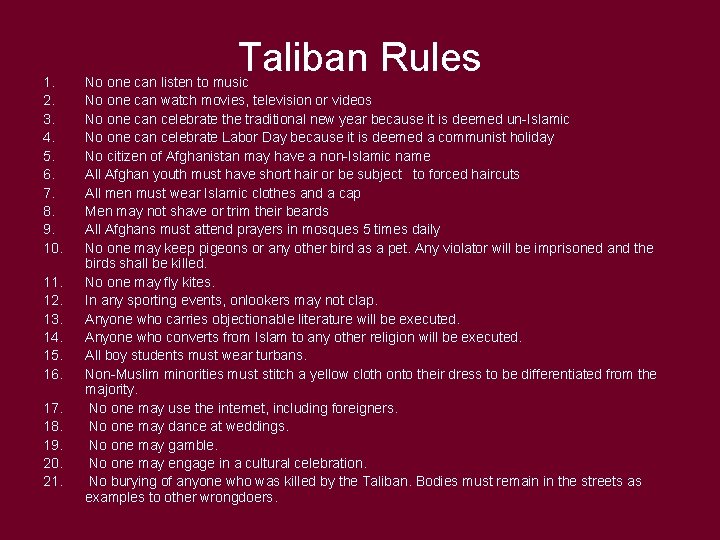
1. 2. 3. 4. 5. 6. 7. 8. 9. 10. 11. 12. 13. 14. 15. 16. 17. 18. 19. 20. 21. Taliban Rules No one can listen to music No one can watch movies, television or videos No one can celebrate the traditional new year because it is deemed un-Islamic No one can celebrate Labor Day because it is deemed a communist holiday No citizen of Afghanistan may have a non-Islamic name All Afghan youth must have short hair or be subject to forced haircuts All men must wear Islamic clothes and a cap Men may not shave or trim their beards All Afghans must attend prayers in mosques 5 times daily No one may keep pigeons or any other bird as a pet. Any violator will be imprisoned and the birds shall be killed. No one may fly kites. In any sporting events, onlookers may not clap. Anyone who carries objectionable literature will be executed. Anyone who converts from Islam to any other religion will be executed. All boy students must wear turbans. Non-Muslim minorities must stitch a yellow cloth onto their dress to be differentiated from the majority. No one may use the internet, including foreigners. No one may dance at weddings. No one may gamble. No one may engage in a cultural celebration. No burying of anyone who was killed by the Taliban. Bodies must remain in the streets as examples to other wrongdoers.
Taliban Punishment Note: It must be noted that the Taliban did not have control over all of Afghanistan, however, they did have a significant presence in certain cities. There were many cases where the Taliban tried to seize a town and apply its rules and did not succeed due to the strength and courage of Afghans who rebelled and stood up for themselves in a non-violent way. 1. 2. 3. 4. 5. 6. 7. 8. 9. Public whipping Public stoning Amputation of limbs Public hanging Imprisonment Public shooting Public execution Dangling of bodies from cranes Public beatings
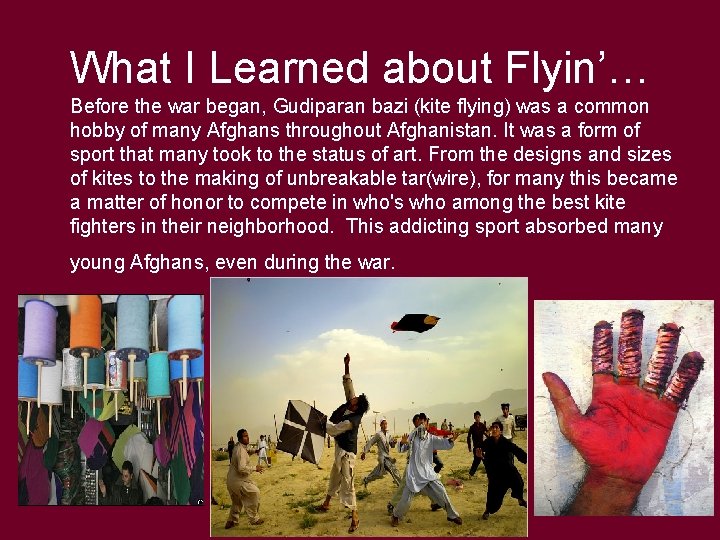
What I Learned about Flyin’… Before the war began, Gudiparan bazi (kite flying) was a common hobby of many Afghans throughout Afghanistan. It was a form of sport that many took to the status of art. From the designs and sizes of kites to the making of unbreakable tar(wire), for many this became a matter of honor to compete in who's who among the best kite fighters in their neighborhood. This addicting sport absorbed many young Afghans, even during the war.
Chapter 1… Meet Amir. . . http: //khaledho sseini. com/pod casts/
- Slides: 11