
The Kingdoms All Living Things Are Organized Domains

- Slides: 12
The Kingdoms All Living Things Are Organized
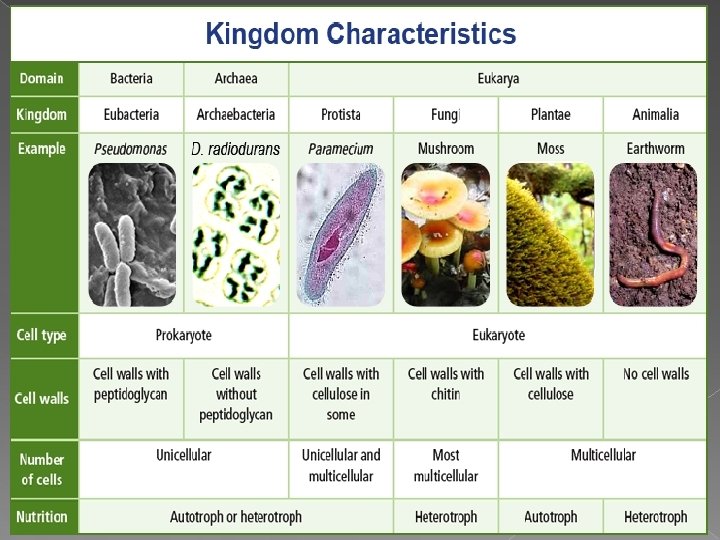
Domains & Kingdoms � The broadest category in the classification used by most biologists is the domain. › The three domains are Bacteria, Archaea, and Eukarya. � The most widely used biological classification system has six kingdoms and three domains. › The six kingdoms are Bacteria, Archaea, Protists, Fungi, Plantae, and Animalia.
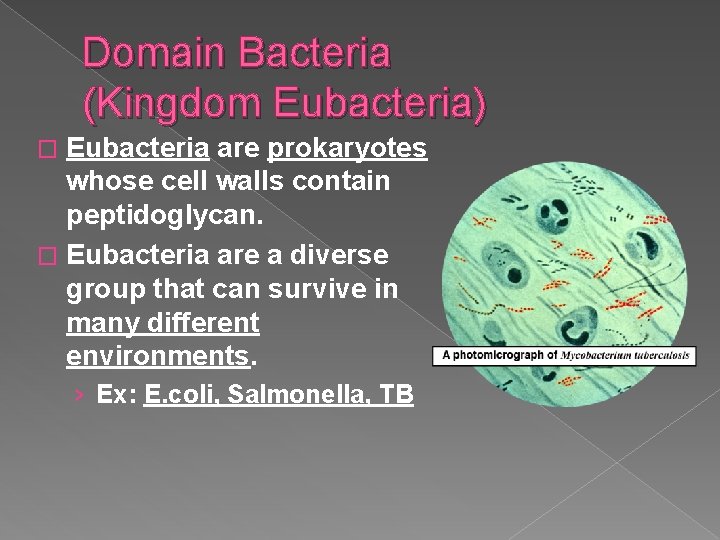
Domain Bacteria (Kingdom Eubacteria) Eubacteria are prokaryotes whose cell walls contain peptidoglycan. � Eubacteria are a diverse group that can survive in many different environments. � › Ex: E. coli, Salmonella, TB
Domain Archaea (Kingdom Archeabacteria) Archaea are thought to be more ancient than bacteria and yet more closely related to our eukaryote ancestors. � Archaea are diverse in shape and nutrition requirements. � They are called extremophiles because they can live in extreme environments. �
Domain Eukarya All eukaryotes are classified in Domain Eukarya. � Domain Eukarya contains Kingdom Protista, Kingdom Fungi, Kingdom Plantae, and Kingdom Animalia. �
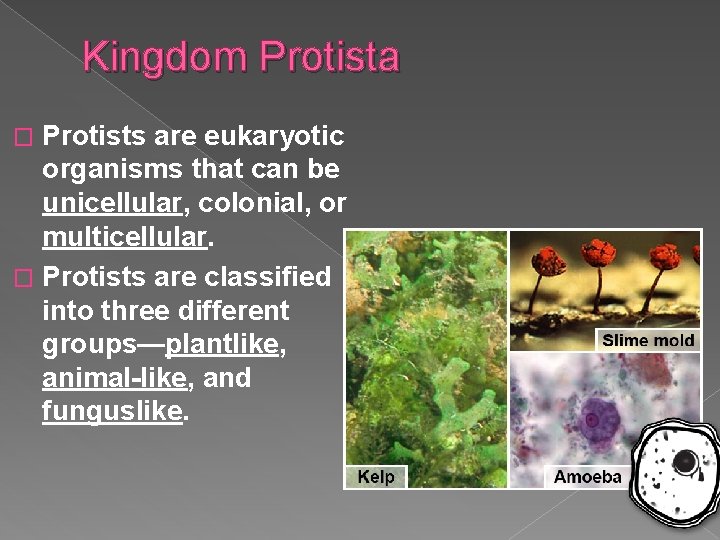
Kingdom Protista Protists are eukaryotic organisms that can be unicellular, colonial, or multicellular. � Protists are classified into three different groups—plantlike, animal-like, and funguslike. �
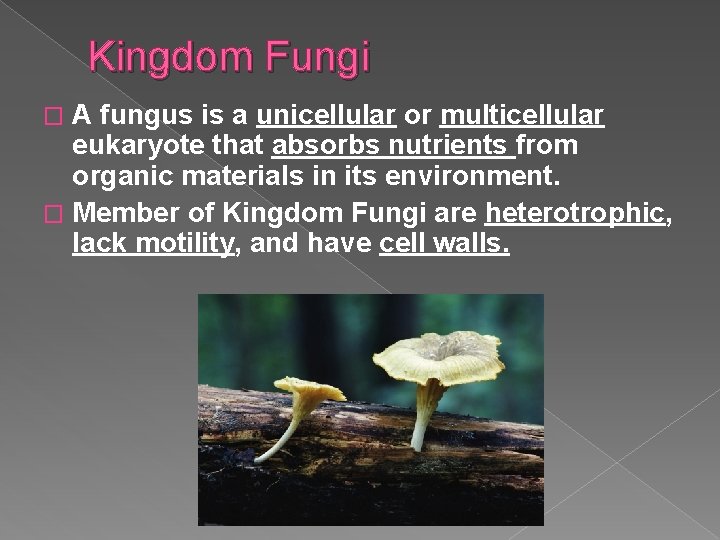
Kingdom Fungi A fungus is a unicellular or multicellular eukaryote that absorbs nutrients from organic materials in its environment. � Member of Kingdom Fungi are heterotrophic, lack motility, and have cell walls. �
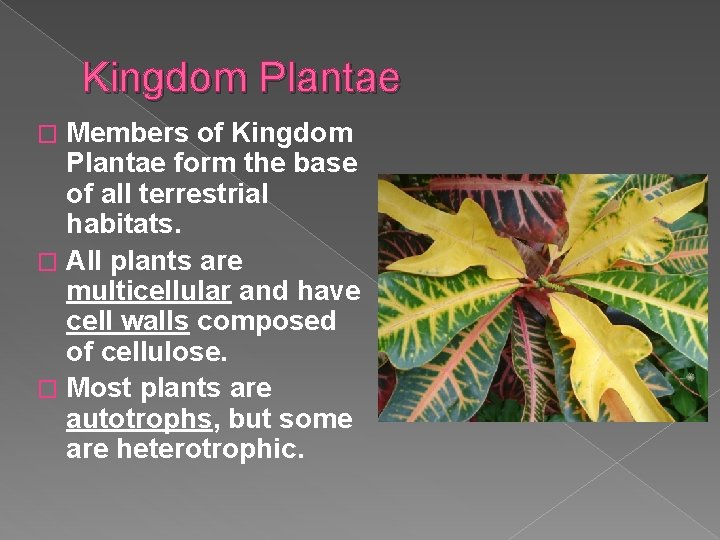
Kingdom Plantae Members of Kingdom Plantae form the base of all terrestrial habitats. � All plants are multicellular and have cell walls composed of cellulose. � Most plants are autotrophs, but some are heterotrophic. �
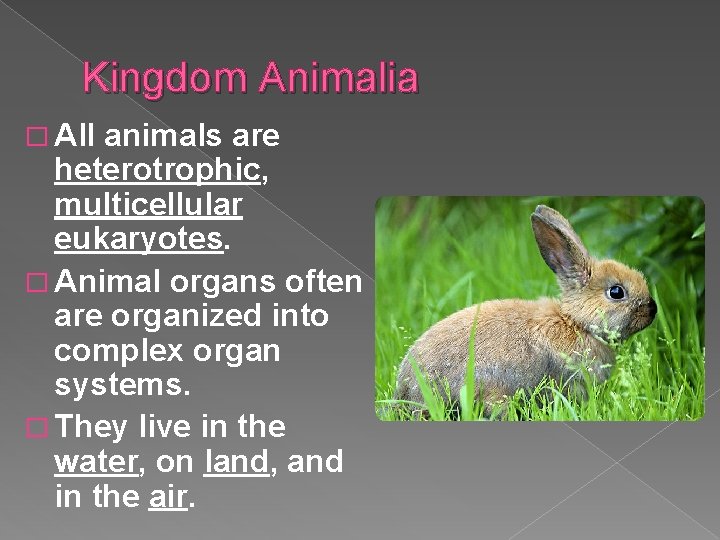
Kingdom Animalia � All animals are heterotrophic, multicellular eukaryotes. � Animal organs often are organized into complex organ systems. � They live in the water, on land, and in the air.
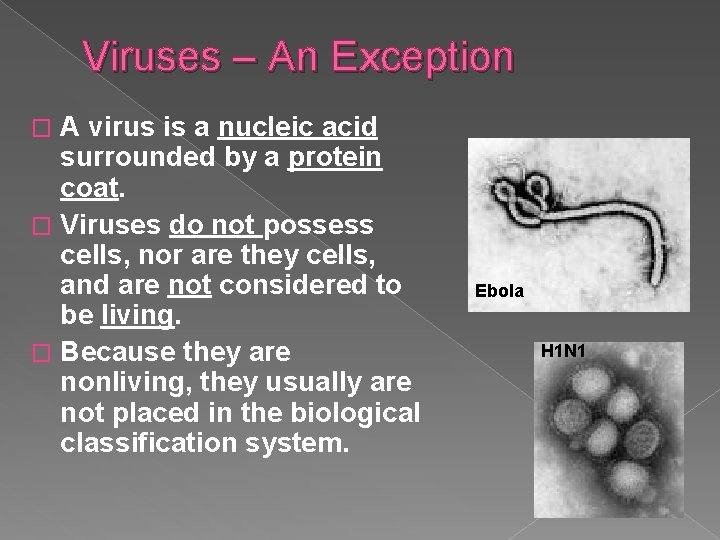
Viruses – An Exception A virus is a nucleic acid surrounded by a protein coat. � Viruses do not possess cells, nor are they cells, and are not considered to be living. � Because they are nonliving, they usually are not placed in the biological classification system. � Ebola H 1 N 1