
The kidneys and Water regulation What is the





- Slides: 28
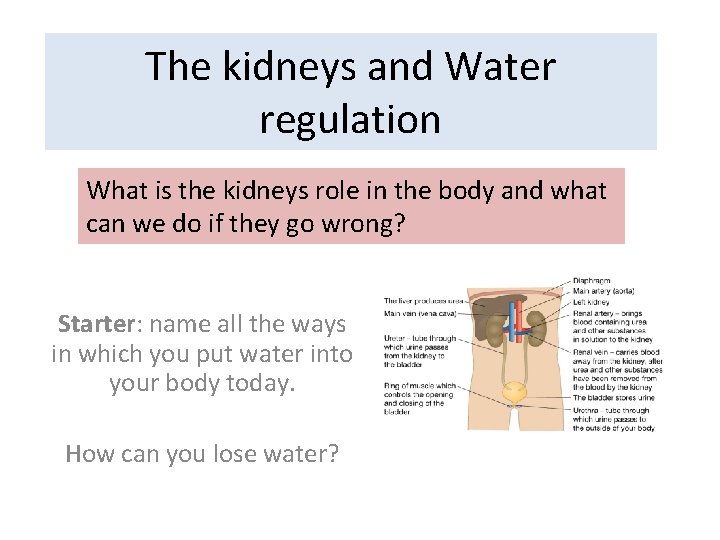
The kidneys and Water regulation What is the kidneys role in the body and what can we do if they go wrong? Starter: name all the ways in which you put water into your body today. How can you lose water?
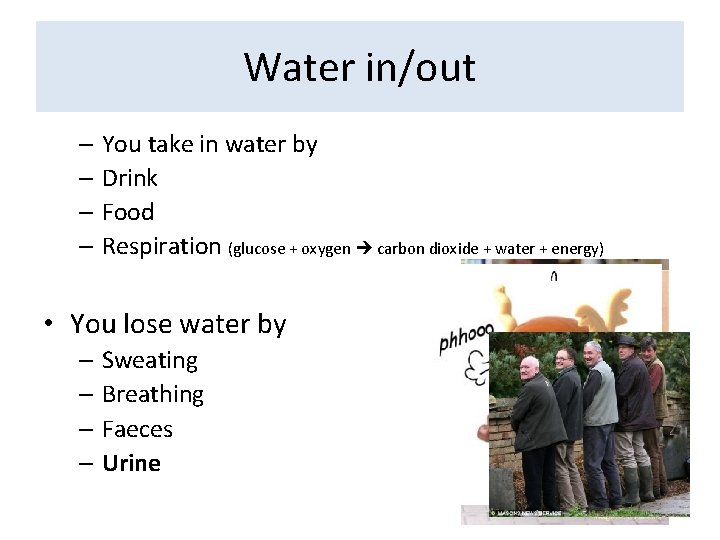
Water in/out – You take in water by – Drink – Food – Respiration (glucose + oxygen carbon dioxide + water + energy) • You lose water by – Sweating – Breathing – Faeces – Urine
Facts of life • • You are 65% water The liquid part of your blood is plasma. Plasma is mostly water. It bathes (surrounds) every cell • Q: If the concentration of water in the plasma is too low what will happen?
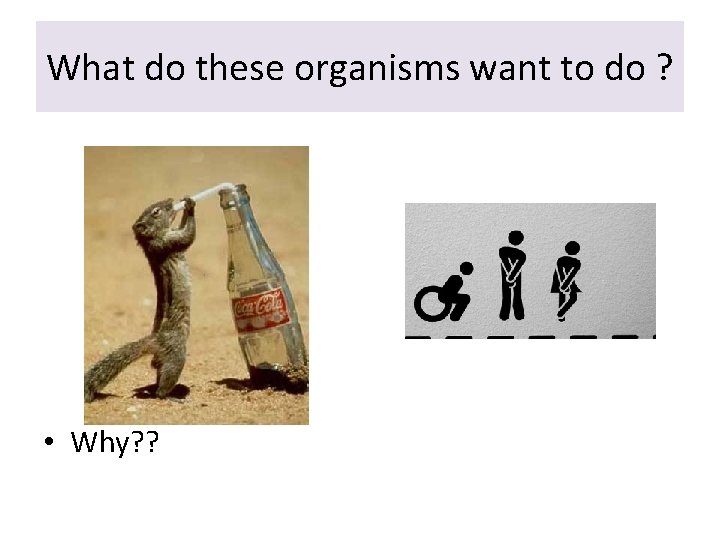
What do these organisms want to do ? • Why? ?
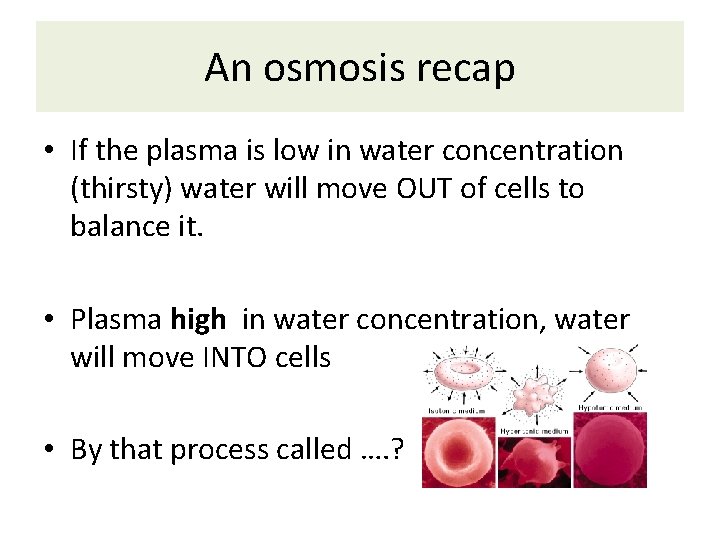
An osmosis recap • If the plasma is low in water concentration (thirsty) water will move OUT of cells to balance it. • Plasma high in water concentration, water will move INTO cells • By that process called …. ?
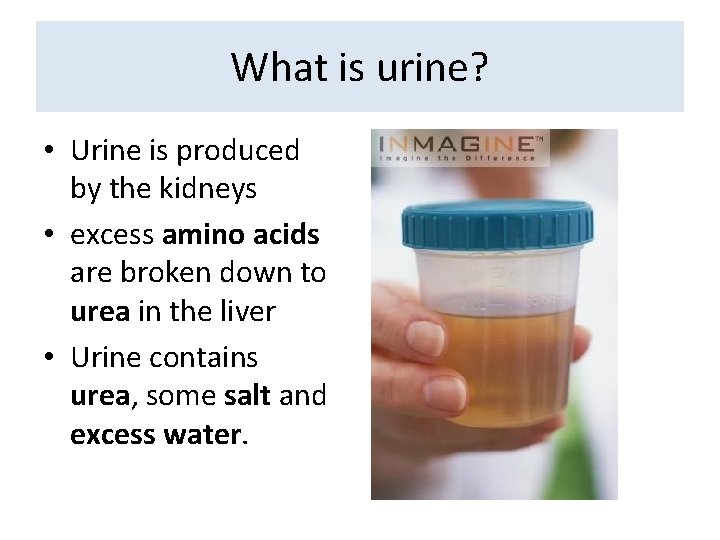
What is urine? • Urine is produced by the kidneys • excess amino acids are broken down to urea in the liver • Urine contains urea, some salt and excess water.
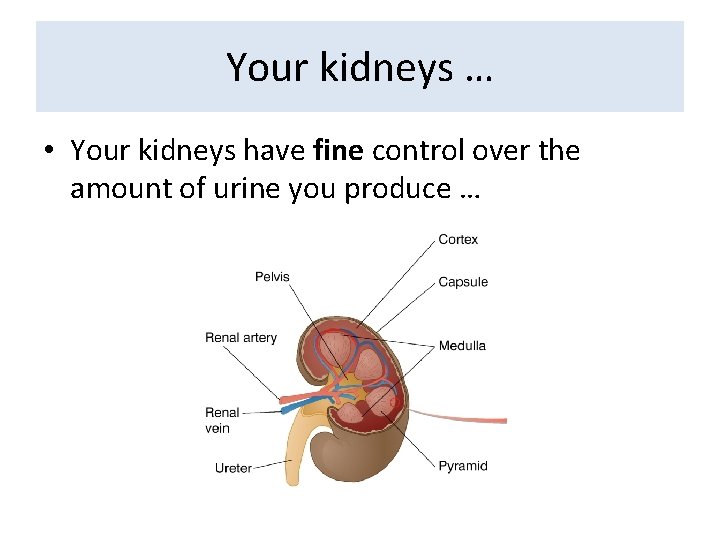
Your kidneys … • Your kidneys have fine control over the amount of urine you produce …
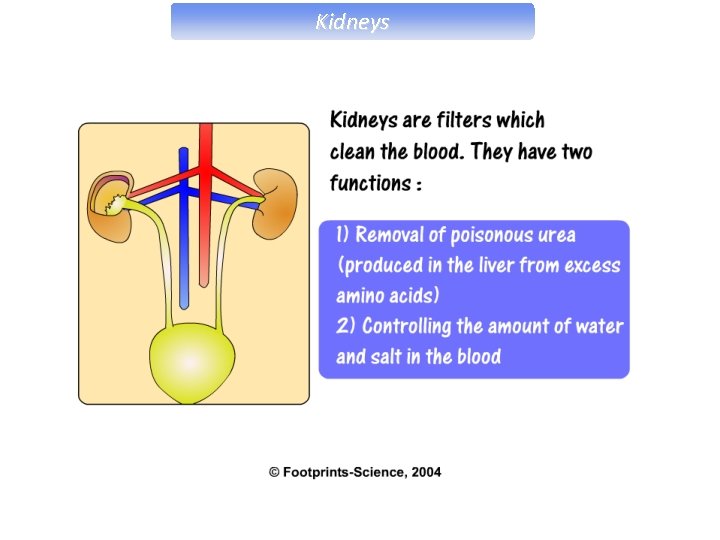
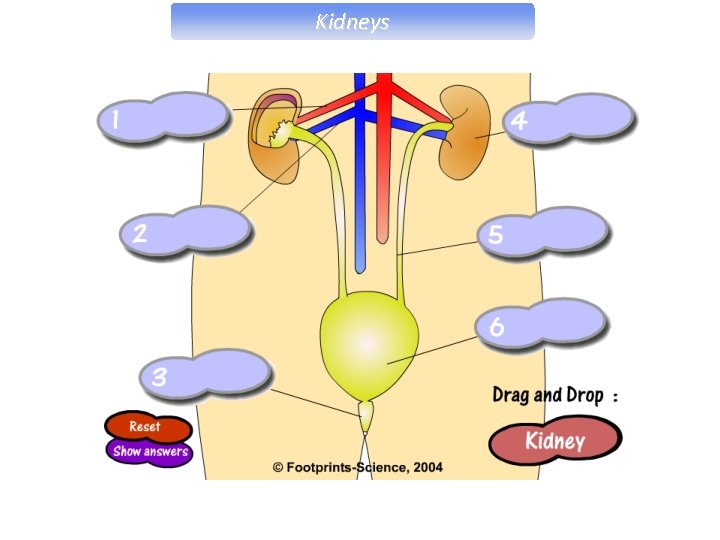
Kidneys
Kidneys
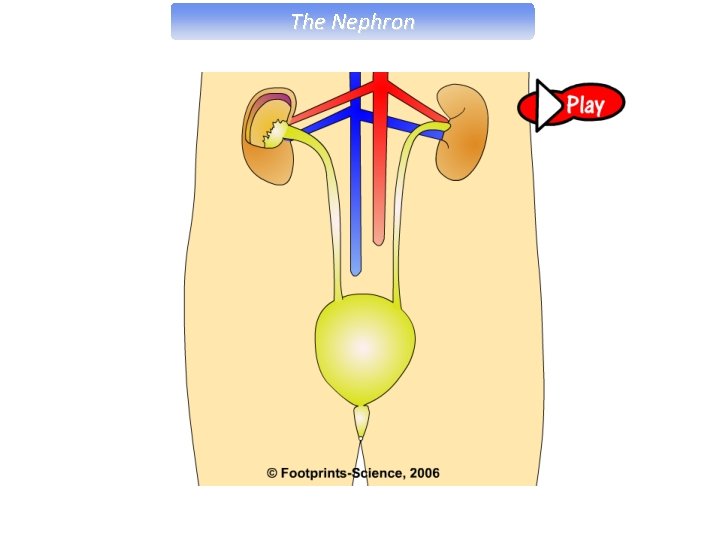
The Nephron
• When you have too much water in your blood your kidneys produce more urine to get rid of it. • When you have too little water in your blood your kidneys produce less urine.
Kidneys • These are responsible for filtering small molecules out of the blood. • This includes – Water – Salt – Glucose – Urea Q? would it be a good idea to lose ALL of these substances
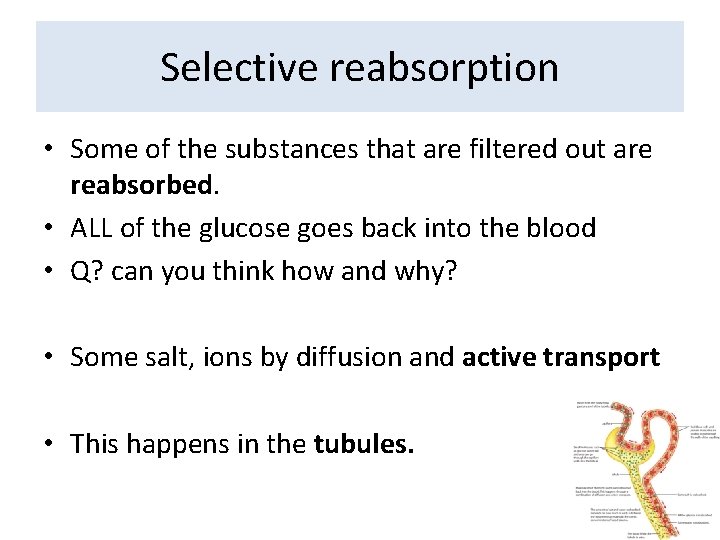
Selective reabsorption • Some of the substances that are filtered out are reabsorbed. • ALL of the glucose goes back into the blood • Q? can you think how and why? • Some salt, ions by diffusion and active transport • This happens in the tubules.
Order the cards and use them to make a flow diagram for producing urine
• http: //www. teachers. tv/videos/homeostasis http: //www. yikers. com/video_woman_loses _life_trying_to_win_nintendo_wii. html • http: //news. bbc. co. uk/1/hi/6261509. stm? lsm
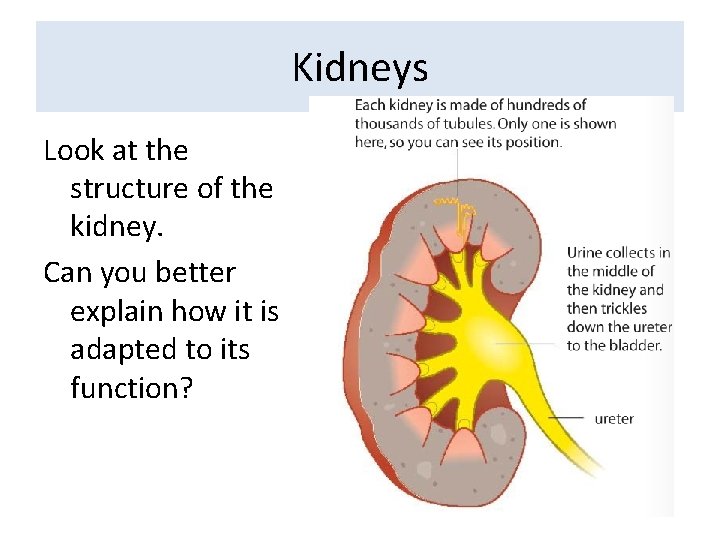
Kidneys Look at the structure of the kidney. Can you better explain how it is adapted to its function?
Kidneys going wrong What can we do when Kidneys go wrong? Starter: What options are there for people who have kidney failure? What limitations are there for these 2 processes?
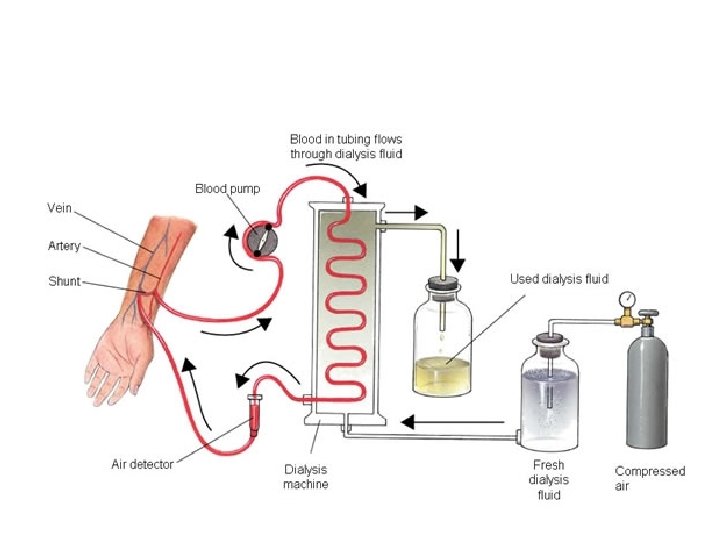
Dialysis • http: //www. youtube. com/watch? v=My. Wc. Ef. T 6 D 44 • http: //biologyanimations. blogspot. co. uk/2011/06/kidneydialysis-animation. html
Copy the diagram • Draw the dialysis machine bit where substances moves across concentration gradient. • Dialysis fluid Same glucose Same mineral concentration No urea
Transplant
Kidney donation – what is involved • http: //www. youtube. com/watch? v=hjh. Ddikx 8 o 8&feature=fvsr • Make notes
Transplants • If kidneys fail you can get a transplant. • Kidney moves from donor to recipient. • A new kidney from a donor is attached to the blood vessels in your groin and allows the new kidney to filter the blood. • The old kidneys remain in the body. • The risk of rejection of transplantation by your immune system is quite high because the antigens on the kidney are “alien” and can be attacked by antibodies. • Immunosuppressant drugs are used to reduce the immune response. • What might the disadvantages of immunosuppressant drugs be?
Dialysis V transplant • Make a list of the pros and cons of kidney transplant and kidney dialysis using pages 250253
1. It is better to have dialysis than a transplant because there is no risk of rejection
2. It is better to try xenotransplatation rather than using human organs
3) Everyone should be made to be tested to see if they are a donor.
4. We should be able to buy kidneys if people want to sell them.