
THE KIDNEY Organ of osmoregulation and excretion 2016
- Slides: 21
THE KIDNEY Organ of osmoregulation and excretion © 2016 Paul Billiet ODWS
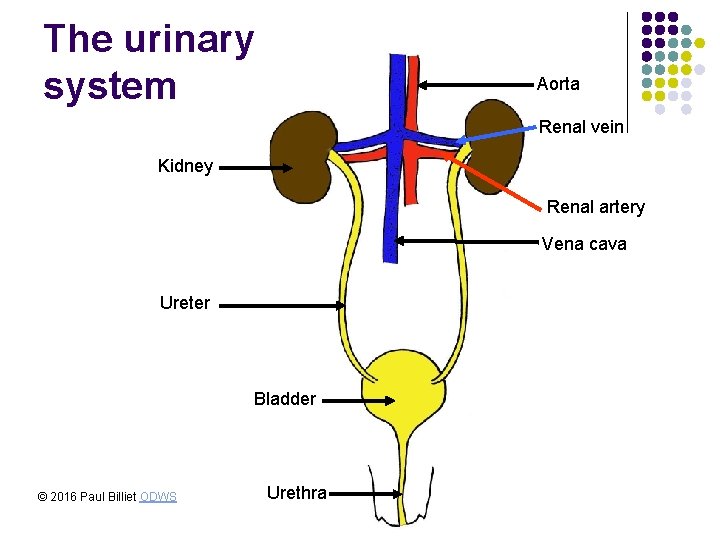
The urinary system Aorta Renal vein Kidney Renal artery Vena cava Ureter Bladder © 2016 Paul Billiet ODWS Urethra
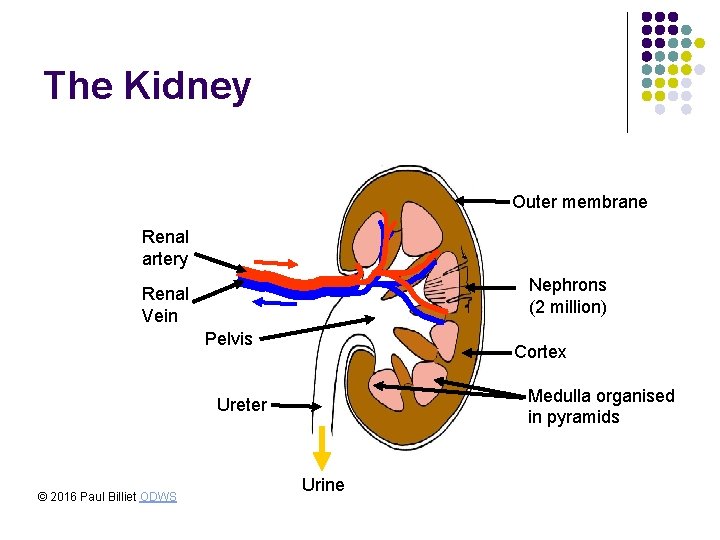
The Kidney Outer membrane Renal artery Nephrons (2 million) Renal Vein Pelvis Cortex Medulla organised in pyramids Ureter © 2016 Paul Billiet ODWS Urine
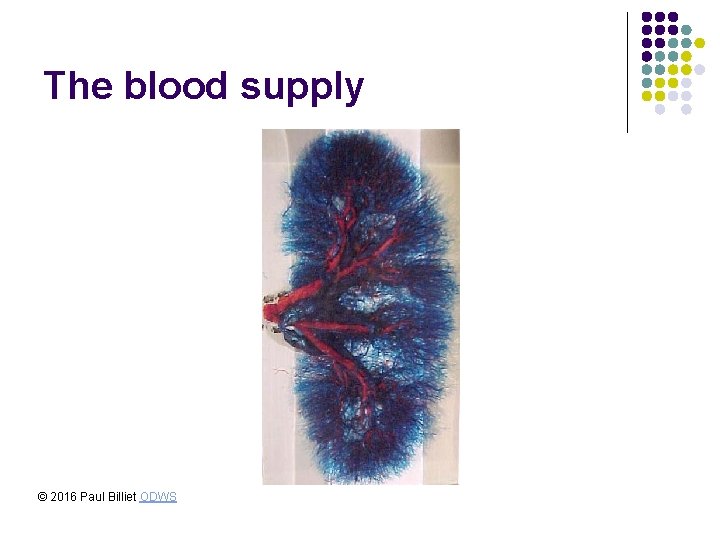
The blood supply © 2016 Paul Billiet ODWS
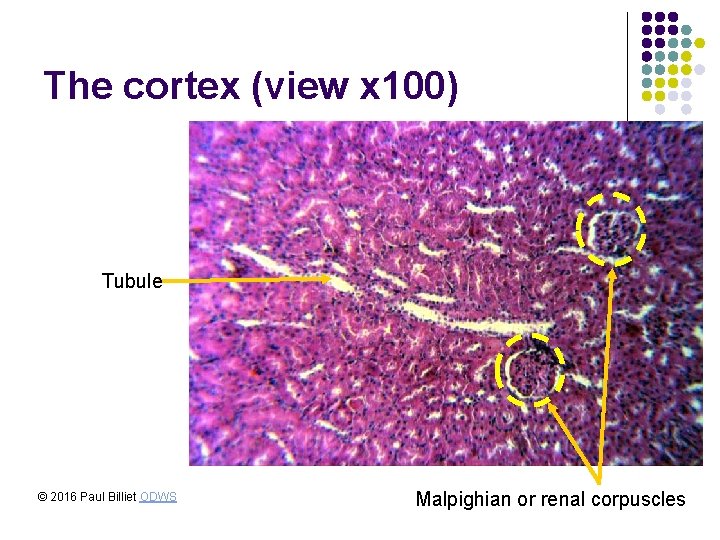
The cortex (view x 100) Tubule © 2016 Paul Billiet ODWS Malpighian or renal corpuscles
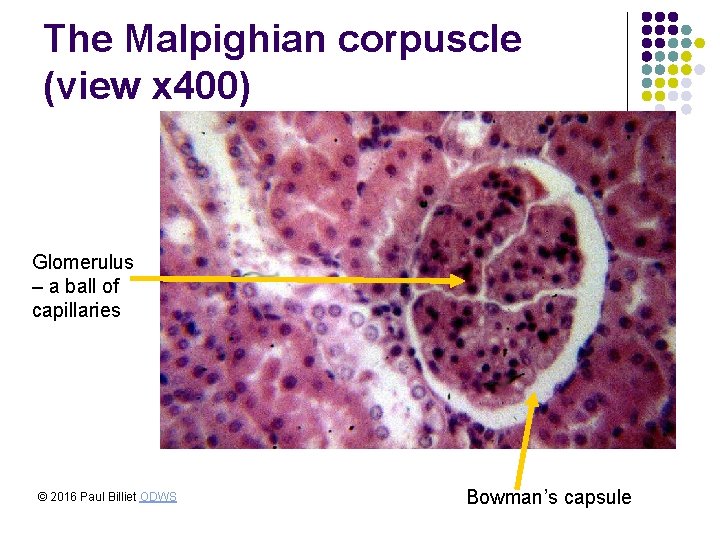
The Malpighian corpuscle (view x 400) Glomerulus – a ball of capillaries © 2016 Paul Billiet ODWS Bowman’s capsule
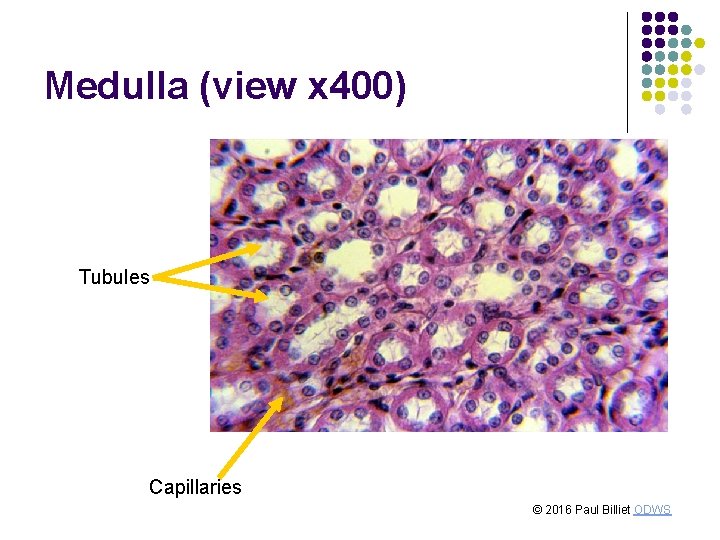
Medulla (view x 400) Tubules Capillaries © 2016 Paul Billiet ODWS
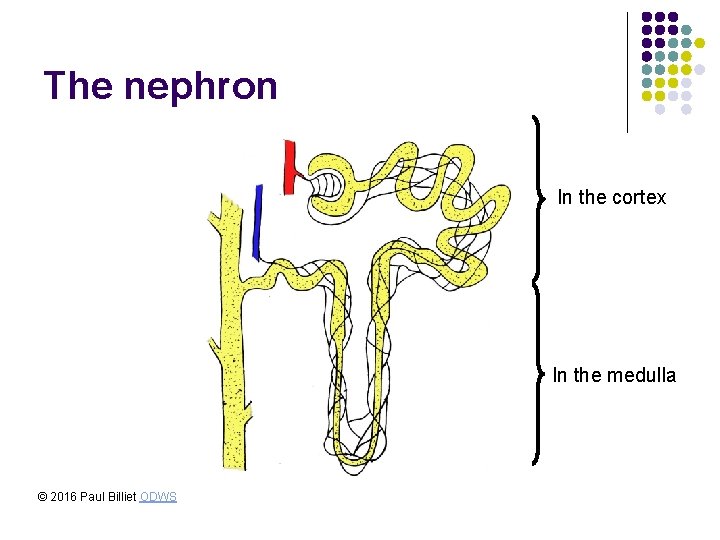
The nephron In the cortex In the medulla © 2016 Paul Billiet ODWS
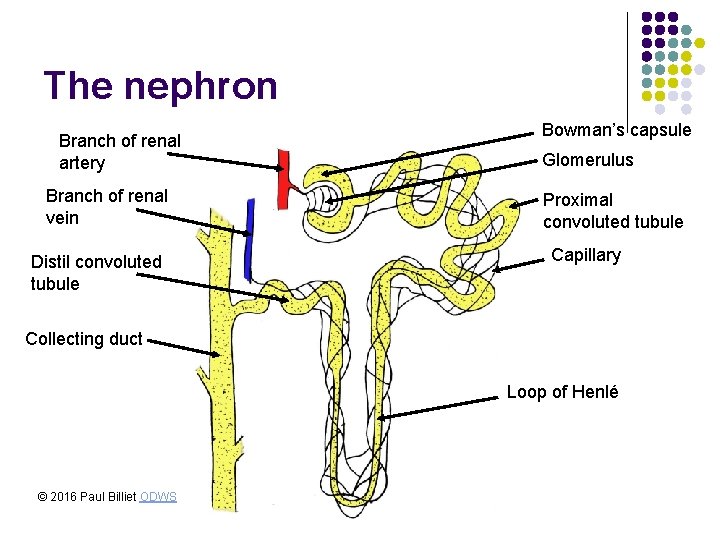
The nephron Branch of renal artery Branch of renal vein Distil convoluted tubule Bowman’s capsule Glomerulus Proximal convoluted tubule Capillary Collecting duct Loop of Henlé © 2016 Paul Billiet ODWS
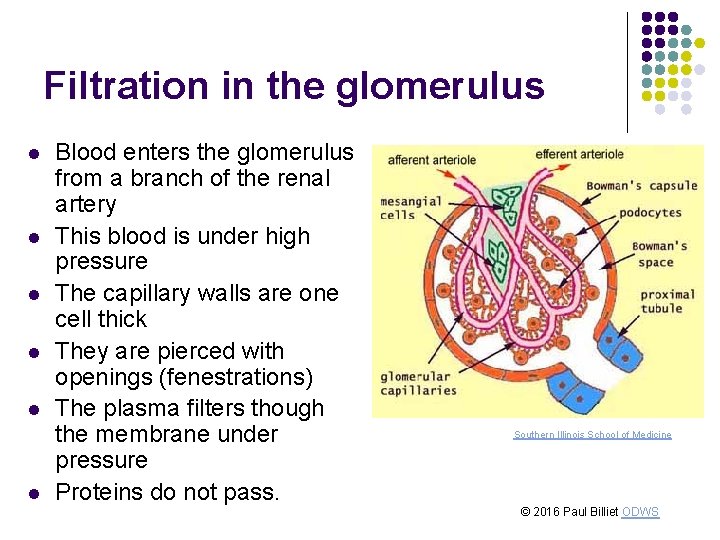
Filtration in the glomerulus l l l Blood enters the glomerulus from a branch of the renal artery This blood is under high pressure The capillary walls are one cell thick They are pierced with openings (fenestrations) The plasma filters though the membrane under pressure Proteins do not pass. Southern Illinois School of Medicine © 2016 Paul Billiet ODWS
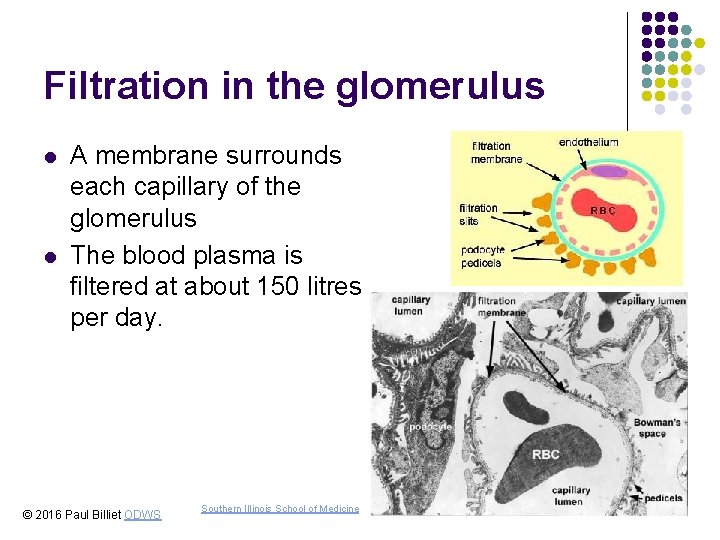
Filtration in the glomerulus l l A membrane surrounds each capillary of the glomerulus The blood plasma is filtered at about 150 litres per day. © 2016 Paul Billiet ODWS Southern Illinois School of Medicine
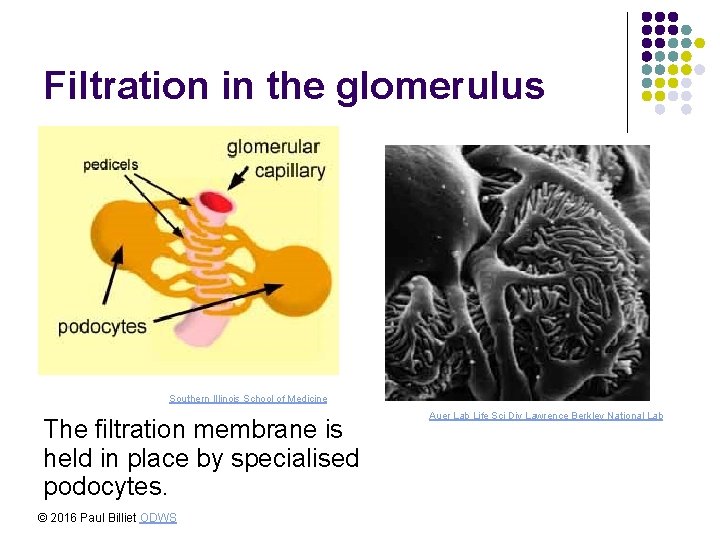
Filtration in the glomerulus Southern Illinois School of Medicine The filtration membrane is held in place by specialised podocytes. © 2016 Paul Billiet ODWS Auer Lab Life Sci Div Lawrence Berkley National Lab
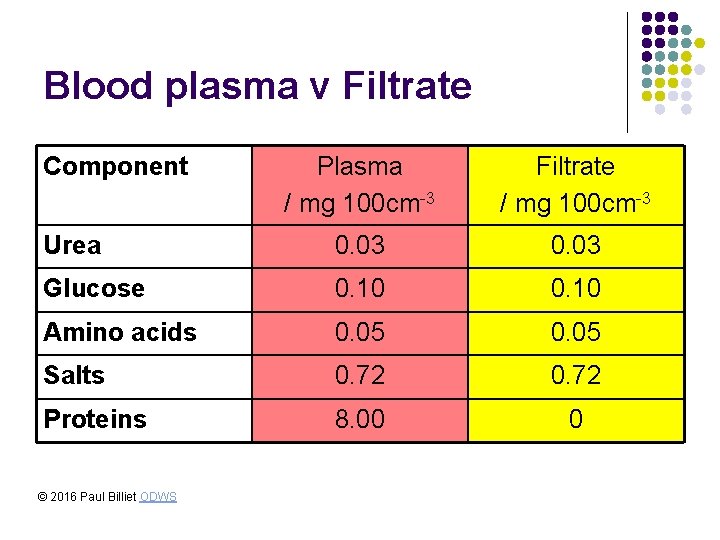
Blood plasma v Filtrate Component Plasma / mg 100 cm-3 Filtrate / mg 100 cm-3 Urea 0. 03 Glucose 0. 10 Amino acids 0. 05 Salts 0. 72 Proteins 8. 00 0 © 2016 Paul Billiet ODWS
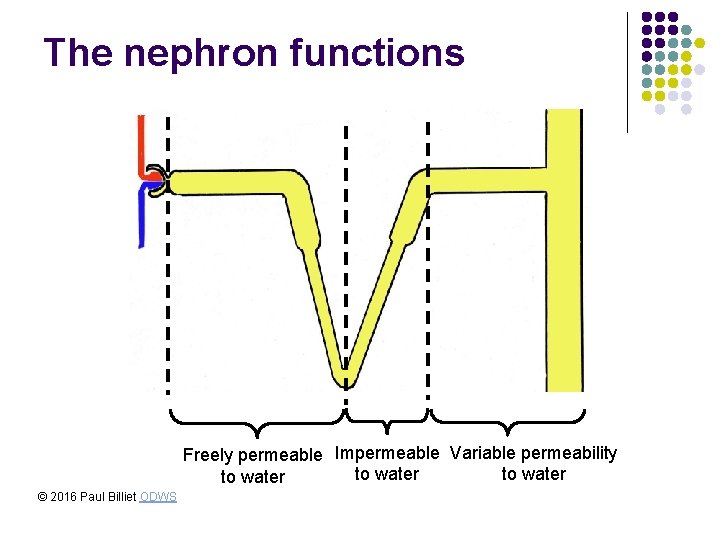
The nephron functions Freely permeable Impermeable Variable permeability to water © 2016 Paul Billiet ODWS
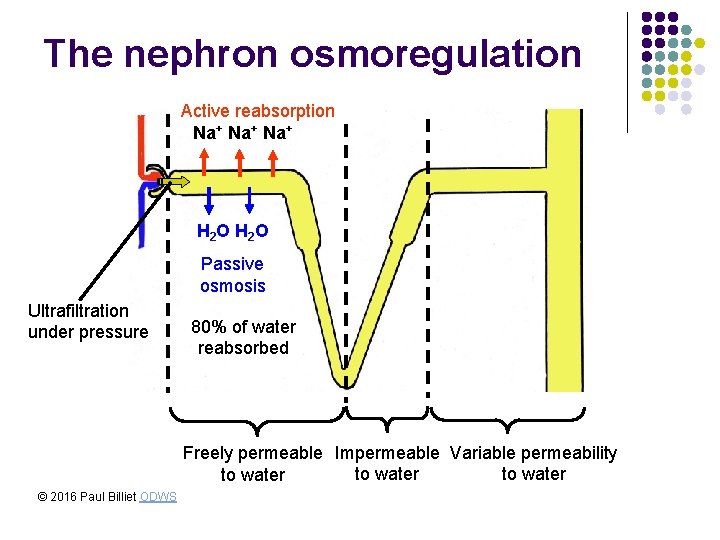
The nephron osmoregulation Active reabsorption Na+ Na+ H 2 O Passive osmosis Ultrafiltration under pressure 80% of water reabsorbed Freely permeable Impermeable Variable permeability to water © 2016 Paul Billiet ODWS
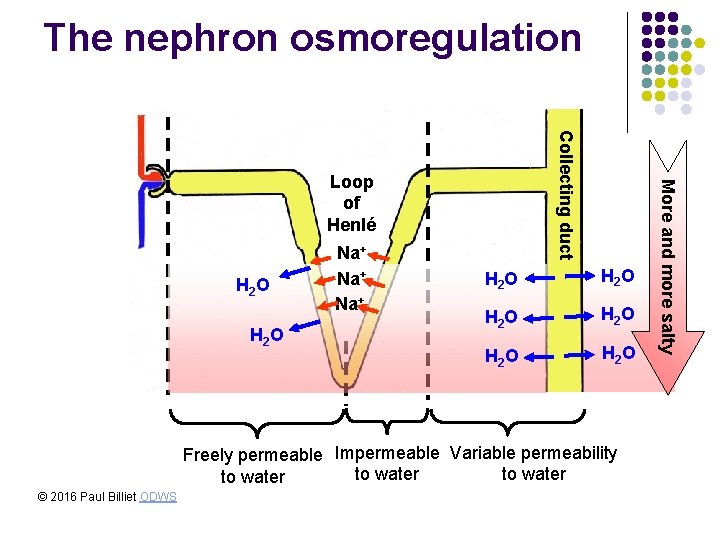
The nephron osmoregulation H 2 O Na+ Na+ H 2 O H 2 O Freely permeable Impermeable Variable permeability to water © 2016 Paul Billiet ODWS More and more salty Collecting duct Loop of Henlé
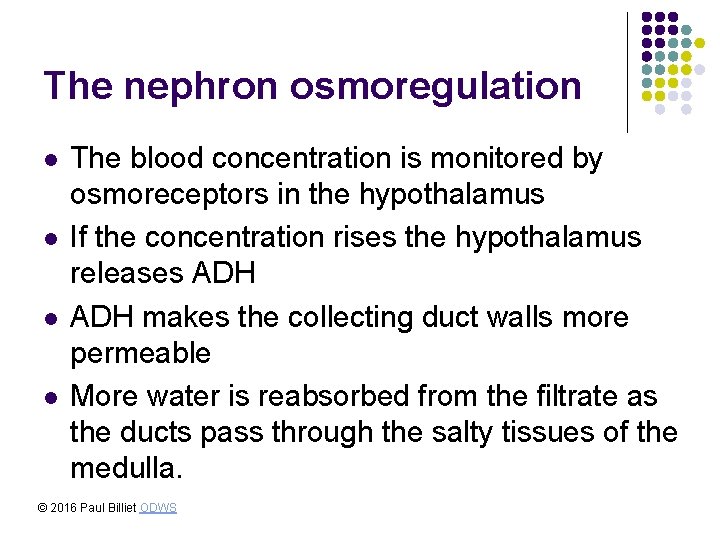
The nephron osmoregulation l l The blood concentration is monitored by osmoreceptors in the hypothalamus If the concentration rises the hypothalamus releases ADH makes the collecting duct walls more permeable More water is reabsorbed from the filtrate as the ducts pass through the salty tissues of the medulla. © 2016 Paul Billiet ODWS
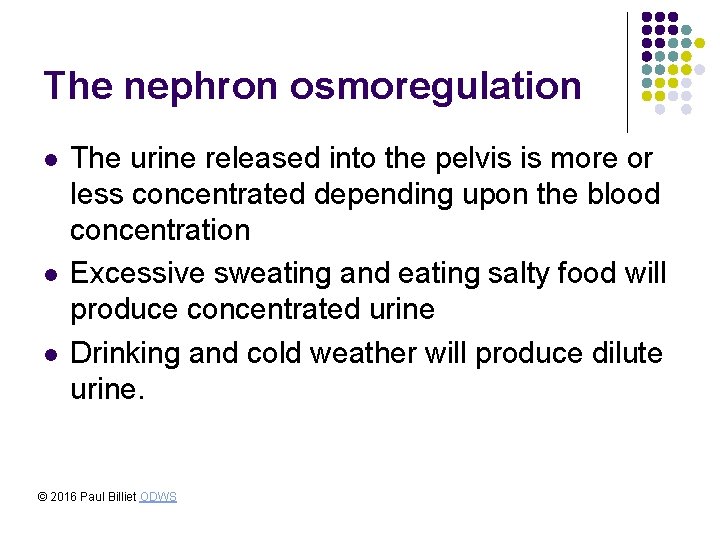
The nephron osmoregulation l l l The urine released into the pelvis is more or less concentrated depending upon the blood concentration Excessive sweating and eating salty food will produce concentrated urine Drinking and cold weather will produce dilute urine. © 2016 Paul Billiet ODWS
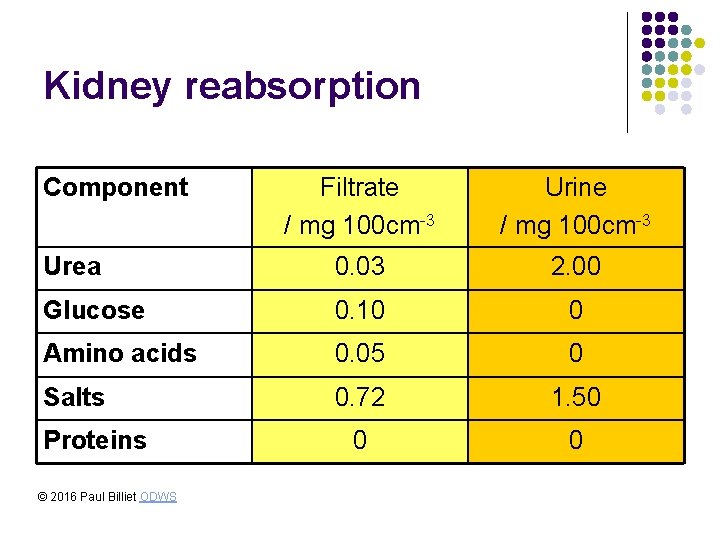
Kidney reabsorption Component Filtrate / mg 100 cm-3 Urine / mg 100 cm-3 Urea 0. 03 2. 00 Glucose 0. 10 0 Amino acids 0. 05 0 Salts 0. 72 1. 50 0 0 Proteins © 2016 Paul Billiet ODWS
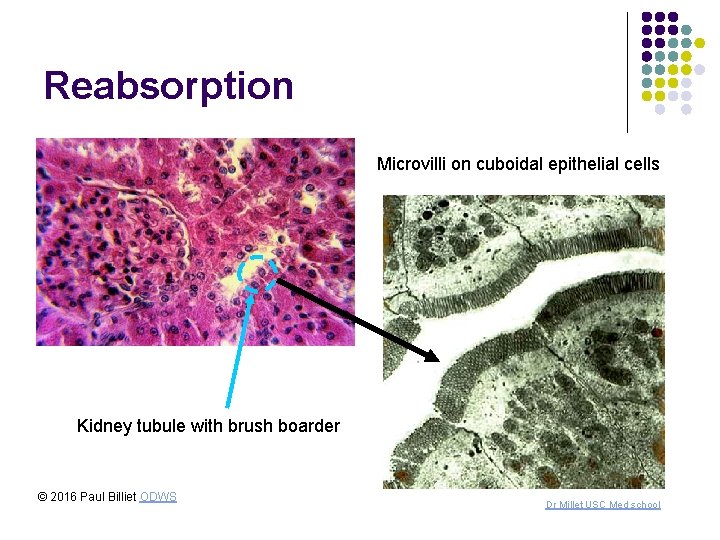
Reabsorption Microvilli on cuboidal epithelial cells Kidney tubule with brush boarder © 2016 Paul Billiet ODWS Dr Millet USC Med school
The proximal tubules reabsorb: 80% of water l All of the glucose l All of the amino acids l Blood p. H is regulated l Blood salt levels are regulated l Urea is left behind and even secreted into the tubules Reabsorbed molecules pass into the surrounding capillaries. l © 2016 Paul Billiet ODWS