
The Keynesian Framework and the ISLM Model Determination


- Slides: 28
The Keynesian Framework and the ISLM Model
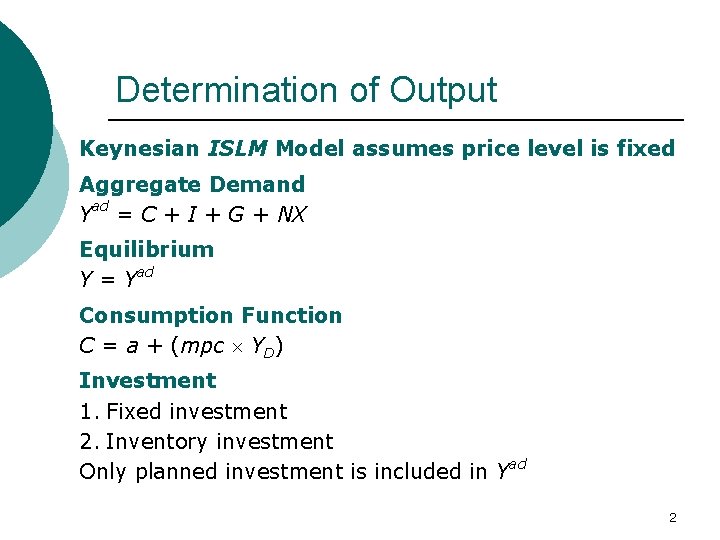
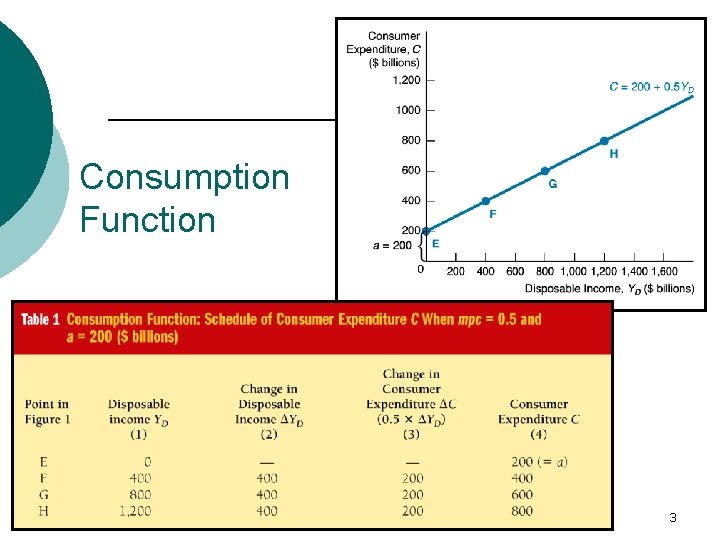
Determination of Output Keynesian ISLM Model assumes price level is fixed Aggregate Demand Yad = C + I + G + NX Equilibrium Y = Yad Consumption Function C = a + (mpc YD) Investment 1. Fixed investment 2. Inventory investment Only planned investment is included in Yad 2
Consumption Function 3
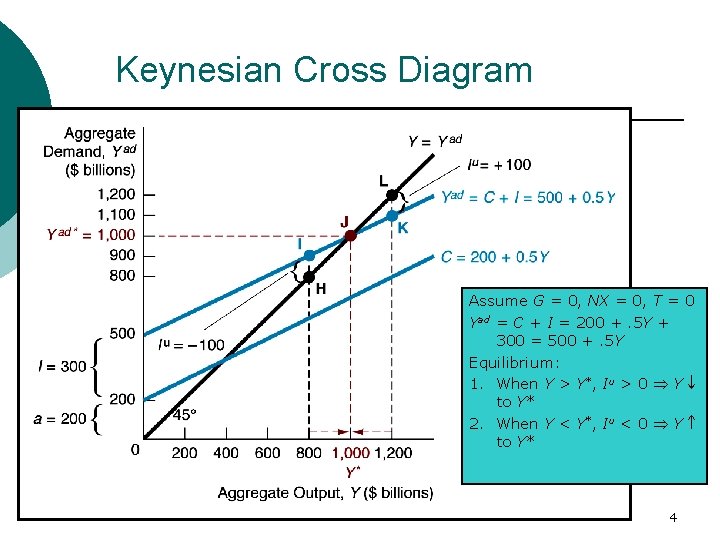
Keynesian Cross Diagram Assume G = 0, NX = 0, T = 0 Yad = C + I = 200 +. 5 Y + 300 = 500 +. 5 Y Equilibrium: 1. When Y > Y*, Iu > 0 Y to Y* 2. When Y < Y*, Iu < 0 Y to Y* 4
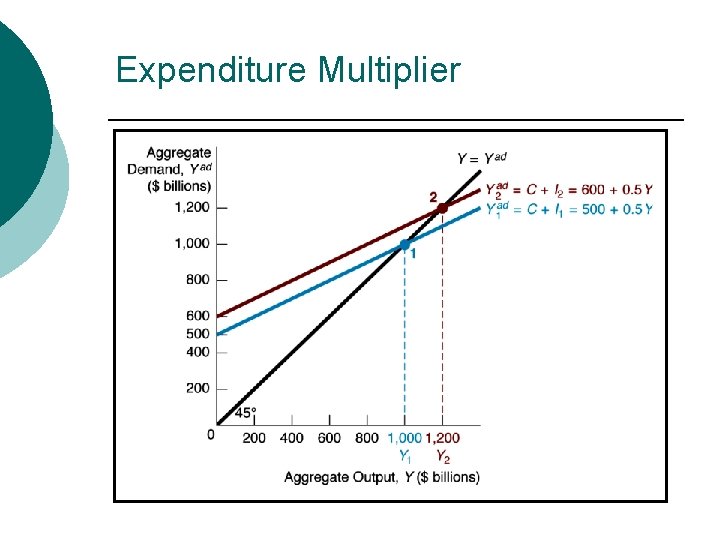
Expenditure Multiplier
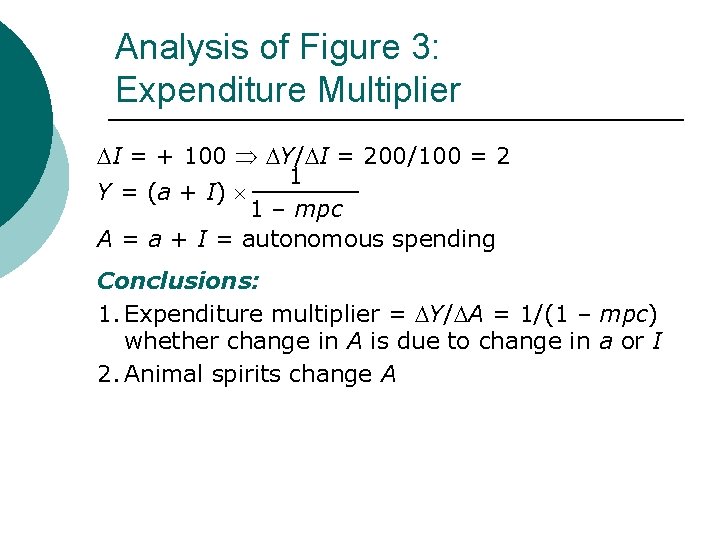
Analysis of Figure 3: Expenditure Multiplier I = + 100 Y/ I = 200/100 = 2 1 Y = (a + I) 1 – mpc A = a + I = autonomous spending Conclusions: 1. Expenditure multiplier = Y/ A = 1/(1 – mpc) whether change in A is due to change in a or I 2. Animal spirits change A
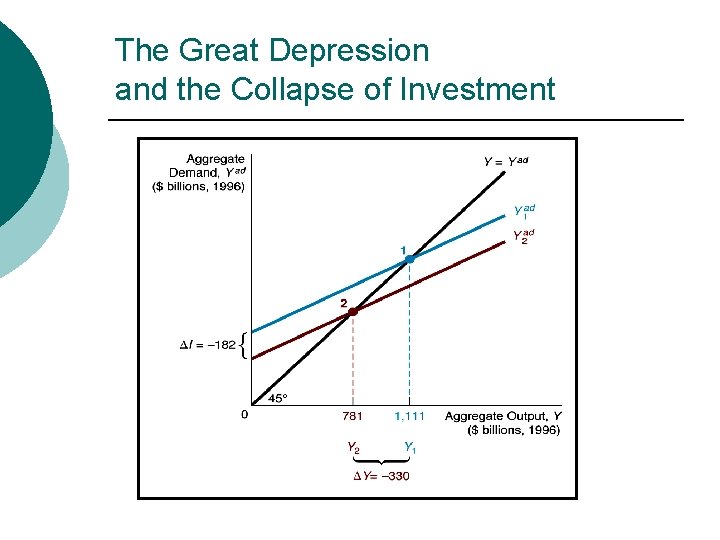
The Great Depression and the Collapse of Investment
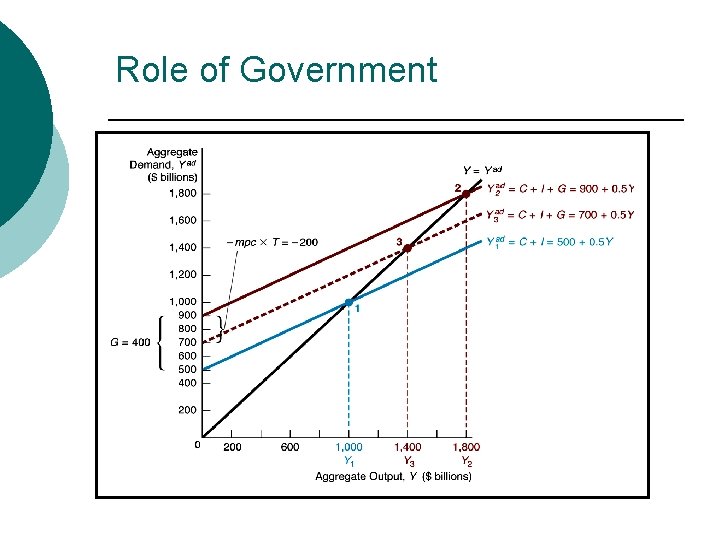
Role of Government
Analysis of Figure 5: Role of Government G = + 400, T = + 400 1. With no G and T, Yd = C + I = 500 + mpc Y = 500 +. 5 Y, Y 1 = 1000 2. With G, Y= C + I + G = 900 +. 5 Y, Y 2 = 1800 3. With G and T, Yd = 900 + mpc Y – mpc T = 700 +. 5 Y, Y 3 = 1400 Conclusions: 1. G Y ; T Y 2. G = T = + 400, Y 400
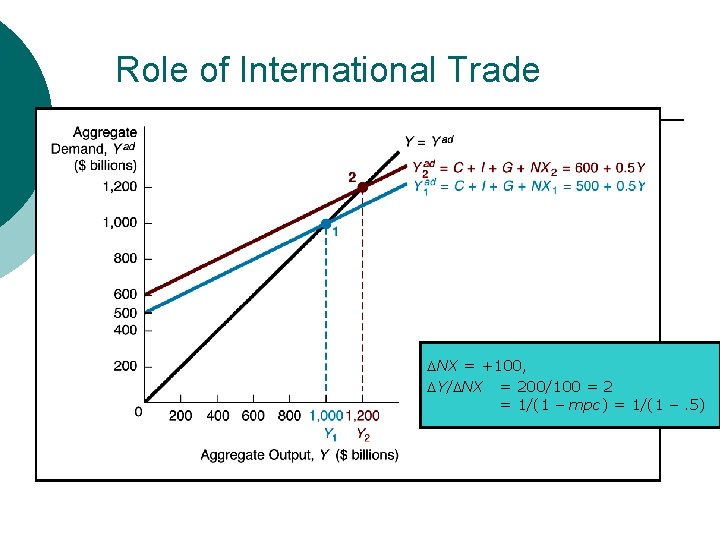
Role of International Trade NX = +100, Y/ NX = 200/100 = 2 = 1/(1 – mpc) = 1/(1 –. 5)
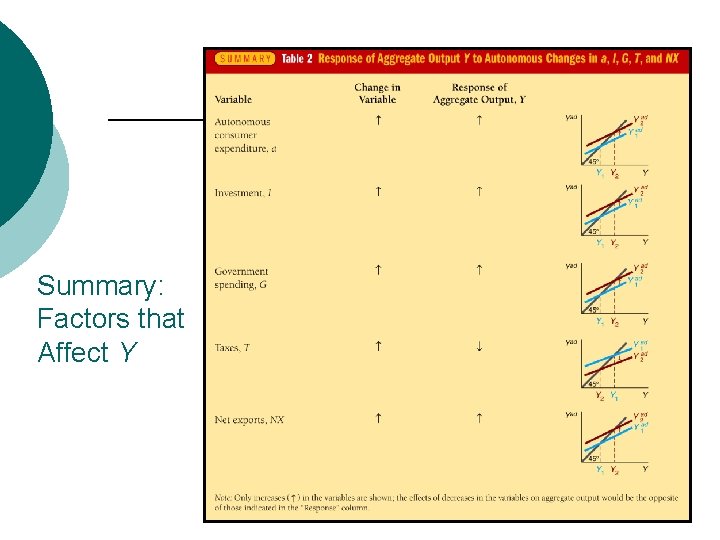
Summary: Factors that Affect Y
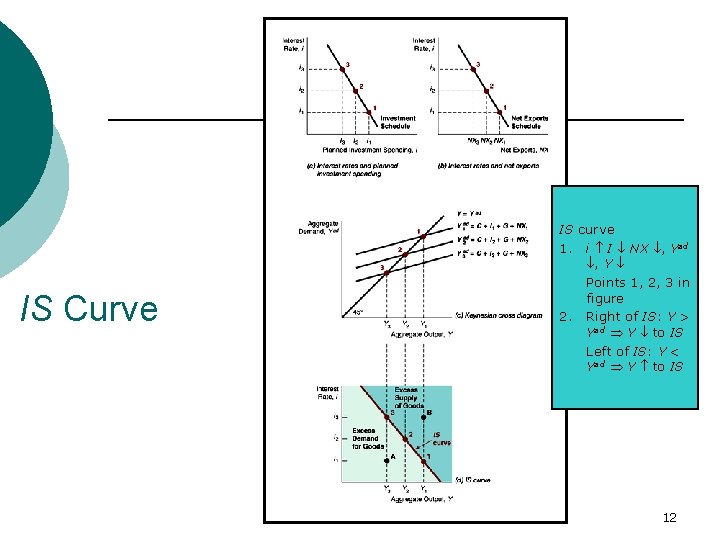
IS Curve IS curve 1. i I NX , Yad , Y Points 1, 2, 3 in figure 2. Right of IS: Y > Yad Y to IS Left of IS: Y < Yad Y to IS 12
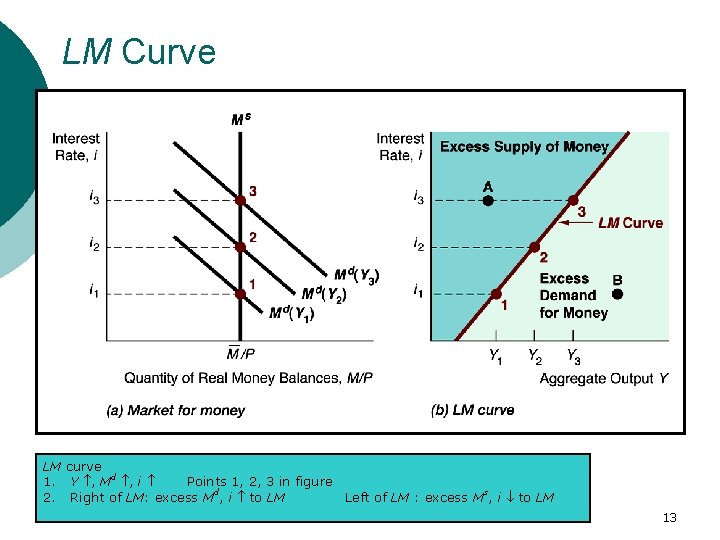
LM Curve LM curve 1. Y , Md , i Points 1, 2, 3 in figure 2. Right of LM: excess Md, i to LM Left of LM : excess Ms, i to LM 13
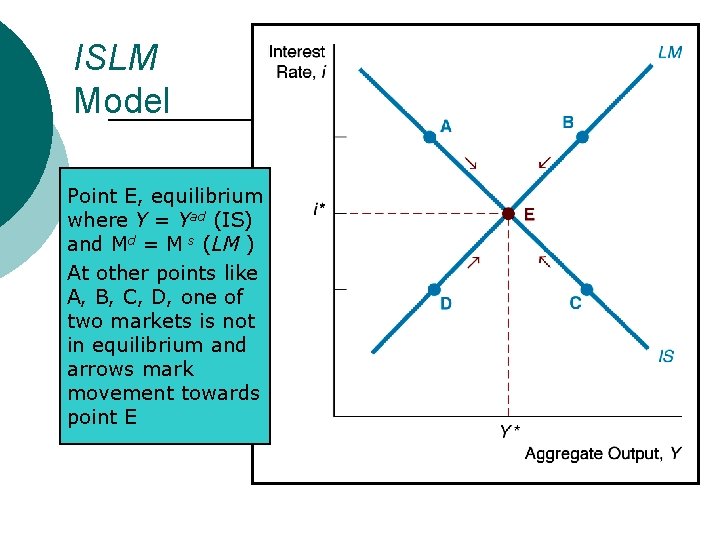
ISLM Model Point E, equilibrium where Y = Yad (IS) and Md = M s (LM ) At other points like A, B, C, D, one of two markets is not in equilibrium and arrows mark movement towards point E
Monetary and Fiscal Policy in the ISLM Model
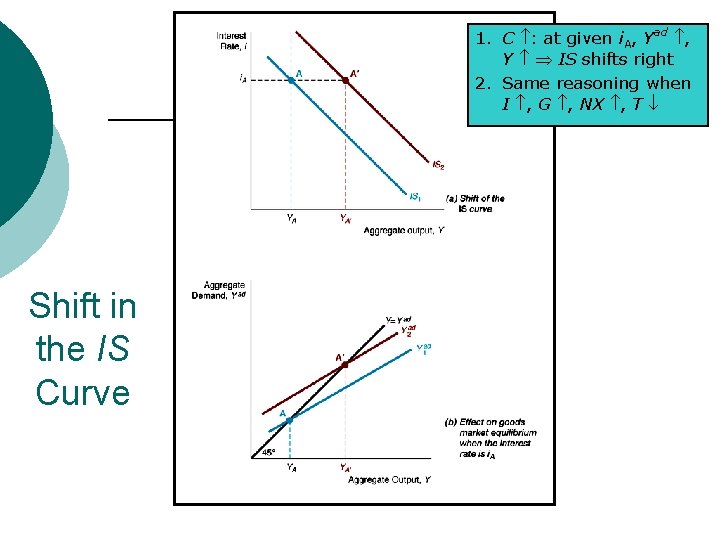
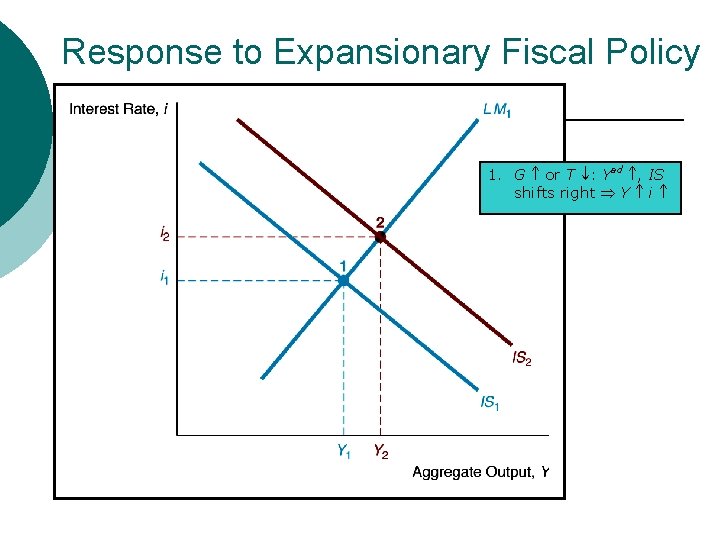
1. C : at given i. A, Yad , Y IS shifts right 2. Same reasoning when I , G , NX , T Shift in the IS Curve
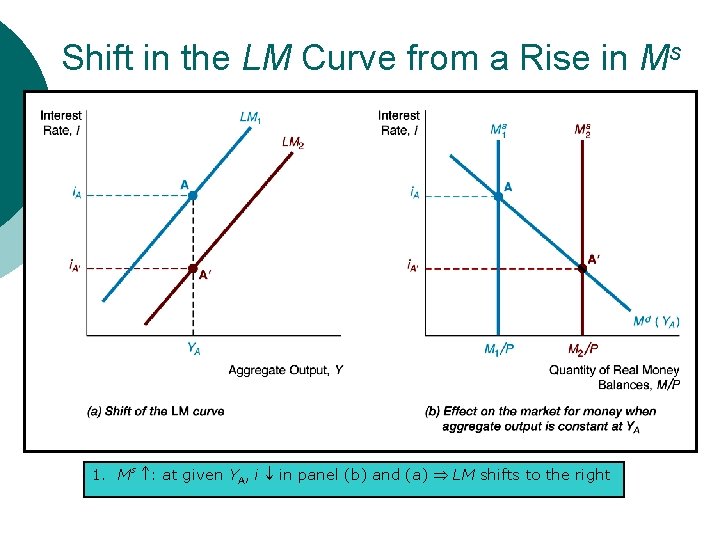
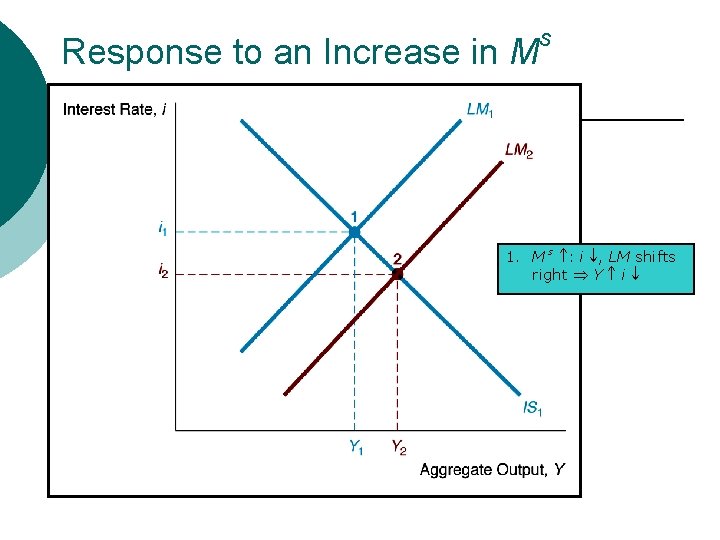
Shift in the LM Curve from a Rise in Ms 1. Ms : at given YA, i in panel (b) and (a) LM shifts to the right
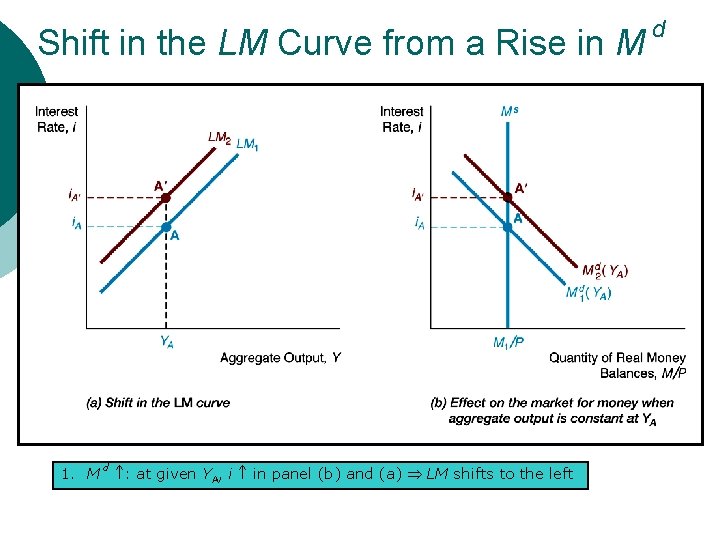
Shift in the LM Curve from a Rise in M 1. M d : at given YA, i in panel (b) and (a) LM shifts to the left d
Response to an Increase in M s 1. M s : i , LM shifts right Y i
Response to Expansionary Fiscal Policy 1. G or T : Yad , IS shifts right Y i
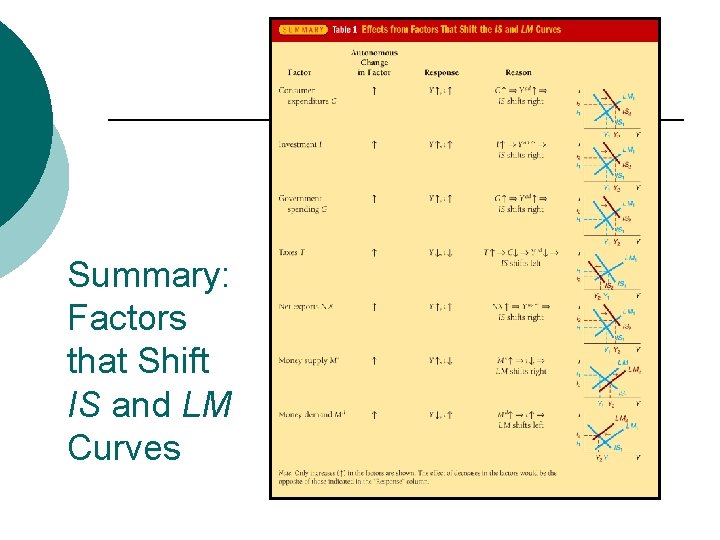
Summary: Factors that Shift IS and LM Curves
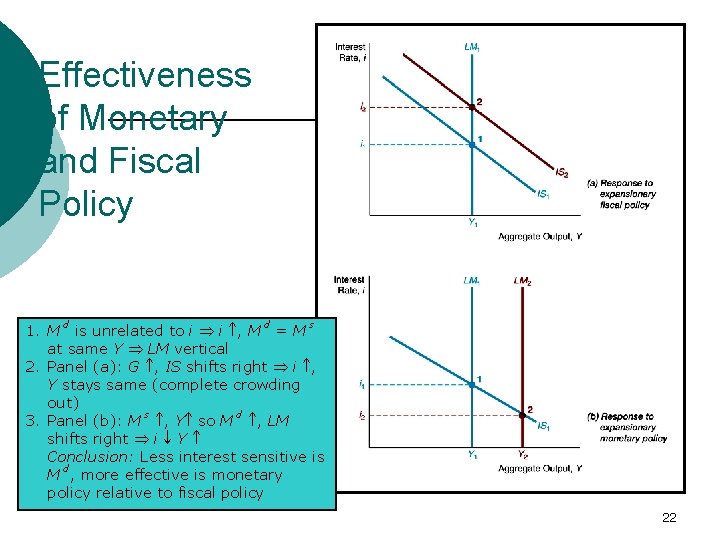
Effectiveness of Monetary and Fiscal Policy 1. M d is unrelated to i i , M d = M s at same Y LM vertical 2. Panel (a): G , IS shifts right i , Y stays same (complete crowding out) 3. Panel (b): M s , Y so M d , LM shifts right i Y Conclusion: Less interest sensitive is M d, more effective is monetary policy relative to fiscal policy 22
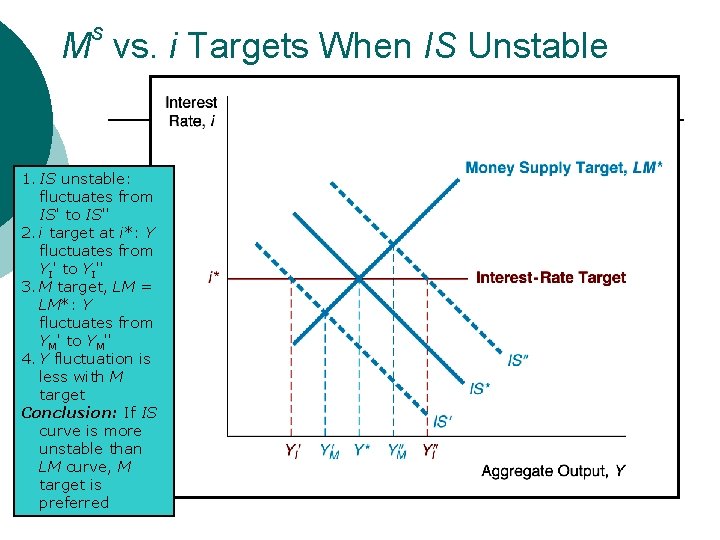
s M vs. i Targets When IS Unstable 1. IS unstable: fluctuates from IS' to IS'' 2. i target at i*: Y fluctuates from YI' to YI'' 3. M target, LM = LM*: Y fluctuates from YM' to YM'' 4. Y fluctuation is less with M target Conclusion: If IS curve is more unstable than LM curve, M target is preferred
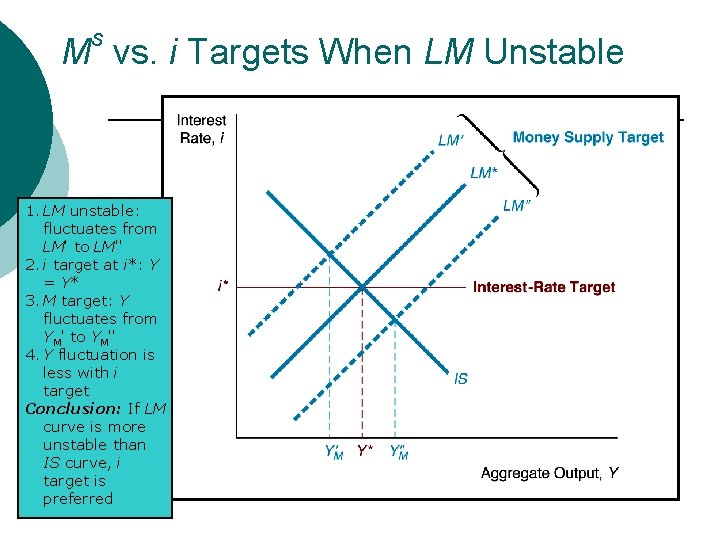
s M vs. i Targets When LM Unstable 1. LM unstable: fluctuates from LM' to LM'' 2. i target at i*: Y = Y* 3. M target: Y fluctuates from YM' to YM'' 4. Y fluctuation is less with i target Conclusion: If LM curve is more unstable than IS curve, i target is preferred
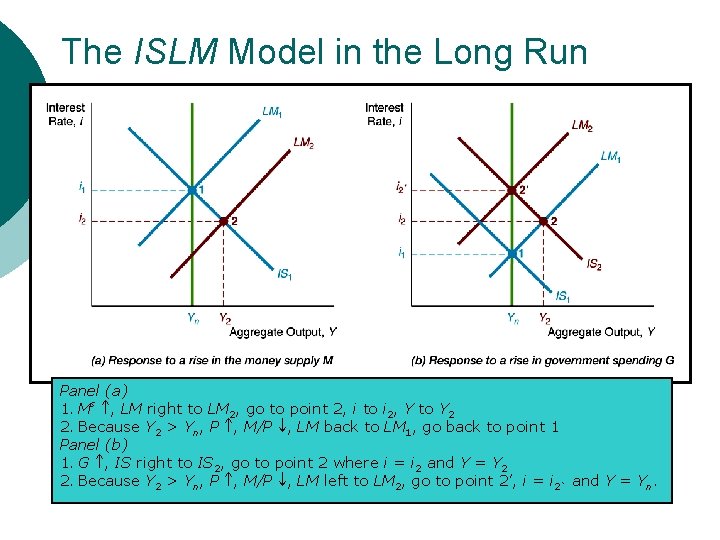
The ISLM Model in the Long Run Panel (a) 1. Ms , LM right to LM 2, go to point 2, i to i 2, Y to Y 2 2. Because Y 2 > Yn, P , M/P , LM back to LM 1, go back to point 1 Panel (b) 1. G , IS right to IS 2, go to point 2 where i = i 2 and Y = Y 2 2. Because Y 2 > Yn, P , M/P , LM left to LM 2, go to point 2', i = i 2` and Y = Yn.
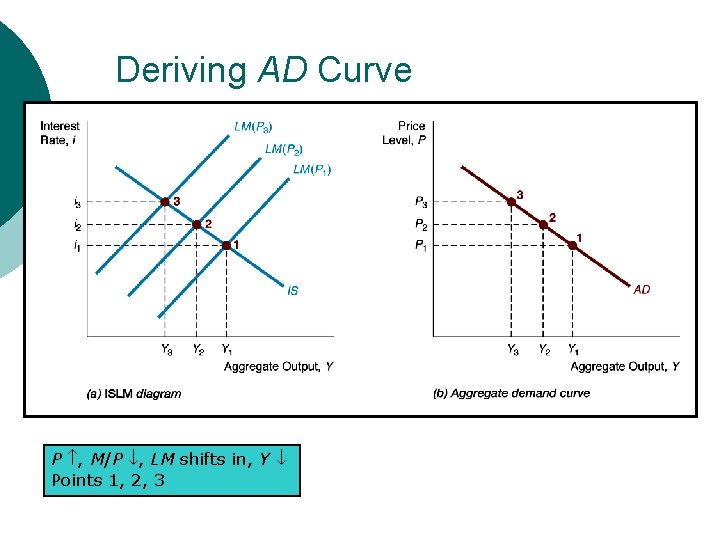
Deriving AD Curve P , M/P , LM shifts in, Y Points 1, 2, 3
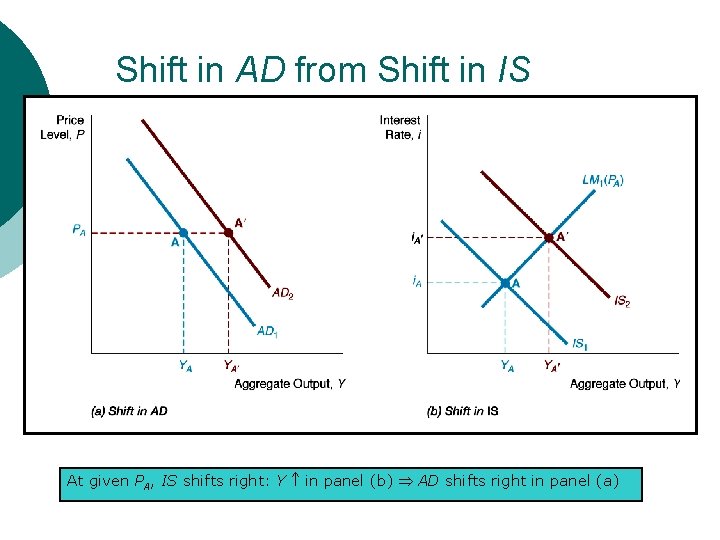
Shift in AD from Shift in IS At given PA, IS shifts right: Y in panel (b) AD shifts right in panel (a)
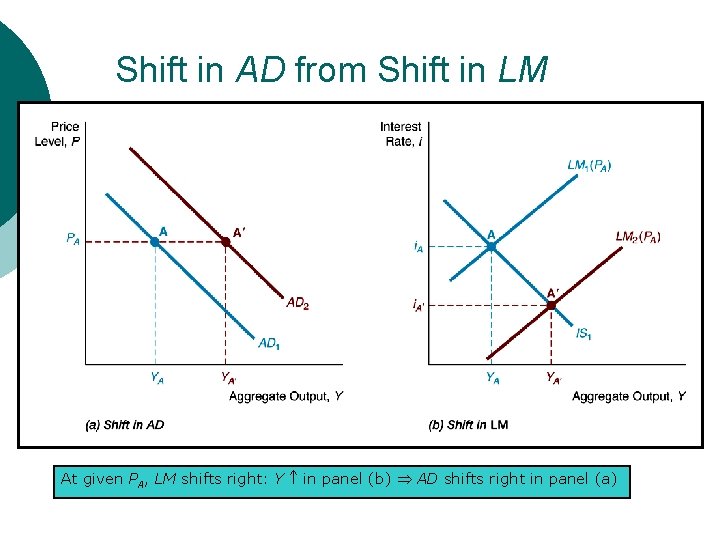
Shift in AD from Shift in LM At given PA, LM shifts right: Y in panel (b) AD shifts right in panel (a)