
The key to success in GCSE maths Examiners


- Slides: 34
The key to success in GCSE maths
Examiners estimate that candidates who show working out get 10% more marks than those who don’t.
Remember every mark counts. There is one mark difference between Grade C and Grade D
Bring your own scientific calculator to maths lessons and learn how to use it.
Make sure that you have all of the equipment you need
Don’t give up. Keep going. Use any spare time to check answers.
Read the question. Answer the question. Read the question again.
Show as much working out as you can.
Do the working out the way you want to do it.
Draw all diagrams accurately using a pencil
If you are spending a lot of time on a question leave it and come back to it later.
Take care when writing numbers
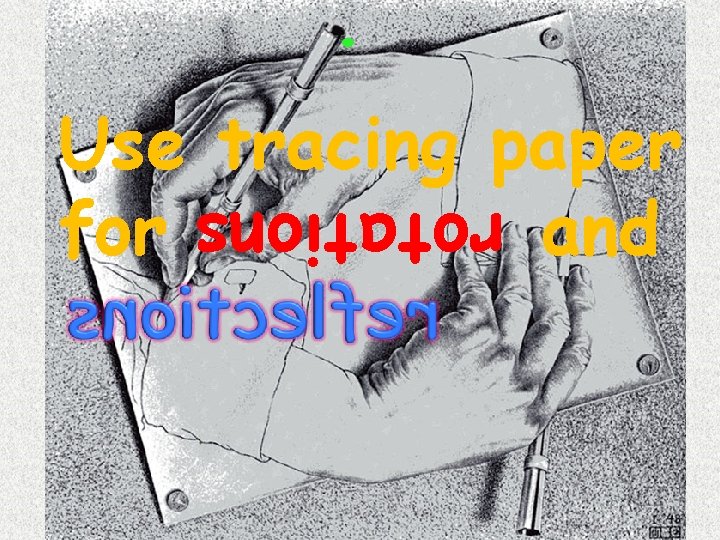
. Use tracing paper for and rotations
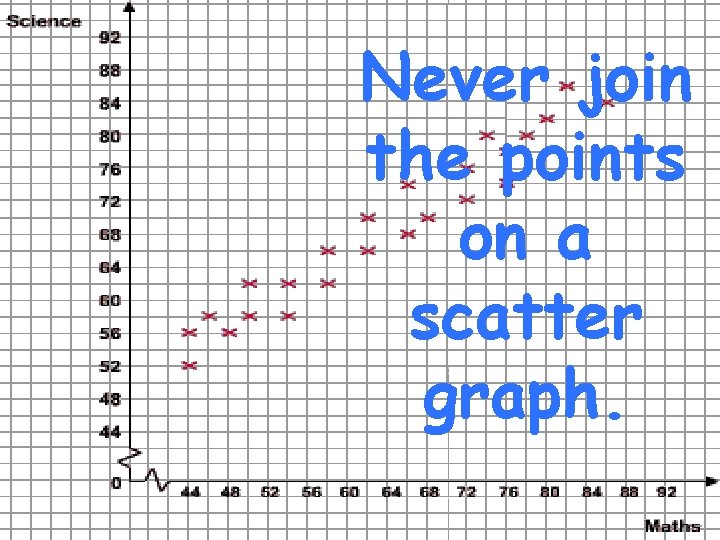
Never join the points on a scatter graph.
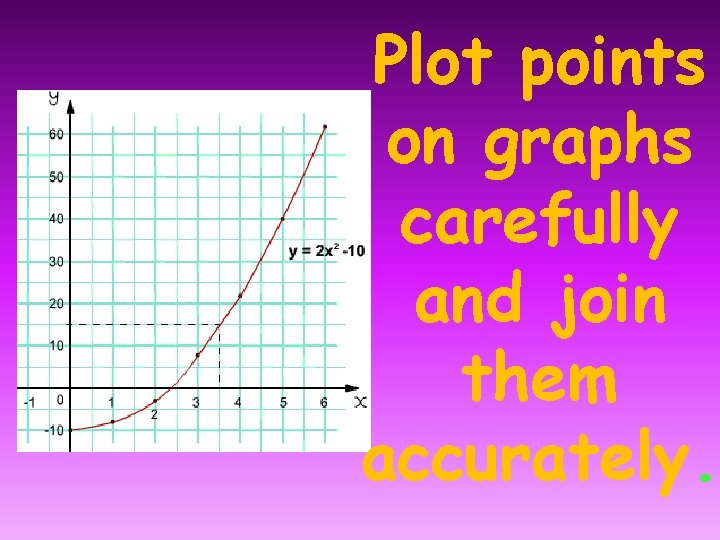
Plot points on graphs carefully and join them accurately.
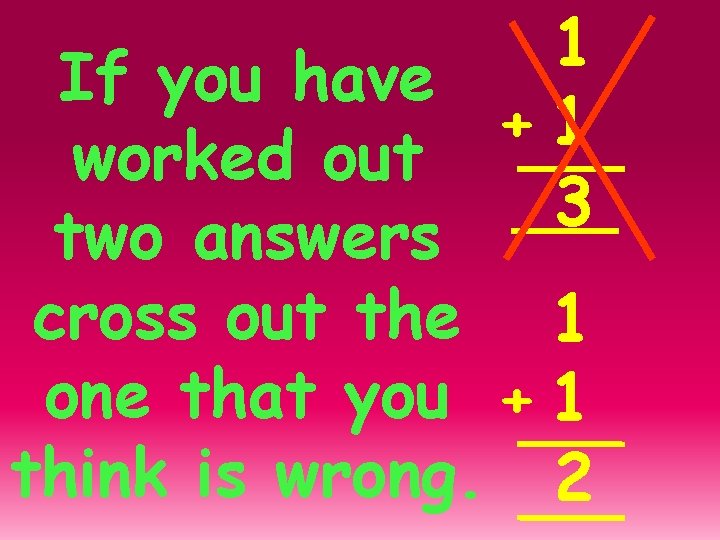
1 If you have +1 worked out 3 two answers cross out the 1 one that you + 1 think is wrong. 2
Don’t rush when answering questions. Take your time.
3 cm min Remember to £ C write in the km 2 m units when they are needed. ml kg
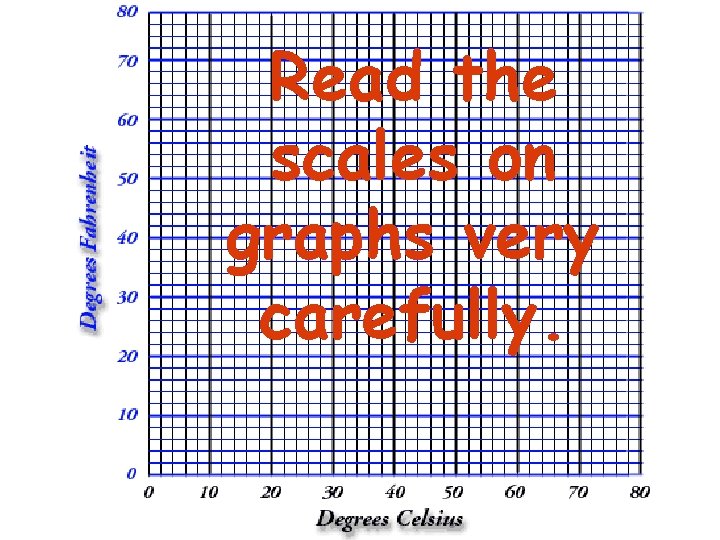
Read the scales on graphs very carefully.
Check each answer carefully
If you can work out the answer in two ways try both ways and check that the answers are the same.
Remember that the answer to a probability question must be a fraction, a decimal or a percentage
Remember to put two figures after the decimal point when the answer is in pounds. e. g. £ 2. 30 not £ 2. 3
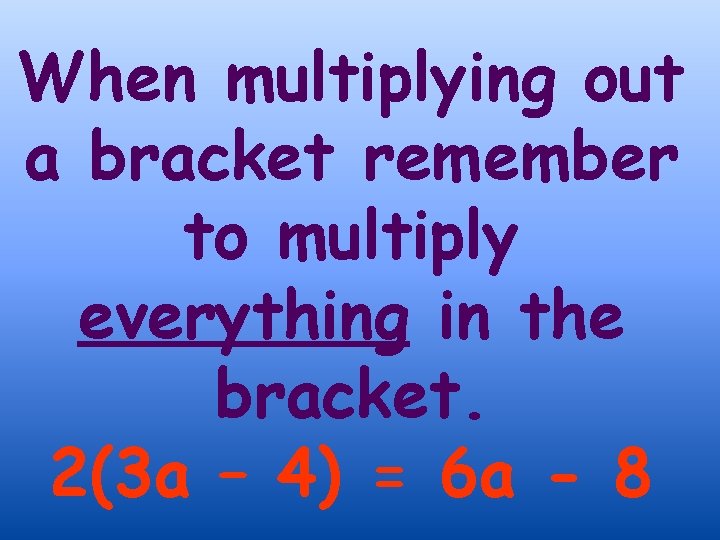
When multiplying out a bracket remember to multiply everything in the bracket. 2(3 a – 4) = 6 a - 8
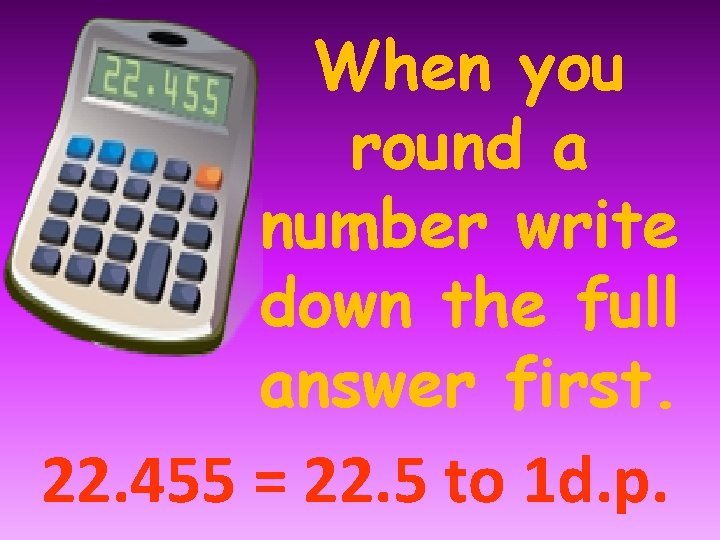
When you round a number write down the full answer first. 22. 455 = 22. 5 to 1 d. p.
Don’t assume anything about diagrams. Use only the information you are given or can work out.
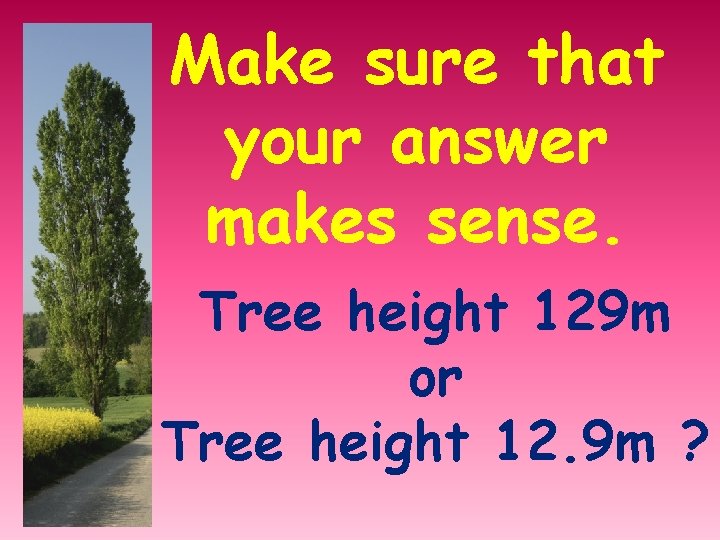
Make sure that your answer makes sense. Tree height 129 m or Tree height 12. 9 m ?
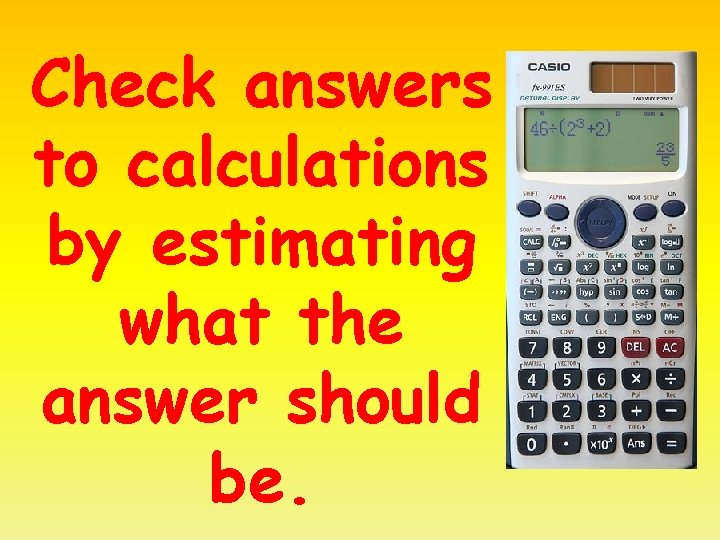
Check answers to calculations by estimating what the answer should be.
3. 14159265358979323846264338327950288419716939937510582 097494459230781640628620899862803482534211706798214808 651328230664709384460955058223172535940812848111745028 410270193852110555964462294895493038196442881097566593 344612847564823378678316527120190914564856692346034861 045432664821339360726024914127372458700660631558817488 152092096282925409171536436789259036001133053054882046 65213841469519415116094330572703657595919530921861173819 3261179310511854807446237996274956735188575272489122793 818301194912983367336244065664308602139494639522473719 070217986094370277053921717629317675238467481846766940 513230005681271452635608277857713427577896091736371787 214684409012249534301465495853710507922796892589235420 19956112129021960864034418159813629774771309960518707211 349999998372978049951059731732816096318595024459455346 9083026425223082533446850352619311881710100031378387528 865875332083814206171776691473035982534904287554687311 595628638823537875937519577818577805321712268066130019 2787661119590921642019893809525720106548586327886593615 338182796823030195203530185296899577362259941389124972 Check to see if the answer needs to be written to a certain number of decimal places or significant figures.
Unless you are estimating an answer, don’t round numbers part way through a calculation
Don’t measure the diagram if it says “Diagram not drawn accurately”.
Remember that your calculator doesn’t understand hours and minutes. Don’t use a calculator for time questions
Try not to leave any questions unanswered. Make an attempt you may get some marks.
Examiners estimate that candidates who show working out get 10% more marks than those who don’t.