
The Juvenile Justice System K12 Education in Washington
- Slides: 20
The Juvenile Justice System & K-12 Education in Washington State 2017 School Counselor Summer Institute June 23 & 29, 2017 Kathleen Sande, OSPI Juvenile Justice Education Office of the Superintendent of Public Instruction
• • Introductions • Outline What do you want out of this session? What I will cover today • • Where are juvenile justice facilities How many youth are there What is included in school settings Role of OSPI and role of Districts Responsibilities of educators Challenges Counselor discussion
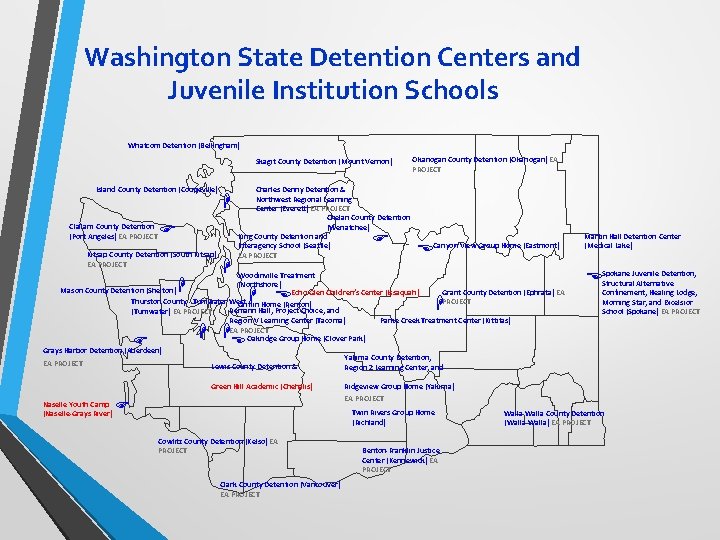
Washington State Detention Centers and Juvenile Institution Schools Whatcom Detention (Bellingham) Skagit County Detention (Mount Vernon) Island County Detention (Coupeville) Clallam County Detention (Port Angeles) EA PROJECT H F Charles Denny Detention & Northwest Regional Learning Center (Everett) EA PROJECT Chelan County Detention (Wenatchee) King County Detention and Interagency School (Seattle) EA PROJECT F Kitsap County Detention (South Kitsap) EA PROJECT H Okanogan County Detention (Okanogan) EA PROJECT E Canyon View Group Home (Eastmont) Woodinville Treatment (Northshore) Echo Glen Children’s Center (Issaquah) Grant County Detention (Ephrata) EA Thurston County - Tumwater West PROJECT Griffin Home (Renton) Remann Hall, Project Choice, and (Tumwater) EA PROJECT Parke Creek Treatment Center (Kittitas) Region V Learning Center (Tacoma) EA PROJECT Oakridge Group Home (Clover Park) Mason County Detention (Shelton) H F Grays Harbor Detention (Aberdeen) EA PROJECT Naselle Youth Camp (Naselle-Grays River) H E H Martin Hall Detention Center (Medical Lake) Juvenile Detention, ESpokane Structural Alternative Confinement, Healing Lodge, Morning Star, and Excelsior School (Spokane) EA PROJECT H HE Lewis County Detention & Yakima County Detention, Region 2 Learning Center, and Green Hill Academic (Chehalis) Ridgeview Group Home (Yakima) EA PROJECT F Twin Rivers Group Home (Richland) Cowlitz County Detention (Kelso) EA PROJECT Clark County Detention (Vancouver) EA PROJECT Benton-Franklin Justice Center (Kennewick) EA PROJECT Walla County Detention (Walla) EA PROJECT
The Juvenile Justice System In WASHINGTON STATE
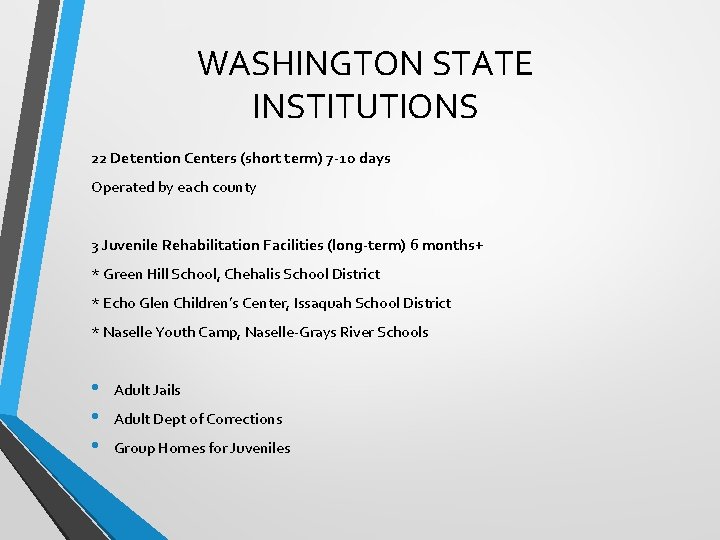
WASHINGTON STATE INSTITUTIONS 22 Detention Centers (short term) 7 -10 days Operated by each county 3 Juvenile Rehabilitation Facilities (long-term) 6 months+ * Green Hill School, Chehalis School District * Echo Glen Children’s Center, Issaquah School District * Naselle Youth Camp, Naselle-Grays River Schools • • • Adult Jails Adult Dept of Corrections Group Homes for Juveniles
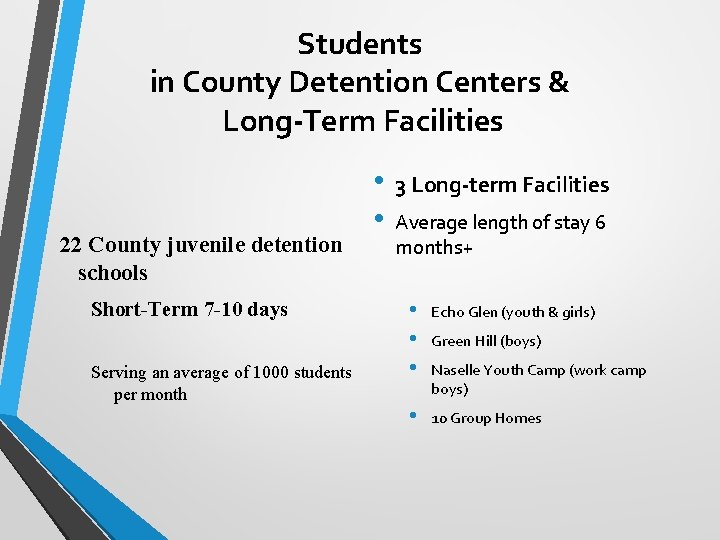
Students in County Detention Centers & Long-Term Facilities 22 County juvenile detention schools Short-Term 7 -10 days Serving an average of 1000 students per month • 3 Long-term Facilities • Average length of stay 6 months+ • • • Echo Glen (youth & girls) • 10 Group Homes Green Hill (boys) Naselle Youth Camp (work camp boys)
K-12 Education Services Inside Juvenile Justice Facilities
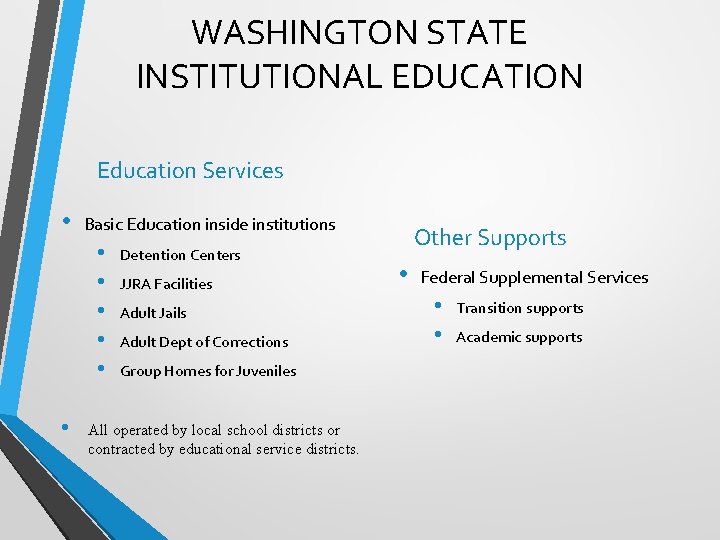
WASHINGTON STATE INSTITUTIONAL EDUCATION Education Services • Basic Education inside institutions • • • Detention Centers JJRA Facilities Adult Jails Adult Dept of Corrections Group Homes for Juveniles All operated by local school districts or contracted by educational service districts. Other Supports • Federal Supplemental Services • • Transition supports Academic supports
The Role of OSPI • Education Funding: Access to State Apportionment ($13 mil) and Federal supplemental funds ($4. 4 mil). • Monitoring: State & Federal program compliance. • Technical Assistance and professional development.
The Role of Districts • Provide a program of basic education • Not less than 180 -days (standard = 220) • Employ admin, teachers and office staff • Provide all learning materials • Design curriculum (with safety in mind) • Provide Special Ed Services • Report students like all schools • Work with facility school to transition youth to local schools
The Students in County Detention Centers in Washington State 22 County juvenile detention schools Serving an average of 1000 students per month Operated by local school districts or contracted by educational service districts. Students Average length of stay of 7 – 10 days. 11, 648 students served (duplicated count) in 2015 -16 Unduplicated count, 6, 216 students.
The Students in Juvenile Rehabilitation Facilities in Washington State 3 DSHS/Juvenile Rehabilitation facilities Serving an average of 600 students per month Operated by local school districts Students Average length of stay of 6 months+. 1, 489 students served (duplicated count) in 2015 -16 Unduplicated count, 1, 333 students.
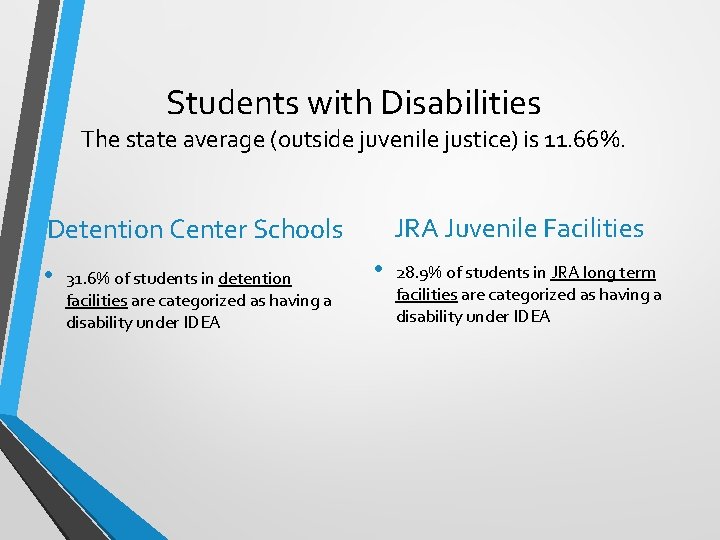
Students with Disabilities The state average (outside juvenile justice) is 11. 66%. JRA Juvenile Facilities Detention Center Schools • 31. 6% of students in detention facilities are categorized as having a disability under IDEA • 28. 9% of students in JRA long term facilities are categorized as having a disability under IDEA
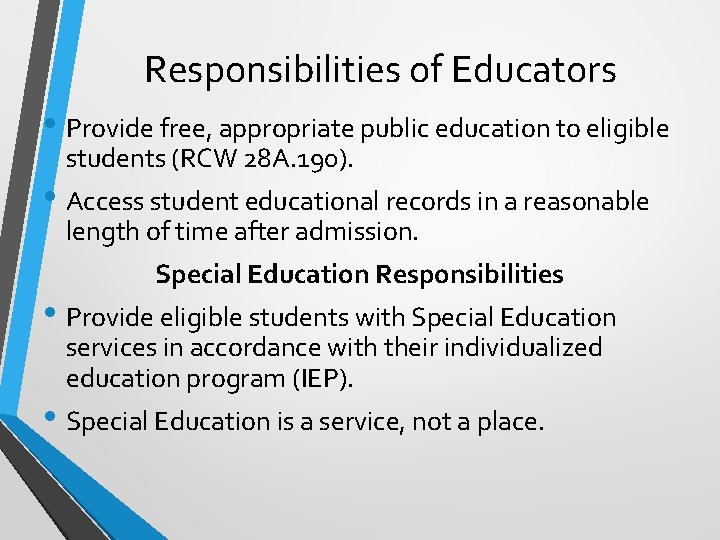
Responsibilities of Educators • Provide free, appropriate public education to eligible students (RCW 28 A. 190). • Access student educational records in a reasonable length of time after admission. Special Education Responsibilities • Provide eligible students with Special Education services in accordance with their individualized education program (IEP). • Special Education is a service, not a place.
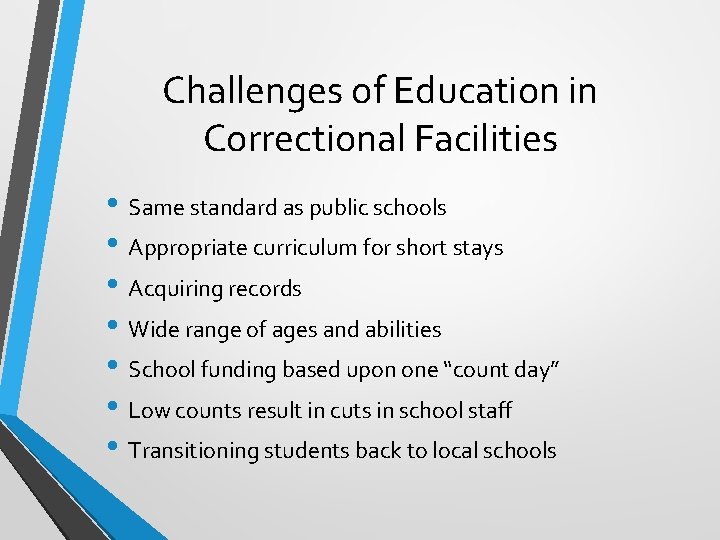
Challenges of Education in Correctional Facilities • Same standard as public schools • Appropriate curriculum for short stays • Acquiring records • Wide range of ages and abilities • School funding based upon one “count day” • Low counts result in cuts in school staff • Transitioning students back to local schools
Sm Group Discussion • Discuss these questions: • What facility lies within your boundaries? • Think of 3 scenarios you have had with returning youth back to your school • What have been the barriers or issues? • How did you resolve these? • What are other ways to resolve?
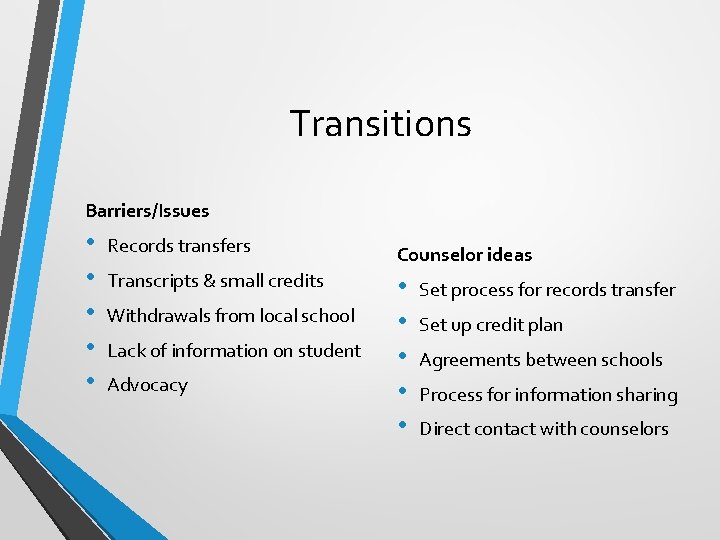
Transitions Barriers/Issues • • • Records transfers Counselor ideas Transcripts & small credits • • • Withdrawals from local school Lack of information on student Advocacy Set process for records transfer Set up credit plan Agreements between schools Process for information sharing Direct contact with counselors
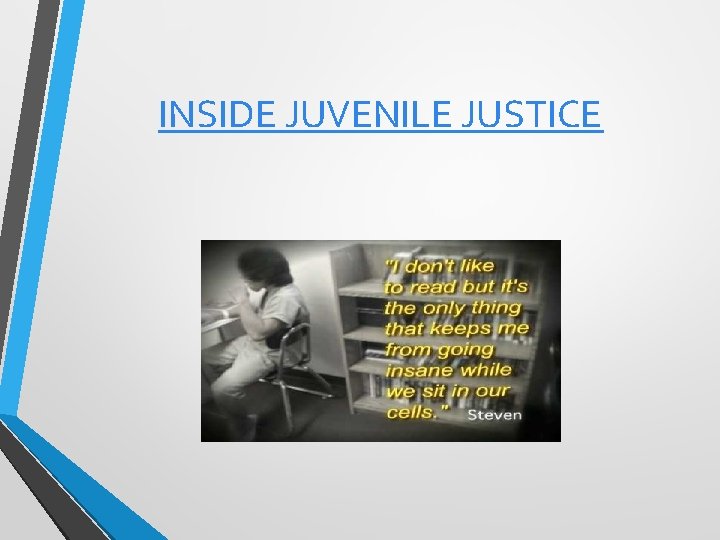
INSIDE JUVENILE JUSTICE
Discussion and Questions
Further Information �Institutional Education apportionment funding via the WA Legislature , WAC 392 -122 -200 �Title 1 D funding via the US Department of Education , Title 1 A set-aside �Special Education funding through Individuals with Disabilities Ed Improvement Act 2004 (20 USC 1400 note) For additional information, contact: �Kathleen Sande, OSPI Institution Education Program Supervisor 360. 725. 6046, kathleen. sande@k 12. wa. us