
The Jungle Book By Rudyard Kipling Rudyard Kipling
The Jungle Book By: Rudyard Kipling
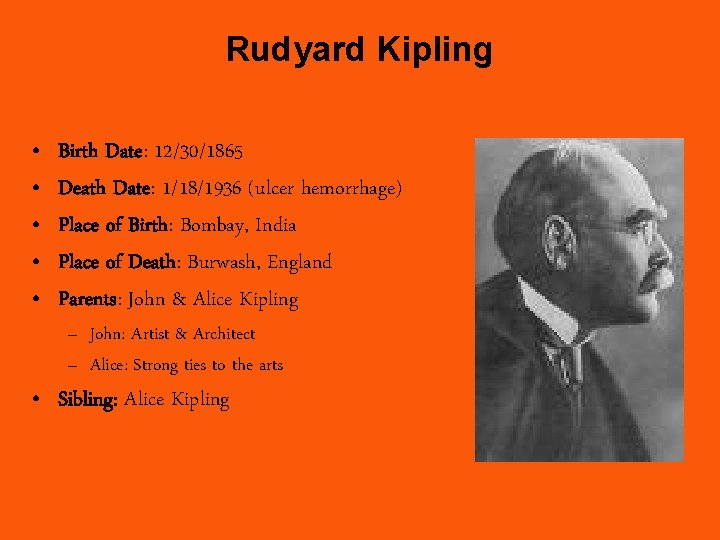
Rudyard Kipling • • • Birth Date: 12/30/1865 Death Date: 1/18/1936 (ulcer hemorrhage) Place of Birth: Bombay, India Place of Death: Burwash, England Parents: John & Alice Kipling – John: Artist & Architect – Alice: Strong ties to the arts • Sibling: Alice Kipling
. . . More Kipling facts • Editor of his school magazine • Worked for many newspapers post school • 1892, Married Caroline Balestier • Two daughters – Josephine (1892 -99) & Elsie (1896 -1976) • One son – John (1897 -1915) died in WWI – Rudyard suffered gastric ulcers from his worry over his son.

Kipling’s career • 1886 - Assistant Editor of Civil and Military Gazette • 1888 - Editor of the weekly supplement, The Week’s News • 1892 - Wrote many novels and short stories, but began writing children’s novels. • 1893 - The Jungle Book published. 2 nd Jungle Book published in 1895. • 1907– awarded the Nobel Prize for Literature.
. . . More on Kipling’s career • 1910– poem “If- ” published within a series of historical stories • 1917– Joined the War Graves Commission as a result of his son’s disappearance. • 1937 - Kipling’s last writings, contained in Something of Myself for my Friends Known and Unknown, published. • 1976 - Elsie Bambridge Kipling, Rudyard’s last surviving child, died childless. His copyrights were left by her to the National Trust.

Kipling’s Old Home
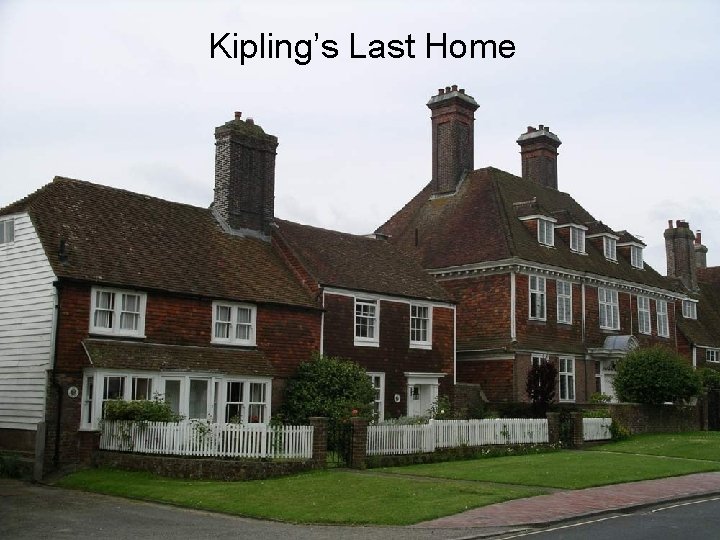
Kipling’s Last Home
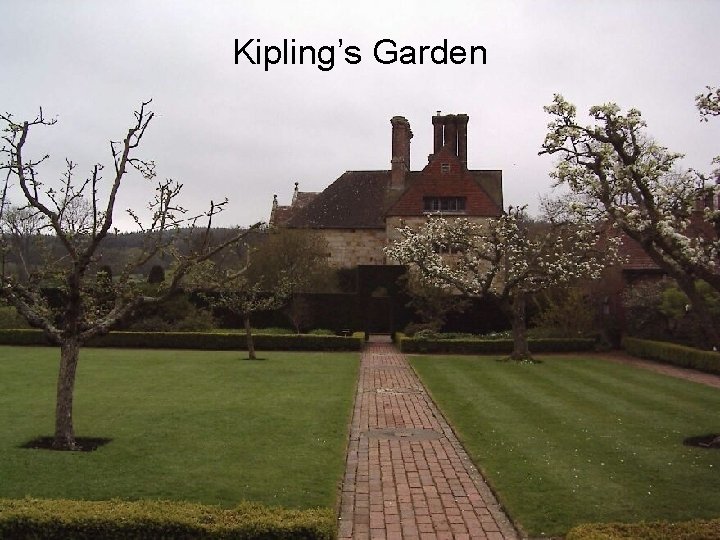
Kipling’s Garden
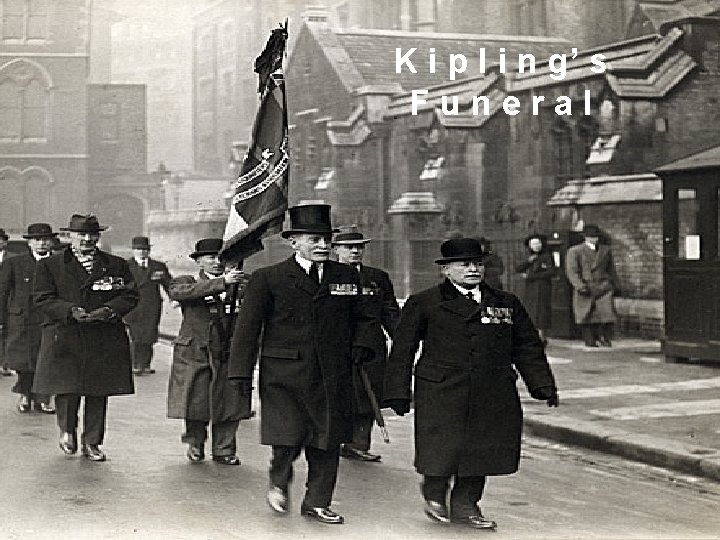
K i p l i n g’ s Funeral
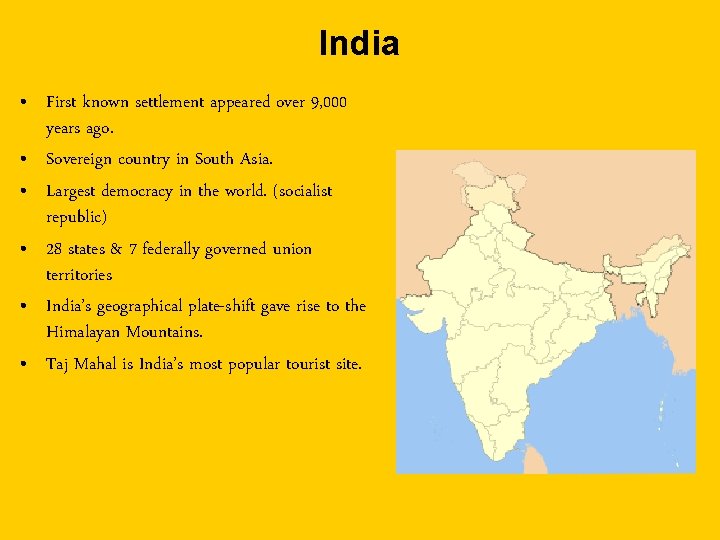
India • First known settlement appeared over 9, 000 years ago. • Sovereign country in South Asia. • Largest democracy in the world. (socialist republic) • 28 states & 7 federally governed union territories • India’s geographical plate-shift gave rise to the Himalayan Mountains. • Taj Mahal is India’s most popular tourist site.
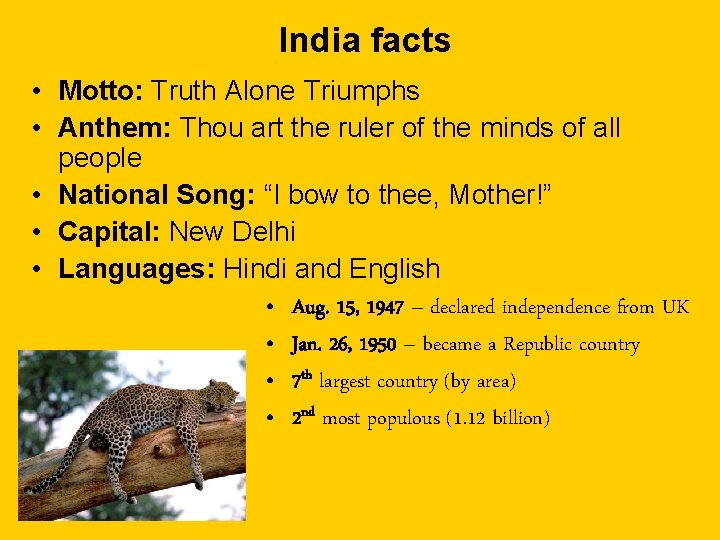
India facts • Motto: Truth Alone Triumphs • Anthem: Thou art the ruler of the minds of all people • National Song: “I bow to thee, Mother!” • Capital: New Delhi • Languages: Hindi and English • Aug. 15, 1947 – declared independence from UK • Jan. 26, 1950 – became a Republic country • 7 th largest country (by area) • 2 nd most populous (1. 12 billion)
. . . More India Facts • Currency: Indian Rupee • Name Derivation: Indus, which is derived from the Old Persian word Hindu. • Animal: Royal Bengal Tiger • Bird: Indian Peacock • Flower: Lotus • Tree: Banyan • Fruit: Mango • Sport: Field Hockey
Why India? • Kipling was born in Bombay, India • Customs and ways of life familiar to Kipling • Kipling shares his love of and fascination with India with his readers who are not able to visit this magical place.
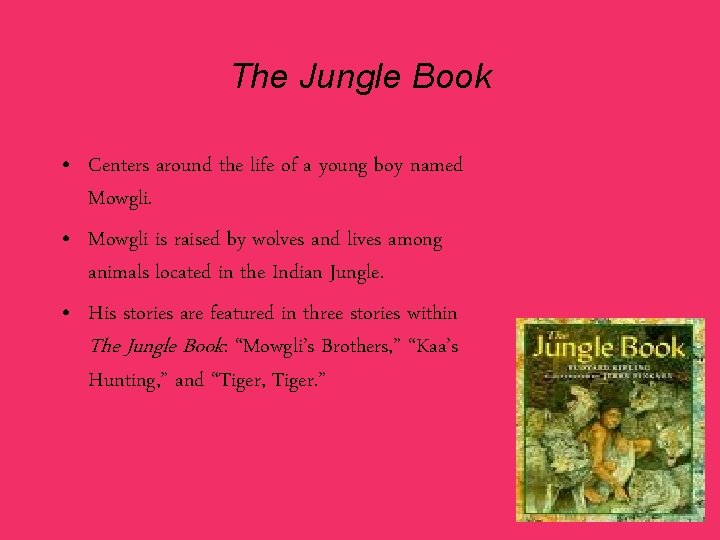
The Jungle Book • Centers around the life of a young boy named Mowgli. • Mowgli is raised by wolves and lives among animals located in the Indian Jungle. • His stories are featured in three stories within The Jungle Book: “Mowgli’s Brothers, ” “Kaa’s Hunting, ” and “Tiger, Tiger. ”
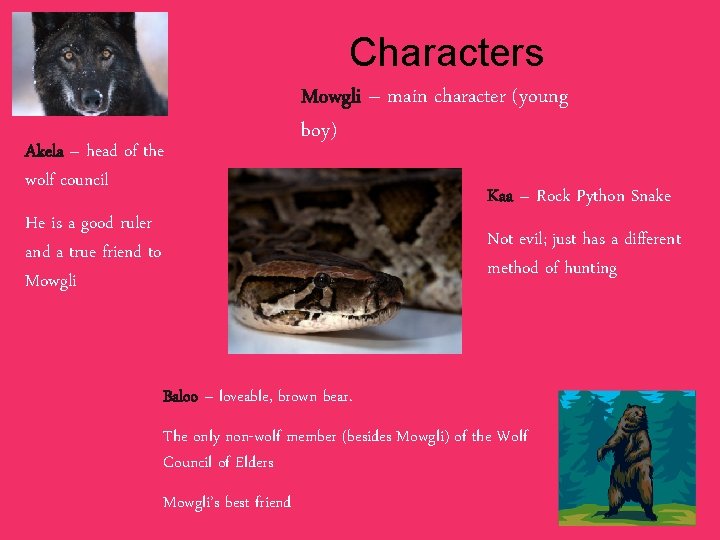
Characters Akela – head of the wolf council Mowgli – main character (young boy) He is a good ruler and a true friend to Mowgli Kaa – Rock Python Snake Not evil; just has a different method of hunting Baloo – loveable, brown bear. The only non-wolf member (besides Mowgli) of the Wolf Council of Elders Mowgli’s best friend
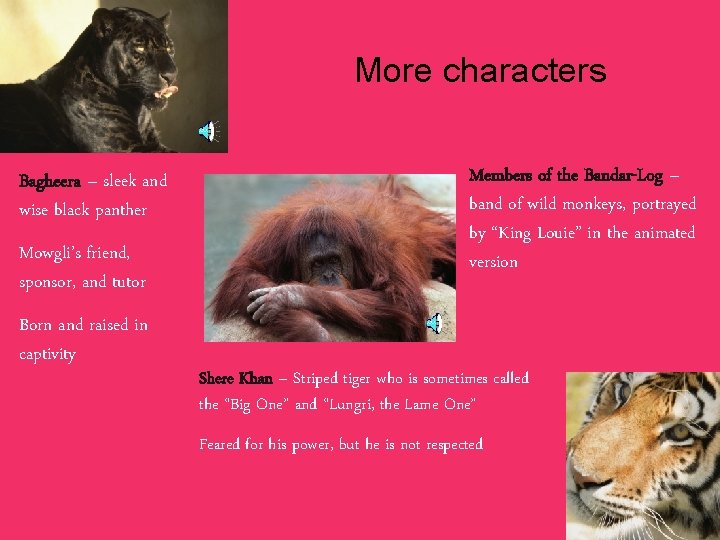
More characters Bagheera – sleek and wise black panther Mowgli’s friend, sponsor, and tutor Born and raised in captivity Members of the Bandar-Log – band of wild monkeys, portrayed by “King Louie” in the animated version Shere Khan – Striped tiger who is sometimes called the “Big One” and “Lungri, the Lame One” Feared for his power, but he is not respected
Layout of the Story • Consists of seven (7) short stories: – Three (3) are about Mowgli and his jungle friends. – Four (4) are a series of animal fables. • Each story is followed by a lyrical poem or song, supposedly sung or spoken by the main character, summarizing the story.
Themes • Mistrust of People Who are Different – Mowgli’s entrance into the wolf pack – Mowgli’s entrance into the village, as well as the villager’s perceptions of Mowgli • The Value of Friendship – Relationships between Mowgli and the jungle animals • Innocence of Animals and Children – Animals appearance as non-threatening to humans – Mowgli’s innocence toward the animals, as well as his judgment towards the animals and the village people.

Places in The Jungle Book • Tropical jungle in the British colony of India • Bering Sea (“The White Seal” and “Servants of the Queen”) Novastoshnah • Monkey City of Bandar-Log • Council rock • South Pacific • Segowlee Contonment

Think about it… • How are you like Mowgli? • How are yours and Mowgli’s worlds similar? • Is it important for a youth to leave their “safety-nest” and go live among others who are like them? • How much of our “life experiences” influence our thinking, our goals, and our perception of the world around us?
- Slides: 20