
The Judicial Branch The Supreme Court and other
The Judicial Branch The Supreme Court and other federal courts
I. Introduction to the Judicial Branch A. The Role of the Judicial Branch: Interpret the Law – The difference between _________________________________ means is the courts responsibility – “Laws are dead letters” without interpretation
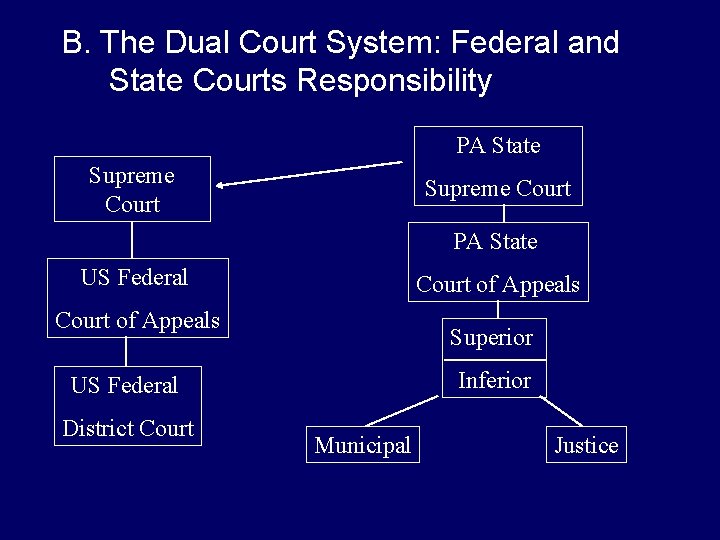
B. The Dual Court System: Federal and State Courts Responsibility PA State Supreme Court PA State US Federal Court of Appeals Superior Inferior US Federal District Court Municipal Justice
What is this case an example of? • http: //www. youtube. com/watch? v=c. Gax GDBAOYE
C. Difference Between Criminal and Civil Cases 1. Criminal cases involve the breaking of a law - Law: __________________ - crossing over such a limit can _______________________________________
2. Civil cases are _________________________________________ - verdict can result in _____________________, depending what side you are on 3. Plaintiff v. Defense in both criminal and civil cases - Plaintiff: ____________________ - Defense: ________________
II. The Constitutional Courts A. Article III of the Constitution establishes: 1. _______________________________________ 2. That the Judicial Powers of the U. S, _______________________________________
B. Jurisdiction: ___________________________________ 1. Federal Court Jurisdiction a. Constitution is specifically broken b. Federal Statutes c. Admiralty / Maritime Law 2. Litigant Jurisdiction: ______________________________________ a. The U. S. or officer of the U. S. b. A Foreign Government -or citizen c. State v. State
d. Citizen of one state v. Citizen of another state 3. Types of Jurisdiction a. Exclusive: only one court, usually, has jurisdiction b. Concurrent: can go to both state or federal court c. Original: the authority to hear the case in the 1 st instance d. Appellate: authority of a court to hear a case on appeal or review the decision of a lower court – Error in lower court or question of law
III. The U. S. Supreme Court
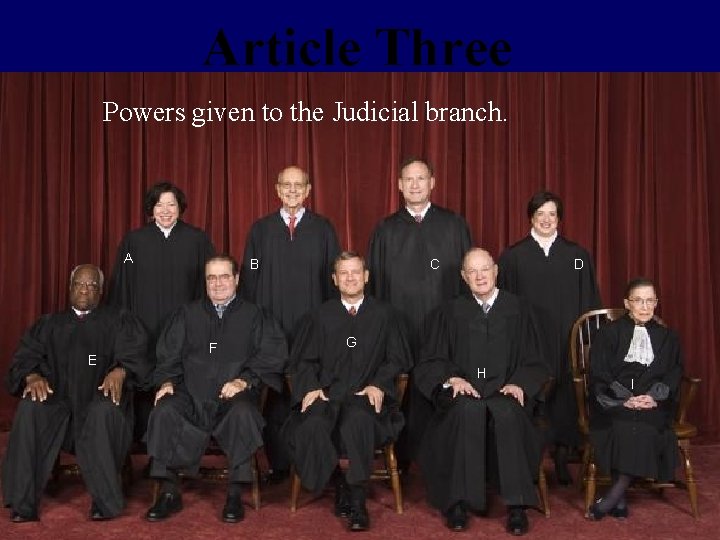
Article Three Powers given to the Judicial branch. A E B F C D G H I
A. Jurisdiction 1. Hears most cases on appeals from: a. Federal Appellate Courts b. Federal Legislative Appellate Courts (special courts) C. State Supreme Courts 2. Caseload a. Requested to hear _____________ b. court accepts __________________________________________
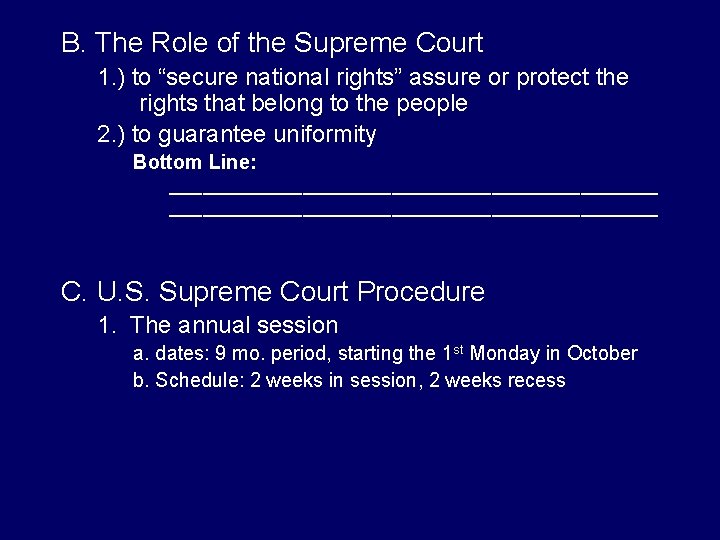
B. The Role of the Supreme Court 1. ) to “secure national rights” assure or protect the rights that belong to the people 2. ) to guarantee uniformity Bottom Line: ____________________________________________ C. U. S. Supreme Court Procedure 1. The annual session a. dates: 9 mo. period, starting the 1 st Monday in October b. Schedule: 2 weeks in session, 2 weeks recess
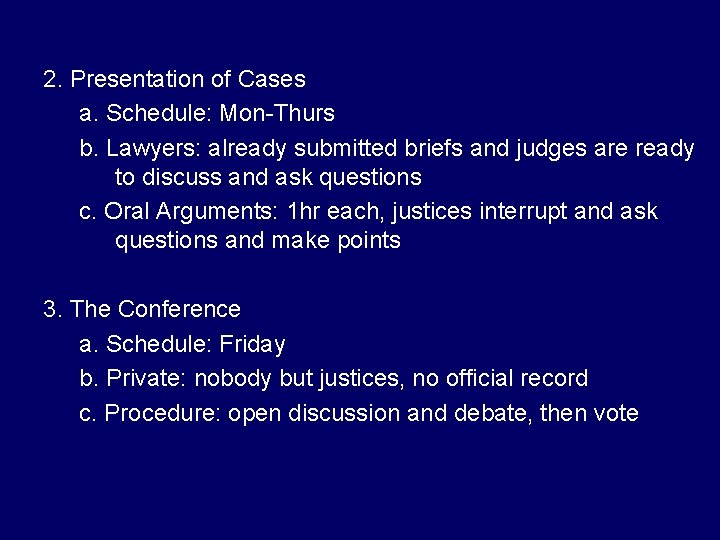
2. Presentation of Cases a. Schedule: Mon-Thurs b. Lawyers: already submitted briefs and judges are ready to discuss and ask questions c. Oral Arguments: 1 hr each, justices interrupt and ask questions and make points 3. The Conference a. Schedule: Friday b. Private: nobody but justices, no official record c. Procedure: open discussion and debate, then vote
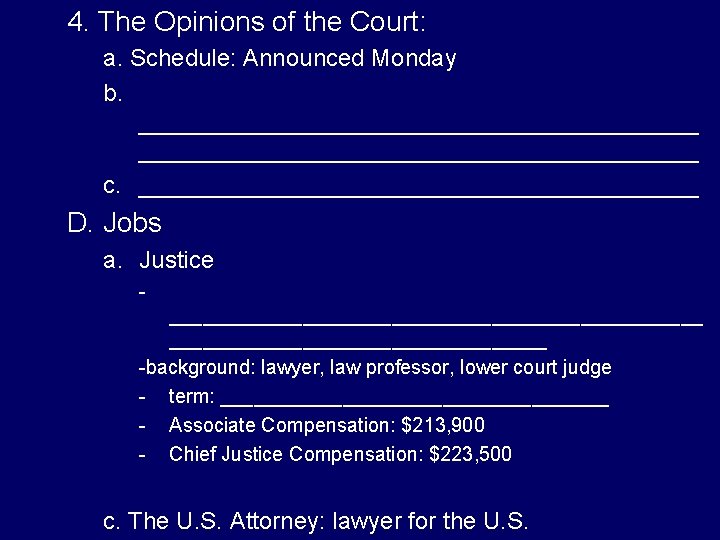
4. The Opinions of the Court: a. Schedule: Announced Monday b. __________________________________________ c. _____________________ D. Jobs a. Justice ________________________ -background: lawyer, law professor, lower court judge - term: __________________ - Associate Compensation: $213, 900 - Chief Justice Compensation: $223, 500 c. The U. S. Attorney: lawyer for the U. S.
- Slides: 15