
The Journey of a Packet Through the Linux
- Slides: 29
The Journey of a Packet Through the Linux Network Stack … plus hints on Lab 9
Assumptions IP version 4 ¡ Codes are from Kernel 2. 6. 9. EL ¡ Ideas are similar ¡
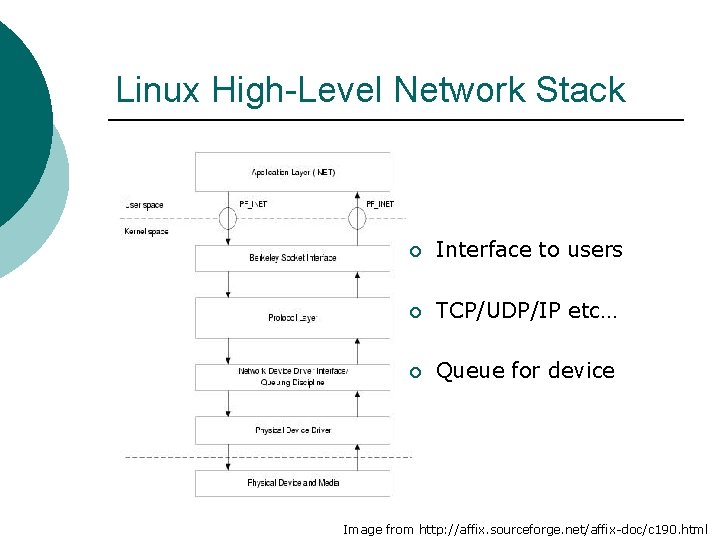
Linux High-Level Network Stack ¡ Interface to users ¡ TCP/UDP/IP etc… ¡ Queue for device Image from http: //affix. sourceforge. net/affix-doc/c 190. html
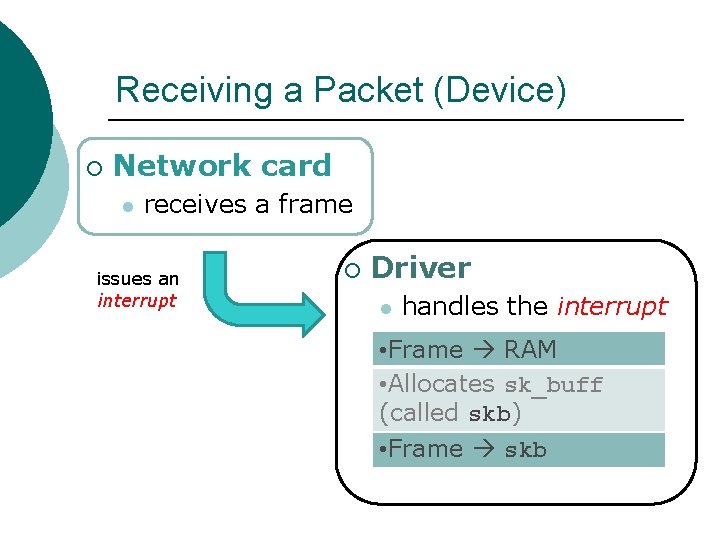
Receiving a Packet (Device) ¡ Network card l receives a frame issues an interrupt ¡ Driver l handles the interrupt • Frame RAM • Allocates sk_buff (called skb) • Frame skb
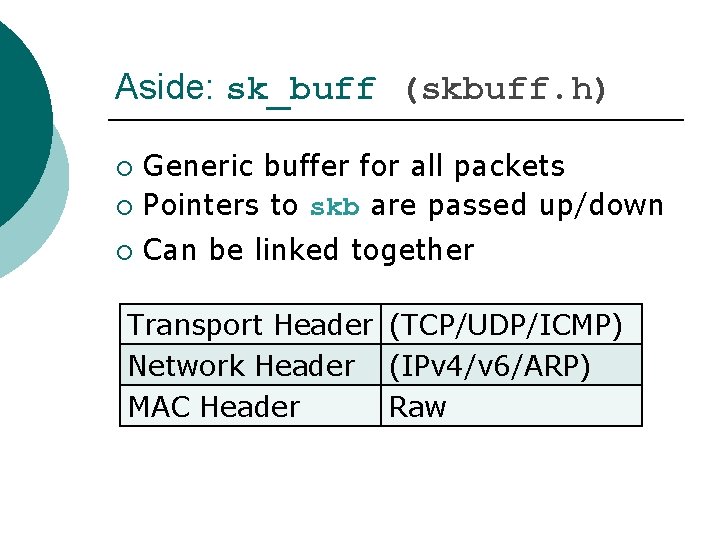
Aside: sk_buff (skbuff. h) Generic buffer for all packets ¡ Pointers to skb are passed up/down ¡ ¡ Can be linked together Transport Header (TCP/UDP/ICMP) Network Header (IPv 4/v 6/ARP) MAC Header Raw
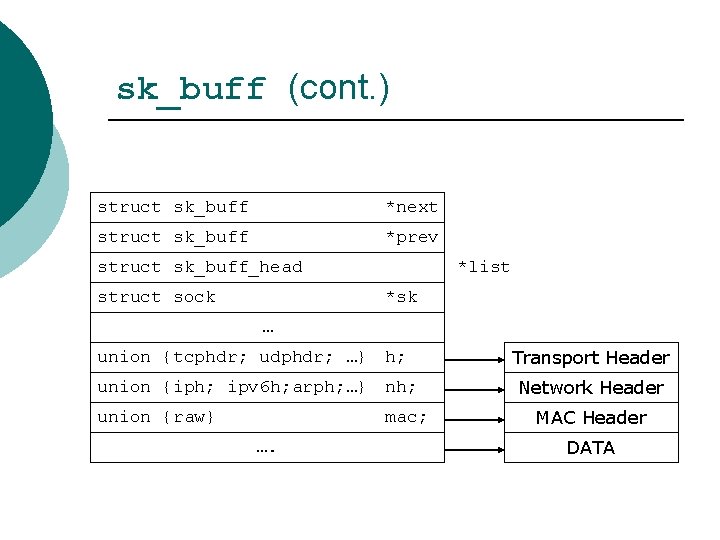
sk_buff (cont. ) struct sk_buff *next struct sk_buff *prev struct sk_buff_head struct sock *list *sk … union {tcphdr; udphdr; …} h; Transport Header union {iph; ipv 6 h; arph; …} nh; Network Header union {raw} mac; …. MAC Header DATA
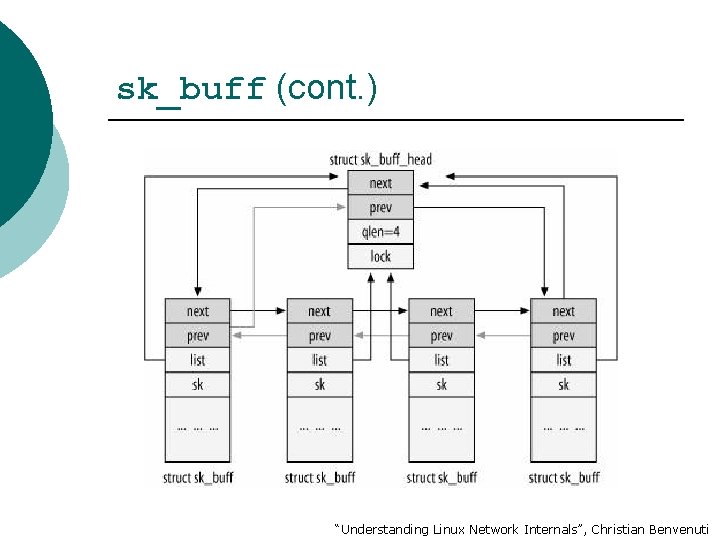
sk_buff (cont. ) “Understanding Linux Network Internals”, Christian Benvenuti
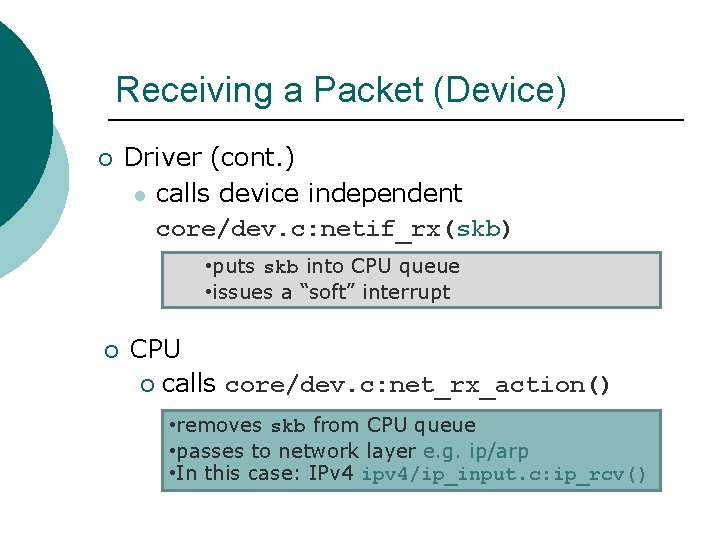
Receiving a Packet (Device) ¡ Driver (cont. ) l calls device independent core/dev. c: netif_rx(skb) • puts skb into CPU queue • issues a “soft” interrupt ¡ CPU ¡ calls core/dev. c: net_rx_action() • removes skb from CPU queue • passes to network layer e. g. ip/arp • In this case: IPv 4 ipv 4/ip_input. c: ip_rcv()
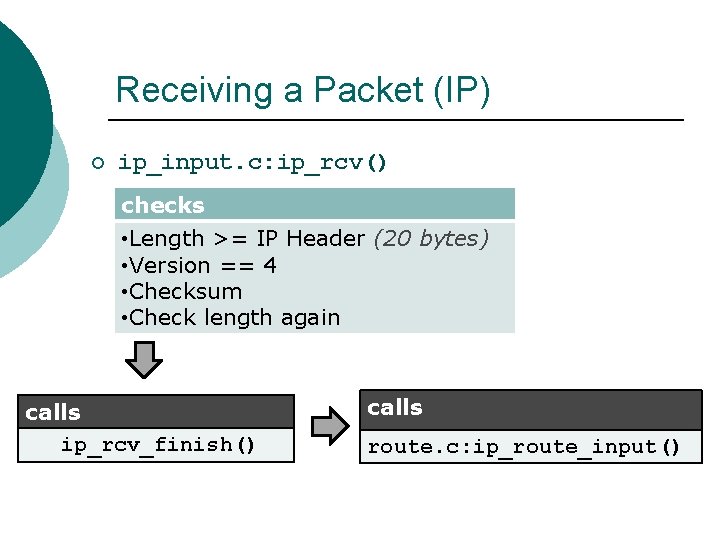
Receiving a Packet (IP) ¡ ip_input. c: ip_rcv() checks • Length >= IP Header (20 bytes) • Version == 4 • Checksum • Check length again calls ip_rcv_finish() calls route. c: ip_route_input()
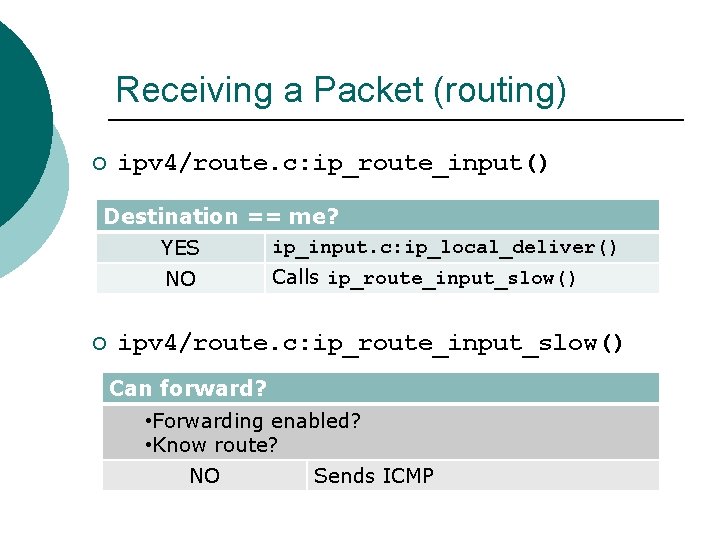
Receiving a Packet (routing) ¡ ipv 4/route. c: ip_route_input() Destination == me? ip_input. c: ip_local_deliver() YES Calls ip_route_input_slow() NO ¡ ipv 4/route. c: ip_route_input_slow() Can forward? • Forwarding enabled? • Know route? NO Sends ICMP
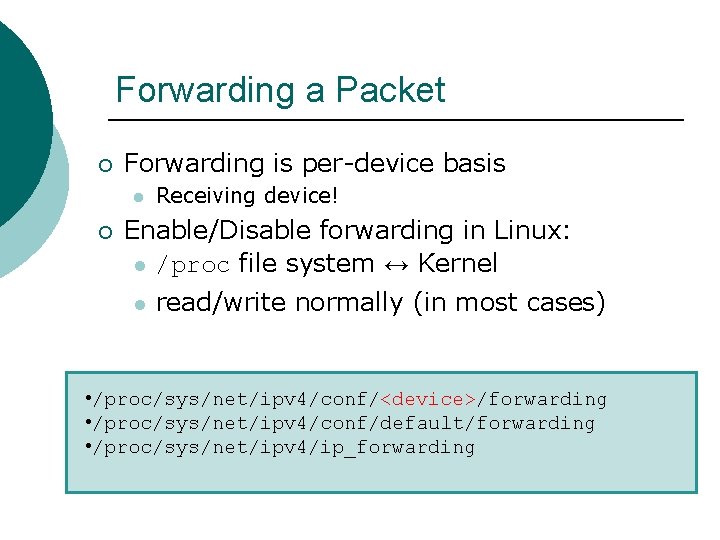
Forwarding a Packet ¡ Forwarding is per-device basis l ¡ Receiving device! Enable/Disable forwarding in Linux: l /proc file system ↔ Kernel l read/write normally (in most cases) • /proc/sys/net/ipv 4/conf/<device>/forwarding • /proc/sys/net/ipv 4/conf/default/forwarding • /proc/sys/net/ipv 4/ip_forwarding
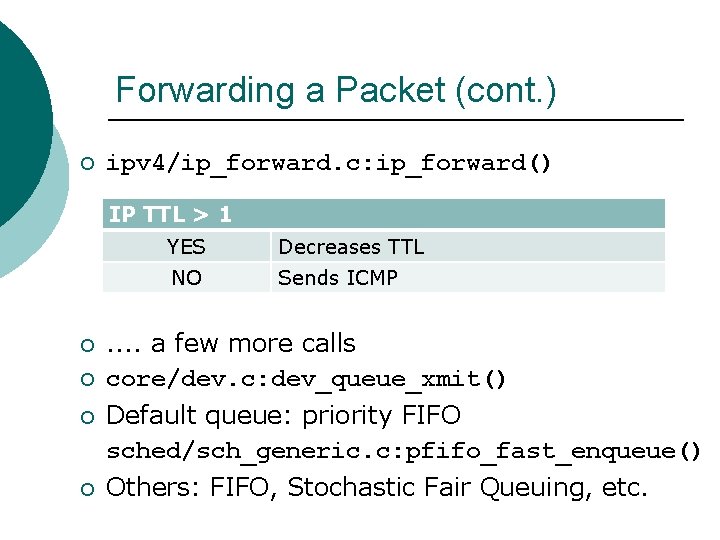
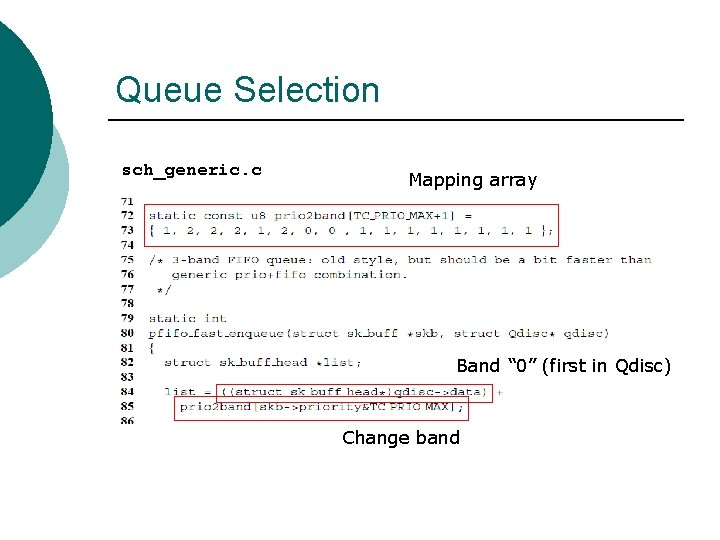
Forwarding a Packet (cont. ) ¡ ipv 4/ip_forward. c: ip_forward() IP TTL > 1 YES NO ¡ ¡ Decreases TTL Sends ICMP . . a few more calls core/dev. c: dev_queue_xmit() ¡ Default queue: priority FIFO sched/sch_generic. c: pfifo_fast_enqueue() ¡ Others: FIFO, Stochastic Fair Queuing, etc.
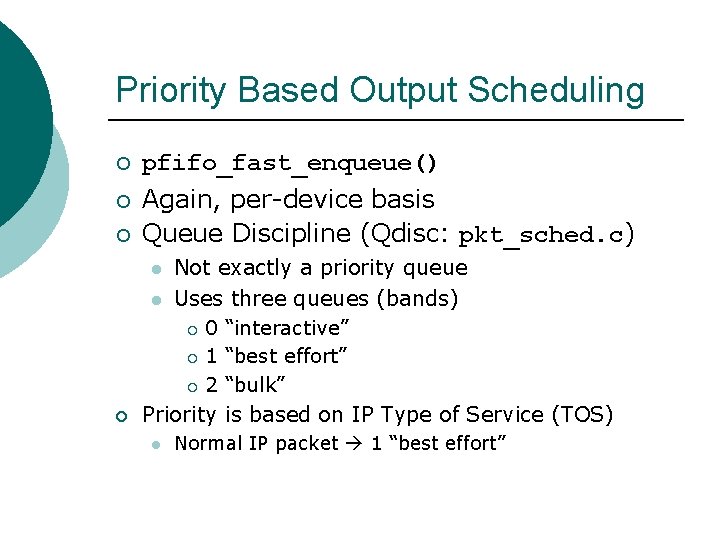
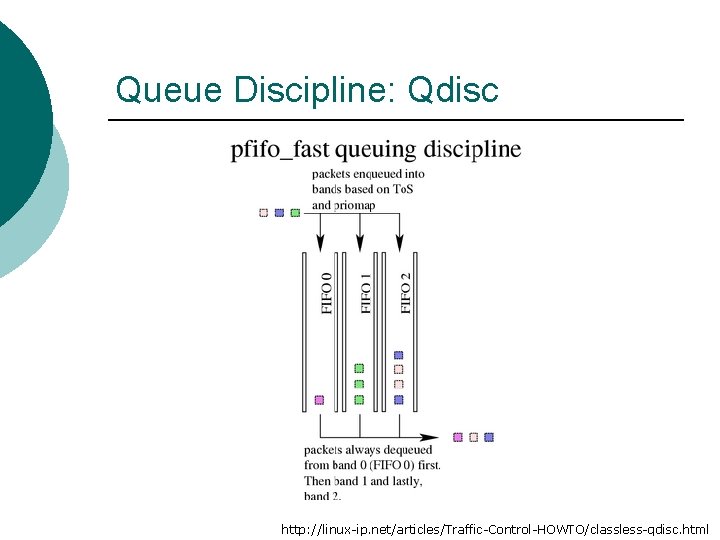
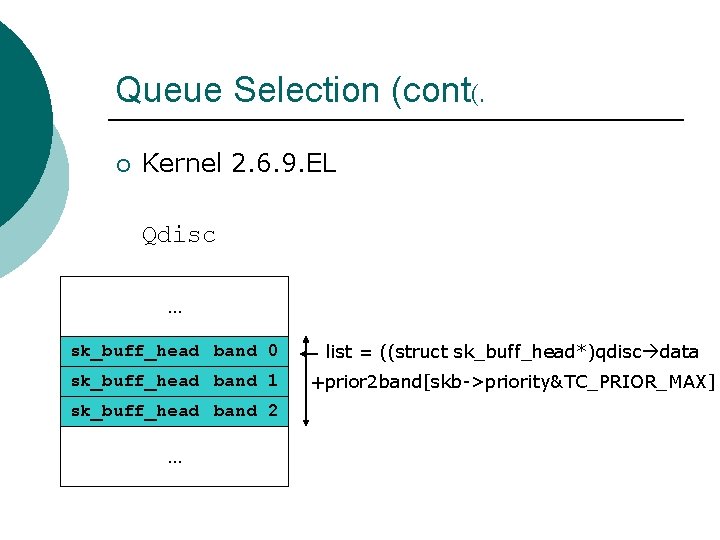
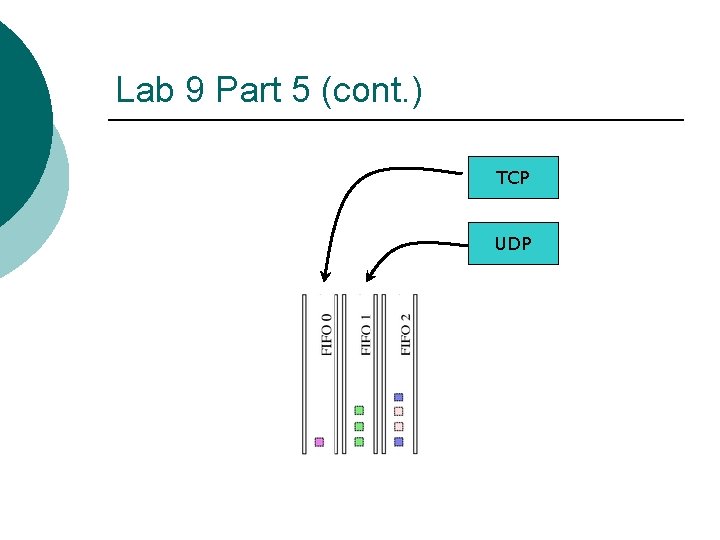
Priority Based Output Scheduling ¡ pfifo_fast_enqueue() ¡ ¡ Again, per-device basis Queue Discipline (Qdisc: pkt_sched. c) ¡ Not exactly a priority queue l Uses three queues (bands) ¡ 0 “interactive” ¡ 1 “best effort” ¡ 2 “bulk” Priority is based on IP Type of Service (TOS) l l Normal IP packet 1 “best effort”
Queue Discipline: Qdisc http: //linux-ip. net/articles/Traffic-Control-HOWTO/classless-qdisc. html
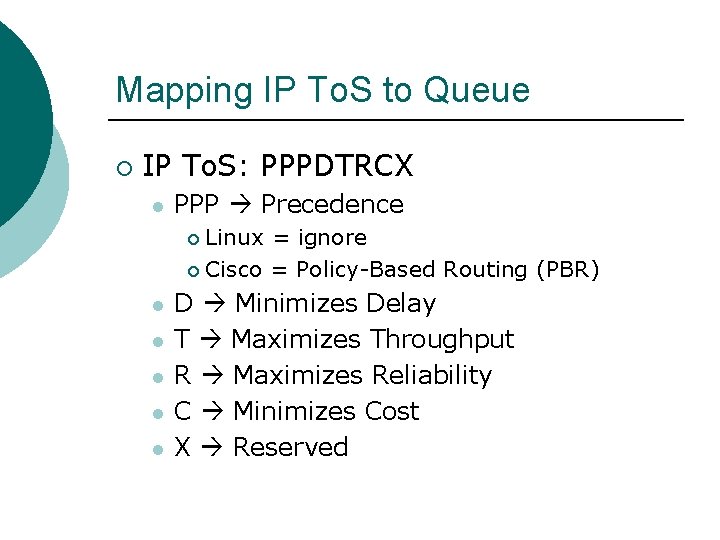
Mapping IP To. S to Queue ¡ IP To. S: PPPDTRCX l PPP Precedence Linux = ignore ¡ Cisco = Policy-Based Routing (PBR) ¡ l l l D Minimizes Delay T Maximizes Throughput R Maximizes Reliability C Minimizes Cost X Reserved
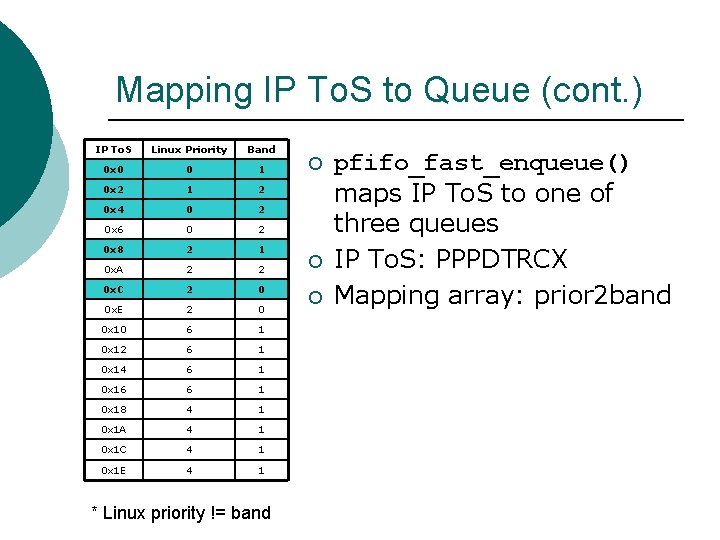
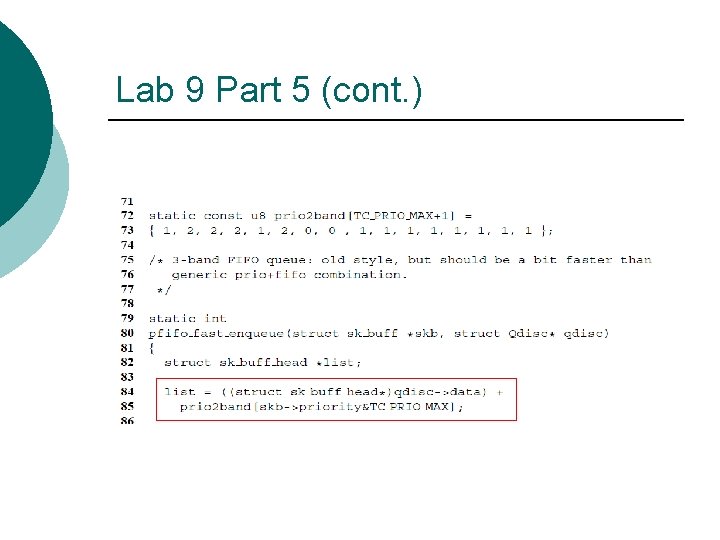
Mapping IP To. S to Queue (cont. ) IP To. S Linux Priority Band 0 x 0 0 1 0 x 2 1 2 0 x 4 0 2 0 x 6 0 2 0 x 8 2 1 0 x. A 2 2 0 x. C 2 0 0 x. E 2 0 0 x 10 6 1 0 x 12 6 1 0 x 14 6 1 0 x 16 6 1 0 x 18 4 1 0 x 1 A 4 1 0 x 1 C 4 1 0 x 1 E 4 1 * Linux priority != band ¡ ¡ ¡ pfifo_fast_enqueue() maps IP To. S to one of three queues IP To. S: PPPDTRCX Mapping array: prior 2 band
Queue Selection sch_generic. c Mapping array Band “ 0” (first in Qdisc) Change band
Queue Selection (cont(. ¡ Kernel 2. 6. 9. EL Qdisc … sk_buff_head band 0 list = ((struct sk_buff_head*)qdisc data sk_buff_head band 1 +prior 2 band[skb->priority&TC_PRIOR_MAX] sk_buff_head band 2 …
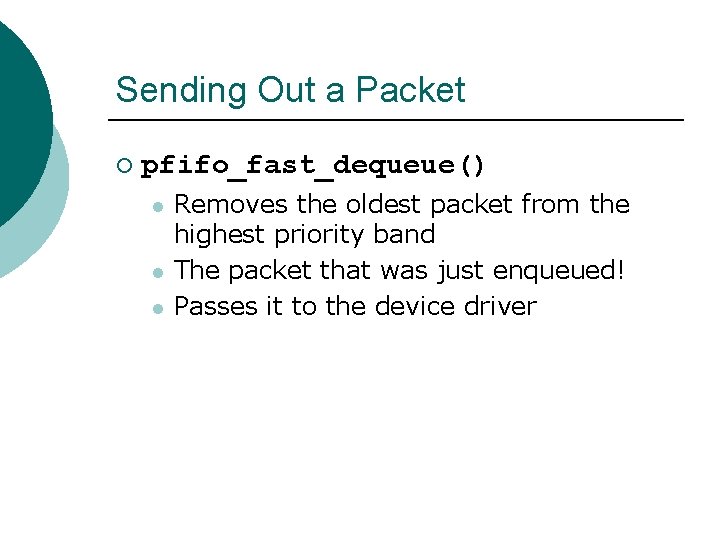
Sending Out a Packet ¡ pfifo_fast_dequeue() l l l Removes the oldest packet from the highest priority band The packet that was just enqueued! Passes it to the device driver
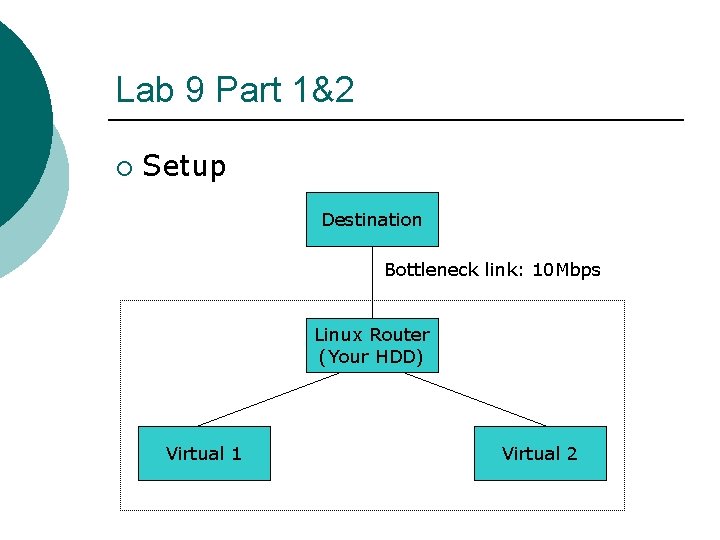
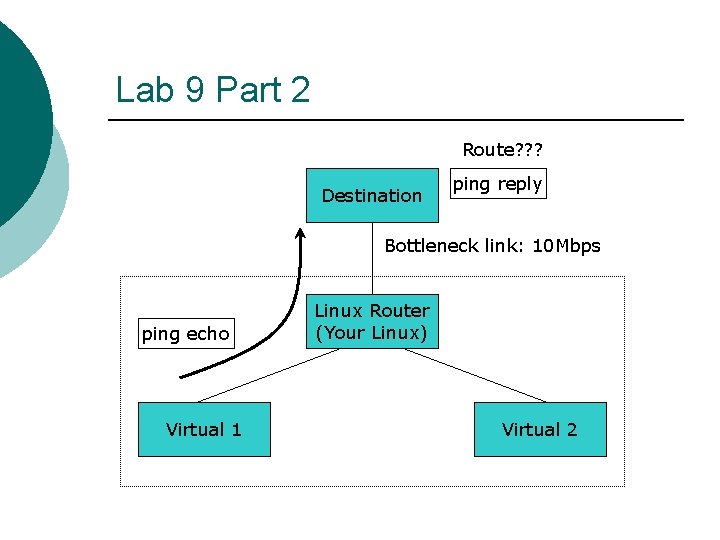
Lab 9 Part 1&2 ¡ Setup Destination Bottleneck link: 10 Mbps Linux Router (Your HDD) Virtual 1 Virtual 2
Lab 9 Part 2 Default: no IP forwarding ¡ Enable IP forwarding /proc/… ¡ Only one router ¡ Default route on “destination” ¡
Lab 9 Part 2 Route? ? ? Destination ping reply Bottleneck link: 10 Mbps ping echo Virtual 1 Linux Router (Your Linux) Virtual 2
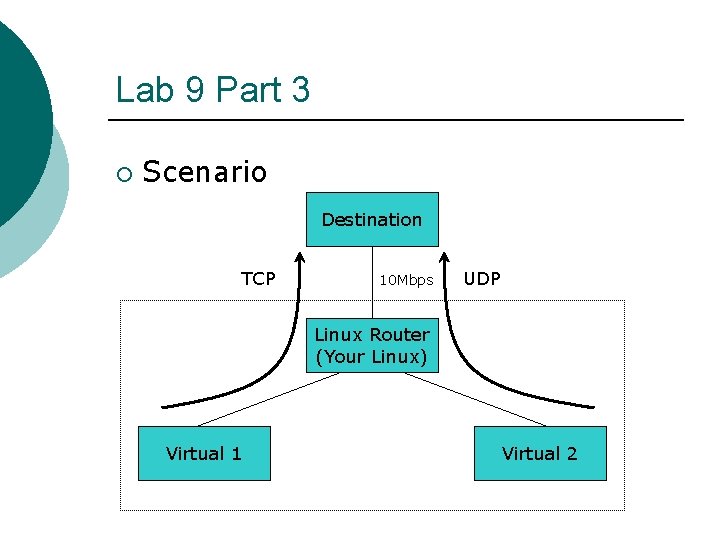
Lab 9 Part 3 ¡ Scenario Destination TCP 10 Mbps UDP Linux Router (Your Linux) Virtual 1 Virtual 2
Lab 9 Part 3 (cont. ) Problem with TCP v. s. UDP? ¡ TCP is too “nice” ¡ Proposed solution: Modify kernel TCP higher priority ¡
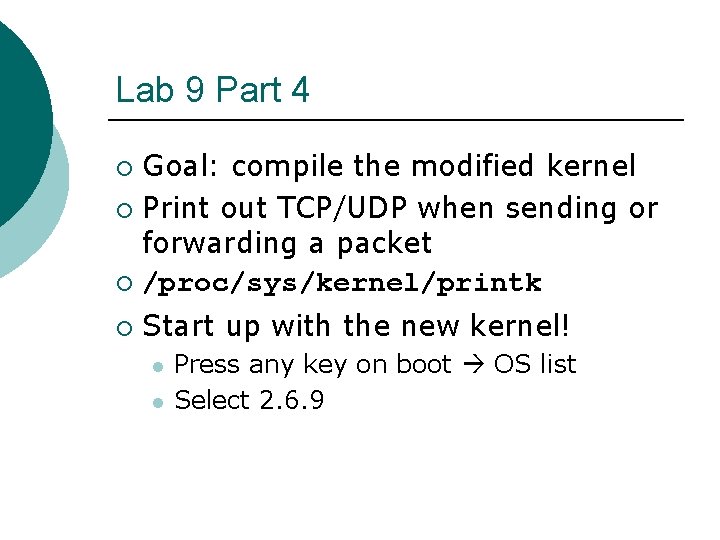
Lab 9 Part 4 Goal: compile the modified kernel ¡ Print out TCP/UDP when sending or forwarding a packet ¡ /proc/sys/kernel/printk ¡ ¡ Start up with the new kernel! l l Press any key on boot OS list Select 2. 6. 9
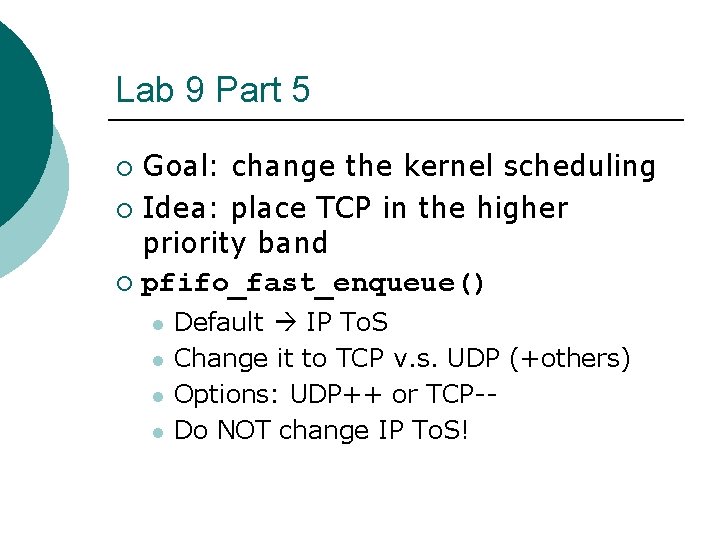
Lab 9 Part 5 Goal: change the kernel scheduling ¡ Idea: place TCP in the higher priority band ¡ pfifo_fast_enqueue() ¡ l l Default IP To. S Change it to TCP v. s. UDP (+others) Options: UDP++ or TCP-Do NOT change IP To. S!
Lab 9 Part 5 (cont. ) TCP UDP
Lab 9 Part 5 (cont. )
Lab 9 Part 5 (cont. ) ¡ Remember: take printk() out! boot into 2. 6. 9 enable forwarding ¡ What happen? Compare to Part 2?