
The Johari Window Model Developed by Joseph Luft
The Johari Window Model • Developed by Joseph Luft and Harry Ingham in 1955 • To help people understand their interpersonal communication and relationships
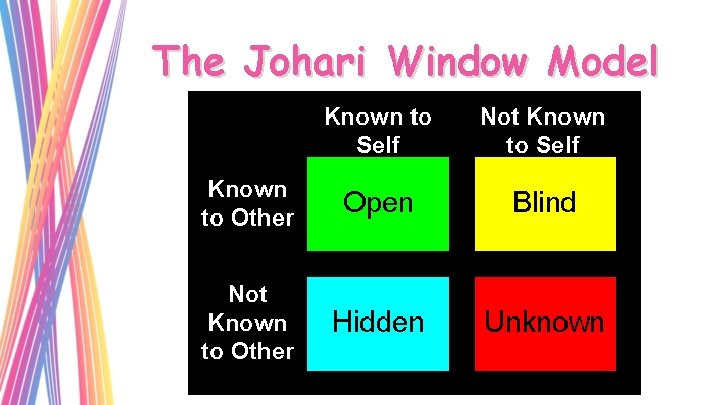
The Johari Window Model
Open Pane • • The IDEAL Window Our public self Things both -you and I - know about ME! Characteristics: high degree of trust, behavior open, open to feedback.
Blind Pane • Things you know about me but that I am unaware of • Ex…irritating habits, qualities you are unable to believe about yourself (food in teeth, bad breath) • feelings of inadequacy, incompetence, unworthiness, or rejection) - difficult for individuals to face directly, and yet can be seen by others.
Hidden Pane • The Façade • Things I am aware of, but you do not know • Ex…likes/dislikes, sensitivities, fears, private matters, hidden agendas, manipulative intentions, secrets
Unknown Pane • The turtle • things neither of us about me • Includes subconscious, things we might have forgotten, and things that are yet to come • Ex…information, feelings, latent abilities, aptitudes, the future
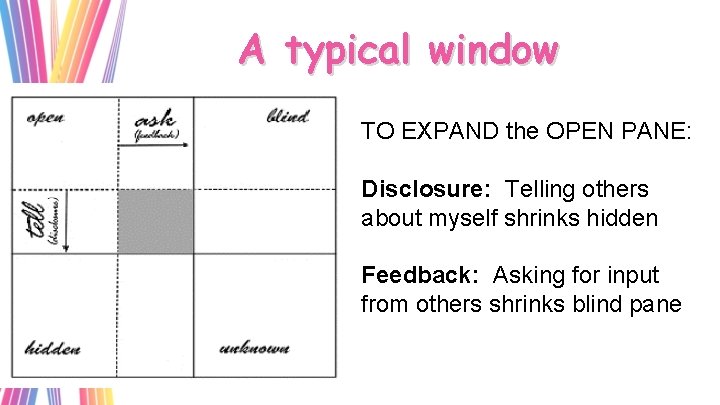
A typical window TO EXPAND the OPEN PANE: Disclosure: Telling others about myself shrinks hidden Feedback: Asking for input from others shrinks blind pane
The ultimate goal of the Johari Window • enlarge the Open Area • without disclosing information that is too personal. • The more your people know about each other, the more productive, cooperative, and effective they'll be when working together.
. . "self-disclosure" • give-and-take process - between yourself and the people that you're interacting with. • As you share - Open Area expands vertically and your Hidden Area gets smaller • As people on your team provide feedback - Open Area expands horizontally, and your Blind Area gets smaller • Done well, the process of give and take, sharing, and open communication builds trust within the group.
A Leader’s Role Leaders play an important role in facilitating feedback and disclosure among group members, and in directly giving feedback to individuals about their own blind areas� Leaders also have a responsibility to promote a culture and expectation for open, honest, positive, constructive communications
What it means to a team • Effective, solid team when = each member has a strong mutual understanding • Members and leaders should strive to increase their open free areas, and to reduce their blind, hidden and unknown areas • Discovery through sensitive communications, active listening, and experience will help
Questions for your Pod • How does theory behind the Johari window relate to self esteem and self awareness? • What is the relationship between communication with others and your own self –esteem? • How an you grow the Ideal Window?
The NEXT Step • You are going to explain YOUR Johari window! • You will also need to ask people to tell you things for your Blind Pane!
- Slides: 13