
The Jig Cell Problem Solving Environment PSE Marc

The Jig. Cell Problem Solving Environment (PSE) Marc Vass and Nick Allen Department of Computer Science Virginia Tech
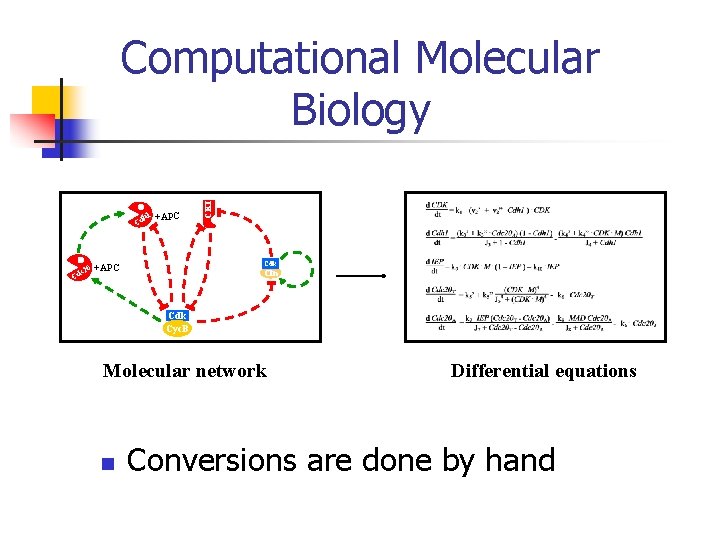
h 1 Cd c 20 Cd +APC CKI Computational Molecular Biology Cdk +APC Cln Cdk Cyc. B Molecular network n Differential equations Conversions are done by hand
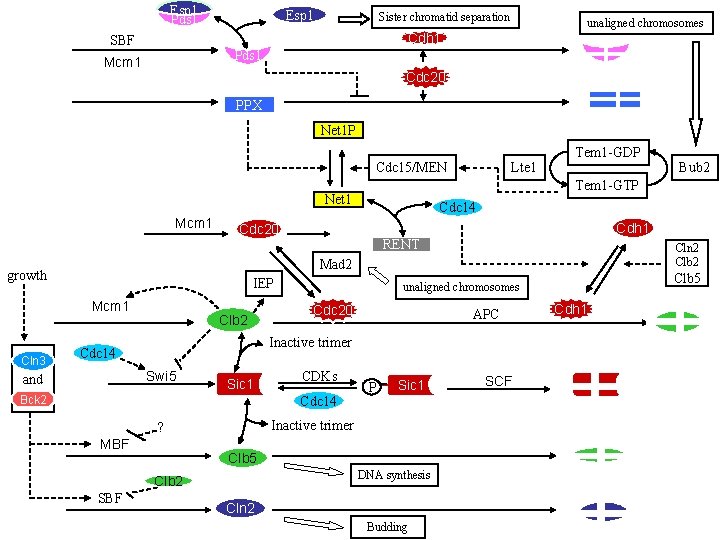
Esp 1 Pds 1 Esp 1 Sister chromatid separation unaligned chromosomes Cdh 1 SBF Pds 1 Mcm 1 Cdc 20 PPX Net 1 P Tem 1 -GDP Cdc 15/MEN Cdc 14 Cdh 1 Cdc 20 RENT Cln 2 Clb 2 Mad 2 growth IEP Mcm 1 Cln 3 Bub 2 Tem 1 -GTP Net 1 Mcm 1 Lte 1 Clb 2 Swi 5 and Cdc 20 Sic 1 Bck 2 CDKs Cdc 14 MBF PP Sic 1 Inactive trimer ? Clb 5 DNA synthesis Clb 2 SBF APC Inactive trimer Cdc 14 Clb 5 unaligned chromosomes Cln 2 Budding SCF Cdh 1
The Jig. Cell PSE n n Why we need a PSE Representing a model Making a prediction based on the model Validating a model
Without a PSE n n n Impossible to move beyond simple hand built models Evaluating models is repetitive and time consuming Leads to more errors
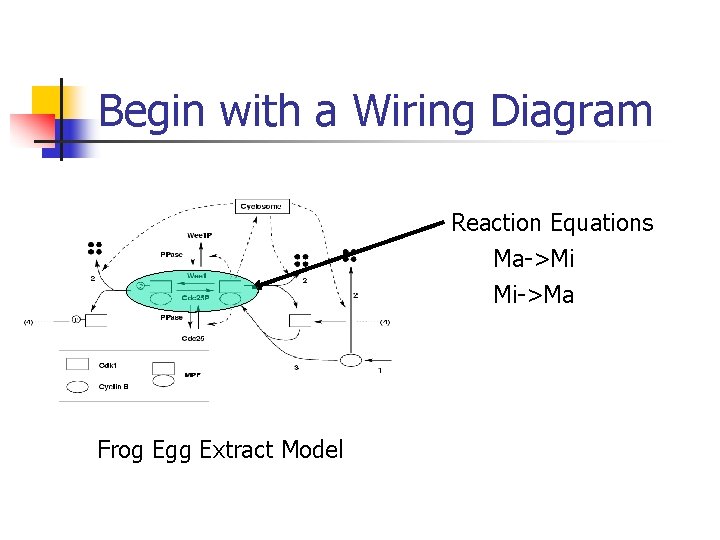
Begin with a Wiring Diagram Reaction Equations Ma->Mi Mi->Ma Frog Egg Extract Model
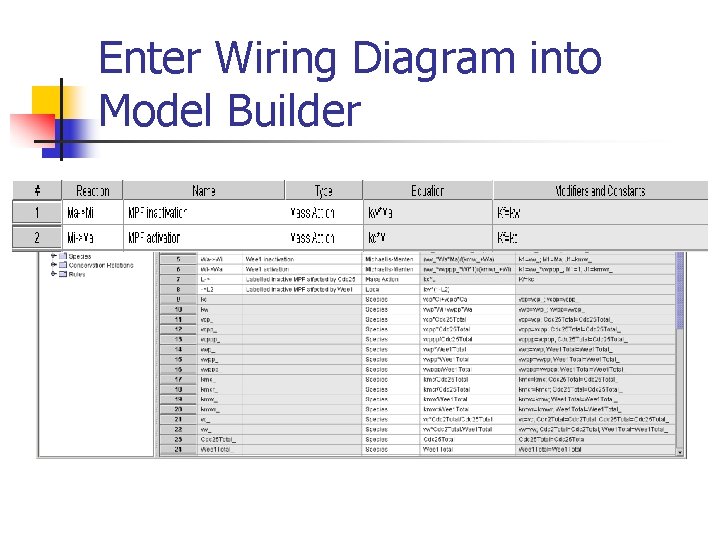
Enter Wiring Diagram into Model Builder
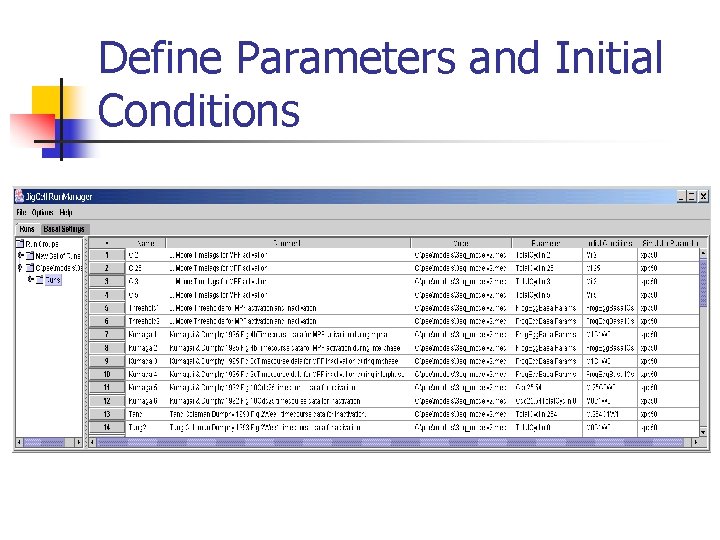
Define Parameters and Initial Conditions
Performing a Comparison n n Identify experimental results of interest Define a simulation with equivalent conditions Massage simulation results into a usable form Run an objective evaluation
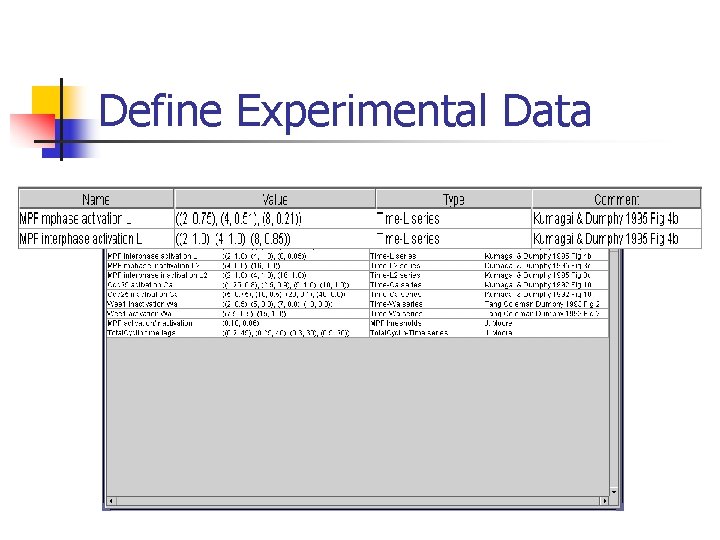
Define Experimental Data
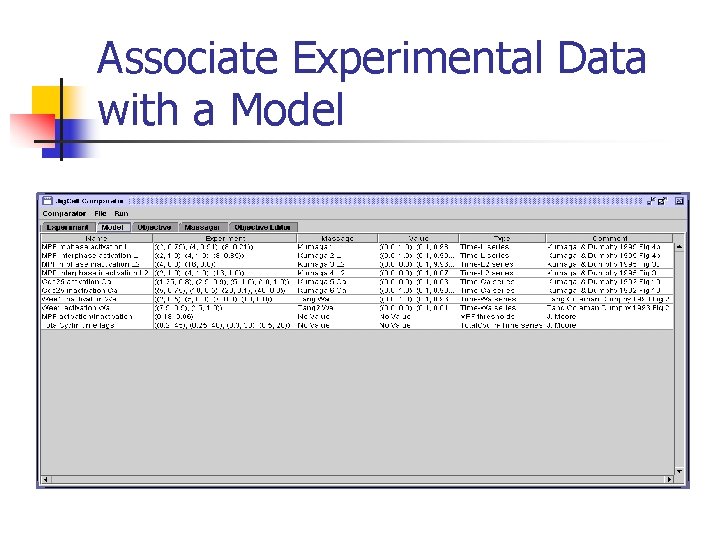
Associate Experimental Data with a Model
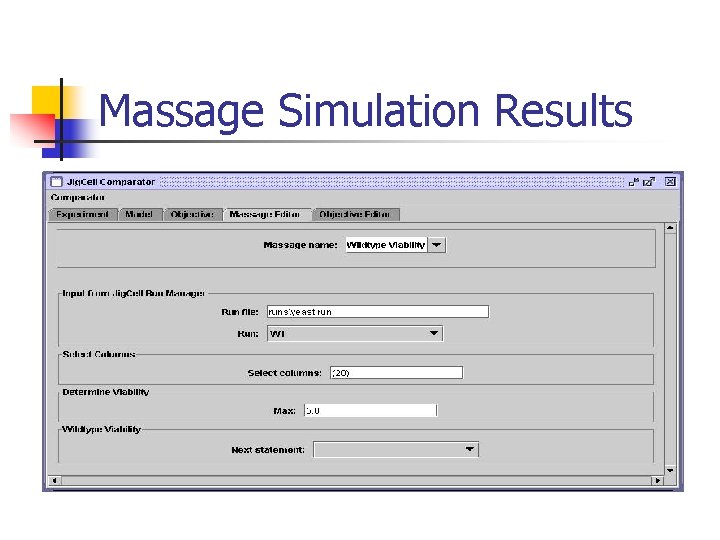
Massage Simulation Results
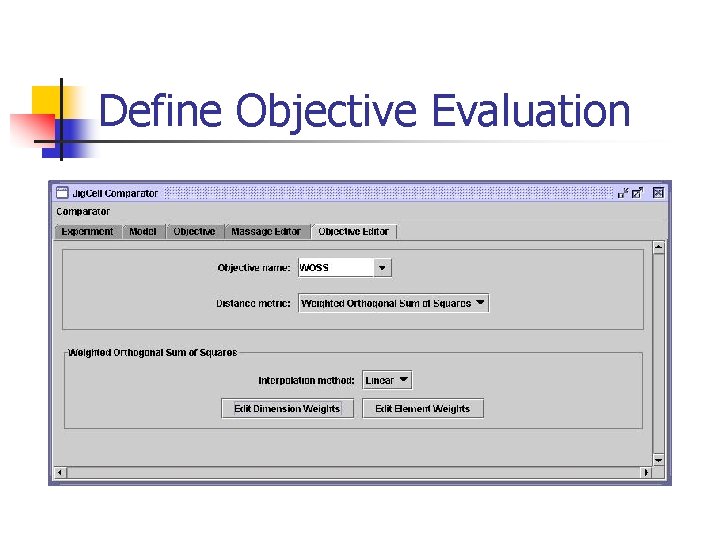
Define Objective Evaluation
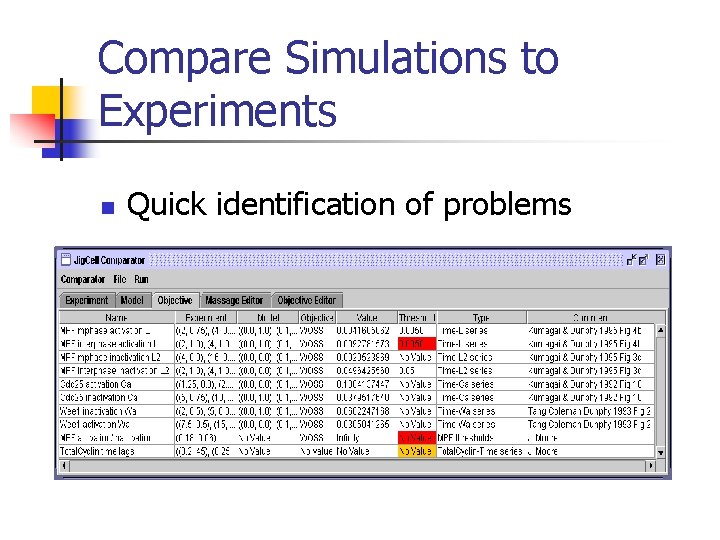
Compare Simulations to Experiments n Quick identification of problems
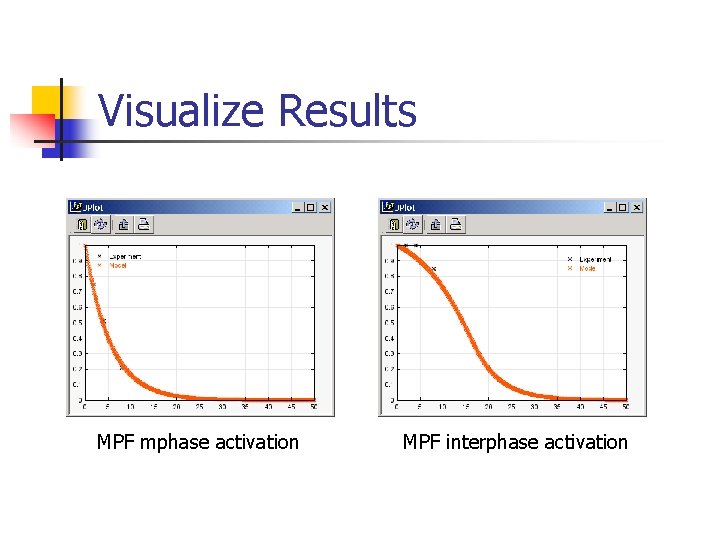
Visualize Results MPF mphase activation MPF interphase activation
Conclusions n n Jig. Cell allows modelers to produce truly useful computer representations of molecular regulatory systems Jig. Cell also allows modelers to quickly evaluate and re-evaluate changes to their models against experimental data

Questions
- Slides: 17