
The JCSS Guidance Document on Robustness of Structures
The JCSS Guidance Document on Robustness of Structures Dr T D Gerard Canisius, BRE Chairman, JCSS Robustness Task Group COST Action E 55 – Graz – 15 May 2007
CONTENTS 1. The Joint Committee on Structural Safety (JCSS) 2. Robustness/Disproportionate Collapse 3. The JCSS Robustness Initiative 4. Expert Task Group 5. The Guidance Document 6. Conclusion
1. The Joint Committee on Structural Safety (JCSS) • An international committee of structural safety experts • Formed by civil and structural engineering associations such as – IABSE – CIB – fib – RILEM – ECCS – CEB • President: Prof Michael Faber, ETH, Zurich • Secretariat: ETH, Zurich.
• JCSS’s concern: Structural Safety • It developed most safety concepts in Eurocodes and ISOs • Current Initiatives: – Probabilistic Model Code – Guidance Document on Robustness of Structures – Guidance Document on Risk Assessment Organises dissemination activities such as seminars, workshops, . . .

2. Robustness/Disproportionate Collapse Picture: by courtesy of Michael Faber, ETH, Zurich
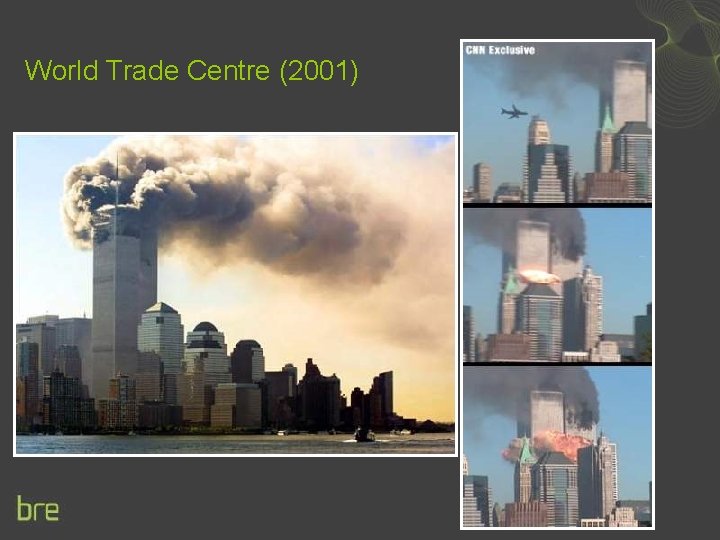
World Trade Centre (2001)
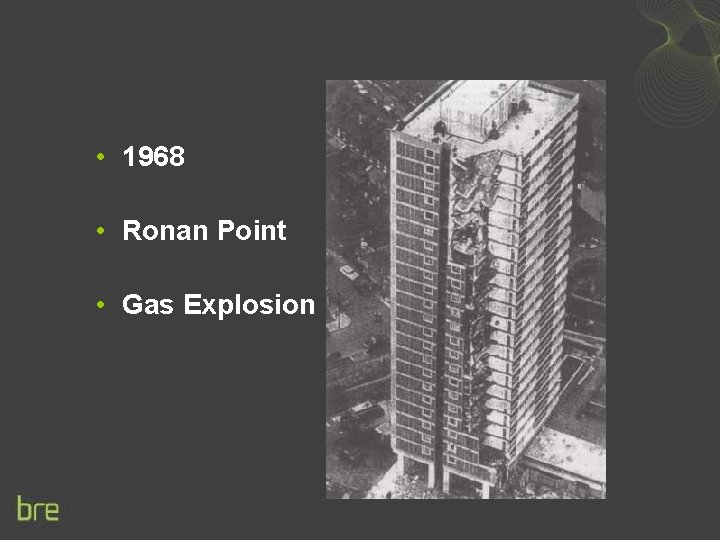
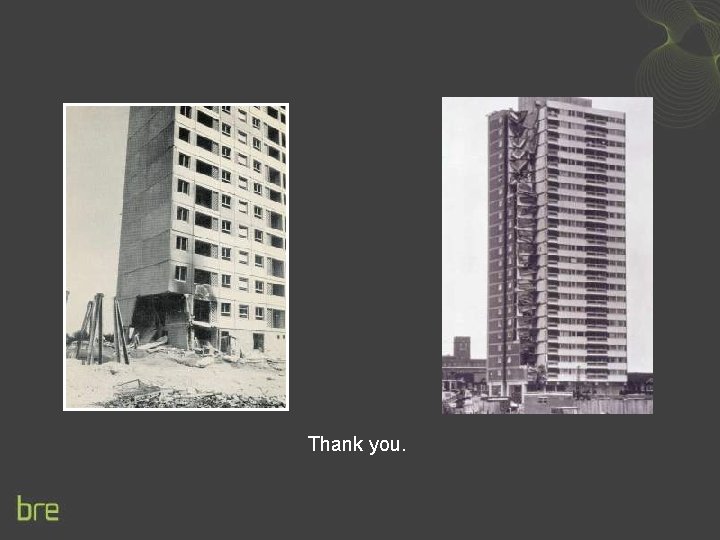
• 1968 • Ronan Point • Gas Explosion
In the UK and Europe, • Design Robust Structures • Eliminate Disproportionate Collapse • Progressive Collapse only a mode of failure. Consider a ‘SYSTEM’
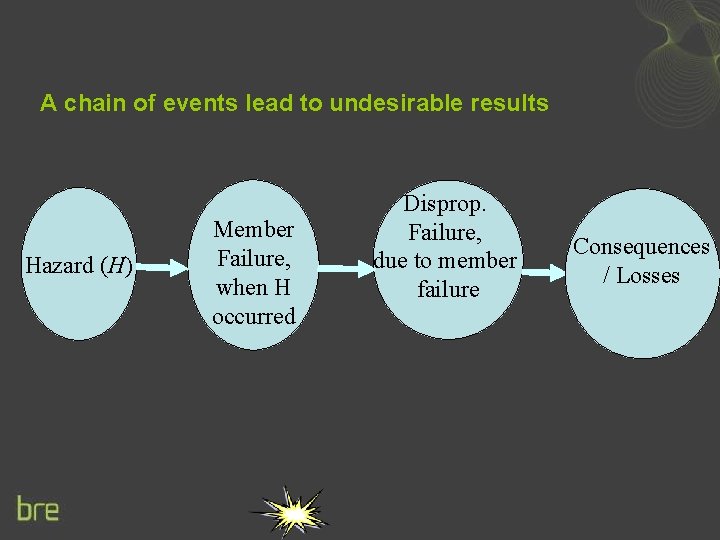
A chain of events lead to undesirable results Hazard (H) Member Failure, when H occurred Disprop. Failure, due to member failure Consequences / Losses
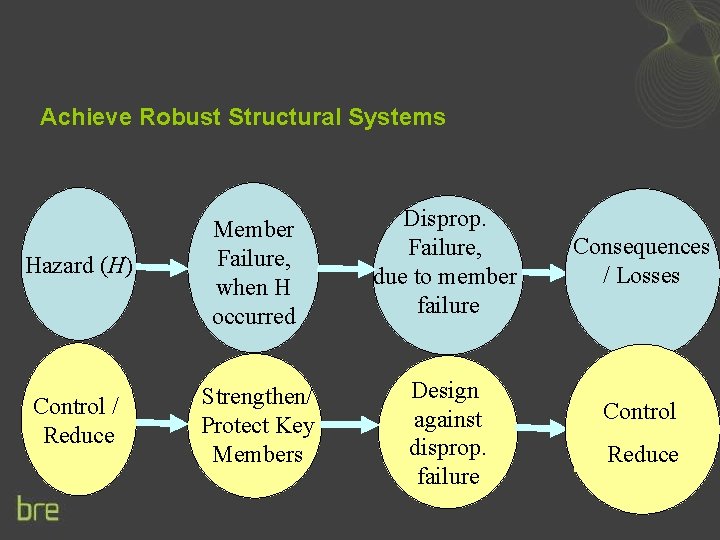
Achieve Robust Structural Systems Hazard (H) Member Failure, when H occurred Disprop. Failure, due to member failure Control / Reduce Strengthen/ Protect Key Members Design against disprop. failure Consequences / Losses Control Reduce
3. The JCSS Robustness Initiative • An outcome of – JCSS/IABSE International Workshop on Robustness – 28 -29 November, 2005 at BRE • TG formed on 25 April 2006 • Develop International Guidelines Related to Robustness of Structures (Target July 2008)

4. JCSS Expert Task Group - Members • • • Dr T. D. Gerard Canisius (BRE). Chairman Prof. Michael Faber (ETH, Zurich) Prof. John Sorensen (University of Aalborg, Denmark) Mr Geoff Harding (formerly of ODPM/CLG, UK) Prof. A. Vrouwenwelder (TNO, The Netherlands) Prof. Bruce Ellingwood (Georgia Tech, USA) Prof. Thomas Vogel (ETH, Zurich) Dr John Menzies (Private Consultant, ex BRE, UK) Dr Fahim Sadek (NIST, USA) Dr Finn Sorensen (Denmark) Dr Jack Baker (Stanford University, USA) Prof. Milan Holicky (Klockner Institute, Czech Rep. ) • • A. Maitra (Faber-Maunsell, UK) R. Shipman (CLG, UK)
• Observers – – – Prof. Haig Gulvanessian (BRE) Mr Richard Shipman (DCLG) Prof. Carmen Andrade (IETCC, Spain) Dr Inger Kroon (COWI, Denmark) Prof. A. Scherer (Univ. of Dresden, Germany) • First Meeting – 5 th July 2006 (BRE) • Second Meeting – 23 rd November 2006 (Munich)
5. The JCSS Guidance Document: ‘Provision and Assessment of Structural Robustness’ • The objective: – To provide international state-of-the-art guidance on robustness issues. Cover methods of quantifying, assessing and providing robustness incorporating latest international thinking and knowledge.
• A document directed more at – Regulators – Code Developers – Research and Development personnel – Can be used by practising engineers • Scope – On-shore and near-shore structures, but not off-shore structures – Common structures (common rules & methods) & special structures. – Includes robustness during erection (execution).
Would Deal With. . . • The structural safety basis for current robustness considerations. • Adequacy of current ‘deemed to satisfy’ rules for providing various levels of ties to a building in situation where multiple load-bearing members can be lost. • Issues arising from ‘too much’ tying of a structure, especially under ‘deemed to satisfy’ rules – for example, non-confinement of collapse and ‘drag down’ of a structure.
• Methods of quantifying robustness of a building when risk is defined in terms of damage, fatalities or economical costs. • The importance of non-structural consequences, e. g. economical consequences and public morale, in assessing risks. The relation to consequence classes in EN 1991 -1 -7. • Decision making in relation to robustness issues. Determination of best (optimum) solutions, including by incorporating hazard elimination (reduction) measures.
• Quality control during execution (construction) and provision of maintenance regimes as means for providing and assuring robustness. • How EC 1 consequence classes, which relate to potential fatalities, can be used in situations where economic consequences and public morale are important. • ‘Over-strength’ materials and components that can modify structural behaviour (robustness) determined based on characteristic strength.
Contents - 14 Chapters • Chapter 1: Introduction • Chapter 2: Philosophy and Principles of Robustness – A preamble giving historic approaches – Stakeholder requirements, especially in terms of existing practice and regulations
• Chapter 3: Public perception of issues related to robustness – – – Nature of structural safety ‘tolerable risks’ risk communication risk acceptance stakeholder participation in decision making • Chapter 4: Hazards – those considered by Regulations and codes – those not considered (including terrorist attacks)
• Chapter 5: Consequences – methods of quantifying consequences (human, structural, economical, political) – methods of expressing risks – proportionate consequences • Chapter 6: Definition of structural systems – from components to complete structures – inclusion of hazard and consequences in a system – sub-systems
• Chapter 7: Quantification of robustness – what is robustness? – can we give a number, like reliability index? – how can we compare two structures or solutions? • Chapter 8: Methods of providing robustness – How to make a system robust • Control of hazards • Good structural forms (topology) and properties (energy absorption) • Redundancy, stronger components • Inspection and maintenance
• Chapter 9: Decision making – – – Strengthening costs vs accepting risks Regulations Optimisation Legal issues Dealing with public perception issues • Chapter 10: Designing for Robustness – Framework for designing for robustness, considering • Hazards (prevent, control, compartmentalise) • Structure (strength, redundancy, energy absorption, maintenance) • Consequences (escape time & routes, contingency plans, emergency services) • Risks (Control/Minimise, Acceptable risk, Constraints)
• Chapter 11: Robustness during construction – The vulnerability of structures during construction – Special hazards and temporary structural conditions – Prevention of disproportionate failure
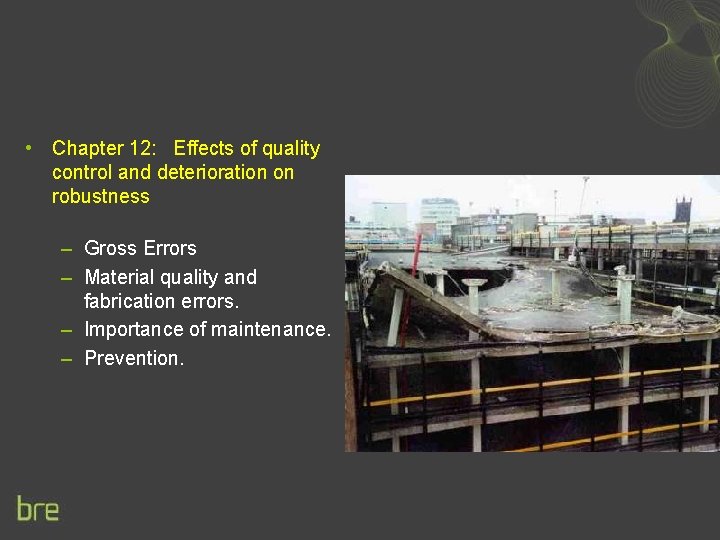
• Chapter 12: Effects of quality control and deterioration on robustness – Gross Errors – Material quality and fabrication errors. – Importance of maintenance. – Prevention.
• 13: Other issues – Existing structures Situations of Changing Risk – Deliberate attacks – with prior weakening of structures, when full occupied – Demolition (Not in detail – as generally same principles apply) • Chapter 14: Recommendations • Annexes
Conclusion • The JCSS has formed an Expert Task Group on Robustness of Structures. • The TG will produce a Guidance Document Provision and Assessment of Structural Robustness • The document will be a major step forward, especially by dealing with issues such as – consideration of systems – quantification of robustness – robustness during construction • The document is currently being developed.
Thank you.
- Slides: 28