
THE JACKSON ERA Chapter 12 Lesson 1 Jacksonian
- Slides: 5
THE JACKSON ERA Chapter 12 Lesson 1 Jacksonian Democracy
NEW PARTIES EMERGE � Political Parties: divided the country; fear of George Washington. � Democratic Republicans: sole political party from 1816 -1824. � Election of 1824: all 4 candidates were Democratic-Republicans. • William Crawford: supported by political party. • Henry Clay: supported by Kentucky. • John Quincy Adams: supported by Northeast. • Andrew Jackson: supported by Tennessee. � Jackson won plurality vote, not majority vote. � House of Representatives: selected J. Q. Adams to become President.
PRESIDENCY OF JOHN QUINCY A�DAMS Favored a strong central government. � Democratic-Republican Party: split into two separate parties… • National Republicans: strong central government. • Democrats: states rights. � Election of 1828: Jackson vs. Adams. � Mudslinging: insulting the opposing candidate. � Campaigning: slogans, flyers, barbeques, rallies, etc…
PRESIDENCY OF ANDREW JACKSON � Believed in American Democracy (rule by the people). � Voting Rights: owning land was no longer a voting requirement. � Electors: formerly chosen by state legislatures; now chosen by citizens. � Bureaucracy: officials were appointed, not elected. � Spoils System: jobs given to people who support the political party. � Nominating Conventions: replaced party caucuses; elected representatives voted for party candidates.
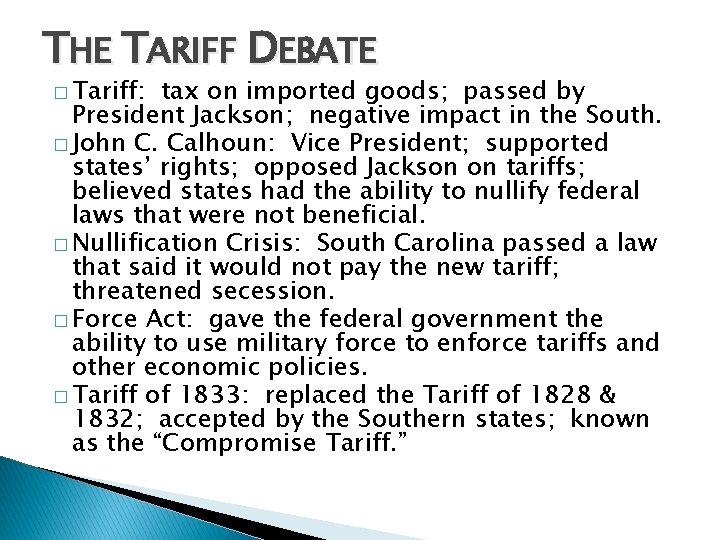
THE TARIFF DEBATE � Tariff: tax on imported goods; passed by President Jackson; negative impact in the South. � John C. Calhoun: Vice President; supported states’ rights; opposed Jackson on tariffs; believed states had the ability to nullify federal laws that were not beneficial. � Nullification Crisis: South Carolina passed a law that said it would not pay the new tariff; threatened secession. � Force Act: gave the federal government the ability to use military force to enforce tariffs and other economic policies. � Tariff of 1833: replaced the Tariff of 1828 & 1832; accepted by the Southern states; known as the “Compromise Tariff. ”