
The ISR Cycle Making decisions more effective The

- Slides: 51
The ISR Cycle
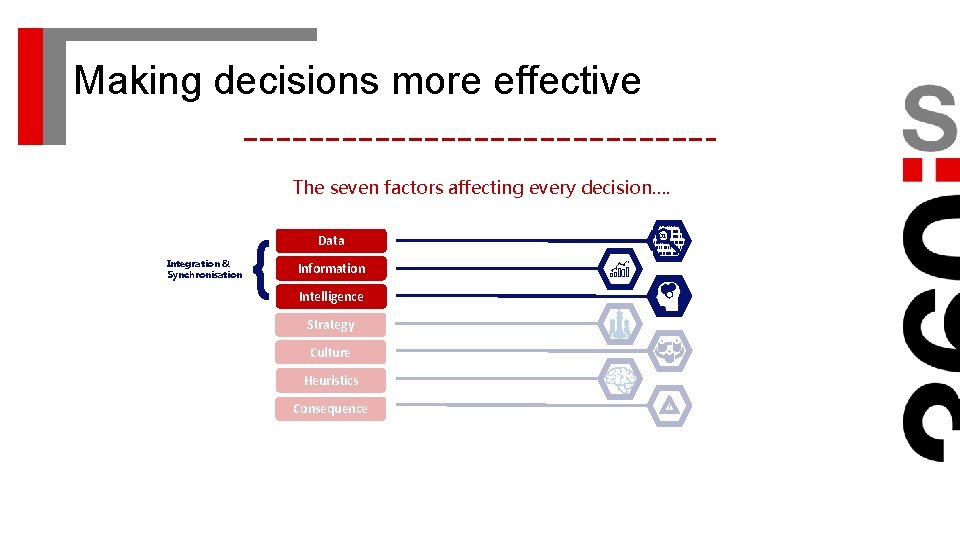
Making decisions more effective The seven factors affecting every decision…. 010 Data Integration & Synchronisation Information 010011011010101 010000110100110 110101110100110 11001010001 01011101110 110100100100001 010010001100100 1010101 . . . Intelligence Strategy Culture Heuristics Consequence !
What does NATO think? • NATO AJP 2. 7 JISR Doctrine • Joint Intelligence, Surveillance and Reconnaissance (JISR) is a set of intelligence and operations capabilities, to synchronize and integrate the planning and operation of all collection capabilities with the processing, exploitation, and dissemination of the resulting information in direct support of the planning, preparation and execution of operations. • Synchronisation mean that the ISR process has to work in time with other cycles such as the intel or ops cycle • Integrated means that two or more things combine in order to become more effective
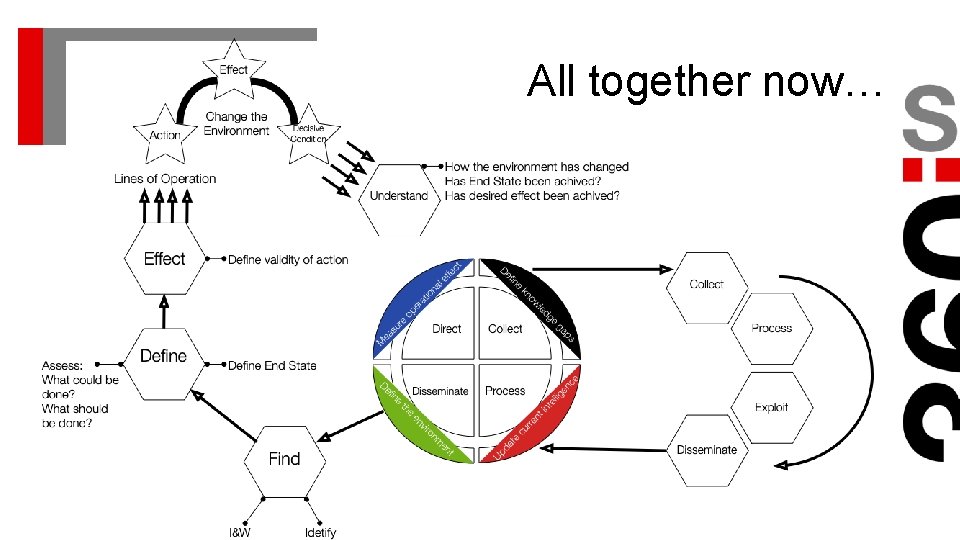
All together now…
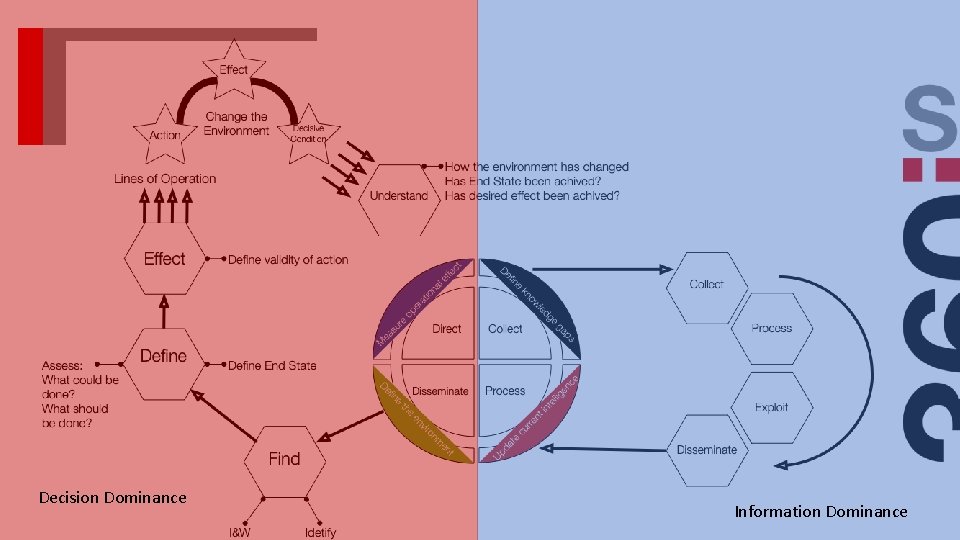
Decision Dominance Information Dominance
Objectives • By the end of this lesson you will • Understand the JISR cycle • Task • Collect • Process • Exploit • Disseminate
References • AJP-2 series • 2, 2. 1 and 2. 7
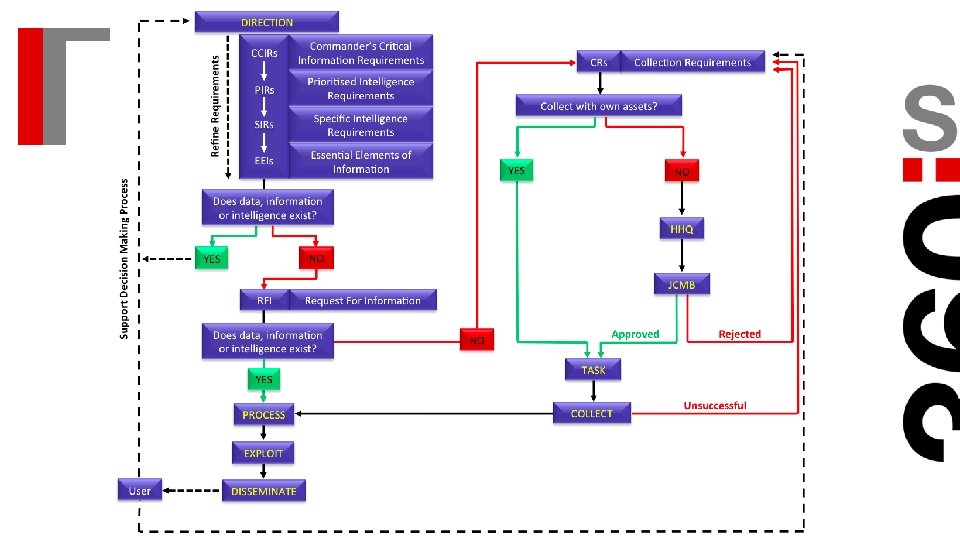
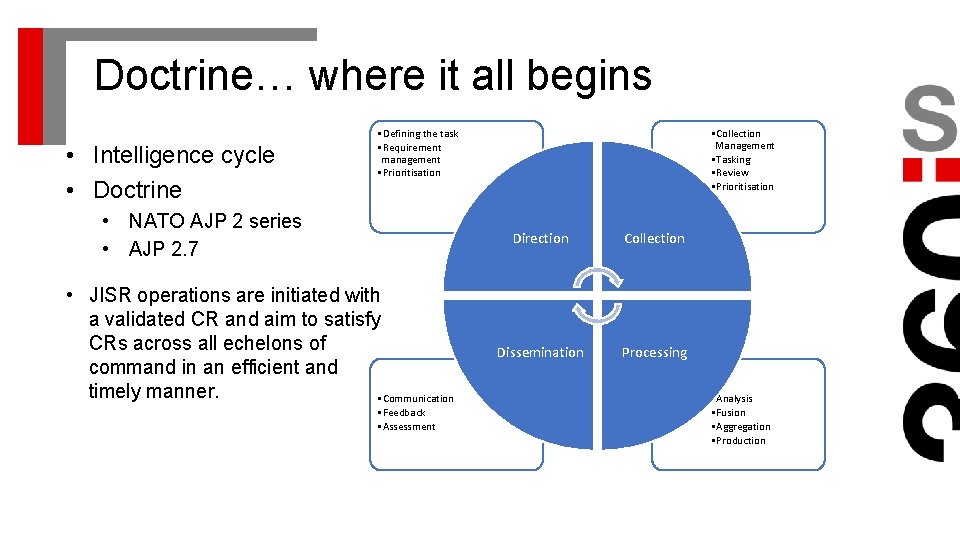
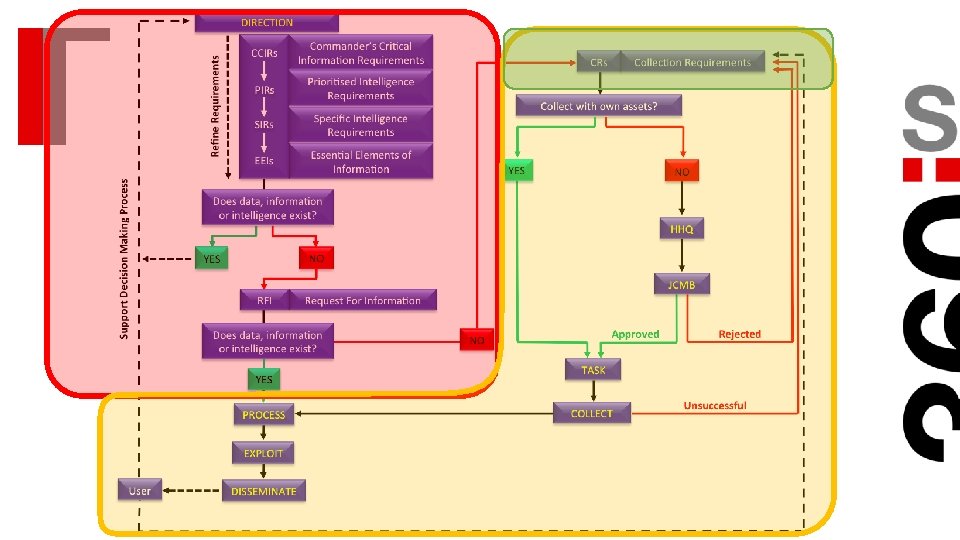
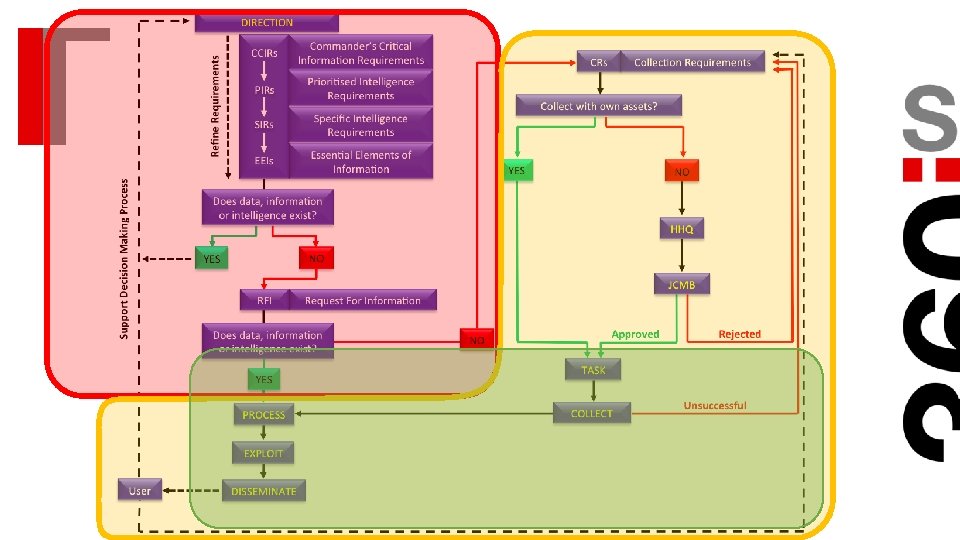
Doctrine… where it all begins • Intelligence cycle • Doctrine • Defining the task • Requirement management • Prioritisation • NATO AJP 2 series • AJP 2. 7 • JISR operations are initiated with a validated CR and aim to satisfy CRs across all echelons of command in an efficient and timely manner. • Communication • Feedback • Assessment • Collection Management • Tasking • Review • Prioritisation Direction Collection Dissemination Processing • Analysis • Fusion • Aggregation • Production
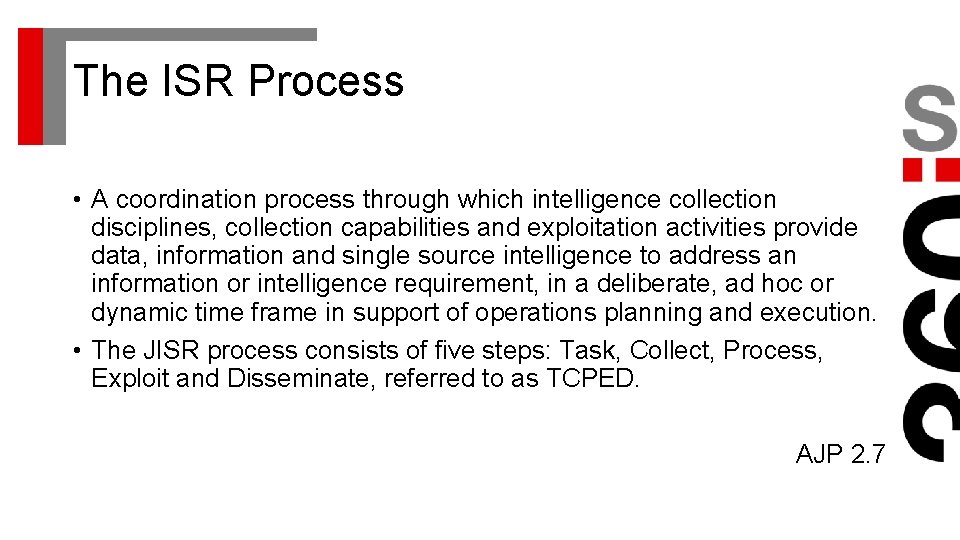
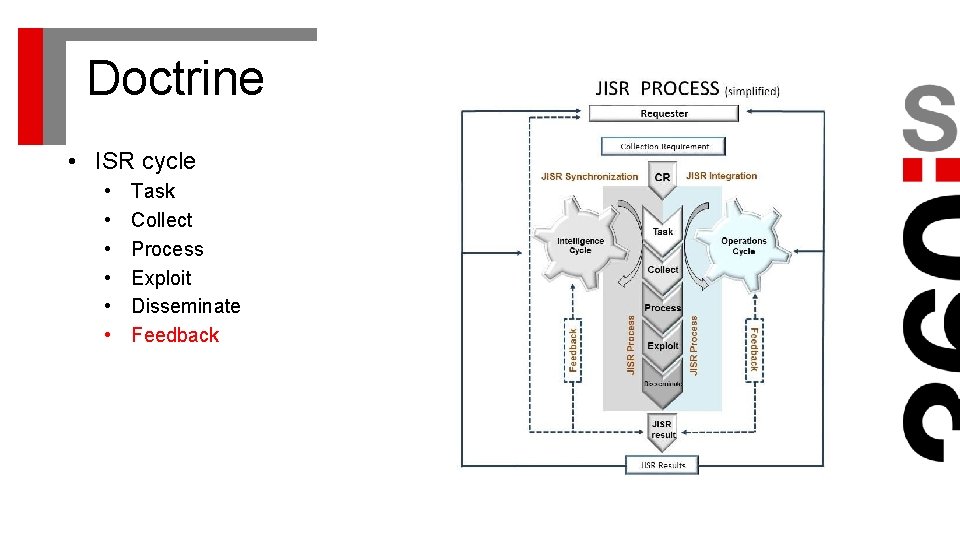
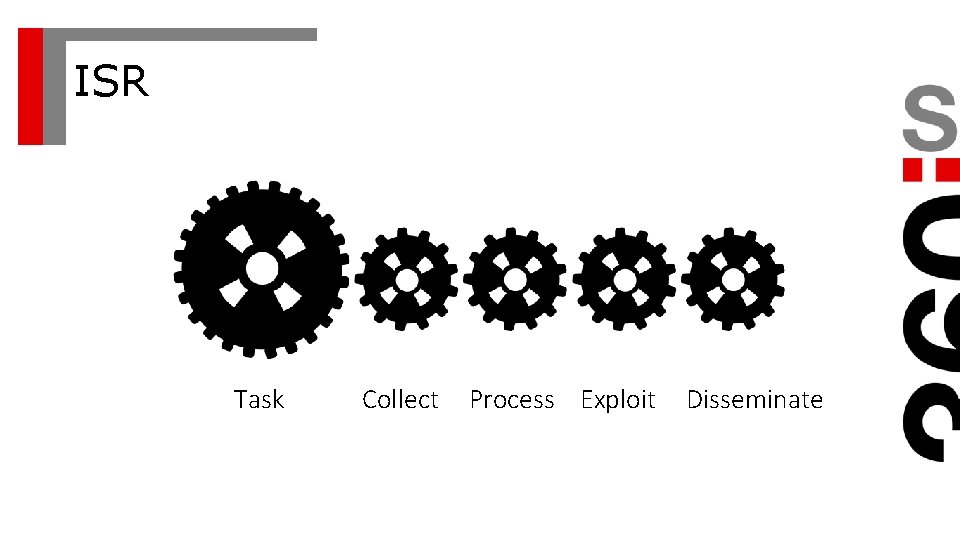
The ISR Process • A coordination process through which intelligence collection disciplines, collection capabilities and exploitation activities provide data, information and single source intelligence to address an information or intelligence requirement, in a deliberate, ad hoc or dynamic time frame in support of operations planning and execution. • The JISR process consists of five steps: Task, Collect, Process, Exploit and Disseminate, referred to as TCPED. AJP 2. 7
JISR is…? • The harmonisation of intelligence and operations functions • This harmonisation is essential to maximise the efficiency and effectiveness of the employment of JISR and operations (J 2 and J 3/5) capabilities. • JISR operates in accordance with six key principles that are appropriate at all levels across the full range of NATO operations to ensure effectiveness. • The 6 principles are: • • • Centralised Direction Responsiveness Shared Sustainable Reliable Accurate
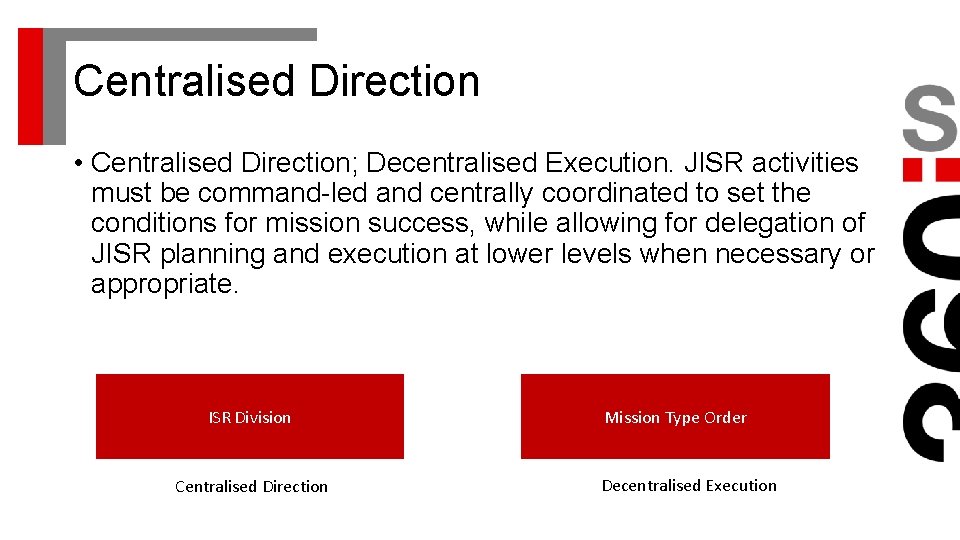
Centralised Direction • Centralised Direction; Decentralised Execution. JISR activities must be command-led and centrally coordinated to set the conditions for mission success, while allowing for delegation of JISR planning and execution at lower levels when necessary or appropriate. ISR Division Centralised Direction Mission Type Order Decentralised Execution
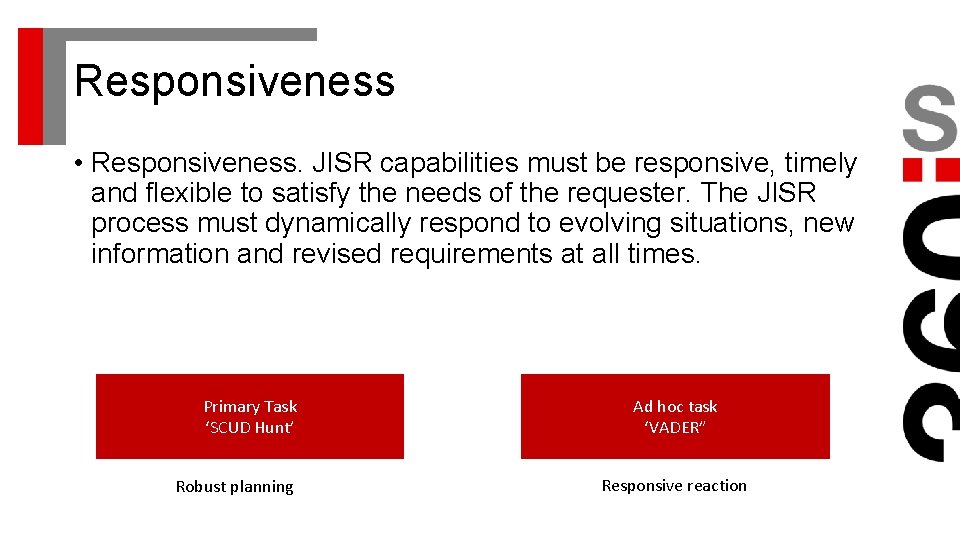
Responsiveness • Responsiveness. JISR capabilities must be responsive, timely and flexible to satisfy the needs of the requester. The JISR process must dynamically respond to evolving situations, new information and revised requirements at all times. Primary Task ‘SCUD Hunt’ Robust planning Ad hoc task ‘VADER” Responsive reaction
Shared • Shared. JISR planning and results should be available and accessible to those who require it on a responsibility-to-share basis in accordance with NATO information exchange and information security procedures.
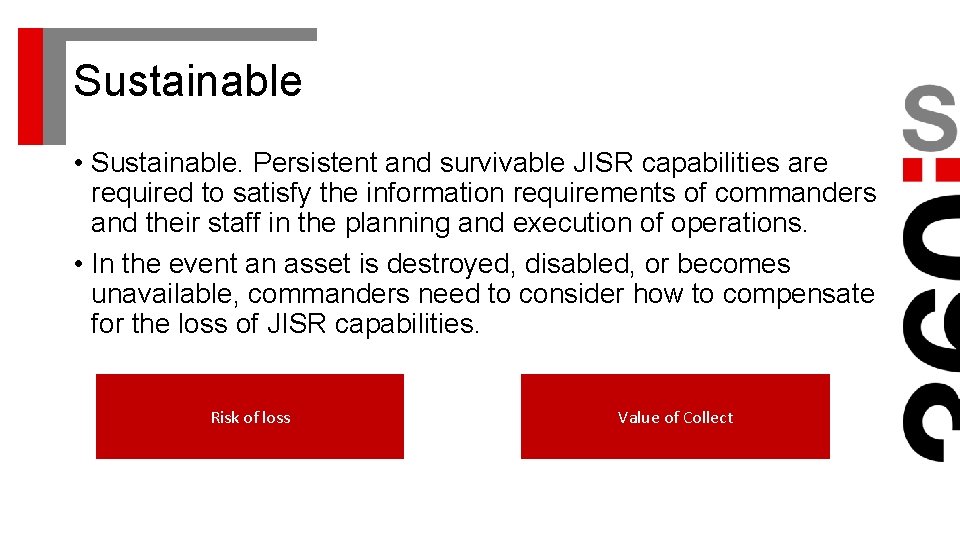
Sustainable • Sustainable. Persistent and survivable JISR capabilities are required to satisfy the information requirements of commanders and their staff in the planning and execution of operations. • In the event an asset is destroyed, disabled, or becomes unavailable, commanders need to consider how to compensate for the loss of JISR capabilities. Risk of loss Value of Collect
Reliable • Reliable. In order to give commanders and their staff confidence in JISR results, JISR capabilities need to provide measures of credibility and probability on the collected data and information.
Accurate • Accurate. JISR results must answer the information requirements in the most accurate way possible. Therefore, accuracy needs to be maintained continuously throughout every step of the JISR process, from tasking through collection, processing, exploitation and dissemination. • This is to ensure the provision of objective, clear, unbiased and undistorted JISR results for subsequent multi and all-source intelligence analysis, as well as to prevent reliance on single source confirmation or circular reporting.
Doctrine TASK • ISR cycle • • • Task Collect Process Exploit Disseminate Feedback DISSEMINATE COLLECT FEEDBACK EXPLOIT PROCESS
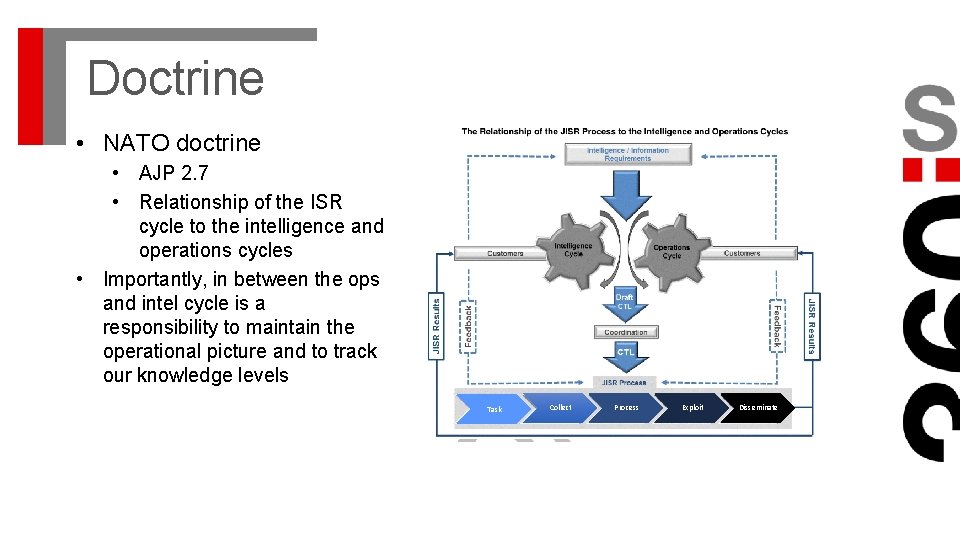
Doctrine • NATO doctrine • AJP 2. 7 • Relationship of the ISR cycle to the intelligence and operations cycles • Importantly, in between the ops and intel cycle is a responsibility to maintain the operational picture and to track our knowledge levels Task Collect Process Exploit Disseminate
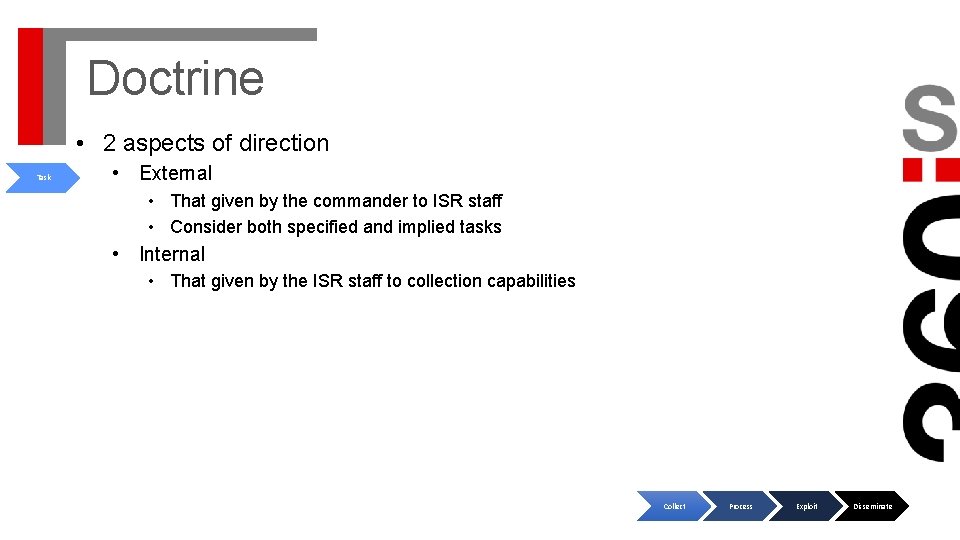
Doctrine • 2 aspects of direction Task • External • That given by the commander to ISR staff • Consider both specified and implied tasks • Internal • That given by the ISR staff to collection capabilities Collect Process Exploit Disseminate
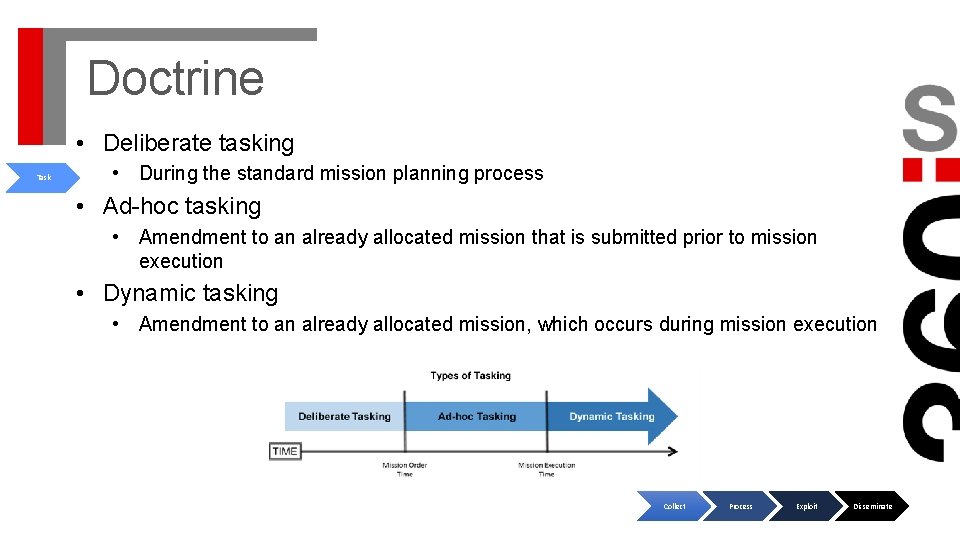
Doctrine • Deliberate tasking Task • During the standard mission planning process • Ad-hoc tasking • Amendment to an already allocated mission that is submitted prior to mission execution • Dynamic tasking • Amendment to an already allocated mission, which occurs during mission execution Collect Process Exploit Disseminate
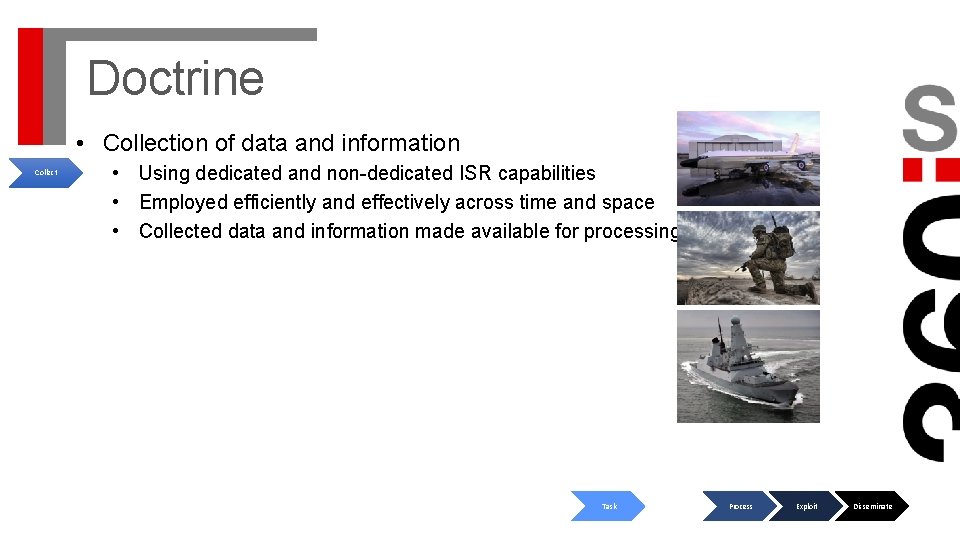
Doctrine • Collection of data and information Collect • Using dedicated and non-dedicated ISR capabilities • Employed efficiently and effectively across time and space • Collected data and information made available for processing Task Process Exploit Disseminate
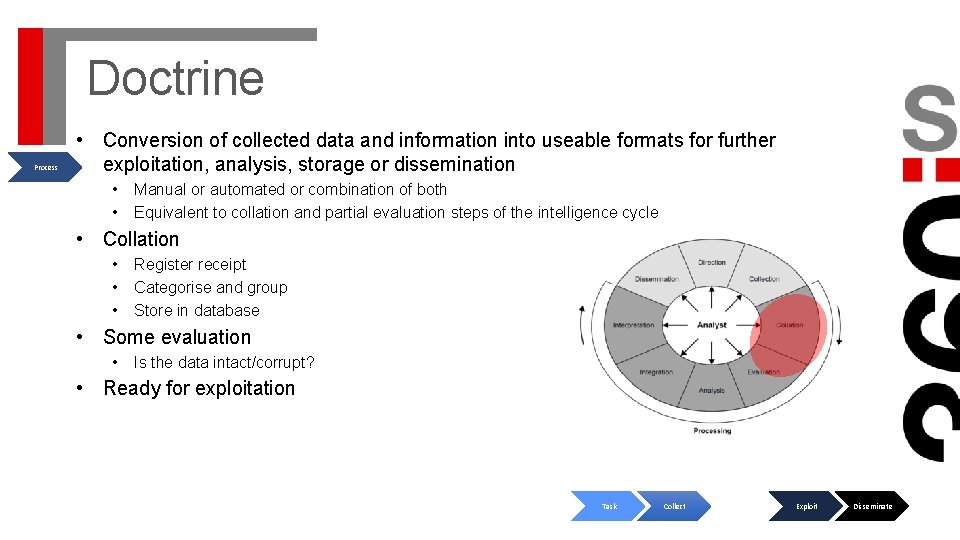
Doctrine Process • Conversion of collected data and information into useable formats for further exploitation, analysis, storage or dissemination • • Manual or automated or combination of both Equivalent to collation and partial evaluation steps of the intelligence cycle • Collation • • • Register receipt Categorise and group Store in database • Some evaluation • Is the data intact/corrupt? • Ready for exploitation Task Collect Exploit Disseminate
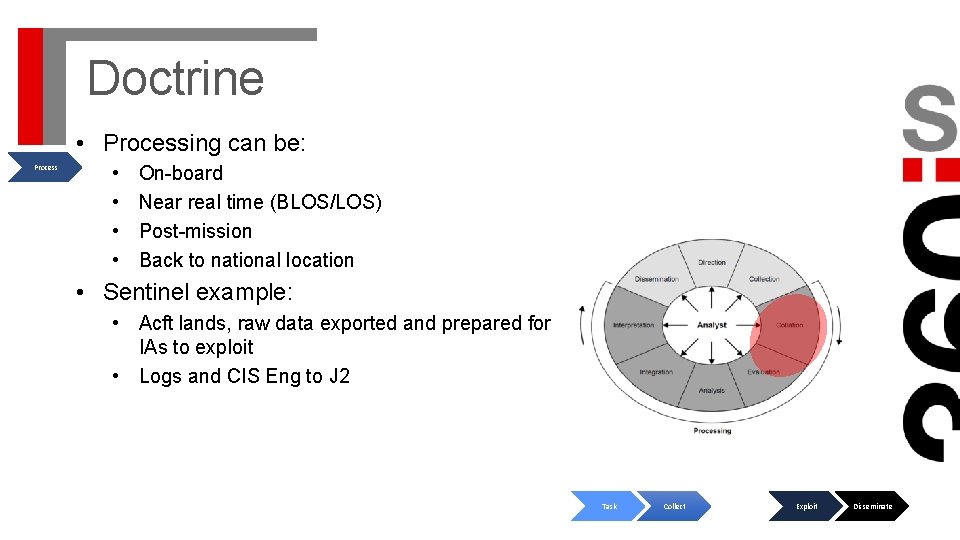
Doctrine • Processing can be: Process • • On-board Near real time (BLOS/LOS) Post-mission Back to national location • Sentinel example: • Acft lands, raw data exported and prepared for IAs to exploit • Logs and CIS Eng to J 2 Task Collect Exploit Disseminate
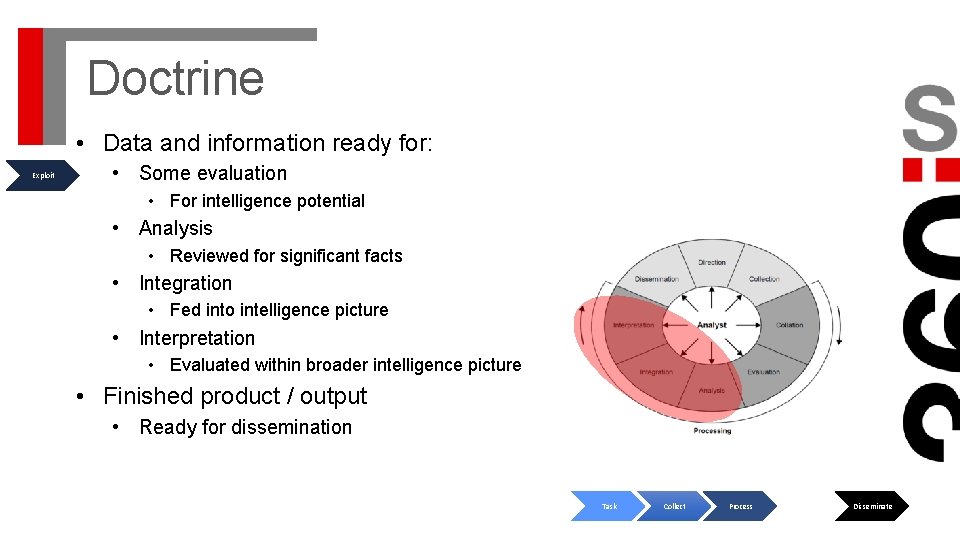
Doctrine • Data and information ready for: Exploit • Some evaluation • For intelligence potential • Analysis • Reviewed for significant facts • Integration • Fed into intelligence picture • Interpretation • Evaluated within broader intelligence picture • Finished product / output • Ready for dissemination Task Collect Process Disseminate
Doctrine Disseminate • Timely provision to those who need it, in the requested format, and through the communication means as specified in the task • Datalink, chat room, voice report, website, e-mail attachment, etc • 5 key principles • Timeliness – timely conveyance of finished product • Appropriate – product in optimal format • Urgency – is the product urgent? • Distribution – via suitable mean s to those who need it • Security – appropriate protective marking / access • Consider CIS architecture • Does the Cdr need the image or will a text report suffice? Task Collect Process Exploit
Doctrine • Feedback • Should be 2 -way • Strive to improve the processes • Often not passed, but not always possible • Busy op tempo • Poor comms • Extremely difficult to do Mo. E without feedback • Review • Whole process continuously reviewed and refined Task Collect Process Exploit Disseminate
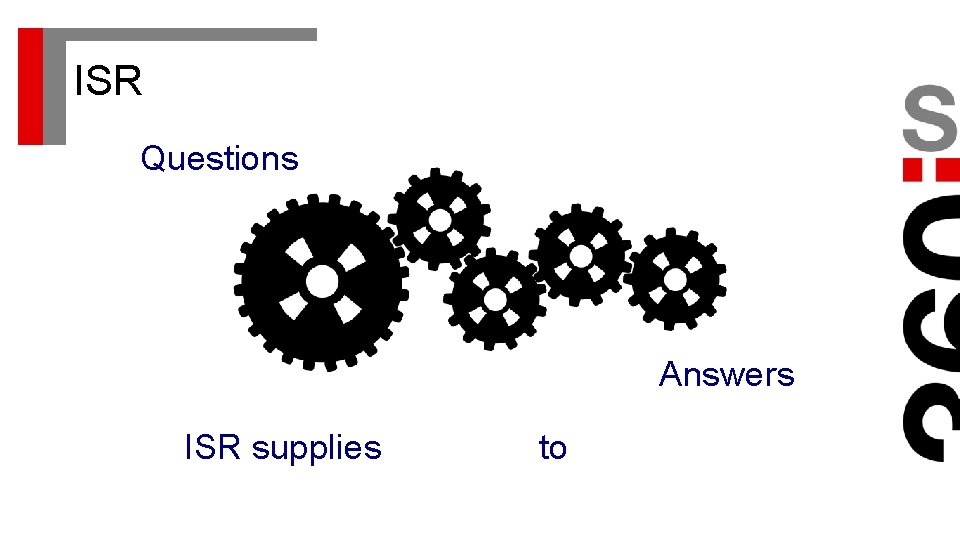
ISR Questions Answers ISR supplies to
ISR Task Collect Process Exploit Disseminate
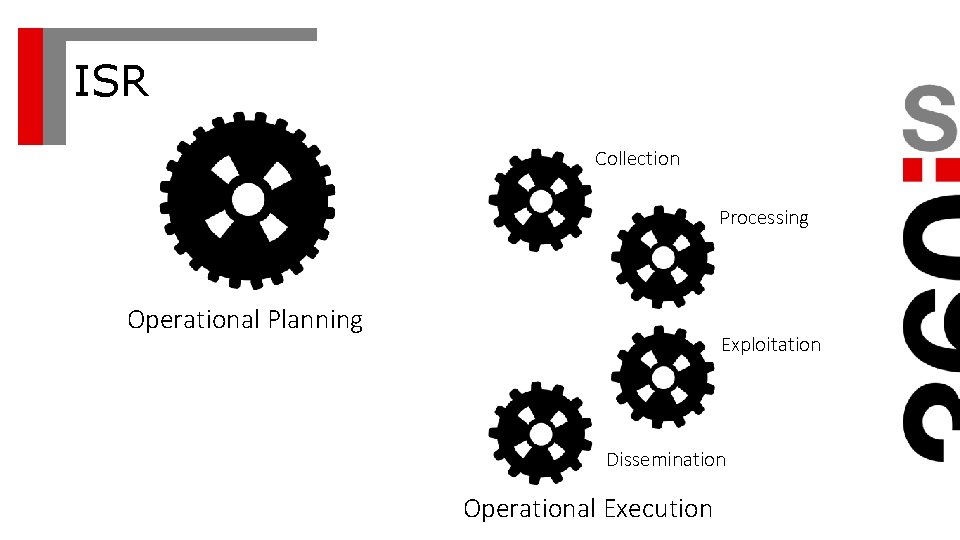
ISR Collection Processing Operational Planning Exploitation Dissemination Operational Execution
ISR • ISR is a system of systems • Each system has interlinking gears or cogs • ISR is an activity that ensure answers are provided to questions that enable decision making
Global Doctrinal Answers • ISR is the activity that supports the commander’s conduct of operations by ensuring a coordinated and integrated acquisition, processing and dissemination of timely, relevant and accurate information and intelligence. • The activity is inherently linked to intelligence as ISR both feeds from and to the intelligence cycle.
Another Answer • Intelligence, Surveillance and Reconnaissance (ISR) combines the product (intelligence), with the information-gathering actions of reconnaissance and surveillance, to answer Intelligence Requirements (IRs) and to maintain the common operational picture. Additionally, ISR goes a step further to facilitate situational understanding. Where reconnaissance and surveillance answer the 'what', 'where' and ‘when’ ISR has the additional requirement of answering 'why'.
Joint ISR (JISR) • Joint Intelligence, Surveillance and Reconnaissance (JISR) is an activity that synchronizes and integrates the planning and operation of all collection capabilities with exploitation and processing and the dissemination of the resulting information to the right person, at the right time, in the right format, in direct support of current and future operations. • JISR encourages the dynamic, agile and coordinated use of platforms, sensors and systems to support a wide range of staff functions.
More… • Provide timely, integrated ISR capability • ISR operations are domain, service and platform neutral • ISR is the linchpin of effects based operations • ISR is indivisible: The elements of ISR are interdependent and mutually supporting to compress the Find, Fix, Track, Target, Engage, and Assess process from days to minutes
Confusion and Clarity • • ISR is a system of systems Within that system, ISR is an activity It is an activity that we utilize every day It is the act of answering questions that cannot be answered from collateral data/intel
Clarity • In answering a question we need to: • Understand what is being asked • What is the question? • Understand what we already know • Can I answer that question now? • Understand what I need to know • DO SOMETHING about the knowledge gap • Collect, Process, Disseminate [Confirm]
Ewen’s 4 Step Process • Understand the TASK • Understand what we already know • Understand what we don’t know • Satisfy the knowledge gap
The 4 Step Process • ISR is a process that results in knowing that which was previously unknown • To achieve this you need to understand: • What is being asked • What is already known • What is Unknown • What can I do about the unknown [in order to know it]
Step 1 - The Question • Understanding the question is key to successful ISR operations • Questions can form many guises: • A Commanders’ [Critical] Information Request (Commanders Critical Intelligence requirement) • A tactical Request For Information (RFI) • An implied question often hidden in the sub text of a stated question • A threat
Understanding the Question • To understand the question is key as often many implied questions are hidden within high level questions. • We will cover task analysis later • To an ISR operator a question represents a gap in knowledge, therefore it becomes a task • Each implied or stated question will manifest itself as a task
Step 2 - What is Known? • In step 2 an ISR operator has to understand what is already known • By conducting this step we perform 2 tasks: • We answer questions quickly • We don’t raise collection requirements that take time and resources to service • We will understand what is known via various means: • Personal knowledge • Previous collected intelligence • Open Source Intelligence
“To know that which we do not” • To assist an ISR operator in conducting step 2, there are various tools • Previous collected intel normally resides within databases • Databases can be searched or an RFI can be submitted • If we do not know the answer to a question we must proceed to step 3…
Step 3 – To define what we don’t know • Step 3 allows us to define what we don’t know • What we need to collect • At the end of step 3 we will have the collection requirements (CRs)
Step 4 - Action • Once we have answered all the questions we can utilising existing data we are left with our unknowns • An unknown is an ISR Task • Each ISR task equals a collection requirement • All collection requirement are not equal, some are prioritised over others, some have time criticality, some are standing tasks.
Summary • ISR is an activity to understand unknowns • Follow the 4 Step process • Step 1 - Understand the question(s) • Step 2 - Understand what is already known • Step 3 – Raise Collection Requirements • Step 4 - Generate activity to find answers to the unknowns
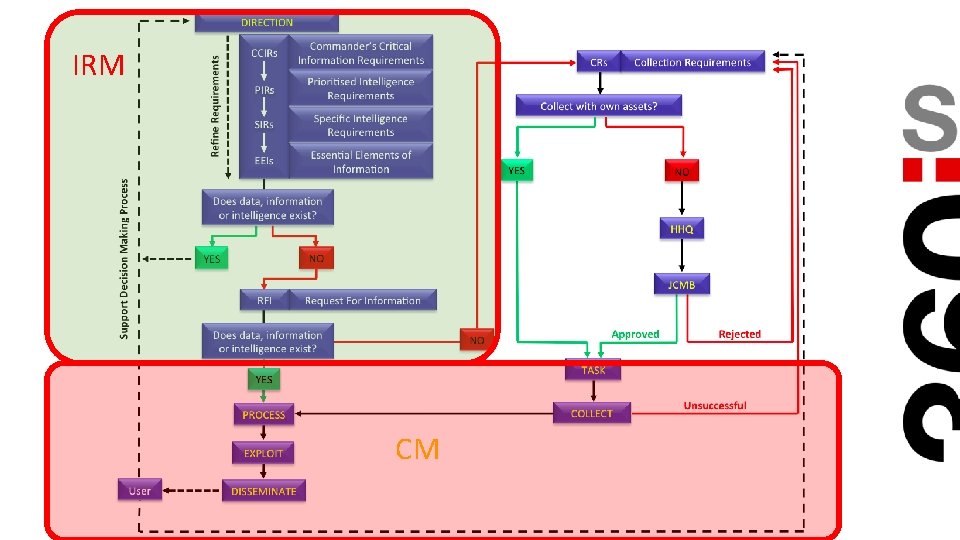
IRM CM
Objectives • By the end of this lesson you will • Understand the JISR cycle
Questions