
The Irish Proclamation The Irish Proclamation W A
- Slides: 16
The Irish Proclamation
The Irish Proclamation • W. A. L. T. 1. Importance of the Proclamation 2. About the 7 Signatories (Any text in green is from the Proclamation).
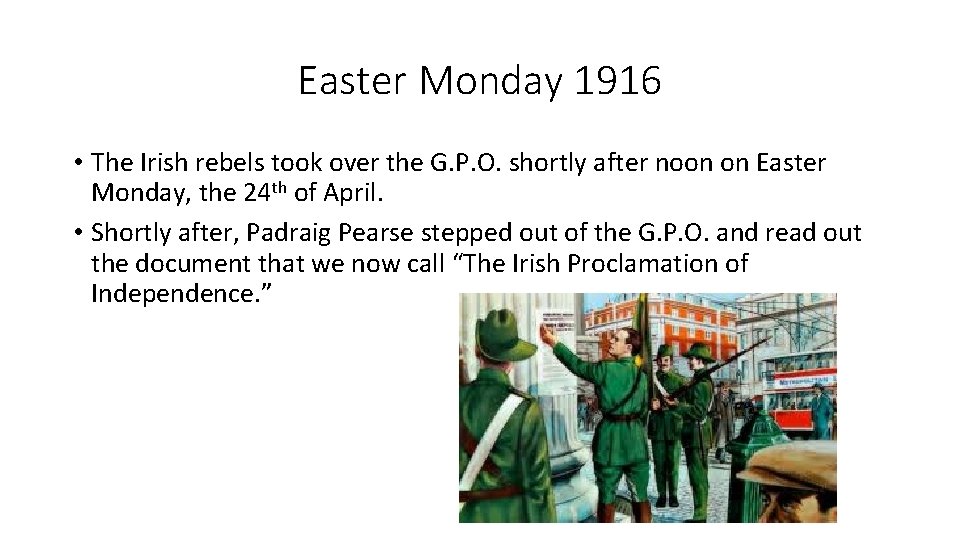
Easter Monday 1916 • The Irish rebels took over the G. P. O. shortly after noon on Easter Monday, the 24 th of April. • Shortly after, Padraig Pearse stepped out of the G. P. O. and read out the document that we now call “The Irish Proclamation of Independence. ”
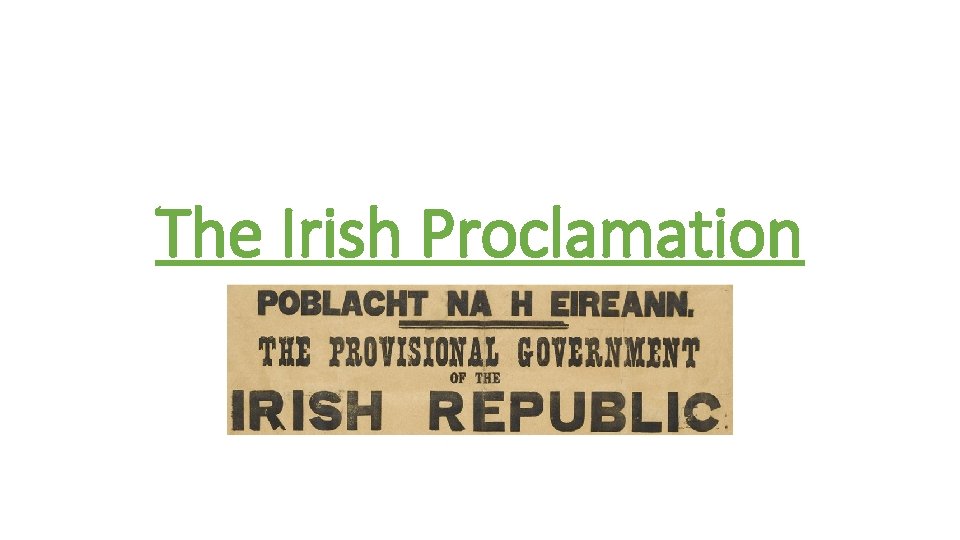
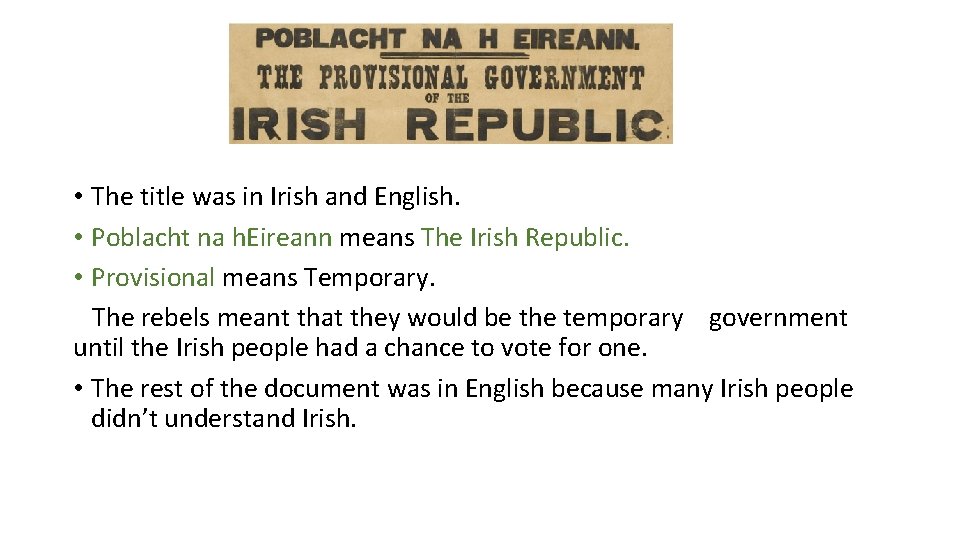
• The title was in Irish and English. • Poblacht na h. Eireann means The Irish Republic. • Provisional means Temporary. The rebels meant that they would be the temporary government until the Irish people had a chance to vote for one. • The rest of the document was in English because many Irish people didn’t understand Irish.
Why is The Proclamation Important? 1. It was a Call to Arms. 2. It was a Declaration of Independence. 3. It was a Declaration of Rights. (“Proclamation” comes from the word to “proclaim” or announce).
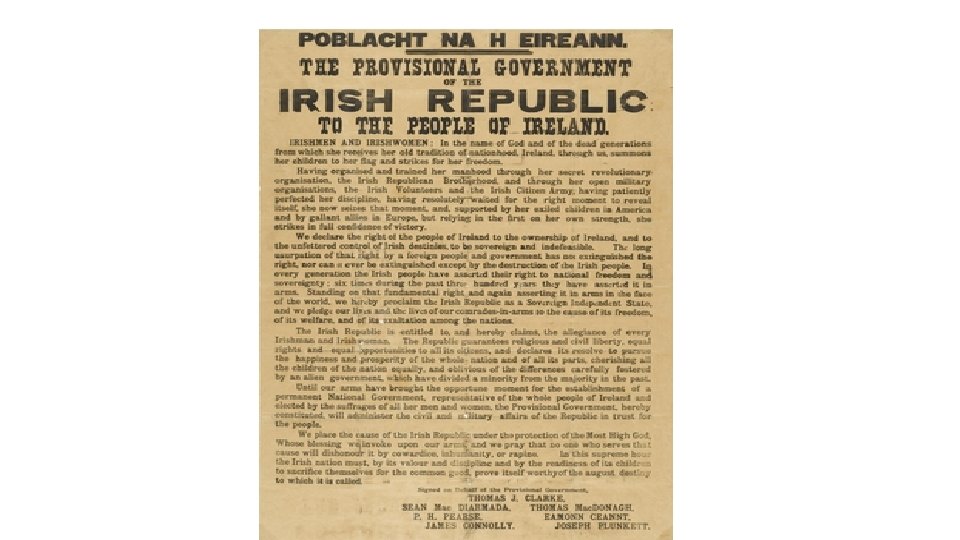
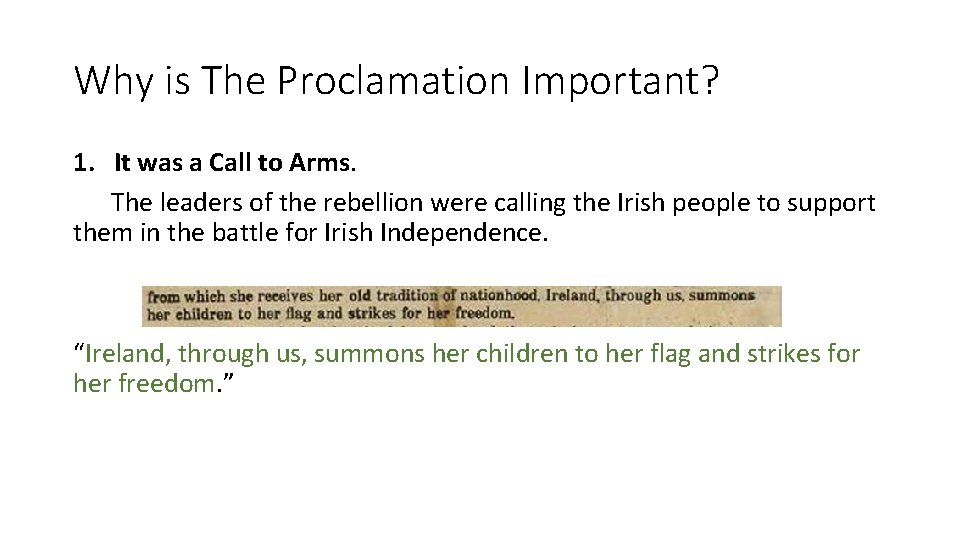
Why is The Proclamation Important? 1. It was a Call to Arms. The leaders of the rebellion were calling the Irish people to support them in the battle for Irish Independence. “Ireland, through us, summons her children to her flag and strikes for her freedom. ”
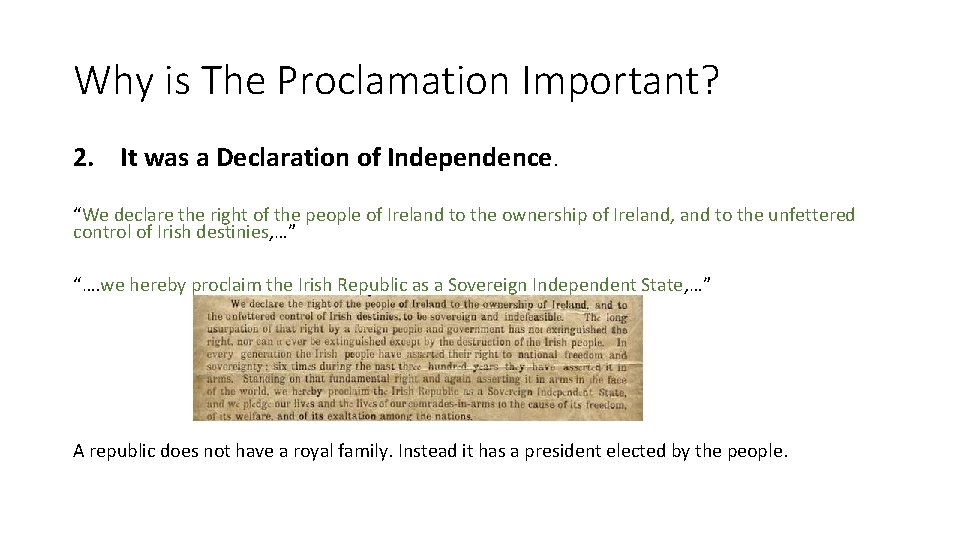
Why is The Proclamation Important? 2. It was a Declaration of Independence. “We declare the right of the people of Ireland to the ownership of Ireland, and to the unfettered control of Irish destinies, …” “…. we hereby proclaim the Irish Republic as a Sovereign Independent State, …” A republic does not have a royal family. Instead it has a president elected by the people.
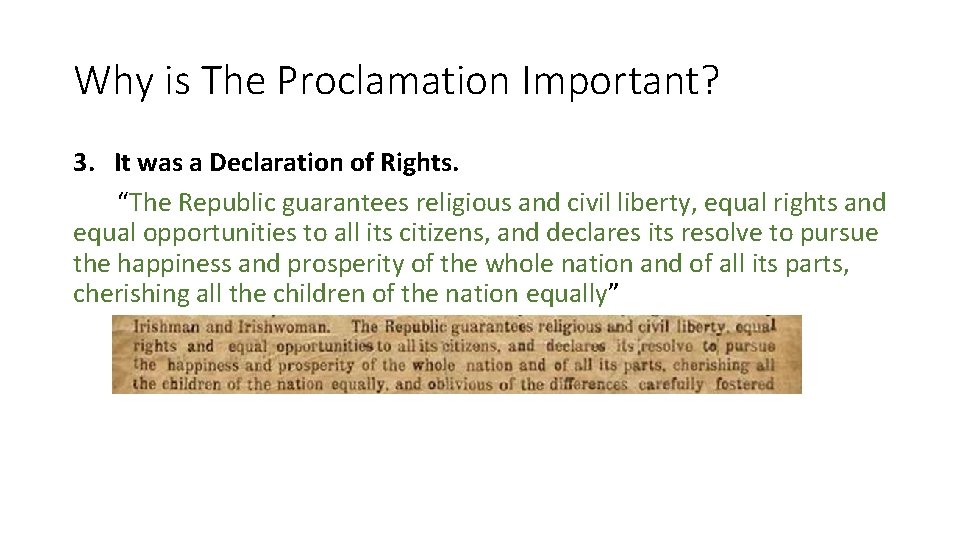
Why is The Proclamation Important? 3. It was a Declaration of Rights. “The Republic guarantees religious and civil liberty, equal rights and equal opportunities to all its citizens, and declares its resolve to pursue the happiness and prosperity of the whole nation and of all its parts, cherishing all the children of the nation equally”
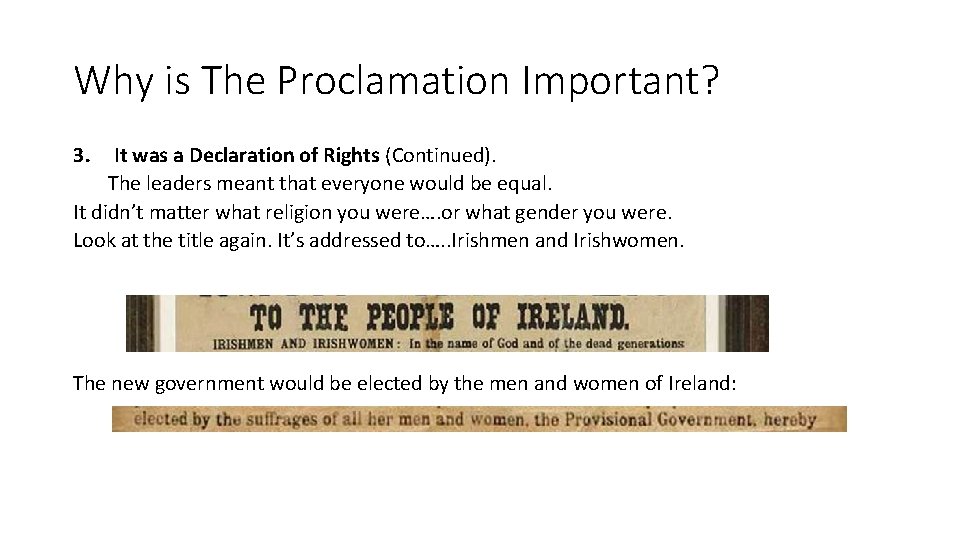
Why is The Proclamation Important? 3. It was a Declaration of Rights (Continued). The leaders meant that everyone would be equal. It didn’t matter what religion you were…. or what gender you were. Look at the title again. It’s addressed to…. . Irishmen and Irishwomen. The new government would be elected by the men and women of Ireland:
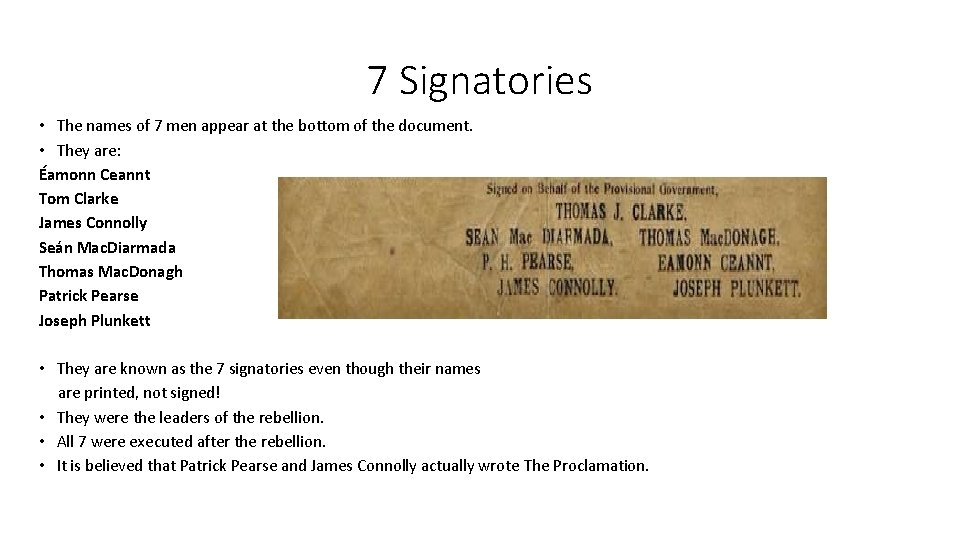
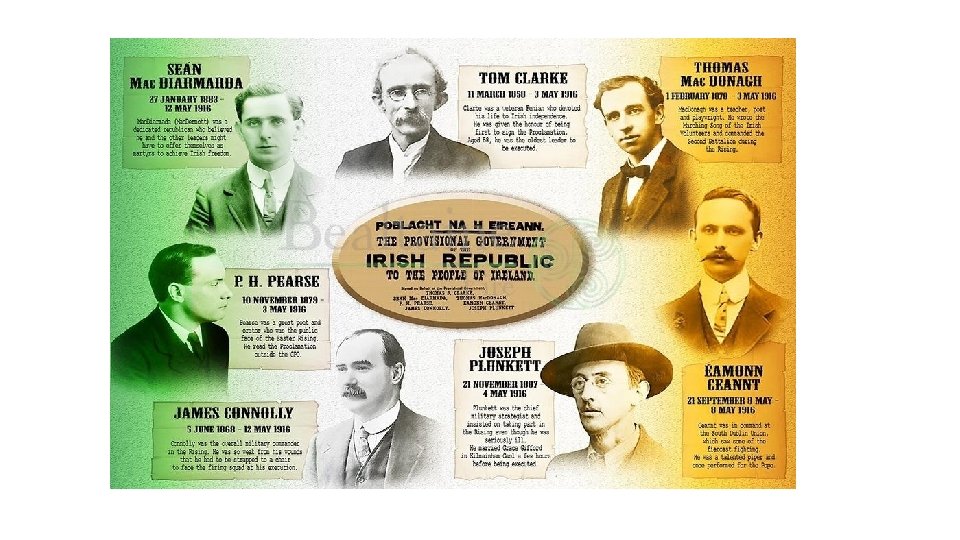
7 Signatories • The names of 7 men appear at the bottom of the document. • They are: Éamonn Ceannt Tom Clarke James Connolly Seán Mac. Diarmada Thomas Mac. Donagh Patrick Pearse Joseph Plunkett • They are known as the 7 signatories even though their names are printed, not signed! • They were the leaders of the rebellion. • All 7 were executed after the rebellion. • It is believed that Patrick Pearse and James Connolly actually wrote The Proclamation.
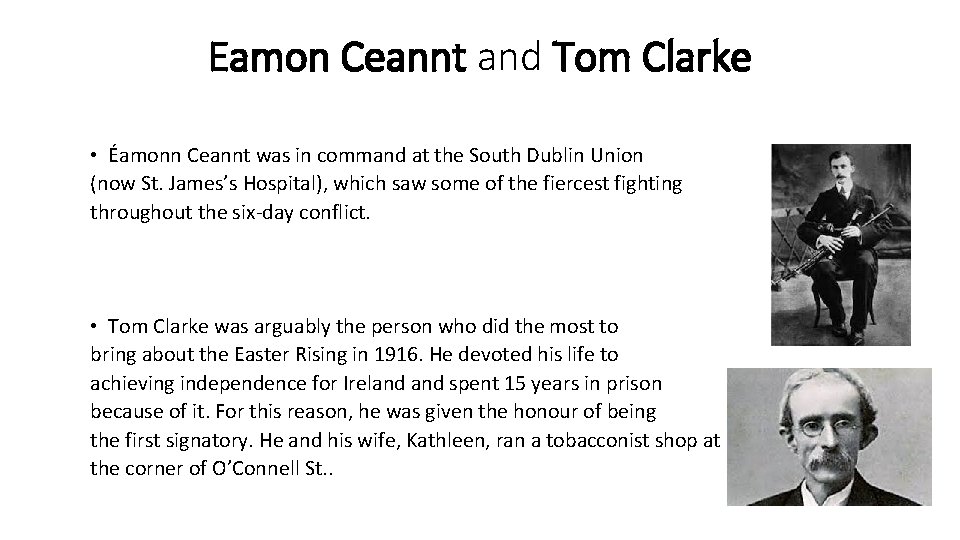
Eamon Ceannt and Tom Clarke • Éamonn Ceannt was in command at the South Dublin Union (now St. James’s Hospital), which saw some of the fiercest fighting throughout the six-day conflict. • Tom Clarke was arguably the person who did the most to bring about the Easter Rising in 1916. He devoted his life to achieving independence for Ireland spent 15 years in prison because of it. For this reason, he was given the honour of being the first signatory. He and his wife, Kathleen, ran a tobacconist shop at the corner of O’Connell St. .
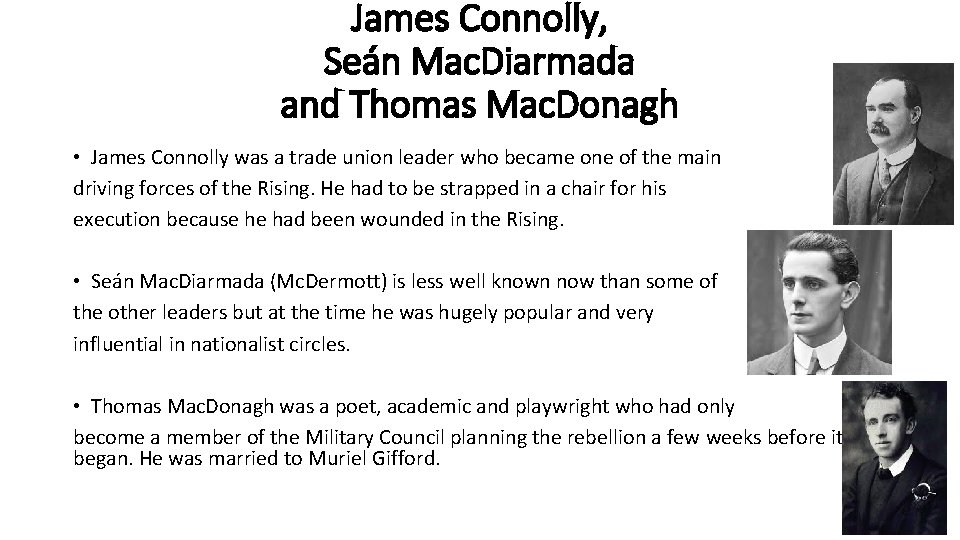
James Connolly, Seán Mac. Diarmada and Thomas Mac. Donagh • James Connolly was a trade union leader who became one of the main driving forces of the Rising. He had to be strapped in a chair for his execution because he had been wounded in the Rising. • Seán Mac. Diarmada (Mc. Dermott) is less well known now than some of the other leaders but at the time he was hugely popular and very influential in nationalist circles. • Thomas Mac. Donagh was a poet, academic and playwright who had only become a member of the Military Council planning the rebellion a few weeks before it began. He was married to Muriel Gifford.
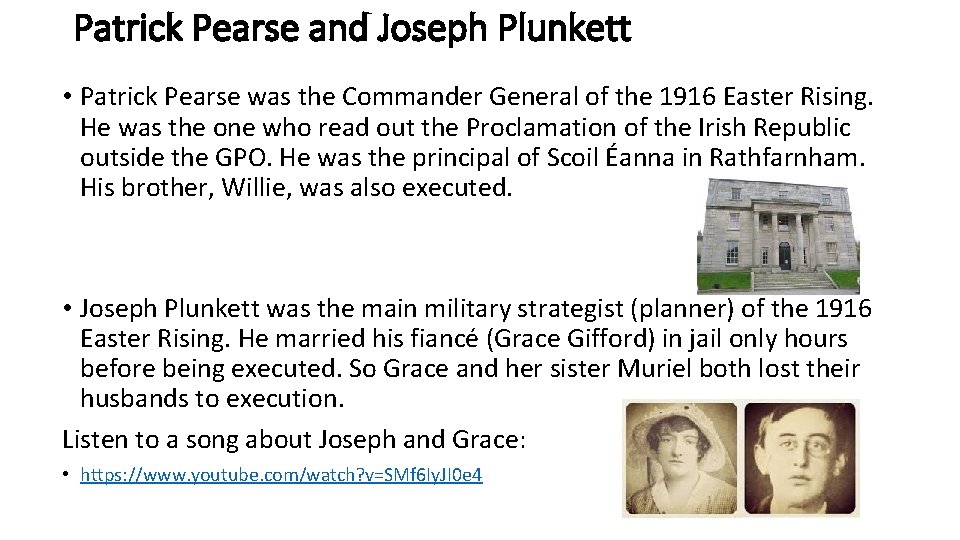
Patrick Pearse and Joseph Plunkett • Patrick Pearse was the Commander General of the 1916 Easter Rising. He was the one who read out the Proclamation of the Irish Republic outside the GPO. He was the principal of Scoil Éanna in Rathfarnham. His brother, Willie, was also executed. • Joseph Plunkett was the main military strategist (planner) of the 1916 Easter Rising. He married his fiancé (Grace Gifford) in jail only hours before being executed. So Grace and her sister Muriel both lost their husbands to execution. Listen to a song about Joseph and Grace: • https: //www. youtube. com/watch? v=SMf 6 Iy. JI 0 e 4
Questions 1. Where was the Proclamation first read out? 2. Who read it out? 3. What does Poblacht na hÉireann mean? 4. Why was the Proclamation written in English? 5. Why is the Proclamation important? (3 Reasons) 6. What is a republic? 7. How many signatories were there? 8. Which 2 signatories actually wrote it? 9. Which signatory was a trade union leader? 10. Which 2 signatories were married to sisters?