
The IPCCs SRES scenarios Emissions Narratives Climate change
- Slides: 26
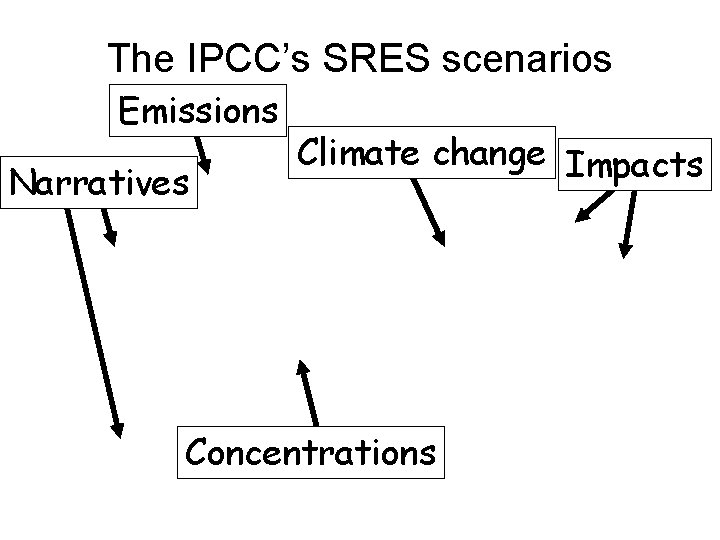
The IPCC’s SRES scenarios Emissions Narratives Climate change Impacts Concentrations
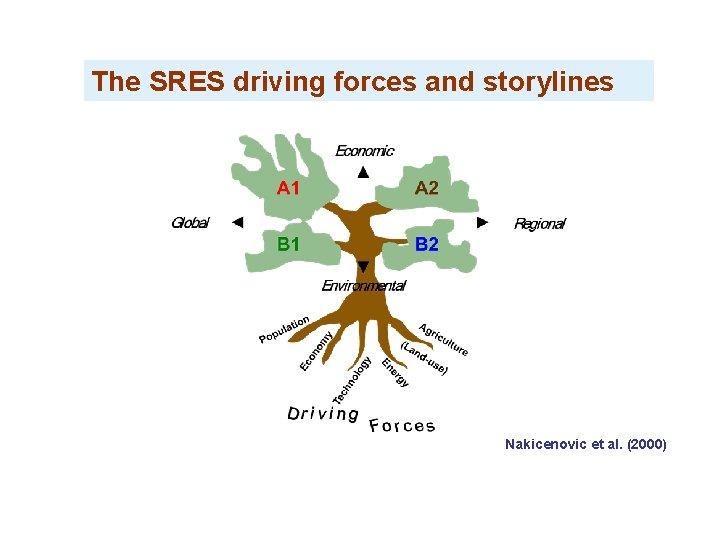
The SRES driving forces and storylines Nakicenovic et al. (2000)
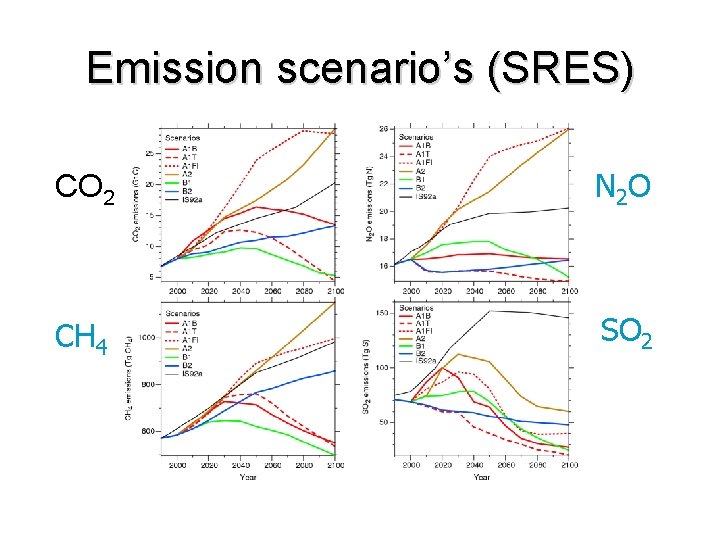
Emission scenario’s (SRES) CO 2 N 2 O CH 4 SO 2
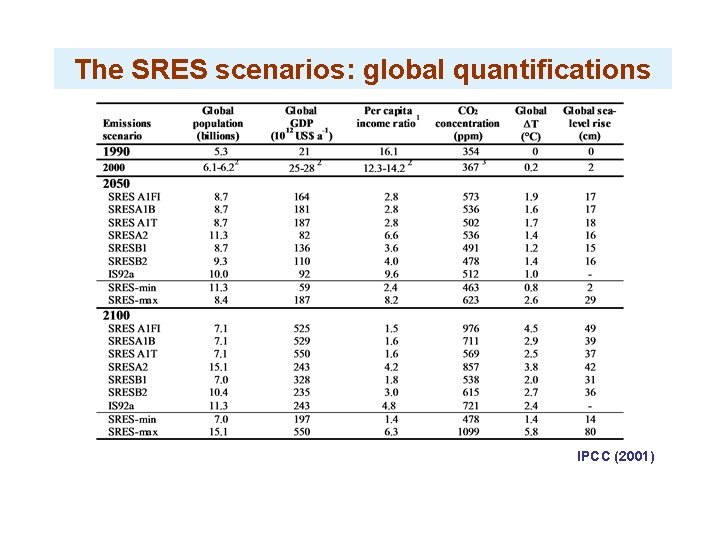
The SRES scenarios: global quantifications IPCC (2001)
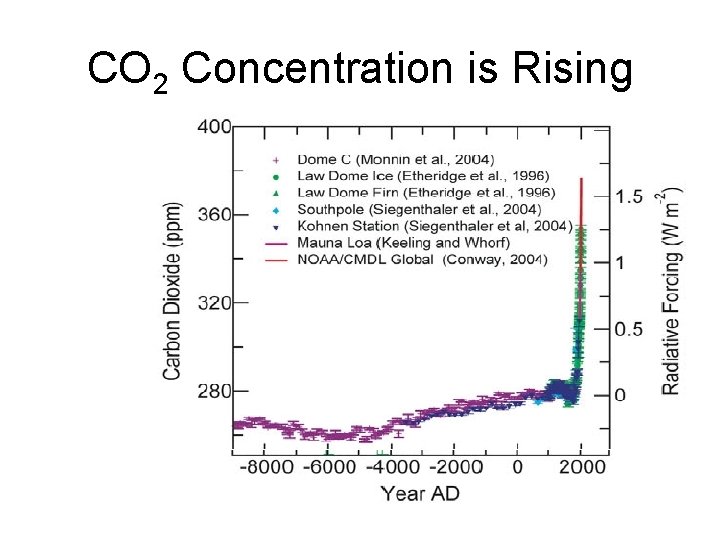
CO 2 Concentration is Rising
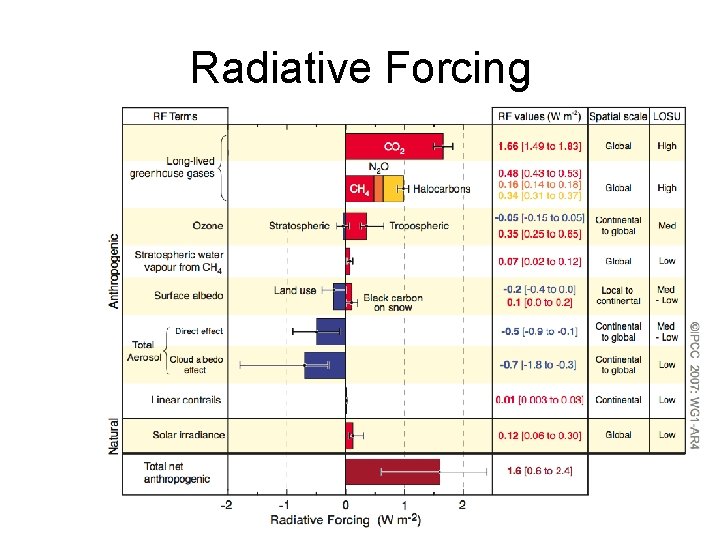
Radiative Forcing
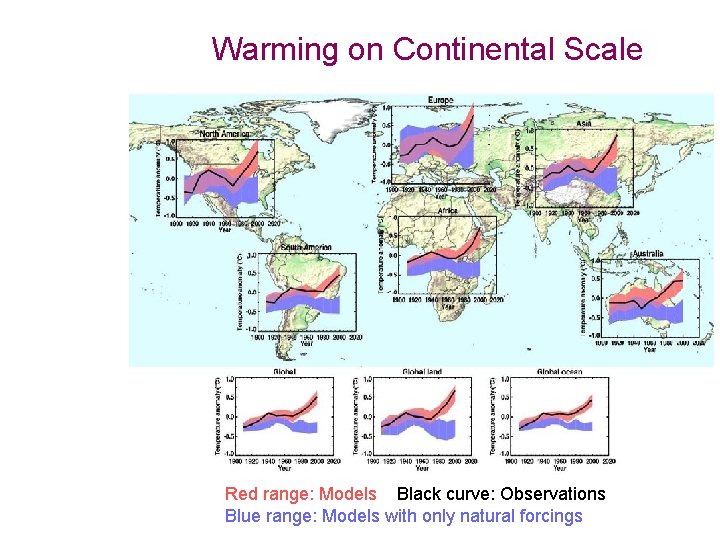
Warming on Continental Scale Red range: Models Black curve: Observations Blue range: Models with only natural forcings
Projected Future Warming
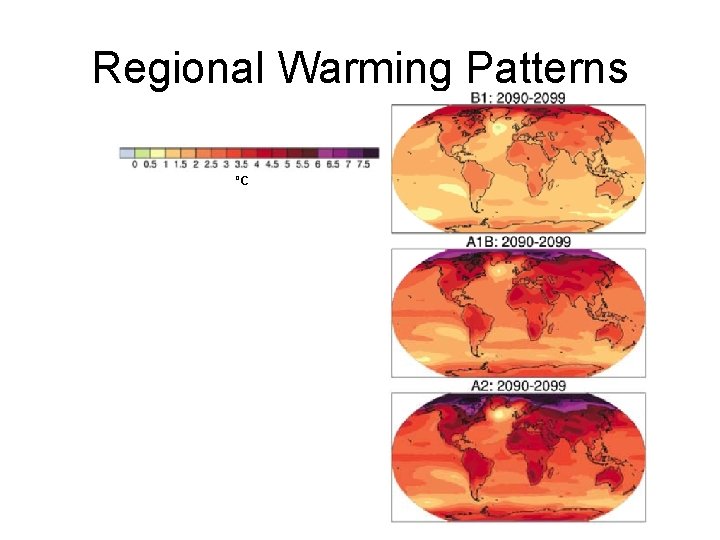
Regional Warming Patterns ºC
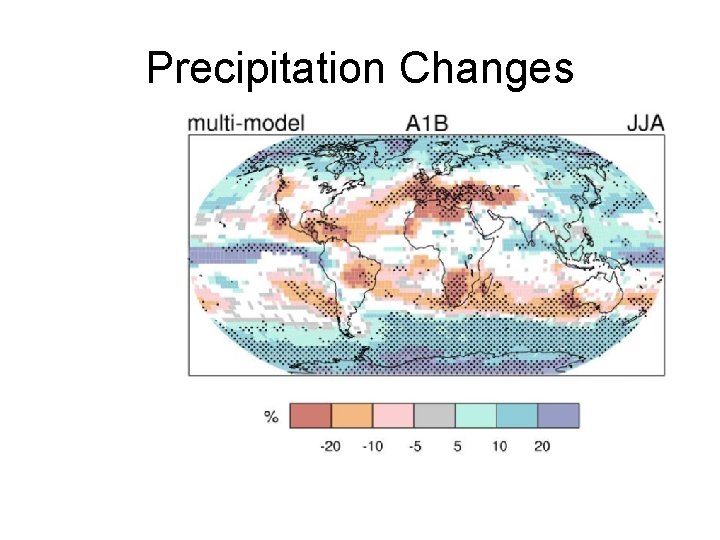
Precipitation Changes
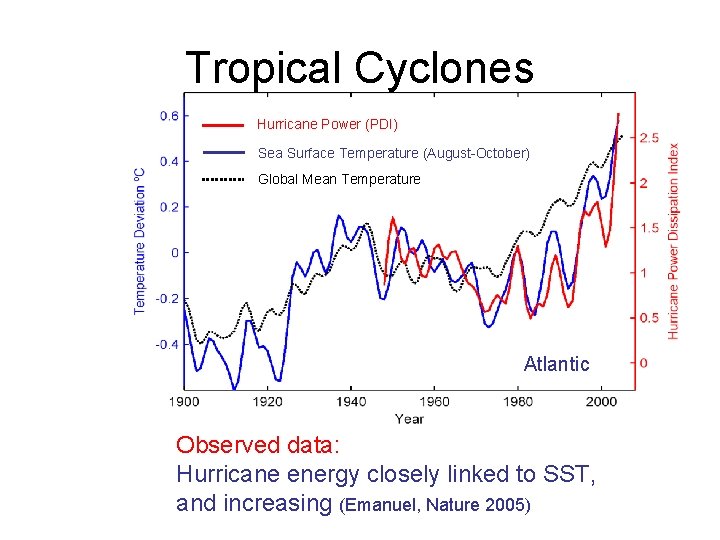
Tropical Cyclones Hurricane Power (PDI) Sea Surface Temperature (August-October) Global Mean Temperature Atlantic Observed data: Hurricane energy closely linked to SST, and increasing (Emanuel, Nature 2005)
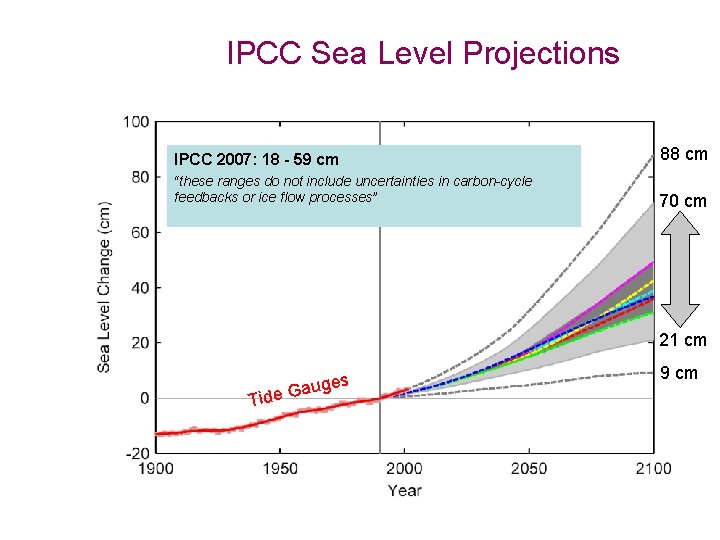
IPCC Sea Level Projections IPCC 2007: 18 - 59 cm 88 cm “these ranges do not include uncertainties in carbon-cycle feedbacks or ice flow processes” 70 cm 21 cm Tid ges u a G e 9 cm
Regional Sea Level Deviations from global mean sea level rise by 2100
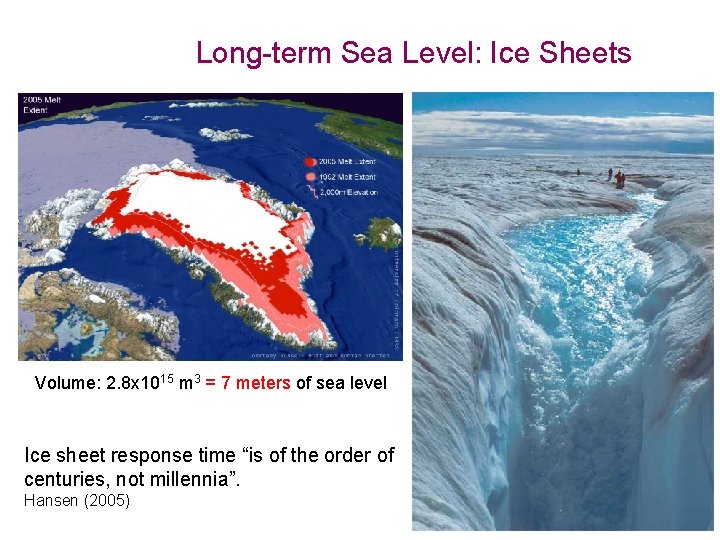
Long-term Sea Level: Ice Sheets Volume: 2. 8 x 10¹⁵ m 3 = 7 meters of sea level Ice sheet response time “is of the order of centuries, not millennia”. Hansen (2005)
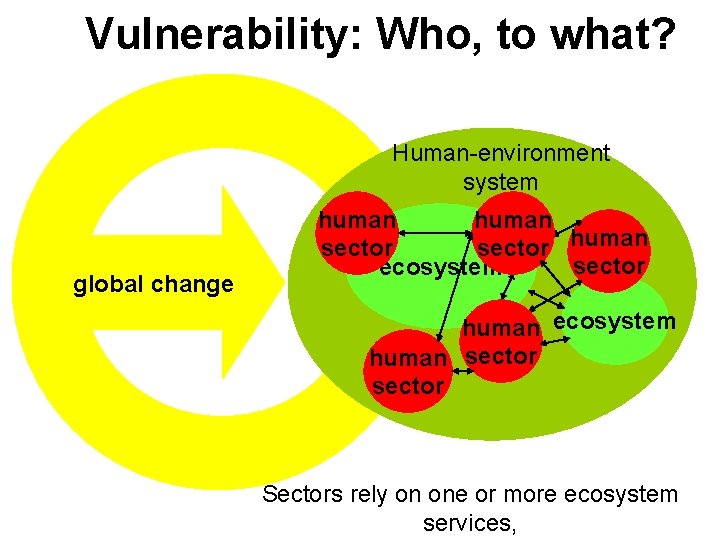
Vulnerability: Who, to what? Human-environment system global change human sector ecosystem human sector Sectors rely on one or more ecosystem services,
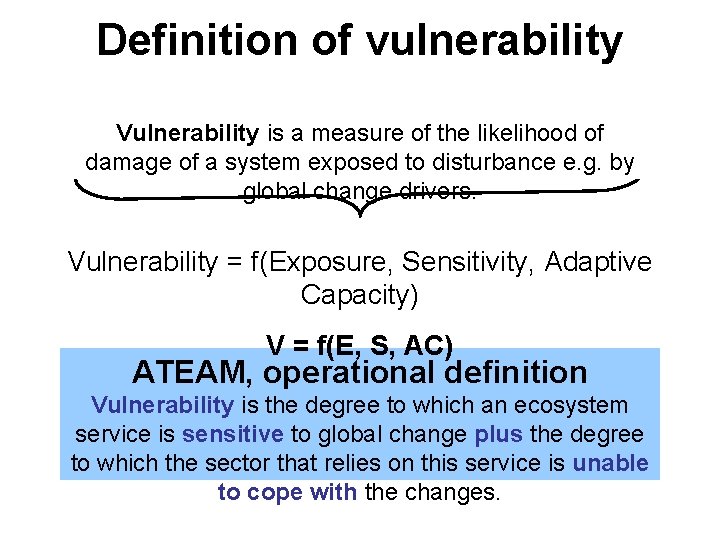
Definition of vulnerability Vulnerability is a measure of the likelihood of damage of a system exposed to disturbance e. g. by global change drivers. Vulnerability = f(Exposure, Sensitivity, Adaptive Capacity) V = f(E, S, AC) ATEAM, operational definition Vulnerability is the degree to which an ecosystem service is sensitive to global change plus the degree to which the sector that relies on this service is unable to cope with the changes.
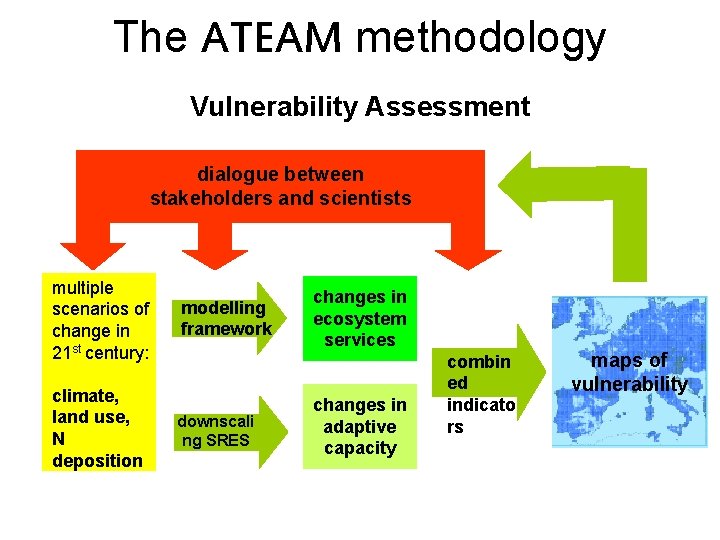
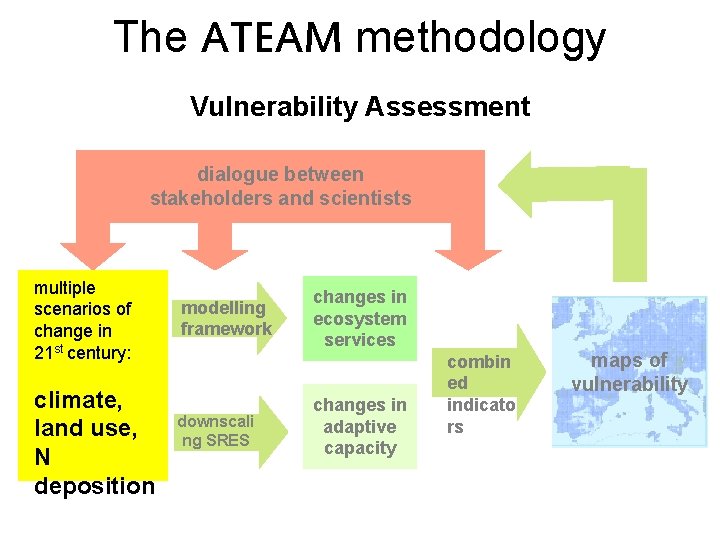
The ATEAM methodology Vulnerability Assessment dialogue between stakeholders and scientists multiple scenarios of change in 21 st century: climate, land use, N deposition modelling framework downscali ng SRES changes in ecosystem services changes in adaptive capacity combin ed indicato rs maps of vulnerability
The ATEAM methodology Vulnerability Assessment dialogue between stakeholders and scientists multiple scenarios of change in 21 st century: climate, land use, N deposition modelling framework downscali ng SRES changes in ecosystem services changes in adaptive capacity combin ed indicato rs maps of vulnerability
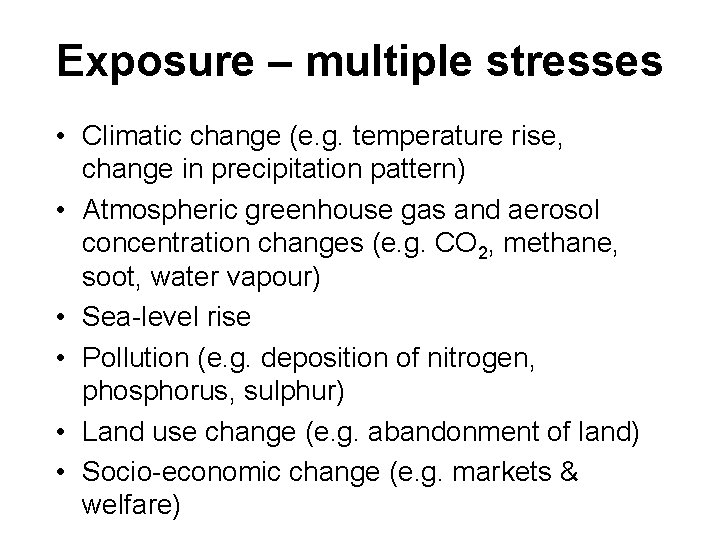
Exposure – multiple stresses • Climatic change (e. g. temperature rise, change in precipitation pattern) • Atmospheric greenhouse gas and aerosol concentration changes (e. g. CO 2, methane, soot, water vapour) • Sea-level rise • Pollution (e. g. deposition of nitrogen, phosphorus, sulphur) • Land use change (e. g. abandonment of land) • Socio-economic change (e. g. markets & welfare)
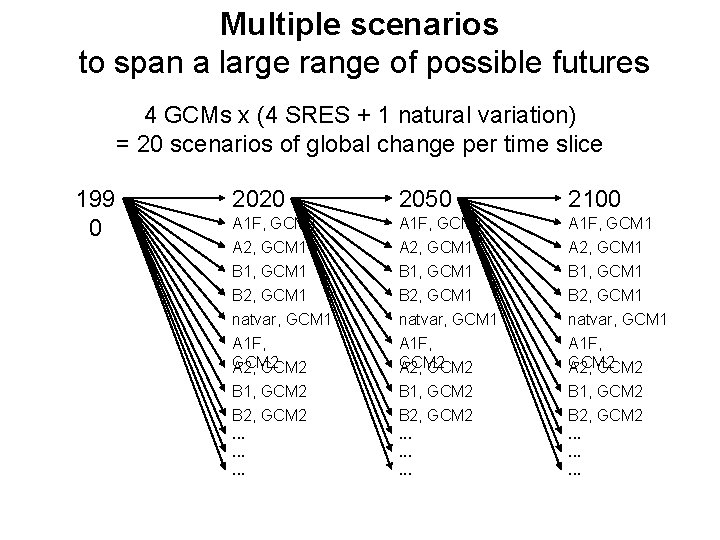
Multiple scenarios to span a large range of possible futures 4 GCMs x (4 SRES + 1 natural variation) = 20 scenarios of global change per time slice 199 0 2020 2050 2100 A 1 F, GCM 1 A 2, GCM 1 B 1, GCM 1 B 2, GCM 1 natvar, GCM 1 A 1 F, GCM 2 A 2, GCM 2 B 1, GCM 2 B 2, GCM 2. . . . natvar, GCM 1 A 1 F, GCM 2 A 2, GCM 2 B 1, GCM 2 B 2, GCM 2. .
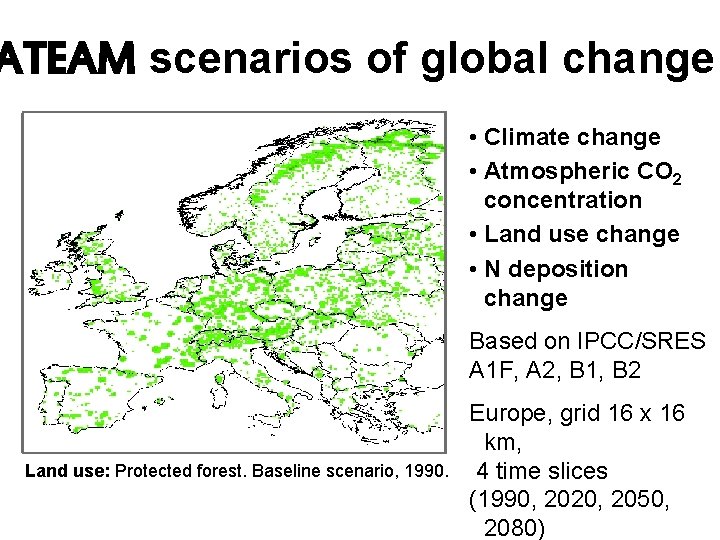
ATEAM scenarios of global change • Climate change • Atmospheric CO 2 concentration • Land use change • N deposition change Based on IPCC/SRES A 1 F, A 2, B 1, B 2 Land use: Protected forest. Baseline scenario, 1990. Europe, grid 16 x 16 km, 4 time slices (1990, 2020, 2050, 2080)
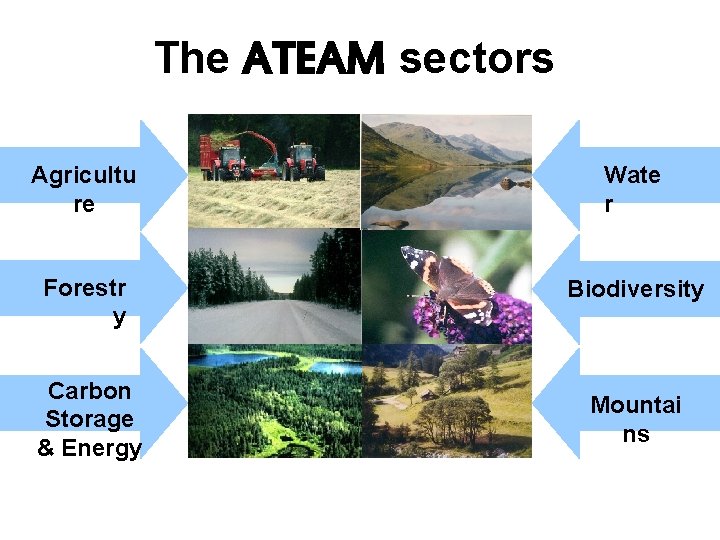
The ATEAM sectors Agricultu re Wate r Forestr y Biodiversity Carbon Storage & Energy Mountai ns
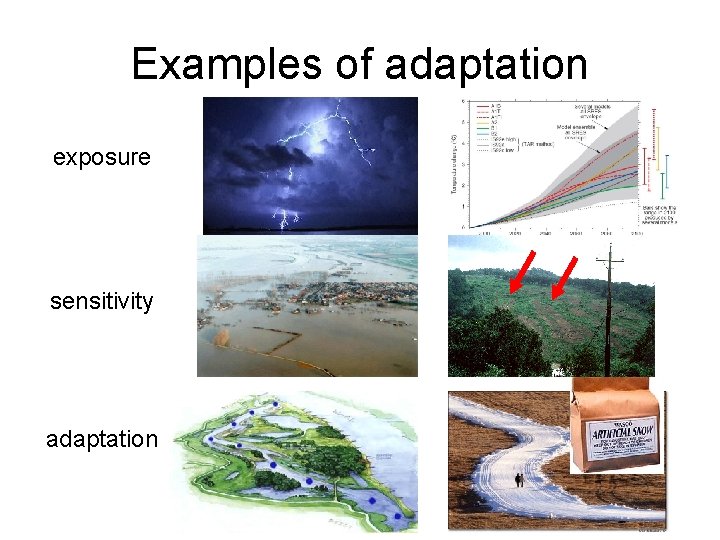
Examples of adaptation exposure sensitivity adaptation
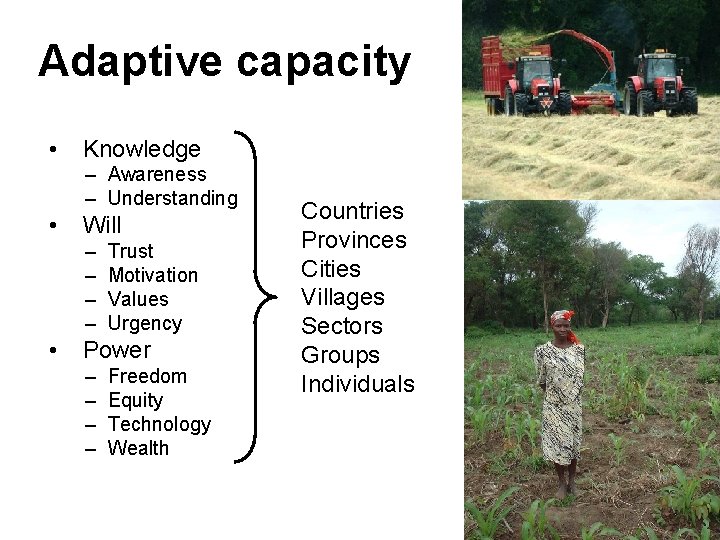
Adaptive capacity • Knowledge – Awareness – Understanding • Will – – • Trust Motivation Values Urgency Power – – Freedom Equity Technology Wealth Countries Provinces Cities Villages Sectors Groups Individuals
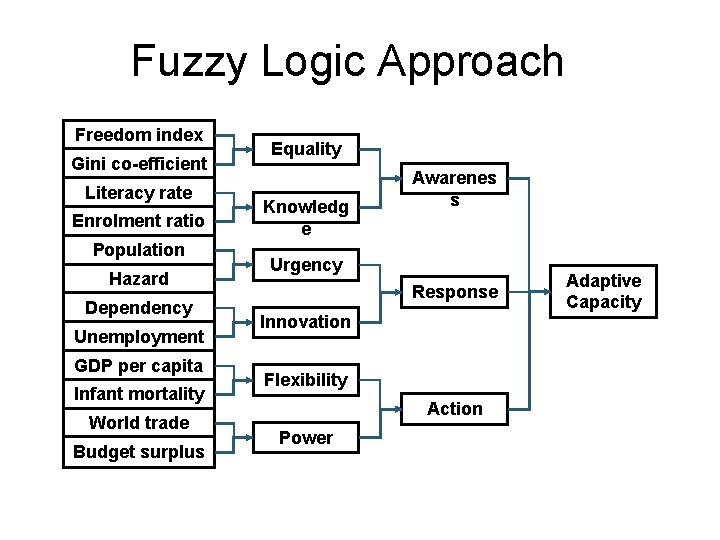
Fuzzy Logic Approach Freedom index Gini co-efficient Literacy rate Equality Enrolment ratio Knowledg e Population density Hazard Urgency exposure Dependency Unemployment GDP per capita Infant mortality World trade share Budget surplus Awarenes s Response Innovation Flexibility Action Power Adaptive Capacity
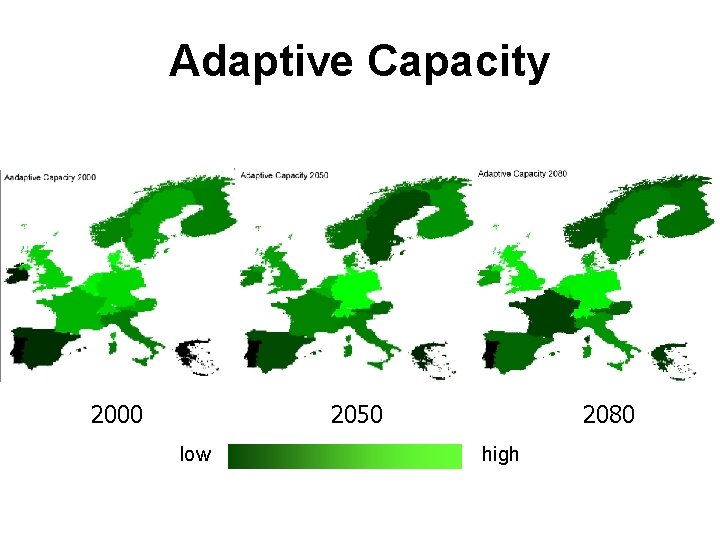
Adaptive Capacity 2000 2050 low 2080 high