
The involvement of stakeholders to define efficient and
- Slides: 24
The involvement of stakeholders to define efficient and sustainable City Logistics solutions in Como Gabriele Grea, Ines Österle, Carlo Vaghi Gruppo CLAS S. p. A. XV Conference of the Italian Association of Transport Economics and Logistics (SIET) Venice - September 18 -20, 2013
Contents 1. FP 7 project Smartfusion 2. Smartfusion activities in Como (IT) 3. Design and Monitoring framework methodology 4. DMF design process in Como • • Organisation of the process and main results Conclusions 26/12/2021
1. Smartfusion – project overview § Main objective: to develop and demonstrate novel transport innovations that will improve the efficiency, as well as social and environmental sustainability, of urban freight operations and the related urban- interurban shipment processes § Focus lies on the question of how to increase the market share of “green” vehicles and of their technical and logistical feasibility § Co-funded under the 7 th EU Framework programme § April 2012 - March 2015 § Private Public Partnership: 14 partners from 7 countries
1. Smartfusion – outputs § Innovations and development in 4 areas • • green vehicle technologies planning and routing devices for low emission vehicles urban consolidation centres urban freight policies § Demonstrations of the innovations in a local context in 2014: Como (IT), Berlin (DE) and Newcastle (UK) § Impact Assessment § Transferability (Smart Urban Freight Designer) 26/12/2021
2. Demonstrations of the innovations in a local context: the case of Como § Demonstration and test of • full electric vehicle (short trial period) • new routing system adapted to clean vehicles (extended trial period) • modified UCC “Merci in Centro” (permanent) • urban freight policies: change of the access rules to the city centre (permanent) § The four elements are combined to increase the use of clean vehicles in the city centre and to tranship more goods through the UCC “Merci in Centro” § Application of a logical framework approach for fine-tuning the demonstration to adapt to the local conditions
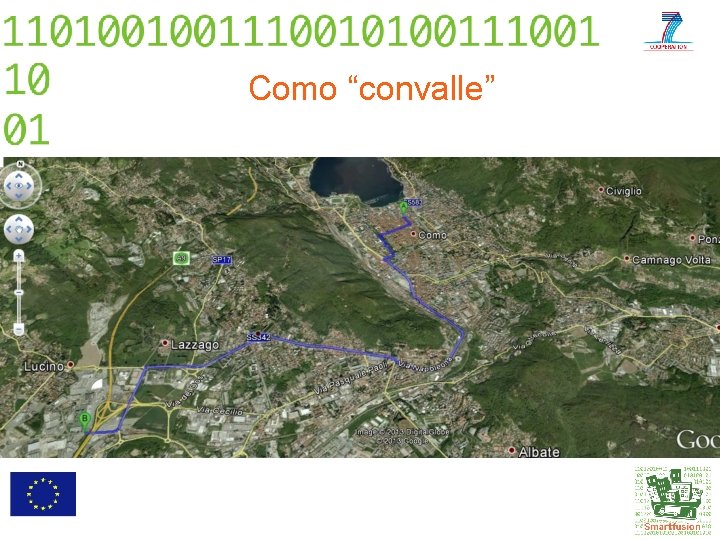
Como “convalle”
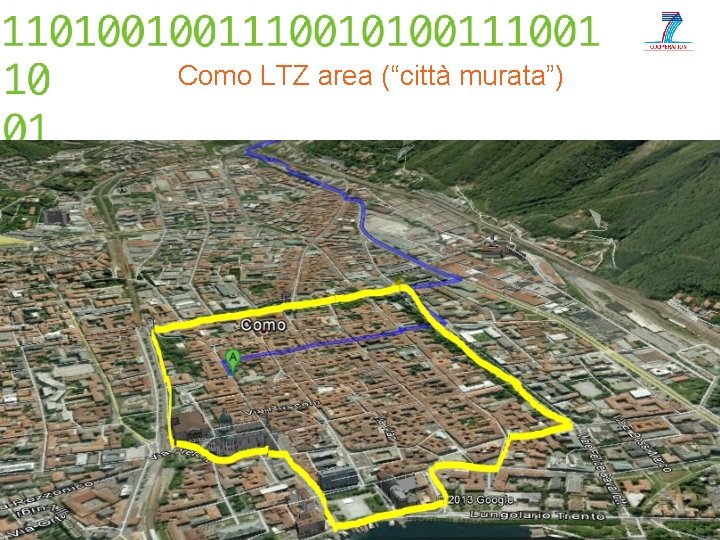
Como LTZ area (“città murata”)
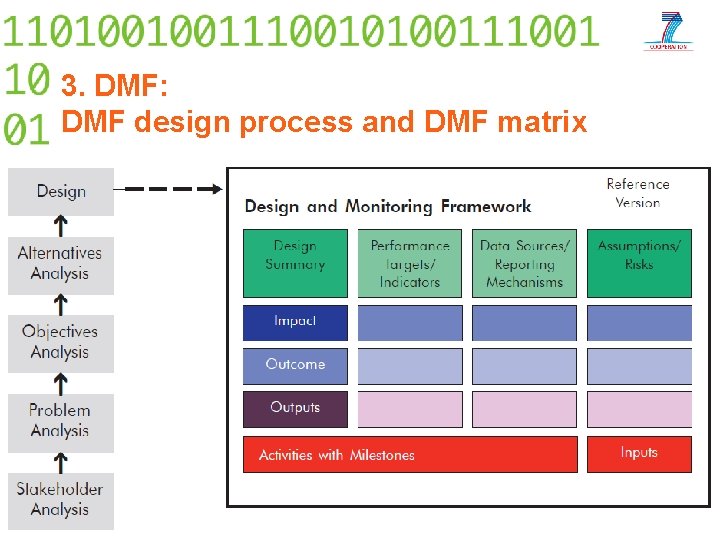
3. Design and Monitoring framework approach § Tool to design, implement, monitor and evaluate a project § Designed and employed by the Asian Development Bank for development projects § Methodology is a form of a Logical Framework Approach § Key is the involvement of stakeholders in all stages of the project cycle 26/12/2021
3. DMF: DMF design process and DMF matrix 26/12/2021
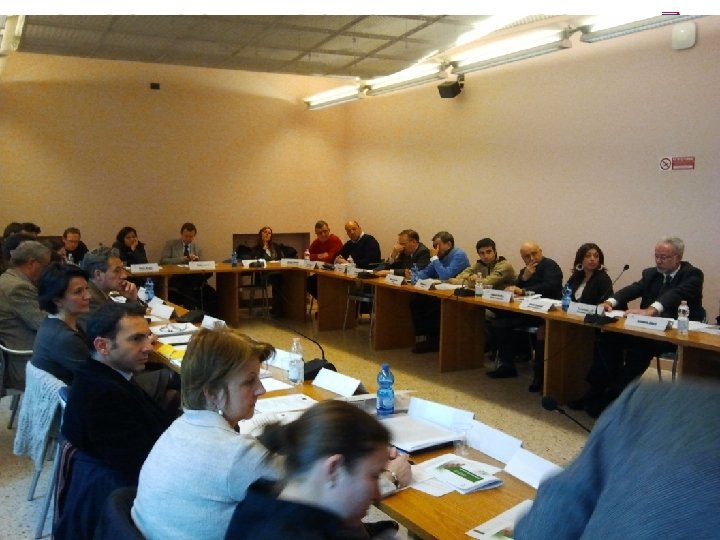
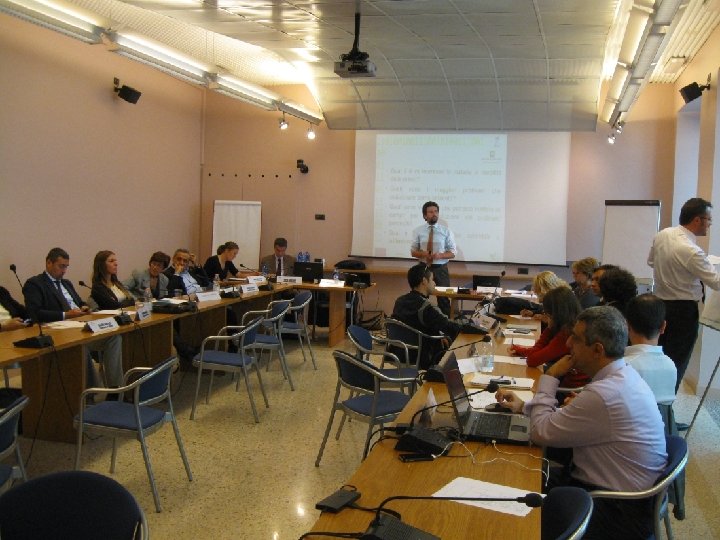
4. DMF design process in Como § Use of DMF approach in Como to fine-tune Smartfusion solutions (vehicle and ICT innovations, regulatory elements and UCC) § Use of DMF approach to find consensus among stakeholders § Four stakeholder consultation events in the past 12 months in order to go through the DMF design process § Project design process planned on the basis of the publication from ADB (2007): Guidelines for Preparing a Design and Monitoring Framework § 15 stakeholders involved in the DMF design process representing a local bus operator, freight forwarders and carriers, retailers and enterprises, citizens, public administrations, scientific bodies. 26/12/2021
12/26/2021 Smartfusion
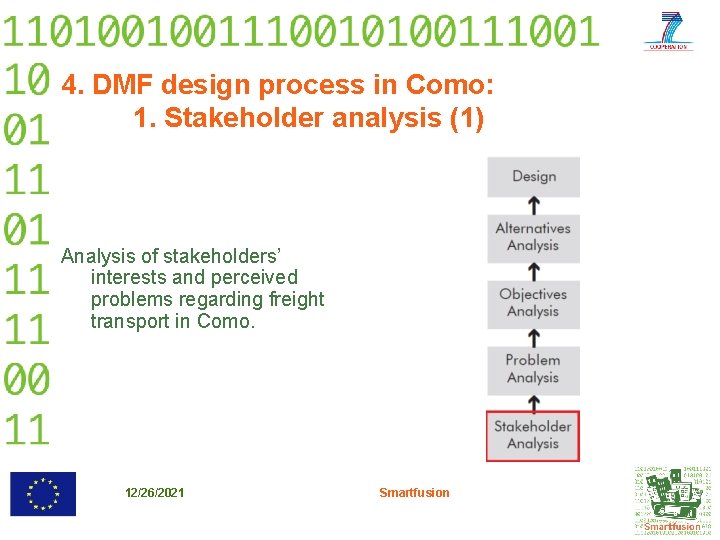
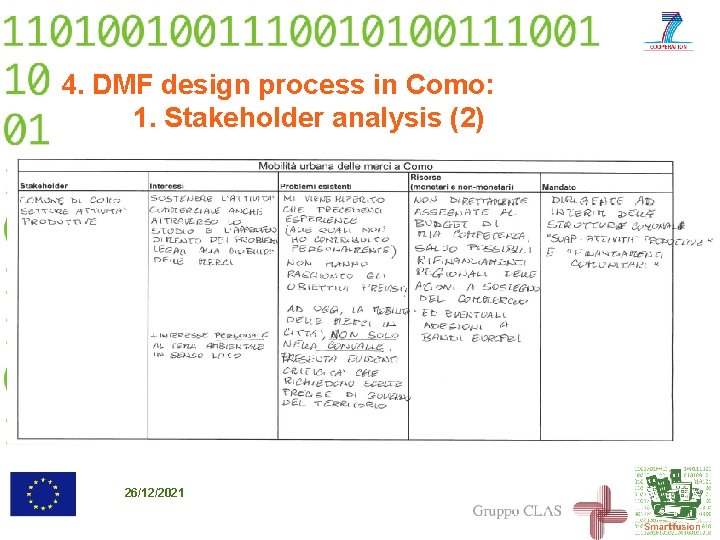
4. DMF design process in Como: 1. Stakeholder analysis (1) Analysis of stakeholders’ interests and perceived problems regarding freight transport in Como. 12/26/2021 Smartfusion
4. DMF design process in Como: 1. Stakeholder analysis (2) 26/12/2021
12/26/2021 Smartfusion
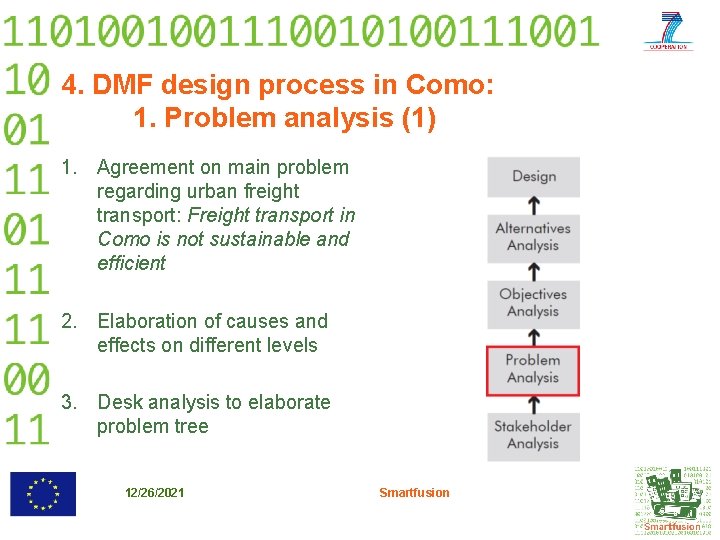
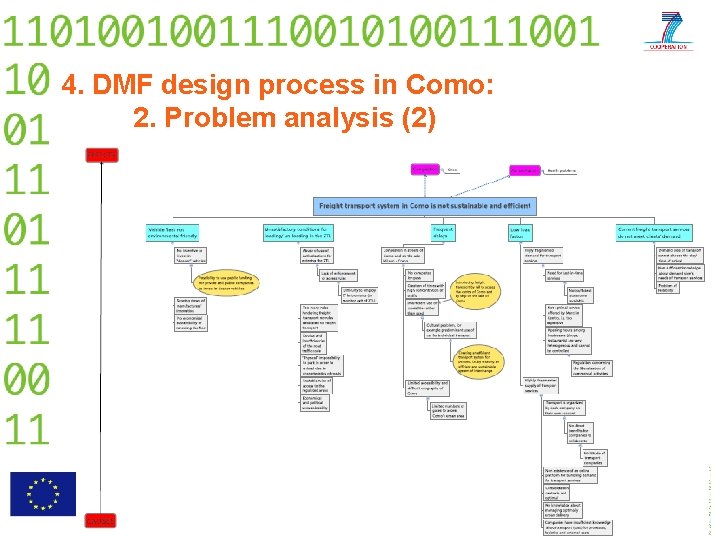
4. DMF design process in Como: 1. Problem analysis (1) 1. Agreement on main problem regarding urban freight transport: Freight transport in Como is not sustainable and efficient 2. Elaboration of causes and effects on different levels 3. Desk analysis to elaborate problem tree 12/26/2021 Smartfusion
4. DMF design process in Como: 2. Problem analysis (2) 26/12/2021
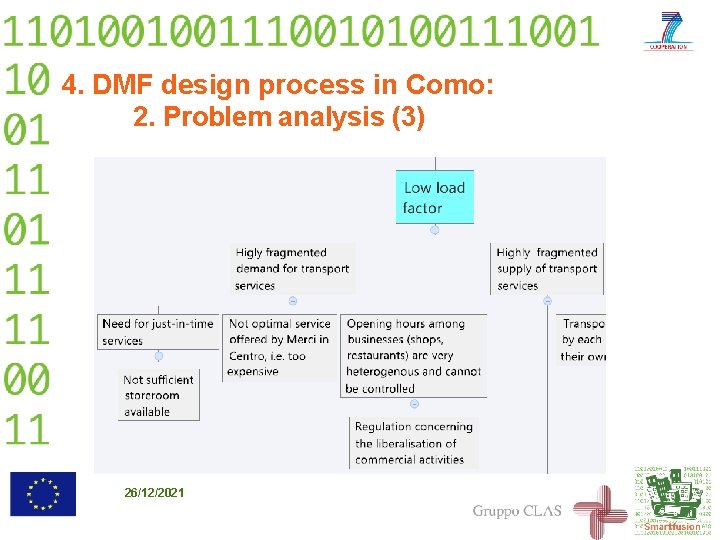
4. DMF design process in Como: 2. Problem analysis (3) 26/12/2021
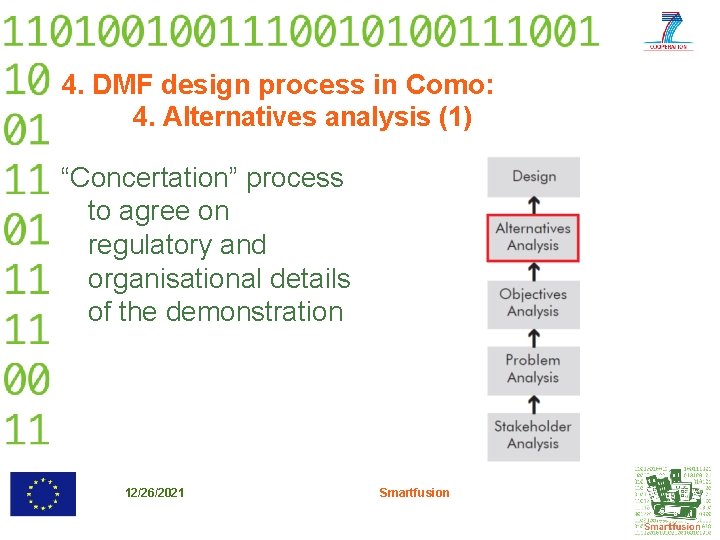
4. DMF design process in Como: 4. Alternatives analysis (1) “Concertation” process to agree on regulatory and organisational details of the demonstration 12/26/2021 Smartfusion
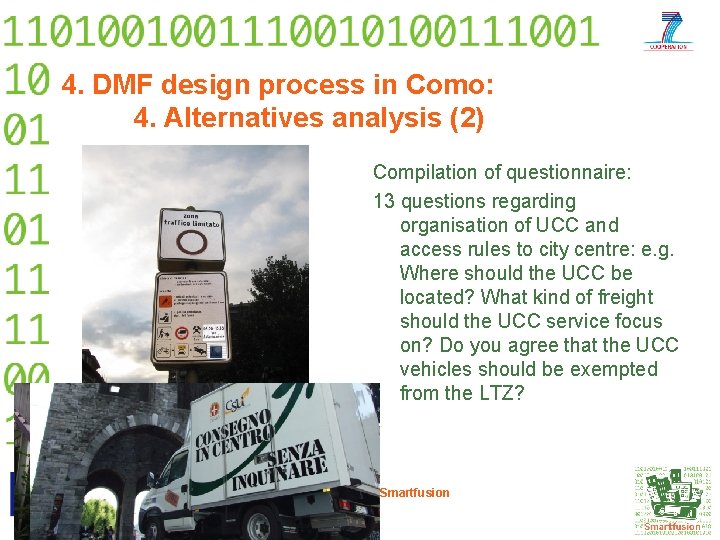
4. DMF design process in Como: 4. Alternatives analysis (2) Compilation of questionnaire: 13 questions regarding organisation of UCC and access rules to city centre: e. g. Where should the UCC be located? What kind of freight should the UCC service focus on? Do you agree that the UCC vehicles should be exempted from the LTZ? 12/26/2021 Smartfusion
Application to Smartfusion: 4. Alternatives analysis (3) 12/26/2021 Smartfusion
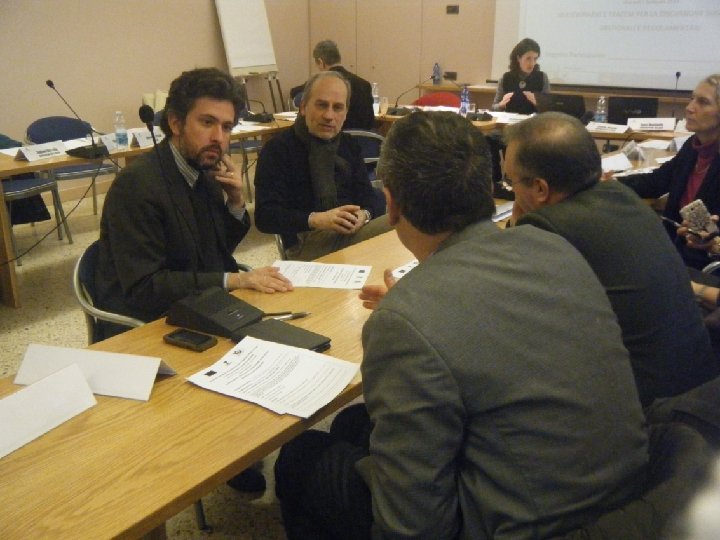
4. DMF design process in Como: 4. Alternatives analysis (3) • • 1 st round of “concertation”: 4 work groups 2 nd round of “concertation”: plenary discussion • Outcomes from 2 nd round “concertation”, include: § § Range of services by UCC: collection/pick-up (besides delivery) desired by stakeholders. It should be checked if storage area for shopkeepers could be made available at UCC. Last-mile delivery price: some stakeholders estimated 2, 50 - 3 Euros/100 kilo as a suitable and competitive market price. Stakeholders agree prevalently to extend the geographic area of the LTZ, but gradually and only after concertation process with shopkeepers. Stakeholders agree prevalently to exempt ecologic vehicles of Merci in Centro from the LTZ ordinance. 12/26/2021 Smartfusion
4. DMF design process in Como: Conclusions (1) § Stakeholder analysis: • Main emphasis of interests differ, but widespread interest among stakeholders for increasing efficiency and sustainability of urban freight transport. § Problem analysis: • Unanimous consensus on inefficiency of urban freight system. • DMF process: project design process does not focus on the verification of stakeholders’ problem perception, but this should not be omitted. § Alternatives analysis: • Wide-spread consensus reached for a range of issues. • DMF process: Alternatives analysis had to be adapted from ADB approach because the solutions were pre-defined by the Smartfusion project.
4. DMF design process in Como: Conclusions (2) § General: • Loyalty to the ADB DMF approach: high, beside objectives analysis omitted and alternatives analysis adapted due to time reasons and predefined Smartfusion elements • Time-consuming process: additional meetings had to be scheduled • High commitment from stakeholders: § expectation that the impacts of the Smartfusion trial in Como will reach beyond the project period due to a strong political support § neutral lead of the process (coordinators Gruppo CLAS) • Variety of stakeholders: Some key stakeholders could not get involved, but still high variety of stakeholders • Consensus: high among stakeholders regarding need for action; widespread interest to increase efficiency and sustainability of freight transport in Como
Thank you for your attention! Contact details: Ines Österle i. oesterle@gruppoclas. it Gabriele Grea g. grea@gruppoclas. it Carlo Vaghi c. vaghi@gruppoclas. it 26/12/2021