
The Invasion of Tinian July 24 to 1
- Slides: 27
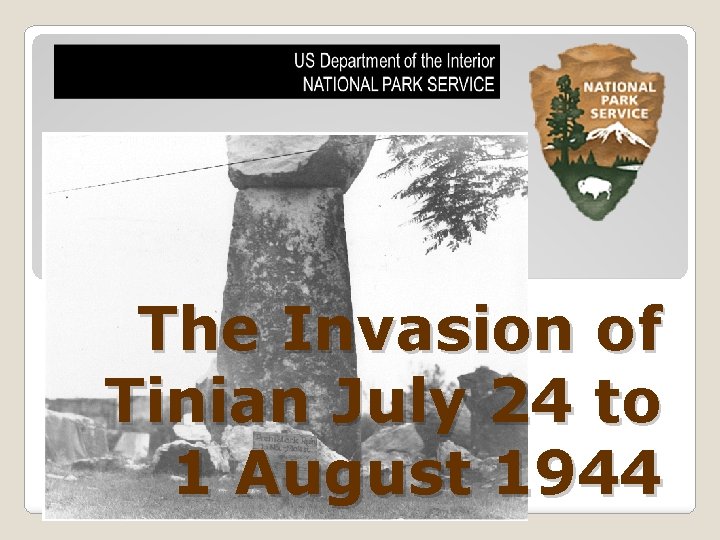
The Invasion of Tinian July 24 to 1 August 1944
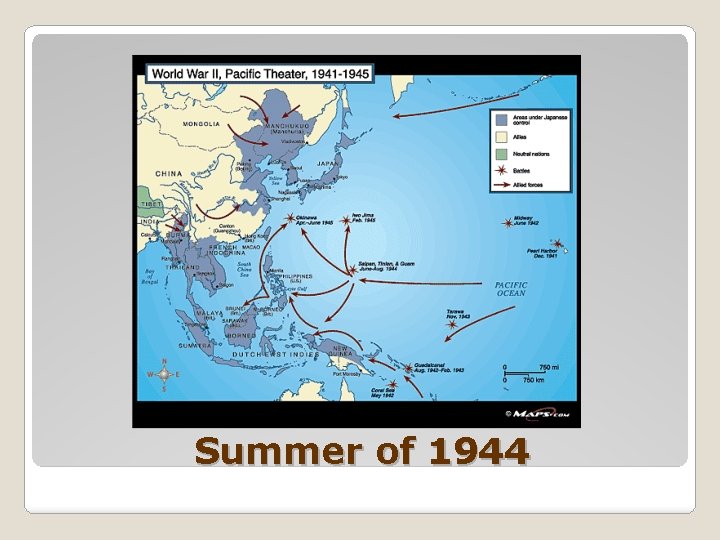
Summer of 1944
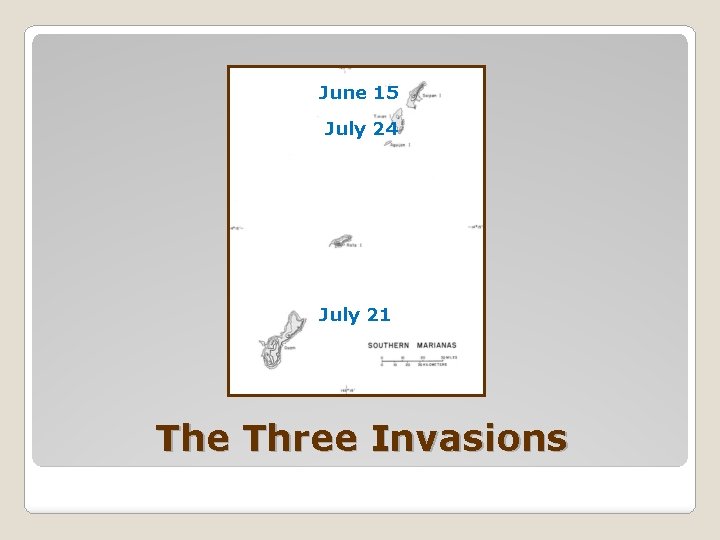
June 15 July 24 July 21 The Three Invasions
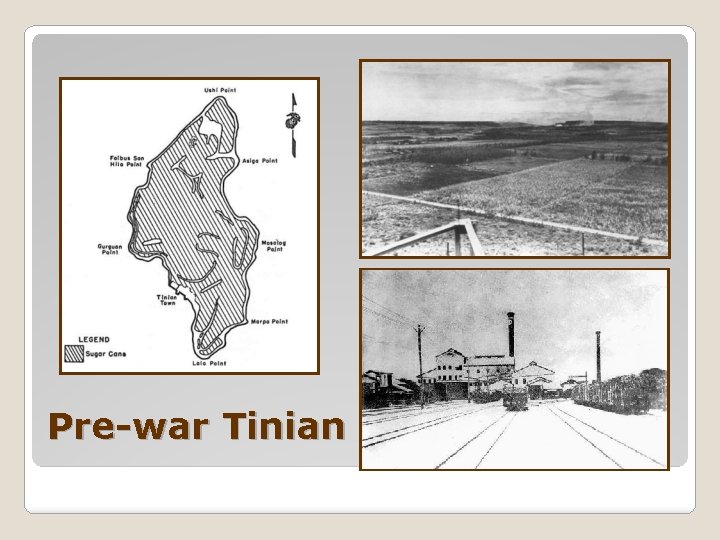
Pre-war Tinian
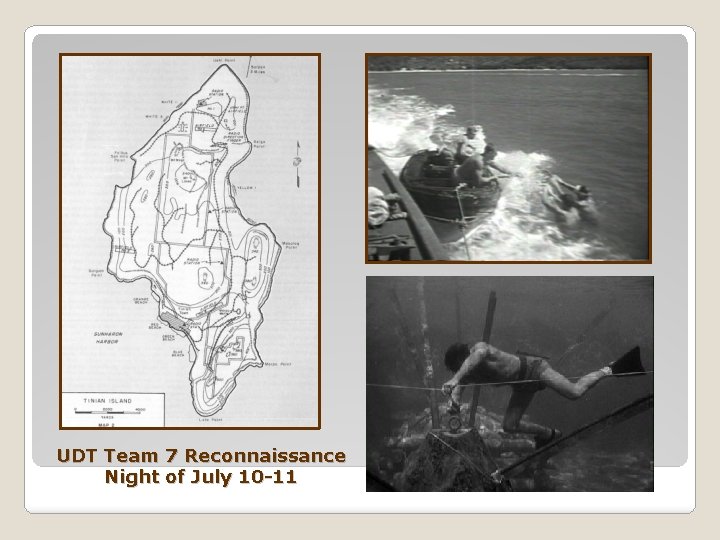
UDT Team 7 Reconnaissance Night of July 10 -11
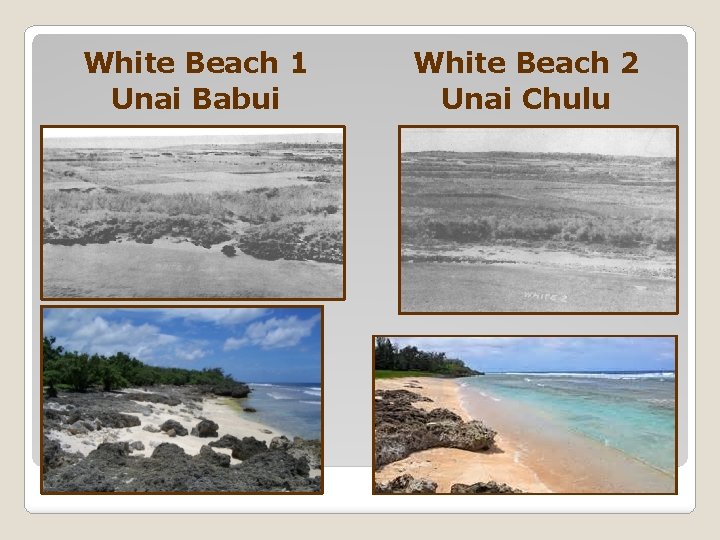
White Beach 1 Unai Babui White Beach 2 Unai Chulu
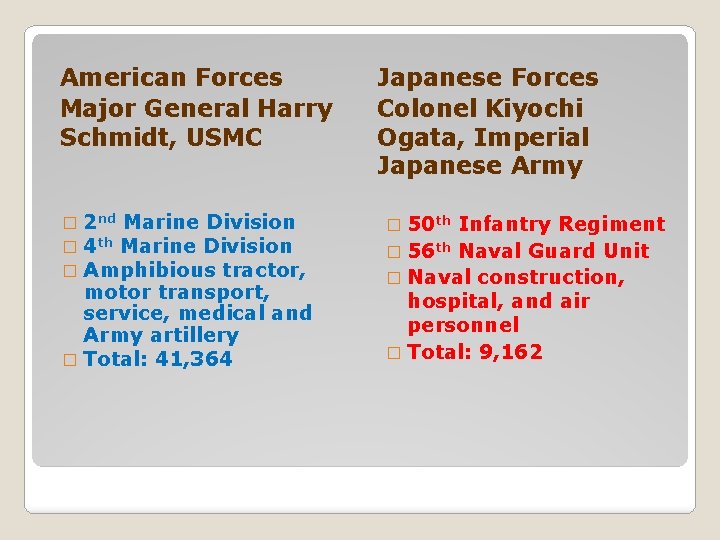
American Forces Major General Harry Schmidt, USMC � 2 nd Marine Division � 4 th Marine Division � Amphibious tractor, motor transport, service, medical and Army artillery � Total: 41, 364 Japanese Forces Colonel Kiyochi Ogata, Imperial Japanese Army � 50 th Infantry Regiment � 56 th Naval Guard Unit � Naval construction, hospital, and air personnel � Total: 9, 162
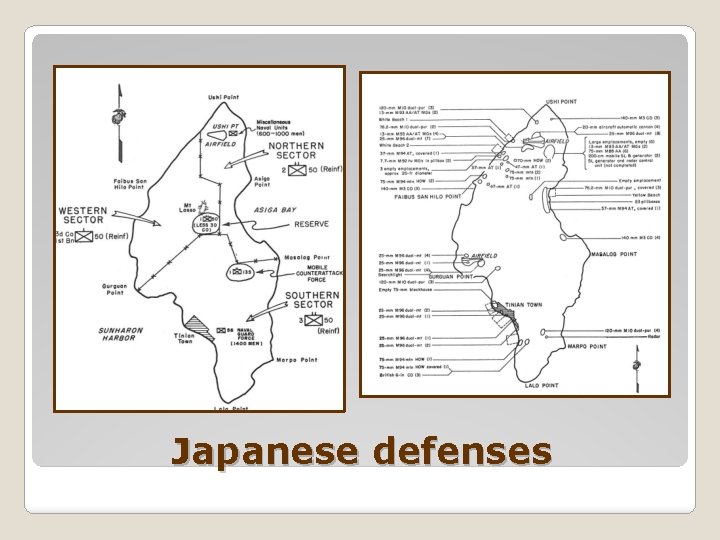
Japanese defenses
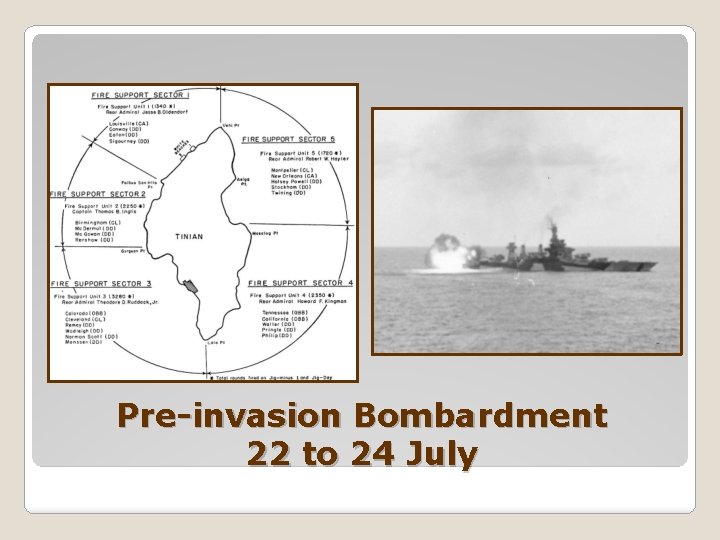
Pre-invasion Bombardment 22 to 24 July
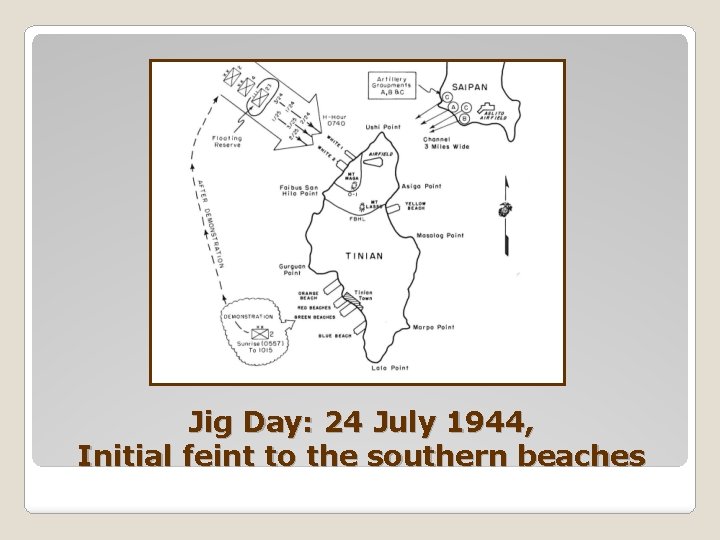
Jig Day: 24 July 1944, Initial feint to the southern beaches
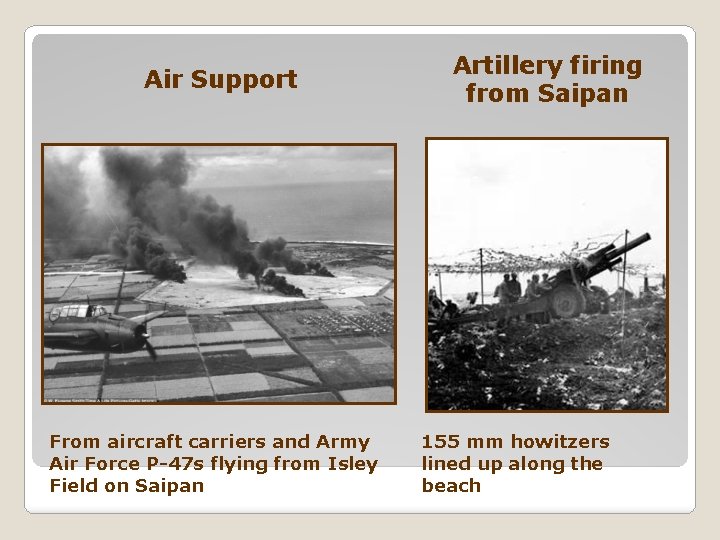
Air Support From aircraft carriers and Army Air Force P-47 s flying from Isley Field on Saipan Artillery firing from Saipan 155 mm howitzers lined up along the beach
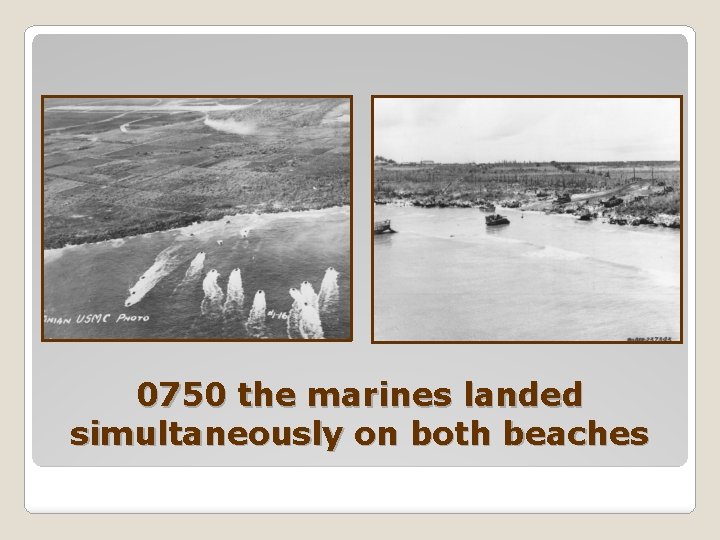
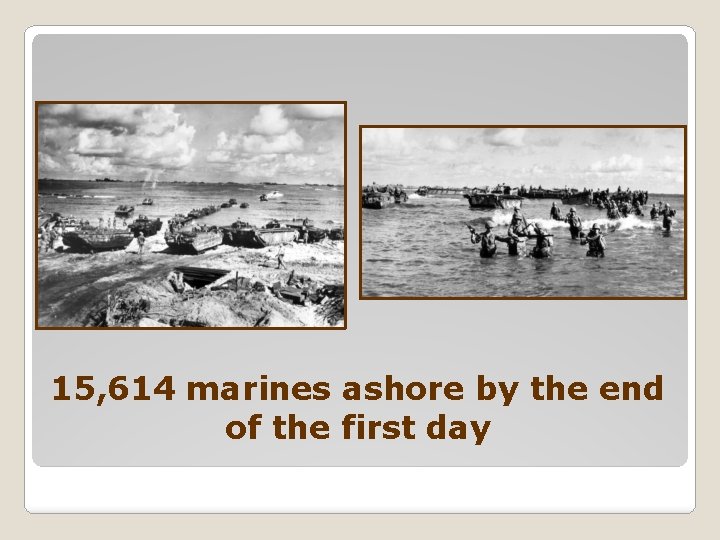
0750 the marines landed simultaneously on both beaches
15, 614 marines ashore by the end of the first day
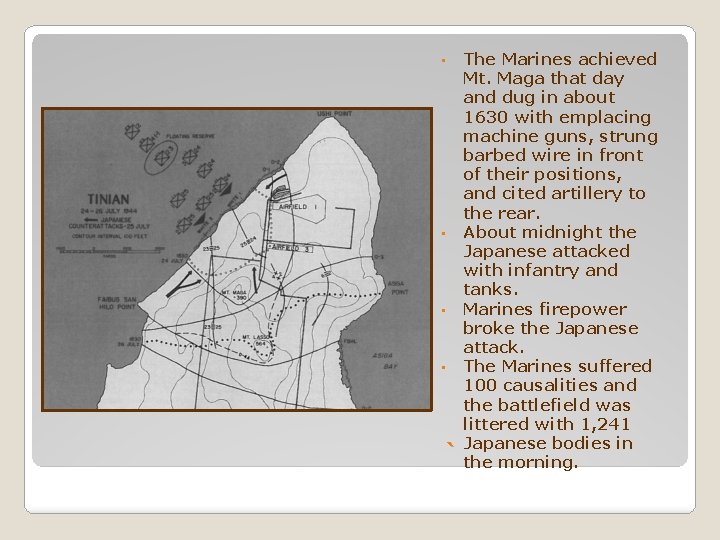
The Marines achieved Mt. Maga that day and dug in about 1630 with emplacing machine guns, strung barbed wire in front of their positions, and cited artillery to the rear. • About midnight the Japanese attacked with infantry and tanks. • Marines firepower broke the Japanese attack. • The Marines suffered 100 causalities and the battlefield was littered with 1, 241 bodies in ` Japanese the morning. •
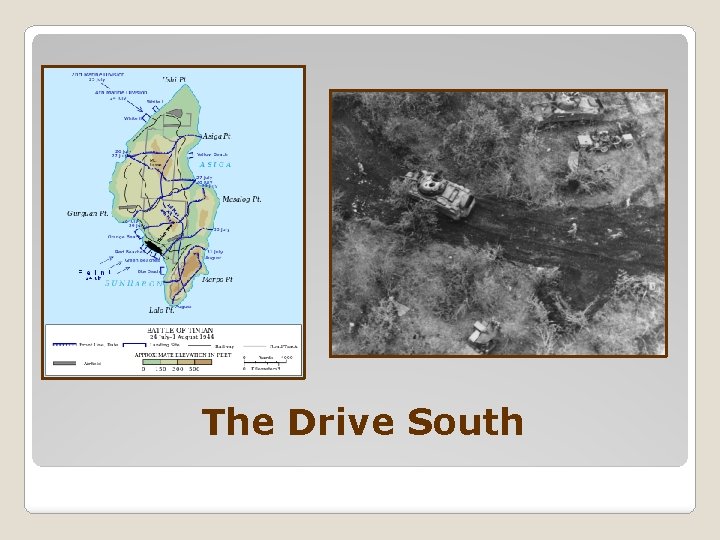
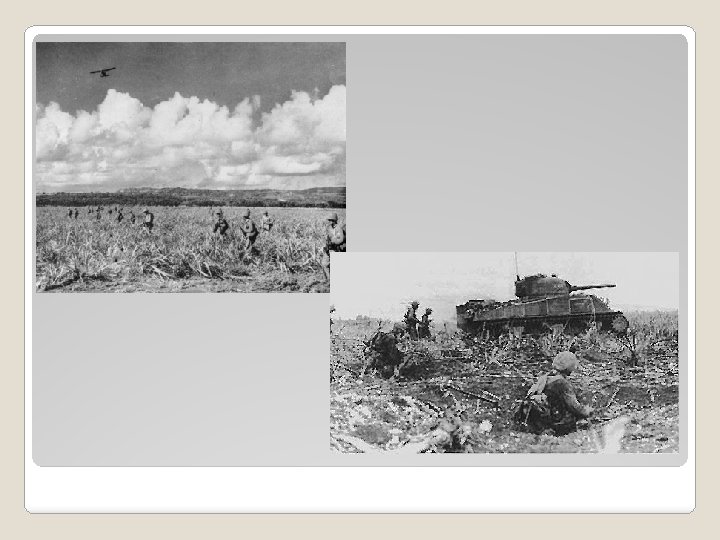
The Drive South
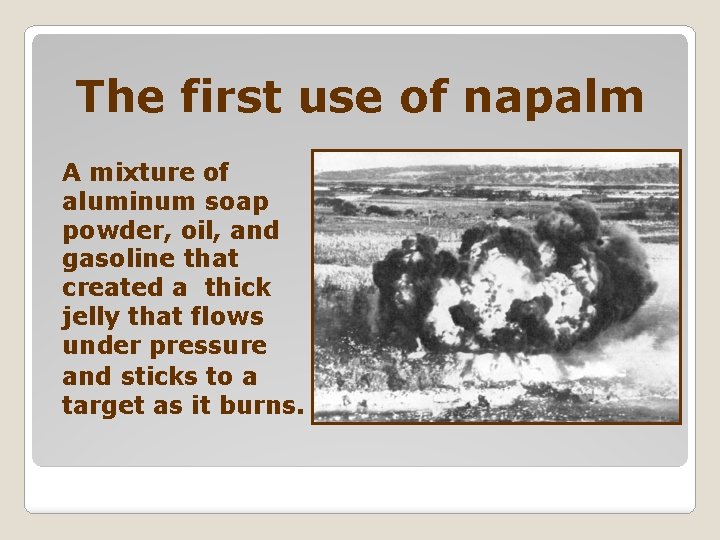
The first use of napalm A mixture of aluminum soap powder, oil, and gasoline that created a thick jelly that flows under pressure and sticks to a target as it burns.
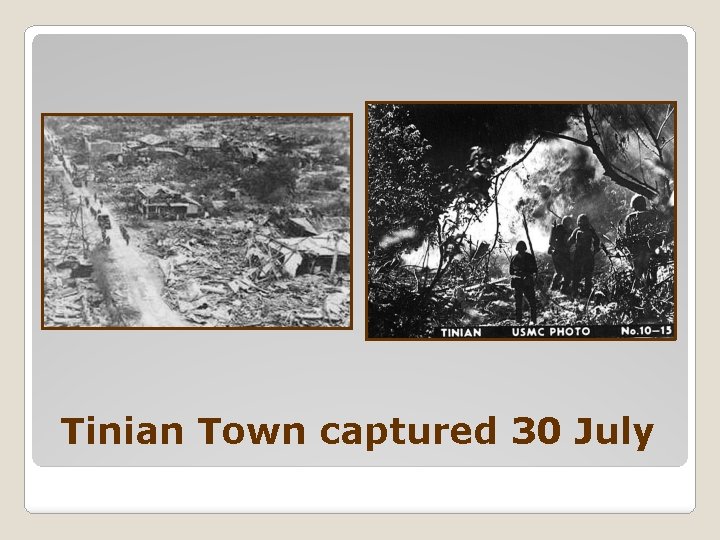
Tinian Town captured 30 July
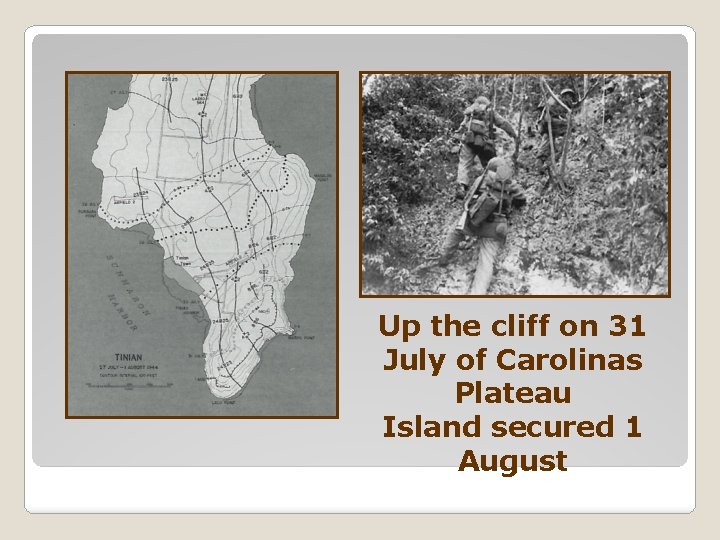
Up the cliff on 31 July of Carolinas Plateau Island secured 1 August
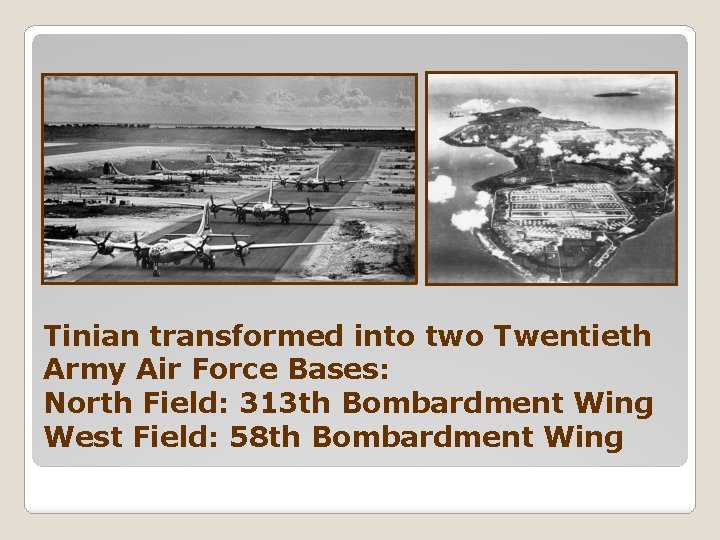
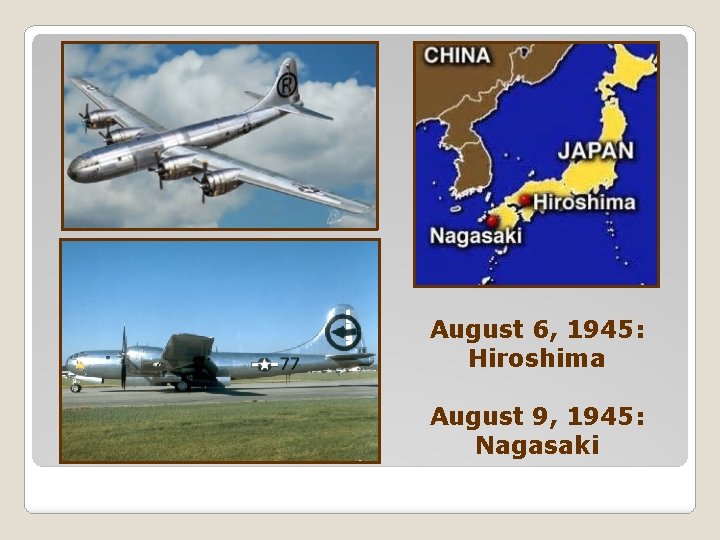
Tinian transformed into two Twentieth Army Air Force Bases: North Field: 313 th Bombardment Wing West Field: 58 th Bombardment Wing
August 6, 1945: Hiroshima August 9, 1945: Nagasaki
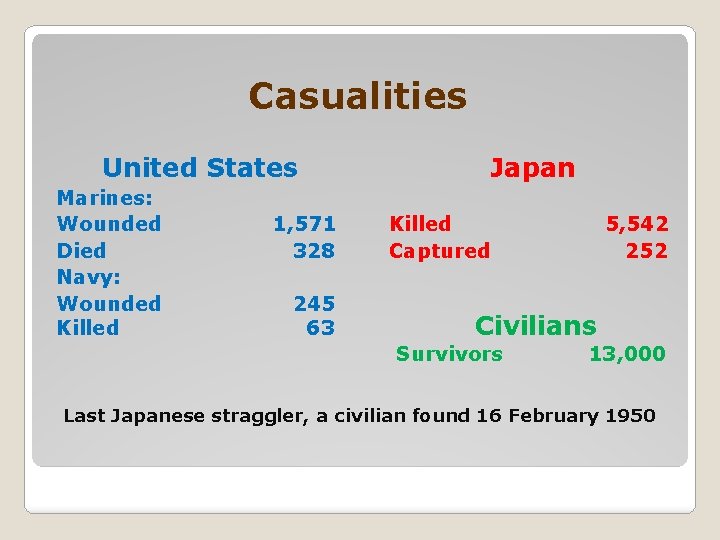
Casualities United States Marines: Wounded Died Navy: Wounded Killed 1, 571 328 245 63 Japan Killed Captured 5, 542 252 Civilians Survivors 13, 000 Last Japanese straggler, a civilian found 16 February 1950
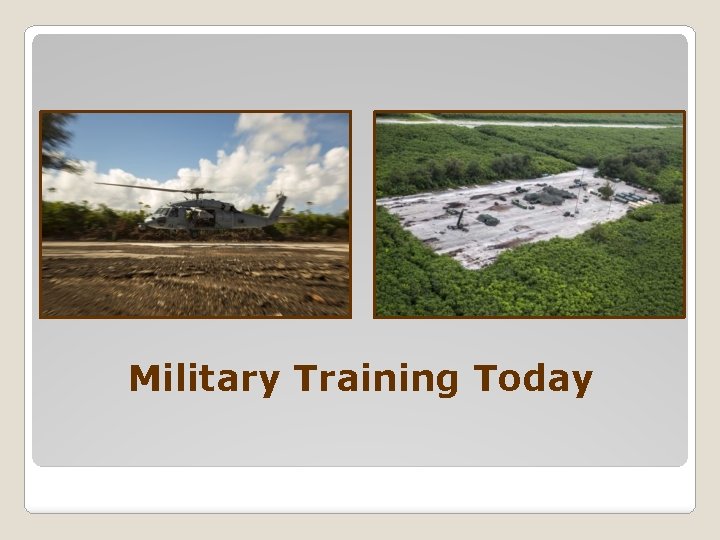
Military Training Today
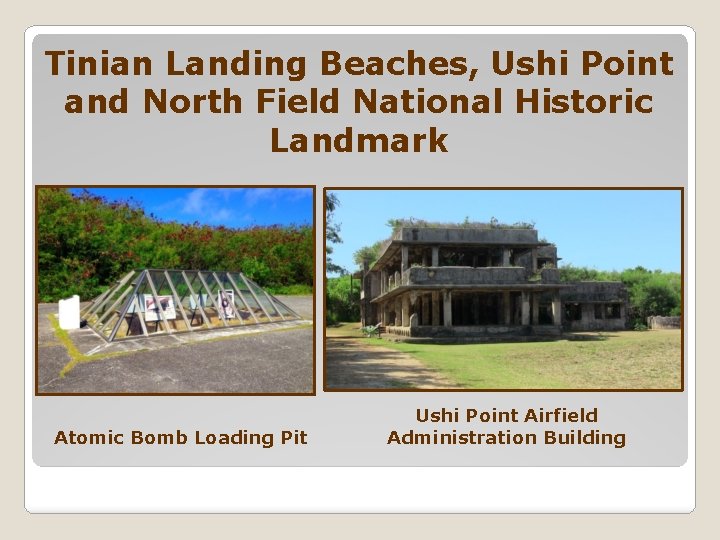
Tinian Landing Beaches, Ushi Point and North Field National Historic Landmark Atomic Bomb Loading Pit Ushi Point Airfield Administration Building
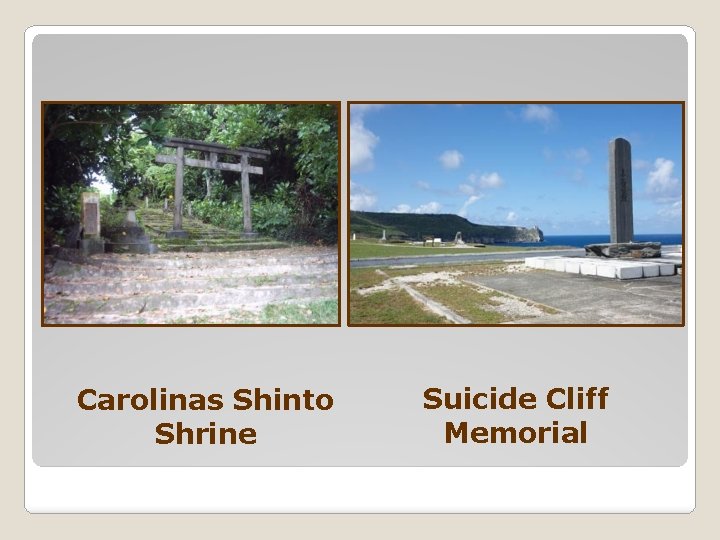
Carolinas Shinto Shrine Suicide Cliff Memorial
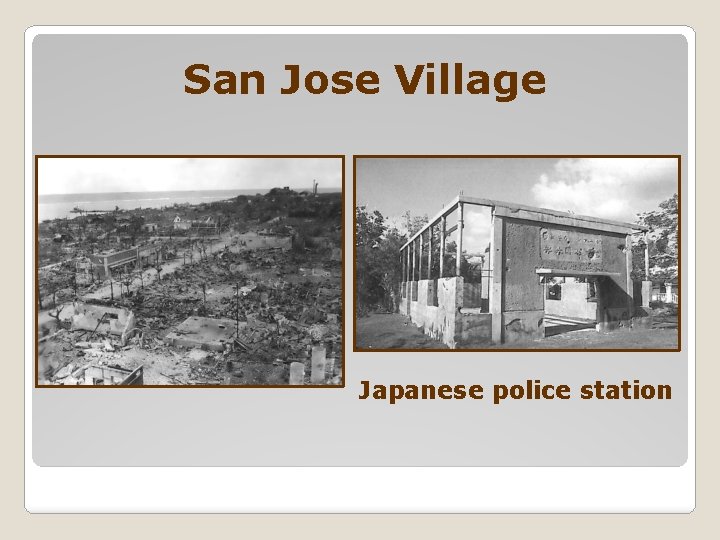
San Jose Village Japanese police station
Dave Lotz, Cultural Resources program manager, War in the Pacific National Historical Park, Guam and American Memorial Park, Saipan david_lotz@nps. gov Questions & Comments