
THE INVADERS Angles and Saxons The Angles and

- Slides: 15
THE INVADERS Angles and Saxons
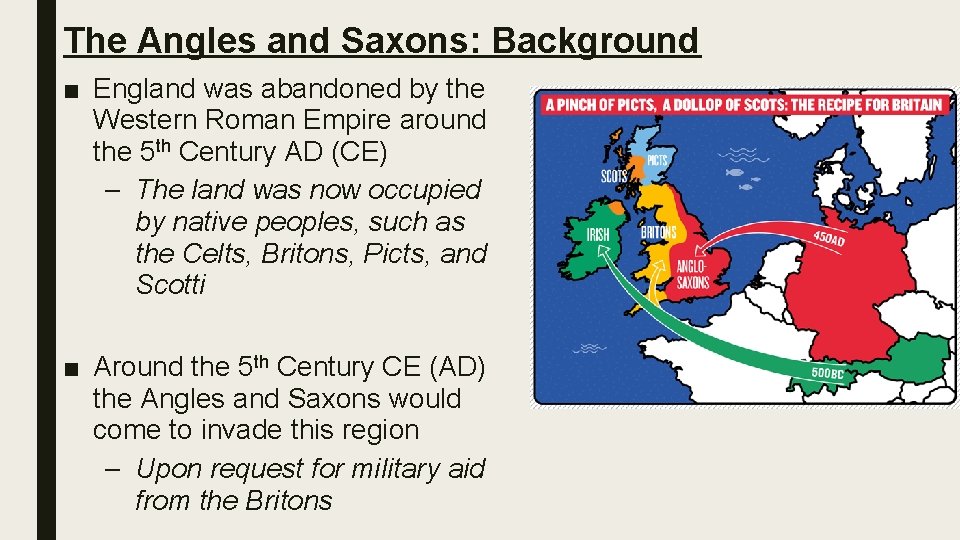
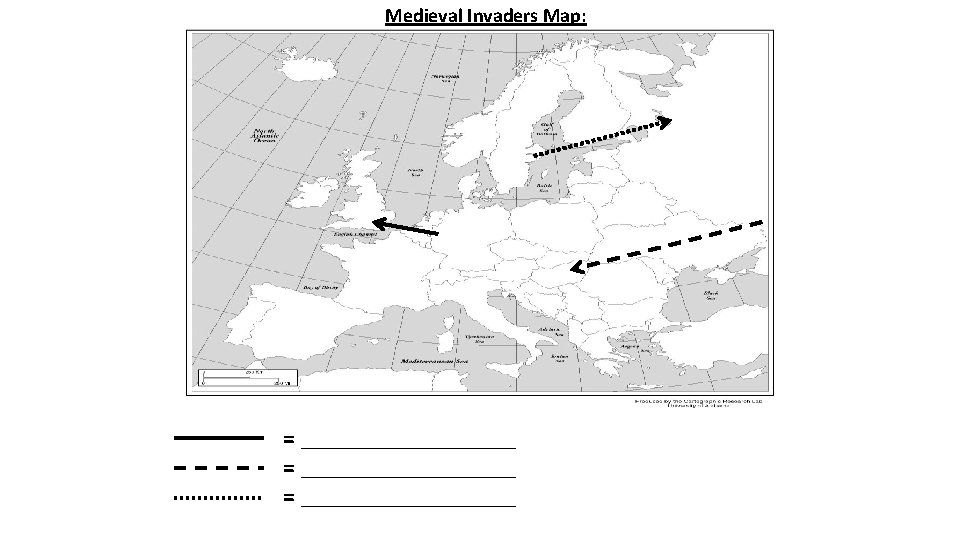
The Angles and Saxons: Background ■ England was abandoned by the Western Roman Empire around the 5 th Century AD (CE) – The land was now occupied by native peoples, such as the Celts, Britons, Picts, and Scotti ■ Around the 5 th Century CE (AD) the Angles and Saxons would come to invade this region – Upon request for military aid from the Britons
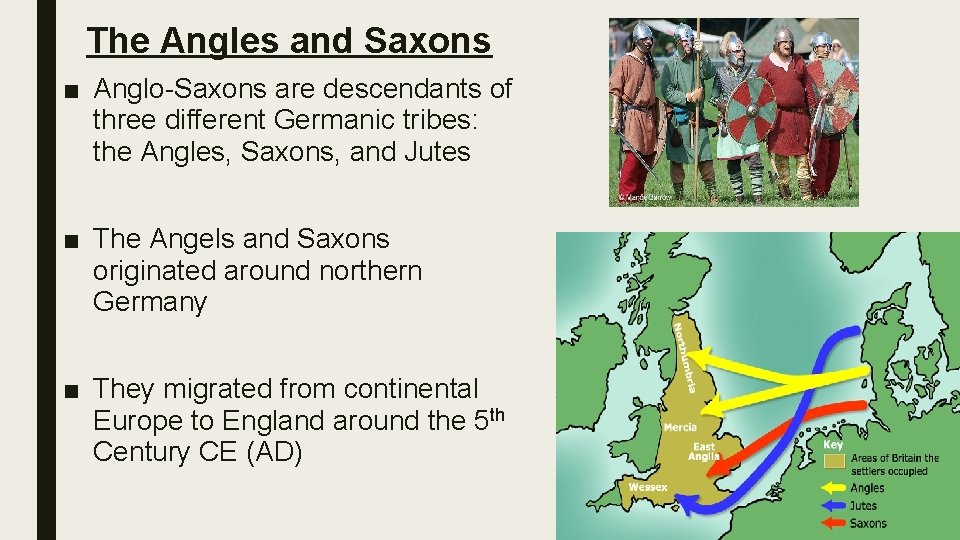
The Angles and Saxons ■ Anglo-Saxons are descendants of three different Germanic tribes: the Angles, Saxons, and Jutes ■ The Angels and Saxons originated around northern Germany ■ They migrated from continental Europe to England around the 5 th Century CE (AD)
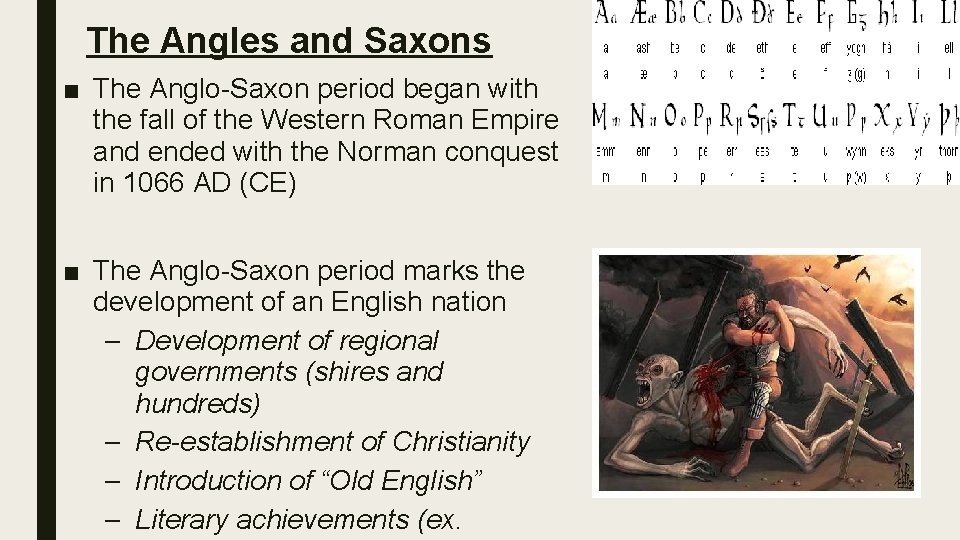
The Angles and Saxons ■ The Anglo-Saxon period began with the fall of the Western Roman Empire and ended with the Norman conquest in 1066 AD (CE) ■ The Anglo-Saxon period marks the development of an English nation – Development of regional governments (shires and hundreds) – Re-establishment of Christianity – Introduction of “Old English” – Literary achievements (ex.
THE INVADERS The Magyars
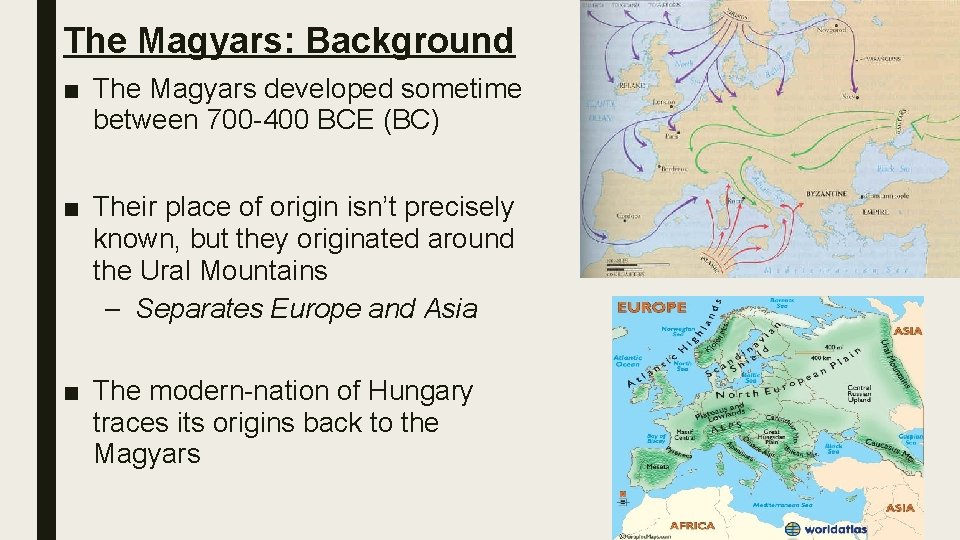
The Magyars: Background ■ The Magyars developed sometime between 700 -400 BCE (BC) ■ Their place of origin isn’t precisely known, but they originated around the Ural Mountains – Separates Europe and Asia ■ The modern-nation of Hungary traces its origins back to the Magyars
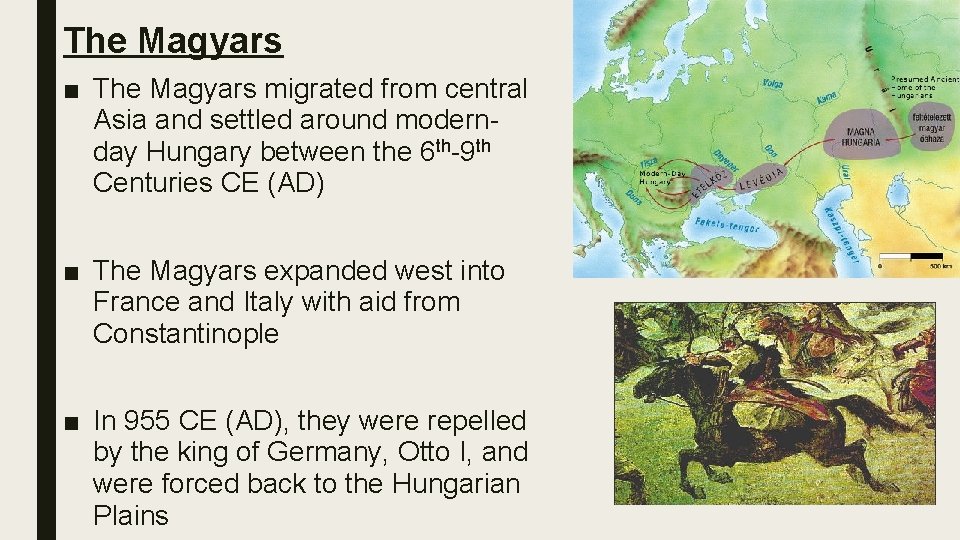
The Magyars ■ The Magyars migrated from central Asia and settled around modernday Hungary between the 6 th-9 th Centuries CE (AD) ■ The Magyars expanded west into France and Italy with aid from Constantinople ■ In 955 CE (AD), they were repelled by the king of Germany, Otto I, and were forced back to the Hungarian Plains
THE INVADERS The Vikings
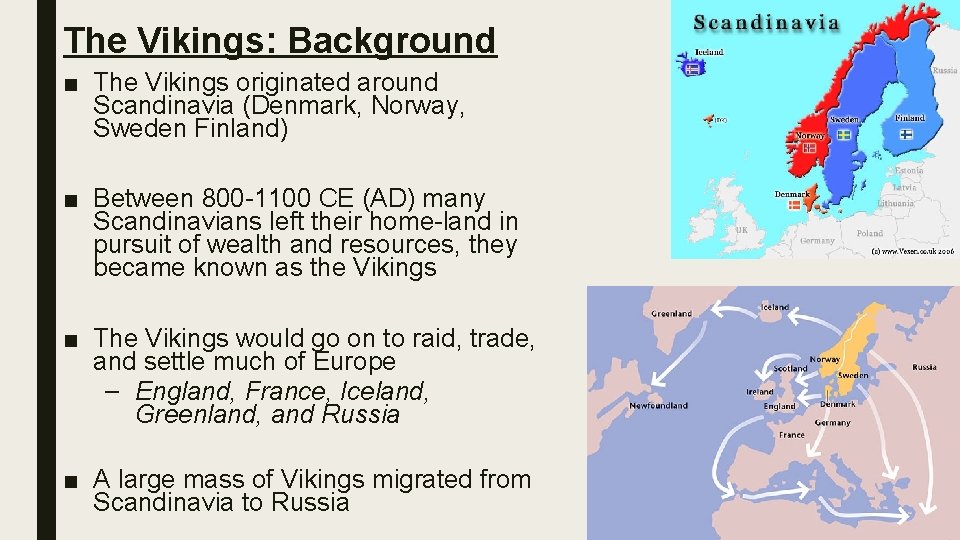
The Vikings: Background ■ The Vikings originated around Scandinavia (Denmark, Norway, Sweden Finland) ■ Between 800 -1100 CE (AD) many Scandinavians left their home-land in pursuit of wealth and resources, they became known as the Vikings ■ The Vikings would go on to raid, trade, and settle much of Europe – England, France, Iceland, Greenland, and Russia ■ A large mass of Vikings migrated from Scandinavia to Russia
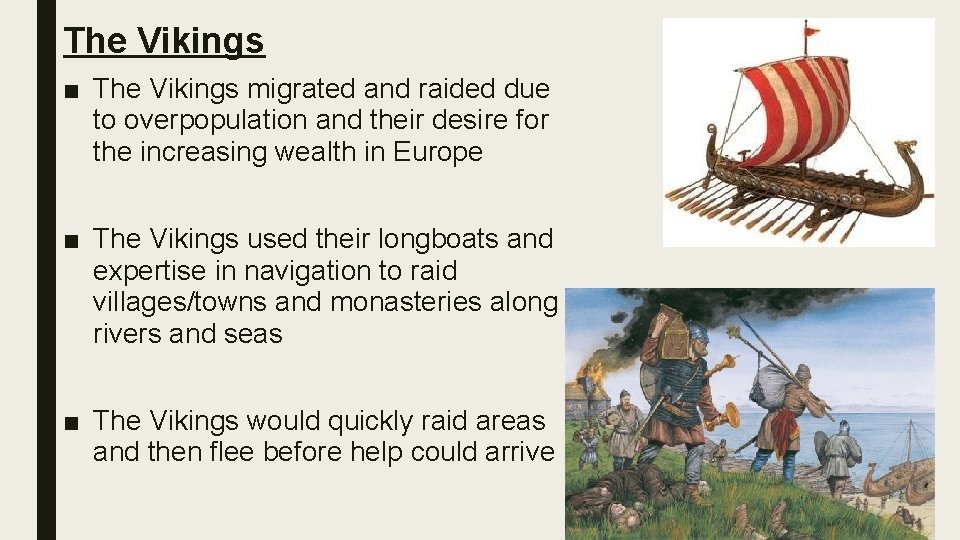
The Vikings ■ The Vikings migrated and raided due to overpopulation and their desire for the increasing wealth in Europe ■ The Vikings used their longboats and expertise in navigation to raid villages/towns and monasteries along rivers and seas ■ The Vikings would quickly raid areas and then flee before help could arrive
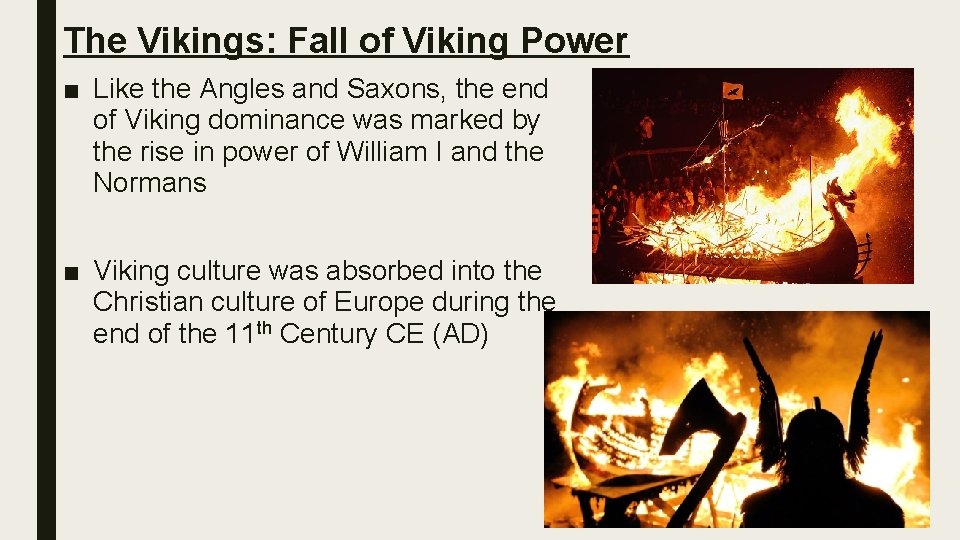
The Vikings: Fall of Viking Power ■ Like the Angles and Saxons, the end of Viking dominance was marked by the rise in power of William I and the Normans ■ Viking culture was absorbed into the Christian culture of Europe during the end of the 11 th Century CE (AD)
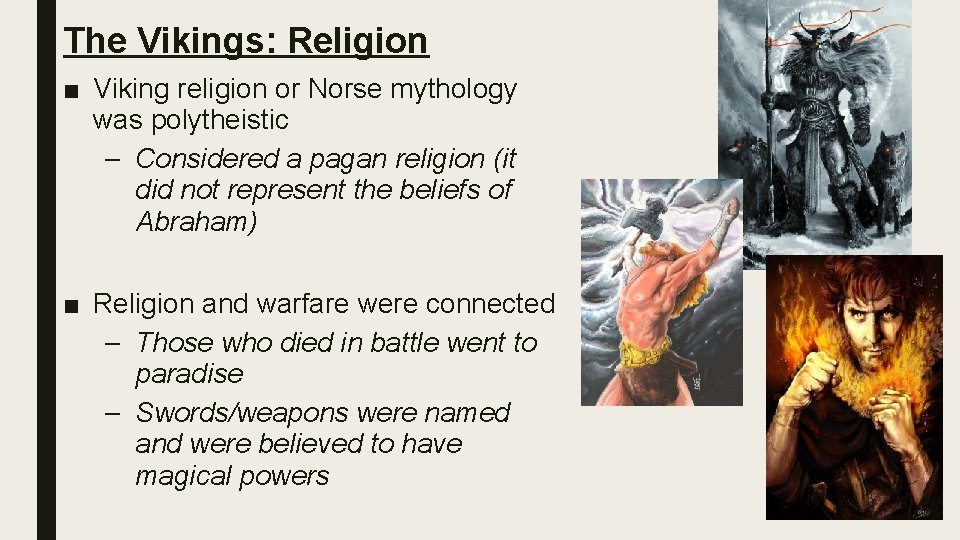
The Vikings: Religion ■ Viking religion or Norse mythology was polytheistic – Considered a pagan religion (it did not represent the beliefs of Abraham) ■ Religion and warfare were connected – Those who died in battle went to paradise – Swords/weapons were named and were believed to have magical powers
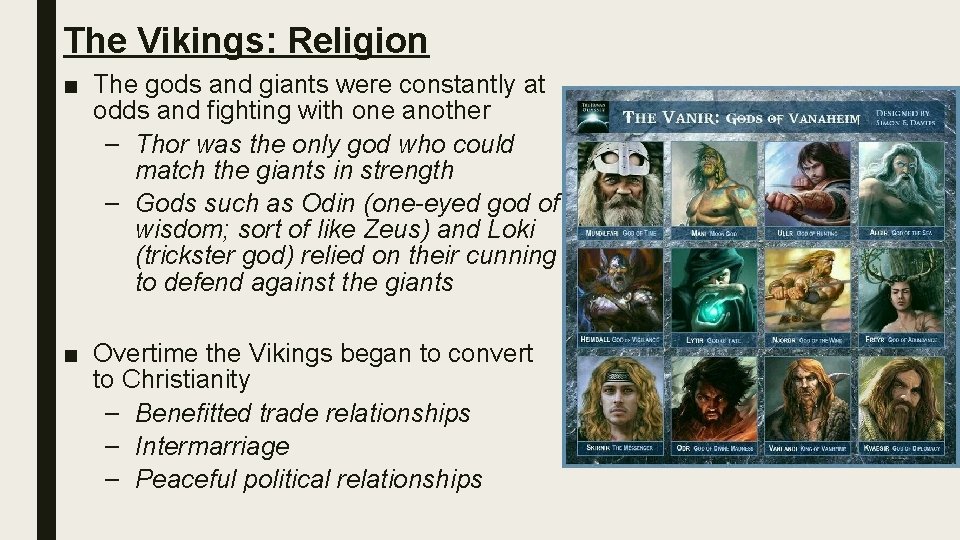
The Vikings: Religion ■ The gods and giants were constantly at odds and fighting with one another – Thor was the only god who could match the giants in strength – Gods such as Odin (one-eyed god of wisdom; sort of like Zeus) and Loki (trickster god) relied on their cunning to defend against the giants ■ Overtime the Vikings began to convert to Christianity – Benefitted trade relationships – Intermarriage – Peaceful political relationships
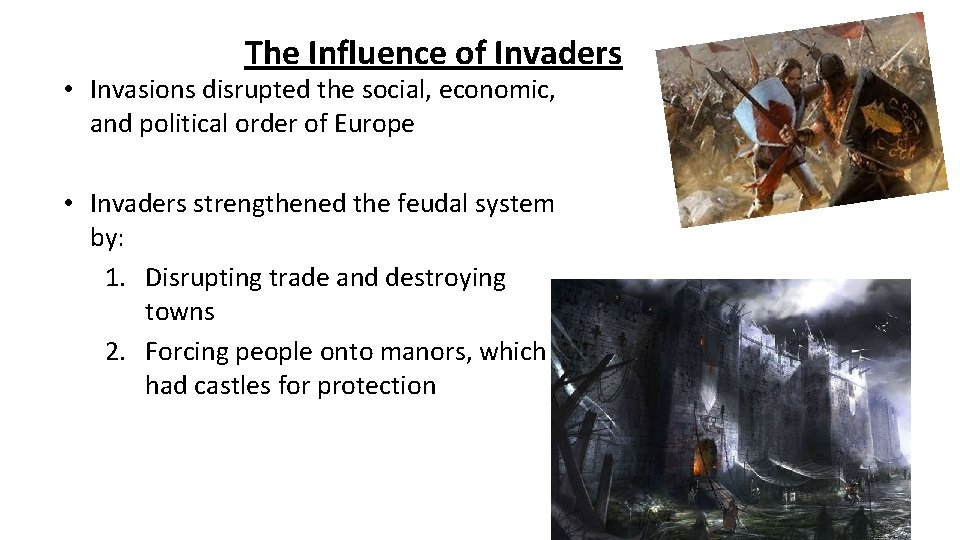
The Influence of Invaders • Invasions disrupted the social, economic, and political order of Europe • Invaders strengthened the feudal system by: 1. Disrupting trade and destroying towns 2. Forcing people onto manors, which had castles for protection