
The Inuit People By Fadi Salback Winter Terrain
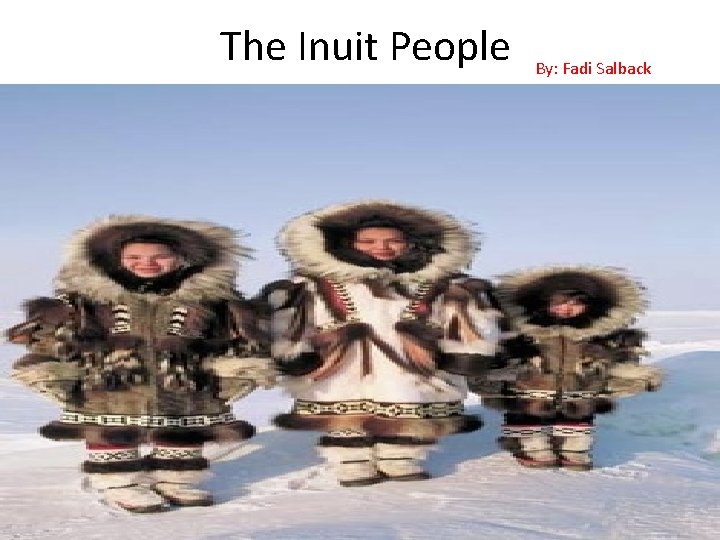
The Inuit People By: Fadi Salback
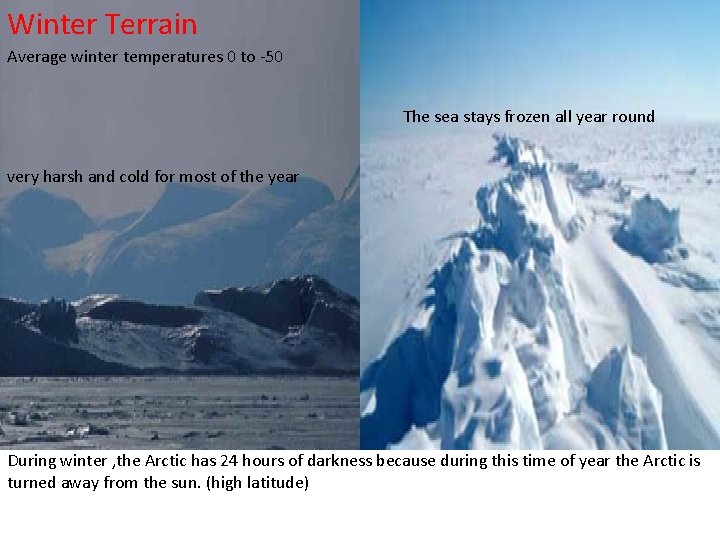
Winter Terrain Average winter temperatures 0 to -50 Climate and Terrain The sea stays frozen all year round very harsh and cold for most of the year During winter , the Arctic has 24 hours of darkness because during this time of year the Arctic is turned away from the sun. (high latitude)
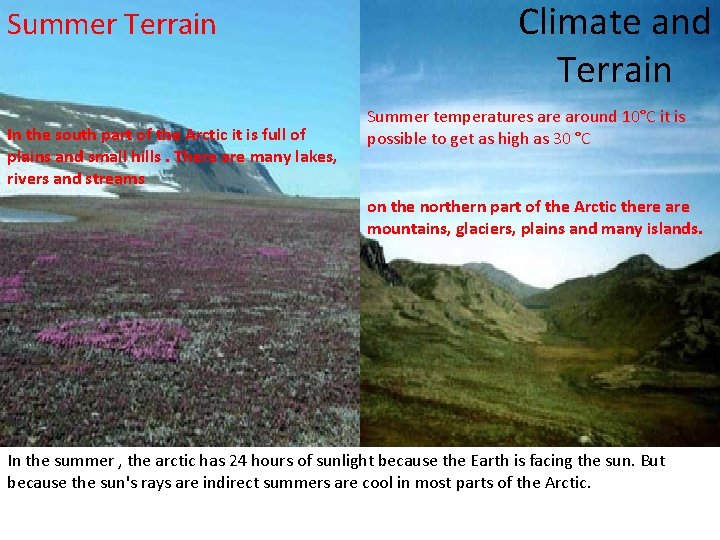
Summer Terrain In the south part of the Arctic it is full of plains and small hills. There are many lakes, rivers and streams Climate and Terrain Summer temperatures are around 10°C it is possible to get as high as 30 °C on the northern part of the Arctic there are mountains, glaciers, plains and many islands. In the summer , the arctic has 24 hours of sunlight because the Earth is facing the sun. But because the sun's rays are indirect summers are cool in most parts of the Arctic.
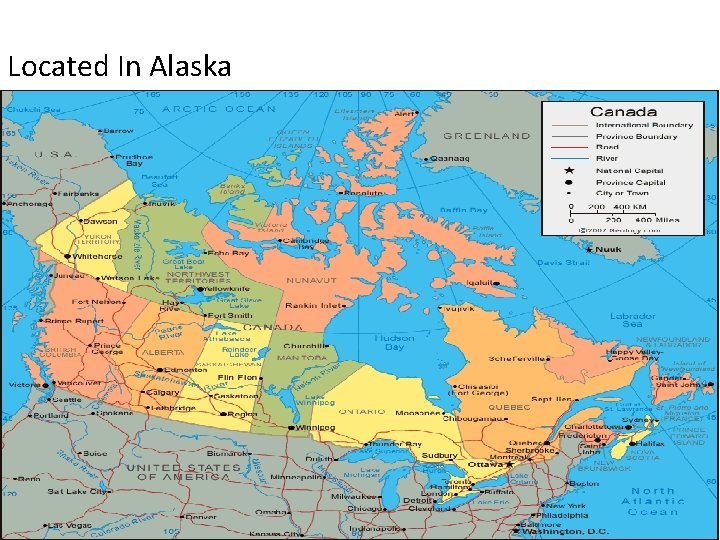
Located In Alaska
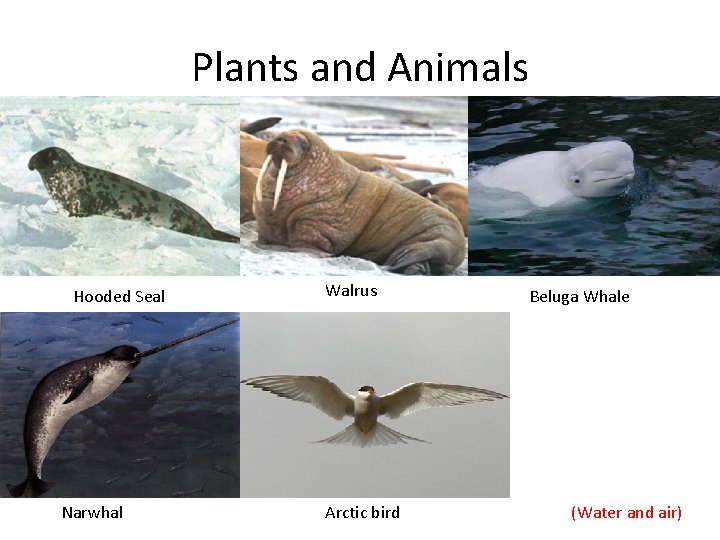
Plants and Animals Hooded Seal Narwhal Walrus Arctic bird Beluga Whale (Water and air)
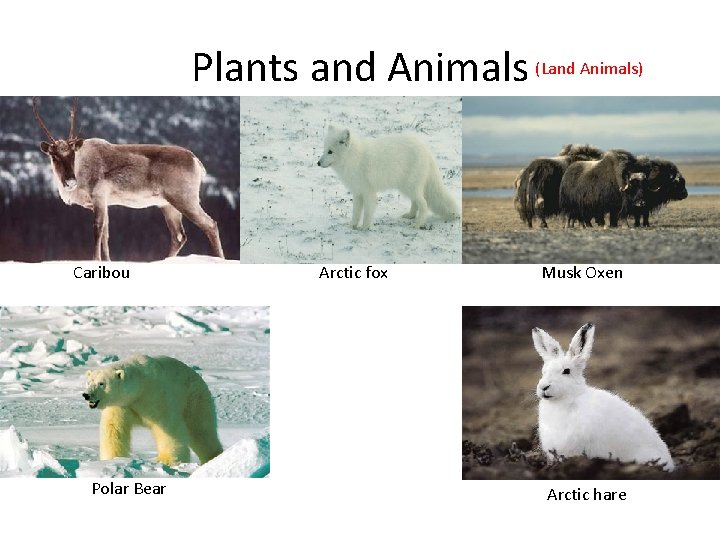
Plants and Animals (Land Animals) Caribou Polar Bear Arctic fox Musk Oxen Arctic hare
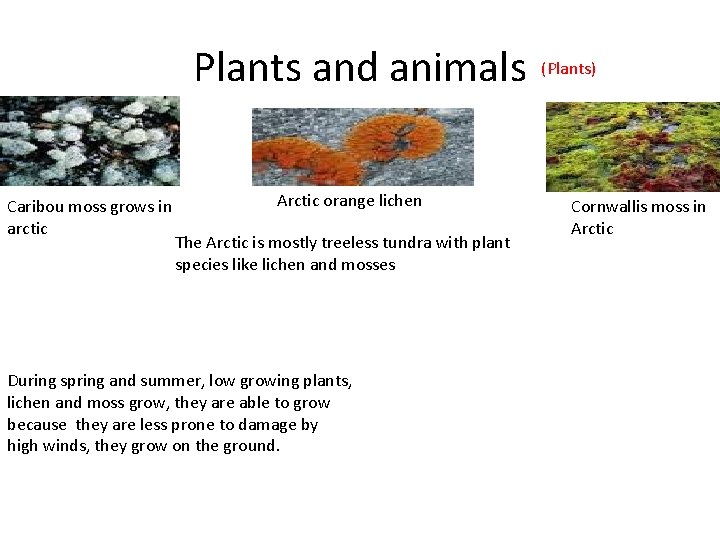
Plants and animals Caribou moss grows in arctic Arctic orange lichen The Arctic is mostly treeless tundra with plant species like lichen and mosses During spring and summer, low growing plants, lichen and moss grow, they are able to grow because they are less prone to damage by high winds, they grow on the ground. (Plants) Cornwallis moss in Arctic
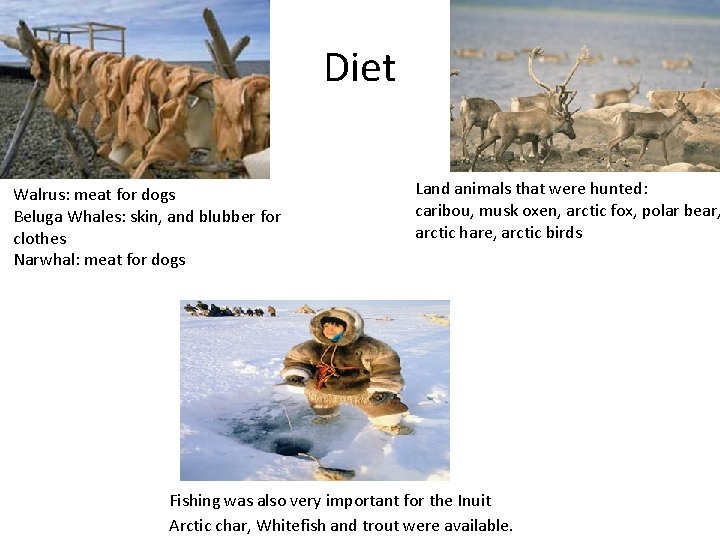
Diet Walrus: meat for dogs Beluga Whales: skin, and blubber for clothes Narwhal: meat for dogs Land animals that were hunted: caribou, musk oxen, arctic fox, polar bear, arctic hare, arctic birds Fishing was also very important for the Inuit Arctic char, Whitefish and trout were available.
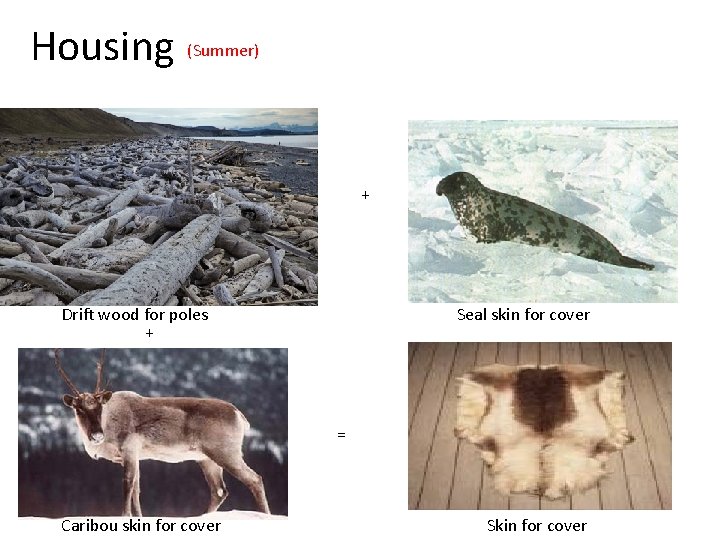
Housing (Summer) + Drift wood for poles + Seal skin for cover = Caribou skin for cover Skin for cover
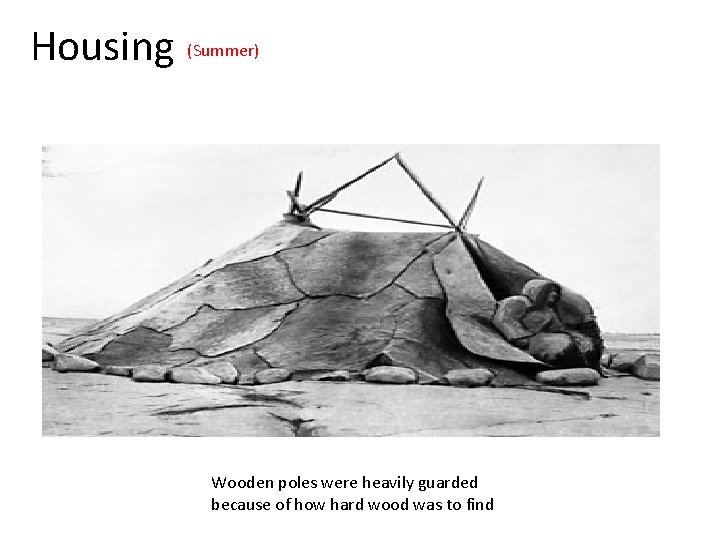
Housing (Summer) Wooden poles were heavily guarded because of how hard wood was to find

Housing (Summer) Summer Inuit Tent During summer, Inuit built tents from driftwood (water that washed up to shore ) or poles covered around animal skins, mostly caribou or sealskin.

Housing (Summer) The Intuit were nomadic, they would rarely stay in one place, houses needed to be built fast and easily.
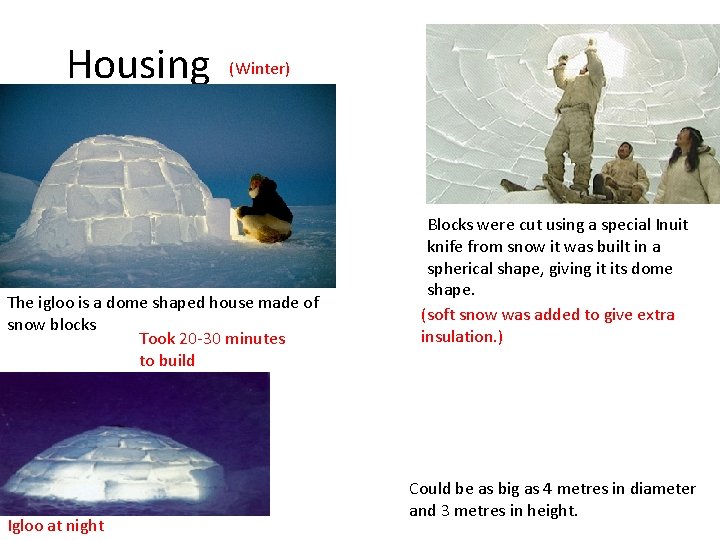
Housing (Winter) The igloo is a dome shaped house made of snow blocks Took 20 -30 minutes to build Igloo at night Blocks were cut using a special Inuit knife from snow it was built in a spherical shape, giving it its dome shape. (soft snow was added to give extra insulation. ) Could be as big as 4 metres in diameter and 3 metres in height.
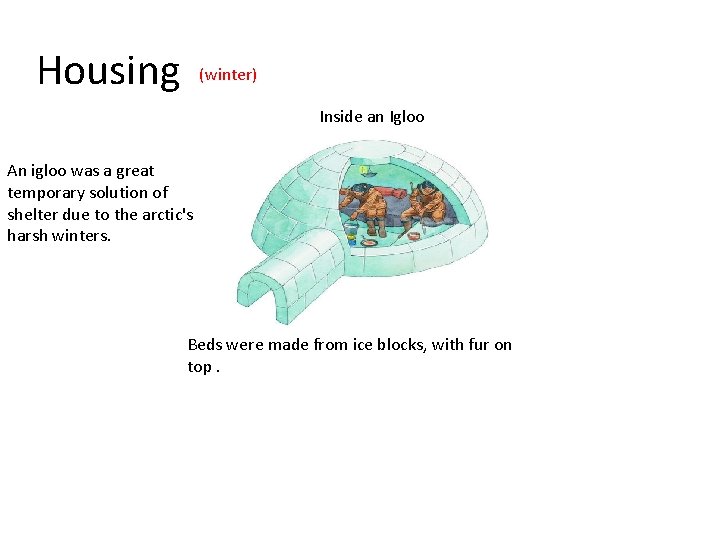
Housing (winter) Inside an Igloo An igloo was a great temporary solution of shelter due to the arctic's harsh winters. Beds were made from ice blocks, with fur on top.

http: //www. youtube. com/watch? v=Rx 5 QOSq. P 3 E ( how to build an igloo)
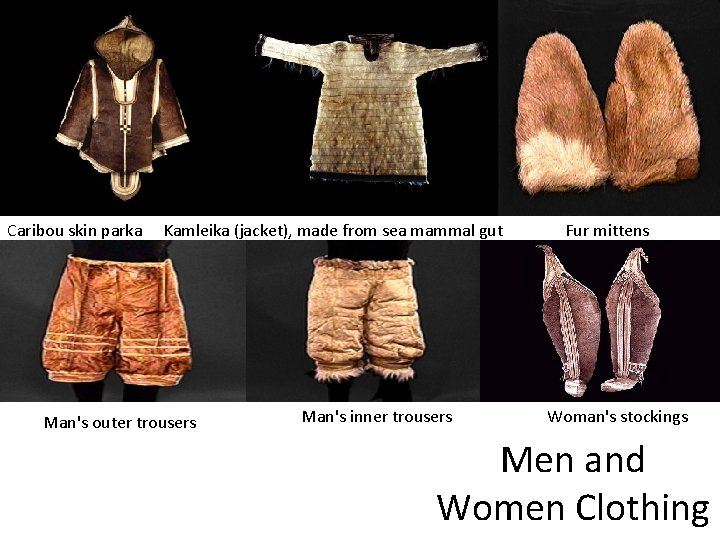
Caribou skin parka Kamleika (jacket), made from sea mammal gut Man's outer trousers Man's inner trousers Fur mittens Woman's stockings Men and Women Clothing
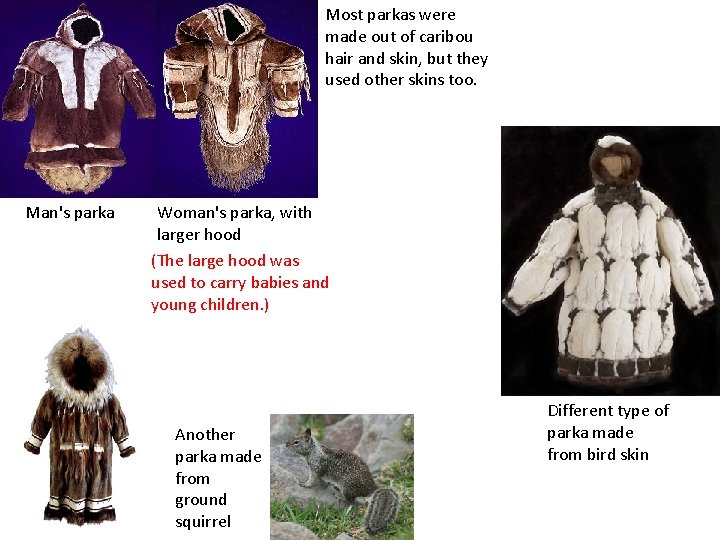
Most parkas were made out of caribou hair and skin, but they used other skins too. Man's parka Woman's parka, with larger hood (The large hood was used to carry babies and young children. ) Another parka made from ground squirrel Different type of parka made from bird skin
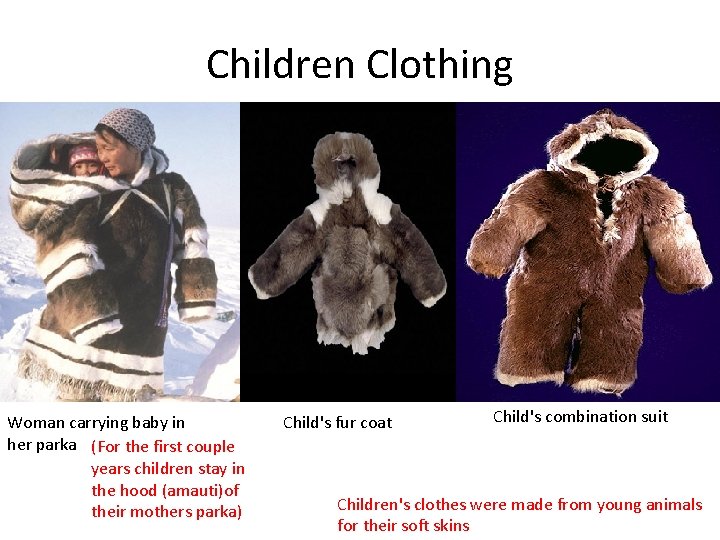
Children Clothing Woman carrying baby in her parka (For the first couple years children stay in the hood (amauti)of their mothers parka) Child's fur coat Child's combination suit Children's clothes were made from young animals for their soft skins
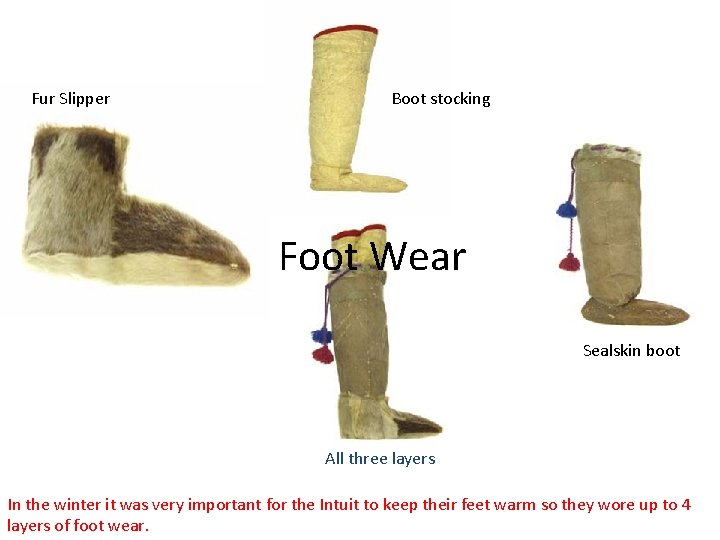
Fur Slipper Boot stocking Foot Wear Sealskin boot All three layers In the winter it was very important for the Intuit to keep their feet warm so they wore up to 4 layers of foot wear.
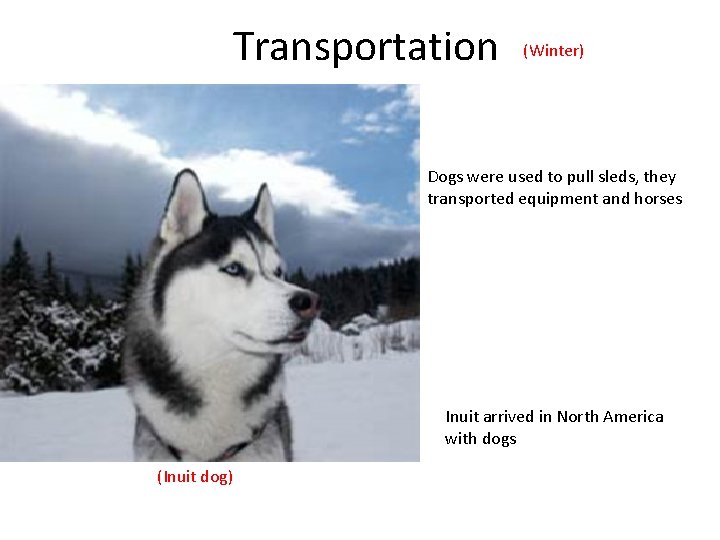
Transportation (Winter) Dogs were used to pull sleds, they transported equipment and horses Inuit arrived in North America with dogs (Inuit dog)
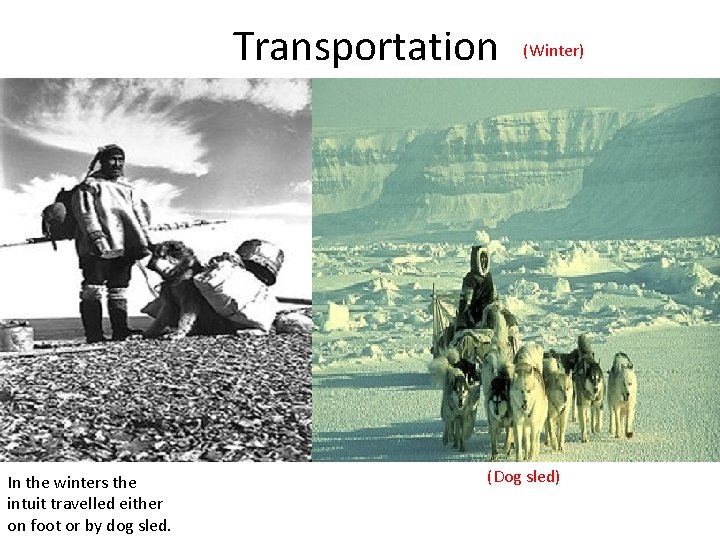
Transportation In the winters the intuit travelled either on foot or by dog sled. (Winter) (Dog sled)
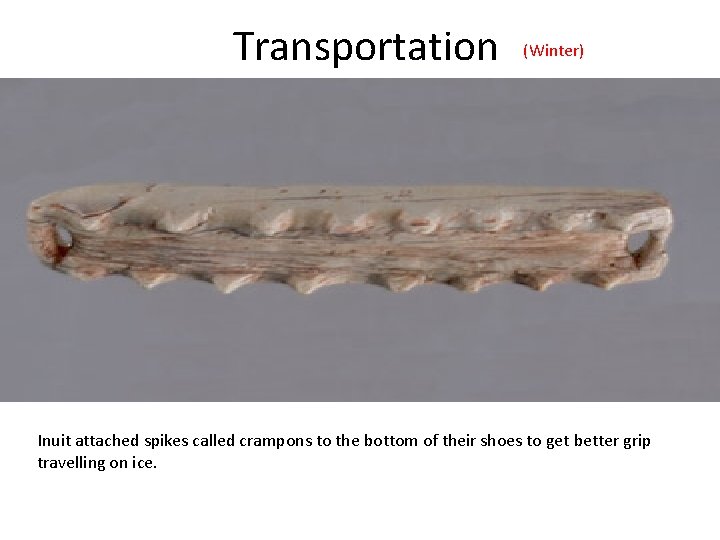
Transportation (Winter) Inuit attached spikes called crampons to the bottom of their shoes to get better grip travelling on ice.
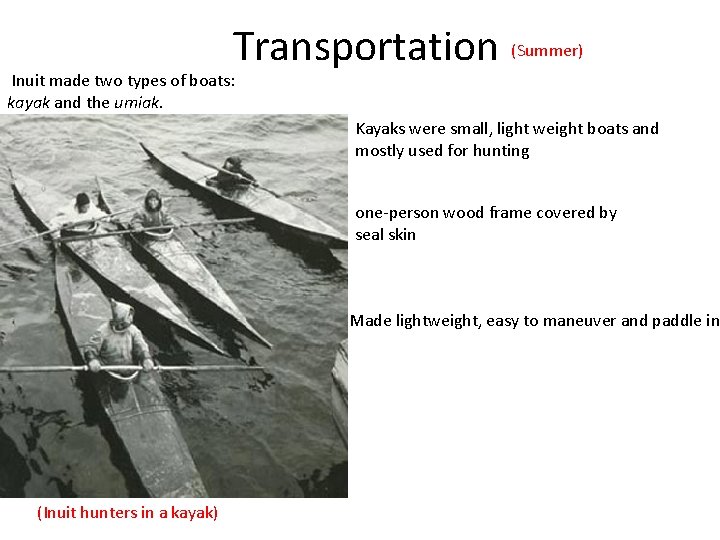
Transportation (Summer) Inuit made two types of boats: kayak and the umiak. Kayaks were small, light weight boats and mostly used for hunting one-person wood frame covered by seal skin Made lightweight, easy to maneuver and paddle in (Inuit hunters in a kayak)
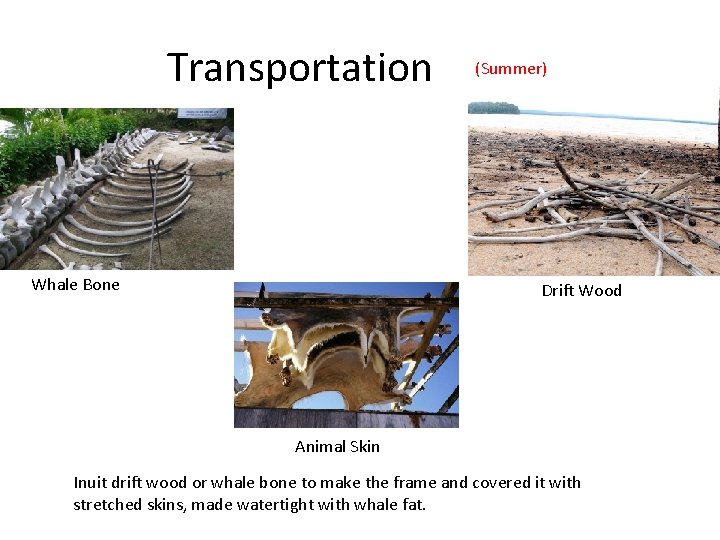
Transportation Whale Bone (Summer) Drift Wood Animal Skin Inuit drift wood or whale bone to make the frame and covered it with stretched skins, made watertight with whale fat.
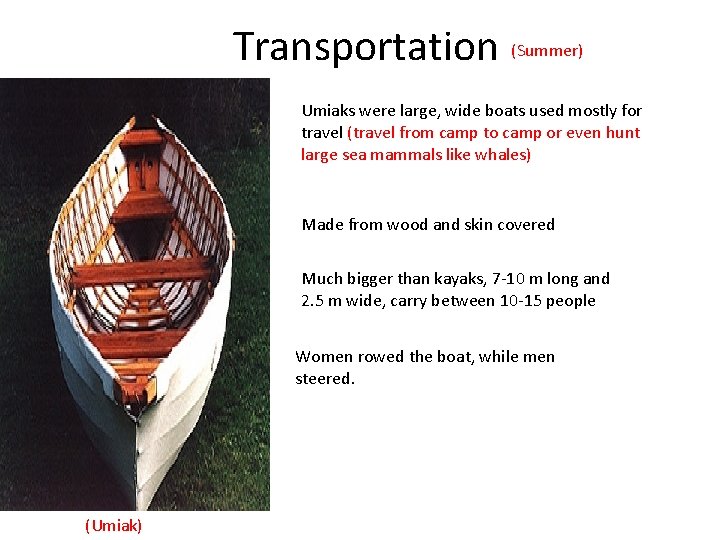
Transportation (Summer) Umiaks were large, wide boats used mostly for travel (travel from camp to camp or even hunt large sea mammals like whales) Made from wood and skin covered Much bigger than kayaks, 7 -10 m long and 2. 5 m wide, carry between 10 -15 people Women rowed the boat, while men steered. (Umiak)

Transportation (summer) • http: //www. youtube. com/watch? v=U 6 Sg. ZXd Oax. A

http: //www. youtube. com/watch? v=Btz 4 LNax. F 4 c (Inuit way)
References Canada's first peoples. (2007). Retrieved October 30, 2014, from Canada's First peoples website: http: //firstpeoplesofcanada. com/fp_groups/fp_inuit 3. html A Geography and Overview of Earth's Arctic Region. (2010, April 22). Retrieved October 30, 2014, from A Geography and Overview of Earth's Arctic Region website: http: //geography. about. com/od/globalproblemsandissues/a/arcticregion. htm Giannetta, J. (2000, June). The Arctic. Retrieved October 30, 2014, from The Arctic website: http: //www. aitc. sk. ca/saskschools/arctic/Aintro. html
- Slides: 28