
THE INTRODUCTIONS ART THEATRE MUSIC ART ELEMENTS OF
- Slides: 83
THE INTRODUCTIONS ART THEATRE MUSIC
ART • • ELEMENTS OF ART Principles of ART FOUR AREAS OF ART Learning How to Critique
ELEMENTS OF ART SHAPE • Definition: is an area that is enclosed by line; only two dimensional in height and width
Shapes Chart ORGANIC GEOMETRIC
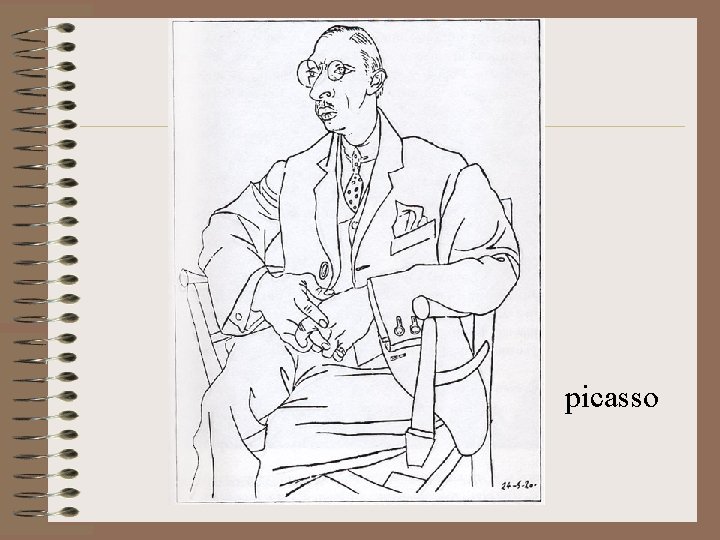
ELEMENTS OF ART LINE • Definition: a continuous mark made on some surface by a moving point
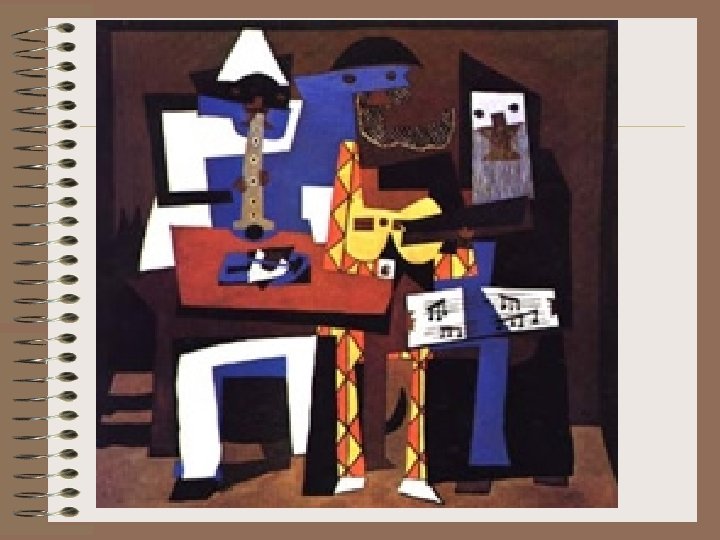
picasso
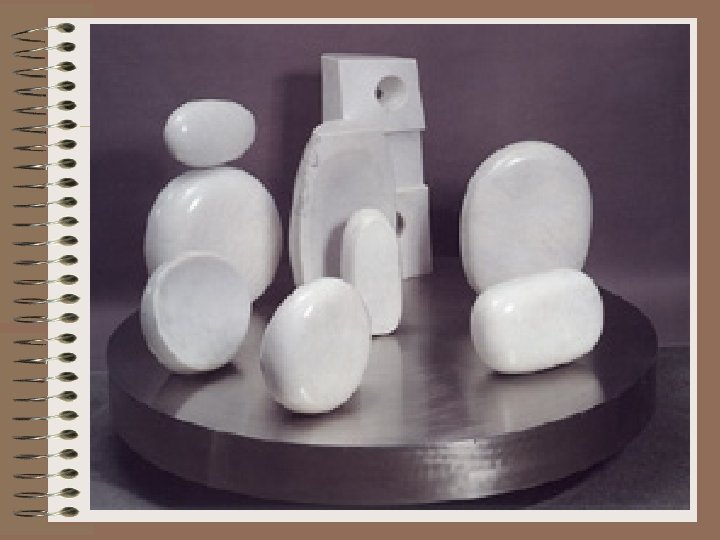
ELEMENTS OF ART FORM • Definition: an object that is threedimensional and encloses volume • Examples: cubes, spheres, pyramids, cylinders
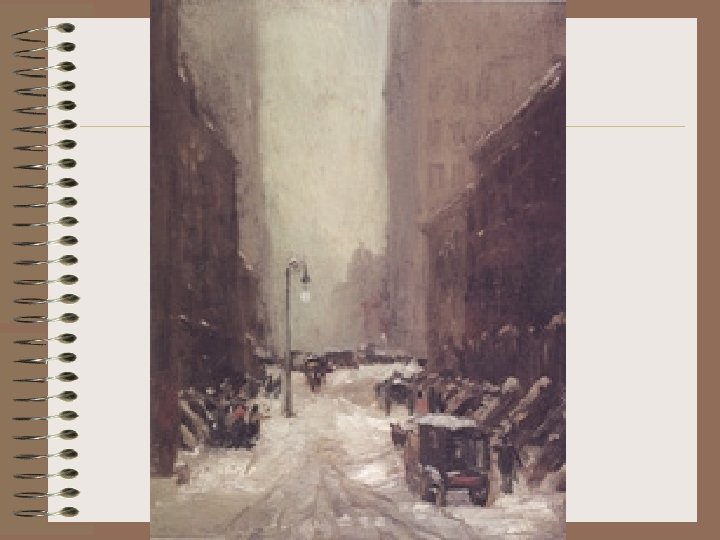
ELEMENTS OF ART SPACE • Definition: the distance or area between, around, below, or withings; 2 -d or 3 -d
ELEMENTS OF ART COLOR • Definition: an element of art with three properties: – Hue: the color name – Intensity: the brightness and purity of the color – Value: the lightness or darkness of a color
ELEMENTS OF ART COLOR • Write the definitions to the following: – Primary colors * Secondary colors – Tertiary colors *Analogous colors – Complementary colors
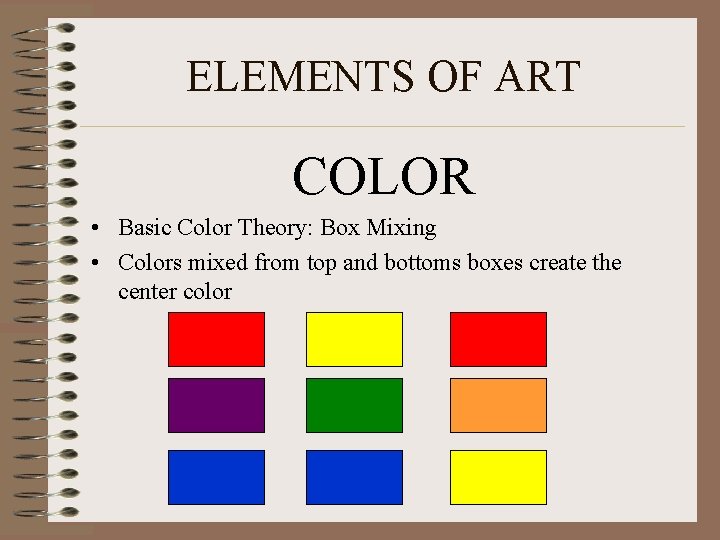
ELEMENTS OF ART COLOR • Basic Color Theory: Box Mixing • Colors mixed from top and bottoms boxes create the center color
ELEMENTS OF ART VALUE • Definition: describes the lightness and darkness of a color – More considered an element in colorless art like black and white photographs, sculpture, architecture, and pure drawings.
Creating a texture rubbing • Take a sheet of paper and a regular pencil • Lay the paper over any given surface and rub pencil over the surface of the paper • You will create a texture rubbing • Activity: – draw three shapes that overlap each other – Rub a new texture into each section – Take a picture of your work
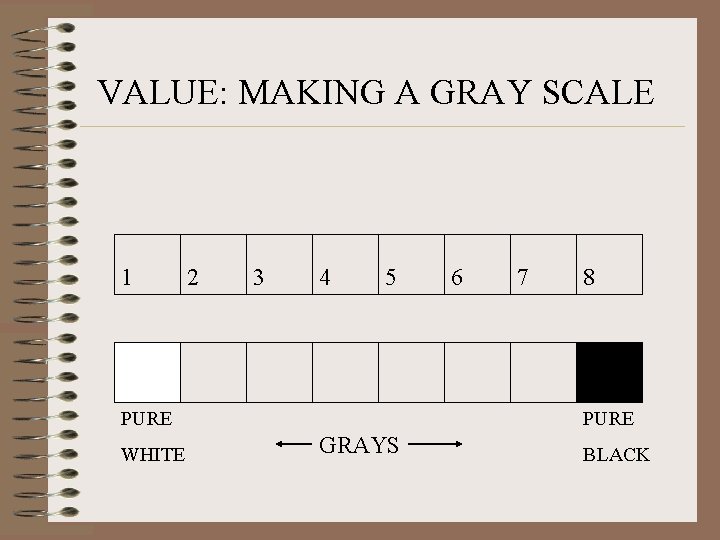
VALUE: MAKING A GRAY SCALE 1 2 3 4 5 PURE WHITE 6 7 8 PURE GRAYS BLACK
ELEMENTS OF ART TEXTURE • Definition: refers to the way things feel, or look as if they might feel if touched • REAL and FAKE
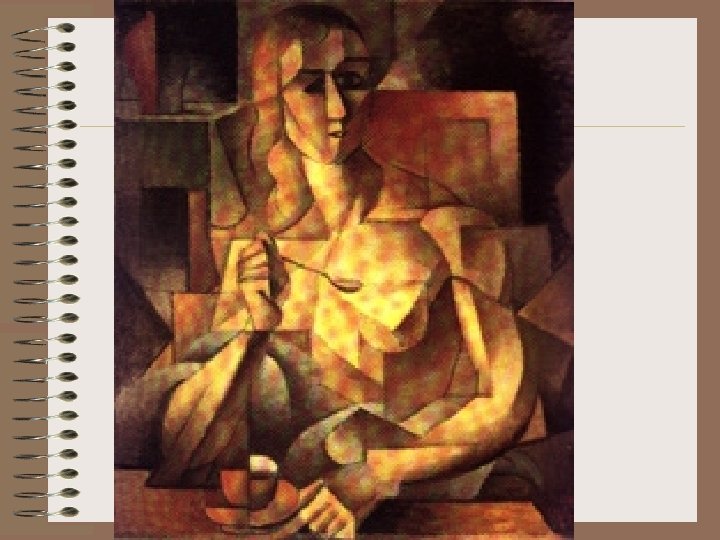
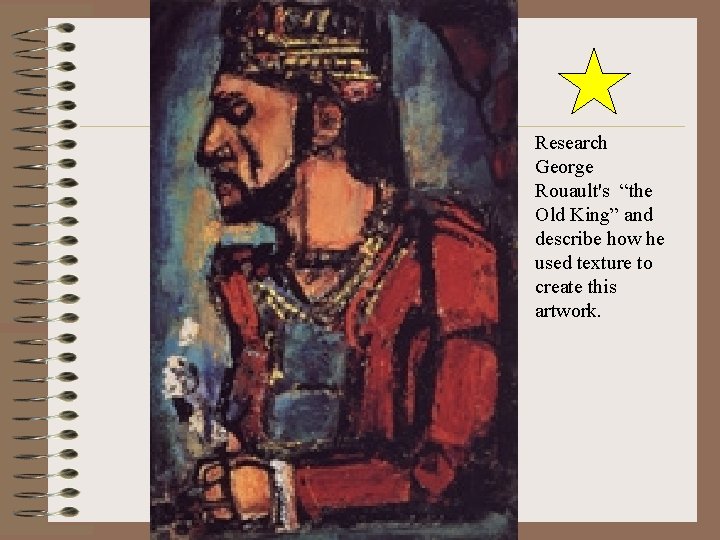
Research George Rouault's “the Old King” and describe how he used texture to create this artwork.
Review Questions 1. The Elements of art are? 2. Shapes can be _____ or _____. 3. Space can be _____ or _____.
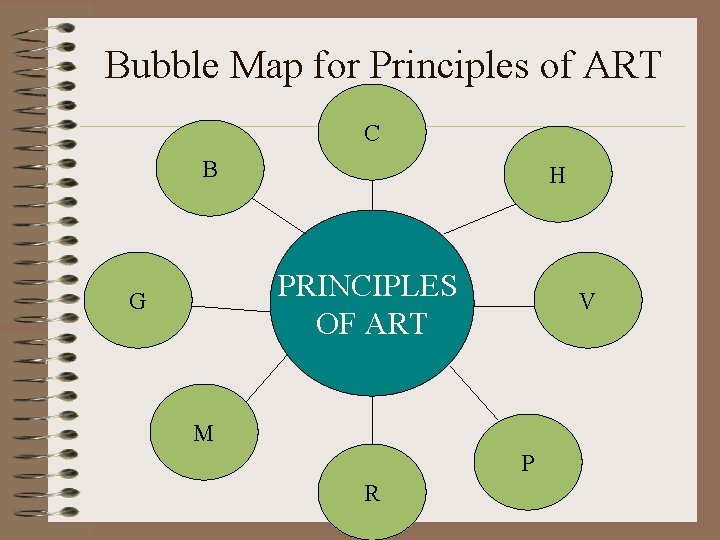
Principles of Art • Balance: symmetrical vs. asymmetrical • Contrast: differences • Harmony: like aesthetics, how everything works together • Variety: relationships
Principles of Art • Gradation: changes • Movement: eye • Rhythm: how the objects respond to each other in a beat pattern • Proportion: size
Bubble Map for Principles of ART C B H PRINCIPLES OF ART G V M P R
Review Questions 1. 2. The Principles of Art are? How would you use the principles to talk about art?
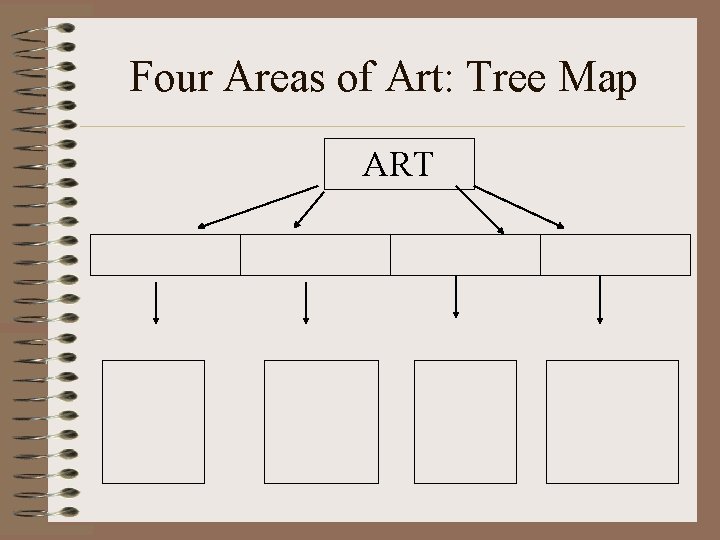
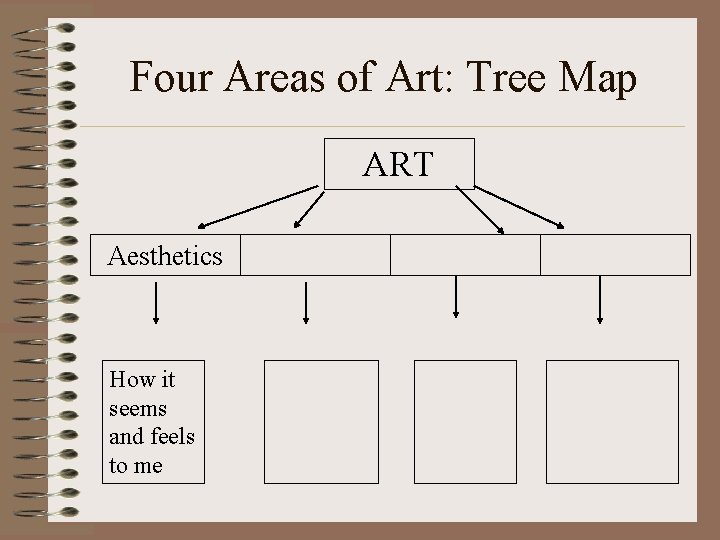
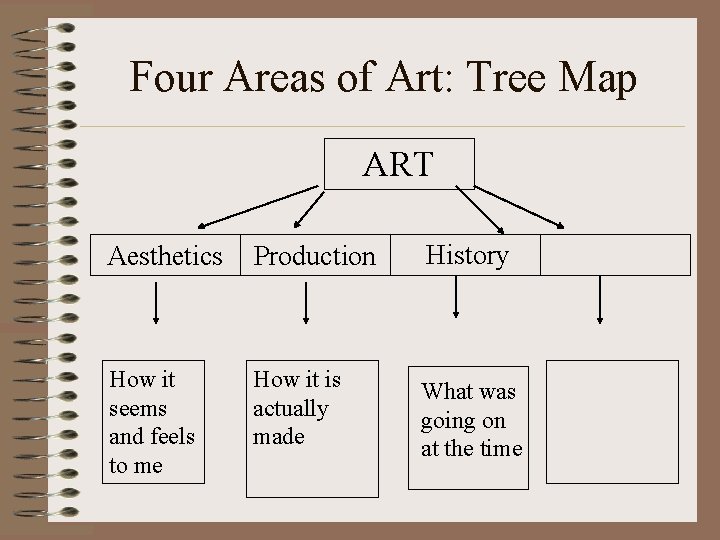
Four Areas of Art: Tree Map ART
AESTHETICS • How a Painting “feels to me” • The qualities that contribute to the nature of beauty in art
Four Areas of Art: Tree Map ART Aesthetics How it seems and feels to me
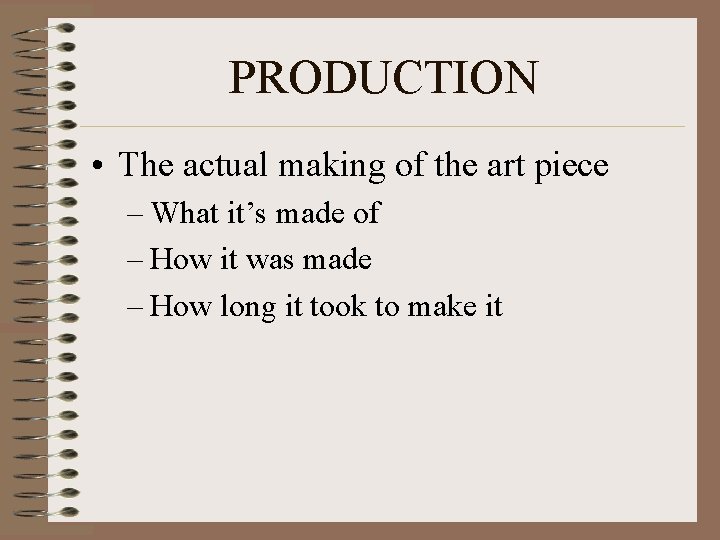
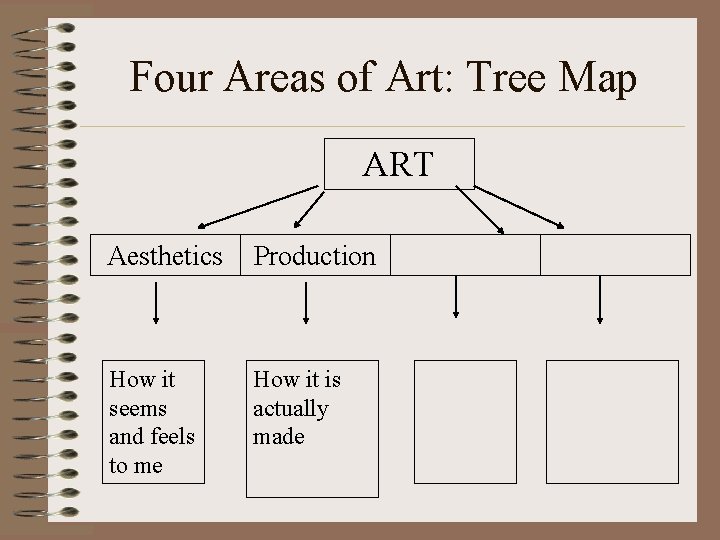
PRODUCTION • The actual making of the art piece – What it’s made of – How it was made – How long it took to make it
Four Areas of Art: Tree Map ART Aesthetics Production How it seems and feels to me How it is actually made
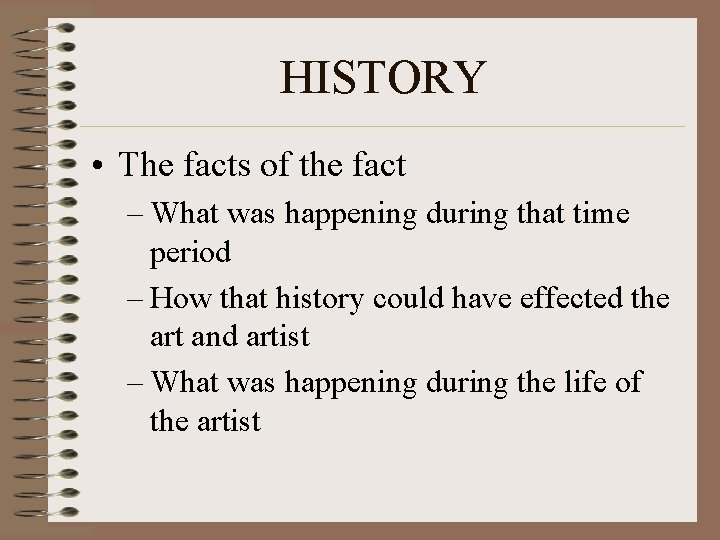
HISTORY • The facts of the fact – What was happening during that time period – How that history could have effected the art and artist – What was happening during the life of the artist
Four Areas of Art: Tree Map ART Aesthetics Production History How it seems and feels to me How it is actually made What was going on at the time
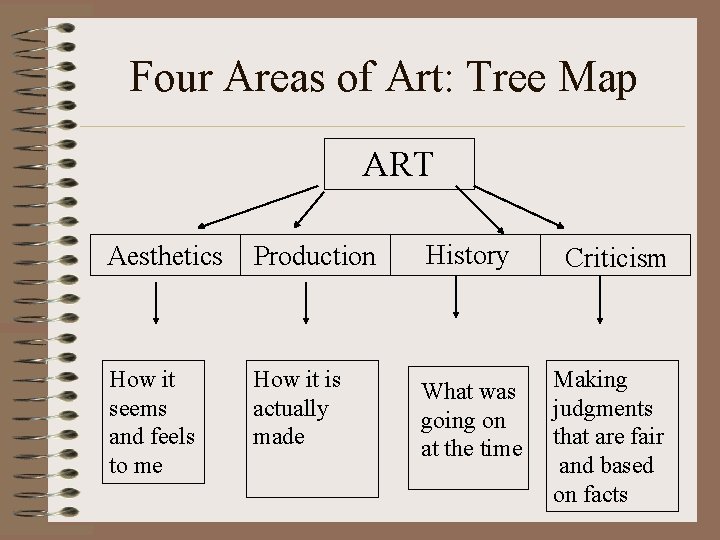
CRITICISM • Making sound judgments with sound reasoning
Four Areas of Art: Tree Map ART Aesthetics Production History How it seems and feels to me How it is actually made What was going on at the time Criticism Making judgments that are fair and based on facts
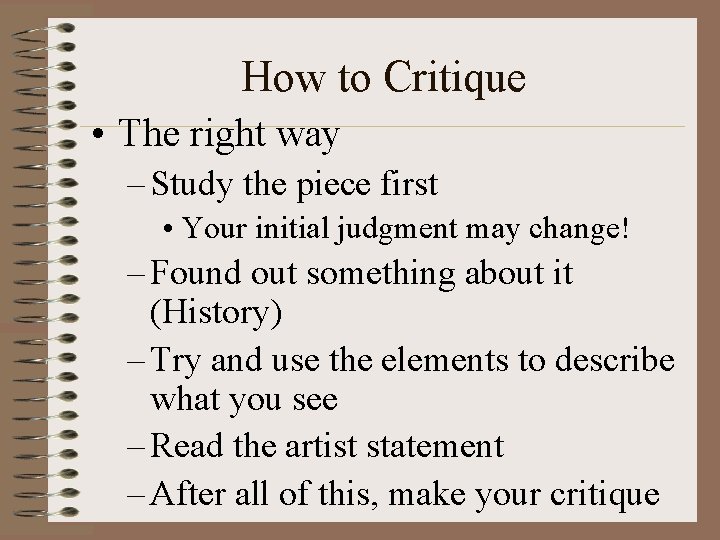
How to Critique • The right way – Study the piece first • Your initial judgment may change! – Found out something about it (History) – Try and use the elements to describe what you see – Read the artist statement – After all of this, make your critique
Review Questions 1. The fours areas of art are used together to ? 2. Why is history important in art production? 3. Why is production important in the art process?
THEATRE • ELEMENTS OF THEATRE • ELEMENTS OF DRAMA • FORMS OF DRAMA • PLACEMENT ON STAGE • ELEMENTS OF PLOT
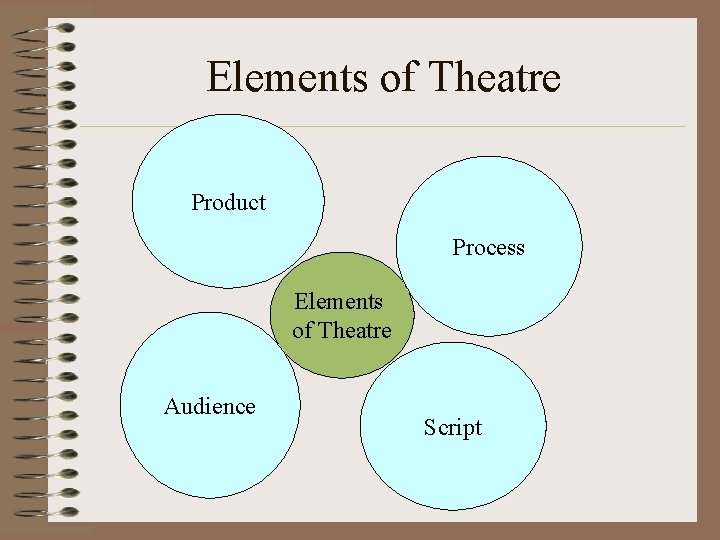
ELEMENTS OF THEATRE • SCRIPT/TEXT/SCENARIO/PLAN – The starting point of the performance, the text by which theatre is created • PROCESS – When the story comes alive with the aid of everyone involved.
ELEMENTS OF THEATRE • PRODUCT – The final outcome of the script and the process • AUDIENCE – Without this nothing matters
Elements of Theatre Product Process Elements of Theatre Audience Script
Basic Definitions • Theatre: an art form based on the interpretation of dramatic literature combining playwriting, acting , directing, and stagecraft. • Drama: a piece of writing intended for stage presentation
Basic Definitions • Audience: one or more persons who observe the scene or play • Spectacle: all visual elements of production
Basic Definitions • Character: a person, animal or entity in a story, scene, or play with specific attributes • Dialogue: words spoken by the characters to communicate
PLAYWRIGHT’S STEPS Anyone can write a play or a story in any way, but here are the basic steps: 1. Idea 2. Genre and Style 3. Basic Action of work/Creating Plot
PLAYWRIGHT’S STEPS 4. Character Development 5. Dialogue 6. Music and Spectacle 7. Research/Relevance
ELEMENTS OF DRAMA • THOUGHT/THEME/IDEA • SPECTACLE • ACTION/PLOT
ELEMENTS OF DRAMA • CHARACTERS • LANGUAGE • MUSIC
The 5 W’s • WHO: refers to roles and characterizations • WHERE: setting, locale, environment • WHAT: dramatic action
The 5 W’s • WHEN: time of hour, day, week, year • WHY: motivation
FORMS OF DRAMA • TRAGEDY –An imitation of an action that is serious –Strong emotional impact
FORMS OF DRAMA • TRAGEDY – A hero whom everyone loves had a profound down fall and has to rise from the ashes – Audience will learn some kind of a lesson and leave feeling uplifted and enlightened
FORMS OF DRAMA • COMEDY –Physical and energetic emotion –Characters act absurd and cause audience to want to correct their behaviors
FORMS OF DRAMA • COMEDY – Because of this, the audience learns not to act crazy and lunatic – Playwrights uses comic devices as exaggeration, incongruity, surprise, repetition, wisecracks, sarcasm.
FORMS OF DRAMA • MELODRAMA –Good vs. evil –Sense of strict moral judgment –Good is rewarded and bad is punished
FORMS OF DRAMA • MELODRAMA –Disaster! –Protagonist is usually a victim of circumstance –Antagonist suffers an inevitable fate
FORMS OF DRAMA • TRAGICOMEDY –Most life like of all the genres –Non-judgmental –Ends with no absolutes
FORMS OF DRAMA • TRAGICOMEDY –It focuses on character relationships –Shows society in a state of flux (change) –Mix of comedy and tragedy
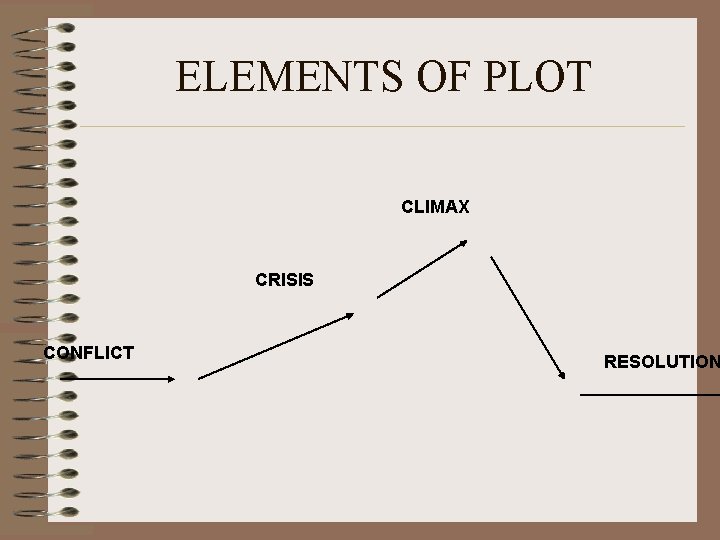
ELEMENTS OF PLOT • CONFLICT: initial problem • CRISIS: turning point
ELEMENTS OF PLOT • CLIMAX: point of highest interest • RESOLUTION: conclusion
ELEMENTS OF PLOT CLIMAX CRISIS CONFLICT RESOLUTION
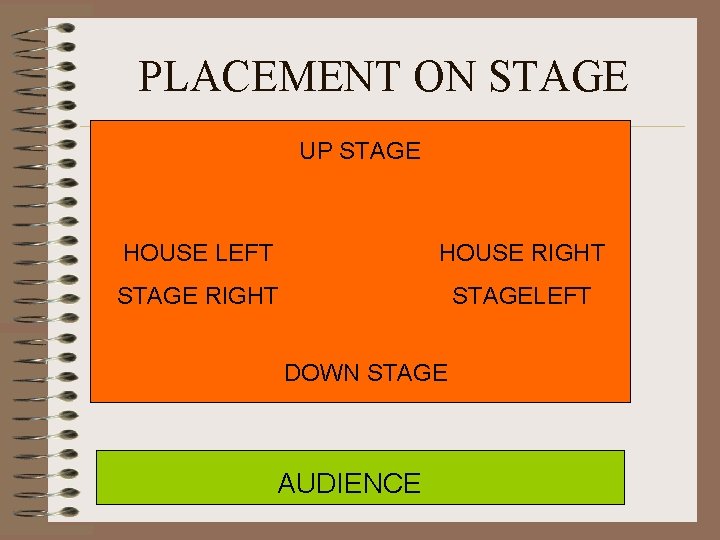
PLACEMENT ON STAGE UP STAGE HOUSE LEFT HOUSE RIGHT STAGELEFT DOWN STAGE AUDIENCE
Review Questions 1. 2. 3. The elements of theater are? List what would qualify as spectacle. Why is the audience important to theater?
MUSIC • ELEMENTS OF MUSIC • BASIC MUSIC
ELEMENTS OF MUSIC • MELODY – The main idea in a piece of music. – What You hum when you listen to a song or other piece of music. – Usually the most memorable and sing-able line of music in a piece.
ELEMENTS OF MUSIC • HARMONY –Other threads of music that aren't meant to stand alone. – the simultaneous sounding of tones
ELEMENTS OF MUSIC • HARMONY – They exist only to support the melody and augment whatever feeling the melody is trying to convey.
ELEMENTS OF MUSIC • RHYTHM –the organization of musical tones with regard to their duration as distinct from their pitches
ELEMENTS OF MUSIC • DYNAMICS =the loudness and quietness of sound
ELEMENTS OF MUSIC • crescendo (cresc. ) – gradually getting louder • decrescendo (decresc. ) – gradually getting quieter
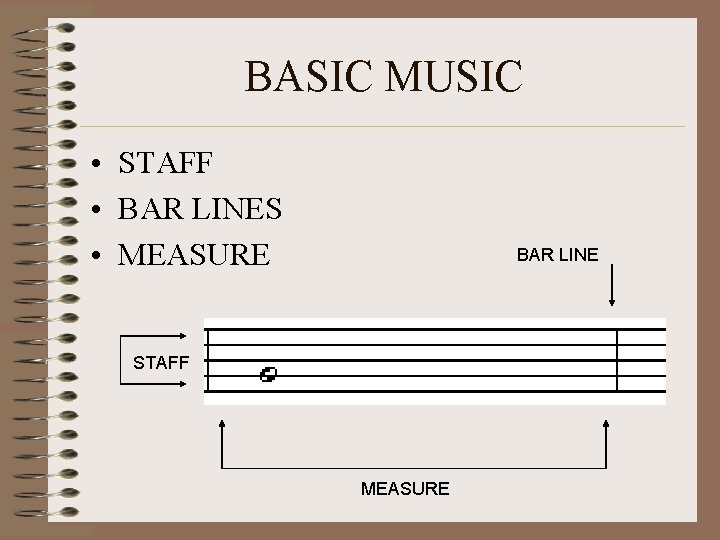
BASIC MUSIC • STAFF • BAR LINES • MEASURE BAR LINE STAFF MEASURE
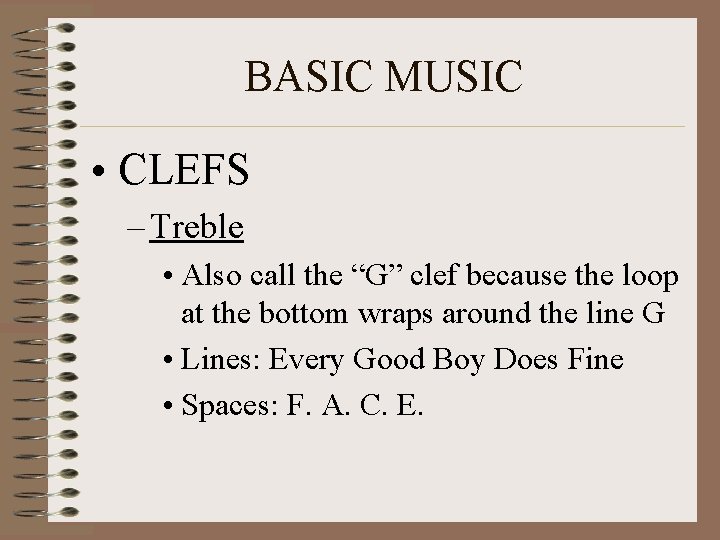
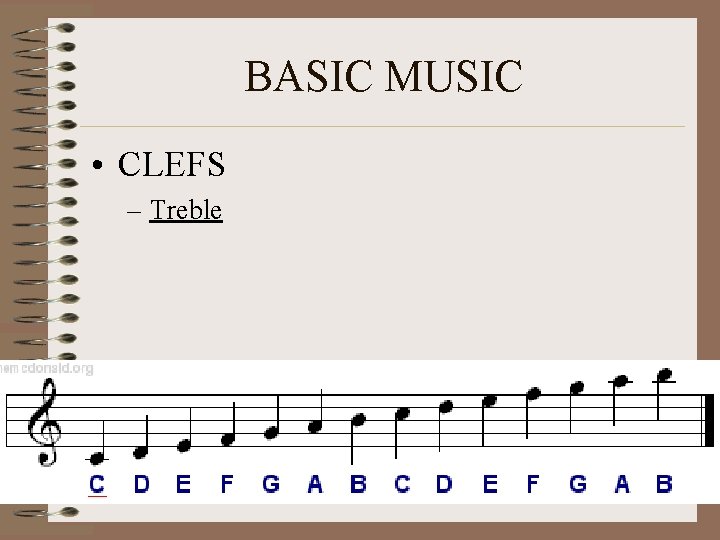
BASIC MUSIC • CLEFS – Treble • Also call the “G” clef because the loop at the bottom wraps around the line G • Lines: Every Good Boy Does Fine • Spaces: F. A. C. E.
BASIC MUSIC • CLEFS – Treble
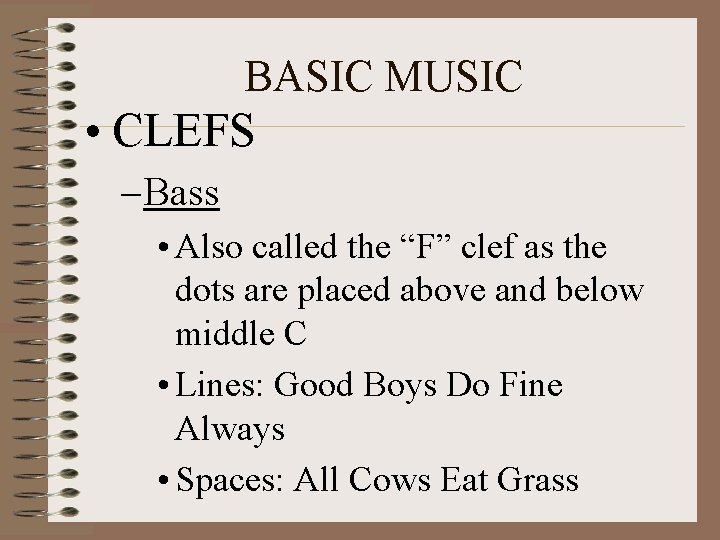
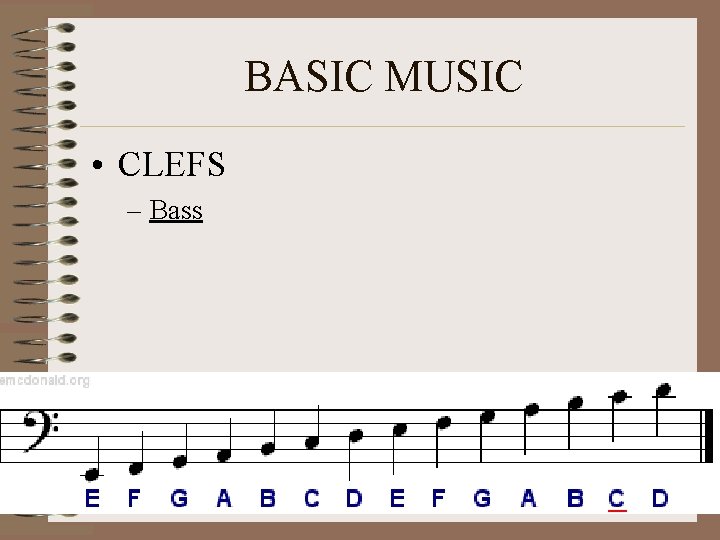
BASIC MUSIC • CLEFS – Bass • Also called the “F” clef as the dots are placed above and below middle C • Lines: Good Boys Do Fine Always • Spaces: All Cows Eat Grass
BASIC MUSIC • CLEFS – Bass
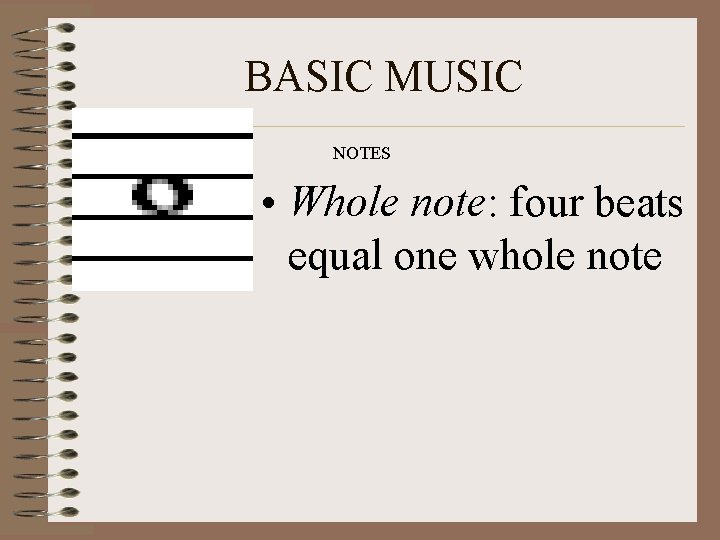
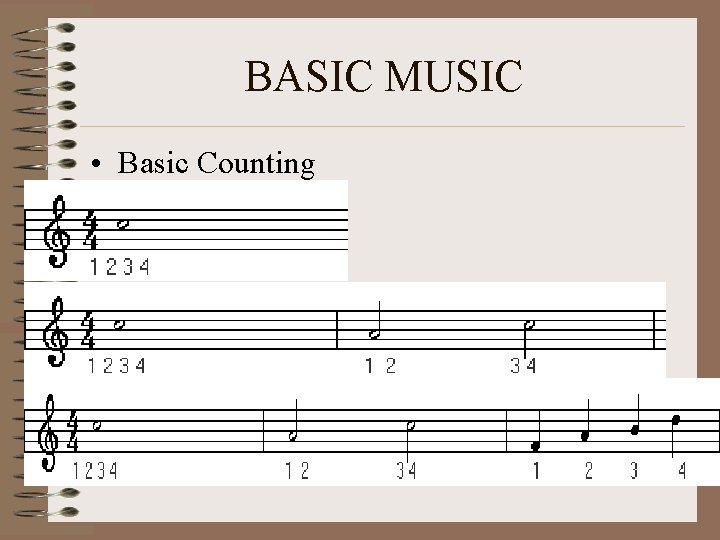
BASIC MUSIC NOTES • Whole note: four beats equal one whole note
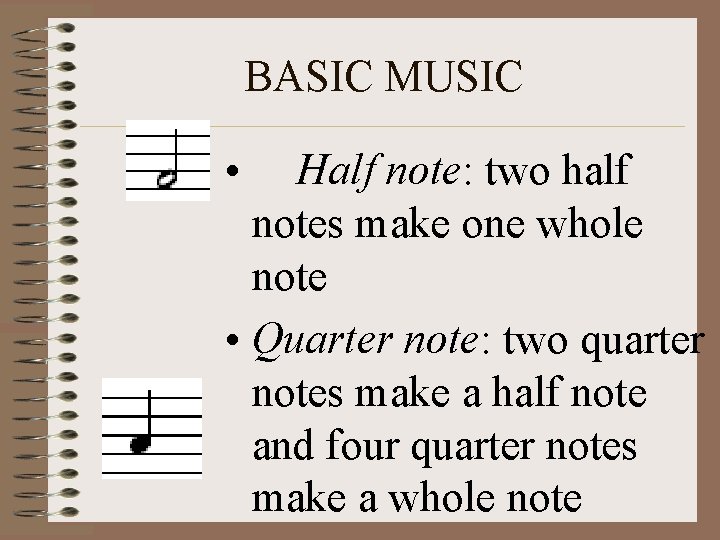
BASIC MUSIC • Half note: two half notes make one whole note • Quarter note: two quarter notes make a half note and four quarter notes make a whole note
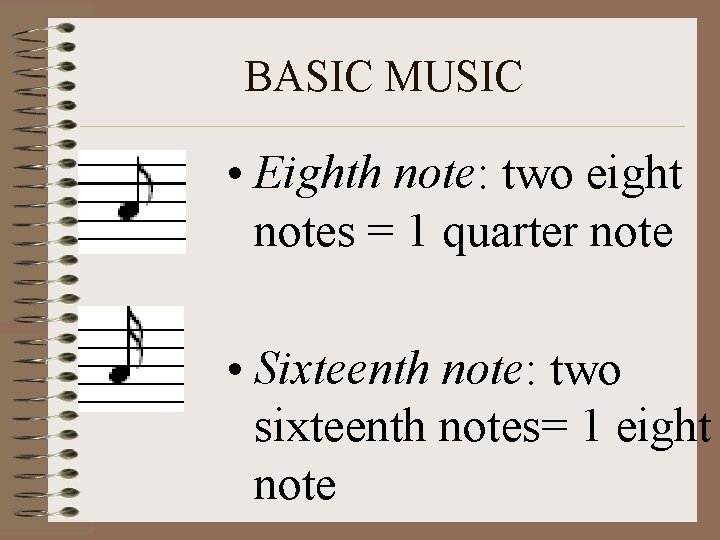
BASIC MUSIC • Eighth note: two eight notes = 1 quarter note • Sixteenth note: two sixteenth notes= 1 eight note
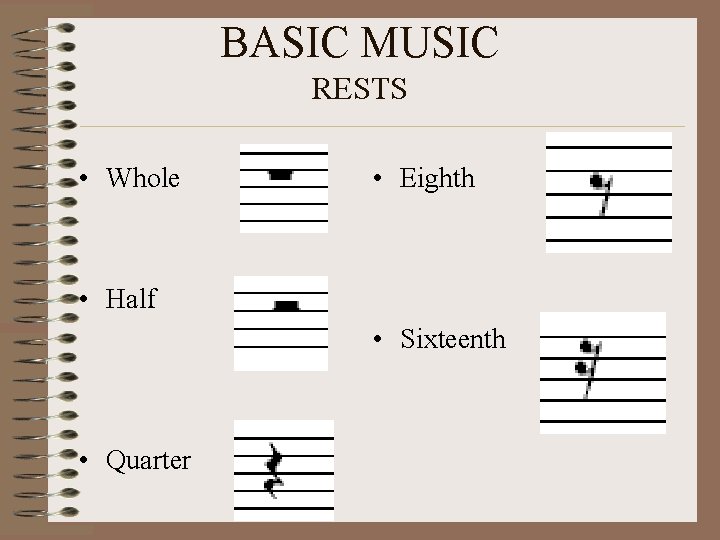
BASIC MUSIC RESTS • Whole • Eighth • Half • Sixteenth • Quarter
BASIC MUSIC • Basic Counting
Looking at Music Lyrics • What is a lyric? • Can you have music without lyrics? • How do lyrics enhance music?
Review Questions 1. 2. 3. The lines and spaces for the treble clef are? The lines and spaces for the bass clef are? How many eighth notes make up one whole note?