
THE INTERWAR ERA AMERICA BEFORE THE WAR TIMELINE
THE INTERWAR ERA: AMERICA BEFORE THE WAR

TIMELINE
NATIONALISM • Nationalism – loyalty to ones country above all else • Nationalist sentiment in extreme forms existed before WWII and still exists. • (e. g. ) (Ancient) The Mongols; (Modern) North Korea • After World War I, many of the countries involved began to express a fierce sense of nationalism.
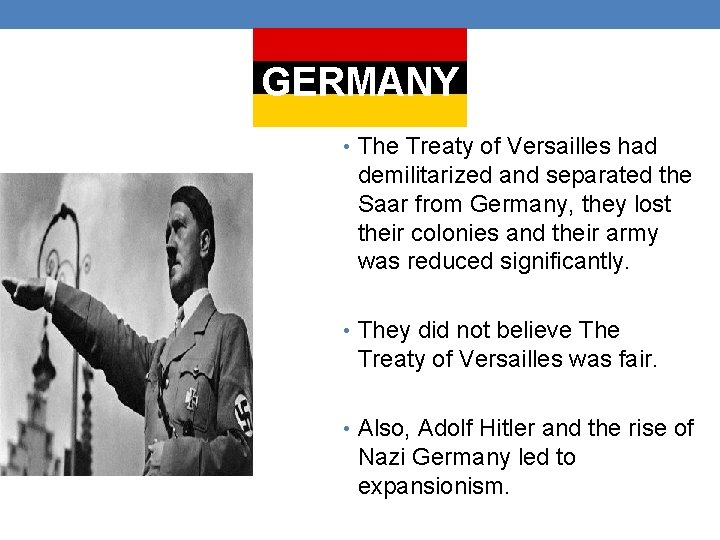
GERMANY • The Treaty of Versailles had demilitarized and separated the Saar from Germany, they lost their colonies and their army was reduced significantly. • They did not believe The Treaty of Versailles was fair. • Also, Adolf Hitler and the rise of Nazi Germany led to expansionism.
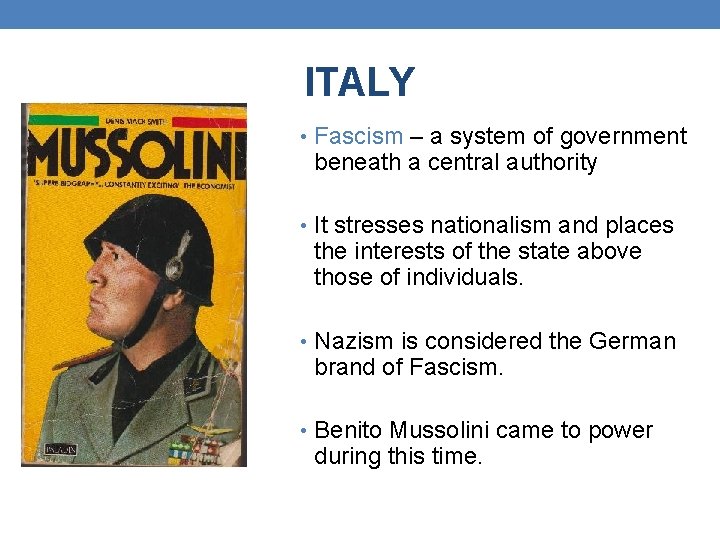
ITALY • Fascism – a system of government beneath a central authority • It stresses nationalism and places the interests of the state above those of individuals. • Nazism is considered the German brand of Fascism. • Benito Mussolini came to power during this time.
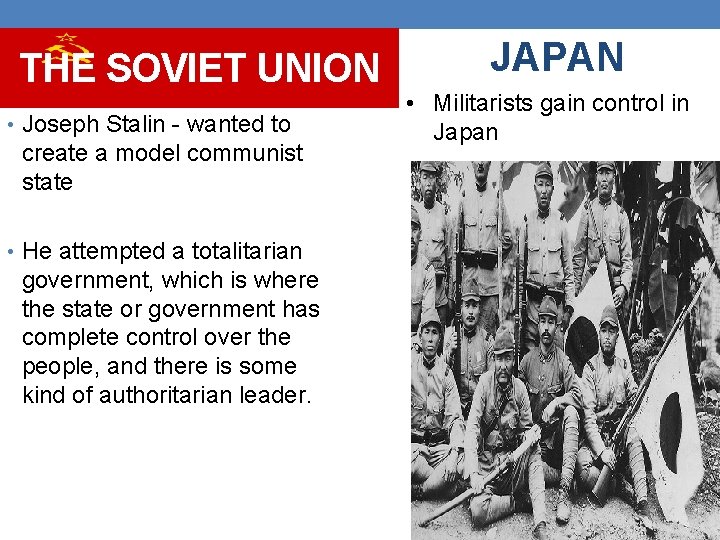
THE SOVIET UNION • Joseph Stalin - wanted to create a model communist state • He attempted a totalitarian government, which is where the state or government has complete control over the people, and there is some kind of authoritarian leader. JAPAN • Militarists gain control in Japan
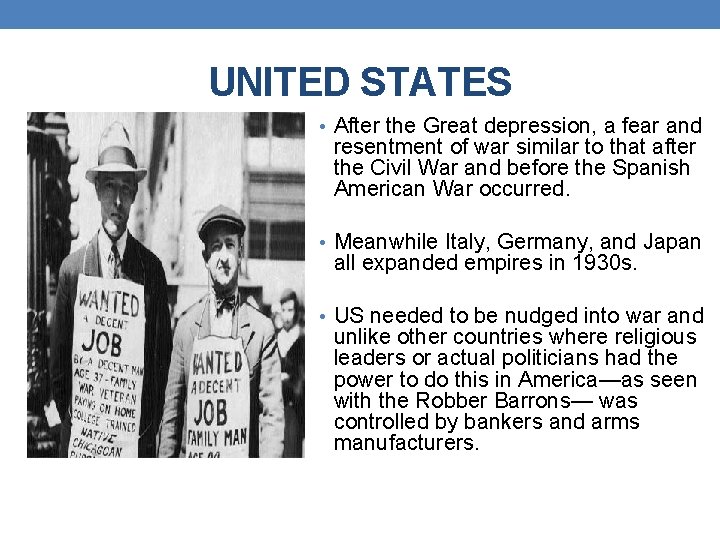
UNITED STATES • After the Great depression, a fear and resentment of war similar to that after the Civil War and before the Spanish American War occurred. • Meanwhile Italy, Germany, and Japan all expanded empires in 1930 s. • US needed to be nudged into war and unlike other countries where religious leaders or actual politicians had the power to do this in America—as seen with the Robber Barrons— was controlled by bankers and arms manufacturers.

THE BEGINNING OF WAR • On September 1 st 1939 Germany invaded Poland. • Subsequently, England France declared war on Germany. • Also, news of rapid German advances in Europe began to change American attitudes.
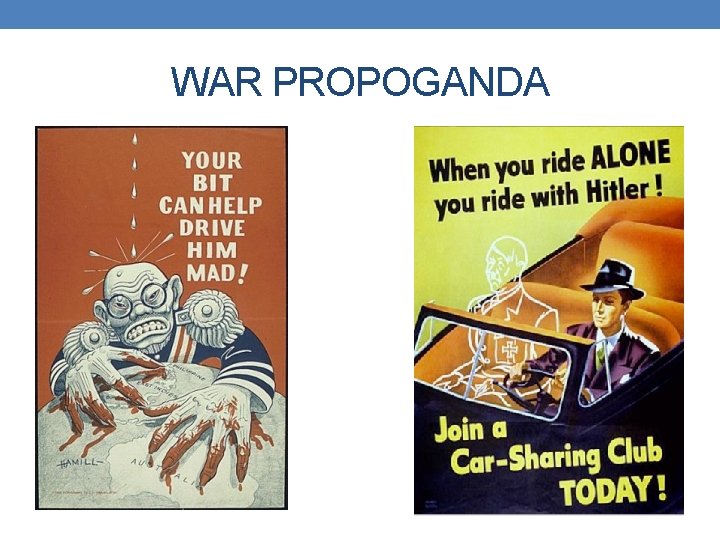
WAR PROPOGANDA

US RELUCTANCE TO GO WAR • A non-interventionist group known as The America First Committee attracted nearly 820, 000 members by 1940. • Neutrality Acts of 1935 stated that if countries went to war, US would not trade arms of weapons with them for 6 months • Any nonmilitary goods sold to nations at war would have to be paid for up front and transported in non-American ships (“cash-and-carry”).
ROOSEVELT IS A STEAM ROLLER • September 1940, Roosevelt gave Great Britain 50 older American destroyers in return for the rights to build military bases in Bermuda and Newfoundland. • German expansionism in Europe convinced Franklin Roosevelt that US would soon have to enter war on side of Great Britain although public opinion opposed this. • Roosevelt asked congress to pass Neutrality Act of 1939, and the bill passed on a party-line vote.

“ ARSENAL OF DEMOCRACY ” • In the 1920 s Woodrow Wilson had a vision of the US as an active leader on the world stage. However, public opinion opposed this. • In 1941, Roosevelt secretly met with British Prime Minister Winston Churchill. • The Atlantic charter was a joint declaration by the two that opposed territorial expansion for either US and GB, wanted free trade and selfdetermination. • Also, they wanted to replace League of Nations.
THE MIDDLE EAST • Zionism – a national movement that worked to create a Jewish national state in Palestine. • 1930 s increased hope that Jewish homeland could be established in Palestine • Increased persecution of German Jews began in the mid-1930 s. Also, pressure began to be exerted on European countries as well on the US to allow more German Jews to immigrate. • White Paper issued by the British government in 1939 limited the number of Jewish peoples who could immigrate to Palestine • Also, American public opinion was against having more immigrants in the country after the Great depression. • Also, anti-semitic sentiment existed in the US.
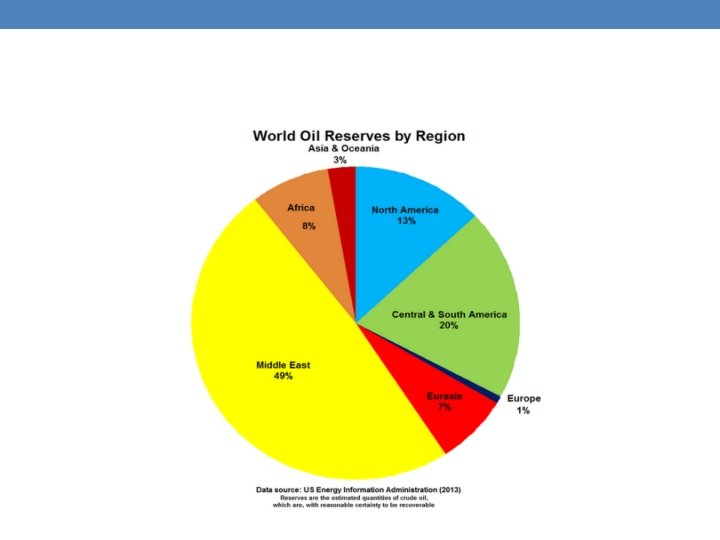
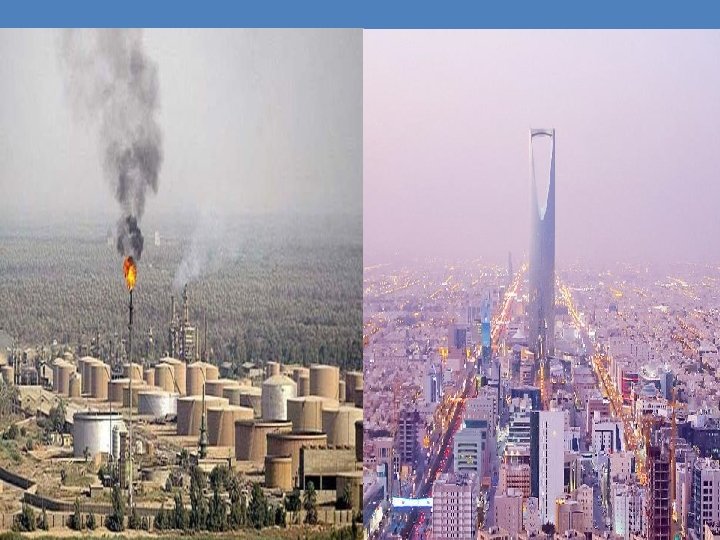
THE MIDDLE EAST CONT’D • America political involvement in the Middle East became scarce, but France and Great Britain exerted tremendous influence in the region. • France had a mandate control over Syria and Lebanon, and Britain controlled Iraq, Transjordan and Palestine. • In 1932, Iraq gets independence, but the British still influenced government officials and actions there. • Oil in the middle East was a huge concern. • In 1928 British, French, Dutch and American oil companies agreed to the Red Line Agreement, which said they could export oil from the region. America began to export from Iraq in late 1928. • In 1933, Saudi Arabia granted Standard Oil of California the right to export Saudi Arabian oil. (5 years later geologists found huge oil reserves there. ) • US began to actively protect its oil reserves in Saudi Arabia from attack by axis powers using its military.
THE ELECTION OF 1940 • Wendell Willkie (republican) vs. Roosevelt (democrat) • Roosevelt won even though some were protesting against widespread poverty and unemployment didn’t vote for him. • He was the first and only president elected for 3 terms. • In early 1941, Roosevelt proposed giving British aid for the war w/o getting cash (lend Lease act). • Congress gave the press the ability to send immediate aid to Britain.
ASIAN EMPIRE • The Japanese wanted a Pacific Empire. • They invaded Manchuria in 1931, attacked eastern China in 1937 and occupied some of French Indochina in 1941. • Roosevelt froze all Japanese assets in US, cut off sale of oil in Japan and closed Panama Canal to Japanese ships • Japan really wanted to regain trade relations with US, but the US wouldn’t until Japan left China.
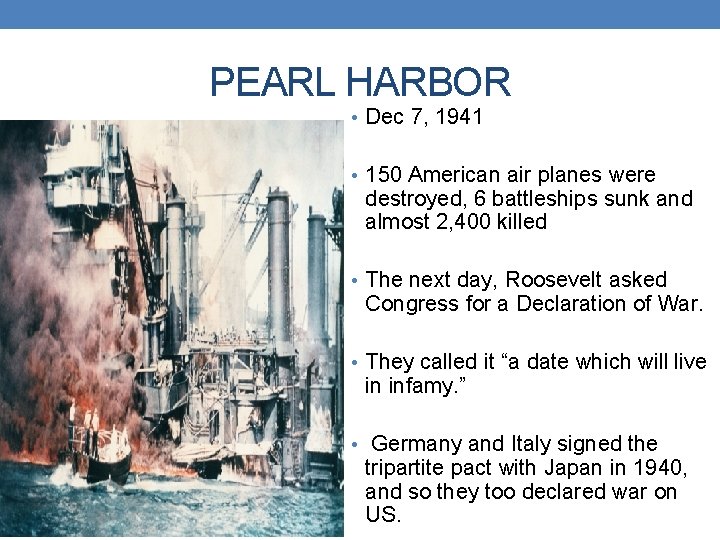
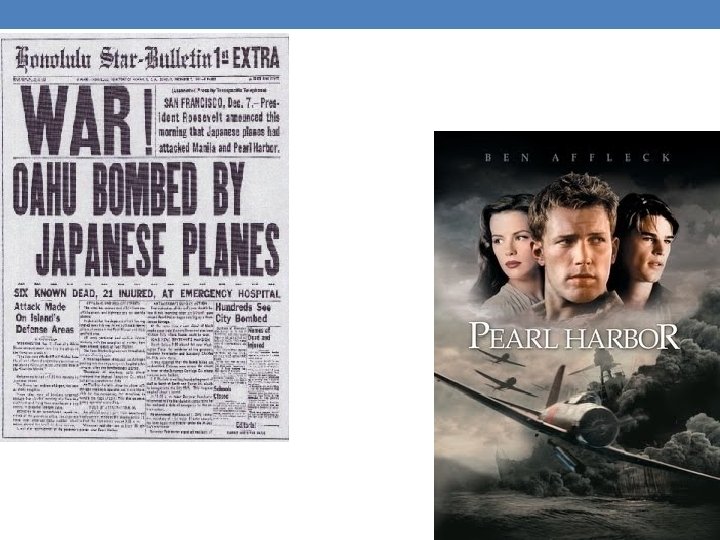
PEARL HARBOR • Dec 7, 1941 • 150 American air planes were destroyed, 6 battleships sunk and almost 2, 400 killed • The next day, Roosevelt asked Congress for a Declaration of War. • They called it “a date which will live in infamy. ” • Germany and Italy signed the tripartite pact with Japan in 1940, and so they too declared war on US.

PREPARING FOR WAR • After Pearl Harbor, men are drafted and volunteered for service, and referred to as GI’s (Government Issued). • In 1940, a Council for National Defense worked rapidly to convert factories over to war production. • In 1942, General Maximum Price Regulation Act froze prices and established a rationing system. • In 1942, the Revenue Act of 1942 expanded the number of Americans who had to pay federal income tax thus increasing the amount of federal revenue.
SOURCES • Mc. Dougal Little US History textbook • APUSH 5 Steps to a 5
- Slides: 23