
The Intersection of Race Disability and Policing 2017
The Intersection of Race, Disability, and Policing 2017 Policing People with Disabilities Series Webinar 1/3 January 19, 2017 The Arc's National Center on Criminal Justice and Disability® (NCCJD®)
Welcome to The Intersection of Race, Disability, and Policing • The webinar will begin promptly at 1: 00 pm EST • Live captioning is available here: http: //west. captionviewer. com/pkmhhknc –Just copy and paste the link into a separate browser window • If possible, please use your computer for audio instead of your phone • If you have any technical problems during the webinar, please visit the Web. Ex Help Desk or call (866) 229 -3239 • Today’s webinar will be recorded and archived on the NCCJD website
The Arc's National Center on Criminal Justice and ® ® Disability (NCCJD ) Leigh Ann Davis, M. S. S. W. , M. P. A. , Director, Criminal Justice Initiatives Ariel Simms, J. D. , Criminal Justice Fellow
Welcome to The Intersection of Race, Disability, and Policing • Live captioning is available here: http: //west. captionviewer. com/pkmhhknc –Just copy and paste the link into a separate browser window • If possible, please use your computer for audio instead of your phone • If you have any technical problems during the webinar, please visit the Web. Ex Help Desk or call (866) 229 -3239 • Today’s webinar will be recorded and archived on the NCCJD website
About NCCJD • Created in 2013 – grant from Bureau of Justice Assistance (BJA) • Advocate at the intersection of criminal justice reform and the advancement of disability rights –Work on both victim/witness issues and on issues facing those who are charged with crimes and/or incarcerated
About NCCJD GOAL: Build the capacity of the criminal justice system to respond to gaps in existing services for people with disabilities, with a focus on I/DD. Activities: Training, technical assistance, resource collection, publication, education
Thank You to Our Panelists: • Lorrell Kilpatrick, Everybody Counts • Janine Jackson, African American Policy Forum (formerly Kimberlé Crenshaw) • David M. Perry, Dominican University • Ronald Hampton, National Police Accountability Project
2017 Policing People with Disabilities Webinar Series • Today: focus on the problem and educate those who may be unaware • May 18 th and September 21 st: highlight potential solutions from around the country –If you have potential solutions/programs to share, email NCCJDinfo@thearc. org
Group Norms • Be present and engaged –Active listening • Challenge ideas, not people –Have a norm of curiosity • Recognize varying perspectives on the problem and how we try to solve it moving forward –Every perspective is valid
The Arc's National Center on Criminal Justice and ® ® Disability (NCCJD ) Leigh Ann Davis, M. S. S. W. , M. P. A. , Director, Criminal Justice Initiatives Ariel Simms, J. D. , Criminal Justice Fellow
“Our lives begin to end the day we become silent about things that matter” – MLK Jr. • How and why are we silent about this issue? • How are people with disabilities included or excluded in these discussions? • What are we afraid of uncovering if we dig a bit deeper below the surface? • What tools can be used to create authentic, genuine communication and community?

Reginald “Neli” Latson VA Governor Mc. Auliffe signs the conditional pardon of Reginald "Neli" Latson on Jan 20, 2015
Grassroots Activism & Advocacy in Response to State Violence Lorrell D. Kilpatrick, M. S. Social Justice Activist/Instructor Everybody Counts North/Indiana University Northwest
Grassroots Activism & Advocacy in Response to State Violence • The Indiana Situation - #INSituation –Fighting for disability justice within Independent Living (IL) https: //docs. google. com/document/d/1 k. Hdj. Wac. H 6 Tb. E 0 EZPHo. Nfs 82 o 5 V 3 Yb. Vjcoiu. S 4 qjx. UU/edit • Use of state violence - cops & courts • Suppression and silencing of voices • https: //indiana. adobeconnect. com/p 42 sp 261 syg/? launcher=false& fcs. Content=true&pb. Mode=normal (1: 13: 00 -1: 20: 23) • https: //indiana. adobeconnect. com/p 96 ev 5 ihpjo/? launcher=false& fcs. Content=true&pb. Mode=normal (1: 37: 28 -1: 44: 04) • https: //www. facebook. com/13746951/videos/vb. 13746951/10107 365844974558/? type=2&theater (15: 45 -end)
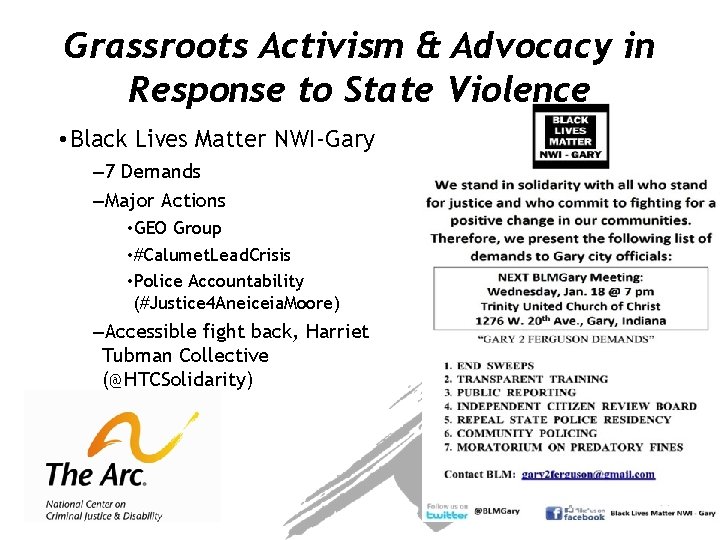
Grassroots Activism & Advocacy in Response to State Violence • Black Lives Matter NWI-Gary – 7 Demands –Major Actions • GEO Group • #Calumet. Lead. Crisis • Police Accountability (#Justice 4 Aneiceia. Moore) –Accessible fight back, Harriet Tubman Collective (@HTCSolidarity)
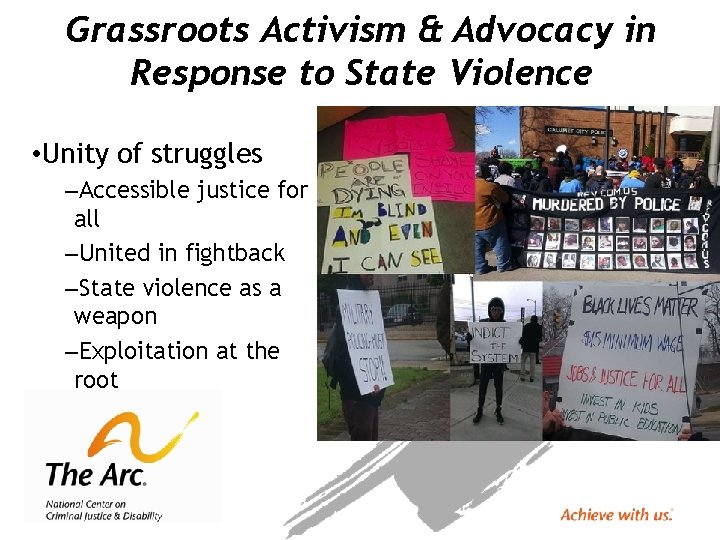
Grassroots Activism & Advocacy in Response to State Violence • Unity of struggles –Accessible justice for all –United in fightback –State violence as a weapon –Exploitation at the root
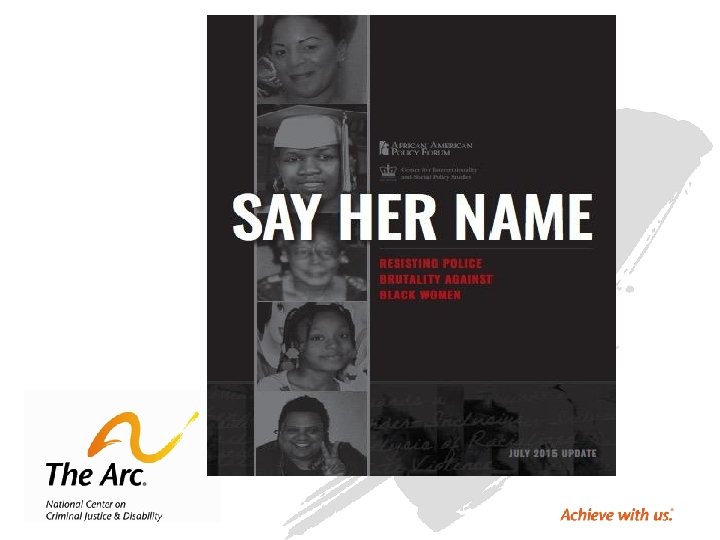
Say Her Name: Race, Gender, and Disability Janine Jackson Board Member African American Policy Forum
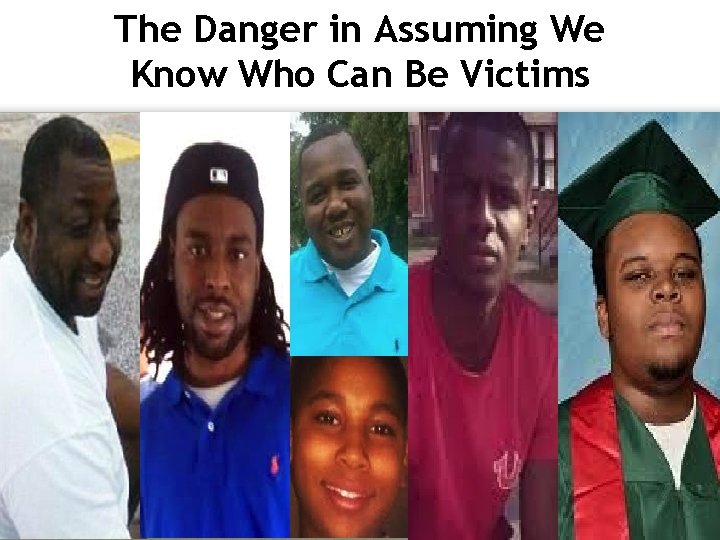
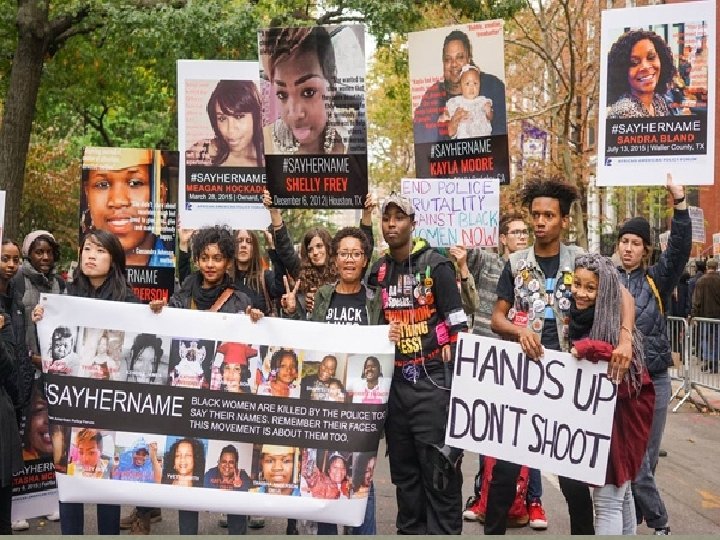
The Danger in Assuming We Know Who Can Be Victims
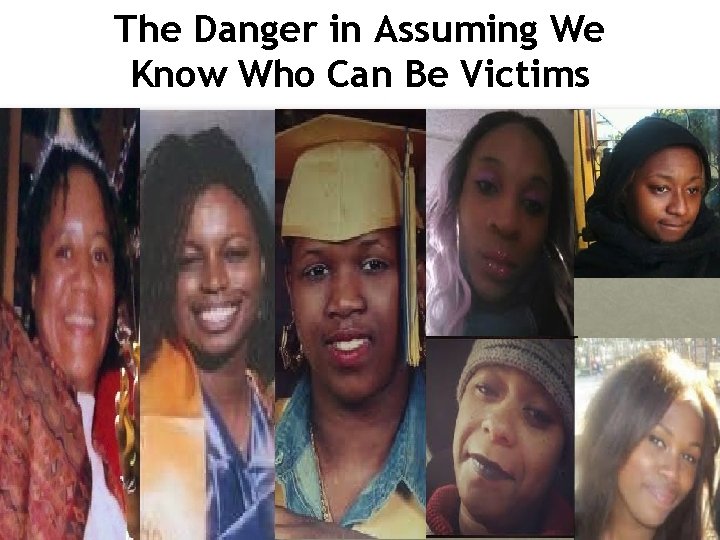
The Danger in Assuming We Know Who Can Be Victims
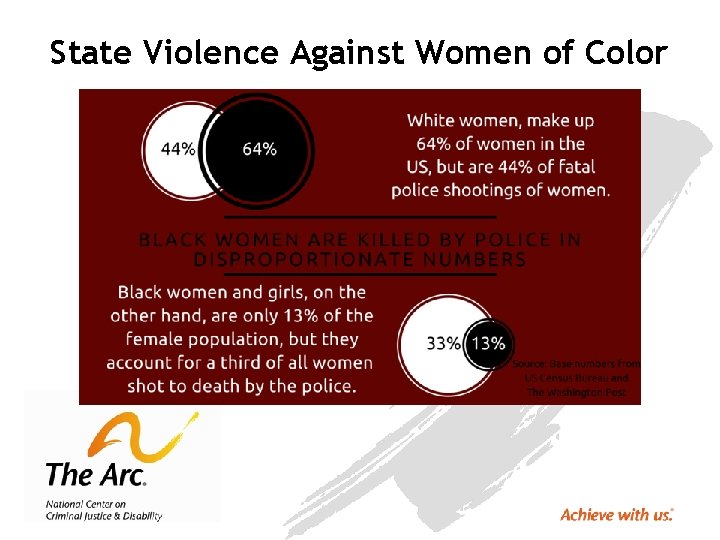
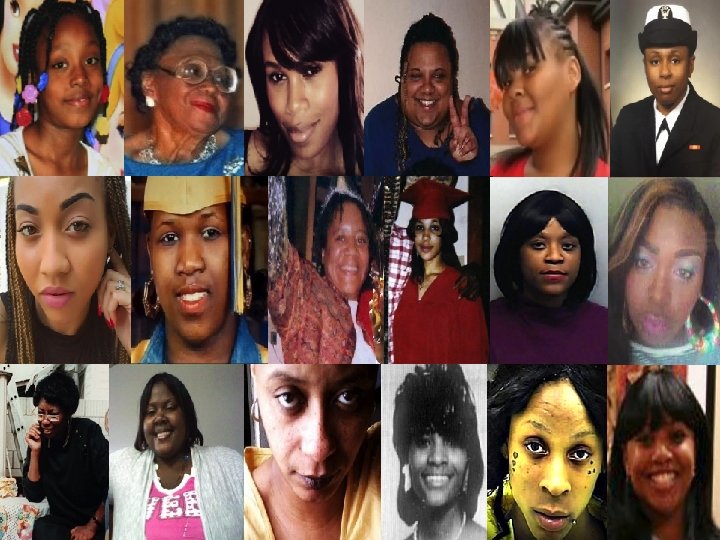
State Violence Against Women of Color
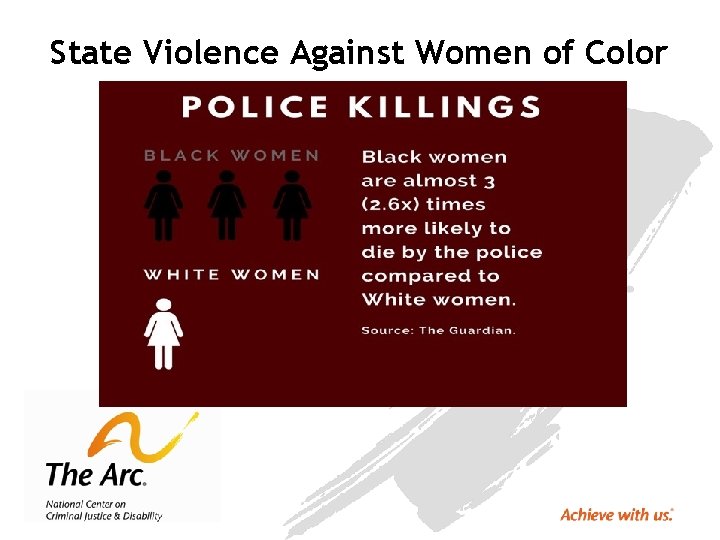
State Violence Against Women of Color
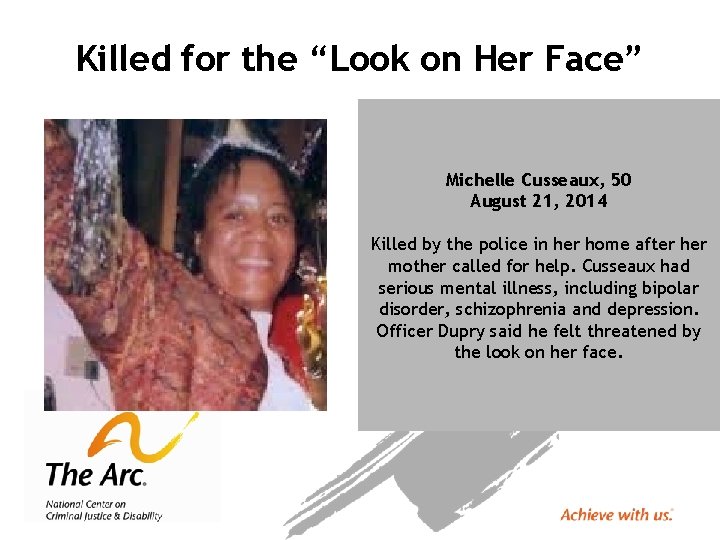
Killed for the “Look on Her Face” Michelle Cusseaux, 50 August 21, 2014 Killed by the police in her home after her mother called for help. Cusseaux had serious mental illness, including bipolar disorder, schizophrenia and depression. Officer Dupry said he felt threatened by the look on her face.
Exemplar • Fran Garrett, Michelle Cusseaux’s mother, has been organizing for changes in police training and hiring in Arizona since her daughter’s death • Her efforts have resulted in the adoption of both measures in the Phoenix Police Department: – Mental Health Advisory Board – Crisis Intervention Squad
Media Coverage and the Use of Force Against People with Disabilities David M. Perry Professor of History Dominican University
Media Coverage of Police Use of Force 1. Media coverage is a major part of the story, thanks to ubiquitous video and power of social media to take local stories national 2. Disability in these cases tend to be treated in the following ways: • Disability goes unmentioned or is listed as an attribute without context • An impairment is used to evoke pity or sympathy for the victim • A medical condition or “mental illness” is used to blame victims for their deaths 3. It’s possible to do better David M. Perry, lollardfish@gmail. com, thismess. net
Single Fact and Best Practice for Media • Goal: Teach the media, broadly, a single fact and a single best practice. • The fact: “A third to a half of all people killed by police have disabilities. ” –Ruderman White Paper on Media Coverage of Police Use of Force and Disability • The practice: Reporters should reach out to local disability rights groups from the affected community David M. Perry, lollardfish@gmail. com, thismess. net
Additional Issues to Consider • Regard “more training” with skepticism • Avoid language implying disabled victims suffer from disabilities, rather than gunshots • #Say. The. Word – Disability, not “Special Needs” or other euphemisms David M. Perry, lollardfish@gmail. com, thismess. net
Holding Police Accountable Ronald Hampton Advisory Board Member National Police Accountability Project
Panelist Discussion Question: As advocates, criminal justice professionals, family members, persons with disabilities, etc. , how do we move forward?
Participant Q&A Type your questions for the panelists into the Q&A box on the right-hand side of your Web. Ex screen. If we don’t get to your question, email your question to NCCJDinfo@thearc. org and we will follow-up after the webinar. Don’t forget to register for our next webinar in the 2017 Policing People with Disabilities series (link is also in the chat box).
Thank you for joining us! Don’t forget to fill out the brief survey that will pop-up after the webinar has ended.
- Slides: 34