
The Internet as Communication The importance of interactivity
- Slides: 15
The Internet as Communication The importance of interactivity Implications for mix elements Issues for perspectives
A Resource for Communication n n A unique medium A context for content – Distinction between information and vehicle that conveys it – Distinction between context/vehicle and infrastructure that conveys it n A context with multiple vehicles – Forms of marketing communications
Characterizing Communication n Components – Source – Message – Receiver n Processes – Encoding (by source) – Decoding (by receiver) n Component x process interactions
Parsing the Internet n Marketing communication as a noun – A noun is a thing • E. g. , a message and its form • A “Download Netscape 128. 0 Now!!!! Button n Marketing communication as a verb – A verb is an act • E. g. , the process of sharing information • Interactivity between source and receiver • Interactivity between receiver and content
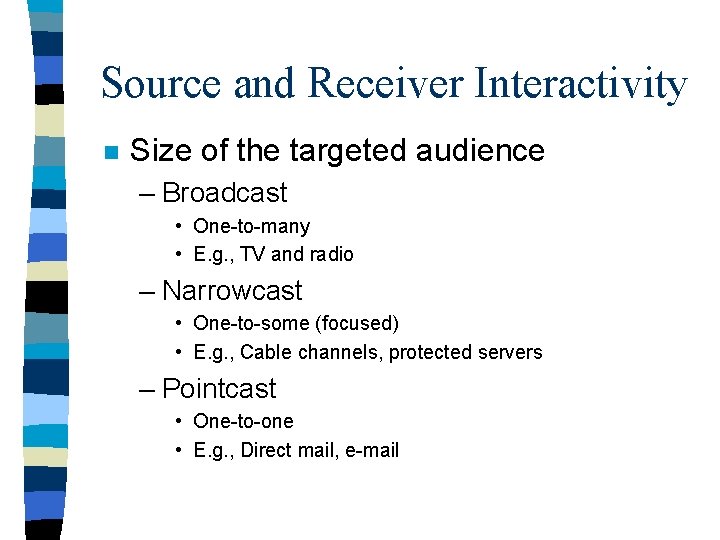
Source and Receiver Interactivity n Size of the targeted audience – Broadcast • One-to-many • E. g. , TV and radio – Narrowcast • One-to-some (focused) • E. g. , Cable channels, protected servers – Pointcast • One-to-one • E. g. , Direct mail, e-mail
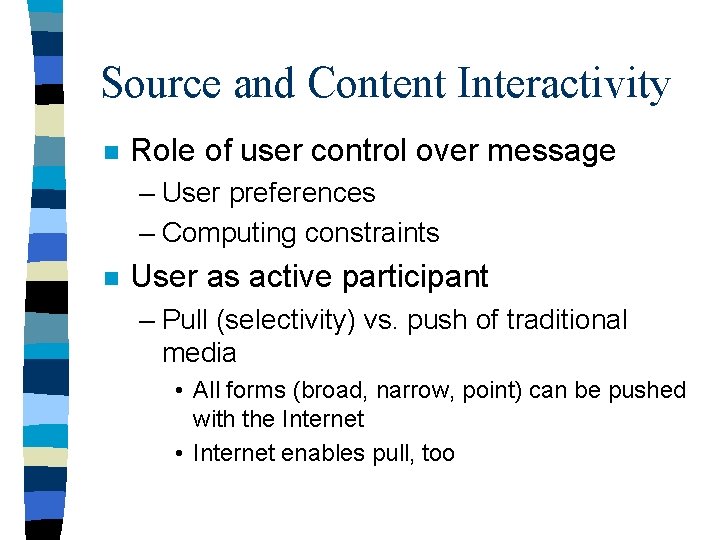
Source and Content Interactivity n Role of user control over message – User preferences – Computing constraints n User as active participant – Pull (selectivity) vs. push of traditional media • All forms (broad, narrow, point) can be pushed with the Internet • Internet enables pull, too
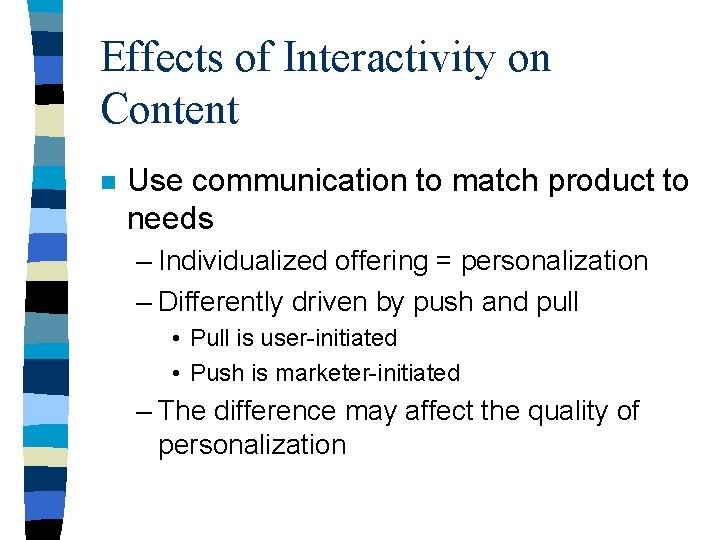
Effects of Interactivity on Content n Use communication to match product to needs – Individualized offering = personalization – Differently driven by push and pull • Pull is user-initiated • Push is marketer-initiated – The difference may affect the quality of personalization
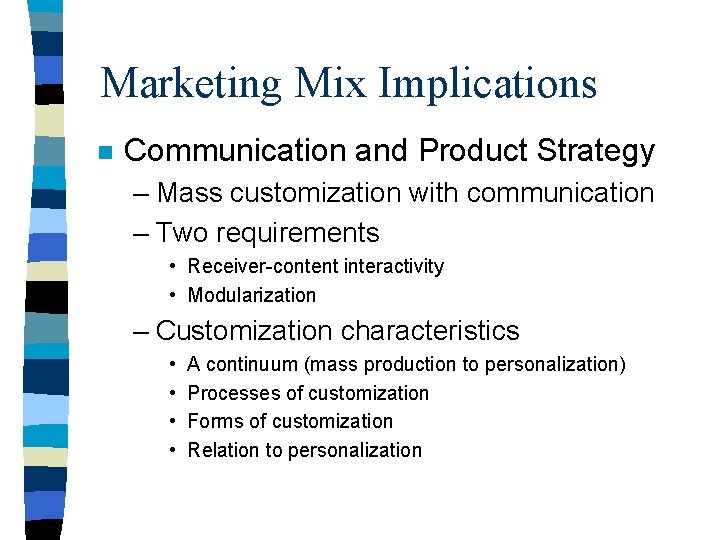
Marketing Mix Implications n Communication and Product Strategy – Mass customization with communication – Two requirements • Receiver-content interactivity • Modularization – Customization characteristics • • A continuum (mass production to personalization) Processes of customization Forms of customization Relation to personalization
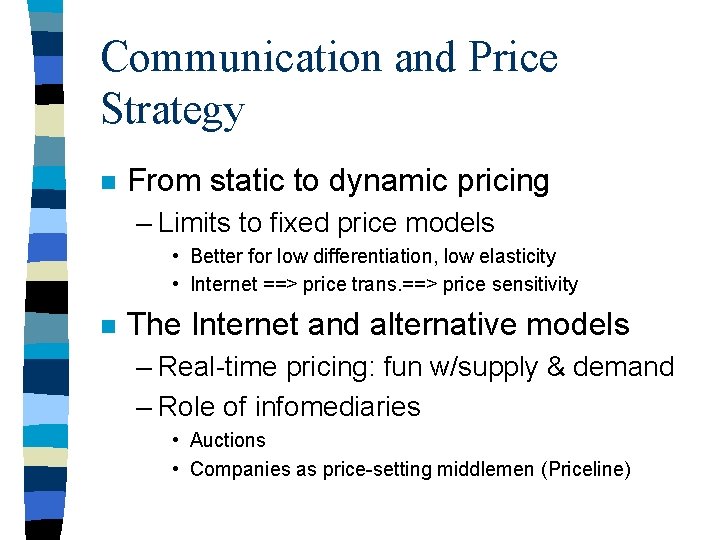
Communication and Price Strategy n From static to dynamic pricing – Limits to fixed price models • Better for low differentiation, low elasticity • Internet ==> price trans. ==> price sensitivity n The Internet and alternative models – Real-time pricing: fun w/supply & demand – Role of infomediaries • Auctions • Companies as price-setting middlemen (Priceline)
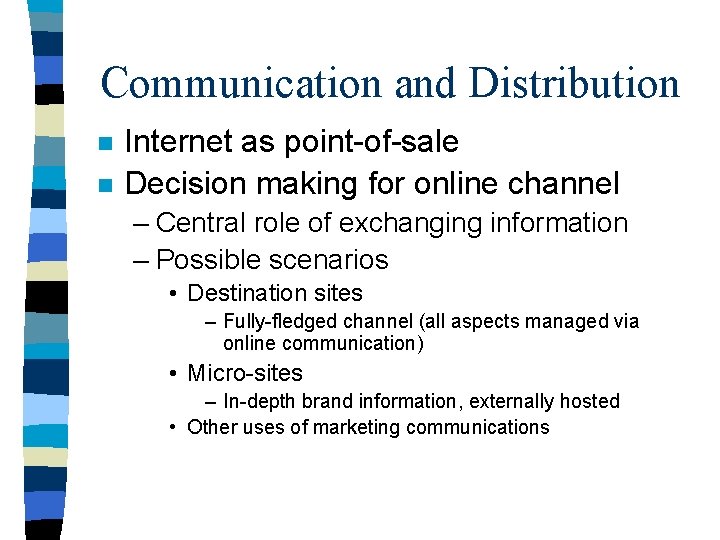
Communication and Distribution n n Internet as point-of-sale Decision making for online channel – Central role of exchanging information – Possible scenarios • Destination sites – Fully-fledged channel (all aspects managed via online communication) • Micro-sites – In-depth brand information, externally hosted • Other uses of marketing communications
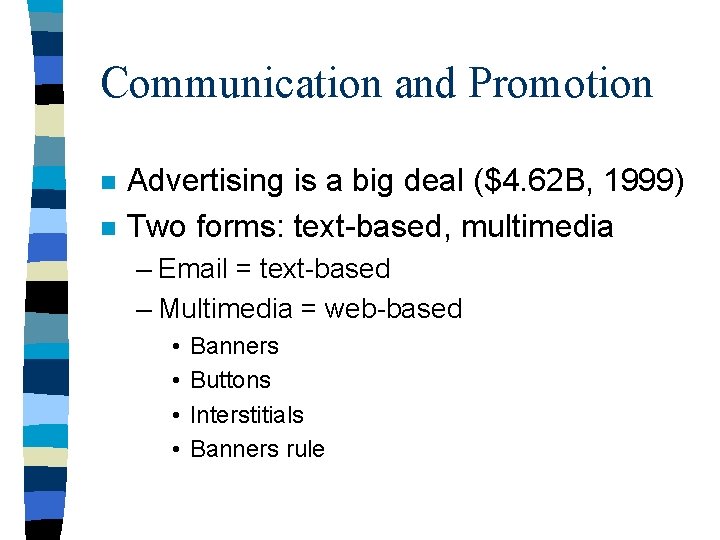
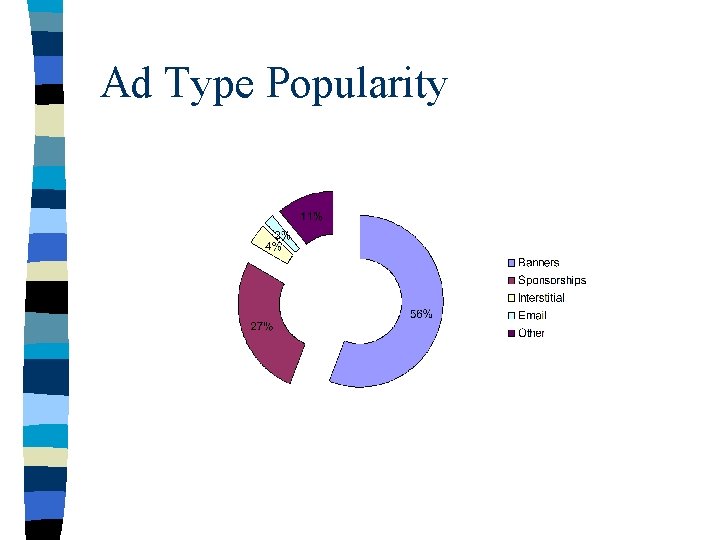
Communication and Promotion n n Advertising is a big deal ($4. 62 B, 1999) Two forms: text-based, multimedia – Email = text-based – Multimedia = web-based • • Banners Buttons Interstitials Banners rule
Ad Type Popularity
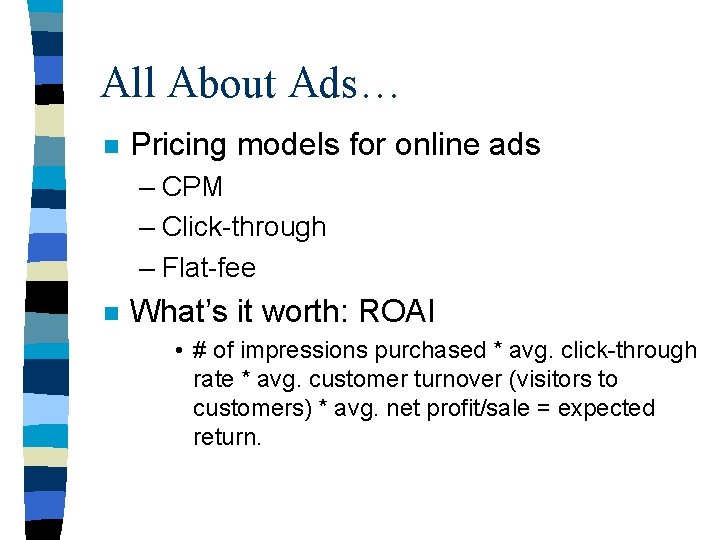
All About Ads… n Pricing models for online ads – CPM – Click-through – Flat-fee n What’s it worth: ROAI • # of impressions purchased * avg. click-through rate * avg. customer turnover (visitors to customers) * avg. net profit/sale = expected return.
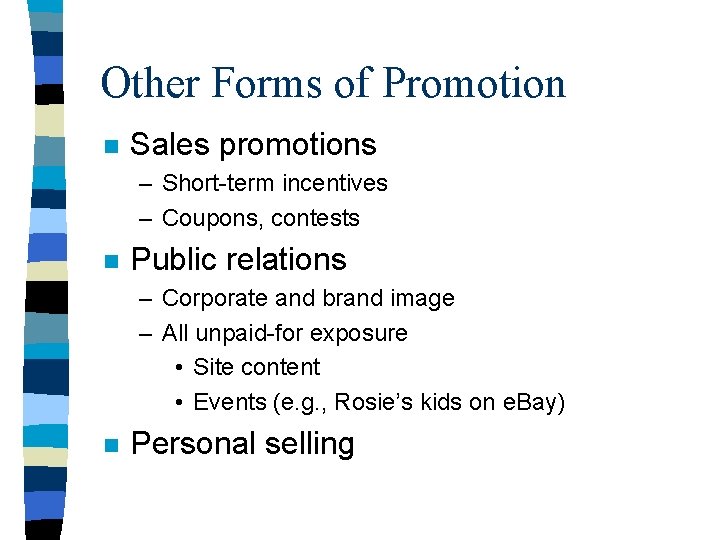
Other Forms of Promotion n Sales promotions – Short-term incentives – Coupons, contests n Public relations – Corporate and brand image – All unpaid-for exposure • Site content • Events (e. g. , Rosie’s kids on e. Bay) n Personal selling
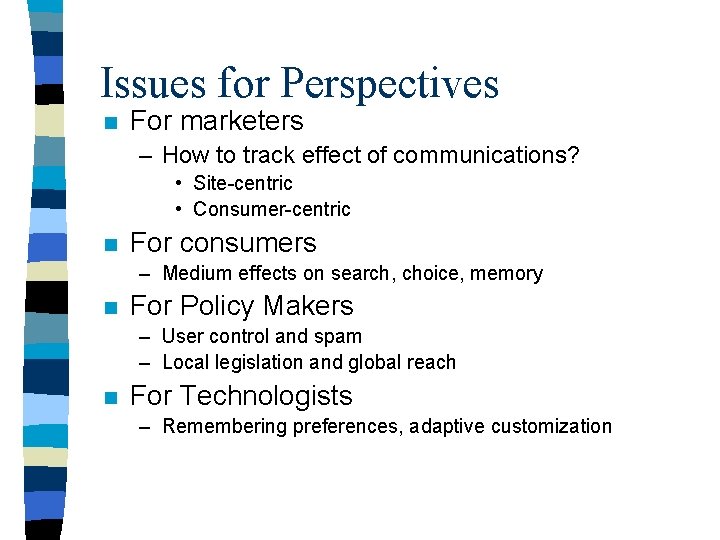
Issues for Perspectives n For marketers – How to track effect of communications? • Site-centric • Consumer-centric n For consumers – Medium effects on search, choice, memory n For Policy Makers – User control and spam – Local legislation and global reach n For Technologists – Remembering preferences, adaptive customization