
The International Red Cross and Red Crescent Movement
- Slides: 15
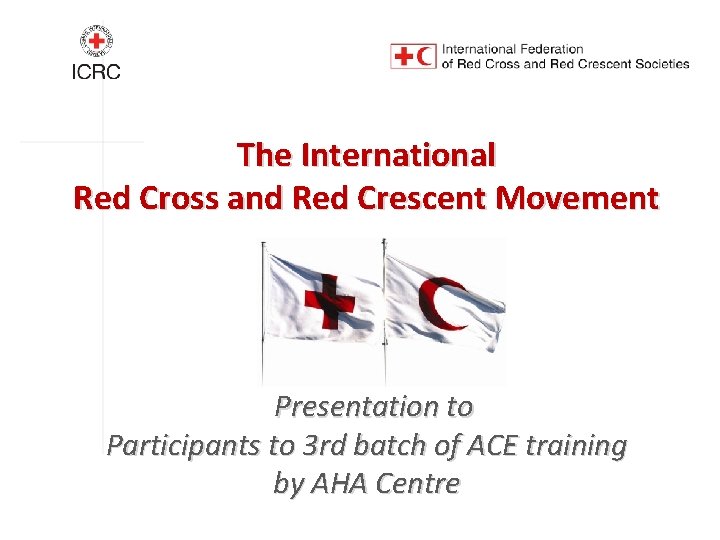
The International Red Cross and Red Crescent Movement Presentation to Participants to 3 rd batch of ACE training by AHA Centre
Presentation to ACE training third batch Semarang, 24 May 2016 Video imagine
Presentation to ACE training third batch Semarang, 24 May 2016 Video Story of an Idea
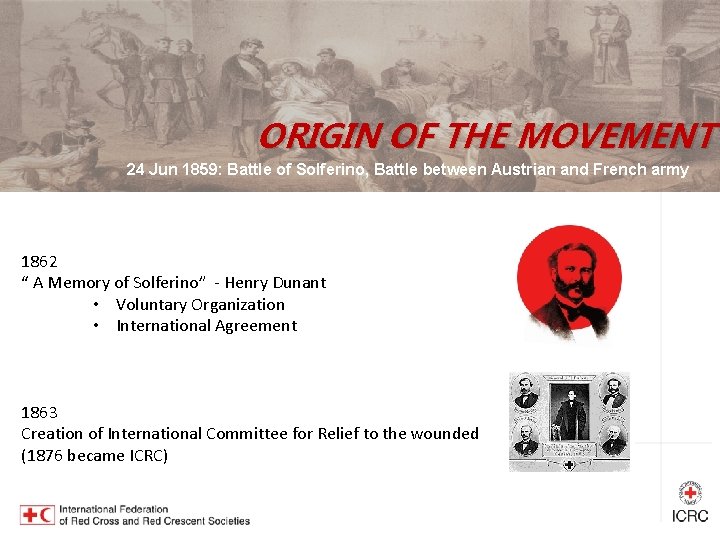
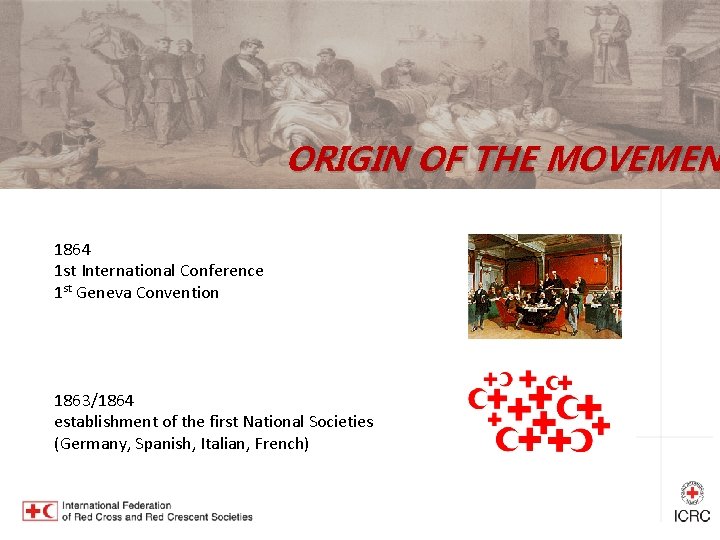
ORIGIN OF THE MOVEMENT 24 Jun 1859: Battle of Solferino, Battle between Austrian and French army 1862 “ A Memory of Solferino” - Henry Dunant • Voluntary Organization • International Agreement 1863 Creation of International Committee for Relief to the wounded (1876 became ICRC)
ORIGIN OF THE MOVEMEN 1864 1 st International Conference 1 st Geneva Convention 1863/1864 establishment of the first National Societies (Germany, Spanish, Italian, French)
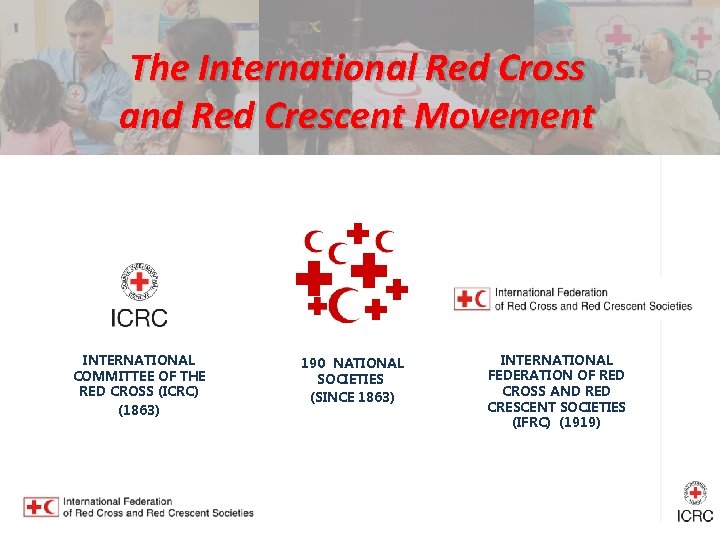
The International Red Cross and Red Crescent Movement INTERNATIONAL COMMITTEE OF THE RED CROSS (ICRC) (1863) 190 NATIONAL SOCIETIES (SINCE 1863) INTERNATIONAL FEDERATION OF RED CROSS AND RED CRESCENT SOCIETIES (IFRC) (1919)
INTERNATIONAL COMMITTEE OF THE RED CROSS (ICRC) o Provide protection and assistance for civilian and victims of international, non-international armed conflict, violence, internal disturbances o IHL development, promotion and dissemination o It directs and coordinates the international activities conducted by the Movement in armed conflicts and other situations of violence
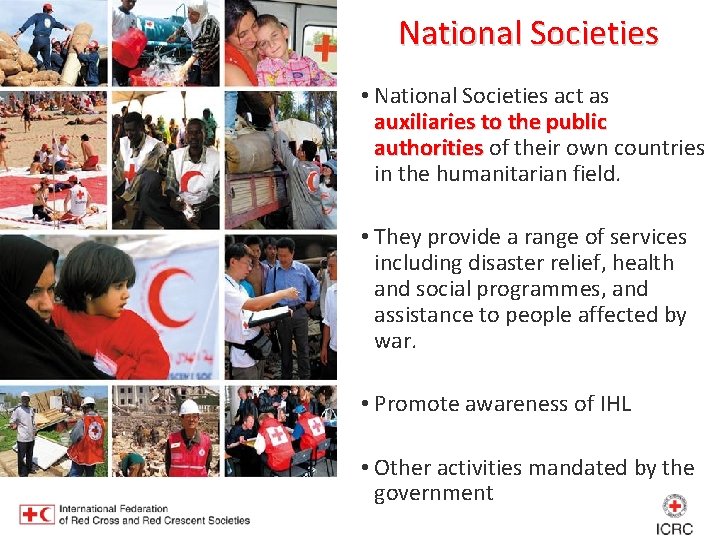
National Societies • National Societies act as auxiliaries to the public authorities of their own countries in the humanitarian field. • They provide a range of services including disaster relief, health and social programmes, and assistance to people affected by war. • Promote awareness of IHL • Other activities mandated by the government
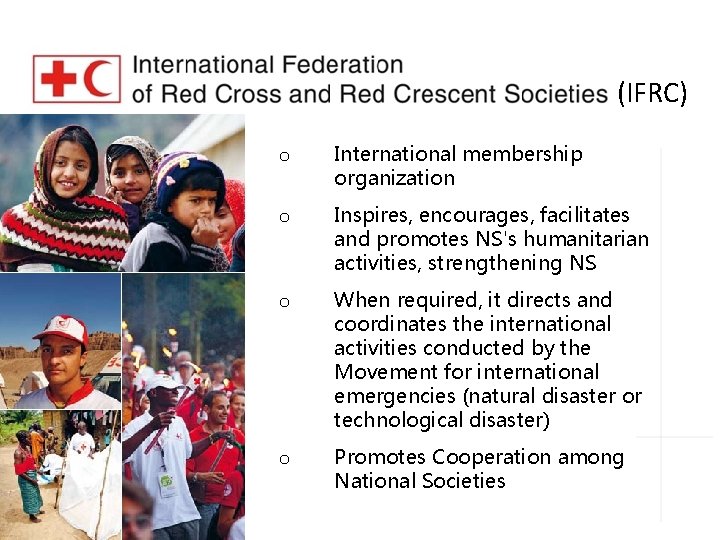
(IFRC) o International membership organization o Inspires, encourages, facilitates and promotes NS's humanitarian activities, strengthening NS o When required, it directs and coordinates the international activities conducted by the Movement for international emergencies (natural disaster or technological disaster) o Promotes Cooperation among National Societies
Presentation to ACE training third batch Semarang, 24 May 2016 Video the Movement
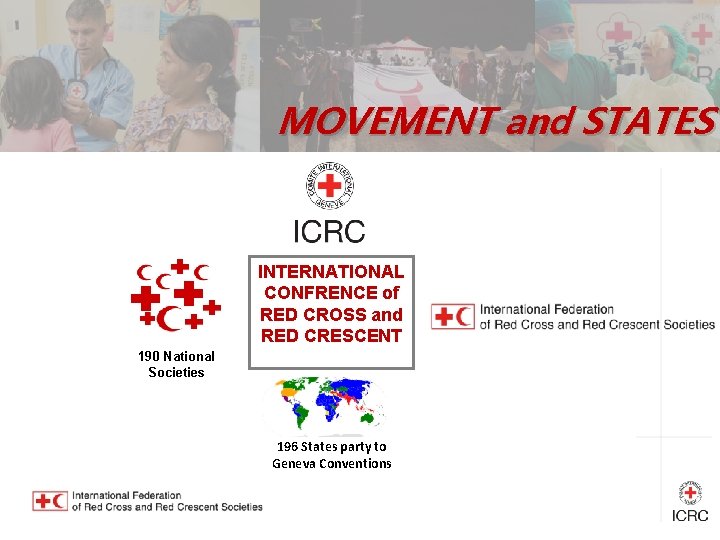
MOVEMENT and STATES INTERNATIONAL CONFRENCE of RED CROSS and RED CRESCENT 190 National Societies 196 States party to Geneva Conventions
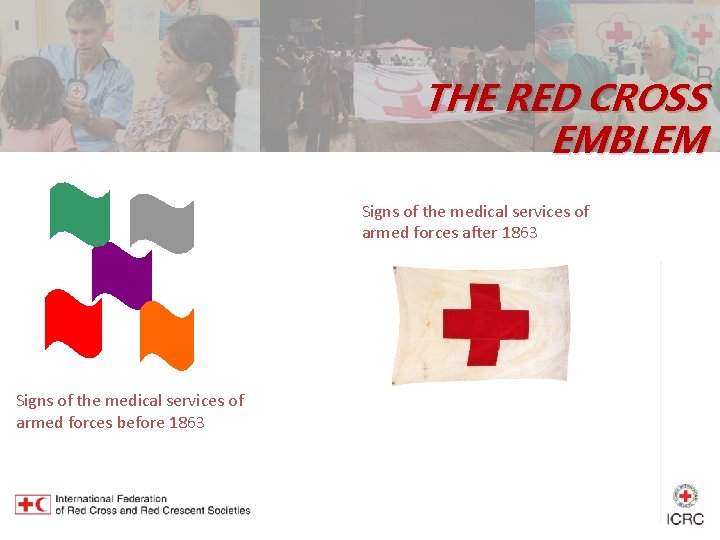
THE RED CROSS EMBLEM Signs of the medical services of armed forces after 1863 Signs of the medical services of armed forces before 1863
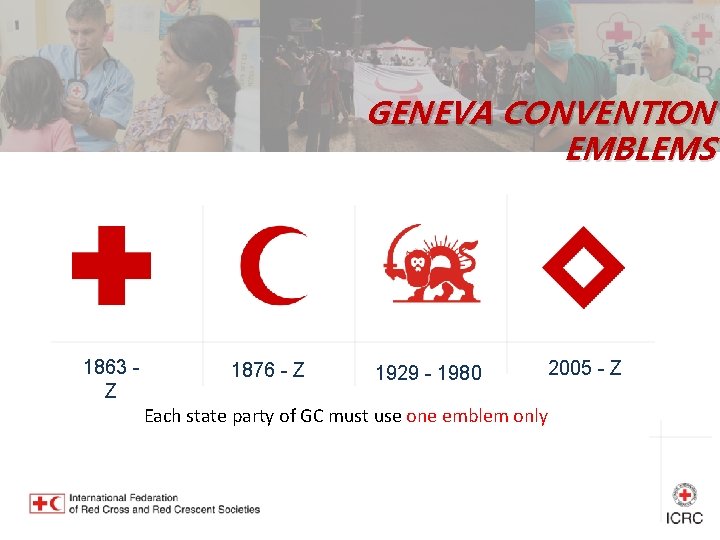
GENEVA CONVENTION EMBLEMS 1863 Z 1876 - Z 1929 - 1980 2005 - Z Each state party of GC must use one emblem only
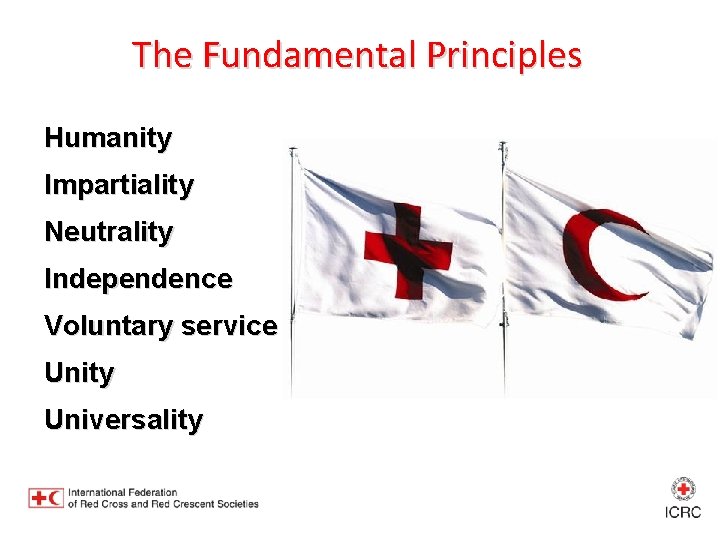
The Fundamental Principles Humanity Impartiality Neutrality Independence Voluntary service Unity Universality
The Fundamental Principles Humanity The International Red Cross and Red Crescent Movement, born of a desire to bring assistance without discrimination to the wounded on the battlefield, endeavours, in its international and national capacity, to prevent and alleviate human suffering wherever it may be found. Its purpose is to protect life and health and to ensure respect for the human being. It promotes mutual understanding, friendship, cooperation and lasting peace amongst all peoples. Impartiality It makes no discrimination as to nationality, race, religious beliefs, class or political opinions. It endeavours to relieve the suffering of individuals, being guided solely by their needs, and to give priority to the most urgent cases of distress. Neutrality In order to enjoy the confidence of all, the Movement may not take sides in hostilities or engage at any time in controversies of a political, racial, religious or ideological nature. Independence The Movement is independent. The National Societies, while auxiliaries in the humanitarian services of their governments and subject to the laws of their respective countries, must always maintain their autonomy so that they may be able at all times to act in accordance with the principles of the Movement. Voluntary service It is a voluntary relief movement not prompted in any manner by desire for gain. Unity There can be only one Red Cross or Red Crescent Society in any one country. It must be open to all. It must carry on its humanitarian work throughout its territory. Universality The International Red Cross and Red Crescent Movement, in which all societies have equal status and share equal responsibilities and duties in helping each other, is worldwide.