
The Interdisciplinary Care of Torture Survivors Context Culture
- Slides: 36
The Interdisciplinary Care of Torture Survivors: Context, Culture and Provider Wellness Hawthorne Smith, Ph. D. Director Bellevue/NYU Program for Survivors of Torture
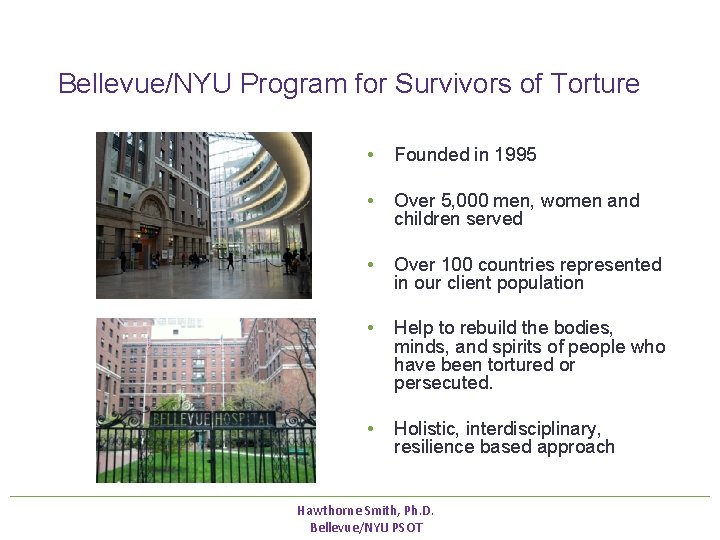
Bellevue/NYU Program for Survivors of Torture • Founded in 1995 • Over 5, 000 men, women and children served • Over 100 countries represented in our client population • Help to rebuild the bodies, minds, and spirits of people who have been tortured or persecuted. • Holistic, interdisciplinary, resilience based approach Hawthorne Smith, Ph. D. Bellevue/NYU PSOT
Extreme Challenges Experienced by Torture Survivors and Refugees • Multiple losses • Ongoing effects of recurrent/reinforcing trauma • Social dislocation; war; trauma; torture; internally displaced in home country; flight and relocation in neighboring country; refugee camps; immigration processing; resettlement in USA • Individuals will respond to these stressors in different ways Hawthorne Smith, Ph. D. Bellevue/NYU PSOT
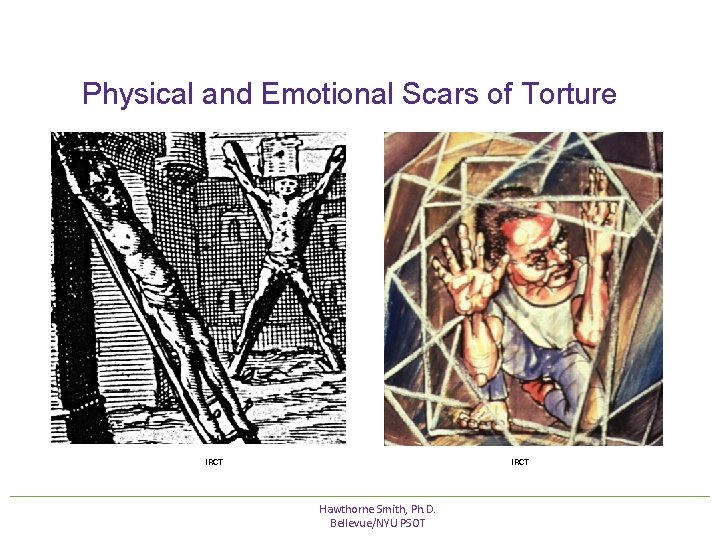
Physical and Emotional Scars of Torture IRCT Hawthorne Smith, Ph. D. Bellevue/NYU PSOT
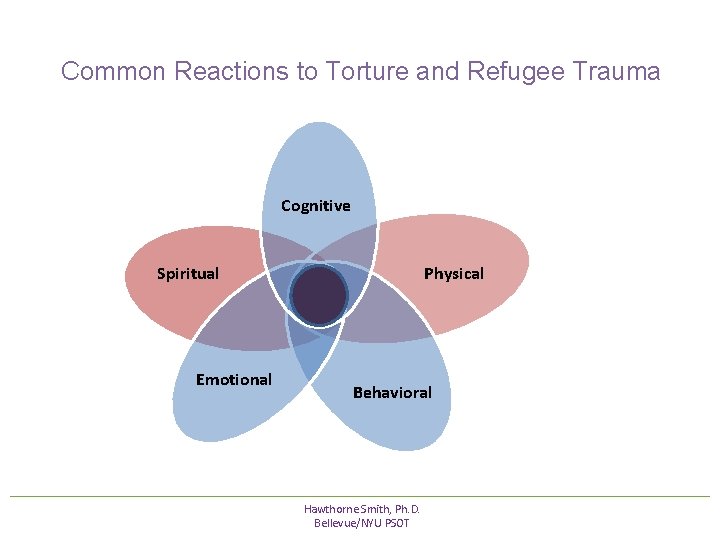
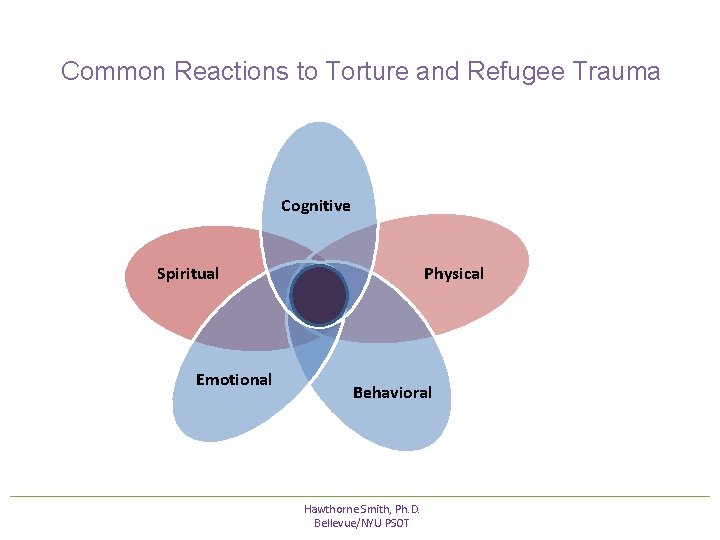
Common Reactions to Torture and Refugee Trauma Cognitive Spiritual Emotional Physical Behavioral Hawthorne Smith, Ph. D. Bellevue/NYU PSOT
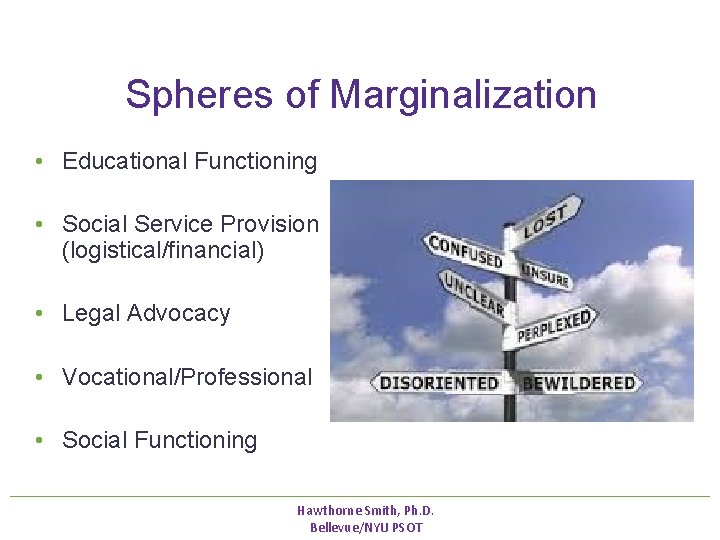
Spheres of Marginalization • Educational Functioning • Social Service Provision (logistical/financial) • Legal Advocacy • Vocational/Professional • Social Functioning Hawthorne Smith, Ph. D. Bellevue/NYU PSOT
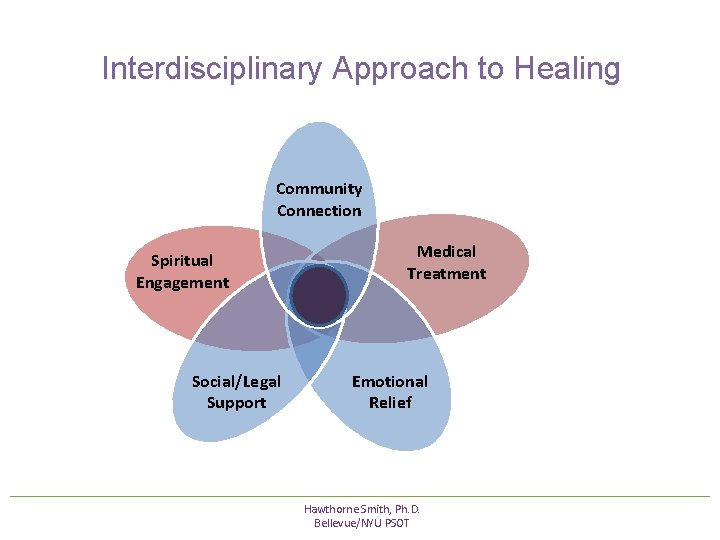
Interdisciplinary Approach to Healing Community Connection Spiritual Engagement Social/Legal Support Medical Treatment Emotional Relief Hawthorne Smith, Ph. D. Bellevue/NYU PSOT
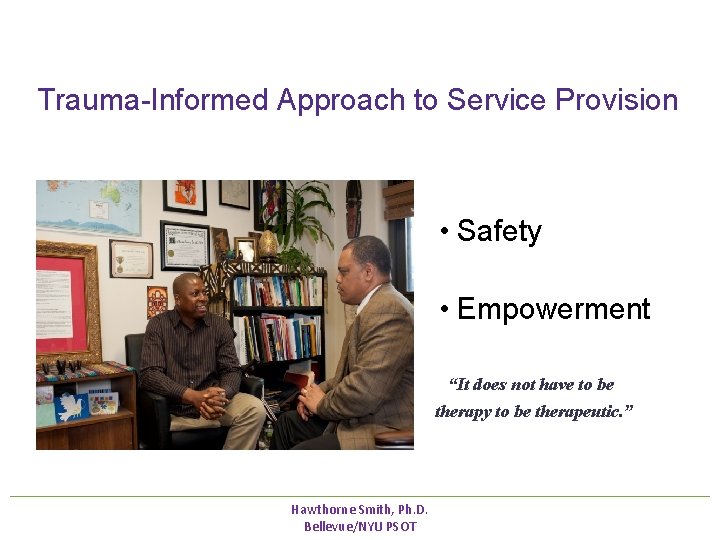
Trauma-Informed Approach to Service Provision • Safety • Empowerment • “It does not have to be • Hawthorne Smith, Ph. D. Bellevue/NYU PSOT therapy to be therapeutic. ”
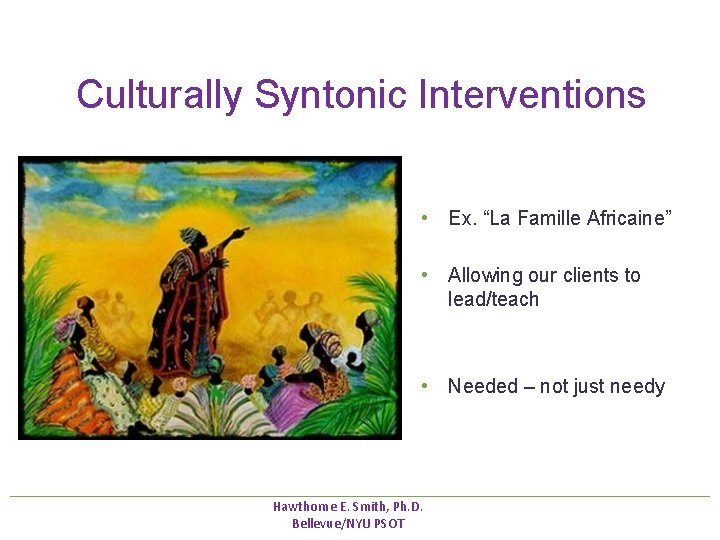
Culturally Syntonic Interventions • Ex. “La Famille Africaine” • Allowing our clients to lead/teach • Needed – not just needy Hawthorne E. Smith, Ph. D. Bellevue/NYU PSOT
Philosophic Framework • Not a “cookbook” approach • Not a simple study of the “cultural other” • Relationship of people who are culturally different • Also consider assumptions of similarity and understanding Hawthorne Smith, Ph. D. Bellevue/NYU PSOT
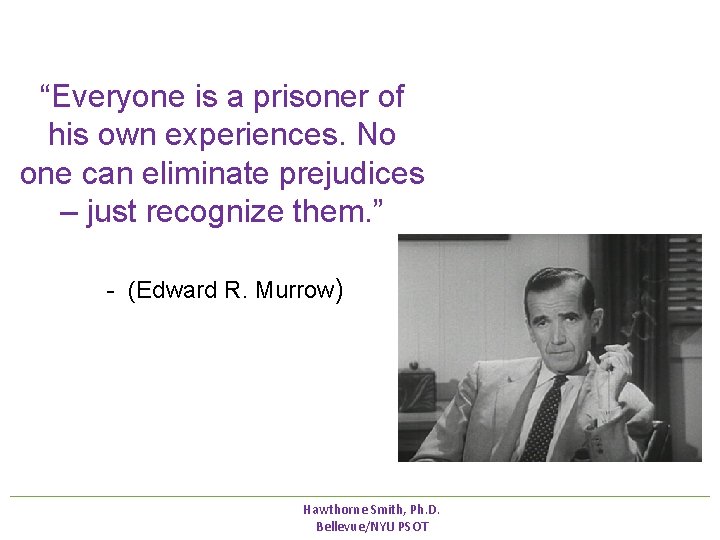
“Everyone is a prisoner of his own experiences. No one can eliminate prejudices – just recognize them. ” - (Edward R. Murrow) Hawthorne Smith, Ph. D. Bellevue/NYU PSOT
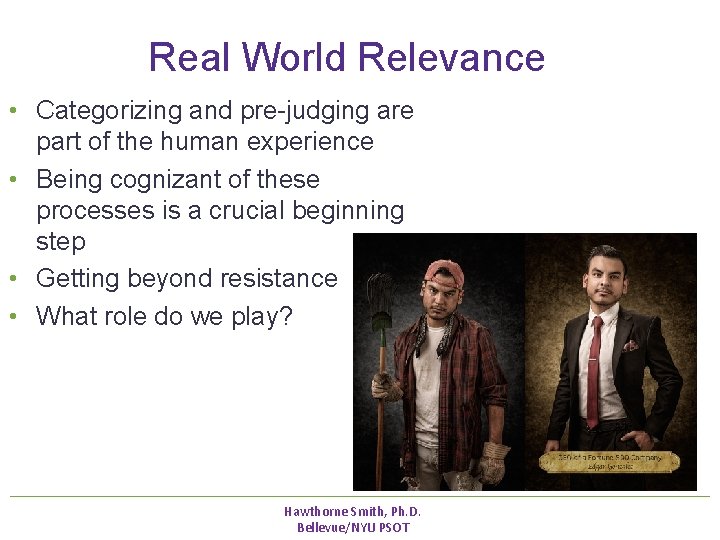
Real World Relevance • Categorizing and pre-judging are part of the human experience • Being cognizant of these processes is a crucial beginning step • Getting beyond resistance • What role do we play? Hawthorne Smith, Ph. D. Bellevue/NYU PSOT
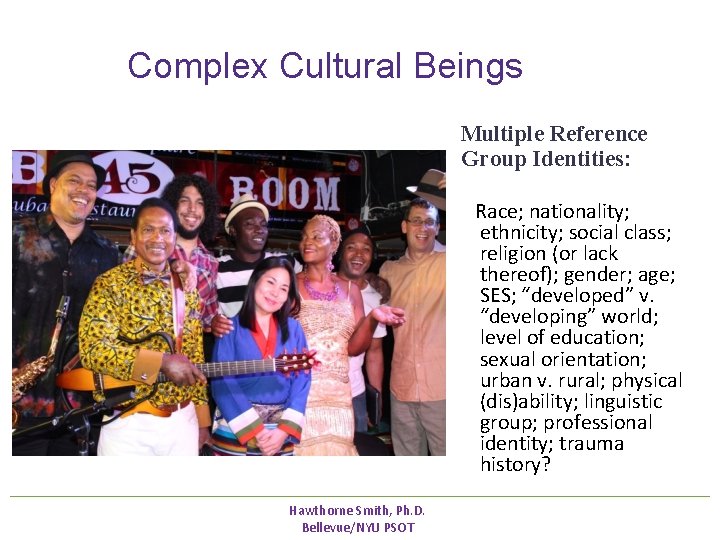
Complex Cultural Beings Multiple Reference Group Identities: Race; nationality; ethnicity; social class; religion (or lack thereof); gender; age; SES; “developed” v. “developing” world; level of education; sexual orientation; urban v. rural; physical (dis)ability; linguistic group; professional identity; trauma history? Hawthorne Smith, Ph. D. Bellevue/NYU PSOT
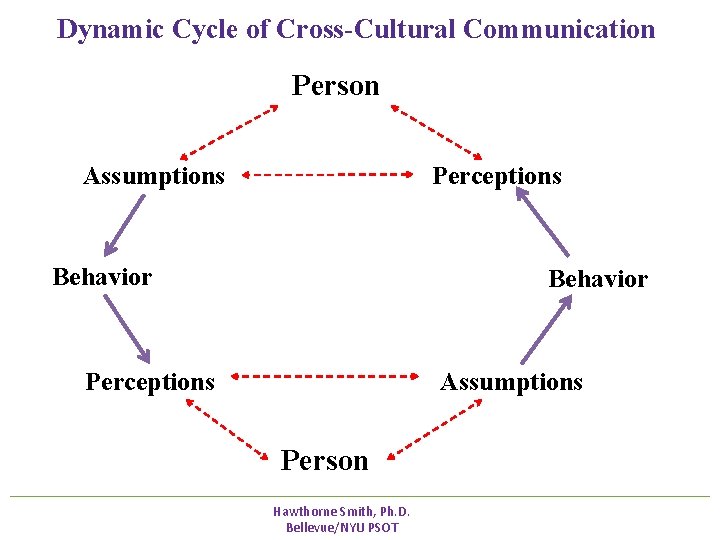
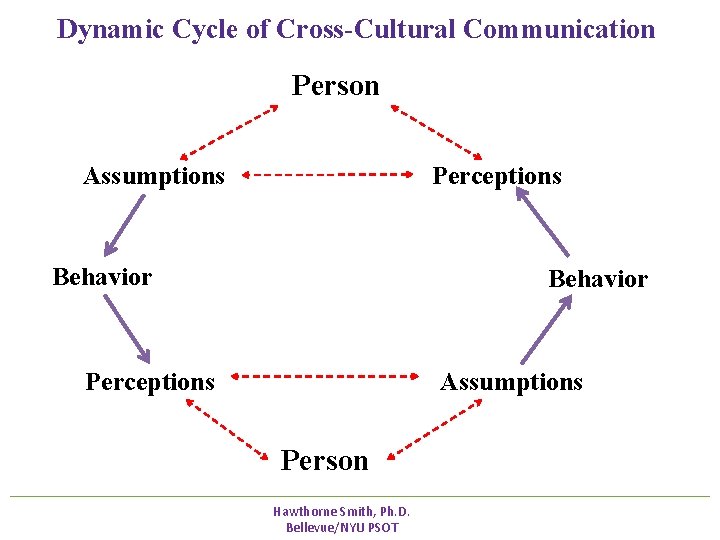
Dynamic Cycle of Cross-Cultural Communication Person Perceptions Assumptions Behavior Assumptions Perceptions Person Hawthorne Smith, Ph. D. Bellevue/NYU PSOT
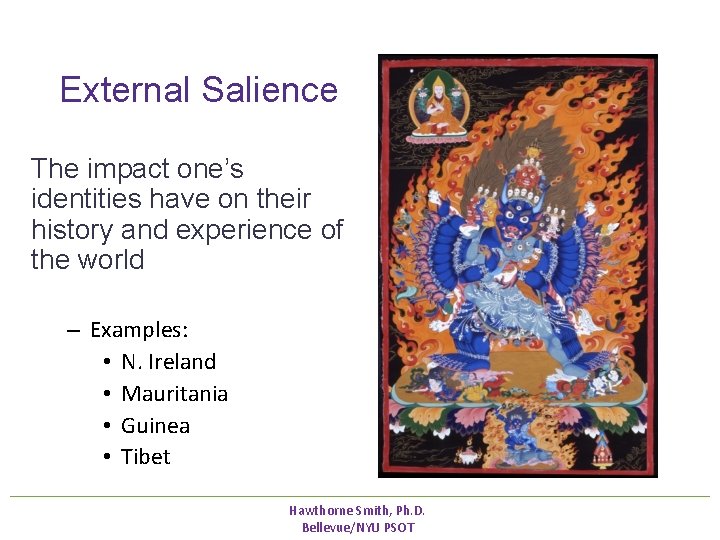
External Salience The impact one’s identities have on their history and experience of the world – Examples: • N. Ireland • Mauritania • Guinea • Tibet Hawthorne Smith, Ph. D. Bellevue/NYU PSOT
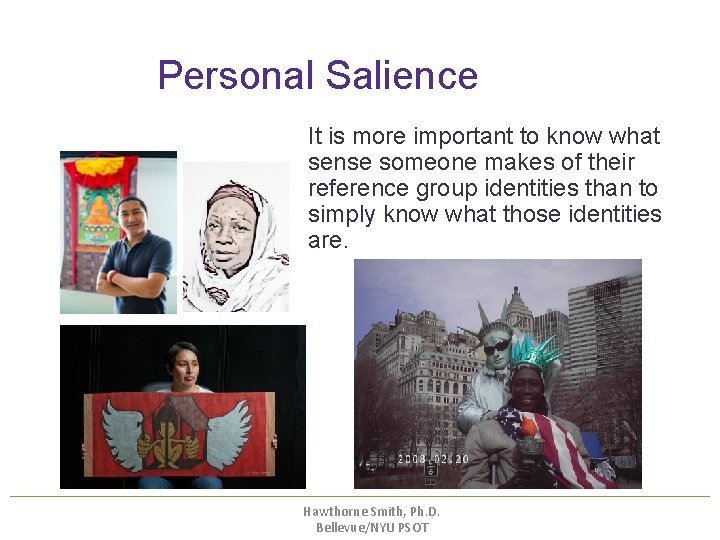
Personal Salience It is more important to know what sense someone makes of their reference group identities than to simply know what those identities are. Hawthorne Smith, Ph. D. Bellevue/NYU PSOT
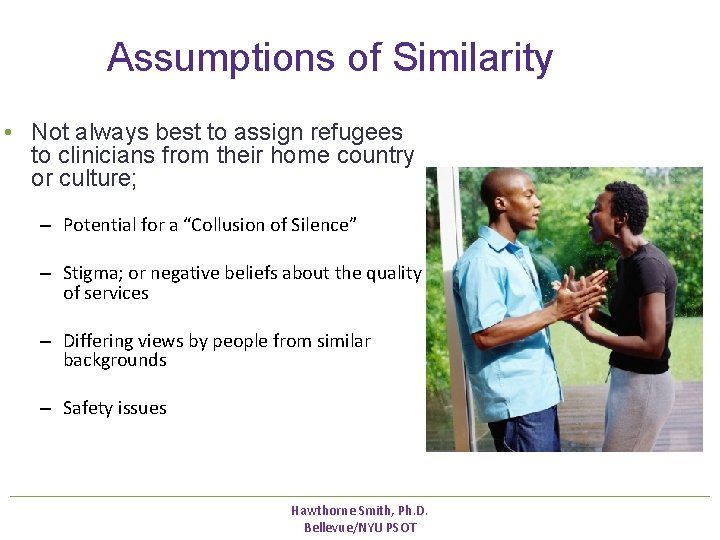
Assumptions of Similarity • Not always best to assign refugees to clinicians from their home country or culture; – Potential for a “Collusion of Silence” – Stigma; or negative beliefs about the quality of services – Differing views by people from similar backgrounds – Safety issues Hawthorne Smith, Ph. D. Bellevue/NYU PSOT
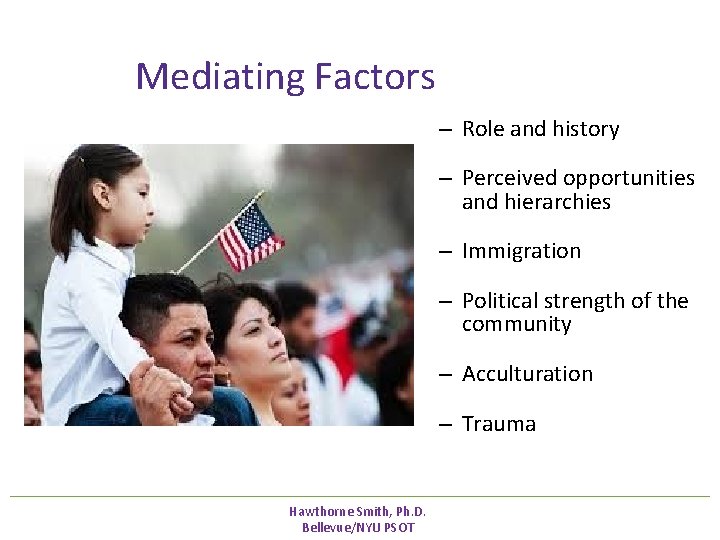
Mediating Factors – Role and history – Perceived opportunities and hierarchies – Immigration – Political strength of the community – Acculturation – Trauma Hawthorne Smith, Ph. D. Bellevue/NYU PSOT
The Power to Define • Important in all areas of functioning and service provision Adaptational and security behaviors Educational choices Career choices and behaviors Decisions regarding substance use/abuse – Sexual risk-taking behaviors – – • Personal v. Societal Conceptions Hawthorne Smith, Ph. D. Bellevue/NYU PSOT
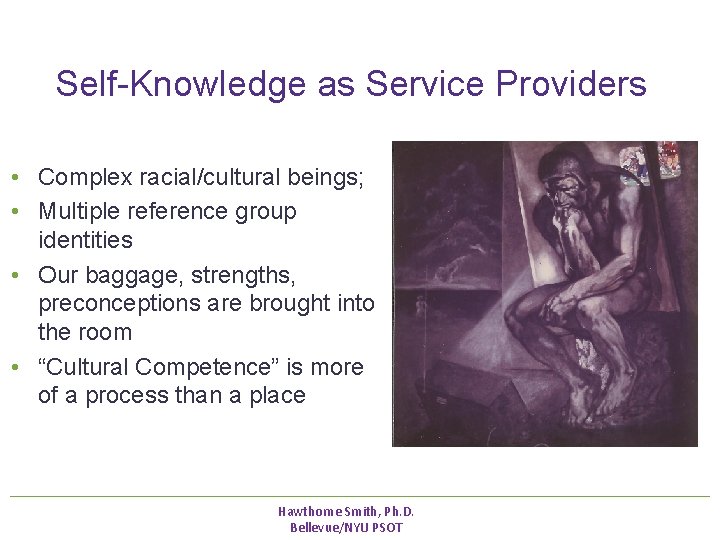
Self-Knowledge as Service Providers • Complex racial/cultural beings; • Multiple reference group identities • Our baggage, strengths, preconceptions are brought into the room • “Cultural Competence” is more of a process than a place Hawthorne Smith, Ph. D. Bellevue/NYU PSOT
Dynamic Cycle of Cross-Cultural Communication Person Perceptions Assumptions Behavior Assumptions Perceptions Person Hawthorne Smith, Ph. D. Bellevue/NYU PSOT
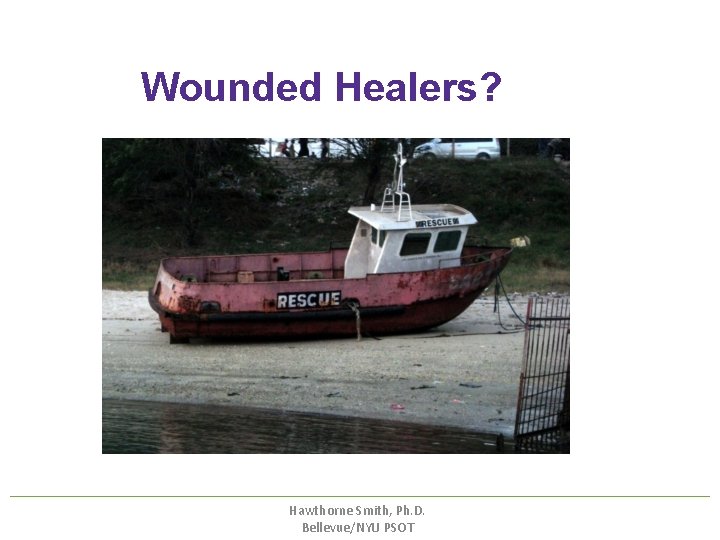
Wounded Healers? Hawthorne Smith, Ph. D. Bellevue/NYU PSOT
“…as clinicians, we serve as our own healing instruments. The ability to truly listen, attend, and empathize with someone who is suffering is a powerful therapeutic tool; but it comes at a price. It can often mean pain and discomfort for the caregiver. ” - As cited in Smith, 2007, p. 404 Hawthorne Smith, Ph. D. Bellevue/NYU PSOT
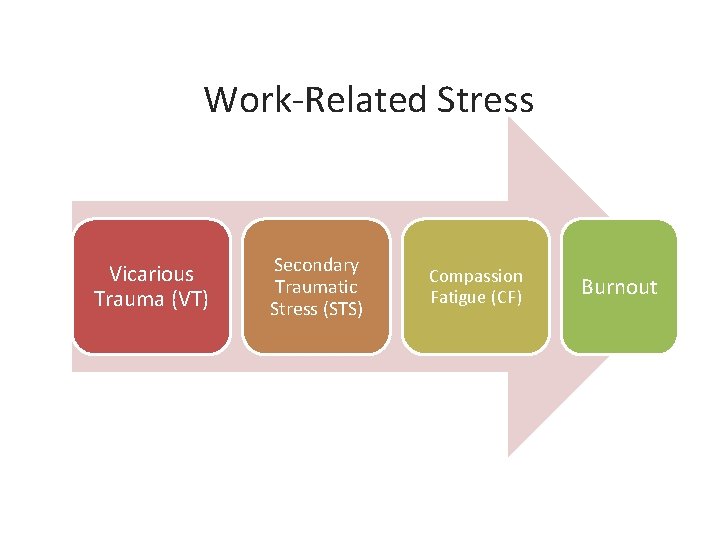
Work-Related Stress Vicarious Trauma (VT) Secondary Traumatic Stress (STS) Compassion Fatigue (CF) Burnout
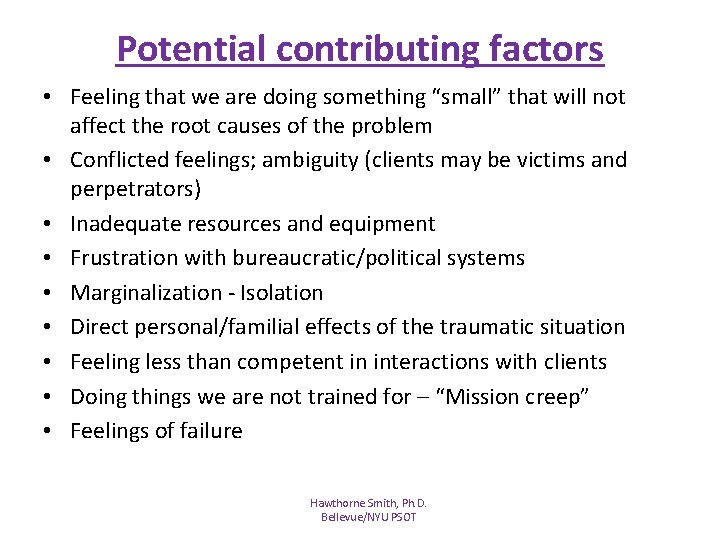
Potential contributing factors • Feeling that we are doing something “small” that will not affect the root causes of the problem • Conflicted feelings; ambiguity (clients may be victims and perpetrators) • Inadequate resources and equipment • Frustration with bureaucratic/political systems • Marginalization - Isolation • Direct personal/familial effects of the traumatic situation • Feeling less than competent in interactions with clients • Doing things we are not trained for – “Mission creep” • Feelings of failure Hawthorne Smith, Ph. D. Bellevue/NYU PSOT
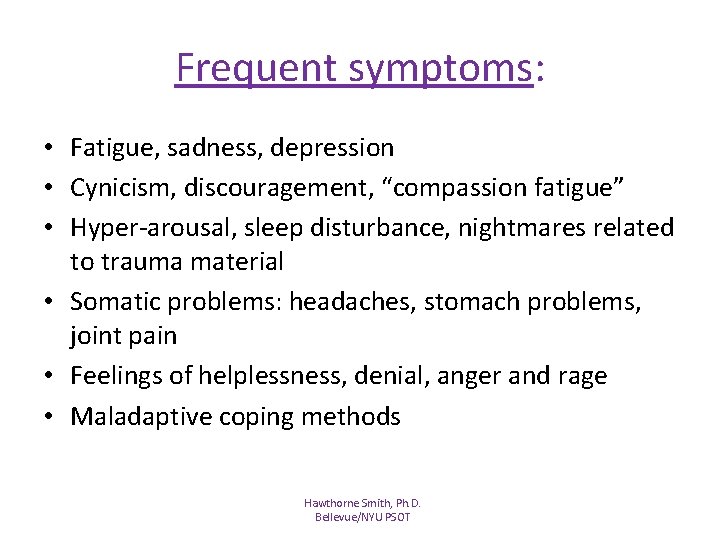
Frequent symptoms: • Fatigue, sadness, depression • Cynicism, discouragement, “compassion fatigue” • Hyper-arousal, sleep disturbance, nightmares related to trauma material • Somatic problems: headaches, stomach problems, joint pain • Feelings of helplessness, denial, anger and rage • Maladaptive coping methods Hawthorne Smith, Ph. D. Bellevue/NYU PSOT
Common Reactions to Torture and Refugee Trauma Cognitive Spiritual Emotional Physical Behavioral Hawthorne Smith, Ph. D. Bellevue/NYU PSOT
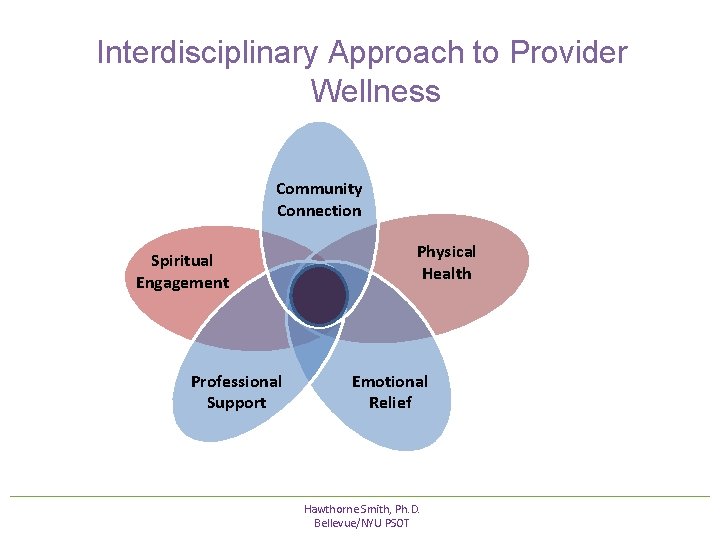
Interdisciplinary Approach to Provider Wellness Community Connection Spiritual Engagement Professional Support Physical Health Emotional Relief Hawthorne Smith, Ph. D. Bellevue/NYU PSOT
Prevention and treatment: • Supportive relationships with colleagues, family and friends • Feelings need to be openly acknowledged and resolved • Do not pathologize these reactions (normal reactions to abnormal stressors) • No collusion of silence Hawthorne Smith, Ph. D. Bellevue/NYU PSOT
Positive Impact on Providers: • Compassion Satisfaction: positive impacts of caring for another • Vicarious Resilience: “Positive meaning-making, growth, and transformations in therapist’s experience resulting from exposure to clients’ resilience in the course of therapeutic processes addressing trauma recovery” (Hernandez, 2007 p 27) • Self-compassion: “responding to our own suffering in a soothing, healing way” (Neff, 2003, p. 44). Hawthorne Smith, Ph. D. Bellevue/NYU PSOT
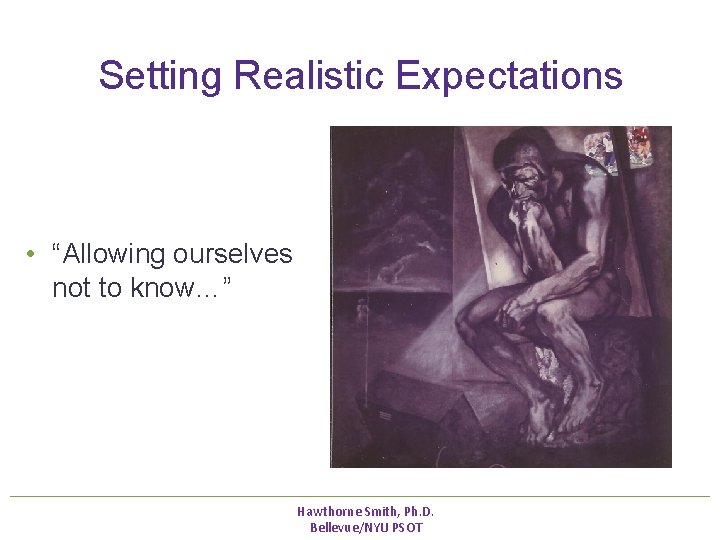
Setting Realistic Expectations • “Allowing ourselves not to know…” Hawthorne Smith, Ph. D. Bellevue/NYU PSOT
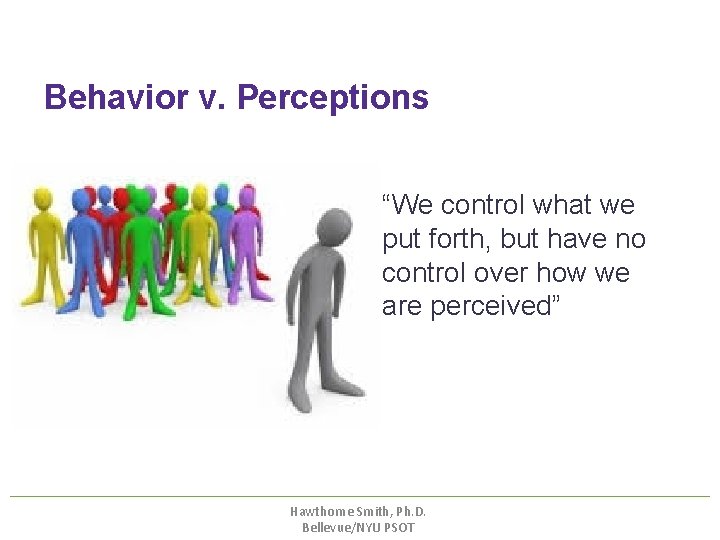
Behavior v. Perceptions • “We control what we put forth, but have no control over how we are perceived” Hawthorne Smith, Ph. D. Bellevue/NYU PSOT
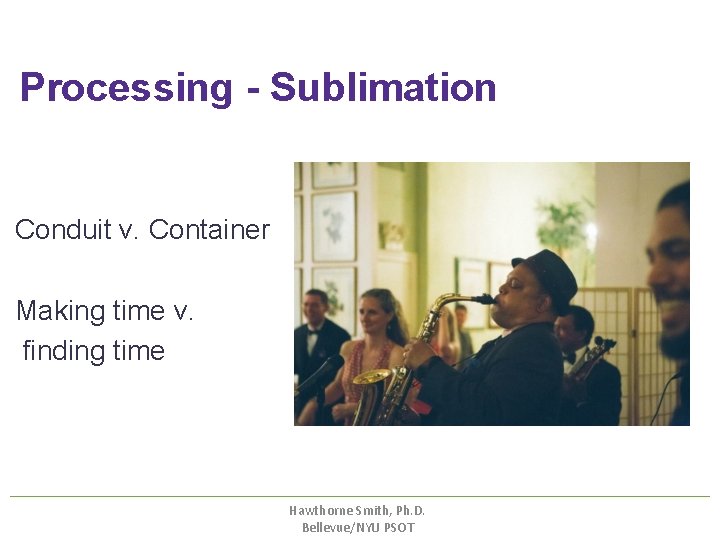
Processing - Sublimation Conduit v. Container Making time v. finding time Hawthorne Smith, Ph. D. Bellevue/NYU PSOT
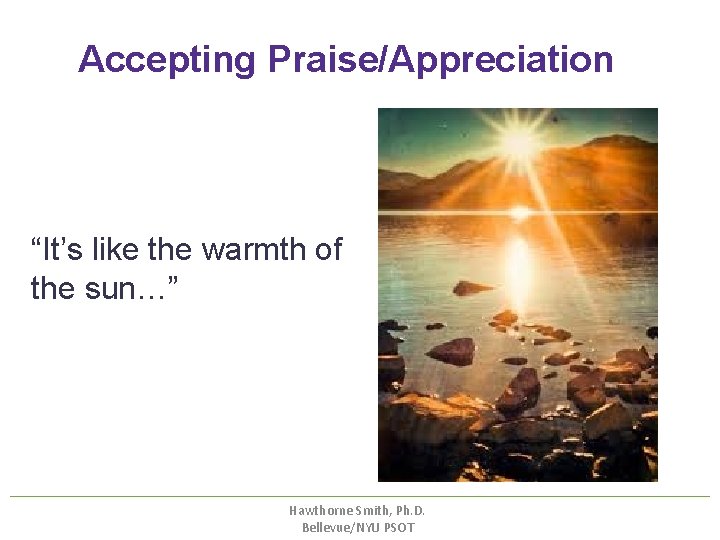
Accepting Praise/Appreciation “It’s like the warmth of the sun…” Hawthorne Smith, Ph. D. Bellevue/NYU PSOT
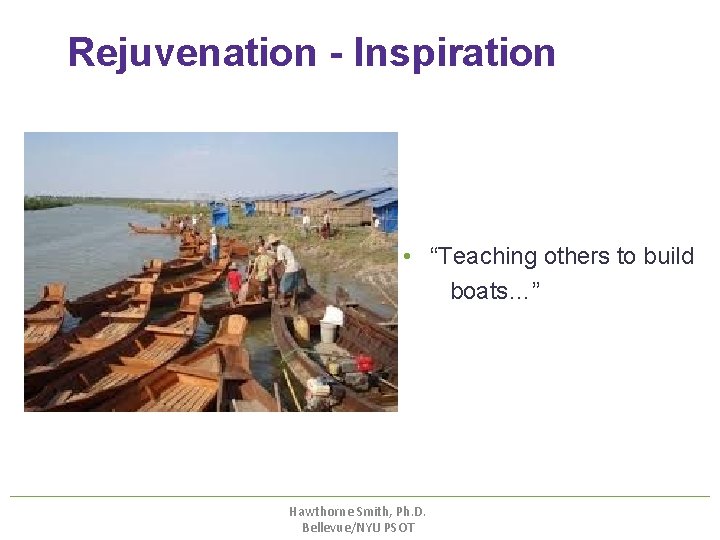
Rejuvenation - Inspiration • “Teaching others to build boats…” Hawthorne Smith, Ph. D. Bellevue/NYU PSOT
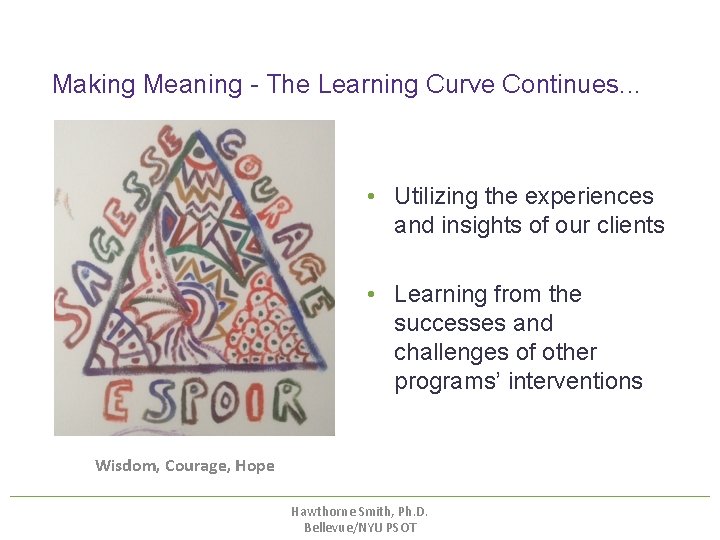
Making Meaning - The Learning Curve Continues. . . • Utilizing the experiences and insights of our clients • Learning from the successes and challenges of other programs’ interventions Wisdom, Courage, Hope Hawthorne Smith, Ph. D. Bellevue/NYU PSOT