
THE INTERDEPENDENCE OF LIVING THINGS Producers Organisms that



- Slides: 16
THE INTERDEPENDENCE OF LIVING THINGS + =
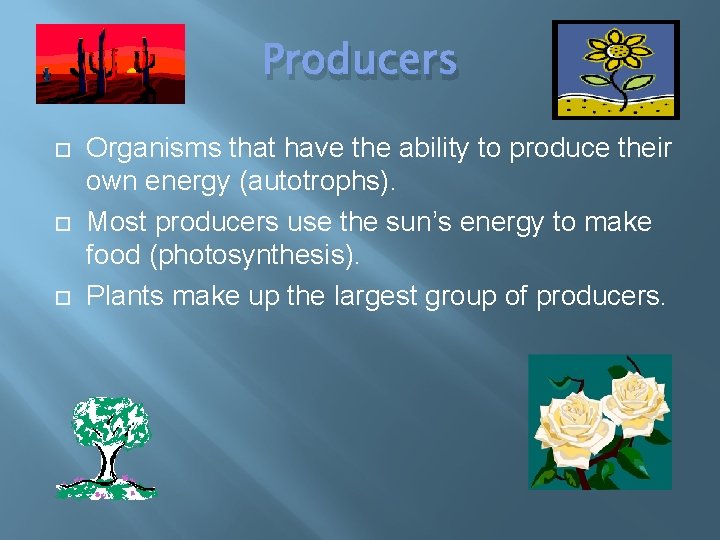
Producers Organisms that have the ability to produce their own energy (autotrophs). Most producers use the sun’s energy to make food (photosynthesis). Plants make up the largest group of producers.
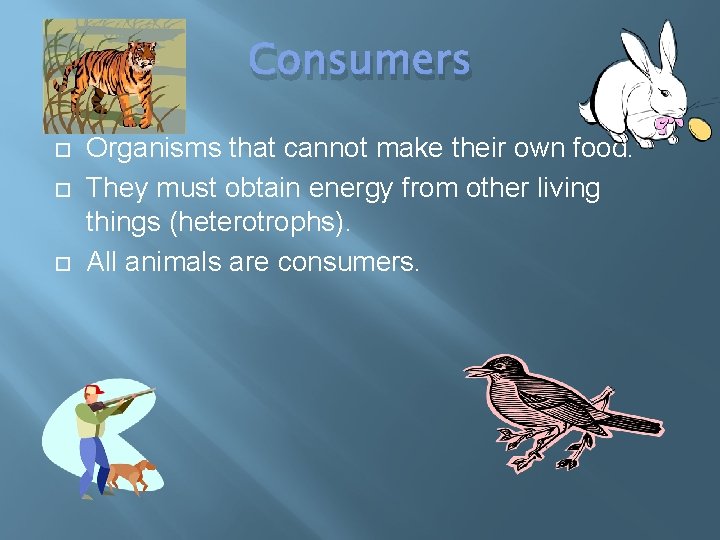
Consumers Organisms that cannot make their own food. They must obtain energy from other living things (heterotrophs). All animals are consumers.
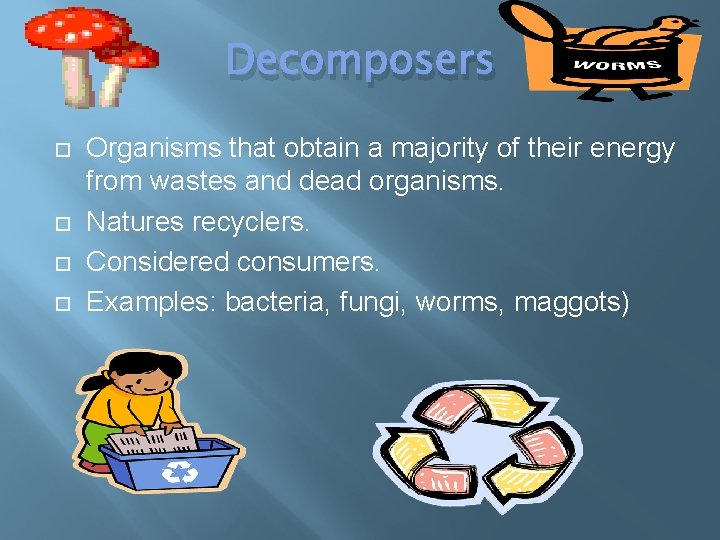
Decomposers Organisms that obtain a majority of their energy from wastes and dead organisms. Natures recyclers. Considered consumers. Examples: bacteria, fungi, worms, maggots)
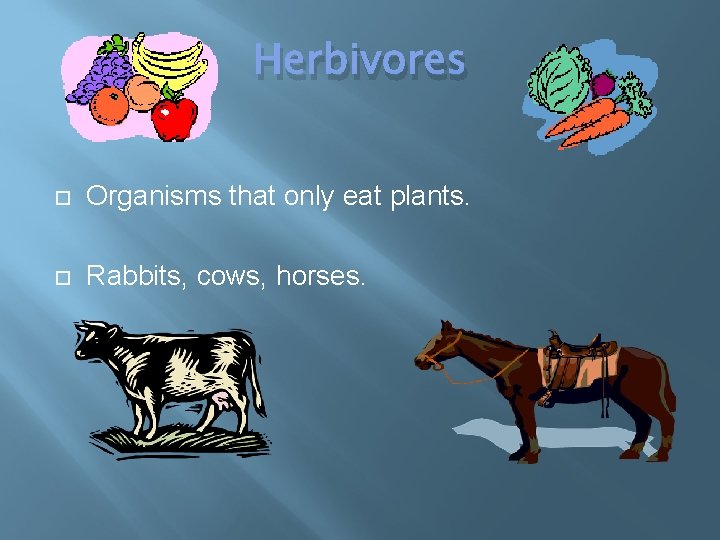
Herbivores Organisms that only eat plants. Rabbits, cows, horses.
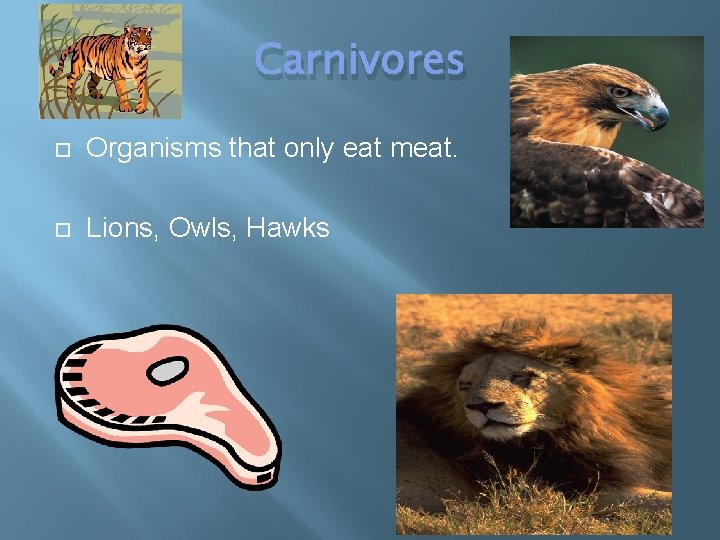
Carnivores Organisms that only eat meat. Lions, Owls, Hawks
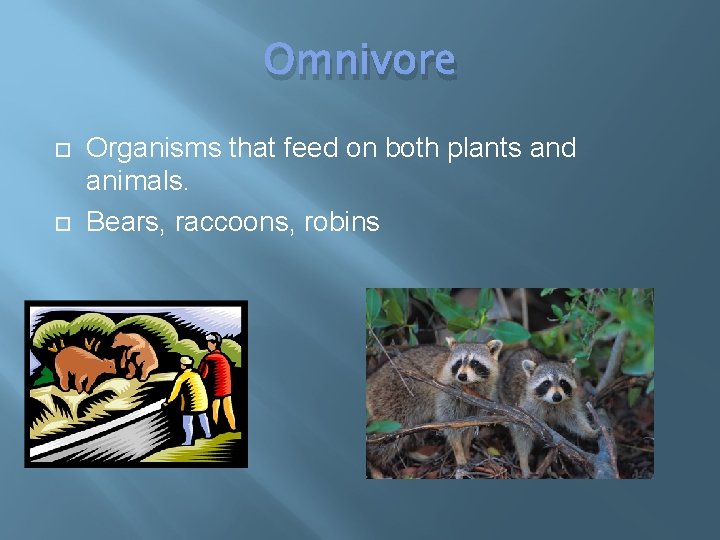
Omnivore Organisms that feed on both plants and animals. Bears, raccoons, robins
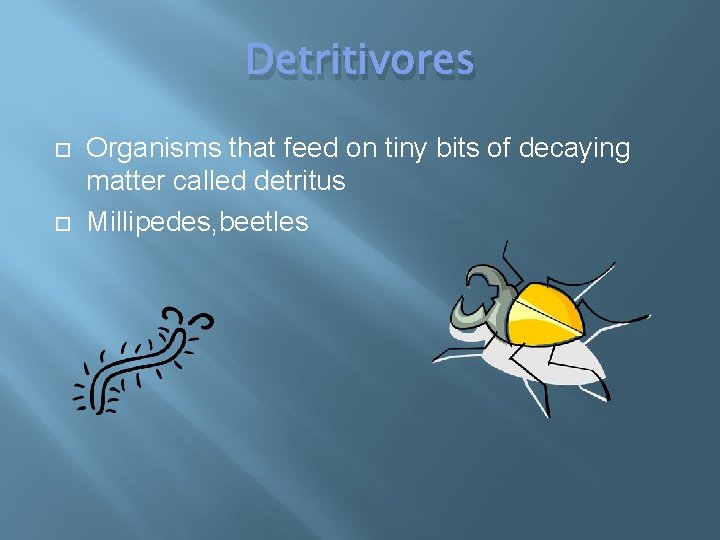
Detritivores Organisms that feed on tiny bits of decaying matter called detritus Millipedes, beetles
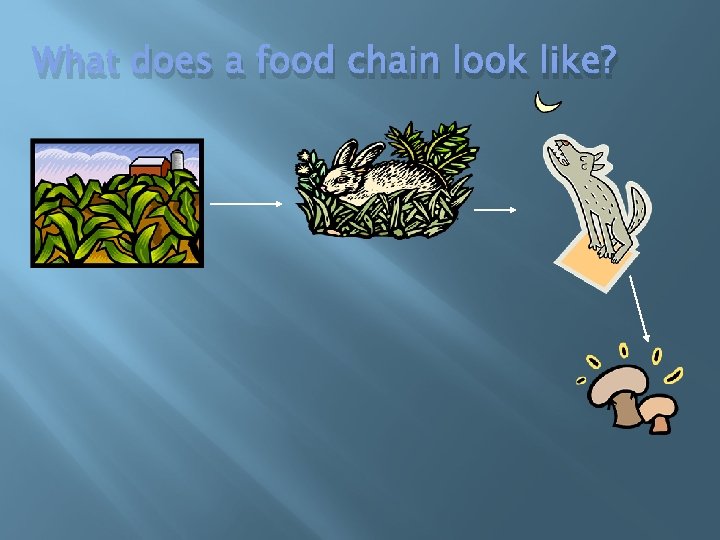
Food Chains Simple model showing how matter and energy pass from one organism to another Always starts with producers (plants) who get their energy from the sun 2 nd step in chain are primary consumers that eat producers (herbivores) 3 rd step in chain are secondary consumers that either eat primary consumers or producers. 4 th step in chain are tertiary consumers or top predators that feed primarily on primary and secondary consumers.
What does a food chain look like?
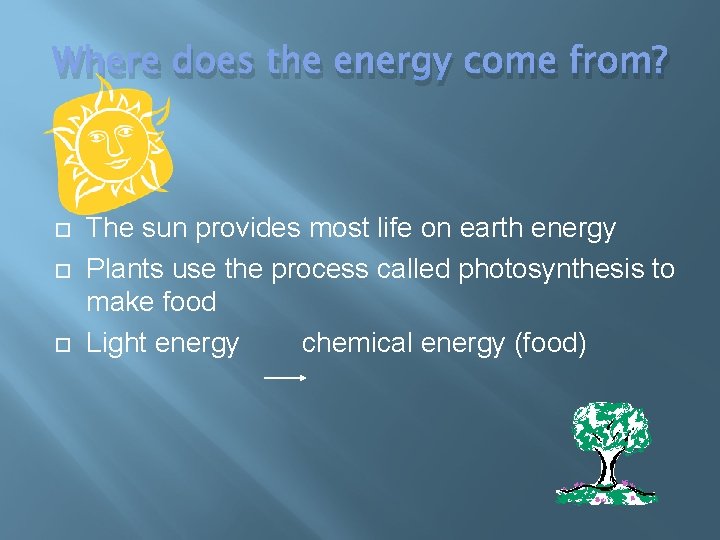
Where does the energy come from? The sun provides most life on earth energy Plants use the process called photosynthesis to make food Light energy chemical energy (food)
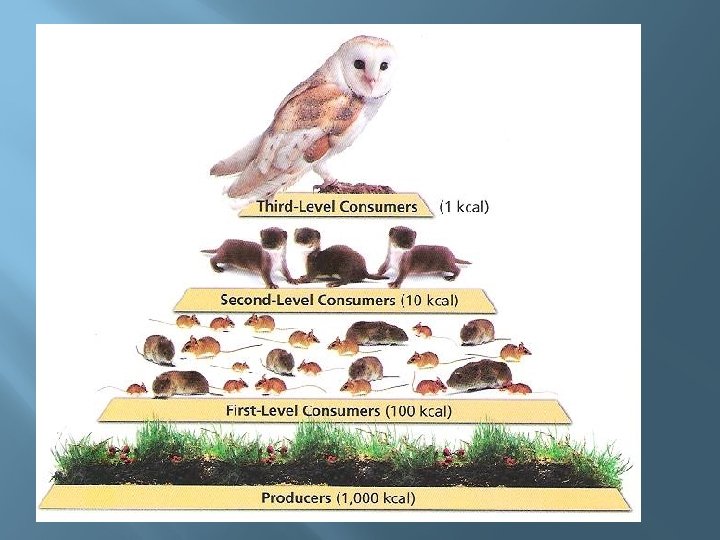
Energy loss When a herbivore eats, only 10% of energy from plants becomes body mass Remaining 90% is lost to carry out life processes (movement, digestion, reproduction) & as waste When carnivore eats herbivore only 1% of original amount of energy is used
Abiotic & biotic factors Abiotic factors are non-living things in the environment ex. soil, water, rocks, sunlight. Biotic factors are living things in the environment ex. animals, plants, bacteria.