
The Integumentary System The skin and its accessories

- Slides: 23
The Integumentary System The skin and its accessories
General Features z. Body’s largest organ z. Surface area of 1. 2 to 2. 2 square meters z 4 -5 Kilograms (7% of body weight) z 1. 5 -4. 0 millimeters thick (paper towel) z. Damage impairs nearly every other system
Functions z Protection-Provides a chemical, physical(mechanical) and biological barrier z Thermoregulation-Body temperature regulation z Sensory Organtemperature, pressure, touch, and pain z Metabolic-Synthesis Vitamin D z Excretion-Small amounts of Nitrogenous wastes, water and salt z Blood reservoir
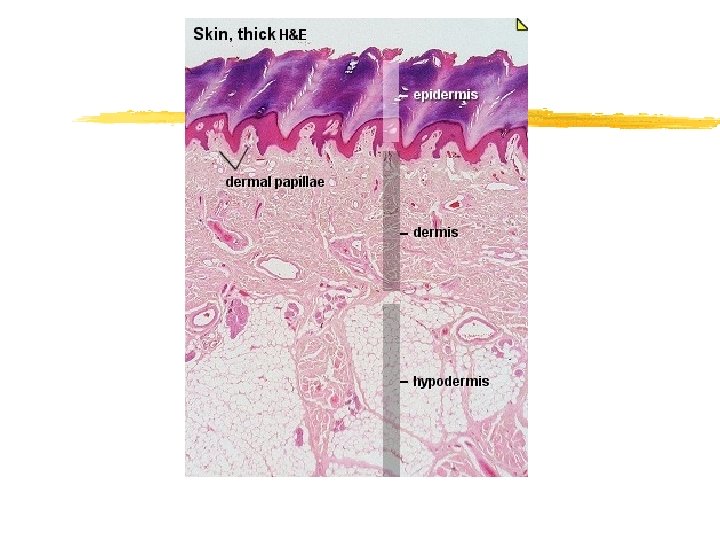
General Structure z. Epidermis z. Dermis z. Hypodermis /Subcutaneous (not offically considered a part of the skin, but important none the less)
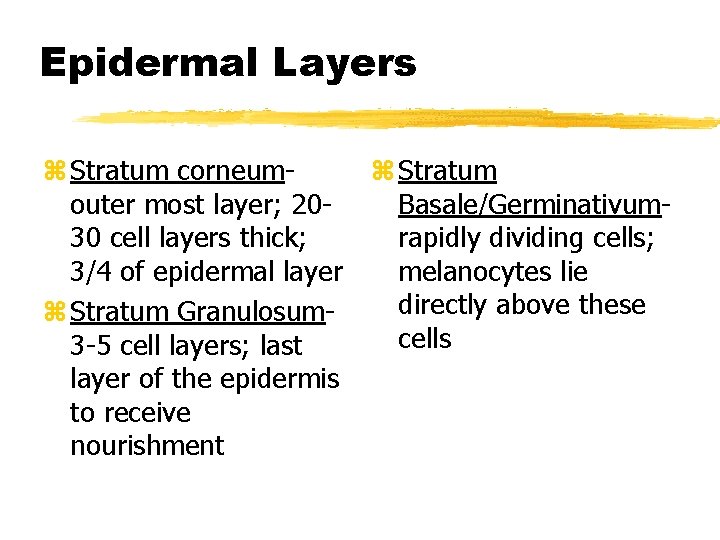
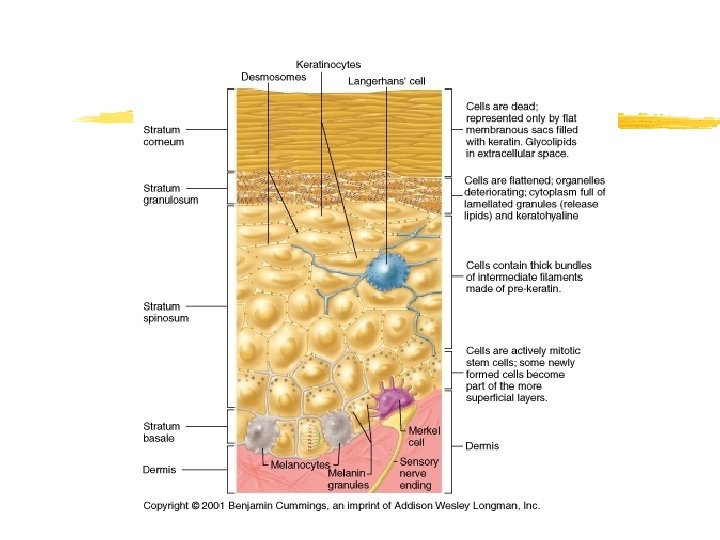
Epidermal Layers z Stratum corneum. Basale/Germinativumouter most layer; 20 rapidly dividing cells; 30 cell layers thick; melanocytes lie 3/4 of epidermal layer directly above these z Stratum Granulosumcells 3 -5 cell layers; last layer of the epidermis to receive nourishment
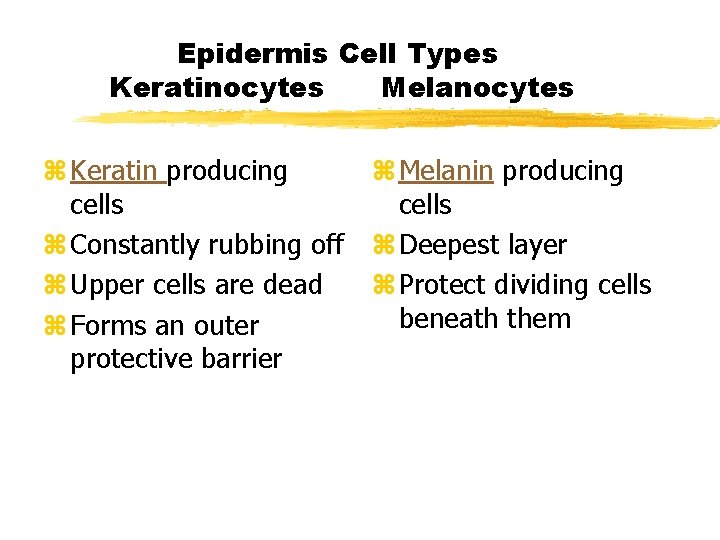
Epidermis Cell Types Keratinocytes Melanocytes z Keratin producing z Melanin producing cells z Constantly rubbing off z Deepest layer z Upper cells are dead z Protect dividing cells beneath them z Forms an outer protective barrier
Keratin Protein found in the epidermis, hair and nails that makes those structures hard and water -repellent.
Melanin Dark pigment formed by melanocytes; imparts color to hair and skin
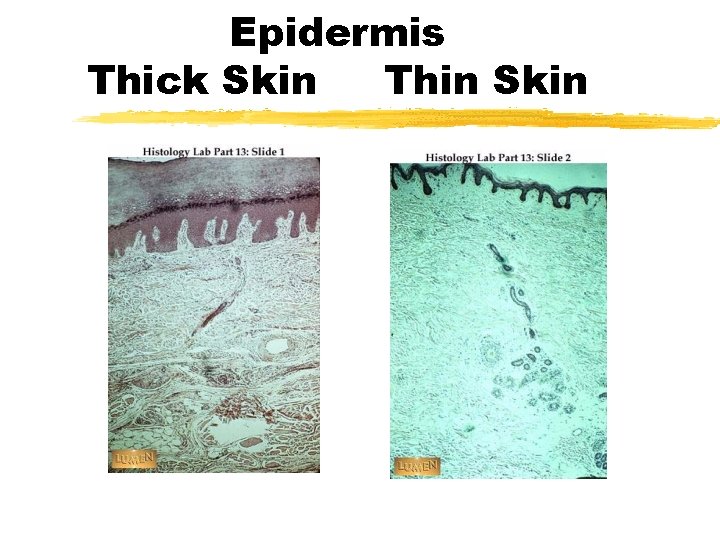
Epidermis Thick Skin Thin Skin
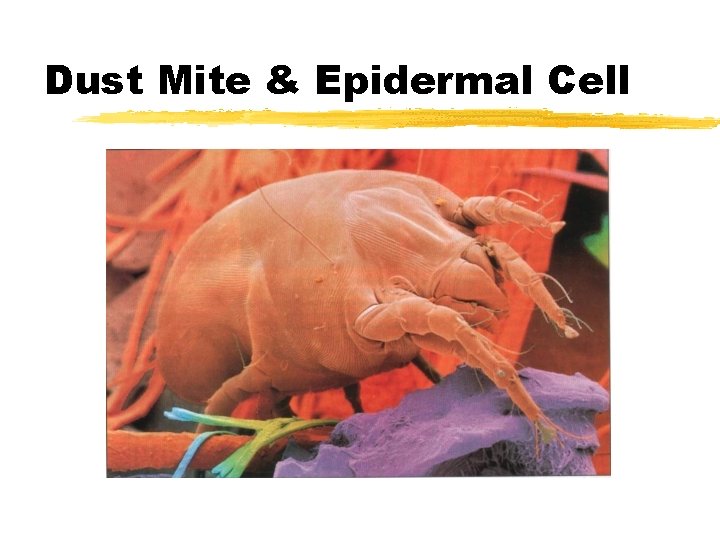
Dust Mite & Epidermal Cell
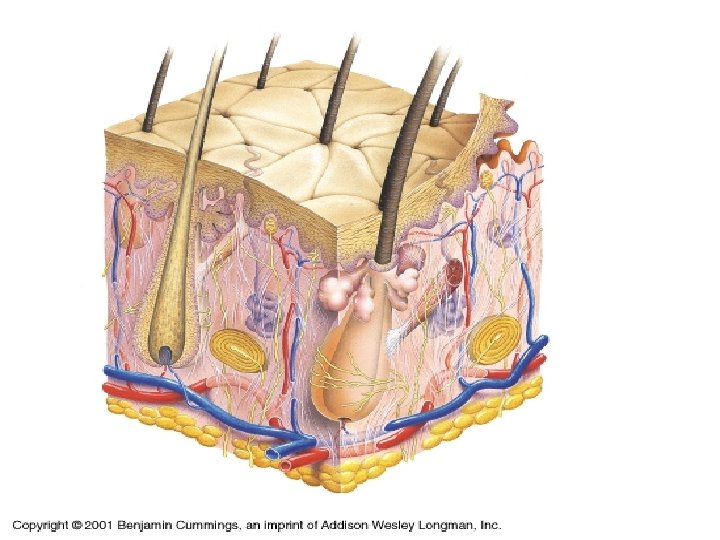
Features of the Dermis z Cell types: fibroblasts, z Other Structures: nerve fibers; blood macrophages, WBC’s vessels; hair follicles; z Fibers: collagen; glands reticular, elastic
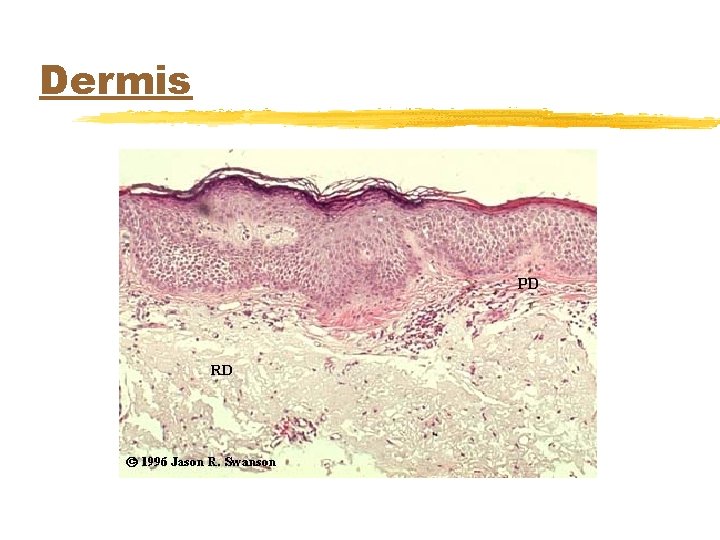
Dermis
Dermis z“True Skin” z. Acts like a “body stocking” to hold the body together z. Connective tissue; highly vascularized
Layers of the Dermis Papillary Reticular z Loosely woven z 80% of the dermis z Dermal papilla form z Very dense and ridges to make fingercollagen rich prints z Lots of blood vessels
Hypodermis or Subcutaneous Layer Although not officially considered a part of the skin, it must be examined in order to fully comprehend integumentary structure.
Features of the Hypodermis z Storage site for adipose tissue z Loosely anchors the skin to underlying muscle. Sliding allows blows to slide off and allows movement.
Factors Determining Skin Color z Melanin: Ranges from yellow to reddishbrown to black. Absorbs radiation from UV light to protect dividing cells beneath it. z Hemoglobin: Imparts a pinkish tint; lack of O 2 gives a bluish cast (Cyanosis) z Carotene: Orange to yellow pigment found in many vegetables; accumulates in the stratum corneum
Effects of Aging z. Fewer melanocytes z. Fewer active hair follicles z. Decreases sebaceous gland activity z. Thin epidermis z. Reduced sweat gland activity z. Reduced blood supply z. Thinner dermis
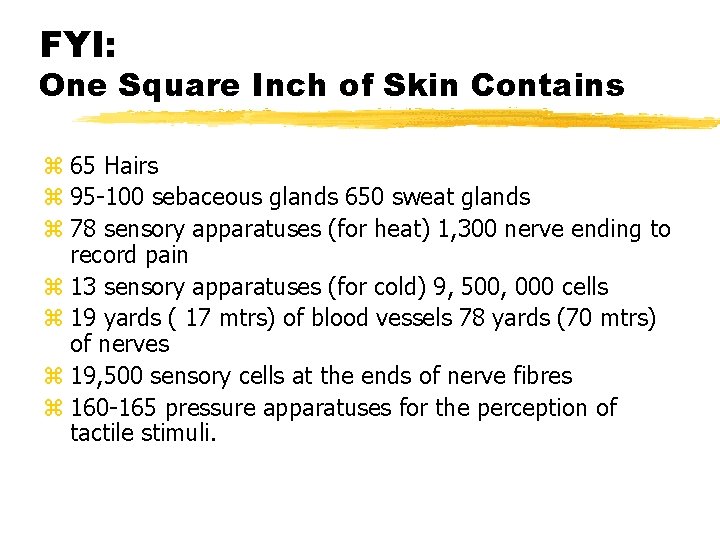
FYI: One Square Inch of Skin Contains z 65 Hairs z 95 -100 sebaceous glands 650 sweat glands z 78 sensory apparatuses (for heat) 1, 300 nerve ending to record pain z 13 sensory apparatuses (for cold) 9, 500, 000 cells z 19 yards ( 17 mtrs) of blood vessels 78 yards (70 mtrs) of nerves z 19, 500 sensory cells at the ends of nerve fibres z 160 -165 pressure apparatuses for the perception of tactile stimuli.