
The Integumentary System By Anthony Marris Julian Delgado

The Integumentary System By: Anthony Marris, Julian Delgado, Alejandro Arias, Natasia Barbosa.

What is the Definition of Integumentary System. • The Integumentary system is the organ system that protects the body from various kinds of damage, such as loss of water or abrasion from outside. • The Integumentary System has a variety of functions; it may serve to waterproof, cushion, and protect the deeper tissue, excrete waste, and regulate temperature.

Definition of Integumentary System • It’s attachment site for sensory receptors to detect pain, sensation, pressure, and temperature. • In the most time terrestrial vertebrates with significant exposure to sunlight, the integumentary system also uses vitamin D synthesis.

Effects of Integumentary System • The Integumentary system is the largest system in the body. • The effects in the integumentary system is the epidermal, also decreased vitamin D production and decreased glandular activity. • Other effects are a reduced blood supply, decreased function of hair follicles and decreased home levels.

Infection of Integumentary System • The integumentary system works to water proof, cushion, and protects the body from infections. • It also excretes waste, regulate temperature and prevents dehydration by controlling the level of perspiration. • It also houses sensory receptors that detect pain, sensation and pressure.

Fun Facts • • An adult has about 20 square feet of skin. You shed about 40 lbs of skin in a lifetime. Your nails grow about 5 mm a week. We lose 30, 000 to 40, 000 dead skin cell every minute. • You have a whole new layer of skin every month.
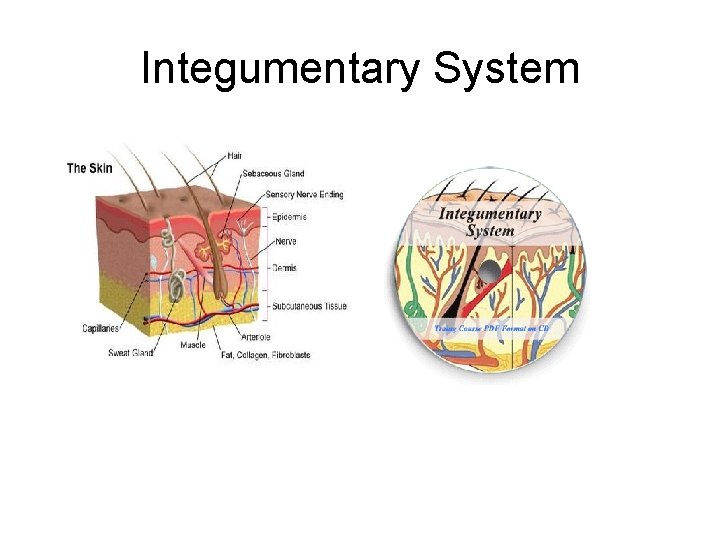
Integumentary System

Prevention and Treatment • • Acne Athletes Foot Warts Dermatitis

Fun Facts • Your skin is your birthday suit. • You will shed 40 lbs in a lifetime. • The average amount of head hair is 120, 000. • Every month you have a new layer of skin. • The eyelids have thinnest skin.
- Slides: 9