
The Integumentary System 1 Overview n Largest organ
- Slides: 53
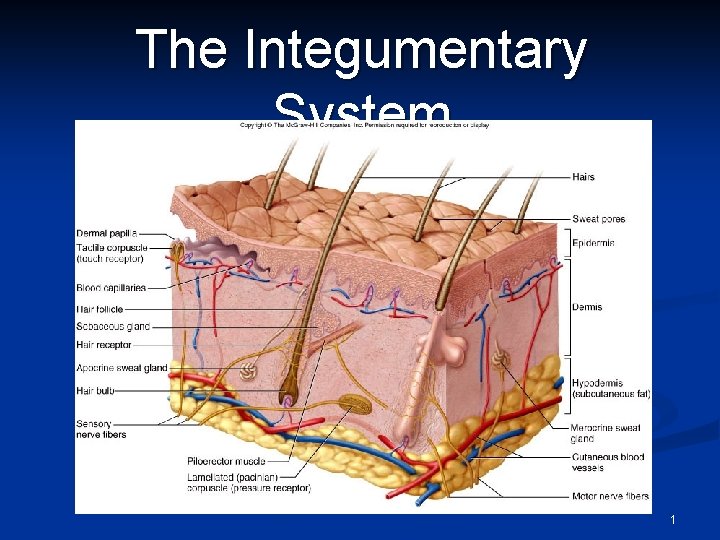
The Integumentary System 1
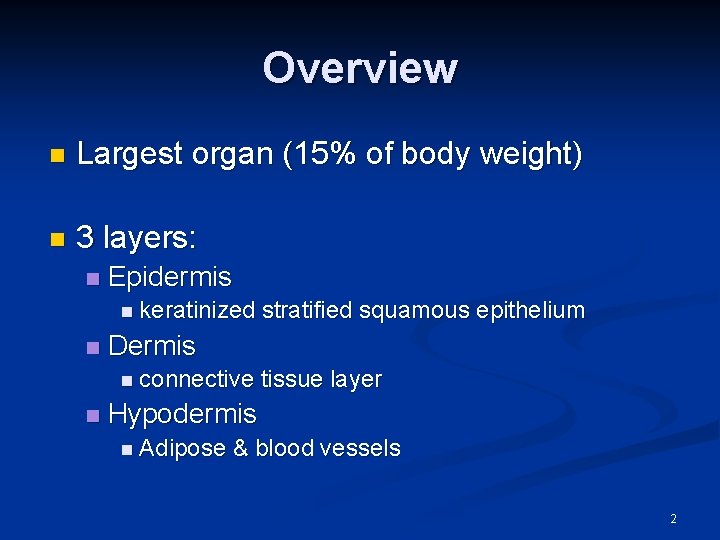
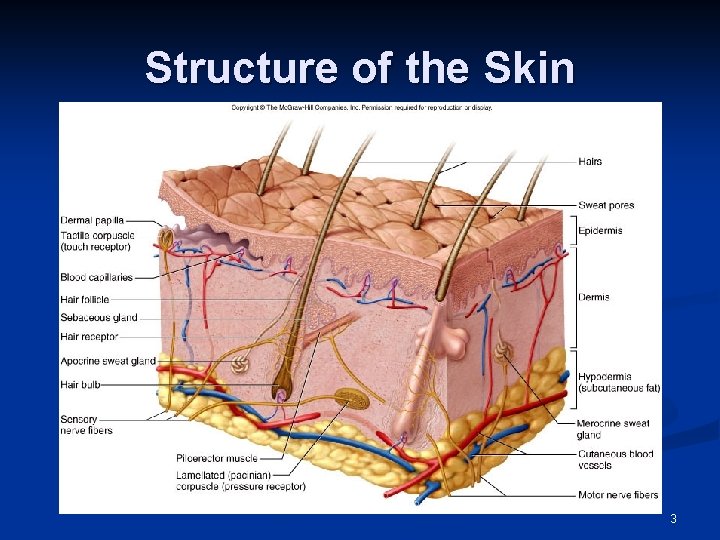
Overview n Largest organ (15% of body weight) n 3 layers: n Epidermis n keratinized n Dermis n connective n stratified squamous epithelium tissue layer Hypodermis n Adipose & blood vessels 2
Structure of the Skin 3
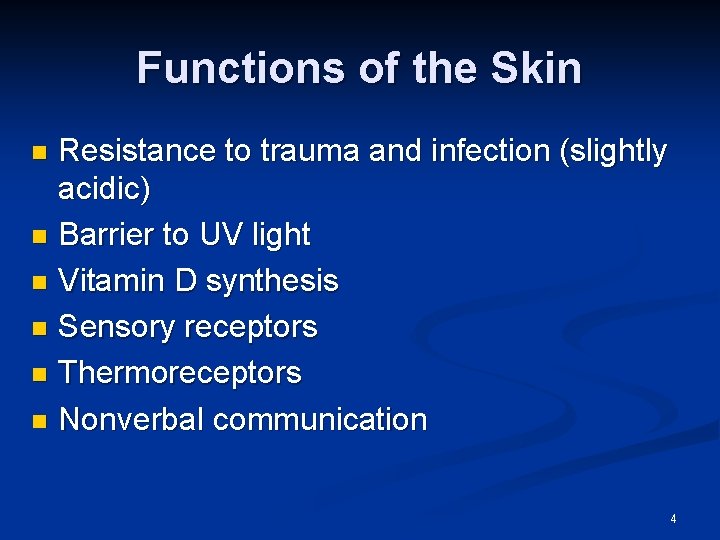
Functions of the Skin Resistance to trauma and infection (slightly acidic) n Barrier to UV light n Vitamin D synthesis n Sensory receptors n Thermoreceptors n Nonverbal communication n 4
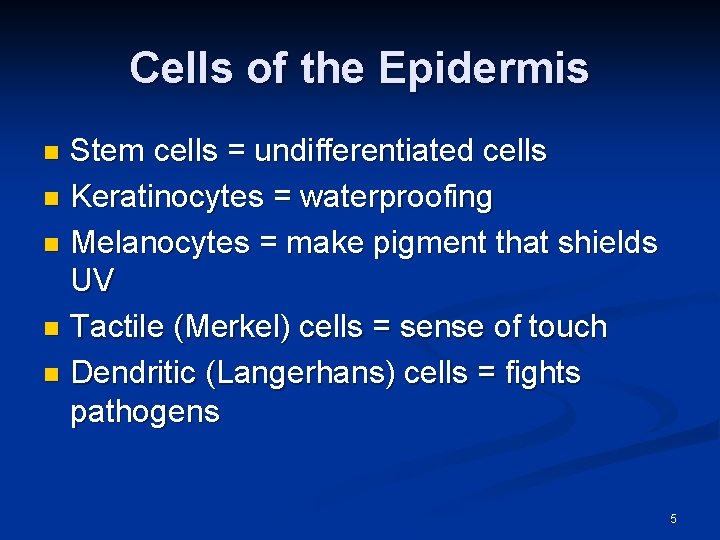
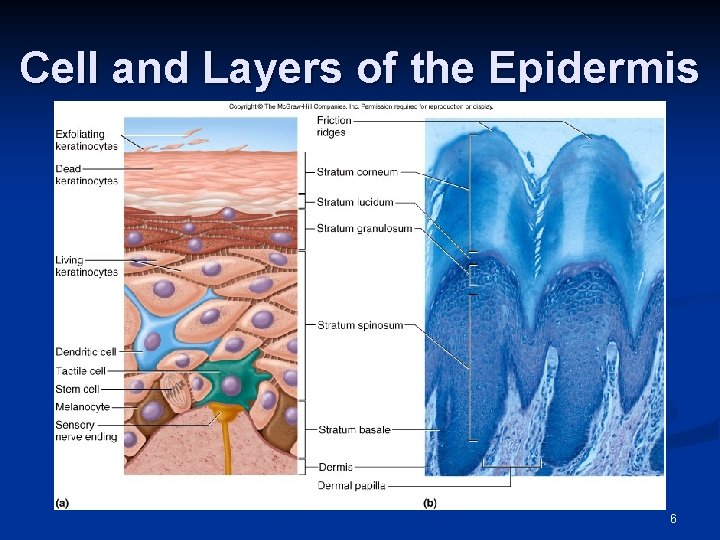
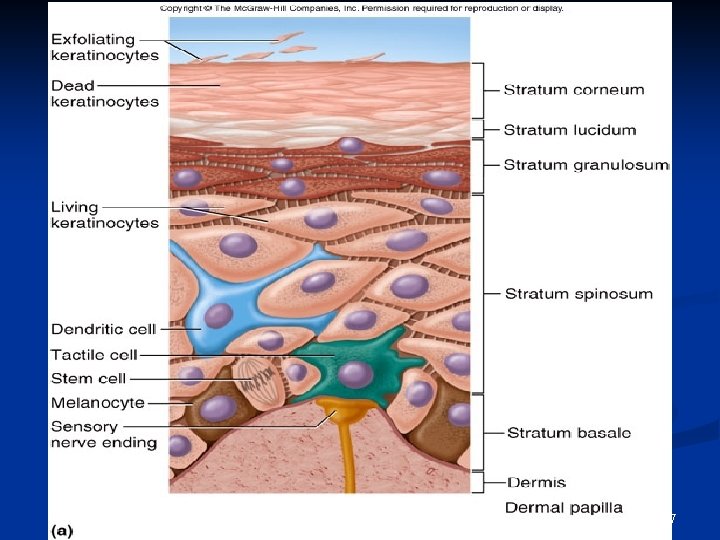
Cells of the Epidermis Stem cells = undifferentiated cells n Keratinocytes = waterproofing n Melanocytes = make pigment that shields UV n Tactile (Merkel) cells = sense of touch n Dendritic (Langerhans) cells = fights pathogens n 5
Cell and Layers of the Epidermis 6
Figure 6. 2 a 7
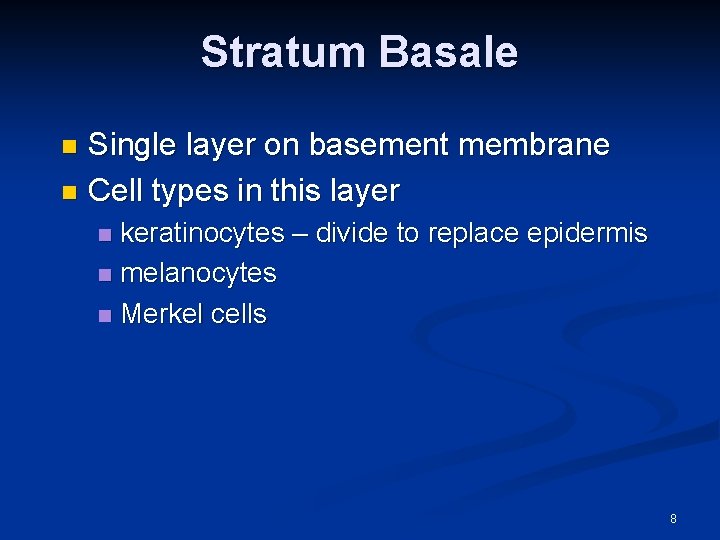
Stratum Basale Single layer on basement membrane n Cell types in this layer n keratinocytes – divide to replace epidermis n melanocytes n Merkel cells n 8
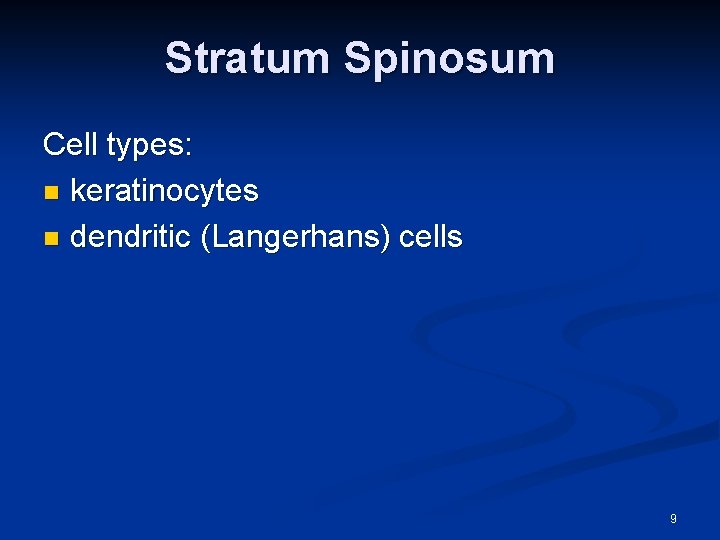
Stratum Spinosum Cell types: n keratinocytes n dendritic (Langerhans) cells 9
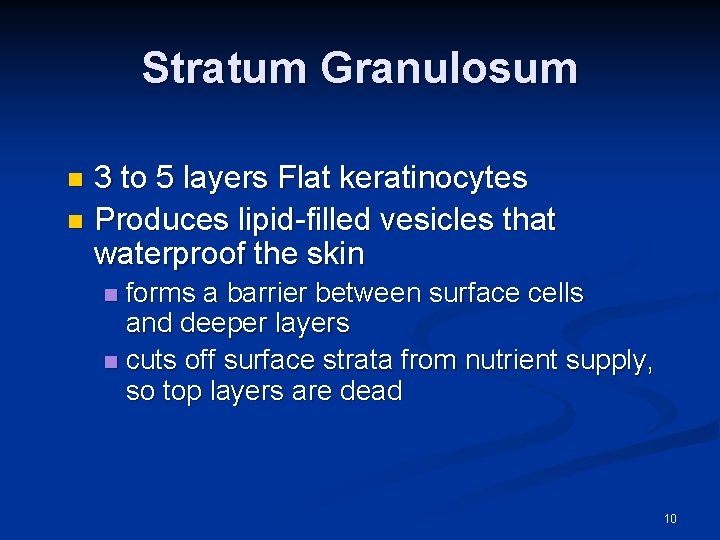
Stratum Granulosum 3 to 5 layers Flat keratinocytes n Produces lipid-filled vesicles that waterproof the skin n forms a barrier between surface cells and deeper layers n cuts off surface strata from nutrient supply, so top layers are dead n 10
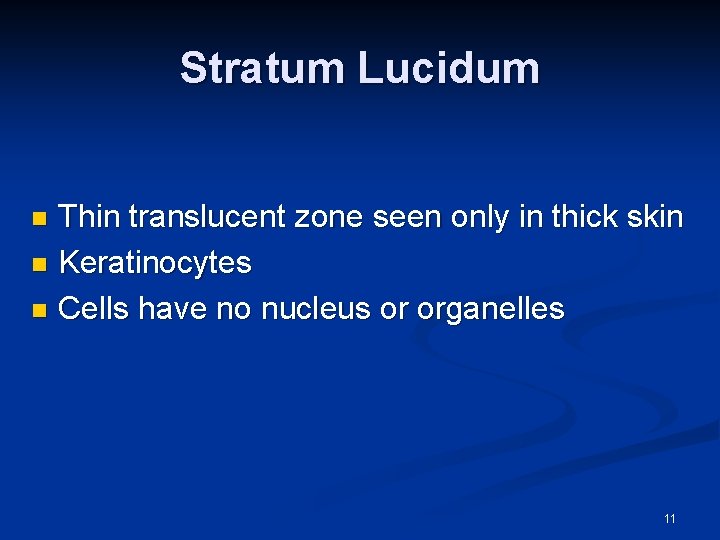
Stratum Lucidum Thin translucent zone seen only in thick skin n Keratinocytes n Cells have no nucleus or organelles n 11
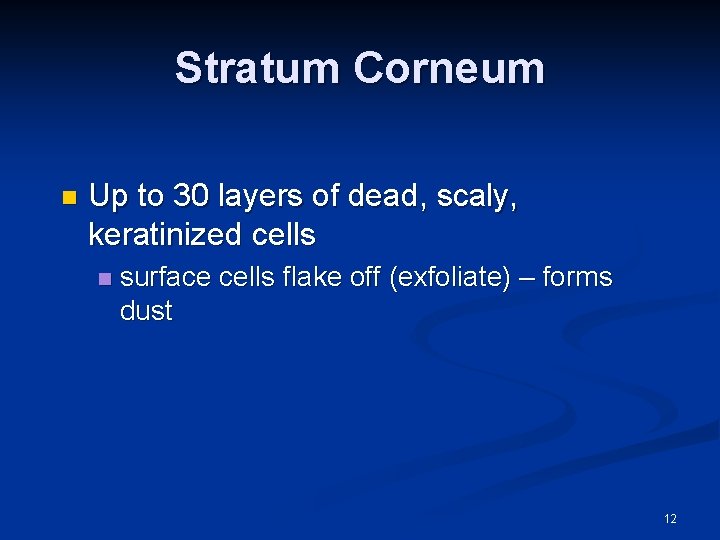
Stratum Corneum n Up to 30 layers of dead, scaly, keratinized cells n surface cells flake off (exfoliate) – forms dust 12
Life History of Keratinocytes Produced by stem cells in stratum basale n New cells push others toward surface n Cells filled with keratin n Cells die and exfoliate n 13
Dermis Thickness = 0. 6 mm to 3 mm n Composition n Dermal papillae - extensions of the dermis into the epidermis n n collagen, elastic and reticular fibers, fibroblasts forming the ridges of the fingerprints 2 Layers papillary layer - top n reticular layer - bottom n 14
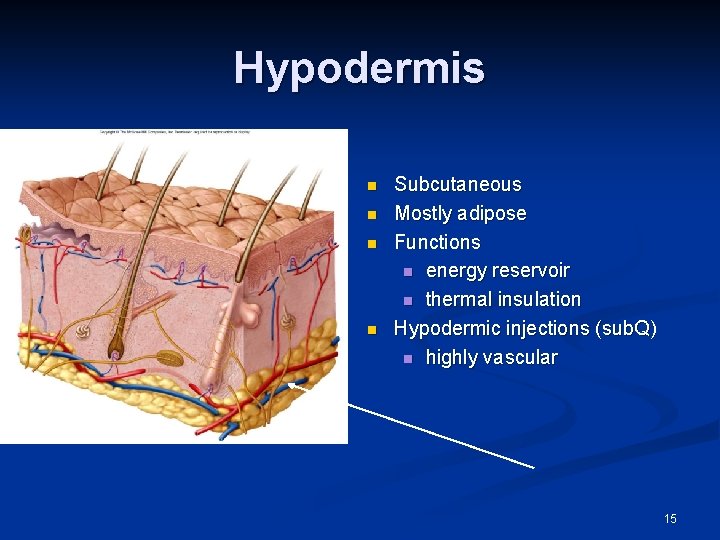
Hypodermis n n Subcutaneous Mostly adipose Functions n energy reservoir n thermal insulation Hypodermic injections (sub. Q) n highly vascular 15
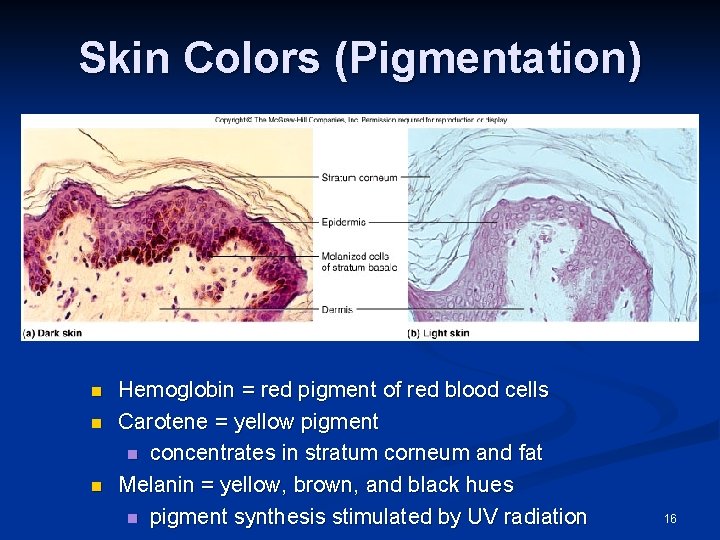
Skin Colors (Pigmentation) n n n Hemoglobin = red pigment of red blood cells Carotene = yellow pigment n concentrates in stratum corneum and fat Melanin = yellow, brown, and black hues n pigment synthesis stimulated by UV radiation 16
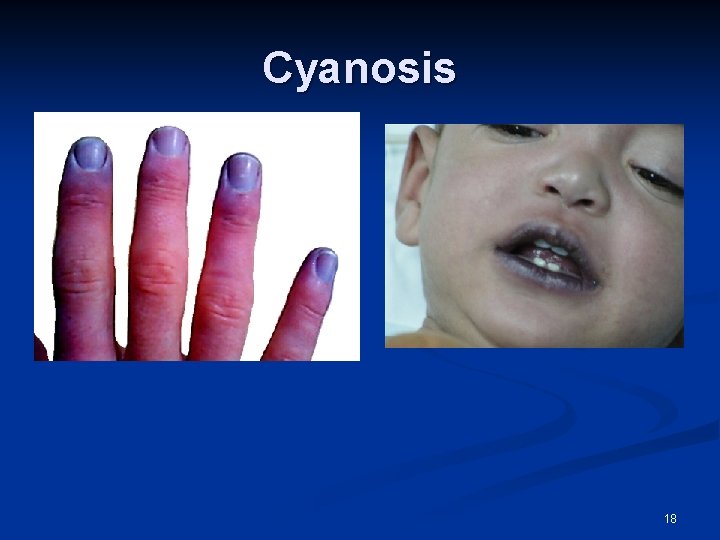
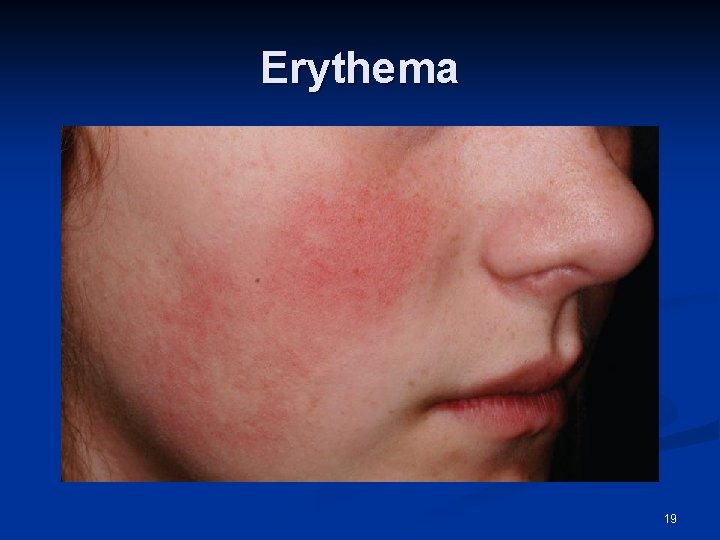
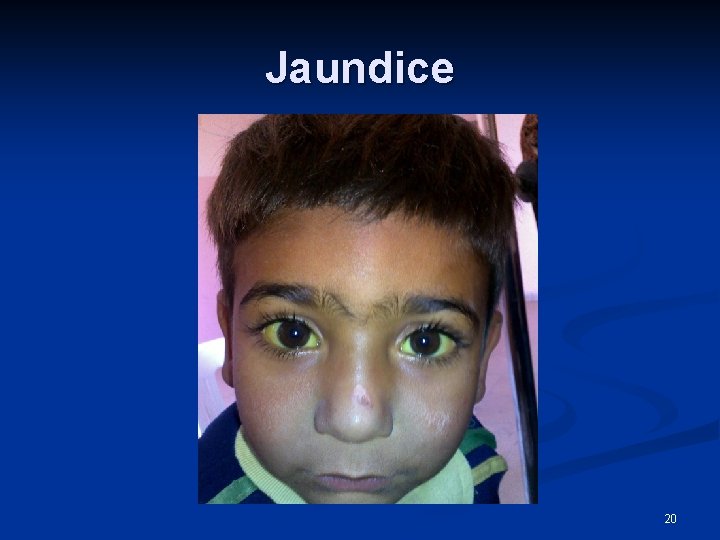
Abnormal Skin Colors 1 Cyanosis = blueness from deficiency of oxygen in the blood (cold weather) n Erythema = redness due to dilated cutaneous vessels (anger, sunburn, embarrassment) n Jaundice = yellowing of skin and sclera due to excess of bilirubin in blood (liver disease) n 17
Cyanosis 18
Erythema 19
Jaundice 20
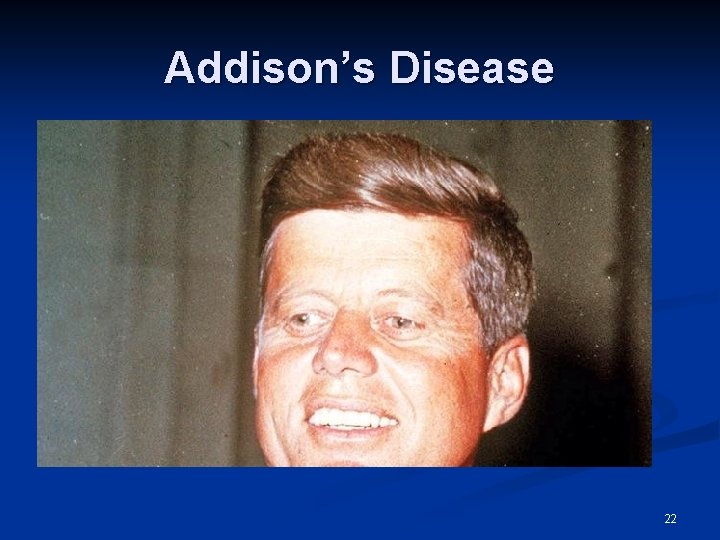
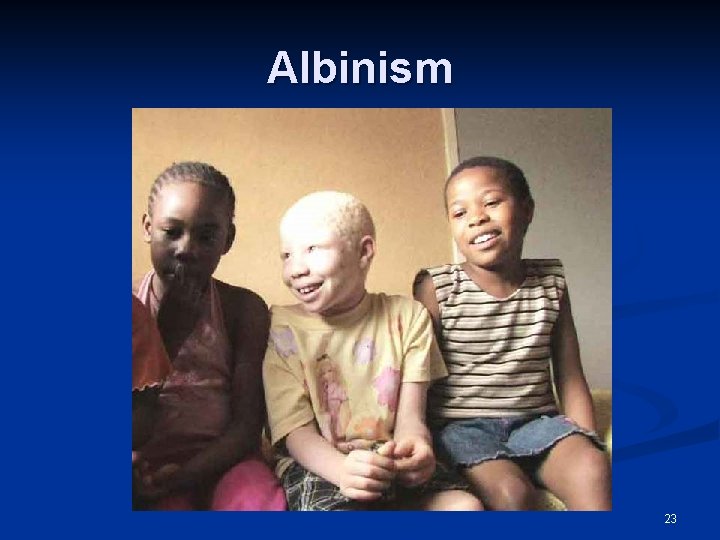
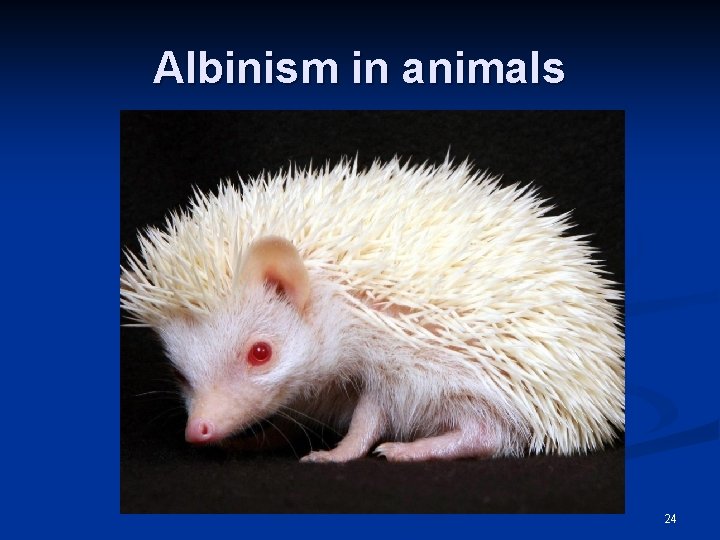
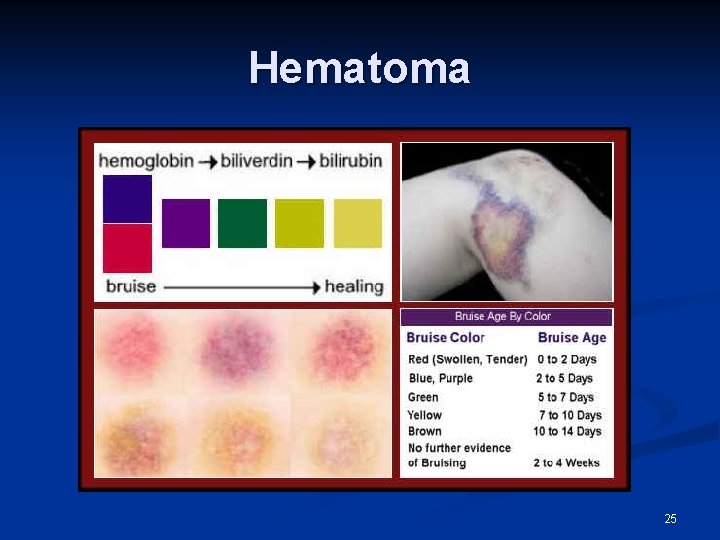
Abnormal Skin Colors 2 Bronzing = golden-brown color of Addison disease n Pallor = pale color from lack of blood flow n Albinism = a genetic lack of melanin n Hematoma = a bruise (visible clotted blood) n 21
Addison’s Disease 22
Albinism 23
Albinism in animals 24
Hematoma 25
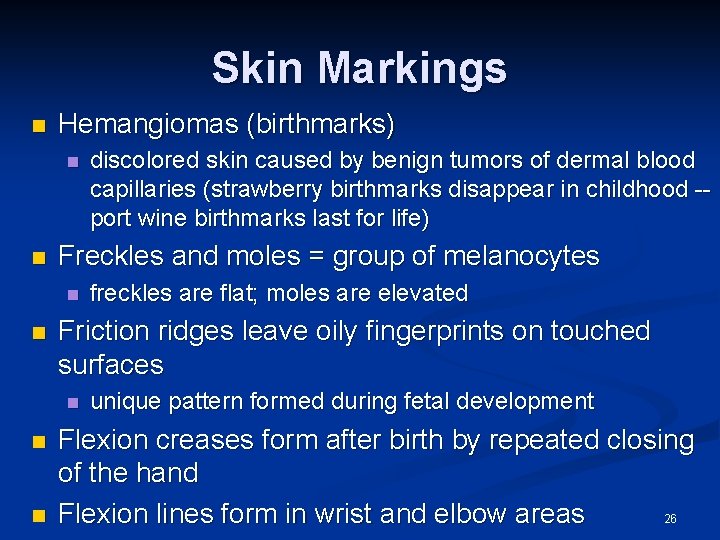
Skin Markings n Hemangiomas (birthmarks) n n Freckles and moles = group of melanocytes n n n freckles are flat; moles are elevated Friction ridges leave oily fingerprints on touched surfaces n n discolored skin caused by benign tumors of dermal blood capillaries (strawberry birthmarks disappear in childhood -port wine birthmarks last for life) unique pattern formed during fetal development Flexion creases form after birth by repeated closing of the hand Flexion lines form in wrist and elbow areas 26
Characteristics of Human Hair (composed of hard keratin) n Hair found almost everywhere n n n differences between sexes or individuals is difference in texture and color of hair 3 different body hair types lanugo -- fine, unpigmented fetal hair n vellus -- fine, unpigmented hair of children and women n terminal hair -- coarse, long, pigmented hair of scalp n 27
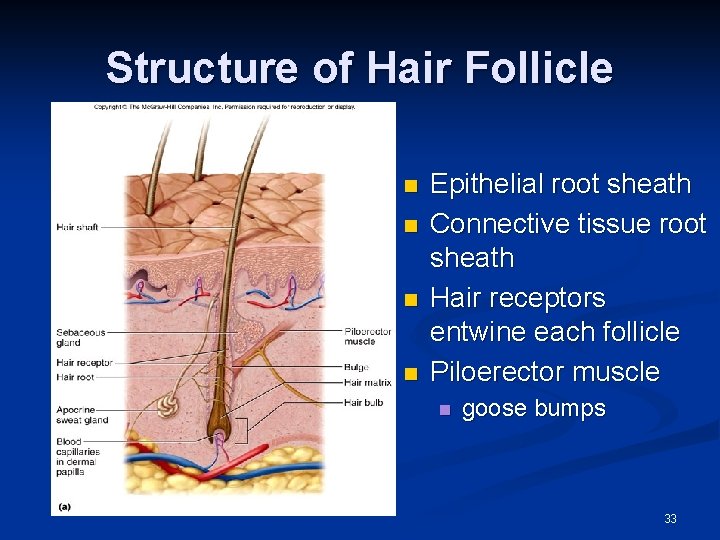
Structure of Hair and Follicle n Hair is filament of keratinized cells n n shaft = above skin; root = within follicle Follicle is oblique tube within the skin bulb is where hair originates n vascular tissue (papilla) in bulb provides nutrients n n Texture and shape of hair n n straight hair = round; wavy = oval Hair color = pigment in cells of cortex 28
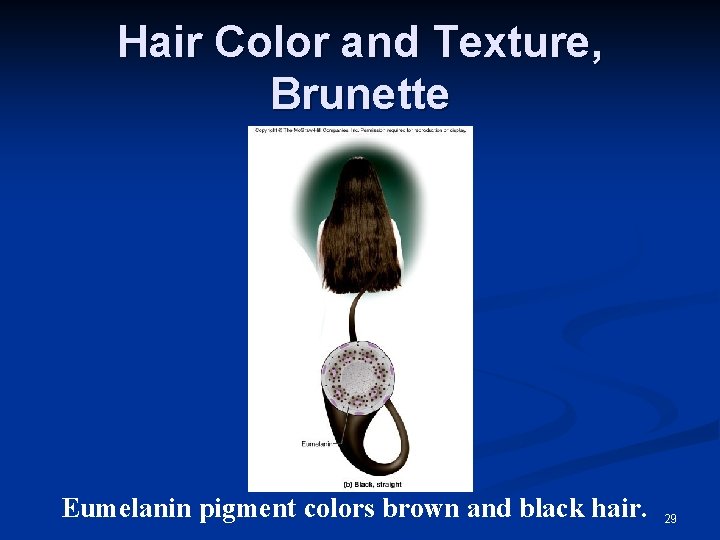
Hair Color and Texture, Brunette Eumelanin pigment colors brown and black hair. 29
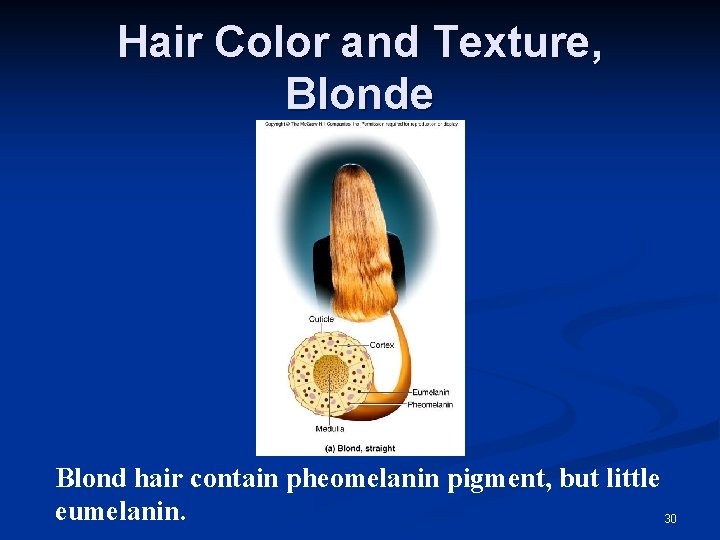
Hair Color and Texture, Blonde Blond hair contain pheomelanin pigment, but little eumelanin. 30
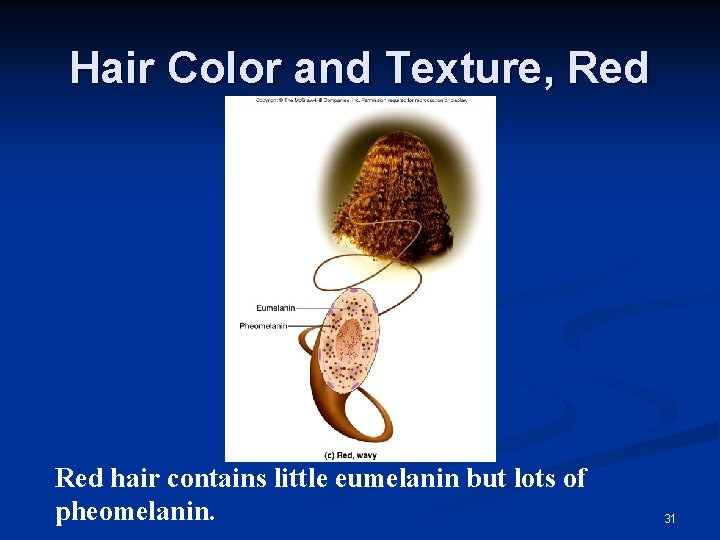
Hair Color and Texture, Red hair contains little eumelanin but lots of pheomelanin. 31
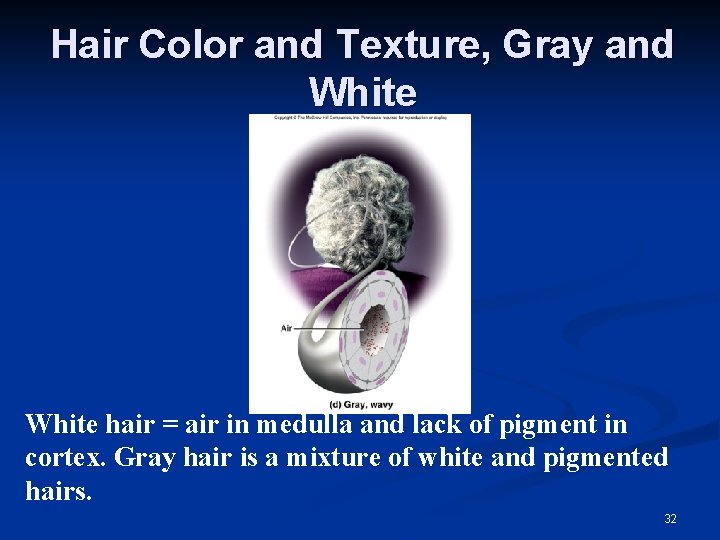
Hair Color and Texture, Gray and White hair = air in medulla and lack of pigment in cortex. Gray hair is a mixture of white and pigmented hairs. 32
Structure of Hair Follicle n n Epithelial root sheath Connective tissue root sheath Hair receptors entwine each follicle Piloerector muscle n goose bumps 33
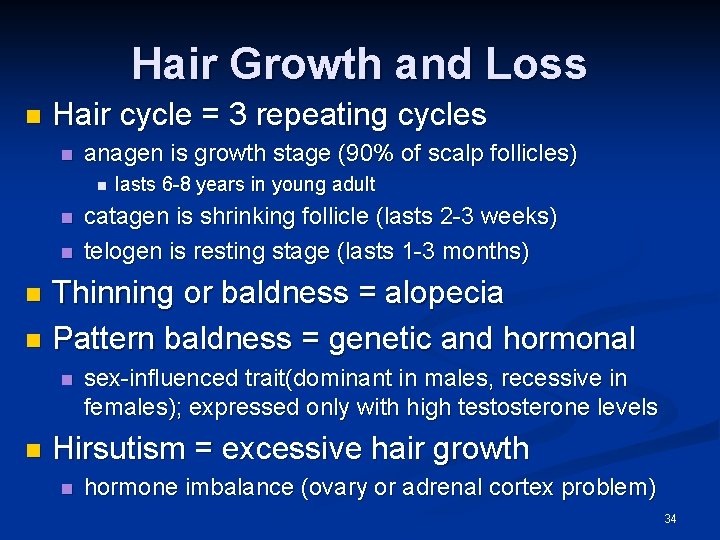
Hair Growth and Loss n Hair cycle = 3 repeating cycles n anagen is growth stage (90% of scalp follicles) n n n lasts 6 -8 years in young adult catagen is shrinking follicle (lasts 2 -3 weeks) telogen is resting stage (lasts 1 -3 months) Thinning or baldness = alopecia n Pattern baldness = genetic and hormonal n n n sex-influenced trait(dominant in males, recessive in females); expressed only with high testosterone levels Hirsutism = excessive hair growth n hormone imbalance (ovary or adrenal cortex problem) 34
Functions of Hair n Body hair (too thin to provide warmth) n n alert us to parasites crawling on skin Scalp hair n heat retention and sunburn cover Beard, pubic and axillary hair indicate sexual maturity and help distribute sexual scents n Guard hairs and eyelashes n n n prevent foreign objects from getting into nostrils, ear canals or eyes Expression of emotions with eyebrows 35
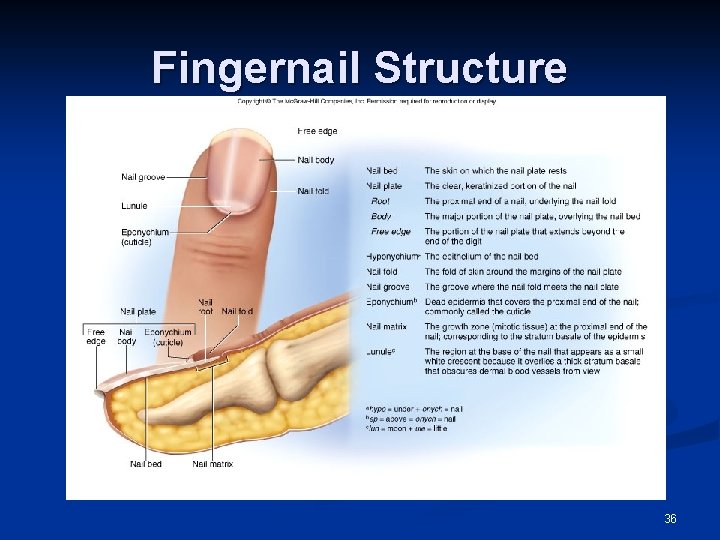
Fingernail Structure 36
Nails n Derivative of stratum corneum n densely packed cells filled with hard keratin Flat nails allow for fleshy, sensitive fingertips n Growth rate is 1 mm per week n new cells added by mitosis n nail plate is visible part of nail n n medical diagnosis of iron deficiency = concave nails 37
Sweat (Sudoriferous) Glands n Purpose = cool us down n n 500 ml of insensible perspiration/day sweating with visible wetness = diaphoresis 2 types of sweat glands: n n Eccrine – all over body Apocrine glands – mainly axillary regions produce sweat containing fatty acids § § found only near hair follicles and respond to stress and sex bromhidrosis is body odor produced by bacterial action on fatty acids 38
Oil (Sebaceous) Glands n Sebaceous- oily secretion called sebum that contains broken-down cells n n lanolin in skin creams is sheep sebum opens into hair follicle 39
Ceruminous Glands Found only in external ear canal n Their secretion combines with sebum to produce earwax n waterproof keeps eardrum flexible n bitterness repel mites and other pests n 40
Mammary Glands Develops in female breasts at puberty (male glands do not develop) n Function: produce milk after pregnancy n Additional nipples (polythelia) n 41
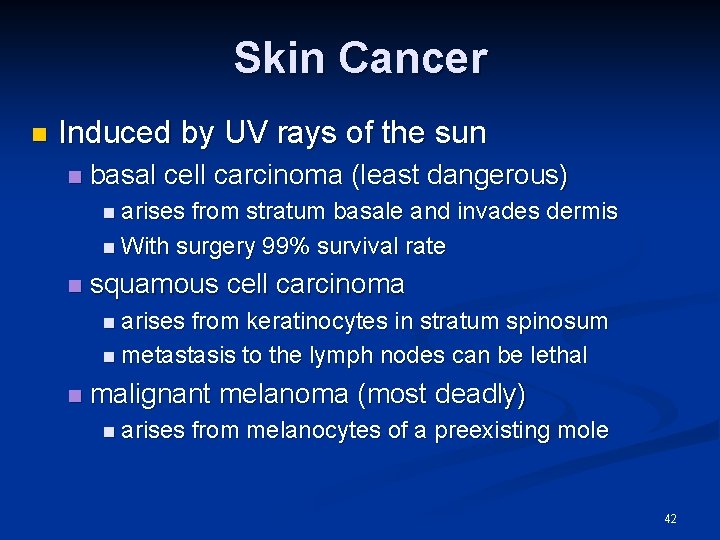
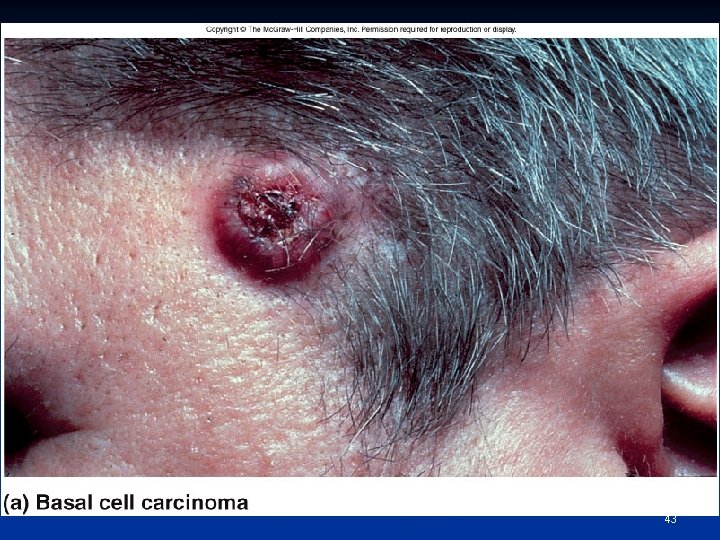
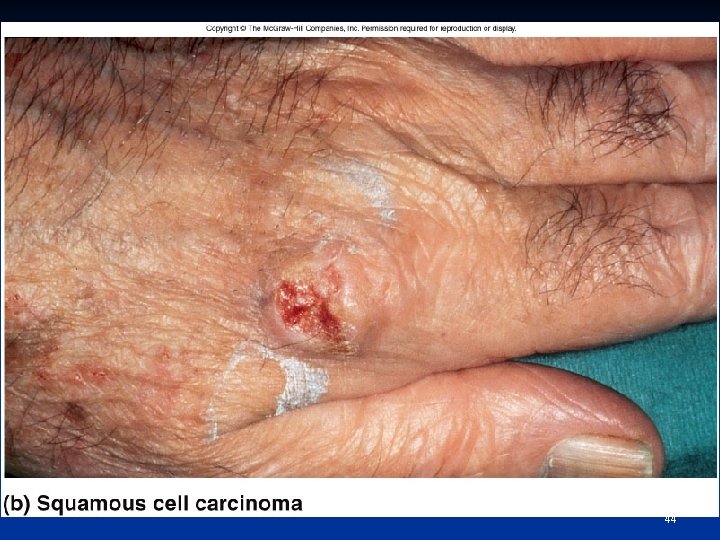
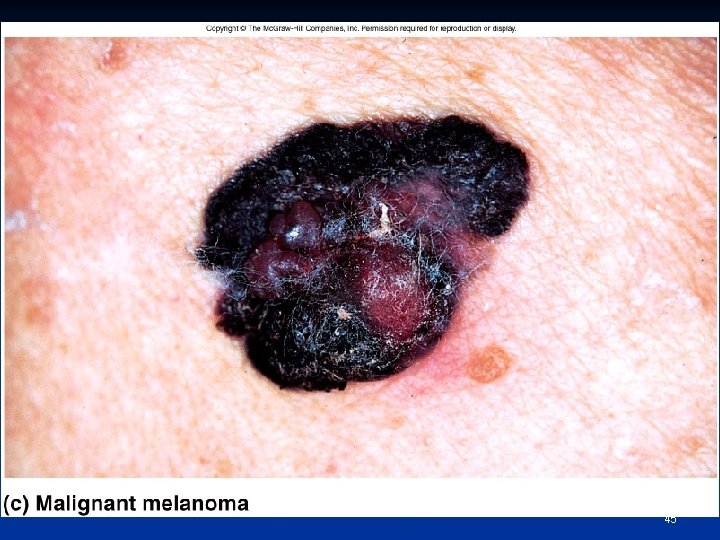
Skin Cancer n Induced by UV rays of the sun n basal cell carcinoma (least dangerous) n arises from stratum basale and invades dermis n With surgery 99% survival rate n squamous cell carcinoma n arises from keratinocytes in stratum spinosum n metastasis to the lymph nodes can be lethal n malignant melanoma (most deadly) n arises from melanocytes of a preexisting mole 42
Figure 6. 11 a 43
Figure 6. 11 b 44
Figure 6. 11 c 45
ABCD Rule by American Cancer Society A: A symmetry-the 2 sides of the pigmented spot or mole do not match n B: Border irregularity-borders of the lesion are not smooth, but exhibit indentations n C: Color- the pigmented spot contains several colors n D: Diameter-spot larger than 6 mm n (E: Elevation) n 46
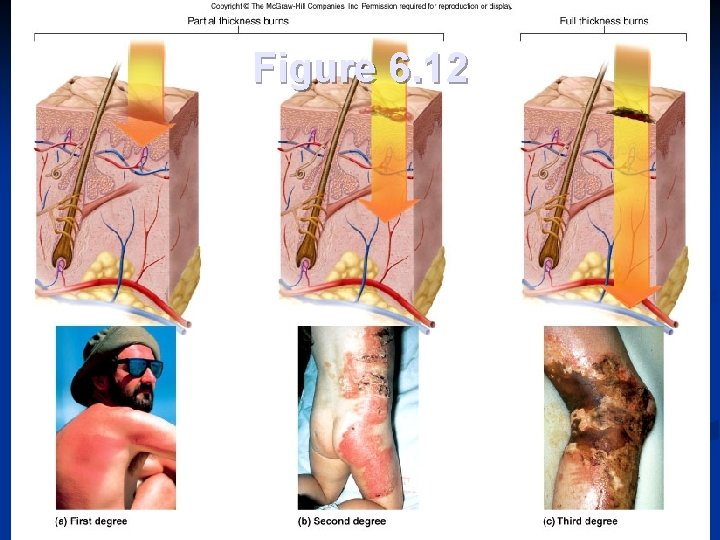
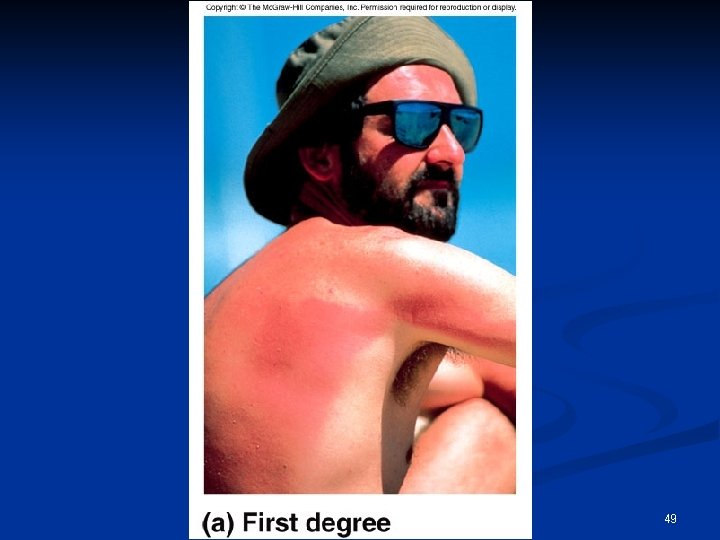
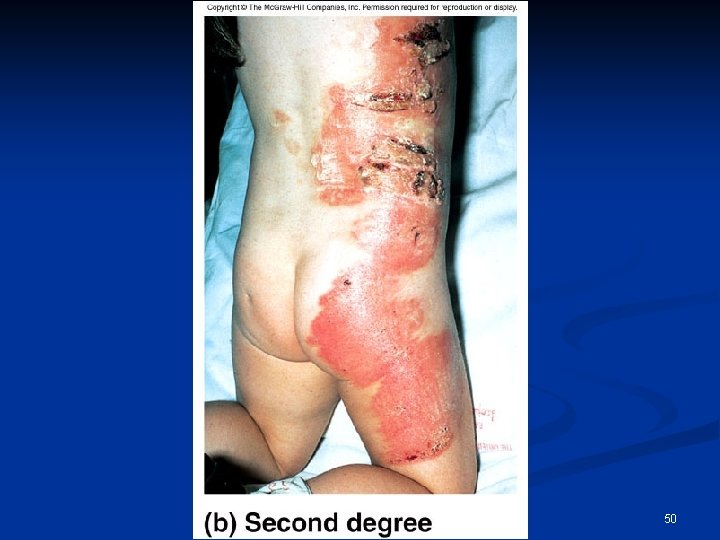
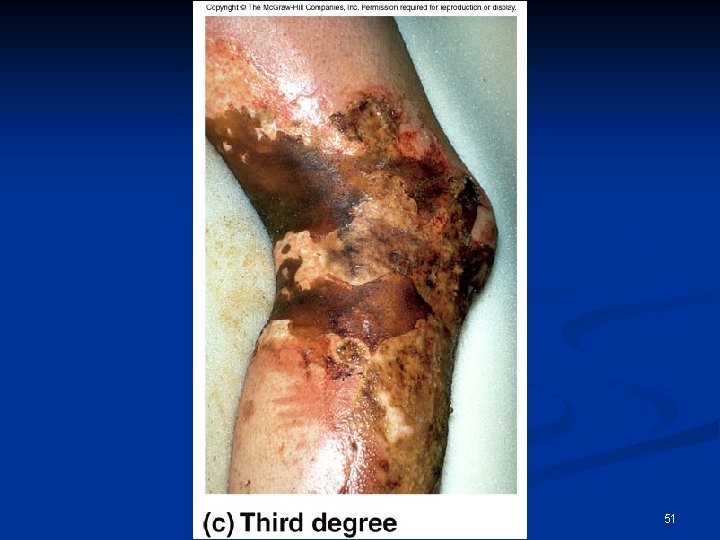
Burns n n n Hot water, sunlight, radiation, electric shock or acids and bases Death from fluid loss and infection Degrees of burns n n 1 st-degree = only the epidermis (red, painful and edema) 2 nd-degree = epidermis and part of dermis (blistered) n n 3 rd-degree = epidermis, dermis and more is destroyed n n epidermis regenerates from hair follicles and sweat glands often requires grafts or fibrosis and disfigurement may occur Treatment – IV nutrition and fluid replacement, remove dead tissue, and infection control 47
Figure 6. 12 48
Figure 6. 12 ab 49
Figure 6. 12 bb 50
Figure 6. 12 cb 51
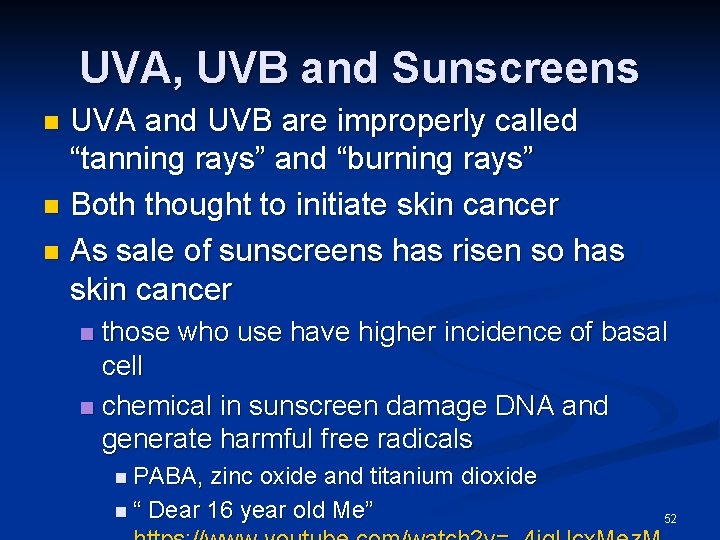
UVA, UVB and Sunscreens UVA and UVB are improperly called “tanning rays” and “burning rays” n Both thought to initiate skin cancer n As sale of sunscreens has risen so has skin cancer n those who use have higher incidence of basal cell n chemical in sunscreen damage DNA and generate harmful free radicals n n PABA, zinc oxide and titanium dioxide n “ Dear 16 year old Me” 52
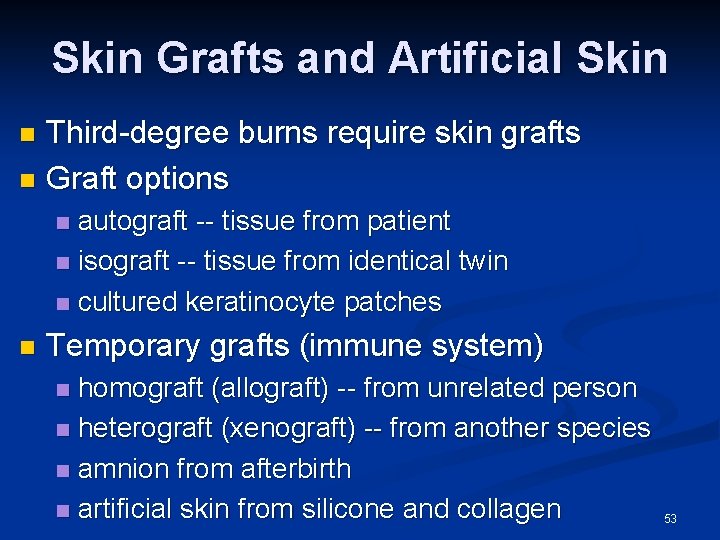
Skin Grafts and Artificial Skin Third-degree burns require skin grafts n Graft options n autograft -- tissue from patient n isograft -- tissue from identical twin n cultured keratinocyte patches n n Temporary grafts (immune system) homograft (allograft) -- from unrelated person n heterograft (xenograft) -- from another species n amnion from afterbirth n artificial skin from silicone and collagen n 53