
The integration of cardiovascular and respiratory function Oxygen
- Slides: 11
The integration of cardiovascular and respiratory function
Oxygen Consumption (VO 2) • The amount of o 2 taken up and consumed by the body for metabolic processes. • Equal to amount of inspired air minus amount of expired air • VO 2 is proportional to workload • Measured by a metabolic cart in a lab environment
. . cont. • The maximal rate of oxygen consumption would occur at max HR, SV and a-vo 2 diff. • VO 2 max is the maximal amount of O 2 that can be taken in and used for the metabolic production of ATP during exercise
Limiting factors to VO 2 • The respiratory system: inadequate ventilation and oxygen diffusion limitations • The cardiovascular system: inadequate blood flow; inadequate oxygen-carrying capacity (Q likely the biggest limiting factor) • Energy systems: lack of mitochondria
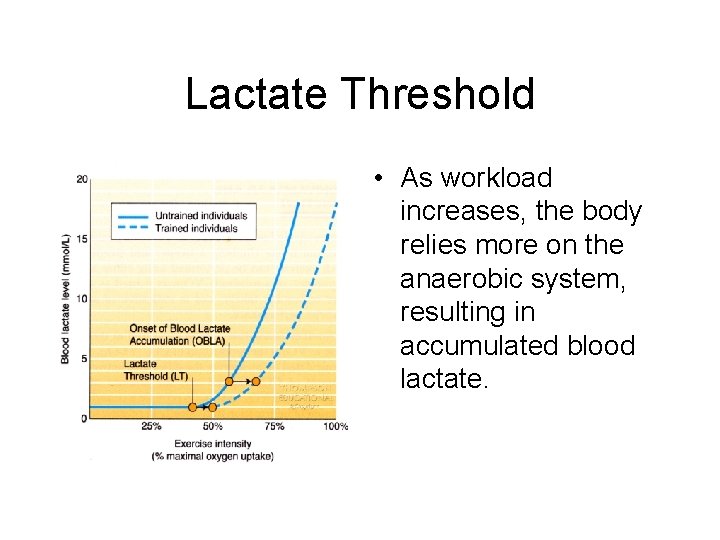
Lactate Threshold • As workload increases, the body relies more on the anaerobic system, resulting in accumulated blood lactate.
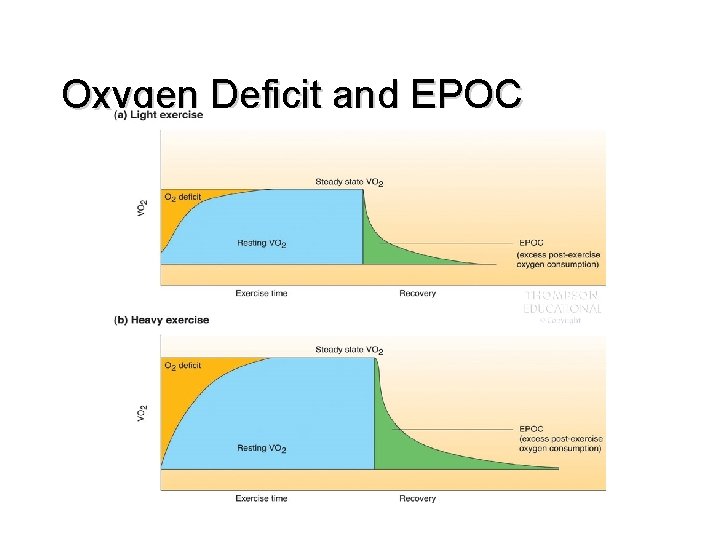
Oxygen Deficit and EPOC
• Oxygen deficit: the difference between the O 2 required to perform a task and the O 2 consumed before reaching steady state (sub-maximal) • Trained individuals reach this state earlier than non-trained individuals.
EPOC • Excess post-exercise oxygen consumption: The extra oxygen required to replenish oxygen to the various systems that were taxed during the exercise. • Eg: refilling phosphocreatine reserves, replenishing O 2 in blood and tissues, lowering breathing rate, lowering body temp. and increasing blood lactate removal. • Active recovery can aid in the removal of blood lactate.
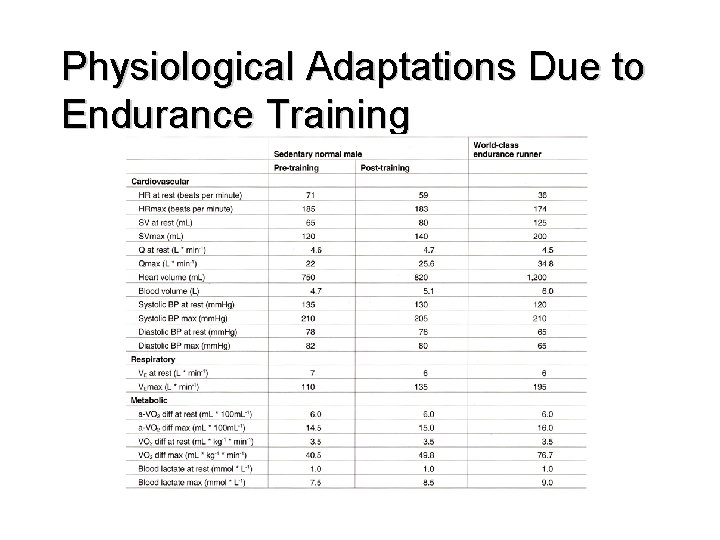
Physiological Adaptations Due to Endurance Training
Oxygen consumption • The amount of O 2 taken up and consumed by the body for metabolic process is called oxygen consumption (VO 2)
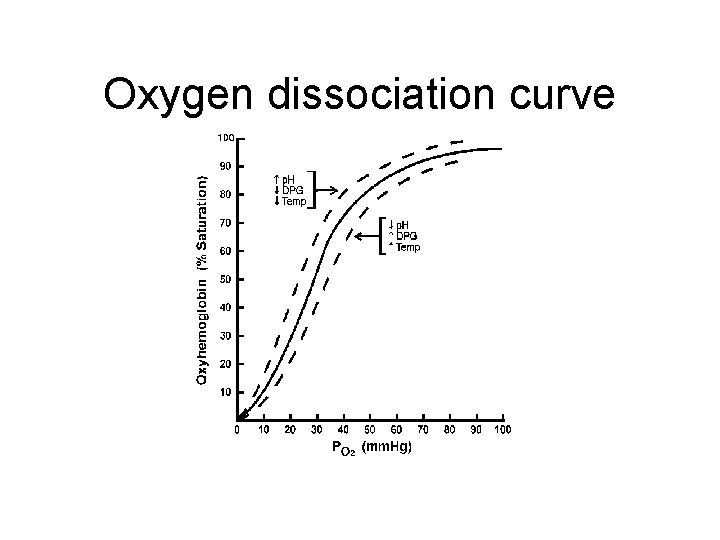
Oxygen dissociation curve