
The Insulin Hypothesis Primer on Regulation of Body
The Insulin Hypothesis
Primer on Regulation of Body Fat �Biological factors regulate amount of fat in our bodies �Modified by genetics �Diets can affect this process
Carbohydrate Metabolism �As carbs are digested, they are sent to bloodstream as glucose �Insulin is released to help cells use glucose �Cells in body burn some glucose immediately as fuel; store some for later use �Insulin stays high as long as carbs are available
Fat Metabolism: �Occurs when insulin levels are low �Fats burned for fuel after carbs are broken down �broken down into fatty acids, which can be used as fuel �Can flow in and out of cells �If insulin is high: fat is stored as trigylcerides �Composed of 3 fatty acids �Too large to leave cells
Implications �When insulin levels go up, we store fat; when they go down, we mobilize fat and use it for fuel. �Suggests that anything that makes us secrete more insulin will extend periods during which we store fat and shorten the periods we burn it
Results �Obesity �Hunger �Can’t use carbohydrates stored in liver and muscle for fuel �Vicious cycle: �bodies getting bigger, so we need more fuel �Energy demands increase, as does appetite
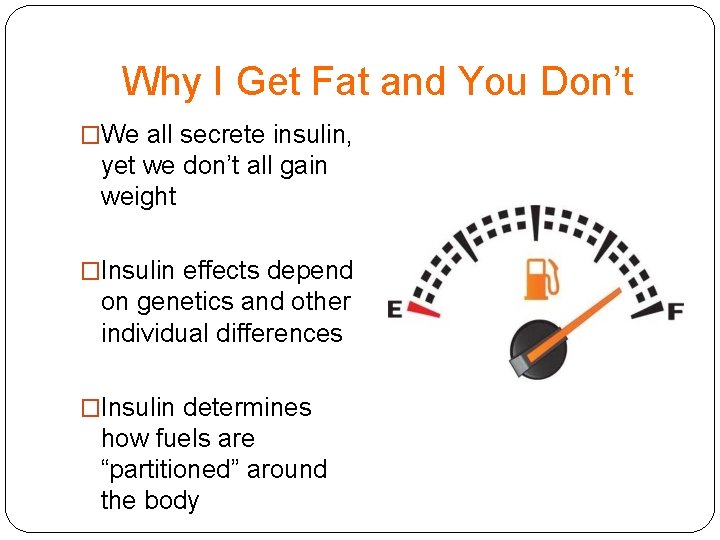
Why I Get Fat and You Don’t �We all secrete insulin, yet we don’t all gain weight �Insulin effects depend on genetics and other individual differences �Insulin determines how fuels are “partitioned” around the body
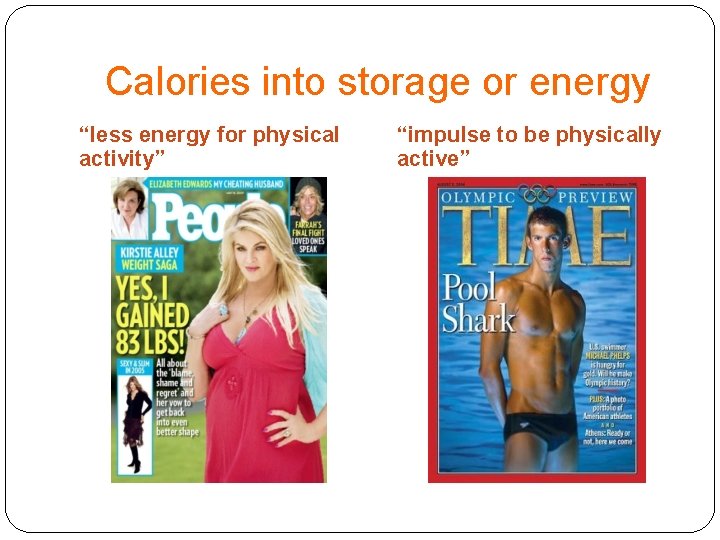
Calories into storage or energy “less energy for physical activity” “impulse to be physically active”
What determines which way needle points? � 1. How much insulin we secrete in response to food �Given same food, some release more insulin �Influenced by genetics �Influenced by diet over years �Influenced by pre-natal factors
� 2. How sensitive our cells are to insulin �How quickly “Insulin resistance” develops �Influenced by genetics �Influenced by diet over years �Influenced by pre-natal factors
� 3. How individual cells respond to insulin �Muscle vs fat cells �Changes with age and diet �Influenced by activity �Influenced by genetics
Prenatal Factors �Mother’s weight and diet �High glucose in mother’s blood results in higher blood glucose in fetus �Fetus responds by developing more insulin-secreting cells �-baby born with more fat �Has tendency to oversecrete insulin, develop insulin- resistance
What we can do �Genetic predisposition is set off by carbohydrates we eat � Not all foods that contain carbohydrates are equally fattening- worst are those that have greatest effect on blood sugar �Concentrated sources �Easily digested �Refined flour, liquids, starches
�Eat fewer carbohydrates �Improve the quality carbs eaten �less refined (their glycemic index is low or at least lower) �come with a lot of fiber attached (green leafy vegetables) �Eat less sugars �both sucrose and high fructose corn syrup.
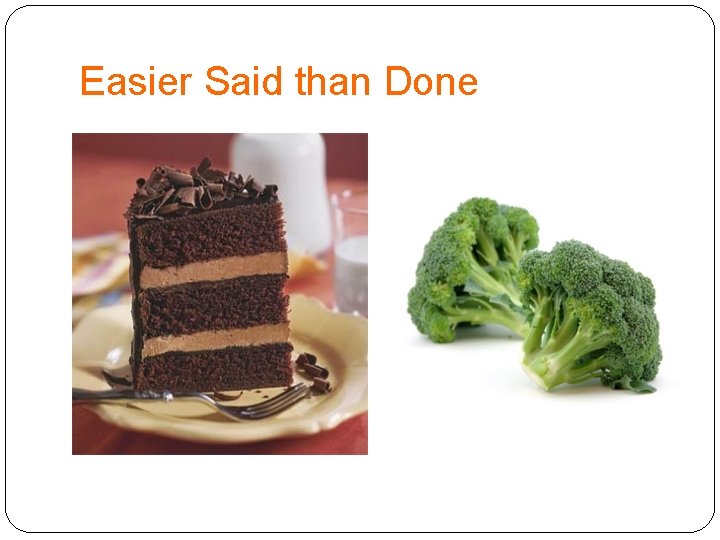
Easier Said than Done
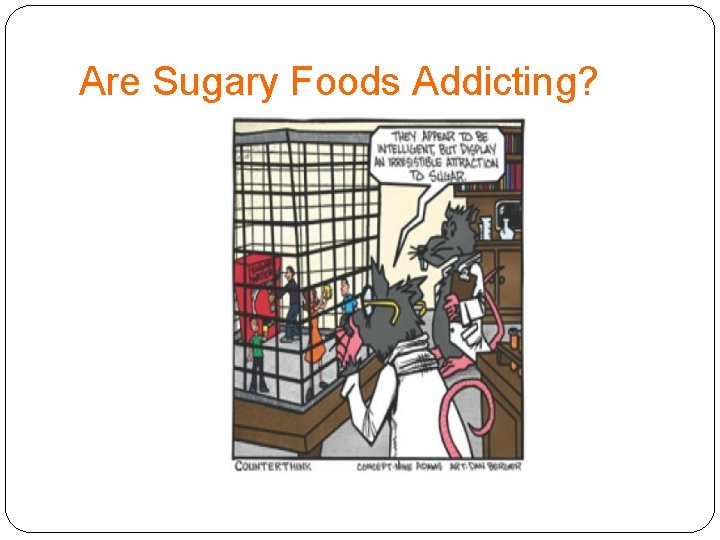
Are Sugary Foods Addicting?

Activate Reward Circuit
Release Dopamine
Qualify on Yale Food Addiction Scale � I find when I start eating certain foods, I end up eating more than planned � I find myself continuing to consume certain foods even if I am no longer hungry � I eat to the point where I feel physically ill � Not eating certain types of food or cutting down on certain types of food is something I worry about � I find that when certain foods are not available, I will go out of my way to obtain them. For example, I will drive to the store to purchase certain foods even though I have other options available to me at home. � There have been times when I consumed certain foods so often or in such large quantities that I started to eat food instead of working, spending time with my family or friends, or engaging in other important activities or recreational activities I enjoy.
� There have been times when I consumed certain foods so often or in such large quantities that I spent time dealing with negative feelings from overeating instead of working, spending time with my family or friends, or engaging in other important activities or recreational activities I enjoy. � There have been times when I avoided professional or social situations where certain foods were available, because I was afraid I would overeat. � I have had withdrawal symptoms such as agitation, anxiety, or other physical symptoms when I cut down or stopped eating certain foods. (Please do NOT include withdrawal symptoms caused by cutting down on caffeinated beverages such as soda pop, coffee, tea, energy drinks, etc. )
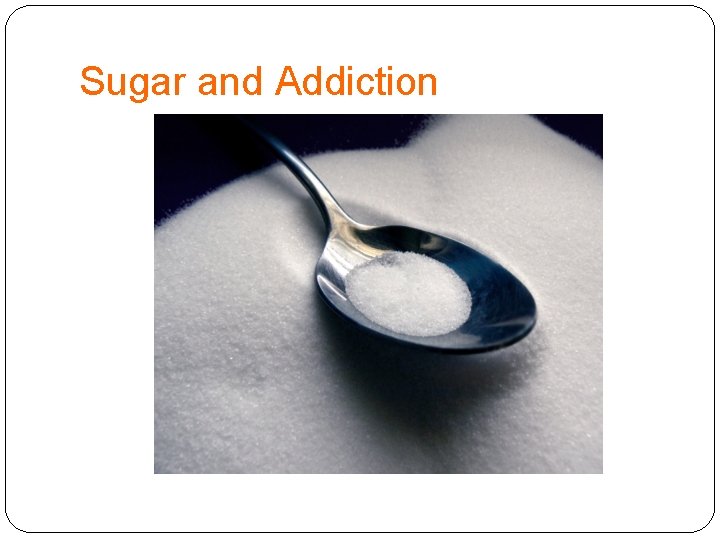
Sugar and Addiction
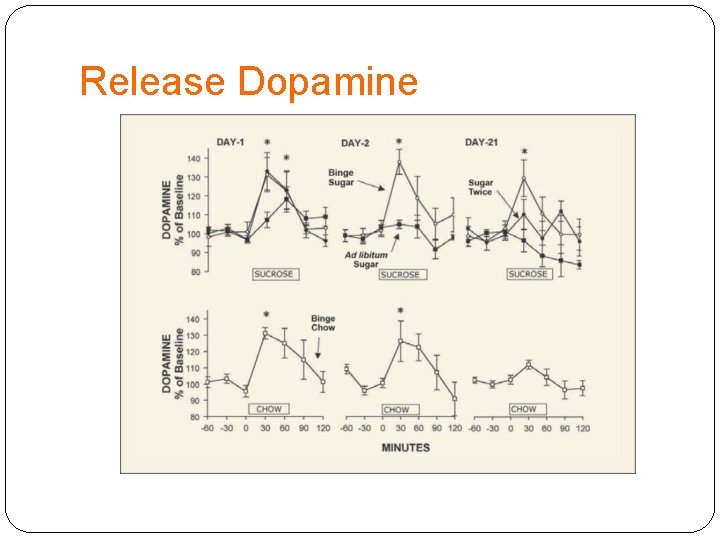
Hoebel (2008) Study: Sugar Binging in Rats �Rats deprived of food for 4 hours �Given access to chow and sugar-water �Binge on sugar solution �Release dopamine in reward center
Become “addicted” to sugar �After one month: fewer dopamine receptors �Same changes seen in cocaine addiction �Withdrawal symptoms when sugar solution taken away: �Anxiety �Teeth chattering �Decreased dopamine/endorphin levels
�When sugar is re-introduced, worked harder to get solution �Consume more than before deprivation �Self-administered more alcohol than usual after sugar cut-off
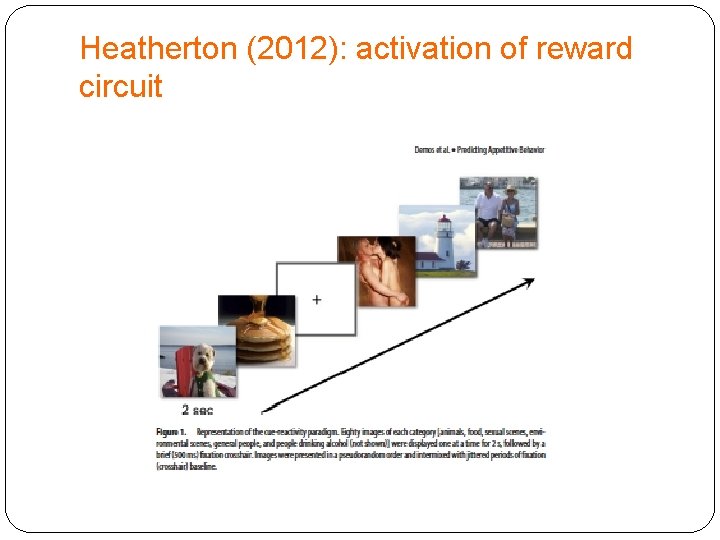
Heatherton (2012): activation of reward circuit
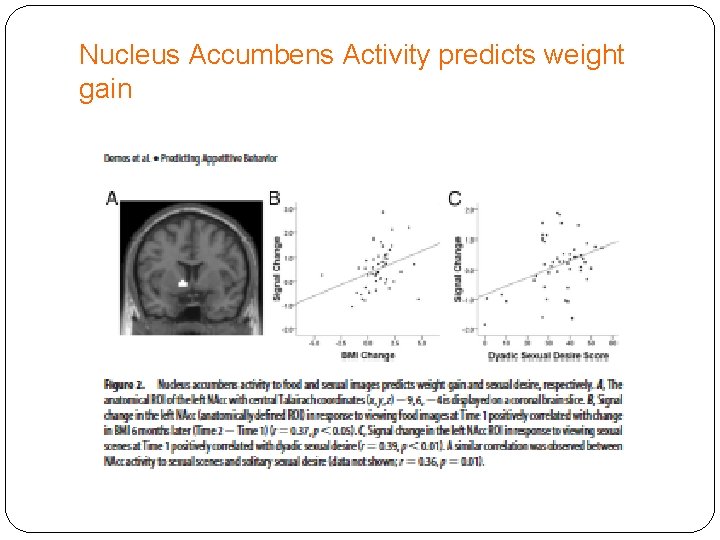
Nucleus Accumbens Activity predicts weight gain
Is Fructose Different than Regular Sugar?
Most Lipogenic �Has no immediate effect on insulin, unlike glucose �Metabolized directly by liver �Turned directly into fat �Causes muscle tissue to become resistant to insulin
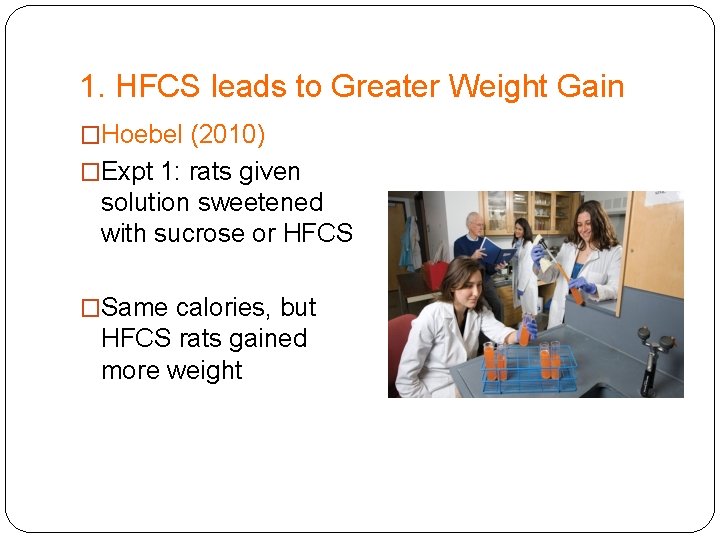
1. HFCS leads to Greater Weight Gain �Hoebel (2010) �Expt 1: rats given solution sweetened with sucrose or HFCS �Same calories, but HFCS rats gained more weight
�Expt 2: monitored weight, triglycerides, body fat in rats with access to HFCS over 6 months �Weight gain �Increased triglycerides �Fat deposits in abdomen
2. Bypasses Brain Satiety Circuits
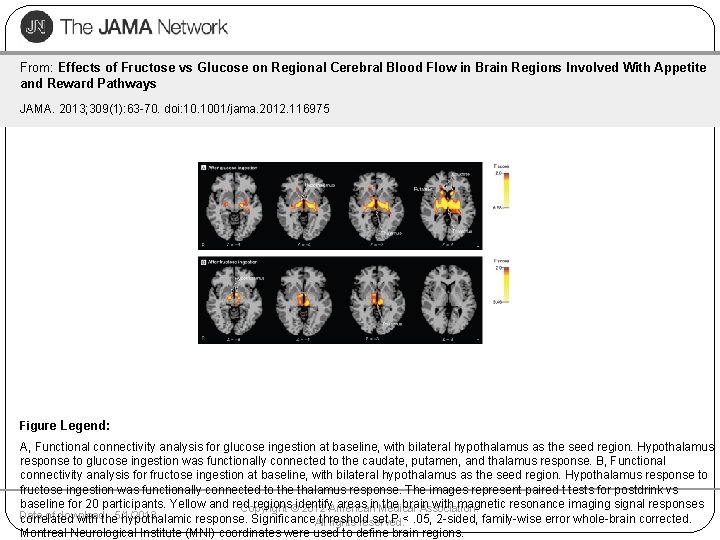
From: Effects of Fructose vs Glucose on Regional Cerebral Blood Flow in Brain Regions Involved With Appetite and Reward Pathways JAMA. 2013; 309(1): 63 -70. doi: 10. 1001/jama. 2012. 116975 Figure Legend: A, Functional connectivity analysis for glucose ingestion at baseline, with bilateral hypothalamus as the seed region. Hypothalamus response to glucose ingestion was functionally connected to the caudate, putamen, and thalamus response. B, Functional connectivity analysis for fructose ingestion at baseline, with bilateral hypothalamus as the seed region. Hypothalamus response to fructose ingestion was functionally connected to the thalamus response. The images represent paired t tests for postdrink vs baseline for 20 participants. Yellow and regions©identify areas in. Medical the brain with magnetic resonance imaging signal responses Copyright 2012 American Association. Date of download: correlated with the 5/1/2013 hypothalamic response. Significance. All threshold set P <. 05, 2 -sided, family-wise error whole-brain corrected. rights reserved. Montreal Neurological Institute (MNI) coordinates were used to define brain regions.
Glucose vs. Fructose Table sugar (Sucrose): 50 % glucose and 50 & fructose molecules bound together. �HFCS: 45 % glucose to 55 % fructose. �Hoebel HFCS Study: Sucrose and high-fructose have different effects on body weight over time. �Current Study: different effects on Brain?
�Subjects given drink sweetened with pure glucose or pure fructose �blinded, double-cross-over design �Measured: blood flow in hypothalamus and other appetite and reward regions, after ingestion �Do they have different effects on Brain?
Results �Glucose: �Blood flow and activity in brain areas controlling appetite, emotion and reward decreased �participants reported greater feelings of fullness. �Fructose: �brain appetite and reward areas continued to stay active �participants did not report feeling full.
Implications �Fructose doesn’t “satisfy” �Seems to bypass brain regulatory processes �Removed from blood by liver- little reaches brain �doesn’t raise insulin, but converted directly to fat in liver
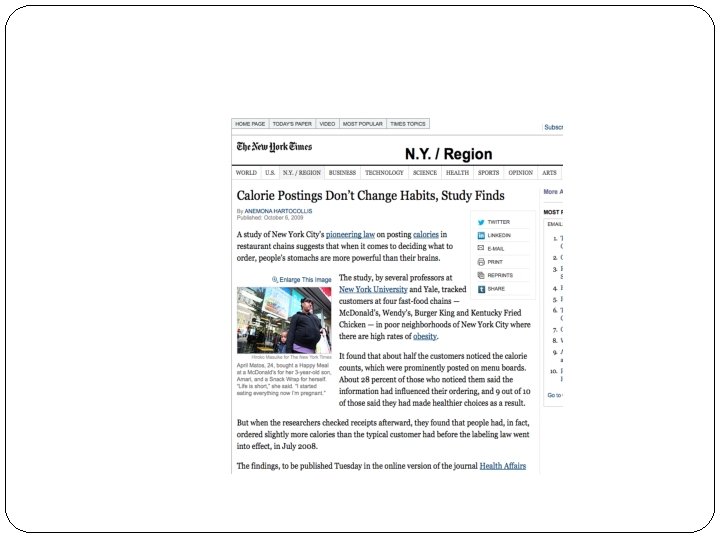
�Response from Food Industry? �new marketing campaigns: calorie counts �Response from Lawmakers? �New Labels �Calorie Counts
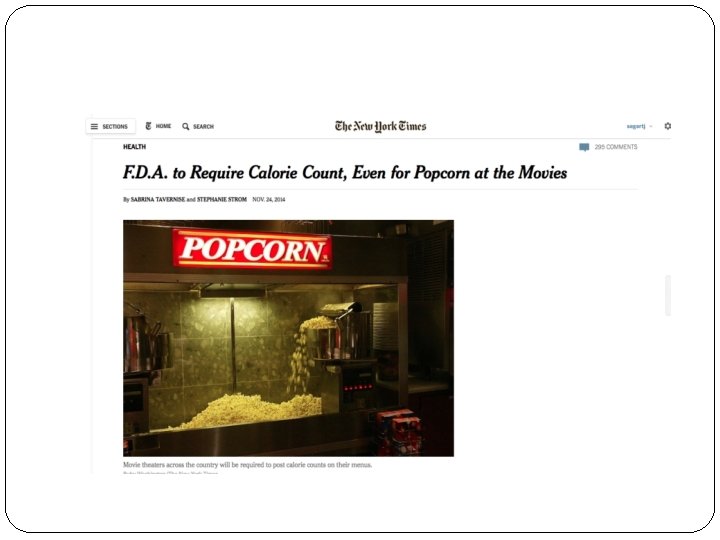
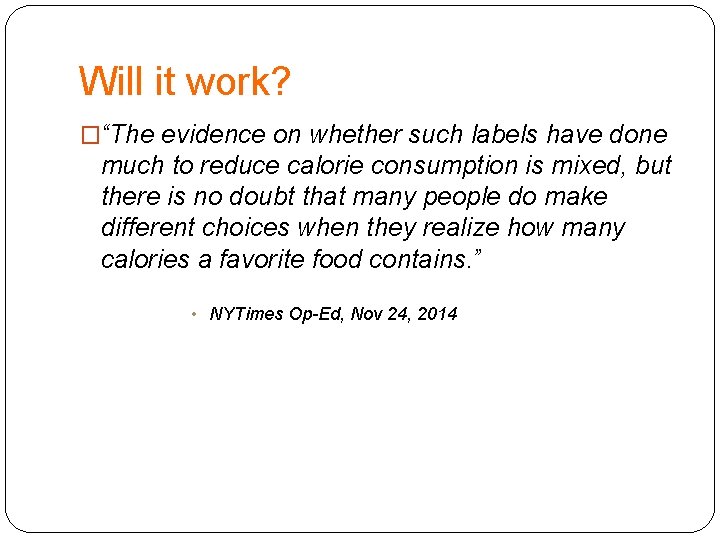
Will it work? �“The evidence on whether such labels have done much to reduce calorie consumption is mixed, but there is no doubt that many people do make different choices when they realize how many calories a favorite food contains. ” • NYTimes Op-Ed, Nov 24, 2014

- Slides: 41