
The Insect Gas Exchange System An Xray of
- Slides: 18
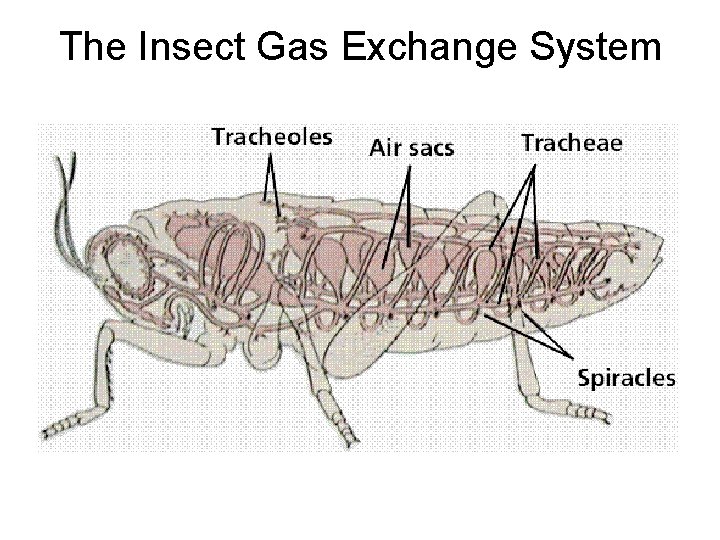
The Insect Gas Exchange System
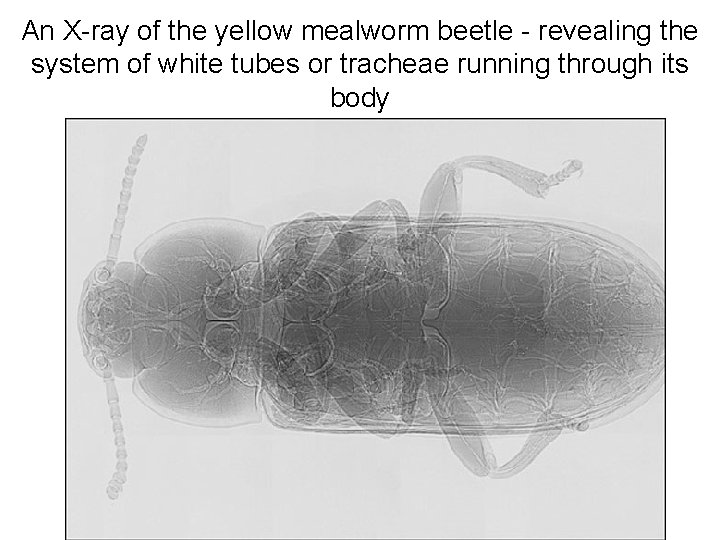
An X-ray of the yellow mealworm beetle - revealing the system of white tubes or tracheae running through its body
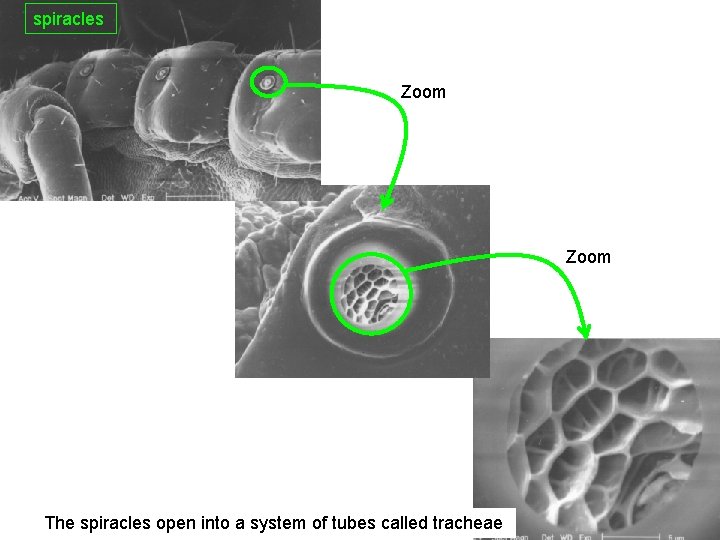
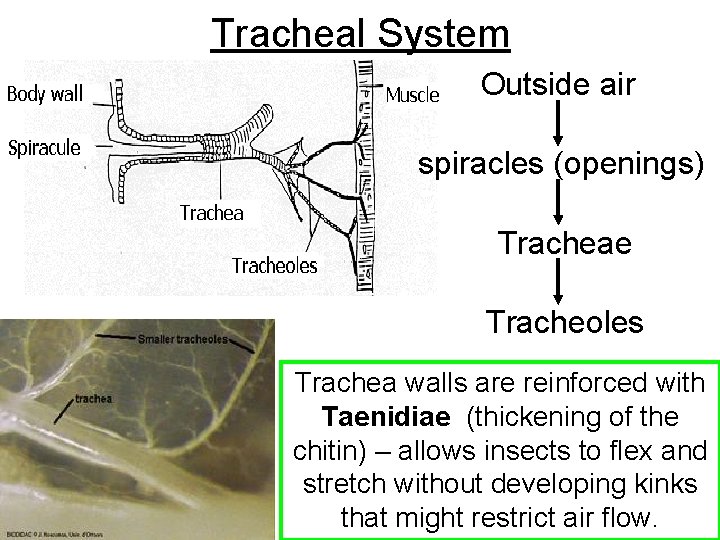
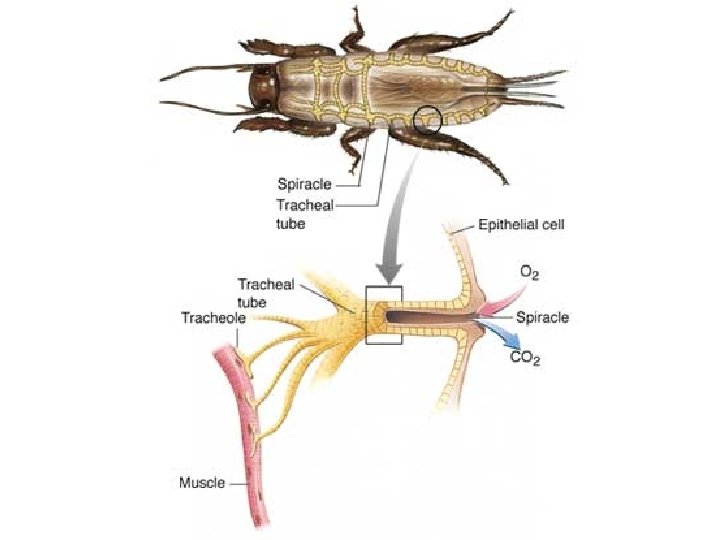
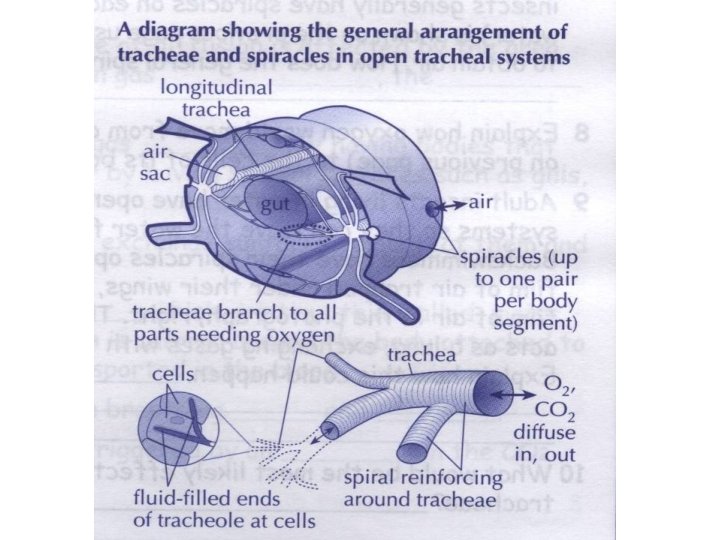
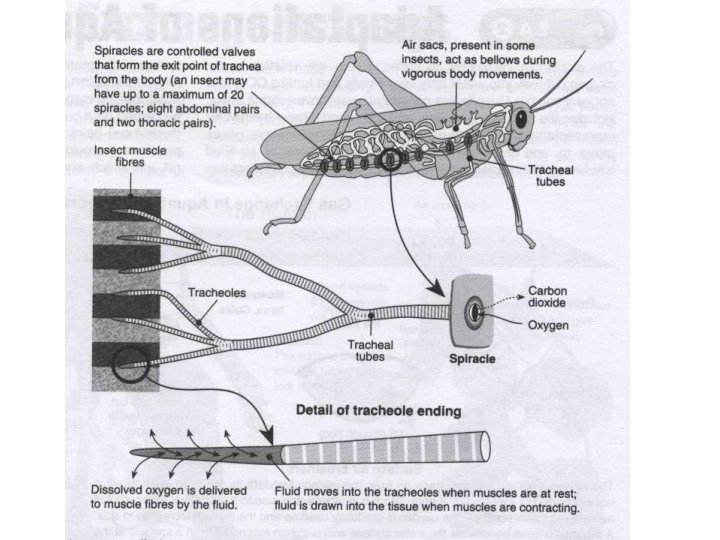
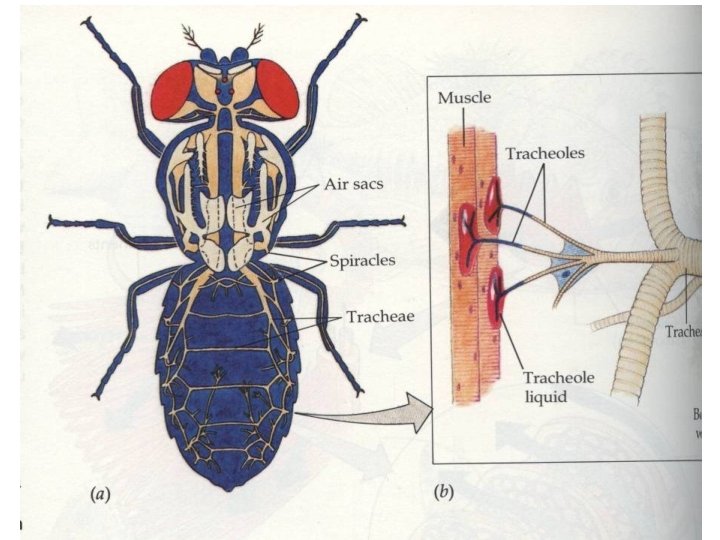
The Insect Gas Exchange System • An insect has spiracles (openings) lined with chitin on the sides of its body. • The chitin give shape to the openings. • The spiracles can open and close by small muscles. • These muscles contract to shut flap like valves and relax to open the valves – allows control of the flow of air as well as slow down the loss of water.
spiracles Zoom The spiracles open into a system of tubes called tracheae
Tracheal System Outside air spiracles (openings) Tracheae Tracheoles Trachea walls are reinforced with Taenidiae (thickening of the chitin) – allows insects to flex and stretch without developing kinks that might restrict air flow.
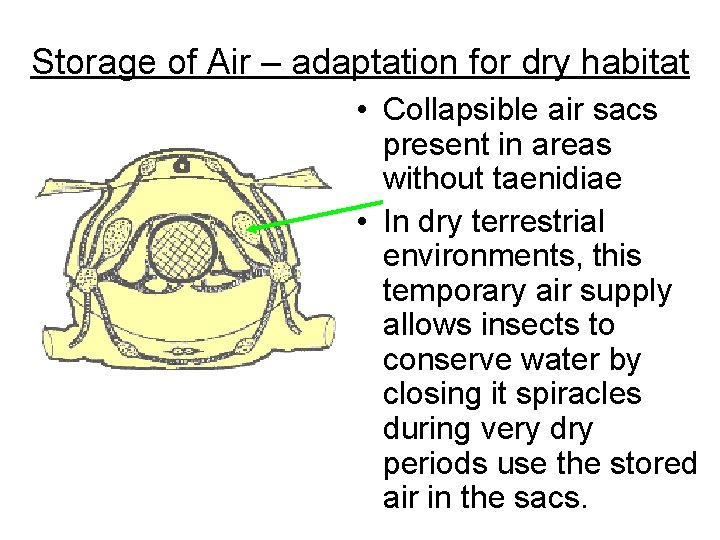
Storage of Air – adaptation for dry habitat • Collapsible air sacs present in areas without taenidiae • In dry terrestrial environments, this temporary air supply allows insects to conserve water by closing it spiracles during very dry periods use the stored air in the sacs.
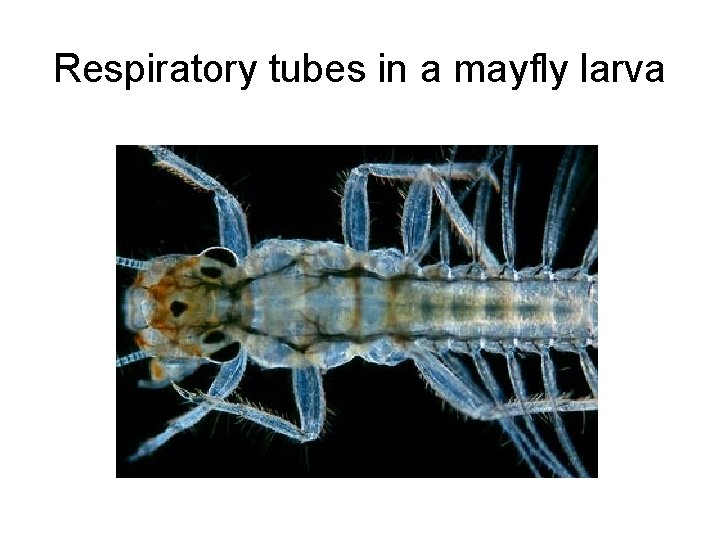
Respiratory tubes in a mayfly larva
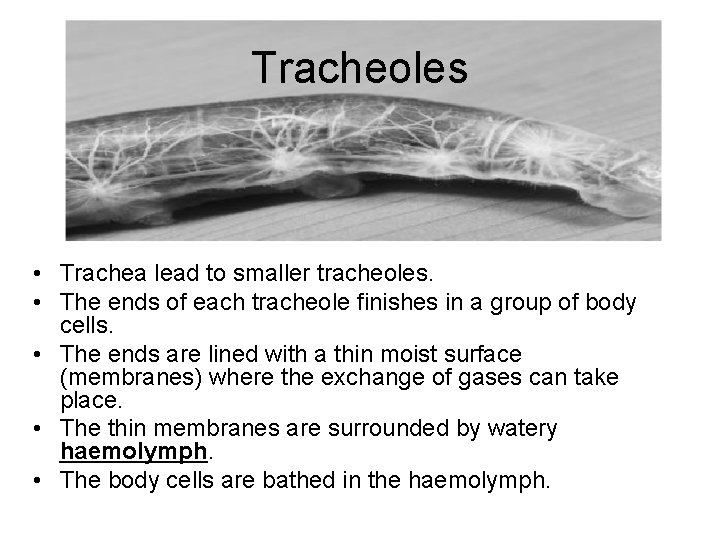
Tracheoles • Trachea lead to smaller tracheoles. • The ends of each tracheole finishes in a group of body cells. • The ends are lined with a thin moist surface (membranes) where the exchange of gases can take place. • The thin membranes are surrounded by watery haemolymph. • The body cells are bathed in the haemolymph.
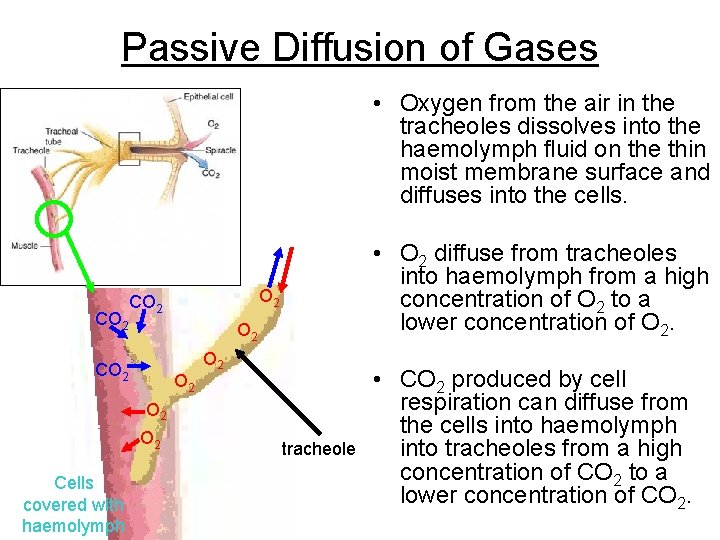
Passive Diffusion of Gases • Oxygen from the air in the tracheoles dissolves into the haemolymph fluid on the thin moist membrane surface and diffuses into the cells. CO 2 • O 2 diffuse from tracheoles into haemolymph from a high concentration of O 2 to a lower concentration of O 2 CO 2 O 2 O 2 Cells covered with haemolymph tracheole • CO 2 produced by cell respiration can diffuse from the cells into haemolymph into tracheoles from a high concentration of CO 2 to a lower concentration of CO 2.
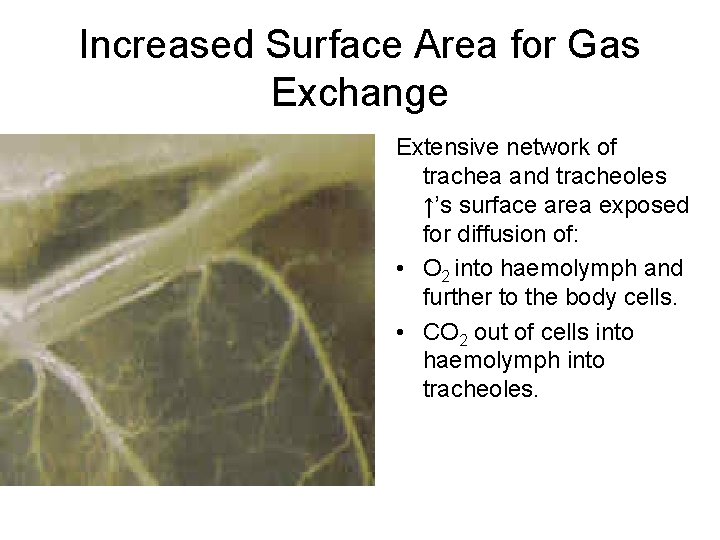
Increased Surface Area for Gas Exchange Extensive network of trachea and tracheoles ↑’s surface area exposed for diffusion of: • O 2 into haemolymph and further to the body cells. • CO 2 out of cells into haemolymph into tracheoles.
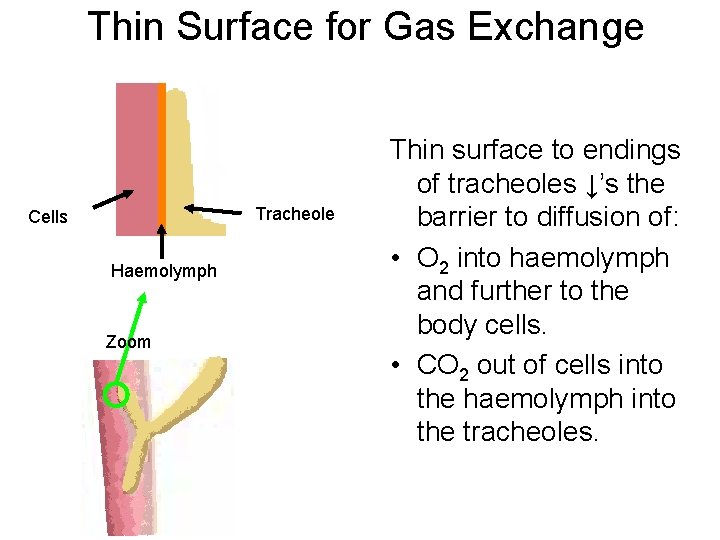
Thin Surface for Gas Exchange Tracheole Cells Haemolymph Zoom Thin surface to endings of tracheoles ↓’s the barrier to diffusion of: • O 2 into haemolymph and further to the body cells. • CO 2 out of cells into the haemolymph into the tracheoles.
Moist Surface for Gas Exchange Moist surface at end of the tracheoles is important for: • O 2 to dissolve into the watery substance for diffusion into the haemolymph. • CO 2 to dissolve into the water substance for diffusion out of the haemolymph into the tracheoles
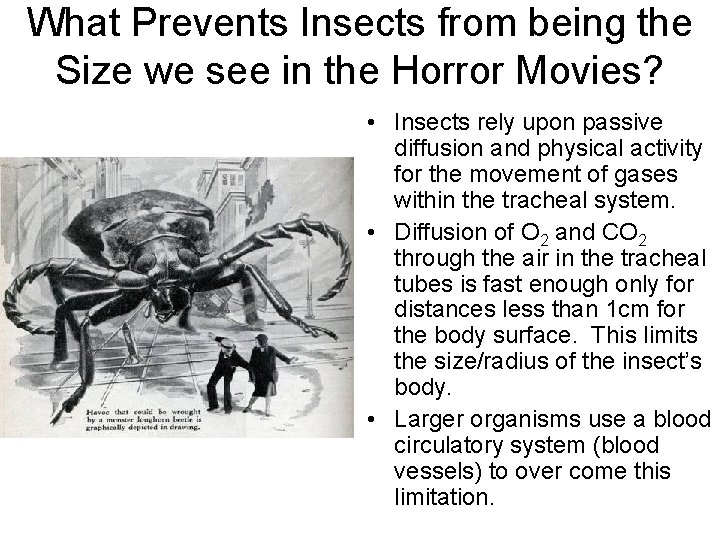
What Prevents Insects from being the Size we see in the Horror Movies? • Insects rely upon passive diffusion and physical activity for the movement of gases within the tracheal system. • Diffusion of O 2 and CO 2 through the air in the tracheal tubes is fast enough only for distances less than 1 cm for the body surface. This limits the size/radius of the insect’s body. • Larger organisms use a blood circulatory system (blood vessels) to over come this limitation.